
#FactCheck-Old Maharashtra Video of Dancing Policemen Falsely Linked to West Bengal Election Results
Executive Summary
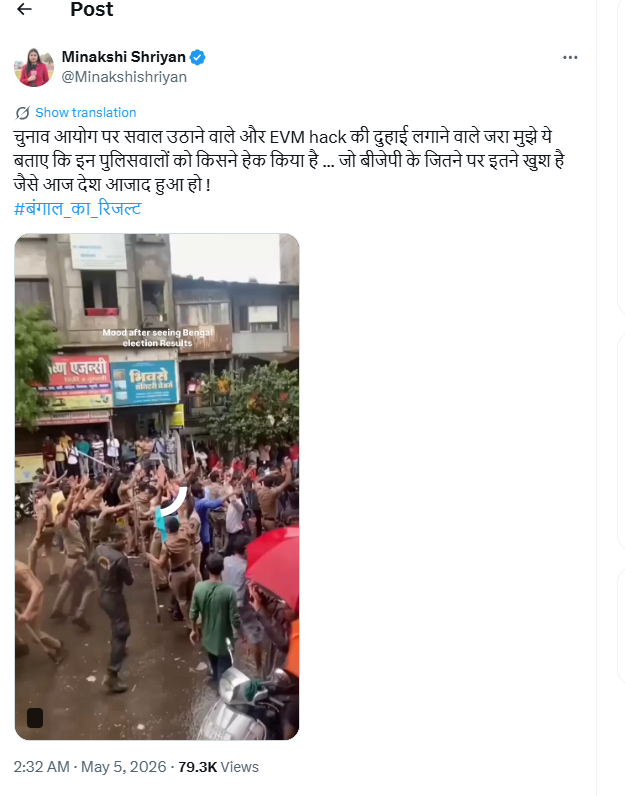
A video showing police personnel dancing on the streets along with civilians is going viral on social media. The clip is being shared with the claim that policemen in West Bengal were celebrating the defeat of Mamata Banerjee and the victory of the BJP.
Research by CyberPeace Research Wing found that the claim is misleading. The viral video is old and unrelated to the West Bengal elections.
Claim
An X user shared the video on April 26, 2026, alleging that police personnel were celebrating BJP’s victory. The post questioned those raising concerns over EVMs, suggesting that even police were openly rejoicing over the election outcome.
- https://x.com/Minakshishriyan/status/2051490074957930510
- https://archive.is/d81OT
Fact Check
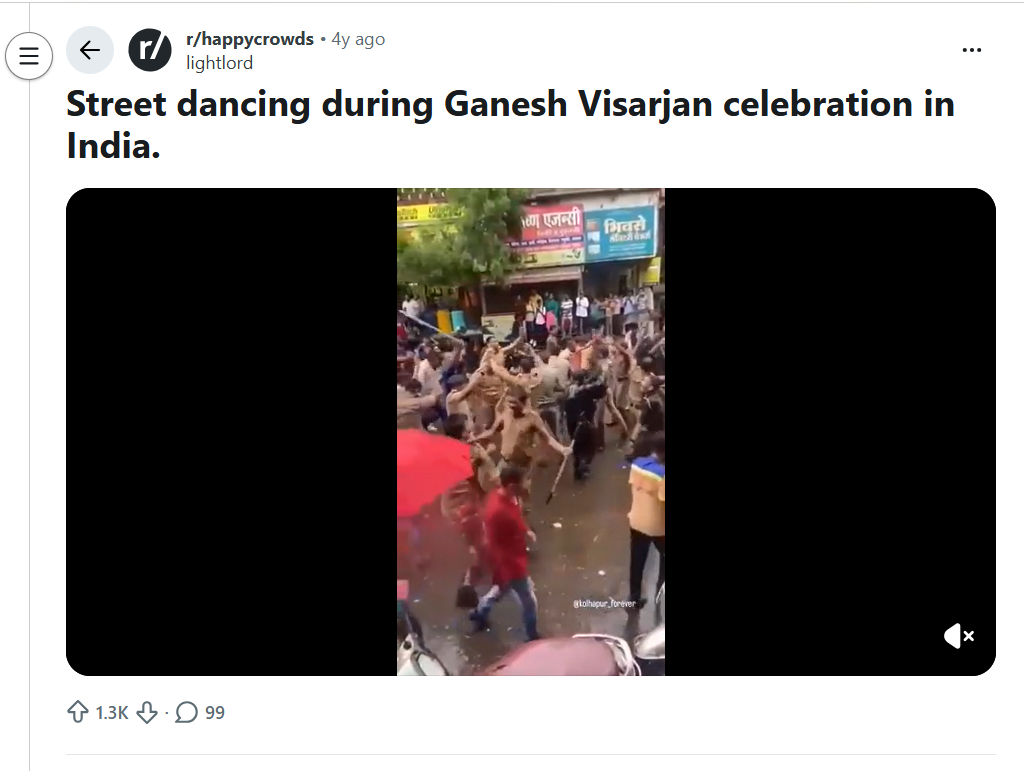
To verify the claim, we extracted keyframes from the viral video and conducted a reverse image search. This led us to a Reddit post dated September 13, 2022, where the same video was shared. The post described it as footage from Ganesh Visarjan celebrations in India, and several users in the comments identified the location as Maharashtra.
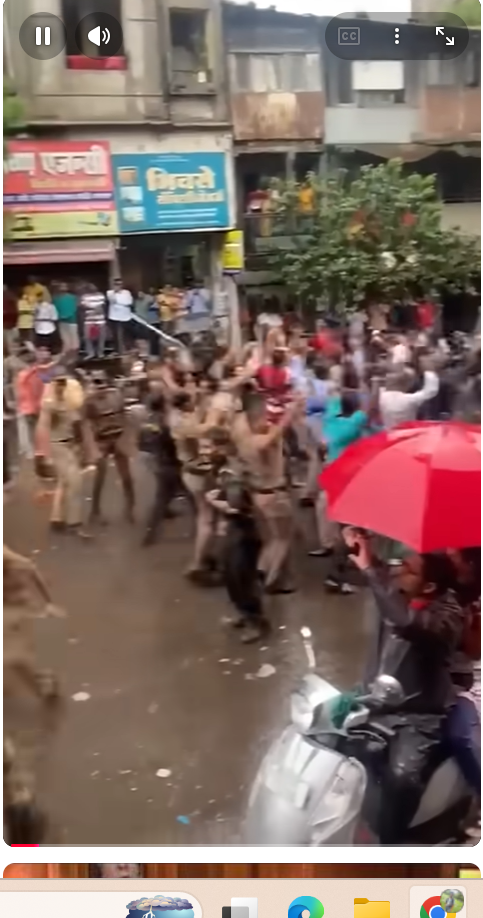
Further research led us to a YouTube channel “Yash Arate Vlogs,” which uploaded the same video on September 10, 2022. The description stated that the clip was recorded during Ganpati immersion celebrations in Kolhapur.
https://www.youtube.com/shorts/0_w5t-4rmTY
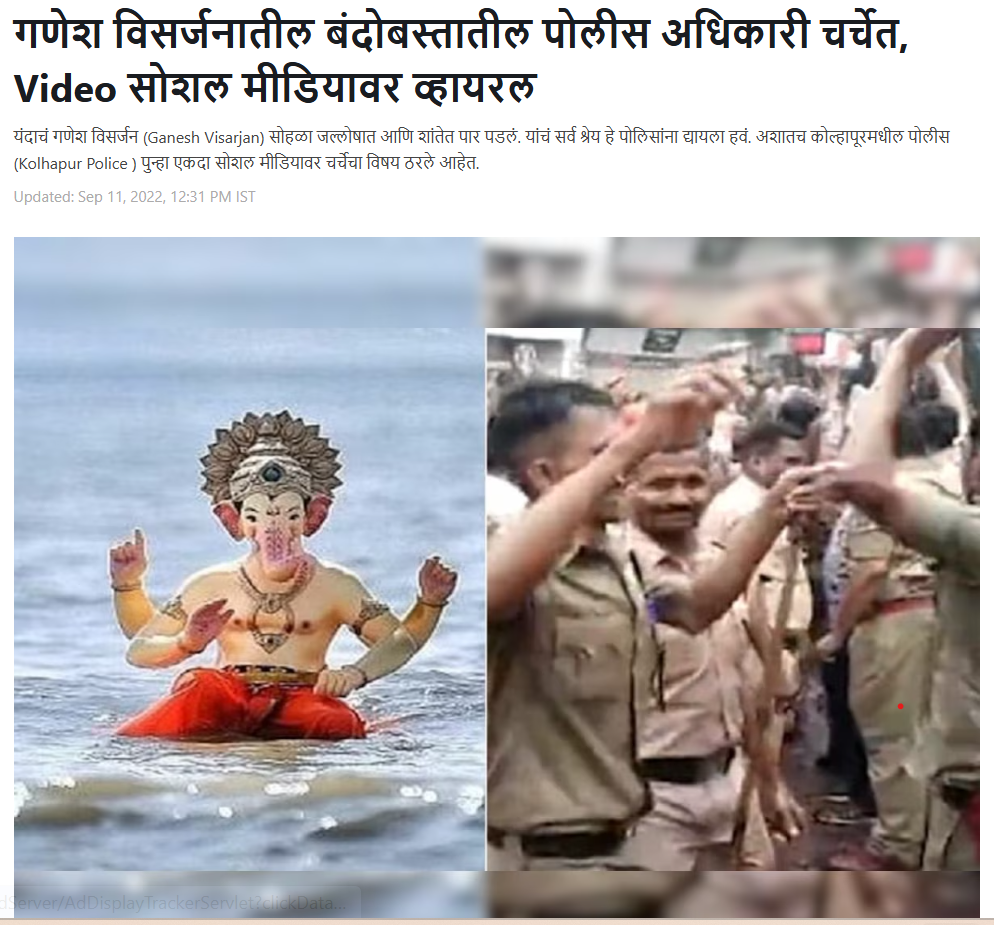
We also found media reports from September 2022 indicating that during Ganesh Visarjan in Kolhapur, loud music and festive atmosphere led even on-duty police personnel to briefly join the celebrations.
Conclusion
Our research confirms that the viral video does not show any post-election celebration in West Bengal. It is an old clip from Maharashtra, recorded during Ganesh Visarjan festivities, and is being falsely shared with a misleading political claim.

Related Blogs

Introduction
Since February 2020 the government has been taking keen steps to safeguard the Indian markets and the consumer, this could be seen in the forms of policies and exemptions for the market players and the consumers, however, due to the COVID-19 pandemic, the markets places became vulnerable to loss and various forms of new crimes and frauds. The Government recently tabled the Jan Vishwas bill which is an aftermath of the Vivad se Vishwas Bill, 2020 which was tabled in February 2020 for creating a safe and dynamic market, this bill is a clear example of how AtmaNirbhar Bharat plays a crucial role in nations development.
What is Jan Vishwas Bill, 2022
The Jan Vishwas (Amendment of Provisions) Bill, 2022 is a 108-page bill introduced in the Lok Sabha by the Union Minister of Commerce and Industry, Piyush Goyal. The statement of objects and reasons of the Bill states, “To amend certain enactments for decriminalizing and rationalizing minor offenses to further enhance trust-based governance for ease of living and doing business.” The bill aims to promote ease of doing business in India by decriminalizing minor offences and amending 183 provisions in 42 Acts administered by 19 ministries. The bill proposes to replace minor offences with monetary penalties and rationalize existing monetary penalties based on the gravity of the offences. The Acts to be amended by the bill include-
- Drugs and Cosmetics Act, 1940
- Public Debt Act, 1944
- Pharmacy Act, 1948
- Cinematograph Act, 1952
- Copyright Act, 1957
- Patents Act, 1970
- Environment (Protection) Act, 1986
- Motor Vehicles Act, 1988
- Trade Marks Act, 1999l Railways Act, 1989
- Information Technology Act, 2000
- Prevention of Money-laundering Act, 2002
- Food Safety and Standards Act, 2006
- Legal Metrology Act, 2009
- Factoring Regulation Act, 2011
The bill aims to decriminalize a large number of minor offences and replace them with monetary penalties. This step by the government is a clear indication of how important the market regulations are, in recent times Google was imposed with a penalty of 1300 crores and 900 crores for violating competitive market practices, these penalties, and criminalised actions will ensure proper compliance to laws of the land thus creating a blanket of safeguards for the Indian consumer and netizen.
What will the Ease of Business be?
The Government has been critical in pinpointing various parameters and factors to improve the ease of business in the country, this bill comes at the right time when we can see numerous start-ups and entrepreneurs emerging in our country. The parameters are as follows-
- Starting a Business of all
- Dealing with Construction Permits
- Getting Electricity
- Registering Property
- Getting Credit
- Protecting
- Minority Investors
- Paying Taxes
- Trading across Borders
- Enforcing Contracts and Resolving Insolvency
These parameters have been created with a sight on the future of the markets and how external factors like the Russia-Ukraine war can influence the markets. According to Minister Piyush Goyal, the fear of imprisonment for minor offences is a major factor hindering the growth of the business ecosystem and individual confidence in India. The Jan Vishwas Bill, 2022 aims to address this issue by replacing minor offences with monetary penalties. The bill also proposes an increase of 10% in the minimum amount of fine and penalty levied after every three years, once the bill becomes a law.
Conclusion
The bill will create a level playing field for the market players and the consumers with the backing of strong legislation and precedents thus maintaining transparency and accountability in the system. The amended provisions will allow various already existing legislation to come in tune with the current times and emerging technologies. The nation is at a critical juncture to fabricate policies and laws to address the issues and threats of the future and hence such a bill will be the strengthening pillar of the Indian markets and cyber-ecosystem. The Jan Vishwas Bill, 2022 has been referred to a 31-member joint parliamentary committee for scrutiny. The committee includes members from the Lok Sabha and the Rajya Sabha and will submit its report to parliament by the second part of the Budget session in 2023, The members from the Lok Sabha include PP Chaudhary, Sanjay Jaiswal, Queen Ojha, Rajendra Agrawal, Gaurav Gogoi, A Raja, Rajendra Agarwal, Poonam Pramod Mahajan, and Sougata Ray.
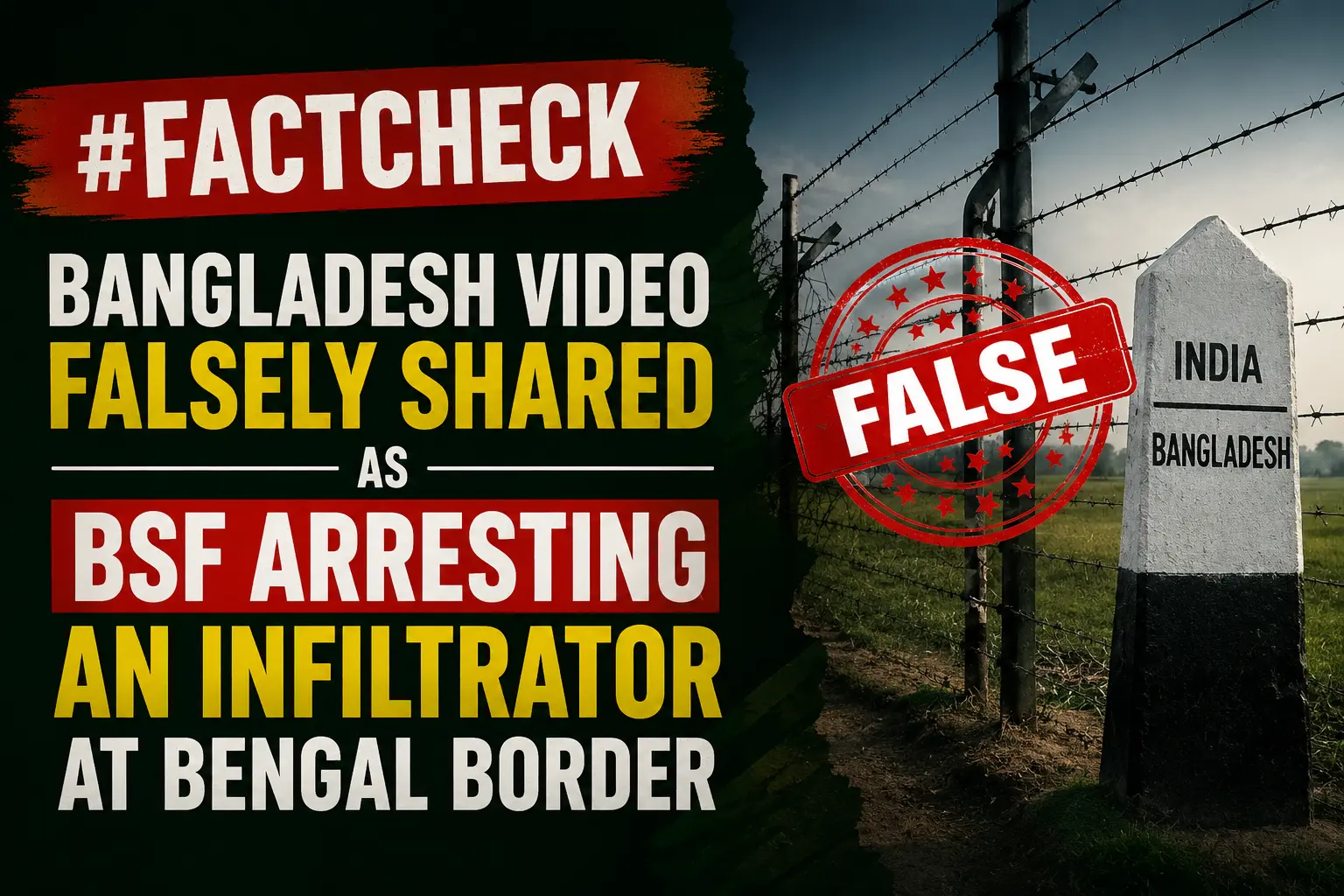
Executive Summary
A video showing security personnel overpowering a man is being widely shared on social media with the claim that it shows the Border Security Force (BSF) arresting an infiltrator attempting to cross the India-Bangladesh border in West Bengal. However, research by CyberPeace Research Wing found that the claim is false. The viral video is from Bangladesh and is unrelated to India or the BSF.
Claim
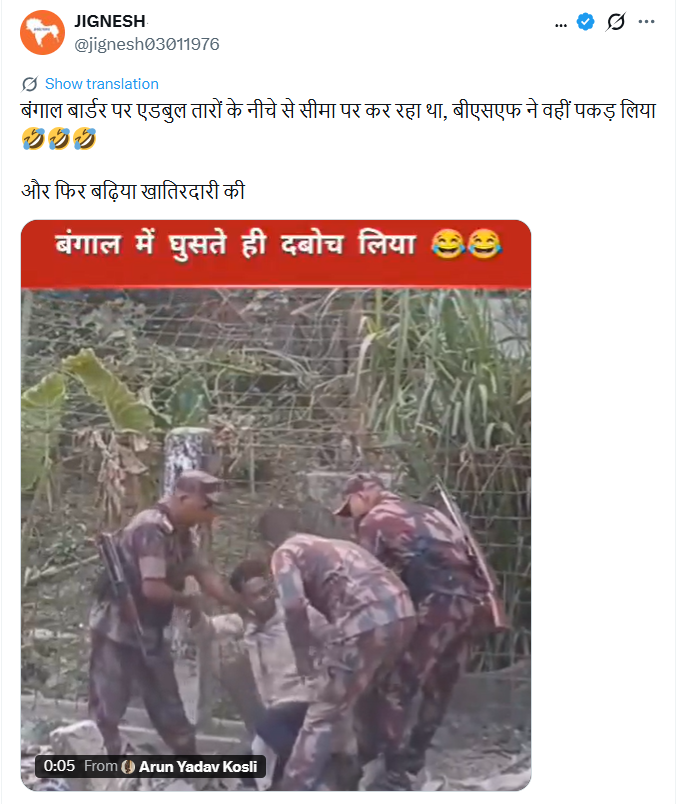
An X user shared the viral video claiming: “He was crossing the Bengal border from beneath the barbed fencing when the BSF caught him on the spot.”
The post was circulated as an incident from the India-Bangladesh border in West Bengal.
Fact Check
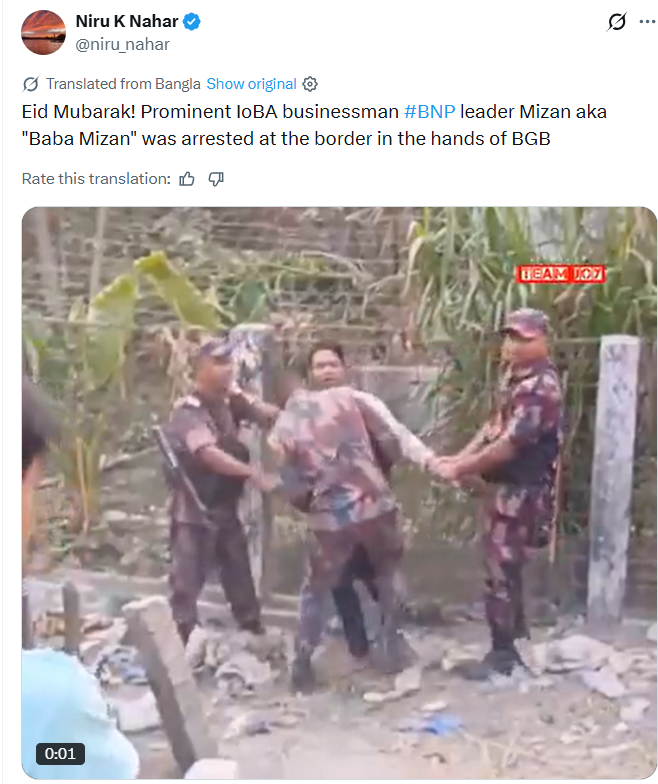
To verify the claim, we extracted keyframes from the viral video and conducted a reverse image search. During the research, we found the same video posted on 21 March 2026 by an X handle named “Niru Nahar.”
According to the caption of that post, the video showed Bangladesh Border Guards arresting BNP leader Mizan, also known as “Baba Mizan,” near the border.
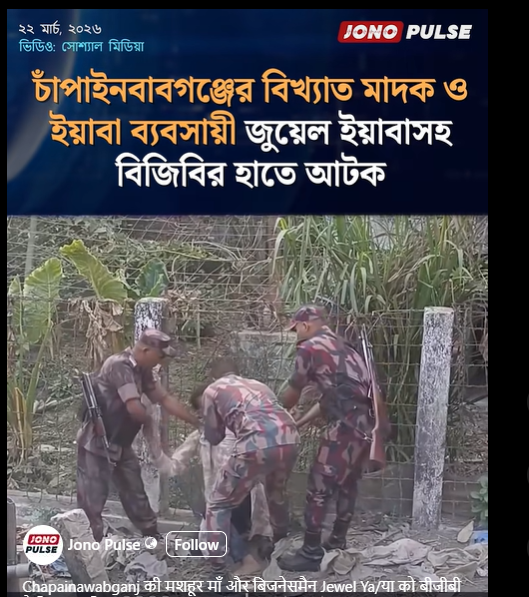
Further research led us to a Facebook post uploaded on 22 March 2026 by Bangladeshi news platform Jono Pulse. The post identified the detained individual as “Juel,” an alleged drug trafficker from Chapainawabganj, and stated that he had been arrested by the Border Guard Bangladesh (BGB).
Chapainawabganj is located in Bangladesh, confirming that the video is unrelated to West Bengal or the BSF.
Conclusion
The viral claim is misleading. The video does not show the BSF arresting an infiltrator at the Bengal border. It is actually from Bangladesh and depicts a separate incident involving Border Guard Bangladesh personnel.

Executive Summary
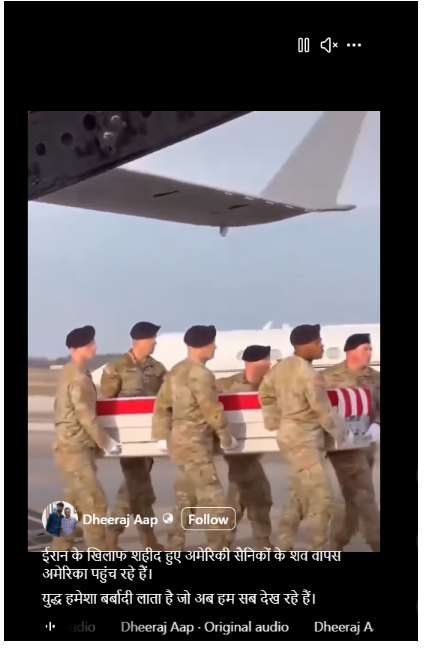
A video is being widely shared on social media showing soldiers carrying coffins with full military honours. Users are claiming that the footage shows the bodies of American soldiers who were killed in the war with Iran being brought back to the United States.
However, research by the CyberPeacefound the viral claim to be misleading. Our research revealed that the video has no connection to the recent Iran-Israel conflict. The footage actually dates back to December 2025, when an Islamic State gunman in Syria killed two US soldiers and a US civilian.
Following that incident, the bodies of the victims were transported with military honours, and the ceremony was recorded in the viral video. The clip is now being circulated online with a false claim.
Claim
On March 1, 2026, an Instagram user shared the viral video claiming that it shows the bodies of American soldiers returning to the US after being killed in the war against Iran. The caption of the post reads: “Bodies of American soldiers martyred against Iran are returning to the United States. War always brings destruction, which we are now witnessing.”
The link to the post and its archived version can be seen below.
Fact check
To verify the claim, we extracted key frames from the viral video and performed a reverse image search using Google Lens. During the search, we found the full version of the video in a report published by BBC on December 18, 2025. This confirms that the footage predates the current developments.

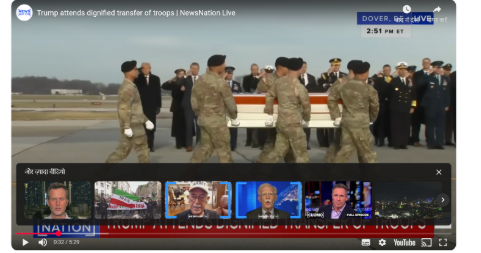
According to the BBC report, US President Donald Trump attended a dignified transfer ceremony for two members of the US National Guard and a US civilian who were killed in Syria. The somber ceremony took place at Dover Air Force Base in Delaware, United States. The US Central Command (Centcom) stated that the two soldiers and a civilian interpreter were killed in an ambush carried out by an Islamic State (IS) gunman in Syria. The US Army identified the two soldiers as Sgt. Edgar Brian Torres-Tovar (25) of Des Moines and Sgt. William Nathaniel Howard (29) of Marshalltown. A US civilian interpreter, Ayad Mansoor Sakat, was also killed in the attack. Officials said that three other service members were injured during the attack, and the gunman was engaged and killed. Syria’s state media also reported that two Syrian security personnel were injured in the incident.
Further research led us to a report published on the News Nation YouTube channel on December 18, 2025, which also featured the same footage related to the incident.
Conclusion
Our research found that the viral video is not related to the recent Iran-Israel conflict. The footage dates back to December 2025, when two US soldiers and a US civilian were killed in an Islamic State attack in Syria. The video shows the dignified transfer of their remains and is now being shared on social media with a misleading claim.
