
#FactCheck -Misleading Claim Uses 2013 Army Coffin Photo to Spread False Ceasefire Narrative
Executive Summary
Social media users, particularly Pakistani propaganda accounts, shared an image showing coffins wrapped in the Indian tricolour and claimed that India violated the ceasefire along the Line of Control (LoC). According to the posts, Pakistan retaliated with heavy firing, captured the Indian Army’s Kumar Top post, and several Indian soldiers were killed in the exchange.
One user wrote, “Breaking News: Indian Army once again violated the ceasefire in the Mandal sector, targeting civilians with mortar shelling. Pakistan responded strongly, captured the Indian Army’s Kumar Top post, and several soldiers were reportedly killed. Calm has now been restored after Pakistan’s response.”

Fact Check
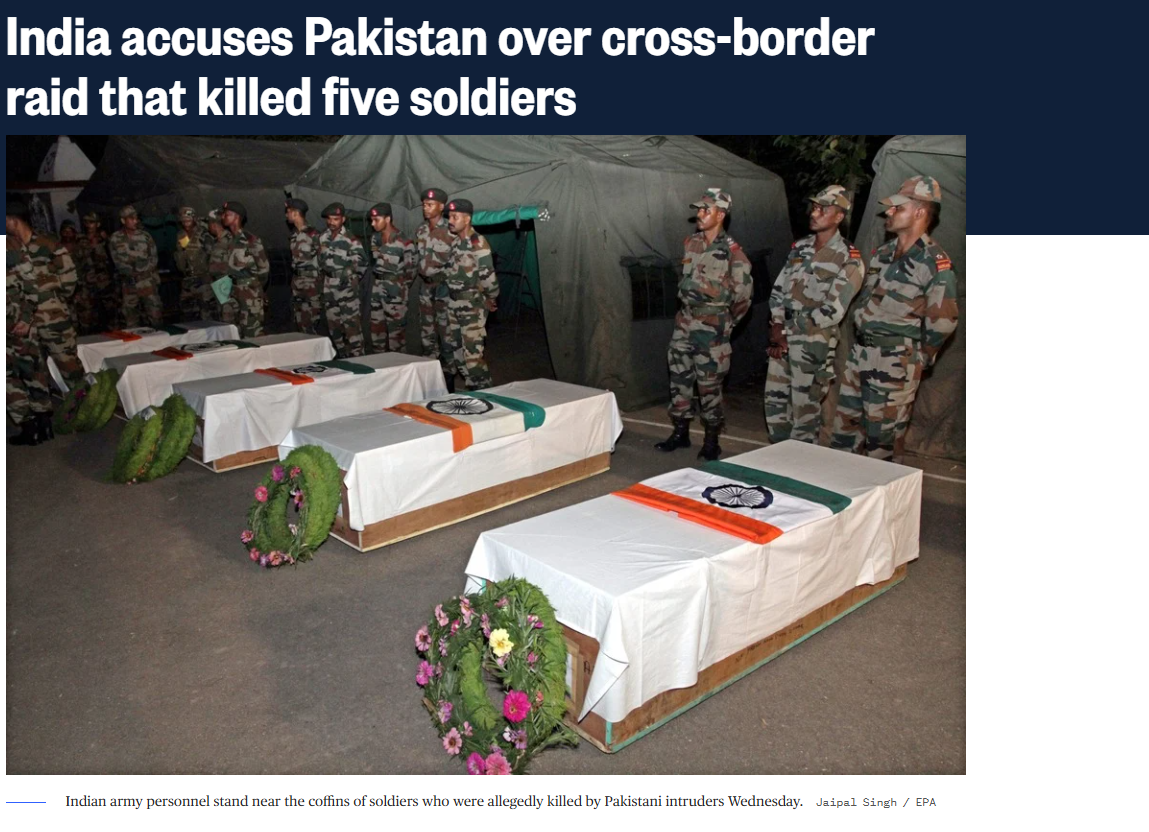
Research by CyberPeace found the viral claim to be false. Using reverse image search, we traced the viral photo to the Shutterstock website. The image description states that it was taken on August 6, 2013, and shows Indian Army personnel standing near the coffins of soldiers who were killed by Pakistani infiltrators at a brigade headquarters in Poonch, located about 240 km from Jammu. This confirms that the image is old and unrelated to recent developments along the Line of Control.

Further verification led us to a report published by NBC News on August 8, 2013, which also featured the same visual in connection with the 2013 cross-border attack.
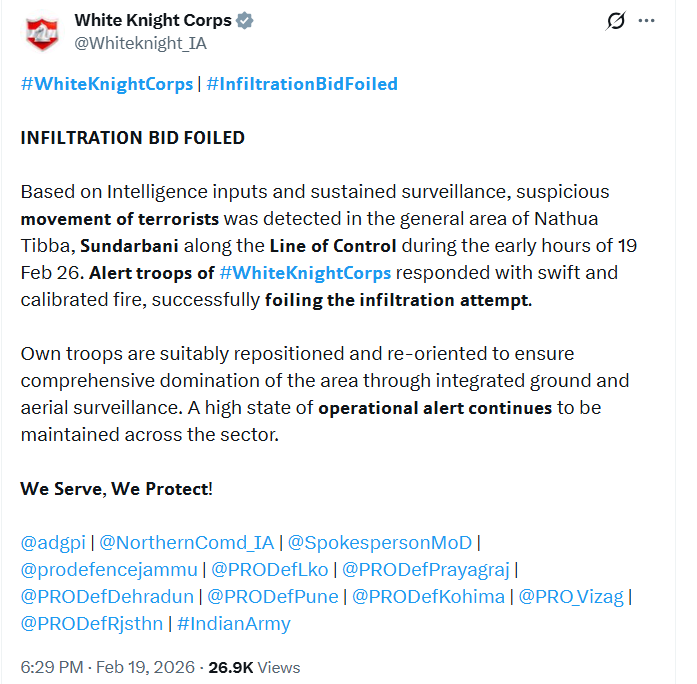
Additionally, posts from the official X (formerly Twitter) handle of the Indian Army 16 Corps (White Knight Corps) stated that based on intelligence inputs and continuous surveillance, suspicious terrorist activity was detected near Nathua Tibba in the Sunderbani sector close to the LoC in the early hours of February 19, 2026. Alert troops responded promptly and successfully foiled the infiltration attempt. The Army also confirmed that operational vigilance remains high across the sector. However, there were no reports of casualties due to Pakistani firing.
Conclusion:
The viral image showing coffins of Indian soldiers is not recent but dates back to 2013. There are no confirmed reports of casualties from Pakistani firing along the Line of Control in the current context. Therefore, the claim circulating on social media is misleading.

Related Blogs
Executive Summary
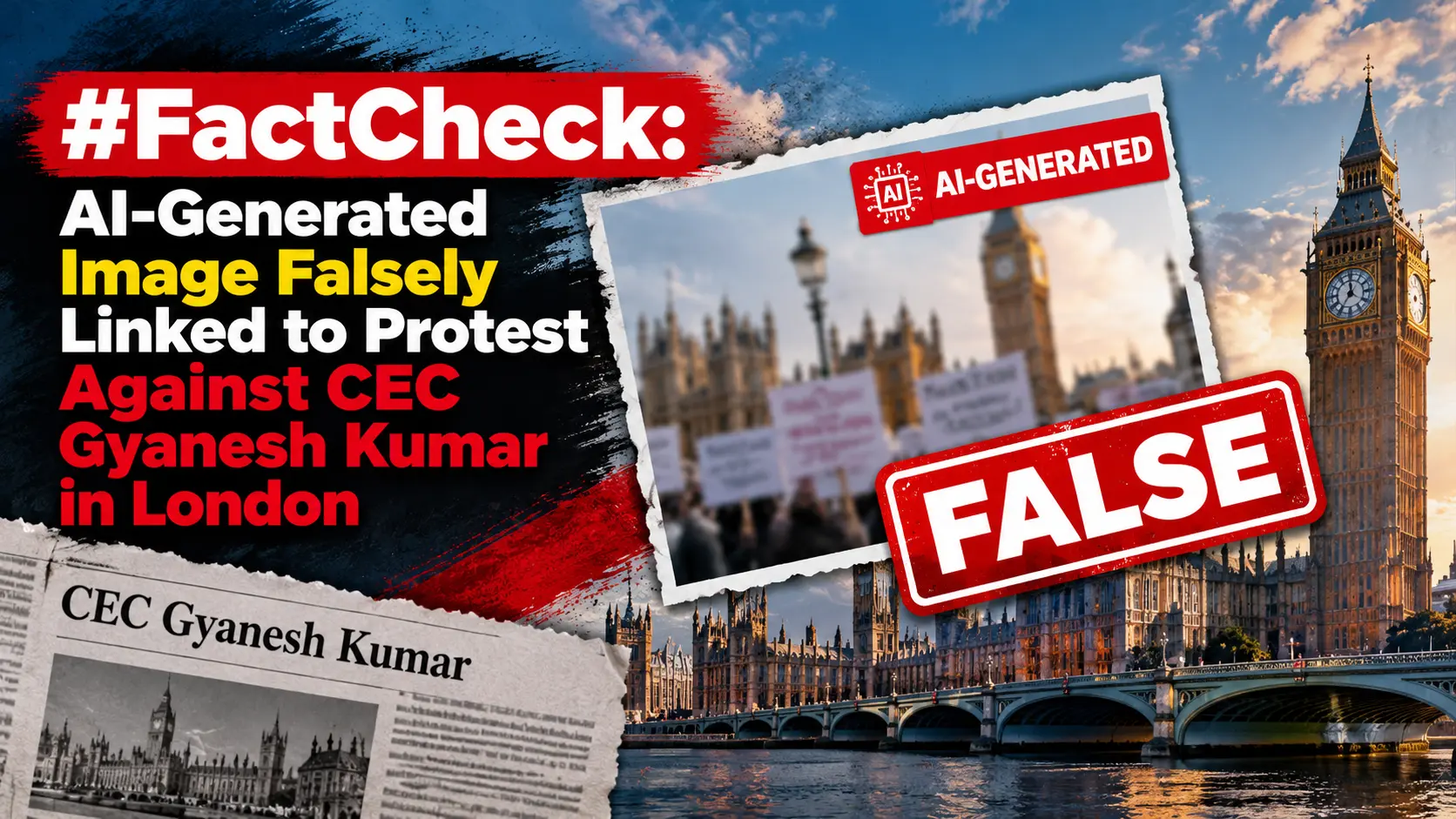
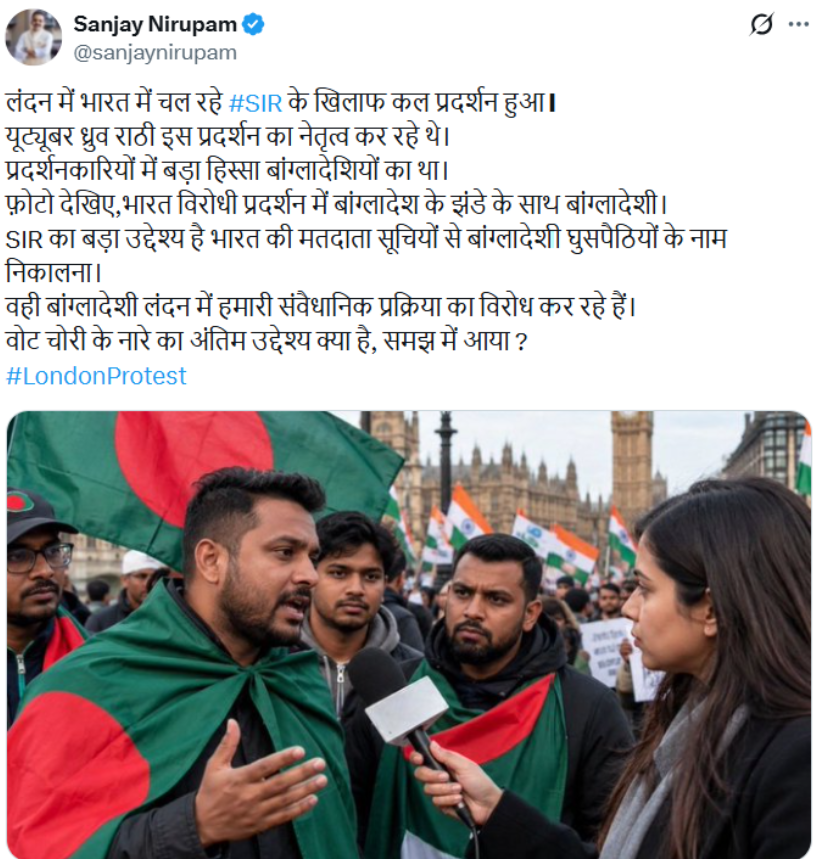
A photo of a Bangladeshi national holding the Bangladesh flag during a protest against Chief Election Commissioner Gyanesh Kumar in London is going viral on social media. The image is being shared with the claim that it was taken during the protest. CyberPeace Research found the viral claim to be false. The image is not authentic and is AI-generated.
Claim:
A photo of a Bangladeshi national holding the Bangladesh flag during a protest against Chief Election Commissioner Gyanesh Kumar in London.
Fact Check
To verify the authenticity of the viral image claiming to show a Bangladeshi man holding the Bangladesh flag during a protest against Chief Election Commissioner Gyanesh Kumar in London, we conducted a reverse image search using Google Lens. However, we could not find the image in any credible media reports.
Upon closely examining the image, we noticed several inconsistencies. For instance, the text on the posters held by people in the image is not clearly legible, and the reporter's microphone does not bear the logo of any media organisation. Such inconsistencies are commonly observed in AI-generated images.
To further examine the image, we analysed it using the AI detection tool Sightengine. The tool indicated a 99.2 per cent probability that the image was AI-generated.
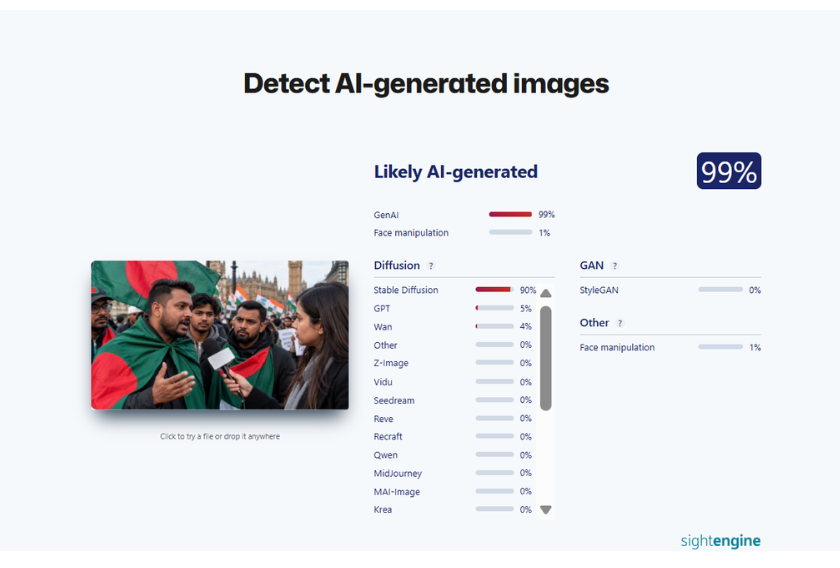
Another AI detection platform, AI or Not, also identified the image as highly likely to be AI-generated.
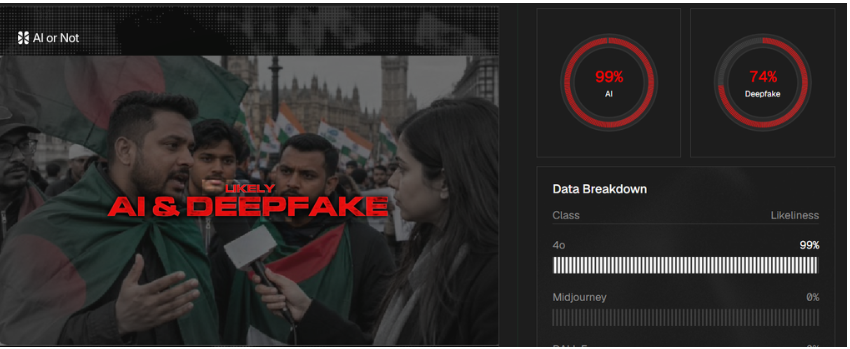
Conclusion
The evidence gathered during CyberPeace Research confirms that the image circulating with the claim that it shows a Bangladeshi national holding the Bangladesh flag during a protest against Chief Election Commissioner Gyanesh Kumar in London is AI-generated.

Executive Summary
A video showing a massive fire in a high-rise building is being widely shared on social media. The footage shows a tall building engulfed in flames with thick smoke rising from it. Users are circulating the video with multiple claims. Some social media users claim that the video is from Tehran, Iran, where Israel allegedly carried out an attack on the headquarters of the Islamic Revolutionary Guard Corps (IRGC). Others are sharing the same video as an alleged strike by the United States Air Force on the IRGC headquarters. CyberPeace Research Wing’s research found the claim to be misleading. The video is not related to any Israeli or U.S. military strike on Iran’s IRGC. In reality, it shows a massive fire that broke out in a skyscraper in Changsha, China, in 2022.
Claim
On Facebook, a user shared the viral video on 3 July 2026, claiming: “Israel has carried out a massive attack on IRGC headquarters in Tehran, Iran. The headquarters has been destroyed in the strike.” The post link, archive link, and screenshots are provided below.
https://archive.ph/7BknH
https://www.facebook.com/watch/?v=1530020795436530
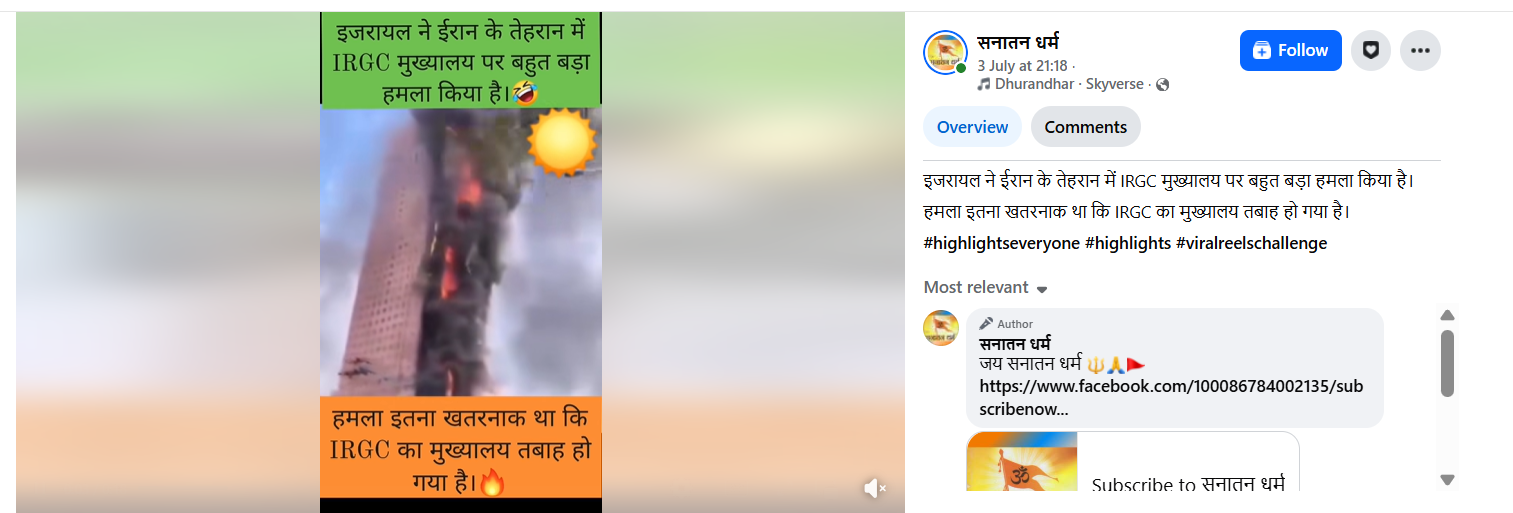
Fact Check
During verification, we extracted keyframes from the viral video and performed a reverse image search using Google Lens. The research led us to the same footage uploaded on the official YouTube channel of Hindustan Times on 16 September 2022. According to the video description, the incident shows a massive fire at a high-rise building in Changsha, China, not any military strike in Iran.
https://www.youtube.com/watch?v=Cphle9wkjCE

The video description states that the incident took place in a 42-storey building in Changsha, which housed the offices of the state-owned telecommunications company China Telecom. Authorities had initially confirmed that no casualties were reported. Further research led us to a report published on The Guardian website three years ago, which also contained visuals matching the viral footage.
https://www.theguardian.com/world/2022/sep/16/major-fire-breaks-out-at-skyscraper-in-changsha-china
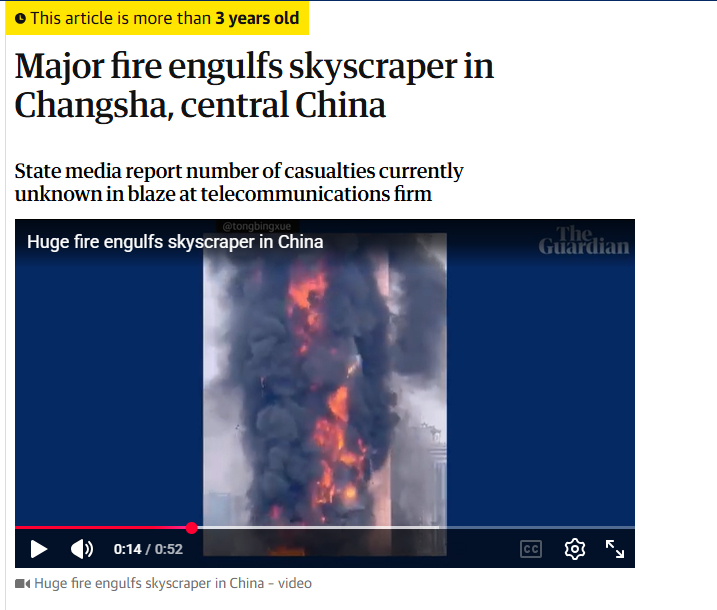
According to The Guardian report, the 42-storey, 218-metre-high building was constructed in 2000 and is located near a major ring road. The report also confirmed that there were no reported fatalities in the incident.
Conclusion
The research clearly found that the viral video does not show an Israeli or U.S. attack on Iran’s IRGC headquarters. The footage is from a massive fire that broke out in a skyscraper in Changsha, China, in 2022. Therefore, the claim being circulated on social media is false and misleading.

Introduction
Monopolies in any sector can have a great impact on economic efficiency and, by extension, on the market and the larger economy. Data monopolies hurt both small startups and large, established companies, and it is typically the biggest corporate players who have the biggest data advantage. Google has recently lost a major antitrust case filed by the U.S. Department of Justice, which focused on the company's search engine dominance and expensive partnerships to promote its products. The lawsuit accused Google of using its dominant position in the search engine market to maintain a monopoly. The case has had a significant impact on consumers and the tech industry as a whole. This dominance allowed Google to raise prices on advertisers without consequences, and delay innovations and privacy features that consumers want when they search online.
Antitrust Allegations Against Google in the US and EU
In the case filed by the US Department of Justice, US District Judge Amit Mehta ruled that Google was monopolistic. In the 10-week-long trial, Google lost the major antitrust lawsuit, and it was established that the tech giant had a monopoly in the web search and advertising sectors. The lawsuit accused Google of using its dominant position in the search engine market to elbow out rivals and maintain a monopoly. The tech giant’s exclusive deals with handset makers were brought before the court as evidence. Additionally, the European Commission has fined Google €1.49 billion for breaching EU antitrust rules in 2019.
The Impact of Big Tech Monopolies on the Digital Ecosystem and Beyond
- Big-tech companies collect vast amounts of personal data, raising concerns about how this data is used and protected. The concentration of data in the hands of a few companies can lead to privacy breaches and misuse of personal information.
- The dominance of a few tech giants in digital advertising markets can stifle competition, leading to higher prices for advertisers and fewer choices for consumers. This concentration also allows these companies to exert major control over what ads are shown and to whom.
- Big-tech platforms have substantial power over the dissemination of information. Their algorithms and policies on content moderation can influence public discourse and may spread misinformation. The lack of competition means fewer alternatives are accessible for users seeking different content moderation policies. In 2021 Google paid $26.3 billion to ensure its search engine is the default on smartphones and browsers and to keep control of its dominant market share.
Regulatory Mechanisms in the Indian Context
In India, antitrust issues are governed by the Competition Act of 2002 and the Competition Commission of India (CCI) checks monopolistic practices. In 2022, the CCI imposed a penalty of Rs 1,337.76 crore on Google for abusing its dominant position in multiple markets for 'anti-competitive practices' in the Android mobile device ecosystem. The Draft Digital Competition Bill, 2024, has been proposed as a legislative reform to regulate a wide range of digital services, including online search engines, social networking platforms, video-sharing sites, interpersonal communication services, operating systems, web browsers, cloud services, advertising services, and online intermediation services. The bill aims to promote competition and fairness in the digital market by addressing anti-competitive practices and dominant position abuses in the digital business space.
Conclusion
Big-tech companies are increasingly under scrutiny from regulators due to concerns over their monopolistic practices, data privacy issues, and the immense influence on markets and public discourse. The U.S. Department of Justice's victory against Google and the European Commission's hefty fines are indicators of a global paradigm shift towards more aggressive regulation to foster competition and protect consumer interests. The combined efforts of regulators across different jurisdictions underscore the recognition that monopolistic practices by such big tech giants can stifle innovation, harm consumers’ interests, and create barriers for new entrants, thus necessitating strong legal frameworks to ensure fair and contestable markets. Overall, the increasing regulatory pressure signifies a pivotal moment for big-tech companies, as they face the challenge of adapting to a more tightly controlled environment where their market dominance and business practices are under intense examination.
References
- https://www.livemint.com/technology/tech-news/googles-future-siege-u-s-court-explores-breaking-up-company-after-landmark-ruling-11723648047735.html
- https://www.thehindu.com/sci-tech/technology/what-is-the-google-monopoly-antitrust-case-and-how-does-it-affect-consumers/article68495551.ece
- https://indianexpress.com/article/business/google-has-an-illegal-monopoly-on-search-us-judge-finds-9497318/
