
#FactCheck-Fake Graphic Falsely Claims Rajinikanth Appointed Kerala Governor
Executive Summary
A graphic carrying the logo of Tamil news channel Sun News is circulating widely on social media, claiming that veteran South Indian actor Rajinikanth has been appointed as the new Governor of Kerala. The viral graphic features a photograph of Rajinikanth along with congratulatory messages, creating the impression that his appointment has been officially announced. However, the claim is false. An research by the CyberPeace ’s Research Wing found that the viral graphic is digitally manipulated and falsely attributed to Sun News.
Claim
A graphic bearing the Sun News logo is being widely shared on social media with congratulatory messages, claiming that actor Rajinikanth has been appointed as the new Governor of Kerala.
https://www.facebook.com/andisamy.puthur/posts/1456280999637808/

FactCheck
The CyberPeace ’s Research Wing investigated the viral claim and found no official notification or credible media report confirming Rajinikanth’s appointment as the Governor of Kerala or as the Governor of any other state. We searched relevant government sources and credible media reports but found no announcement regarding such an appointment. We also checked the official platforms of Sun News, but found no report confirming that Rajinikanth had been appointed as the Governor of Kerala. Further research revealed that the photograph of Rajinikanth used in the viral graphic is actually from a press conference held on March 12, 2020. A video of the original press conference shows Rajinikanth speaking about his political plans. During the press conference, he had clarified that he was not interested in becoming the Chief Minister of Tamil Nadu.
The original video of the press conference is available on YouTube.
https://www.youtube.com/watch?v=Vni3pxjWSR8
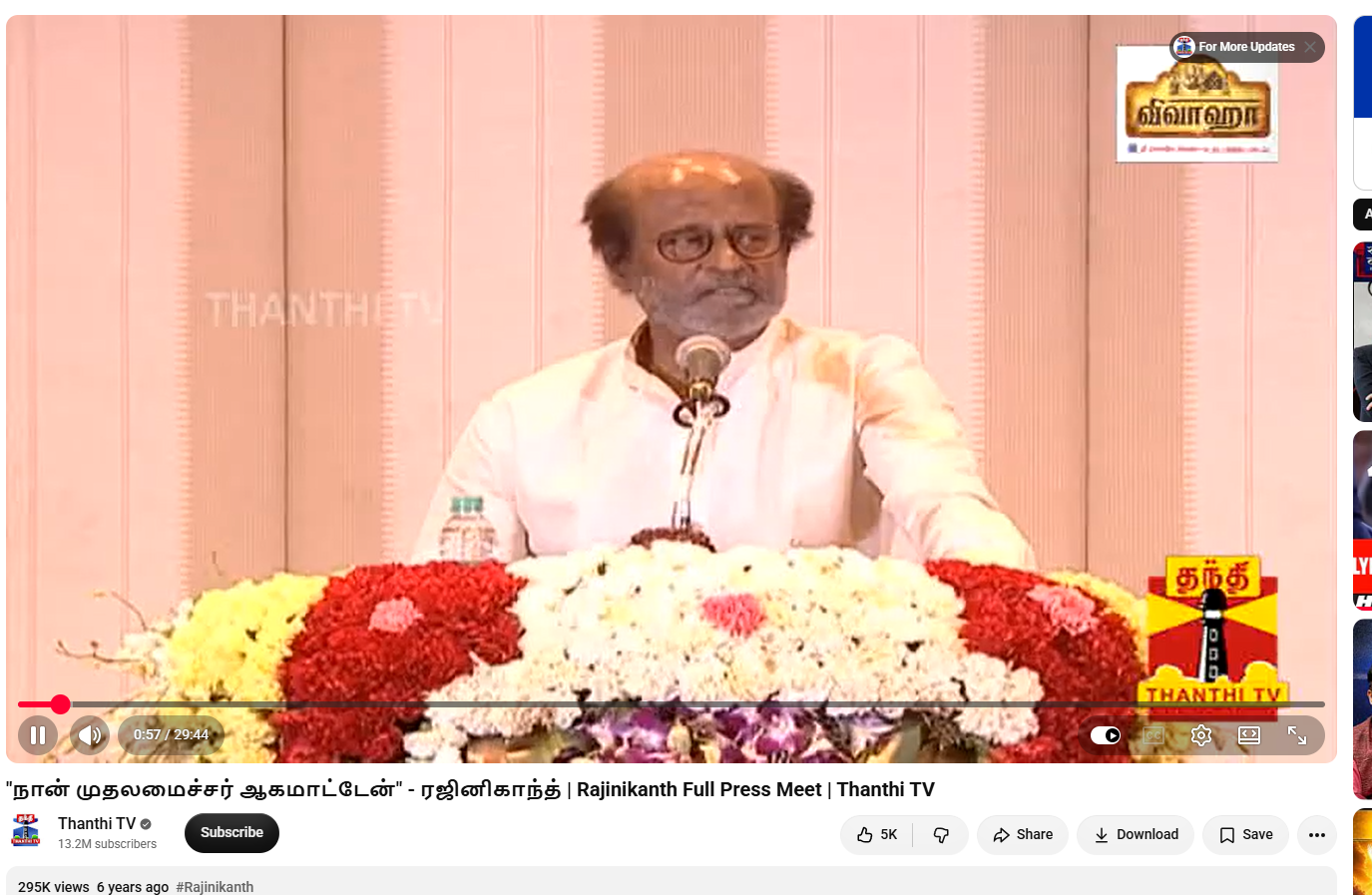
The research further found that the viral graphic has been digitally altered and falsely attributed to Sun News. The graphic was also found to have been created using an artificial intelligence (AI) tool.
Conclusion
The claim that Rajinikanth has been appointed as the new Governor of Kerala is false and misleading. There has been no official government announcement or credible media report confirming his appointment, and Sun News has not published any such report. The viral graphic is digitally manipulated and falsely attributed to the news channel.

Related Blogs
Executive Summary
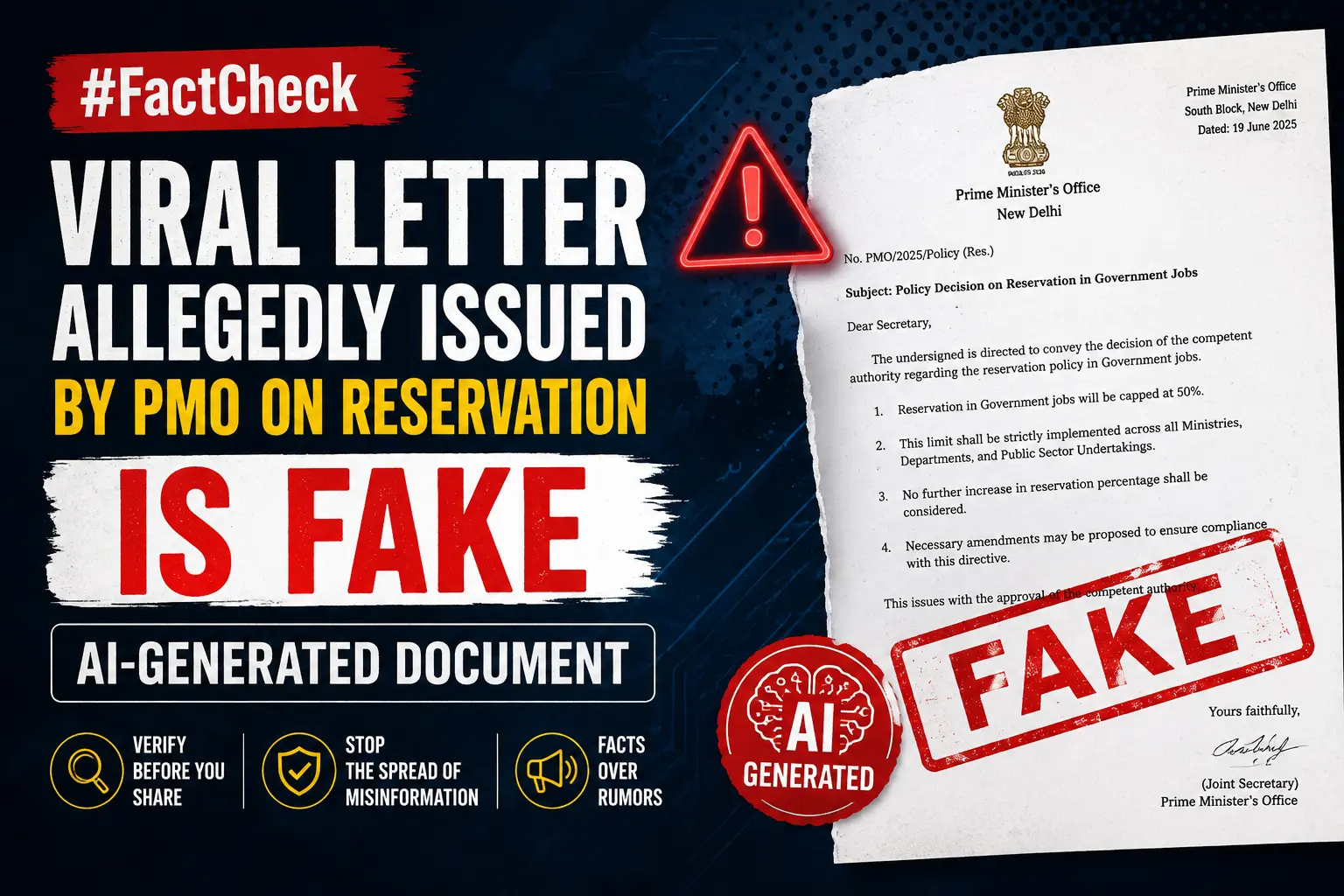
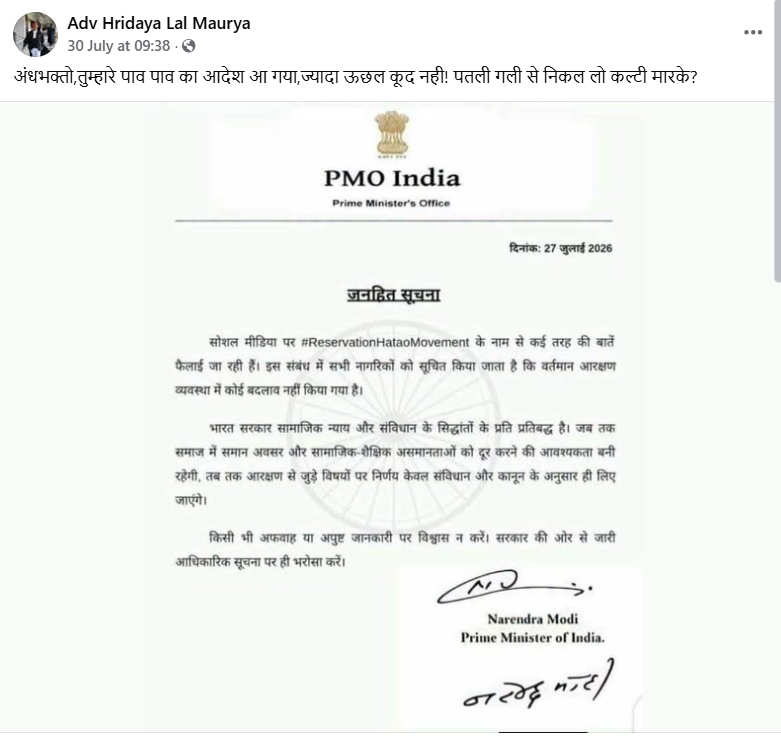
A purported letter issued in the name of the Prime Minister’s Office (PMO) is being widely shared on social media. The letter claims that the government has not made any changes to the reservation system regarding the “Remove Reservation Movement” and appeals to people not to pay attention to rumours. The viral letter is dated July 27, 2026, and also carries what appear to be Prime Minister Narendra Modi’s signatures in both Hindi and English.
CyberPeace Research Wing’s research found the viral claim to be false. The research revealed that the Prime Minister’s Office (PMO) has neither issued any official statement regarding reservation nor released any such letter. No credible media reports related to the alleged letter were found. The research further revealed that the purported reservation-related letter circulating on social media was a fake document created with the help of AI.
Claim:
A Facebook user shared the alleged letter issued in the name of the Prime Minister’s Office on July 30, 2026, claiming that the government has not made any changes to the reservation system in connection with the “Remove Reservation Movement” and appealed to citizens not to believe rumours. The viral letter bears the date July 27, 2026, and displays signatures of Prime Minister Narendra Modi in both Hindi and English. The archived link and screenshot of the post are provided below:
https://www.facebook.com/share/p/1b9nD5k3As/
Factcheck
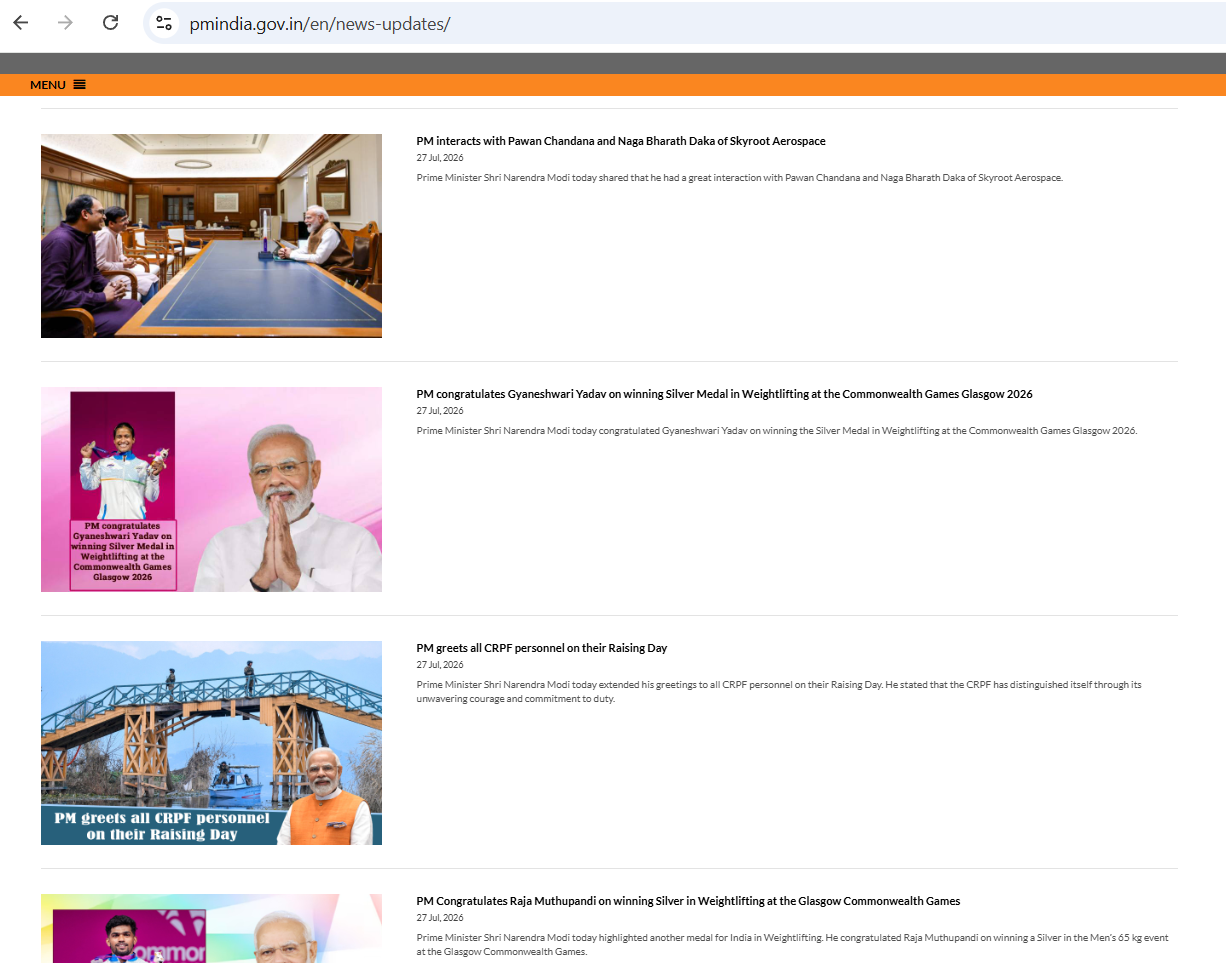
To verify the authenticity of the viral claim, we conducted a Google search using relevant keywords. However, no credible media reports related to the alleged letter were found. During the next stage of the research, we scanned the official X account (formerly Twitter) of PMO India. We did not find any such letter posted on July 27 or around that date. Continuing the research, we checked the official website of PMO India. No such letter was found in the news updates section or anywhere else on the website that could confirm the viral claim.
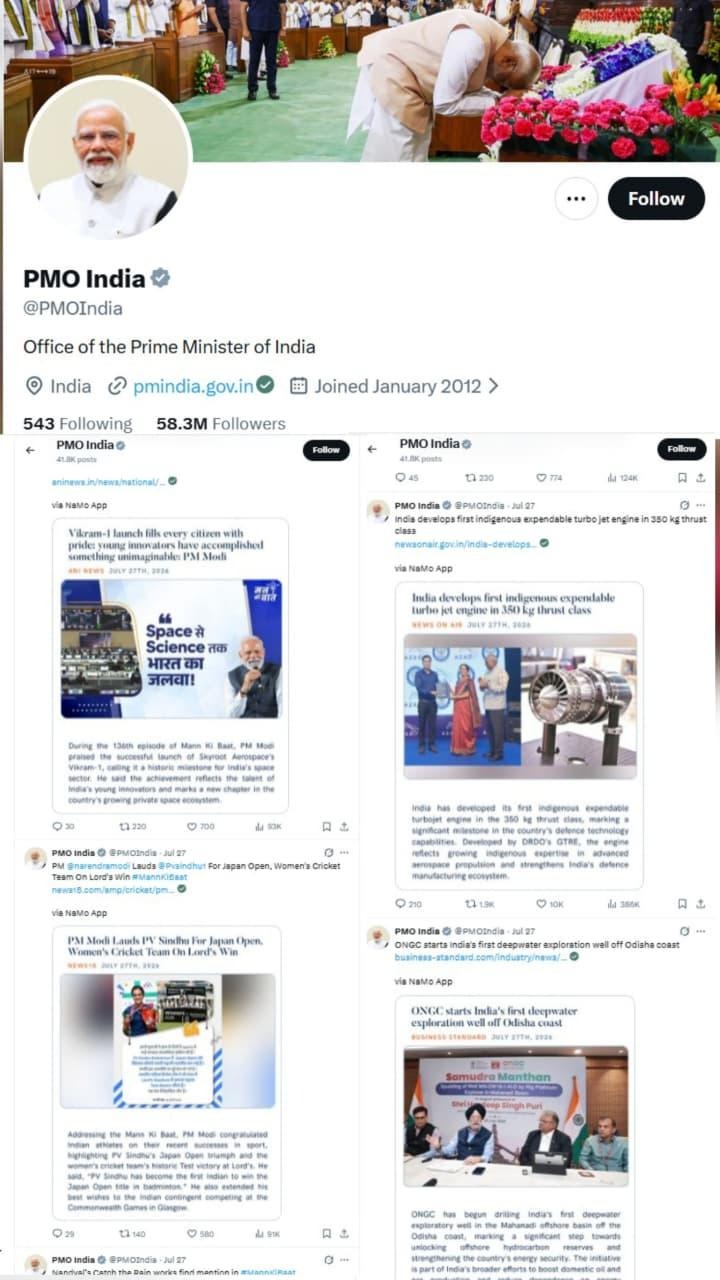
Further, we reviewed the press releases issued by the Prime Minister’s Office on July 27 available on the official website of the Press Information Bureau (PIB). We found no press release or official communication related to reservation or matching the viral letter.
https://www.pmindia.gov.in/en/
As part of the research, we scanned the viral letter using the AI detection tool Image Detector. The results indicated that the document was 93 percent likely to be AI-generated.

We also analysed the viral letter using another AI detection tool, My Detector. The results showed a 98 percent probability that the letter was created using AI.
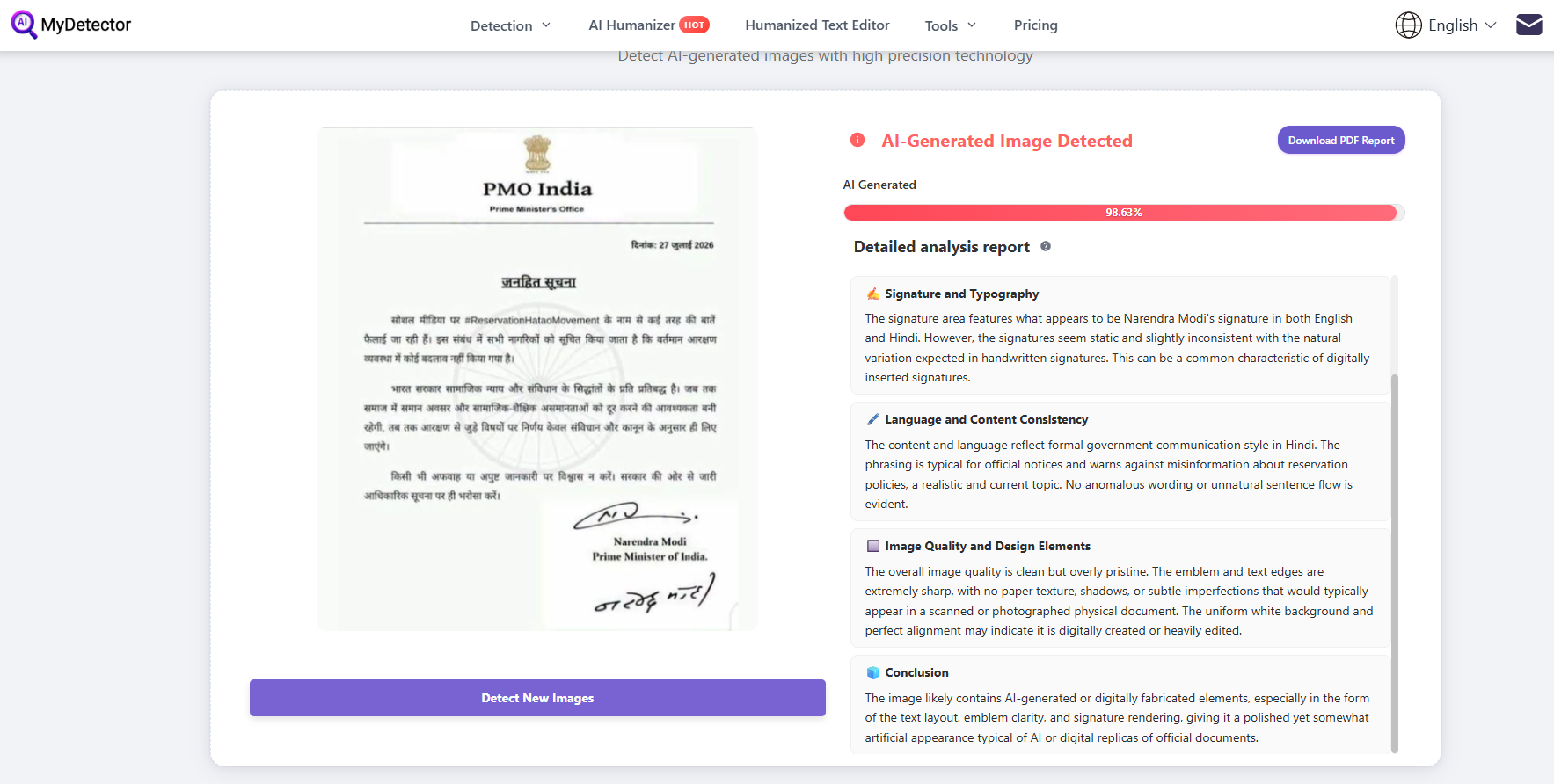
Conclusion:
Our research found no official evidence confirming that the Prime Minister’s Office issued the viral letter. The purported PMO letter regarding reservation was found to be fake and AI-generated.
.webp)
Introduction
We were all stunned and taken aback when multiple photos of streets in the U.S. surfaced with heavily drugged individuals loosely sitting on the streets, victims of a systematically led drug operation that has recently become a target of the Trump-led “tariff” war, which he terms as a war on drug cartels. The drug is a synthetic opioid, fentanyl, which is highly powerful and addictive. The menace of this drug is found in a country that has Wall Street and the largest and most powerful economy globally. The serious implications of drug abuse are not about a certain economy; instead, it has huge costs to society in general. The estimated cost of substance misuse to society is more than $820 billion each year and is expected to continue rising.
On June 26, the International Day against Drug Abuse and Illicit Trafficking is observed globally. However, this war is waged daily for millions of people, not on streets or borders, but in bloodstreams, behind locked doors, and inside broken homes. Drug abuse is no longer a health crisis; it is a developmental crisis. The United Nations Office on Drugs and Crime has launched a campaign against this organised crime that says, “Break the Cycle’ attributing to the fact that de-addiction is hard for individuals.
The Evolving Drug Crisis: From Alleyways to Algorithms
The menace of Drug abuse and illicit trafficking has also taken strides in advancement, and what was once considered a street-side vice has made its way online in a faceless, encrypted, and algorithmically optimised sense. The online drug cartels operate in the shadows and often hide in plain sight, taking advantage of the privacy designed to benefit individuals. With the help of darknet markets, cryptocurrency, and anonymised logistics, the drug trade has transformed into a transnational, tech-enabled industry on a global scale. In an operation led by the U.S. Department of Justice’s Joint Criminal Opiod and Darknet Enforcement (JCODE) and related to Operation RapTor, an LA apartment was only to find an organised business centre that operated as a hub of one of the most prolific methamphetamine and cocaine distributors in the market. Aaron Pinder, Unit Chief of the FBI Hi-Tech Organised Crime Unit, said in his interview, “The darknet vendors that we investigate, they truly operate on a global scale.” On January 11, 2025, during the Regional Conference on “Drug Trafficking and National Security,” it was acknowledged how cryptocurrency, the dark web, online marketplaces, and drones have made drug trafficking a faceless crime. Reportedly, there has been a seven-fold increase in the drugs seized from 2004-14 to 2014-24.
India’s Response: Bridging Borders, Policing Bytes
India has been historically vulnerable due to its geostrategic placement between the Golden Crescent (Afghanistan-Iran-Pakistan) and Golden Triangle (Myanmar-Laos-Thailand), and confronts a fresh danger from “click-to-consume’ narcotics. Although India has always adopted a highly sensitised approach, it holds an optimistic future outlook for the youth. Last year, to commemorate the occasion of International Day against Drug Abuse and Illicit Trafficking, the Department of Social Justice & Empowerment organised a programme to engage individuals for the cause. The Indian authorities are often seen coming down heavily on the drug peddlers and cartels, and to aid the cause, the Home Minister Amit Shah inaugurated the new office complex of the NCB’s Bhopal zonal unit and extension of the MANAS-2 helpline to all 36 states and UTs. The primary objectives of this step are to evaluate the effectiveness of the Narcotics Coordination Mechanism (NCORD), assess the progress of states in fighting drug trafficking, and share real-time information from the National Narcotics Helpline ‘MANAS’ portal with the Anti-Narcotics Task Force (ANTF) of states and UTs.
The United Nation’s War on Narcotics: From Treaties to Technology
The United Nations Office on Drugs and Crime (UNODC) is leading the international response. It offers vital data, early warning systems, and technical support to the states fighting the drug problem. The UNODC incorporates cooperation in cross-border intelligence, overseeing the darknet activities, encouraging the treatment and harm reduction, and using anti-money laundering mechanisms to stop financial flows. India has always pledged its support to the UN led activities, and as per reports dated 26th March, 2025, India chaired the prestigious UN-backed Commission on Narcotic Drugs (CND) meeting held in vienna, wherein India highlighted the importance of opioids for medical purposes as well as the nation’s notable advancements in the field.
Resolution on June 26: From Commemoration to Commitment
Let June 26 be more than a date on the calendar- let it echo as a call to action, a day when awareness transforms into action, and resolve becomes resistance. On this day, CyberPeace resolves the following:
- To treat addicts as victims rather than criminals and to pitch for reforms to provide access to reasonably priced, stigma-free rehabilitation.
- To integrate anti-drug awareness into digital literacy initiatives and school curricula in order to teach frequently and early.
- To demand responsibility and accountability from online marketplaces and delivery services that unwittingly aid traffickers
- To tackle the demand side through employment, mental health services, and social protection, particularly for at-risk youth.
References
- https://www.gatewayfoundation.org/blog/cost-of-drug-addiction/#:~:text=The%20estimated%20cost%20for%20substance,Alcohol%3A%20%24249%20billion
- https://www.unodc.org/unodc/en/drugs/index-new.html
- https://www.fbi.gov/news/stories/global-operation-targets-darknet-drug-trafficking
- https://www.thehindu.com/news/national/dark-web-crypto-drones-emerge-as-challenges-in-fight-against-drug-trafficking-amit-shah/article69088383.ece
- https://www.pib.gov.in/PressReleaseIframePage.aspx?PRID=2028704
- https://www.newindianexpress.com/nation/2025/Mar/26/in-a-first-india-chairs-un-forum-on-narcotics-pledges-to-improve-access-to-pain-relief-and-palliative-care
Introduction
In recent years, India has seen tremendous growth in its space industry. The satellite infrastructure of India now provides key services to a variety of sectors, including communication, navigation, broadcasting, disaster management and national security operations. Satellite communications globally will connect remote communities, aid in the delivery of Digital Governance and support India's strategic military capabilities. Given the expanding space ecosystem in India with the involvement of the public sector, private sector and research institutions, the security of satellite communications is becoming increasingly important.
At the same time, as satellite communication technologies become more pervasive, the risk of cyber threats targeting space systems increases. Cyberattacks against satellites, ground terminals or communication networks may critically impact, disrupt, damage, and/or destroy essential services, and expose sensitive information. To mitigate these risks, CERT-In (Computer Emergency Response Team), in collaboration with the SatCom Industry Association of India released a Cyber Security Framework and Guidelines for Space Platforms/Systems, including Satellite Communication, in 2026. This framework aims to establish and enhance cybersecurity measures throughout India's space ecosystem, while guiding how to better prepare for and respond to the growing volume of cyber threat activity targeting Space Systems.
Overview of the CERT-In Space Cybersecurity Framework
CERT-In introduced a dedicated cybersecurity framework for space systems in February 2026. Developed in collaboration with industry stakeholders, the framework provides guidelines to strengthen the security of satellite communication infrastructure across India. Although the guidelines are advisory in nature, they are designed to promote best practices and encourage organisations to adopt robust cybersecurity measures.
The framework targets a wide range of stakeholders involved in satellite communication operations. These include government agencies, satellite operators, ground station operators, equipment manufacturers, technology vendors, and emerging space startups. By outlining cybersecurity principles, technical controls, and governance mechanisms, the framework aims to create a coordinated approach to protecting space assets.
Another key objective of the guidelines is to foster collaboration between the public and private sectors. As India’s space industry expands and private participation increases, maintaining a secure and resilient ecosystem becomes essential. The framework, therefore, emphasises risk management, incident reporting, and continuous monitoring to strengthen the overall cybersecurity posture of the space sector.
Key Components of Satellite Communication Systems
Satellite communication systems are made up of multiple interconnected devices that can be used to deliver communication services. The cybersecurity framework groups these elements into three categories: the space segment, the ground segment, and the user segment.
The space segment is everything related to the satellite itself, including the satellite's onboard systems. This includes the satellite's communication payload, telemetry systems, antennas, power systems, and software that controls its operation. Because satellites operate in remote parts of space with very little opportunity for maintenance, securing these systems is critical in order to guard against unauthorized access to or control of these systems.
The ground segment comprises the terrestrial infrastructure responsible for controlling the satellite's operations. It consists of satellite mission control centres, ground stations, network gateways and data processing facilities. The ground stations send commands to the satellites and receive telemetry data from the satellites, which makes the ground station a very important physical interface point between the satellite asset located in outer space and a terrestrial network.
The user segment contains any device terminal being used by either an individual or an organisation that is accessing a satellite service. Examples of user devices are satellite phones, VSAT terminals, modems, and IoT devices connected to satellite networks. Since these devices connect directly to the communication networks, vulnerabilities in user equipment could also represent a significant threat to the cybersecurity of satellite communications.
Major Cyber Threats to Space Infrastructure
The space systems that support the delivery of satellite communications are being increasingly targeted with multiple types of cyber threats. A major category includes cyber-attacks on communication links between satellites and ground stations. Cyber criminals can attempt to jam the satellite’s communication link, intercept communication signals, or re-transmit previously sent communication signals in order to disrupt the operation of the affected satellites.
Attacks on the systems that control the satellite are serious threats to satellite operations. Cybercriminals and hostile actors can perform command injection attacks where commands are sent to a satellite, and the satellite responds through some undesired action. If cybercriminals are able to gain access to the telemetry or command channels, they can potentially disrupt the operation of the satellite or alter the telemetry data being received from the satellite.
The ground infrastructure that supports satellite communications is still a major target for cybercriminals. Mission control networks and data centres are susceptible to malware, ransomware, phishing, and insider threats. Attackers will frequently target ground stations because they provide a connection point to terrestrial networks and can exploit vulnerabilities from the ground station’s IT systems into the satellite control systems. The combination of these threats illustrates the need for an overall security strategy that encompasses all parts of the satellite communications ecosystem.
Key Security Principles and Measures
A comprehensive overview of multiple principles designed to increase the security of satellite communications is provided in the CERT-In Framework on Cybersecurity for Satellite Communications. The first of these principles, security by design, refers to ensuring that all cybersecurity controls associated with a system are implemented at the time of the system's initial design and development, not afterwards; therefore, security controls should be incorporated throughout the entire lifecycle of a satellite system.
The second principle, which is known as Defense-in-Depth, consists of implementing many different layers or tiers of security controls to protect a system against cyber threats or attacks. An example of the different categories of security controls includes physical security, network security, and access control, among others. By combining security controls across multiple categories, an organisation may be able to reduce the chance that one single vulnerability will result in the loss of the entire system.
The third principle in the Framework, Zero Trust Architecture (ZTA): Users and/or devices located within a network should not be able to rely on implicit trust. Therefore, every request for access to the network will be verified and continuously monitored for potential threats.
The previous two principles stated that secure satellite communications should be conducted using strong encryption and authentication methods, as well as secure communications methods, and that an enterprise monitoring system would be put into place to help detect anomalies or suspicious behaviour.
Conclusion
India is taking an important step toward protecting its expanding space ecosystem by creating a cybersecurity framework to safeguard cyberspace systems from cyber threats. The CERT-In guidelines offer a structured means of reducing the likelihood of cyber threats impacting satellite communication infrastructure through secure system design, continuous monitoring of systems and creating consistent partnerships among organisations. As well as providing evidence that both government and private sector organisations share a collective responsibility for the protection of space assets, both sectors participate in a collaborative effort.
India will need to implement rigorous cybersecurity measures as it expands its space infrastructure in order to ensure the continued availability of critical space infrastructure and ultimately develop its existing commercial satellite business operations with the highest level of safety and security.
References
- https://www.cert-in.org.in/s2cMainServlet?pageid=GUIDLNVIEW02&refcode=CISG-2026-01
- https://www.pib.gov.in/PressReleasePage.aspx?PRID=2233122®=3&lang=1
