
#FactCheck-Old Parliament Video Falsely Shared as Kangana Ranaut Backing CJP Protest
Executive Summary
A video from the Parliament complex is being widely shared on social media with the claim that Bharatiya Janata Party (BJP) MP Kangana Ranaut has come out in support of the ongoing Cockroach Janata Party (CJP)-led protest at Delhi’s Jantar Mantar. The viral post claims that Ranaut can be seen raising slogans in support of the protesters. CyberPeace Research Wing’s research found the claim to be misleading. The viral footage is not related to the ongoing CJP protest. It dates back to April 2026, when BJP women MPs staged a demonstration outside Parliament after the 131st Constitutional Amendment Bill failed to pass. The old video is now being falsely linked to the current protest.
Claim:
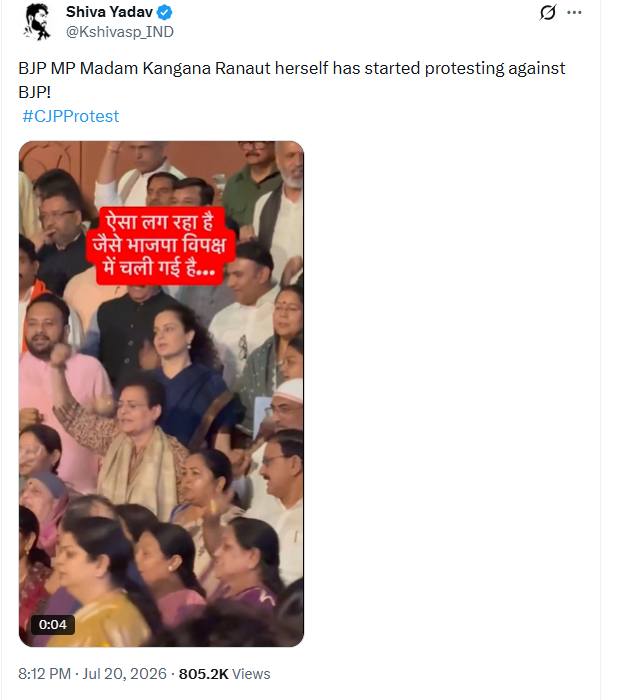
On July 20, 2026, an X (formerly Twitter) user shared the viral video claiming that “BJP MP Kangana Ranaut has now started protesting against her own party.”
The post link, archive link and screenshot are provided below.
https://x.com/Kshivasp_IND/status/2079215438664233391
Fact Check:
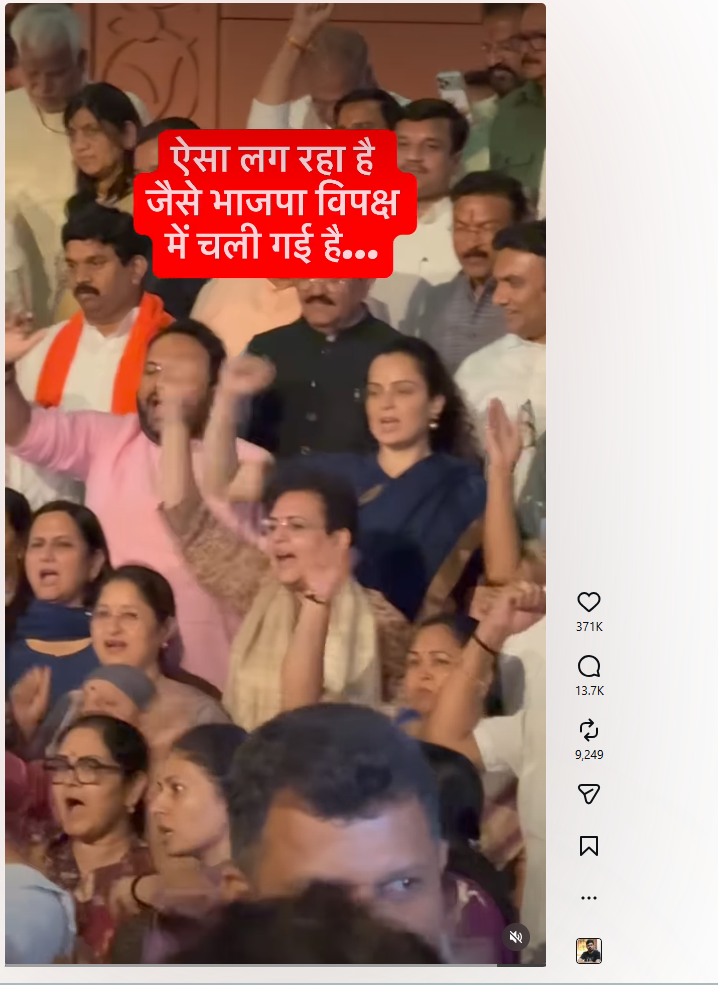
To verify the claim, the Desk extracted keyframes from the viral video and conducted a reverse image search using Google Lens. This led to the same video uploaded on the Instagram account ashutoshjourno on April 17, 2026. The caption accompanying the post read, “Aaj Makar Dwar ka nazara alag tha” (The scene at Makar Dwar was different today).
https://www.instagram.com/reels/DXPQoIAiQ3L/
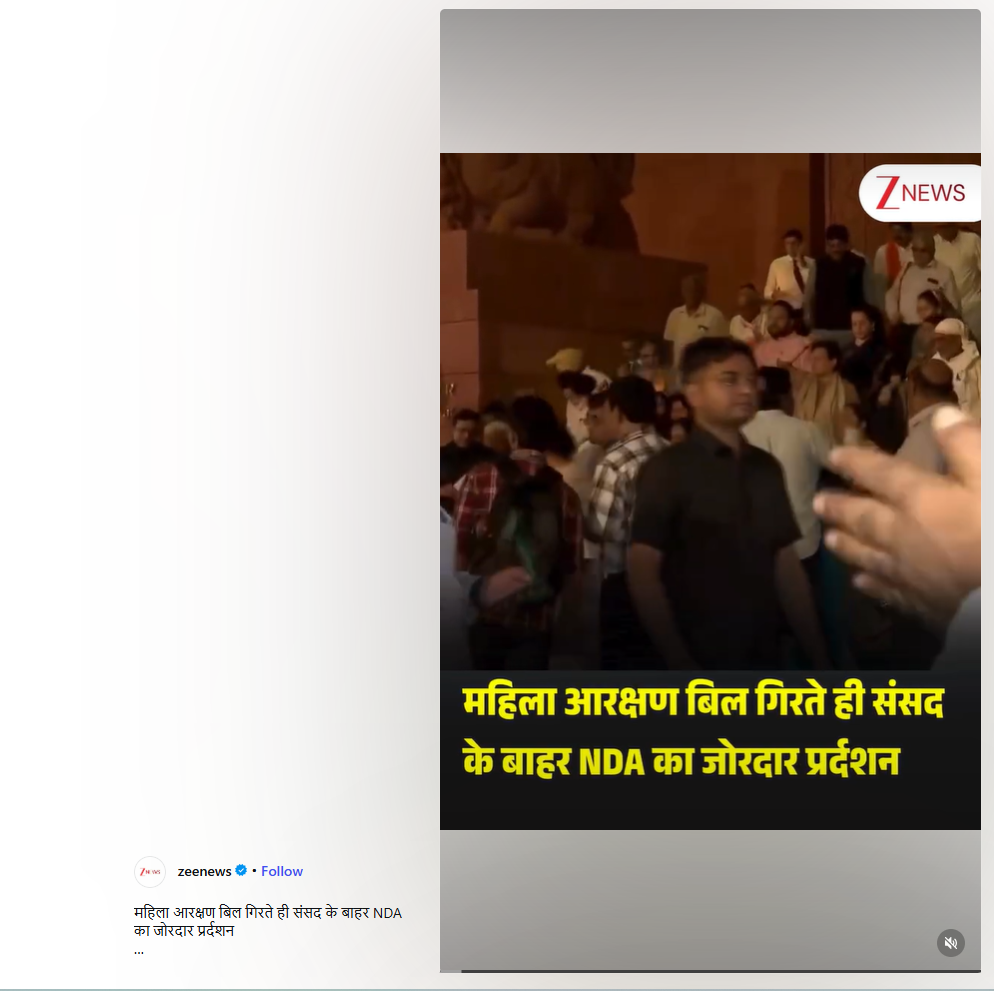
In the next stage of the research, the Desk carried out a keyword search based on the clues obtained from the Instagram post. This led to a Zee News report published on April 17, 2026, which reported that NDA MPs staged a protest outside Parliament after the 131st Constitutional Amendment Bill failed to pass. The visuals in the report matched those seen in the viral video.
https://www.instagram.com/reels/DXPL4tOky5P/
Conclusion:
CyberPeace Research Wing’s research found the viral claim to be misleading. The video is unrelated to the ongoing CJP protest at Jantar Mantar. It was recorded in April 2026, when BJP women MPs protested outside Parliament following the failure of the 131st Constitutional Amendment Bill to pass. The old footage is now being falsely shared as a recent video of Kangana Ranaut supporting the CJP protest.

Related Blogs
Executive Summary
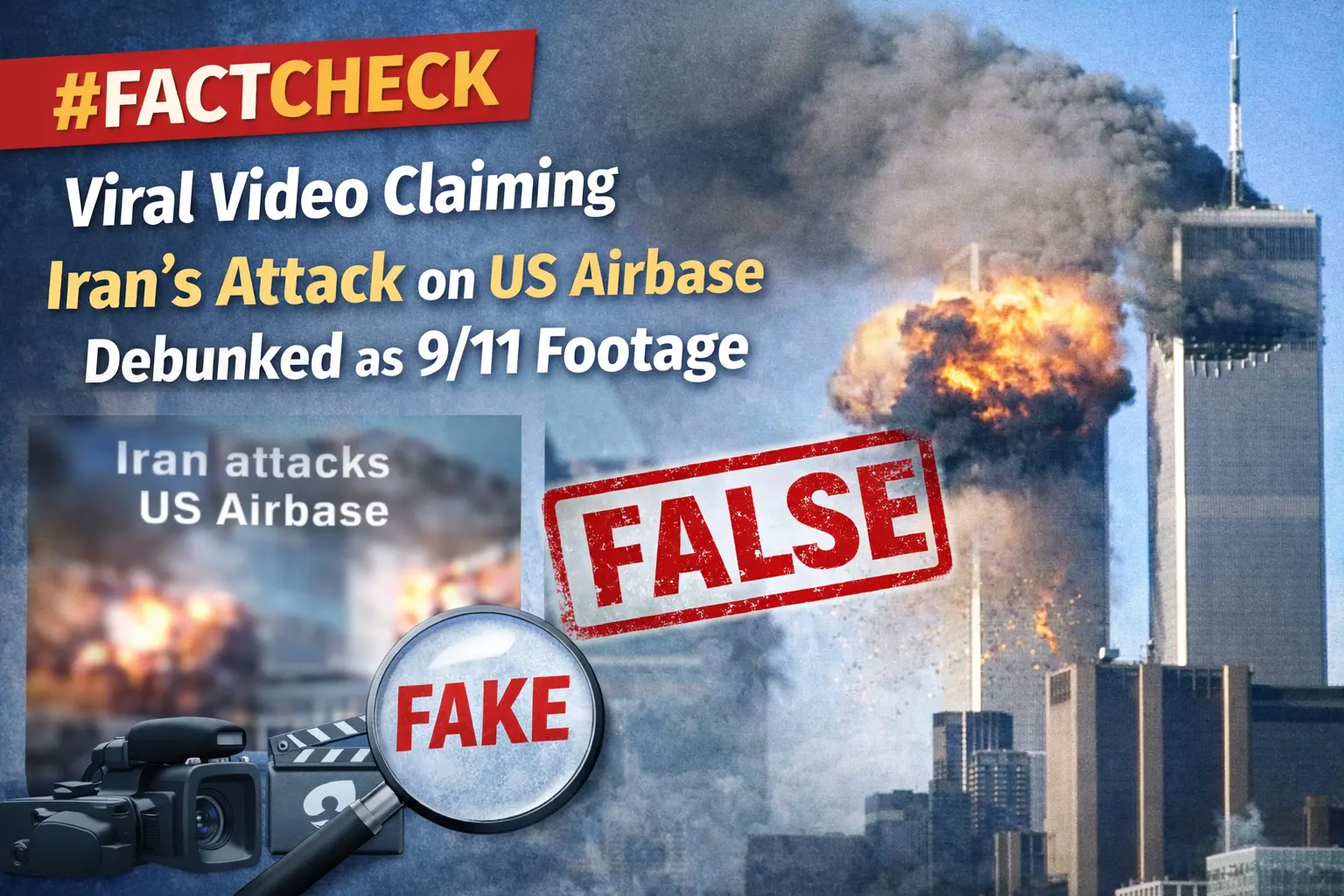
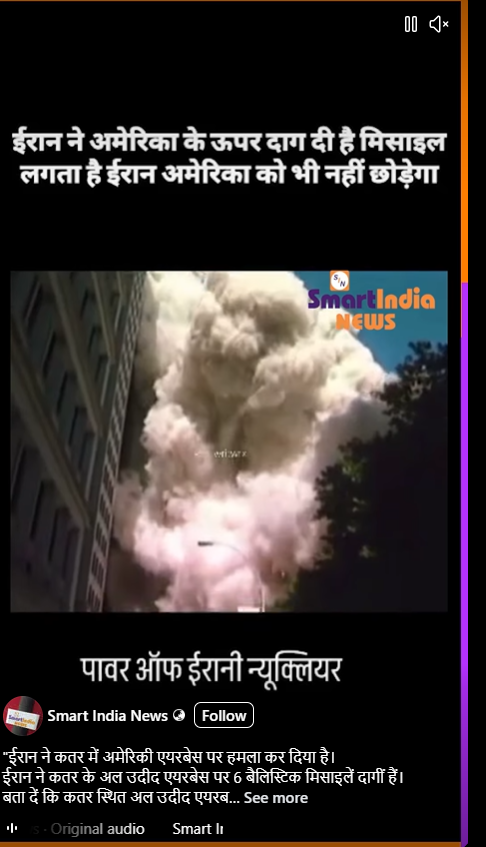
A video showing thick smoke rising from a building and people running in panic is being shared on social media. The video is being circulated with the claim that it shows Iran launching a missile attack on the United States.CyberPeace’s research found the claim to be misleading. Our probe revealed that the video is not related to any recent incident. The viral clip is actually from the September 11, 2001 terrorist attacks on the World Trade Center in the United States and is being falsely shared as footage of an alleged Iranian missile strike on the US.
Claim:
An Instagram user shared the video claiming, “Iran has attacked a US airbase in Qatar. Iran has fired six ballistic missiles at the Al Udeid Airbase in Qatar. Al Udeid Airbase is the largest US military base in West Asia.”
Links to the post and its archived version are provided below.
Fact Check:
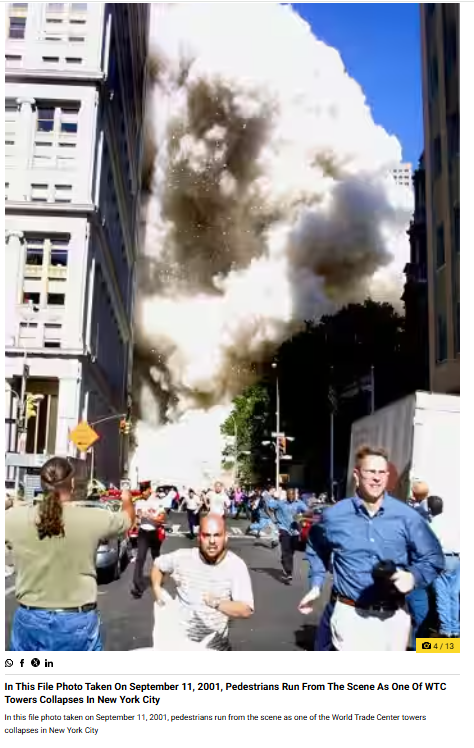
To verify the claim, we extracted key frames from the viral video and ran a reverse image search using Google Lens. During the search, we found visuals matching the viral clip in a report published by Wion on September 11, 2021. The report, titled “In pics | A look back at the scenes from the 9/11 attacks,” included an image that closely resembled the visuals seen in the viral video. The caption of the image stated that it was a file photo from September 11, 2001, showing pedestrians running as one of the World Trade Center towers collapsed in New York City.
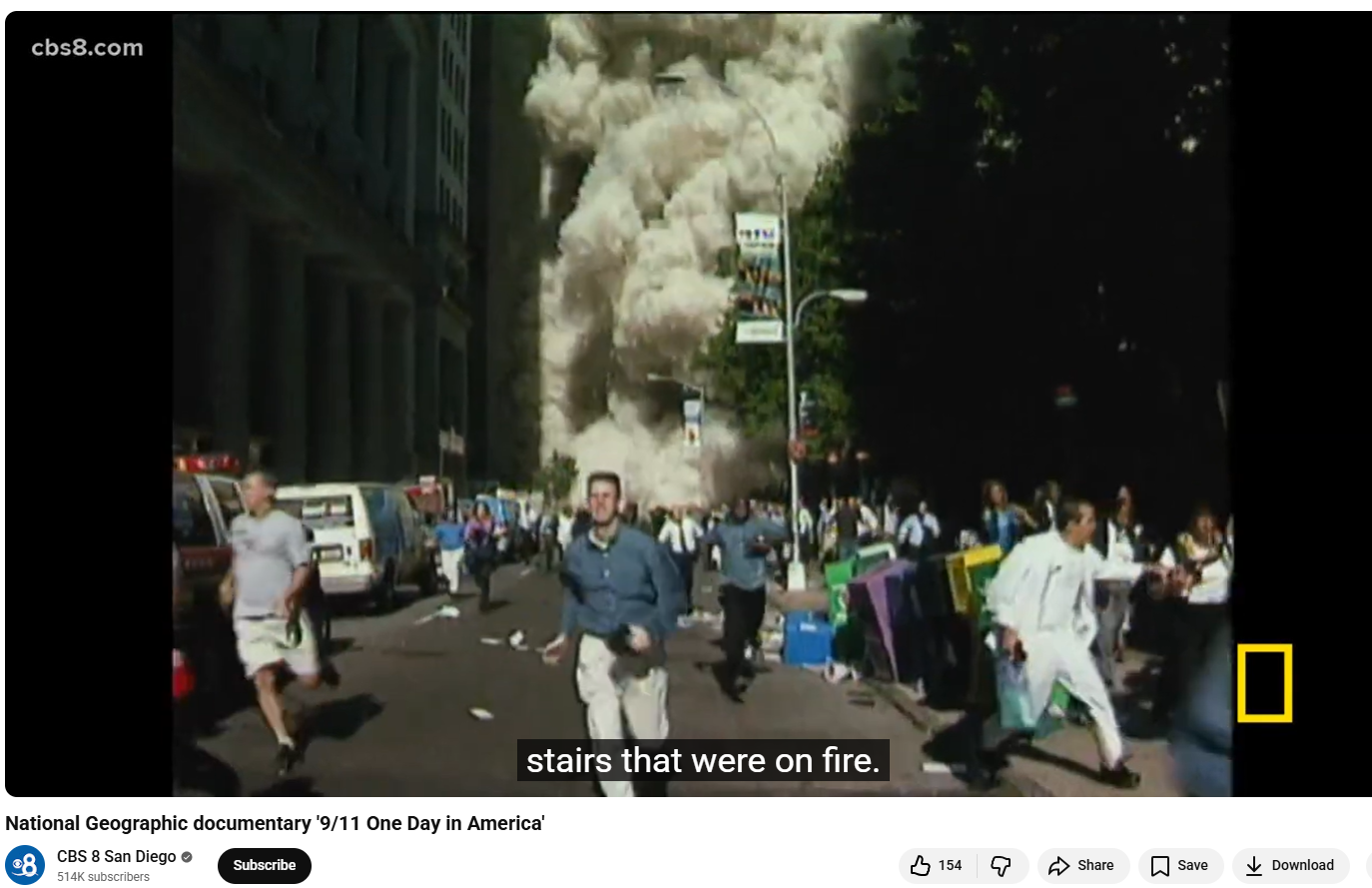
Further research led us to the same footage on the YouTube channel CBS 8 San Diego. At the 01:11 timestamp of the video, visuals matching the viral clip can be clearly seen.
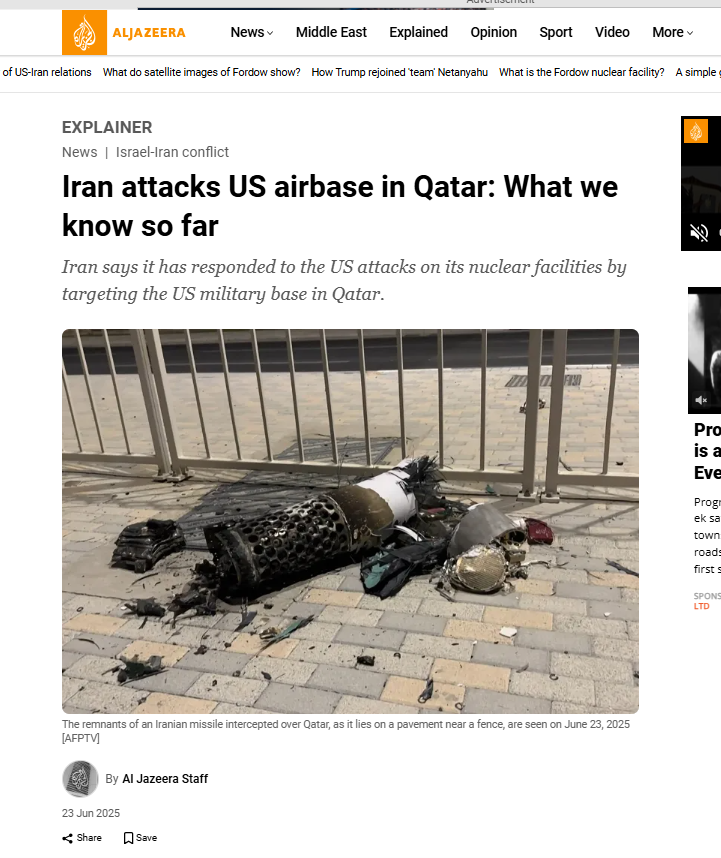
We also found an Al Jazeera report dated June 23, 2025, which confirmed that Iran had attacked US forces stationed at the Al Udeid airbase in Qatar in retaliation for US strikes on Iran’s uclear facilities. However, the visuals used in the viral video do not correspond to this incident.
Conclusion
The viral video does not show a recent Iranian attack on a US airbase in Qatar. The clip actually dates back to the September 11, 2001 terrorist attacks on the World Trade Center in the United States. Old 9/11 footage has been falsely shared with a misleading claim linking it to Iran’s alleged missile strike on the US.

Introduction
The debate between free speech and social responsibility is one of the oldest, long-running debates in history. Free speech is considered to be at the heart of every democracy. It is considered the “mother” of all other freedoms, enshrined in Article 19(1)(a) of the Indian Constitution under Part III: Fundamental Rights. It takes various shapes and forms according to the sociopolitical context of society. Evelyn Beatrice Hall, a prominent English writer of the 19th century, laid the foundation of every democracy when she wrote in her book, "I disapprove of what you say, but I willdefend to the death your right to say it." The drastic misuse of social media to disseminate propaganda and fakenews makes it a marketplace of half-baked truth, becoming the antithesis ofwhat early philosophers dreamed of for a democratic modern age. Losethe ethics, and there you have it, the modern conceptualisation of freedom ofspeech and expression in the digital age. The right to freedom of speech andexpression is one of the most fundamental rights, but its exercise is notunfettered, and certain limits are placed upon this right under Art. 19 (2).Every right comes with a corresponding duty, and the exercise of such freedomalso puts the citizenry under the responsibility not to violate the rights ofothers and not to use the media to demean any other person.
SocialMedia: The New Public Square or a Weaponised Echo Chamber
InIndia, Art. 19(1)(a) of the constitution guarantees the right to freedom ofspeech and expression, but it is not absolute. Under Art. 19(2), this right issubject to reasonable restrictions in the interest of public order, decency,morality, and national security. This is construed as a freedom for everyindividual to freely express their opinions, but not to incite violence, spreadfalsehoods, or harm others’ dignity. Unfortunately, the boundaries betweenthese are increasingly blurred.
Thedissemination of unfiltered media and the strangulation of innocence by pushingoften vulgar and obscene content down the throats of individuals, withoutverifying the age and gender profile of the social media user, is a big farcein the name of free speech and a conscious attempt by the intermediaries andsocial media platforms such as Facebook, Instagram, Threads, etc., to wriggleout of their responsibility. A prime example is when Meta’s Mark Zuckerberg, on7th January 2025, gave a statement asserting less intervention into what peoplefind on its social media platforms as the new “best practice”. While lessinterference would have worked in a generation that merely operated on thediffering, dissenting, and raw ideas bred by the minds of differentindividuals, it is not the case for this day and age. There has been asignificant rise in cases where social media platforms have been used as abattleground for disputes, spreading communal violence, misinformation, anddisinformation.
Thereis no debate about the fact that social media platforms have fostered a globalexpression, making the world a global village, bringing everyone together. Onthe other hand, the platforms have become the epicentre of computer-basedcrimes, where children and teenagers often become prey to these crimes,cyberbullying, and cyberstalking.
Rising Importance of Platform Accountability
Themost pertinent question that is to be asked with a conscious mind is whether anunregulated media is a reflection of Freedom of Speech, a right given to us byour constitution under Article. 19(1)(a), or whether free speech is just a garbby big stakeholders, and we are all victims of an impending infodemic andvictims of AI algorithms, because, as per the reports that surfaced during theCovid-19 pandemic, India saw a dramatic 214% rise in false information. Anotherreport by the UNESCO-Ipsos survey revealed that 85% of Indian respondentsencounter online hate speech, with around 64% pointing to social media as aprimary source.
While the focus on platform accountability is critical, it is equally important to recognise that the right to free speech is not absolute. Therefore, users also bear a constitutional responsibility while exercising this right. Free expression in a democratic society must be accompanied by civic digital behaviour, which includes refraining from spreading hate speech, misinformation, or engaging in harmful conduct online. The most recent example of this is the case of Ranveer Gautam Allahabadia vs. UOI (popularly known as “Latent Case”); the court came down heavily on the hosts and makers of the show and made its position crystal clear by stating, “there is nothinglike a fundamental right on platter...the fundamental rights are all followedby a duty...unless those people understand duty, there is no [...] deal withthat kind of elements...if somebody wants to enjoy fundamental rights, thiscountry gives a guarantee to enjoy, but guarantee is with a duty so thatguarantee will involve performing that duty also” .
The Way Forward: CyberPeace Suggests
In order to realise the benefits and derive the true benefits from the rights we are provided, especially the one in discussion, i.e., Freedom of Speech and Expression, the government and the designated intermediaries and regulators have to prepare both roadmaps, one for “Platform Accountability” and one for "User Accountability”, wherein the regulators with a reasonable foresight should conduct Algorithm Risk Audits which is a technique to make algorithms and there effects on content feeds visible. It can be an effective tool and an objective manner to compare how algorithms are automatically pushing different content to different users in an unfair or unbalanced way. As for user accountability, “Digital Literacy” is the way forward, ensuring that social media remains a marketplace of ideas and does not become a minefield of misfires.

What Is a VPN and its Significance
A Virtual Private Network (VPN) creates a secure and reliable network connection between a device and the internet. It hides your IP address by rerouting it through the VPN’s host servers. For example, if you connect to a US server, you appear to be browsing from the US, even if you’re in India. It also encrypts the data being transferred in real-time so that it is not decipherable by third parties such as ad companies, the government, cyber criminals, or others.
All online activity leaves a digital footprint that is tracked for data collection, and surveillance, increasingly jeopardizing user privacy. VPNs are thus a powerful tool for enhancing the privacy and security of users, businesses, governments and critical sectors. They also help protect users on public Wi-Fi networks ( for example, at airports and hotels), journalists, activists and whistleblowers, remote workers and businesses, citizens in high-surveillance states, and researchers by affording them a degree of anonymity.
What VPNs Do and Don’t
- What VPNs Can Do:
- Mask your IP address to enhance privacy.
- Encrypt data to protect against hackers, especially on public Wi-Fi.
- Bypass geo-restrictions (e.g., access streaming content blocked in India).
- What VPNs Cannot Do:
- Make you completely anonymous and protect your identity (websites can still track you via cookies, browser fingerprinting, etc.).
- Protect against malware or phishing.
- Prevent law enforcement from tracing you if they have access to VPN logs.
- Free VPNs usually even share logs with third parties.
VPNs in the Context of India’s Privacy Policy Landscape
In April 2022, CERT-In (Computer Emergency Response Team- India) released Directions under Section 70B (6) of the Information Technology (“IT”) Act, 2000, mandating VPN service providers to store customer data such as “validated names of subscribers/customers hiring the services, period of hire including dates, IPs allotted to / being used by the members, email address and IP address and time stamp used at the time of registration/onboarding, the purpose for hiring services, validated address and contact numbers, and the ownership pattern of the subscribers/customers hiring services” collected as part of their KYC (Know Your Customer) requirements, for a period of five years, even after the subscription has been cancelled. While this directive was issued to aid with cybersecurity investigations, it undermines the core purpose of VPNs- anonymity and privacy. It also gave operators very little time to carry out compliance measures.
Following this, operators such as NordVPN, ExpressVPN, ProtonVPN, and others pulled their physical servers out of India, and now use virtual servers hosted abroad (e.g., Singapore) with Indian IP addresses. While the CERT-In Directions have extra-territorial applicability, virtual servers are able to bypass them since they physically operate from a foreign jurisdiction. This means that they are effectively not liable to provide user information to Indian investigative agencies, beating the whole purpose of the directive. To counter this, the Indian government could potentially block non-compliant VPN services in the future. Further, there are concerns about overreach since the Directions are unclear about how long CERT-In can retain the data it acquires from VPN operators, how it will be used and safeguarded, and the procedure of holding VPN operators responsible for compliance.
Conclusion: The Need for a Privacy-Conscious Framework
The CERT-In Directions reflect a governance model which, by prioritizing security over privacy, compromises on safeguards like independent oversight or judicial review to balance the two. The policy design renders a lose-lose situation because virtual VPN services are still available, while the government loses oversight. If anything, this can make it harder for the government to track suspicious activity. It also violates the principle of proportionality established in the landmark privacy judgment, Puttaswamy v. Union of India (II) by giving government agencies the power to collect excessive VPN data on any user. These issues underscore the need for a national-level, privacy-conscious cybersecurity framework that informs other policies on data protection and cybercrime investigations. In the meantime, users who use VPNs are advised to choose reputable providers, ensure strong encryption, and follow best practices to maintain online privacy and security.
References
- https://www.kaspersky.com/resource-center/definitions/what-is-a-vpn
- https://internetfreedom.in/top-secret-one-year-on-cert-in-refuses-to-reveal-information-about-compliance-notices-issued-under-its-2022-directions-on-cybersecurity/#:~:text=tl;dr,under%20this%20new%20regulatory%20mandate.
- https://www.wired.com/story/vpn-firms-flee-india-data-collection-law/#:~:text=Starting%20today%2C%20the%20Indian%20Computer,years%2C%20even%20after%20they%20have
