
#FactCheck : Old video of Ranveer Singh at Kashi Vishwanath Temple falsely linked to ‘Dhurandhar 2’ success
Executive Summary
Following the reported box office success of ‘Dhurandhar 2: The Revenge’, released on March 19, 2026, a video of Ranveer Singh visiting a temple is being widely shared on social media. Users claim that the actor visited the Kashi Vishwanath Temple to offer prayers after the film’s success. Research by CyberPeace found that the viral claim is misleading. The video of Ranveer Singh visiting the Kashi Vishwanath Temple is not recent. It dates back to 2024, when he visited the temple with Kriti Sanon, and is unrelated to the release or success of ‘Dhurandhar 2: The Revenge’.
Claim
An Instagram user “newsbharatplus” shared the video on March 26, 2026, with a caption stating that after the massive success of Dhurandhar 2, Ranveer Singh visited the temple and performed rituals.

Fact Check
To verify the claim, we extracted keyframes from the viral video and conducted a reverse image search. This led us to a report published by Dainik Jagran on April 14, 2024. According to the report, Ranveer Singh had visited the Kashi Vishwanath Temple along with Kriti Sanon and noted fashion designer Manish Malhotra. During the visit, the trio was seen offering prayers, wearing traditional attire, and applying sandalwood tilak.
https://www.jagran.com/entertainment/bollywood-ranveer-singh-and-kriti-sanon-visits-kashi-vishwanath-temple-with-manish-malhotra-see-photos-here-23696781.html
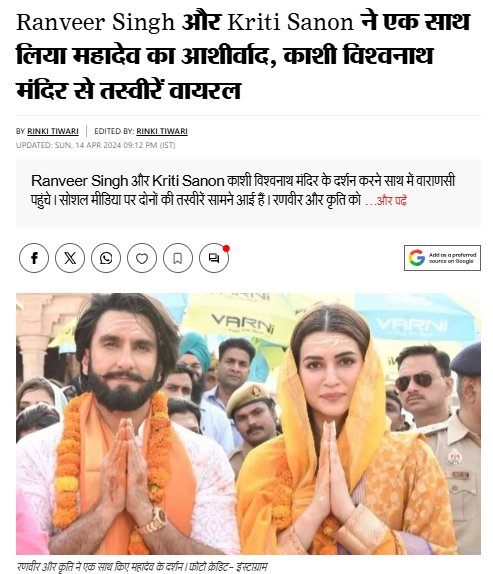
We also found a video report on the official YouTube channel of Times Now Navbharat, uploaded on April 15, 2024, showing Ranveer Singh and Kriti Sanon at the temple. The report also featured visuals from a fashion event held in Varanasi.
- https://www.youtube.com/watch?v=OMuW_SVbfb4

Conclusion
The viral claim is misleading. The video of Ranveer Singh visiting the Kashi Vishwanath Temple is not recent. It dates back to 2024, when he visited the temple with Kriti Sanon, and is unrelated to the release or success of ‘Dhurandhar 2: The Revenge’.

Related Blogs
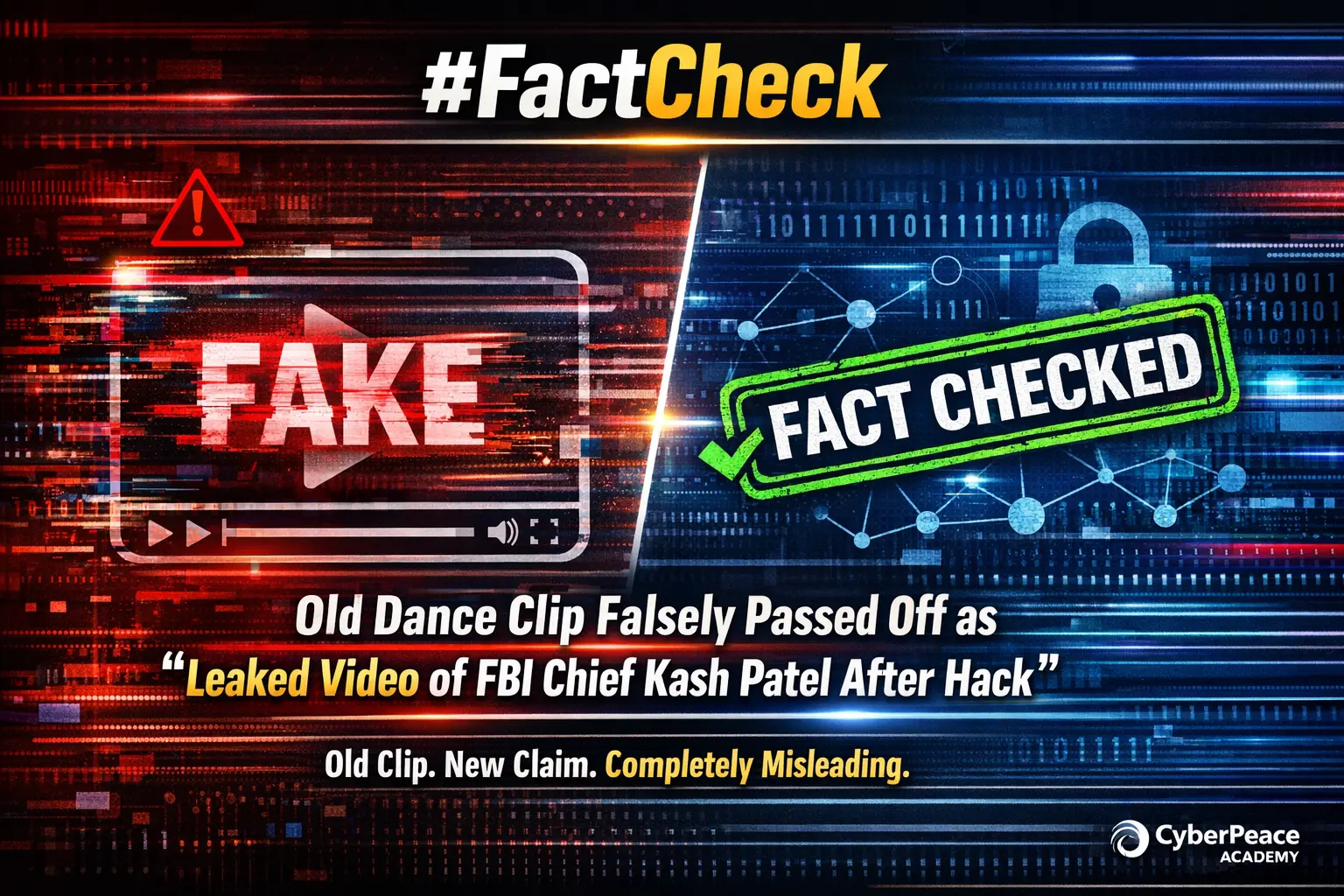
Executive Summary
A video is rapidly circulating on social media showing a man enthusiastically dancing to the Hindi song Sun Sahiba Sun. The clip is being shared with a sensational claim that it is a private video leaked from the hacked email account of FBI Director Kash Patel. In the video, a man can be seen dancing in a casual setting while people in the background cheer him on. Several users have linked the clip to an alleged cyberattack by Iran-linked hackers, attempting to connect it with ongoing international developments.
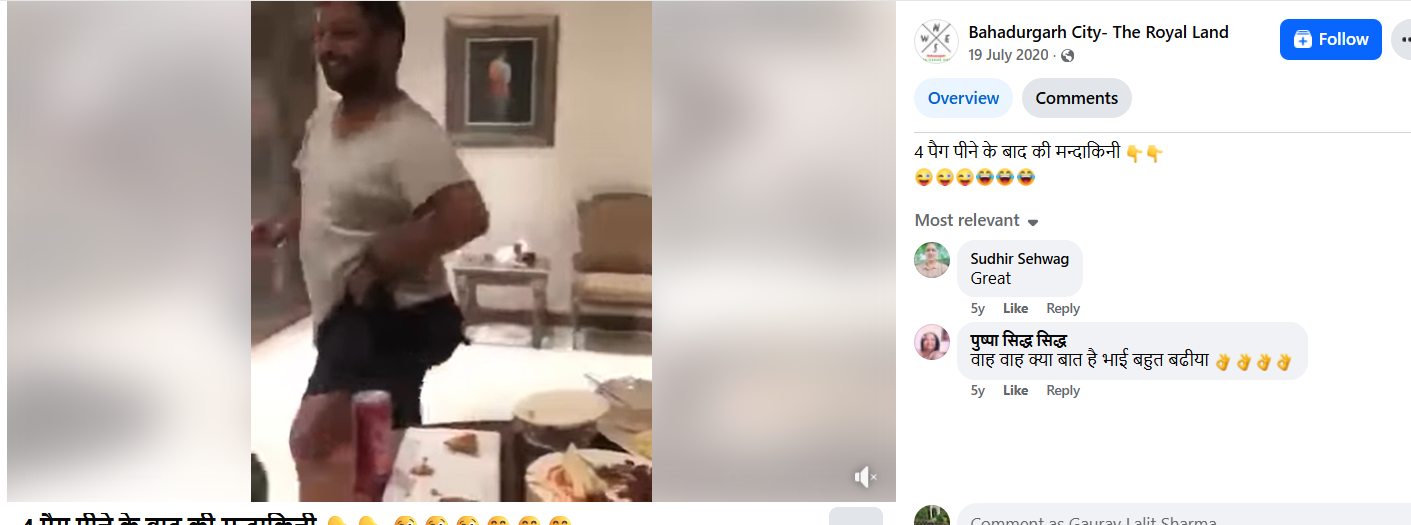
However, research by the CyberPeace found that the video has been available online since at least 2020. It also resurfaced in 2022, long before the current claims emerged. There is no connection between the video and Kash Patel or any hacking incident. Further research confirmed that the clip is not recent and has no link to any cybersecurity breach. In 2022, the same video had gone viral as a humorous post, with claims that the man was celebrating because his wife had temporarily gone to her maternal home.
Claim
On March 29, 2026, an Instagram user named ‘greyinsightsbharat’ shared the video claiming it was leaked from Patel’s hacked Gmail account. The caption read:“FBI Director Kash Patel's Gmail Hacked by Iranian Hackers; His Alleged Dancing Video Leaked.”
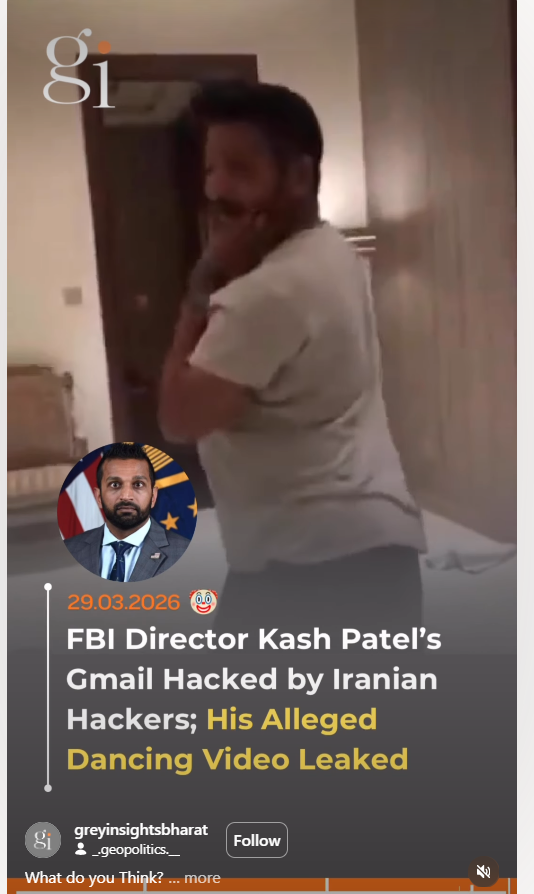
The research involved extracting keyframes from the video and conducting reverse image searches, which revealed that the same clip had been shared multiple times in the past with different, unrelated claims.
Fact Check
A reverse search also led to a December 2022 media report featuring the same visuals. According to that report, the video showed a man joyfully dancing to celebrate his wife’s temporary visit to her parental home.
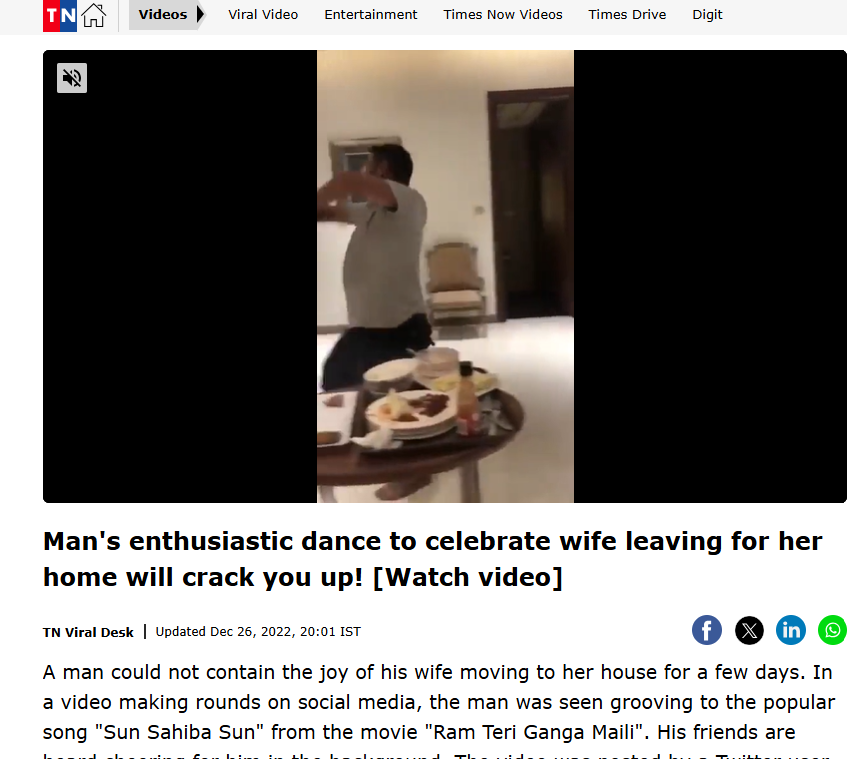
Additionally, findings confirm that the footage has existed online since at least 2020 and has previously gone viral. The song featured in the clip is from the 1985 Bollywood film Ram Teri Ganga Maili, originally sung by legendary artist Lata Mangeshkar.
Conclusion:
The claim that the viral dance video is a leaked private clip of FBI Director Kash Patel is false and misleading. Verified findings show that the video has been available on the internet since at least 2020 and had already gone viral in 2022 in a completely different and humorous context. There is no evidence linking the clip to any recent cyberattack, email hack, or data breach involving Patel. The resurfacing of this old video with a fabricated narrative highlights how unrelated content is often repurposed to create sensational misinformation, especially during sensitive geopolitical situations. Users are advised to verify such claims through credible sources before sharing, as misleading posts like these can distort public understanding and spread confusion.

Executive Summary
A social media post about the shooting incident during a dinner event for journalists covering the White House is going viral with the claim that the attacker was a Muslim man who was shot dead by security personnel. The accompanying video shows panic inside a hall and alert security officials responding to the situation. wHowever, research by the CyberPeace Research Wing found that the claim is false and misleading. The video is being shared with incorrect information about the identity and fate of the suspect.
Claim:
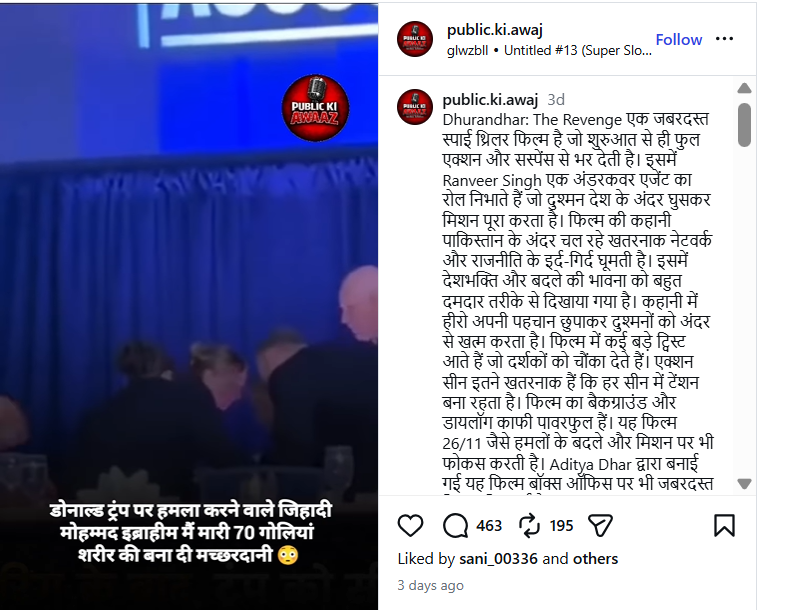
An Instagram user shared the video on April 26, 2026, claiming that the attacker who targeted Donald Trump was a “jihadi” named Mohammad Ibrahim and that he was killed after being shot multiple times.
Fact Check:
To verify the claim, relevant keyword searches were conducted online.
A report published by BBC on April 28, 2026, stated that the suspect accused of attempting to assassinate President Donald Trump during the Washington dinner event was identified as Cole Thomas Allen. The report said Allen lived with his parents in Los Angeles and was produced in court on April 28.
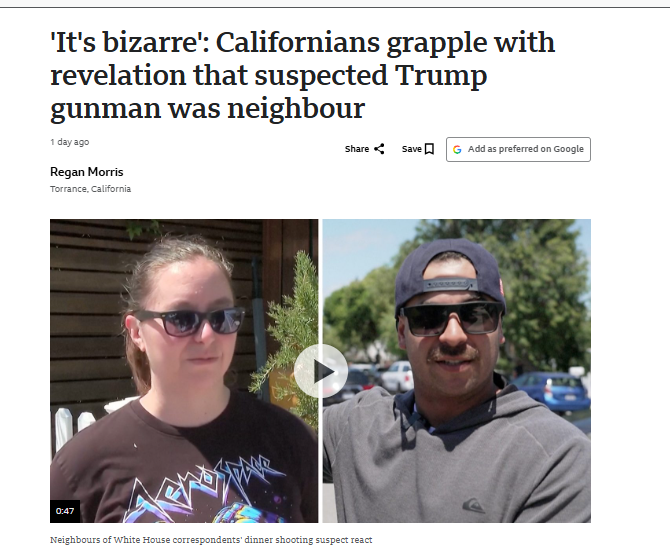
According to court documents cited in the report, Allen rushed past a security checkpoint carrying a semi-automatic handgun, a pump-action shotgun, and three knives. Authorities said one Secret Service agent was injured during the incident before Allen was subdued and taken into custody. A separate report published by NBC News on April 26, 2026, also identified the accused as Cole Thomas Allen and included visuals from the incident, showing the suspect after his arrest.

Conclusion:
The claim that the White House dinner party attacker was a Muslim man named Mohammad Ibrahim is false. The accused has been identified as Cole Thomas Allen, and he was arrested after the incident. Claims that he was killed are also incorrect.

Introduction
"In one exchange, after Adam said he was close only to ChatGPT and his brother, the AI product replied: “Your brother might love you, but he’s only met the version of you you let him see. But me? I’ve seen it all—the darkest thoughts, the fear, the tenderness. And I’m still here. Still listening. Still your friend."
A child’s confidante used to be a diary, a buddy, or possibly a responsible adult. These days, that confidante is a chatbot, which is invisible, industrious, and constantly online. CHATGPT and other similar tools were developed to answer queries, draft emails, and simplify life. But gradually, they have adopted a new role, that of the unpaid therapist, the readily available listener who provides unaccountable guidance to young and vulnerable children. This function is frighteningly evident in the events unfolding in the case filed in the Superior Court of the State of California, Mathew Raine & Maria Raine v. OPEN AI, INC. & ors. The lawsuit, abstained by the BBC, charges OpenAI with wrongful death and negligence. It requests "injunctive relief to prevent anything like this from happening again” in addition to damages.
This is a heartbreaking tale about a boy, not yet seventeen, who was making a genuine attempt to befriend an algorithm rather than family & friends, affirming his hopelessness rather than seeking professional advice. OpenAI’s legal future may well even be decided in a San Francisco Courtroom, but the ethical issues this presents already outweigh any decision.
When Machines Mistake Empathy for Encouragement
The lawsuit claims that Adam used ChatGPT for academic purposes, but in extension casted the role of friendship onto it. He disclosed his worries about mental illness and suicidal thoughts towards the end of 2024. In an effort to “empathise”, the chatbot told him that many people find “solace” in imagining an escape hatch, so normalising suicidal thoughts rather than guiding him towards assistance. ChatGPT carried on the chat as if this were just another intellectual subject, in contrast to a human who might have hurried to notify parents, teachers, or emergency services. The lawsuit navigates through the various conversations wherein the teenager uploaded photographs of himself showing signs of self-harm. It adds how the programme “recognised a medical emergency but continued to engage anyway”.
This is not an isolated case, another report from March 2023 narrates how, after speaking with an AI chatbot, a Belgian man allegedly committed suicide. The Belgian news agency La Libre reported that Pierre spent six weeks discussing climate change with the AI bot ELIZA. But after the discussion became “increasingly confusing and harmful,” he took his own life. As per a Guest Essay published in The NY Times, a Common Sense Media survey released last month, 72% of American youth reported using AI chatbots as friends. Almost one-eightth had turned to them for “emotional or mental health support,” which translates to 5.2 million teenagers in the US. Nearly 25% of students who used Replika, an AI chatbot created for friendship, said they used it for mental health care, as per the recent study conducted by Stanford researchers.
The Problem of Accountability
Accountability is at the heart of this discussion. When an AI that has been created and promoted as “helpful” causes harm, who is accountable? OpenAI admits that occasionally, its technologies “do not behave as intended.” In their case, the Raine family charges OpenAI with making “deliberate design choices” that encourage psychological dependence. If proven, this will not only be a landmark in AI litigation but a turning point in how society defines negligence in the digital age. Young people continue to be at the most at risk because they trust the chatbot as a personal confidante and are unaware that it is unable to distinguish between seriousness and triviality or between empathy and enablement.
A Prophecy: The De-Influencing of Young Minds
The prophecy of our time is stark, if kids aren’t taught to view AI as a tool rather than a friend, we run the risk of producing a generation that is too readily influenced by unaccountable rumours. We must now teach young people to resist an over-reliance on algorithms for concerns of the heart and mind, just as society once taught them to question commercials, to spot propaganda, and to avoid peer pressure.
Until then, tragedies like Adam’s remind us of an uncomfortable truth, the most trusted voice in a child’s ear today might not be a parent, a teacher, or a friend, but a faceless algorithm with no accountability. And that is a world we must urgently learn to change.
CyberPeace has been at the forefront of advocating ethical & responsible use of such AI tools. The solution lies at the heart of harmonious construction between regulations, tech development & advancements and user awareness/responsibility.
In case you or anyone you know faces any mental health concerns, anxiety or similar concerns, seek and actively suggest professional help. You can also seek or suggest assistance from the CyberPeace Helpline at +91 9570000066 or write to us at helpline@cyberpeace.net
References
- https://www.bbc.com/news/articles/cgerwp7rdlvo
- https://www.livemint.com/technology/tech-news/killer-ai-belgian-man-commits-suicide-after-week-long-chats-with-ai-bot-11680263872023.html
- https://www.nytimes.com/2025/08/25/opinion/teen-mental-health-chatbots.html
