
#FactCheck- Viral ‘Modi Massage Video’ Claim False, Features Content Creators
Executive Summary
A video showing a woman giving a facial massage to an elderly man with a white beard is going viral on social media, with users claiming that the man is Prime Minister Narendra Modi. Some posts describe it as a “leaked massage video” of the Prime Minister, while others sarcastically link it to the glow on his face. However, research by the CyberPeace Research Wing found that the claim is false. The viral video has no connection to Narendra Modi and is being shared with a misleading narrative.
Claim
An X user named Sonu Singh shared the video with the caption: “Narendra Modi video leaked.”
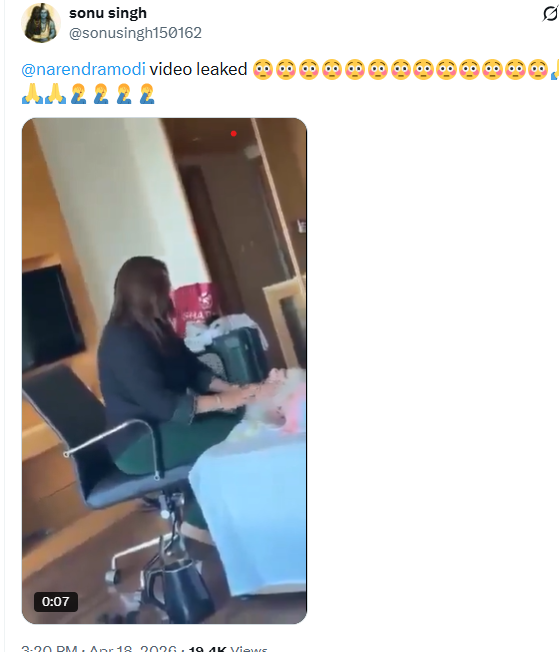
Fact Check
To verify the claim, we extracted keyframes from the viral video and conducted a reverse image search. This led us to the same video uploaded on April 12, 2026, on the Instagram and Facebook pages of content creator Pradeep Kaur Dhillon, where it was captioned “Massage time.”

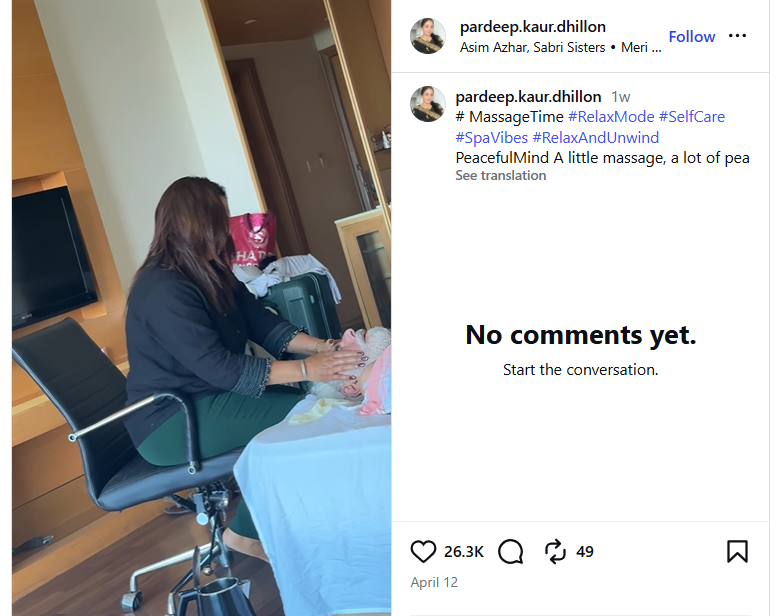
Further checks revealed another similar video posted on March 28, 2026, on the same social media accounts, with the caption: “Stylish, Spa day for him… kyunki self-care sirf ladies layi nahi.”
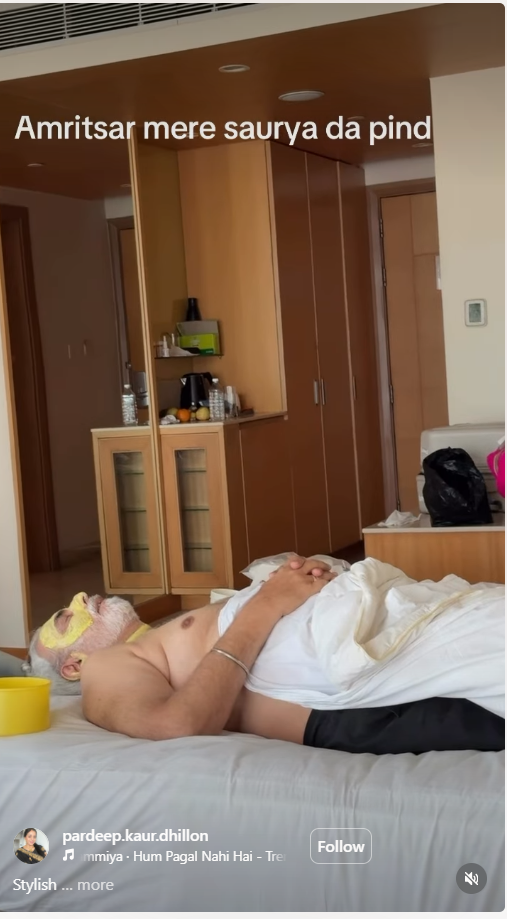
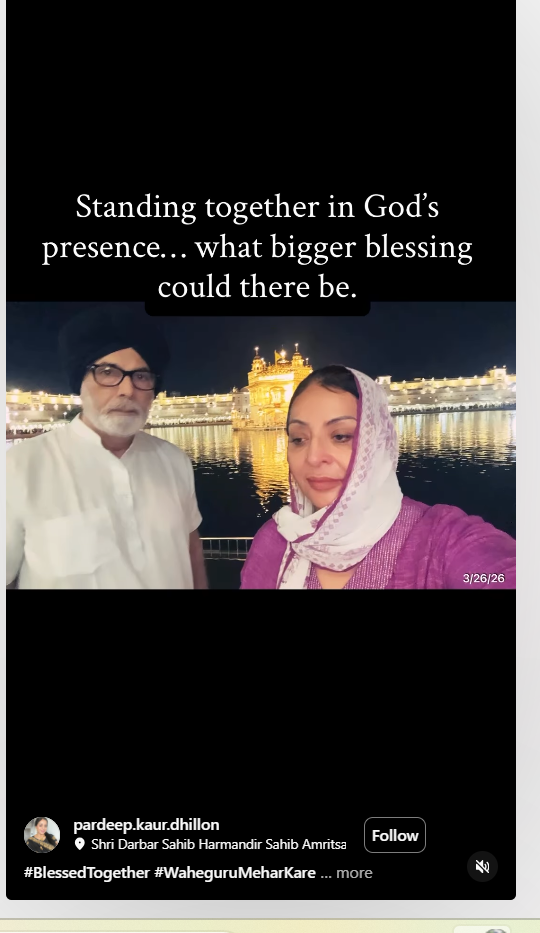
During the research, we also found that the man seen in the video is Jaspal Singh, Dhillon’s partner, who frequently appears in her social media posts. According to publicly available profile details, the duo resides in New Jersey, USA, and originally belongs to Amritsar, Punjab, India.
Conclusion
The viral claim is false. The video does not show Prime Minister Narendra Modi. It features content creators Pradeep Kaur Dhillon and Jaspal Singh and is being circulated online with a false and misleading claim.

Related Blogs
.webp)
Executive
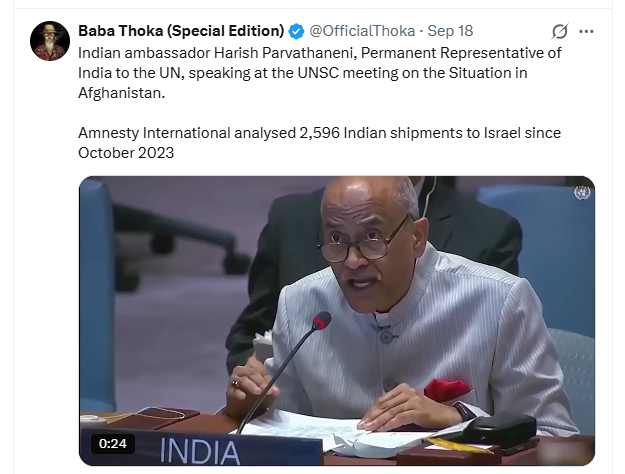
An Indian official is seen allegedly speaking at a United Nations Security Council (UNSC) meeting, where he is purportedly defending India’s supply of weapons to Israel. The video claims that India is fulfilling its defence export commitments despite allegations concerning the supply of small arms, ammunition and military vehicles to Israel since October 2023, including shipments by government-owned companies. CyberPeace Research Wing found that Permanent Representative of India to the UN Parvathaneni Harish did not make any such statement at the UNSC. His AI-manipulated video is being circulated on social media with a misleading claim.
Claim
Indian ambassador Harish Parvathaneni, Permanent Representative of India to the UN, speaking at the UNSC meeting on the Situation in Afghanistan. Amnesty International analysed 2,596 Indian shipments to Israel since October 2023
https://x.com/OfficialThoka/status/2100656814660743174?s=20
Fact Check
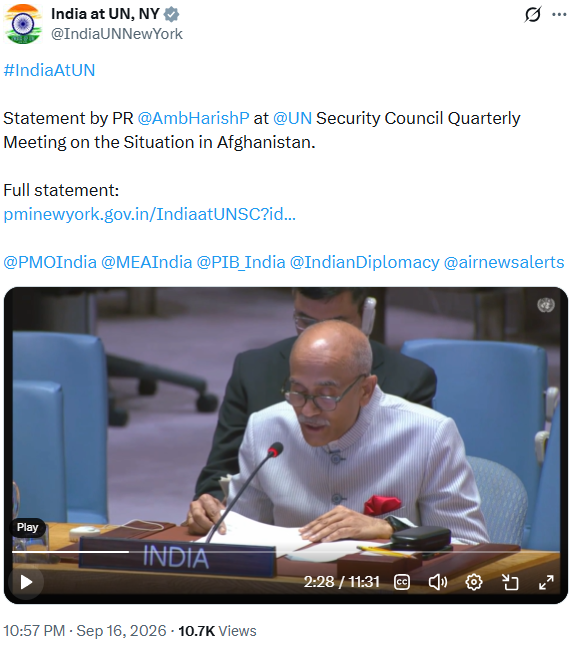
To investigate the video, we first converted it into keyframes and then conducted a reverse image search of those frames using Google Lens. We found the original video posted on the official X handle of the Permanent Mission of India to the United Nations. The post was accompanied by the caption: “#IndiaAtUN Statement by Permanent Representative Parvathaneni Harish at the quarterly UN Security Council meeting on the situation in Afghanistan.” We reviewed Parvathaneni Harish’s complete statement but found no such remarks as those shown in the video being circulated on social media. In his address, Harish did not make any reference to supplying weapons to Israel.
https://x.com/IndiaUNNewYork/status/2100275501851877641?s=20
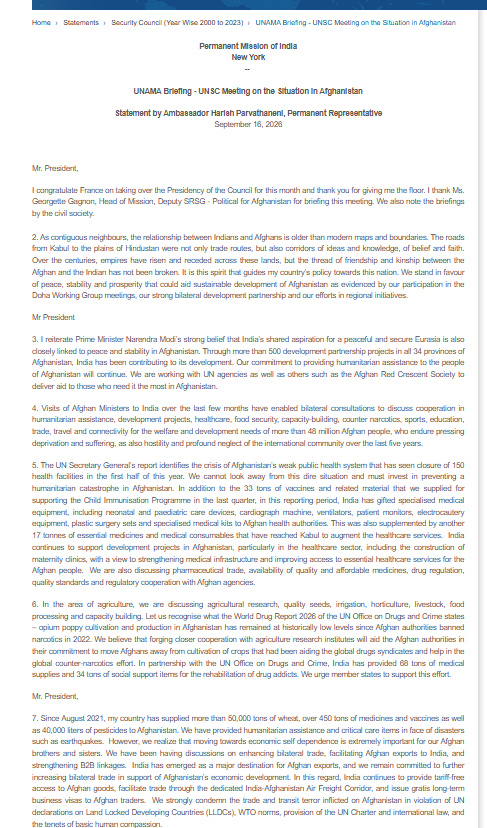
Our investigation found that Parvathaneni Harish, Permanent Representative of India to the United Nations, had issued a statement on the situation in Afghanistan and India-Afghanistan relations. We also found the text version of his statement on the official website of the Permanent Mission of India to the United Nations. In his statement, Harish referred to the historical ties between India and Afghanistan, noting that the relationship between the two countries predates modern maps and borders. He also spoke about India’s policy towards Afghanistan and its commitment to peace, stability and prosperity. In addition, he highlighted India’s participation in the meetings of the Doha Contact Group, its strong bilateral development partnership with Afghanistan, and its efforts through regional initiatives. However, a review of Harish’s complete statement shows that it contains no remarks resembling those attributed to him in the video being shared on social media. His official statement also makes no mention of India’s alleged supply of weapons to Israel or the 2,596 shipments cited by Amnesty International. This establishes that the video being circulated on social media is presenting Harish’s actual statement in a misleading context.
https://pminewyork.gov.in/IndiaatUNSC?id=NTYzNA
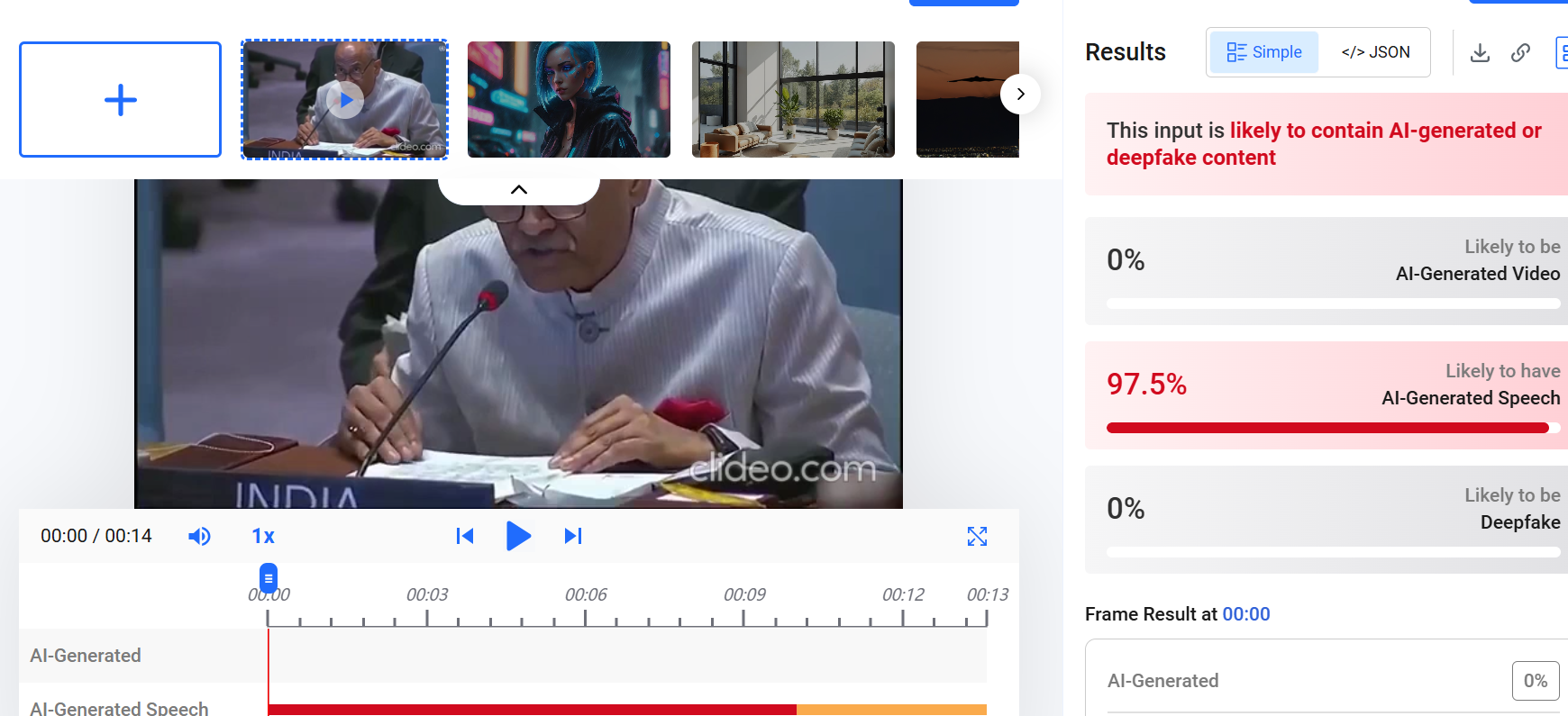
Hive Moderation’s analysis found no signs of manipulation in the video’s visuals. However, the analysis indicated a 97% probability that the speech used in the video was AI-generated.
Conclusion
Our research found that Parvathaneni Harish, Permanent Representative of India to the United Nations, did not make the statement attributed to him in the video being circulated on social media. His official statement at the UN Security Council meeting on the situation in Afghanistan focused on India-Afghanistan relations, peace, stability, development cooperation and regional initiatives, and contained no reference to India supplying weapons to Israel or to the 2,596 shipments mentioned in the viral video.
Further analysis by Hive Moderation found a 97% probability that the speech used in the video was AI-generated, while the visuals showed no signs of manipulation. These findings indicate that the video has been digitally manipulated by replacing or altering the original speech and is being presented with a misleading claim.Therefore, the claim that Parvathaneni Harish defended India’s alleged supply of weapons to Israel during a UNSC meeting is false and misleading.

Executive Summary
A video linked to the FIFA World Cup 2026 is being widely shared on social media. The clip appears to show a match between Brazil and Argentina, with Neymar and Lionel Messi facing each other on the field. In the video, Messi is seen trying to stop Neymar from scoring, but Neymar dribbles past him and scores a goal. The footage is being circulated as a real moment from the ongoing FIFA World Cup. CyberPeace Research Wing research found the claim to be false. The video does not depict any real football match and was created using artificial intelligence (AI).
Claim
A Facebook user named “India Guru” shared the viral video on June 25, 2026, with the caption: "Neymar’s storm in the FIFA World Cup. Lionel Messi could only watch. Wow! What a moment… Brilliant." https://www.facebook.com/reel/993162133465919 , https://perma.cc/V8SA-Y3SE

Fact Check
To verify the claim, we searched relevant keywords on Google. However, we found no credible news reports related to the viral video or the claims being made alongside it. We also found no evidence that Brazil and Argentina had played a match against each other during the FIFA World Cup 2026. A closer examination of the footage revealed unusual movements in the legs and body positions of both players, which appeared unnatural and inconsistent with real match footage. These visual anomalies raised suspicions that the video had been generated using artificial intelligence. The video was then analyzed using the AI detection tool Hive Moderation, which indicated a nearly 99 percent probability that the content was AI-generated.
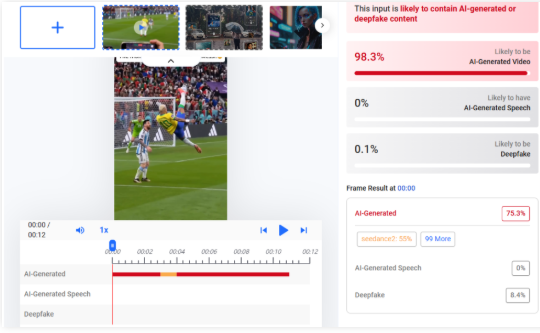
For additional verification, we also examined the clip using Undetectable AI, which similarly indicated a high likelihood that the video had been created using artificial intelligence.

Conclusion
Our research found that the viral claim linking the video to a FIFA World Cup 2026 match between Neymar and Lionel Messi is false. The footage is AI-generated and does not show a real football match.

Executive Summary
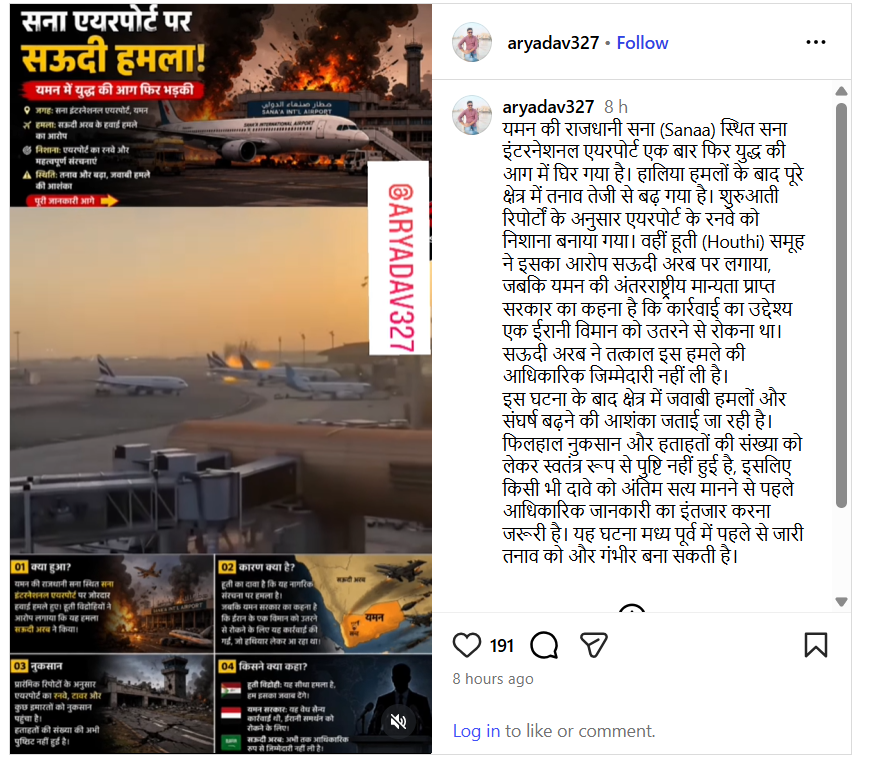
A video is being widely shared on social media claiming to show a Saudi Arabian F-15 fighter jet carrying out an airstrike on Sanaa International Airport in Yemen's capital. The footage shows several aircraft parked at what appears to be an airport before explosions erupt, followed by flames, thick smoke and people running in panic. The CyberPeace Research Wing found that the viral claim is false. Our research revealed that the circulating video is AI-generated and does not depict the actual airstrike. While it is true that Saudi Arabia carried out an airstrike at Sanaa International Airport, the viral footage is unrelated to that incident and is being shared with a misleading claim.
Claim
An Instagram post shared on July 15, 2026, claims that Saudi Arabia's F-15 fighter jets bombed Sanaa International Airport in Yemen. The post can be viewed here:
https://www.instagram.com/reel/DayBwufzn2N/?utm_source=ig_web_button_share_sheet
Fact Check
To verify the claim, we searched using relevant keywords but found no credible news reports or authentic footage matching the viral video. However, we found verified footage of the actual Saudi airstrike on The New York Post's YouTube channel. A comparison showed that the genuine footage is entirely different from the viral clip in terms of visuals, sequence and overall content.
https://www.instagram.com/reel/DawHCM_s_fn/?utm_source=ig_web_button_share_sheet

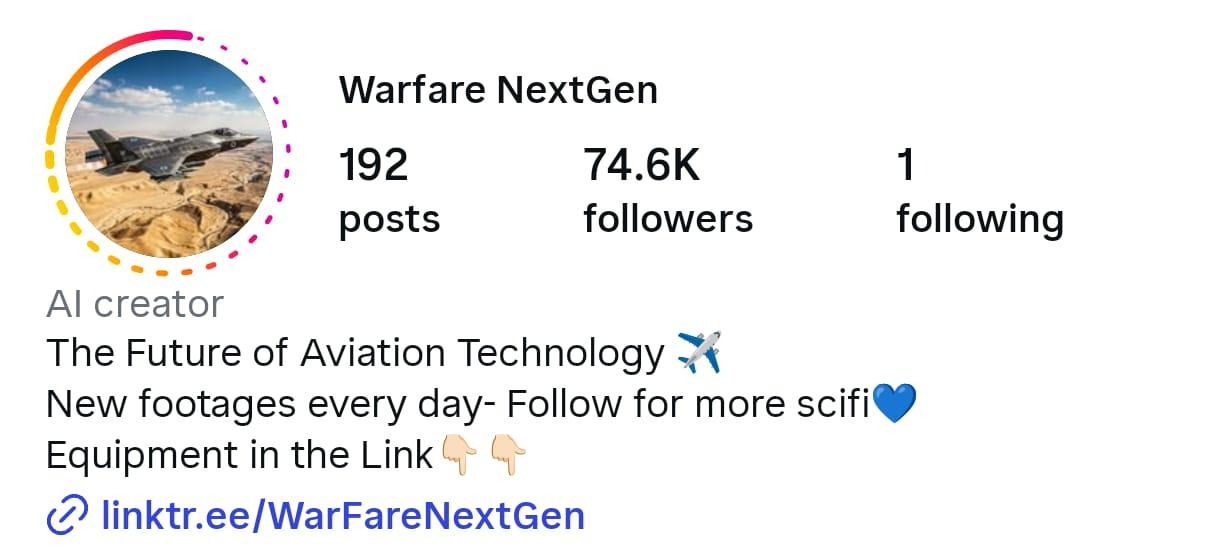
During our research, we also found the same viral video on an Instagram account named "warfarenextgen", which regularly publishes AI-generated war-related videos
We further examined the video using multiple AI detection tools: Hive Moderation assessed the video as 99.9% likely to be AI-generated.

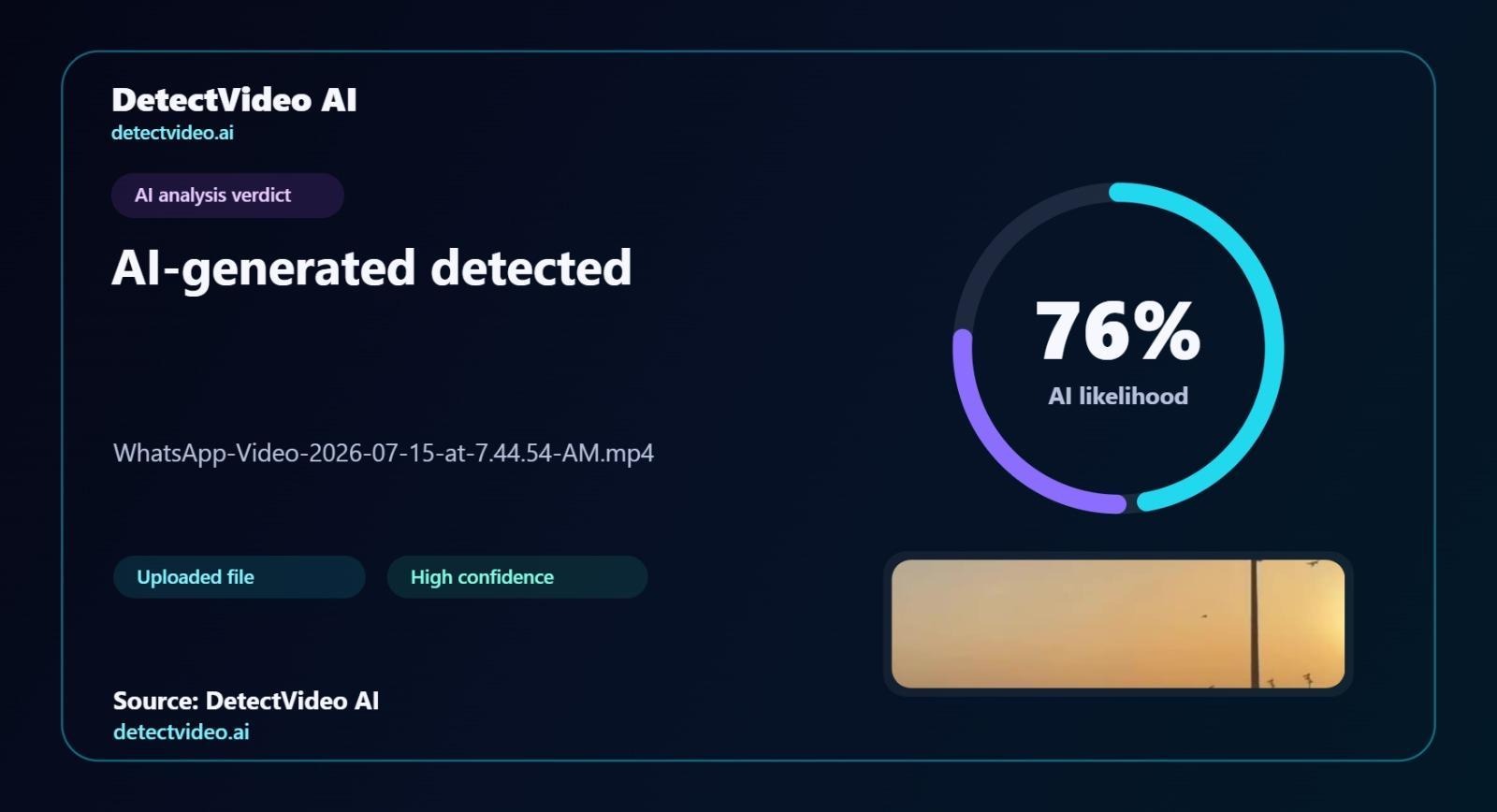
DetectVideo AI found a 76% probability that the video was AI-generated.
Sightengine also concluded that the video was approximately 99% likely to be AI-generated.

Conclusion
Our research found that Saudi Arabia did carry out an airstrike on Sanaa International Airport to prevent an Iranian aircraft carrying a Houthi delegation from landing. However, the viral video does not show that attack. It is an AI-generated video that is being falsely circulated as footage of the real incident, making the viral claim misleading.
