
#FactCheck - Misleading Video Misinterprets Trump’s Handling of Official Folder as Xi Jinping’s “Private Notebook”
Executive Summary
A video circulating on social media claims that during a summit in Beijing, Donald Trump was seen peeking into Chinese President Xi Jinping’s “private notebook” while Xi briefly stepped away. However, a fact-check by CyberPeace Research Wing found the claim to be baseless. A review of the full event footage clearly shows that the folder in question belonged to Donald Trump himself, not Xi Jinping. The viral interpretation is therefore misleading.
Claim
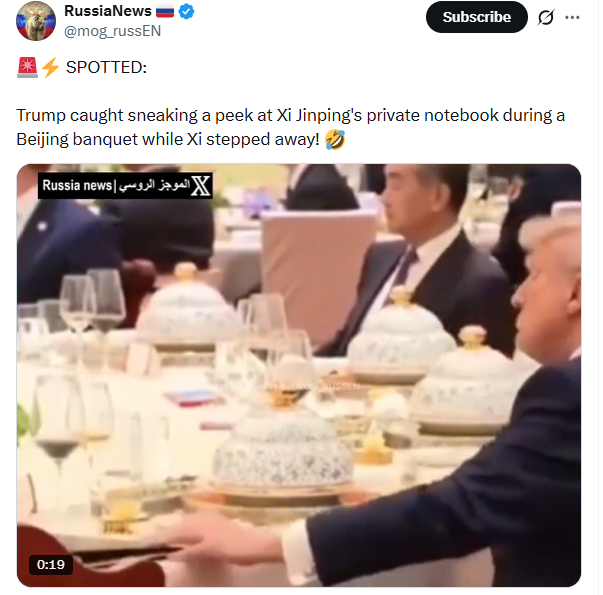
An X user shared the clip alleging, “Trump caught sneaking a peek at Xi Jinping’s private notebook during a Beijing banquet while Xi stepped away.”
Fact Check
A longer version of the video, shared by NBC News on May 14, shows the state banquet held at the Great Hall of the People in Beijing. Around the 1-minute-50-second mark, Xi Jinping, seated to Trump’s left, gets up and walks to the podium. The viral clip follows shortly after, showing Trump opening the folder placed to his left and flipping through its pages.
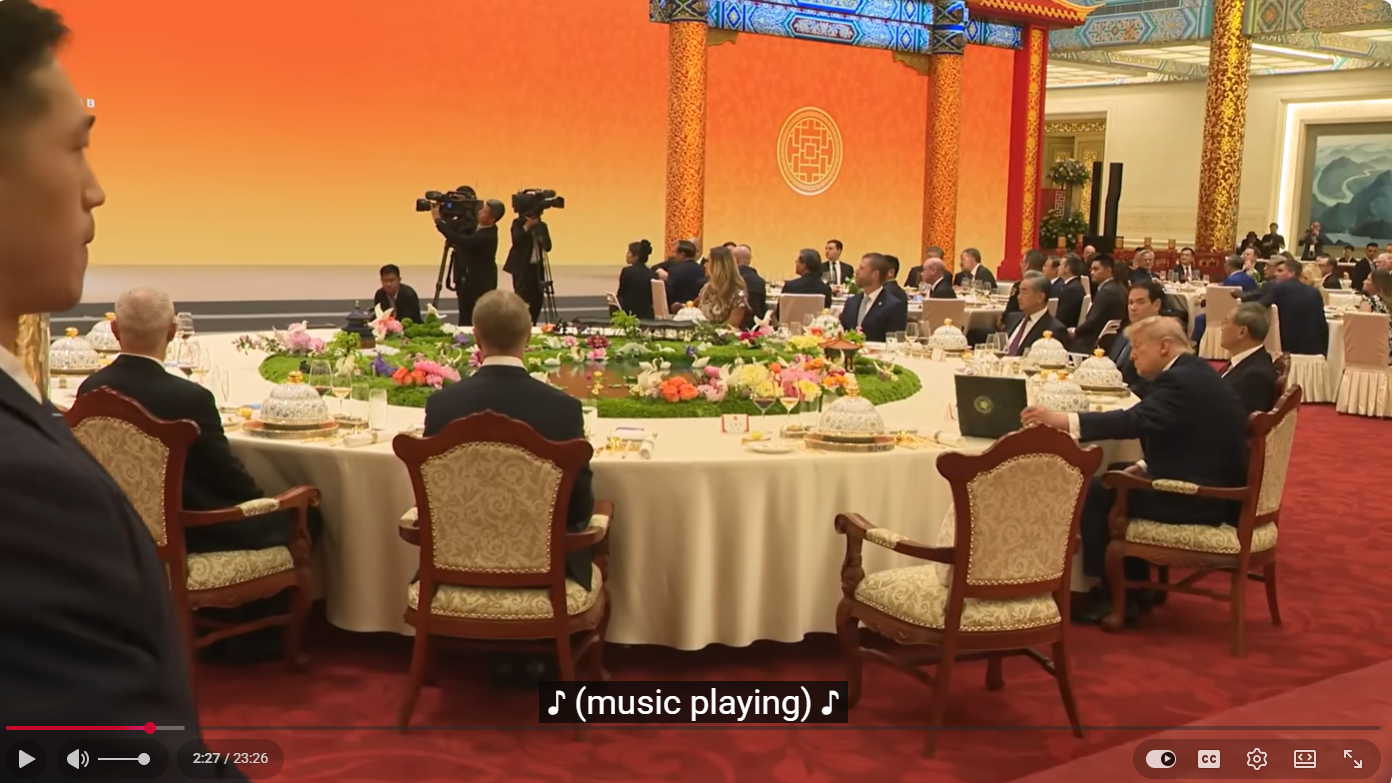

The White House also uploaded the full footage on its official YouTube channel, showing wider, uninterrupted shots of the event. Around the two-minute mark, the announcer says, “And now a toast by President Xi,” after which Xi Jinping stands up. Immediately after, Trump is seen opening the folder on his left and reading from it.
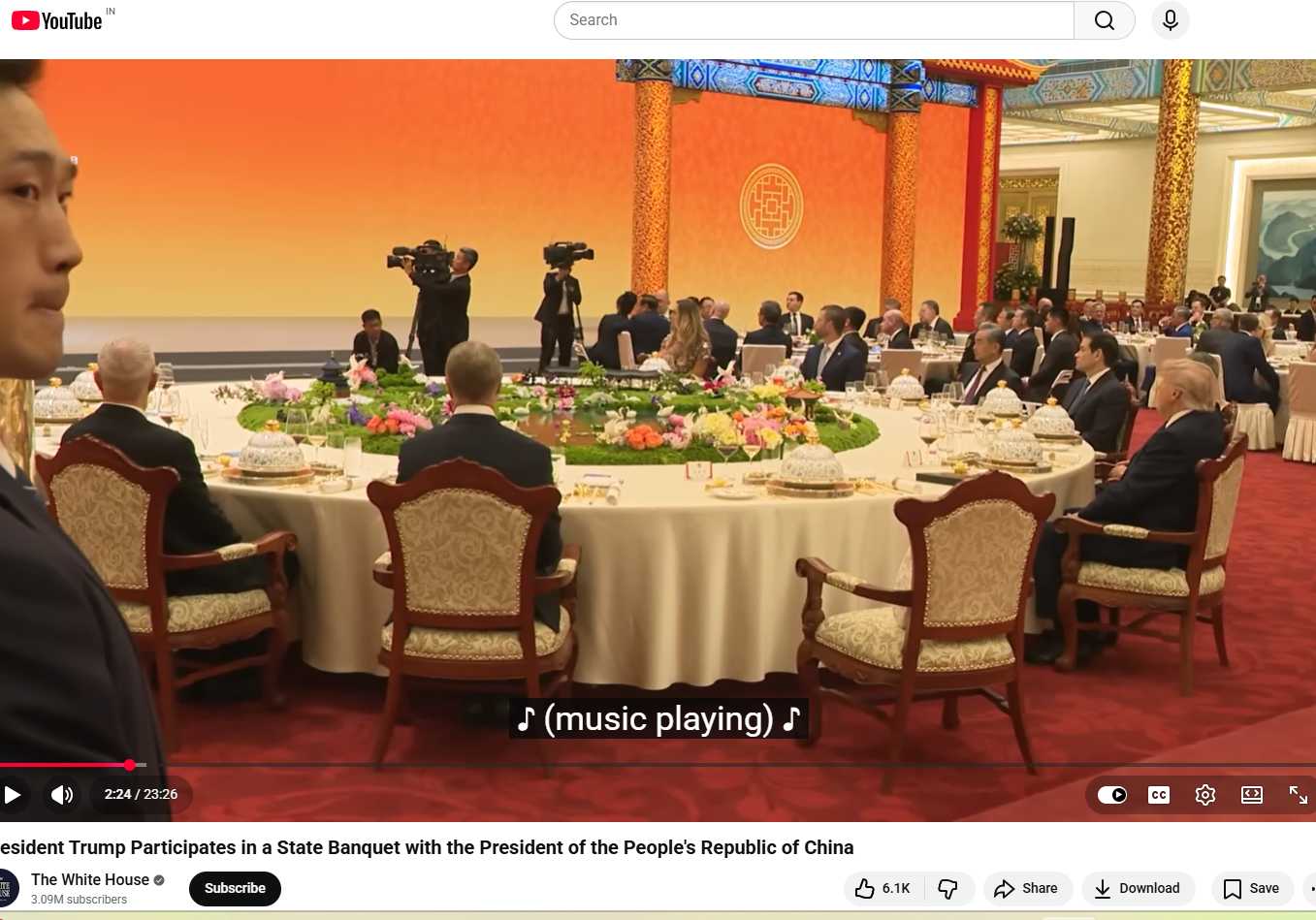
Later in the video, around the 12-minute mark, when Xi returns to his seat, Trump is seen standing up, taking the folder with him to the podium, turning pages, and reading from it. The same sequence can also be seen in the NBC News footage at around 11 minutes and 50 seconds. This clearly indicates that the folder belonged to the U.S. President and not Xi Jinping, and that Trump was not peeking into any private notebook. Another key detail is the embossed emblem on the folder, which closely resembles the Seal of the President of the United States. The American bald eagle, the national bird of the United States, is clearly visible at the centre. A comparison between the viral screenshot and the official seal shows they are nearly identical.
Conclusion
The viral claim is misleading and taken out of context. A detailed review of the full footage, including official recordings from NBC News and the White House, clearly shows that the folder in question belonged to Donald Trump and not Chinese President Xi Jinping. At multiple points in the video, Trump is seen opening, handling, and reading from the same folder, including while Xi Jinping is away from his seat and later after he returns. The visual evidence from the event also supports this conclusion. The embossed seal on the folder matches the official Seal of the President of the United States, further confirming that it was part of Trump’s official briefing material and not any private document belonging to Xi Jinping. Taken together, the full sequence of events and official video sources make it clear that the viral narrative has been incorrectly framed. There is no evidence to suggest that Trump was peeking into Xi Jinping’s personal notebook.

Related Blogs

Executive Summary
Amid rising tensions in West Asia and concerns over the safety of Indian seafarers, a video showing a vessel engulfed in flames and thick black smoke is being widely circulated on social media. The clip is being shared with the claim that it depicts a US attack on a ship carrying Indian nationals in Omani waters. CyberPeace Research Wing research found the claim to be misleading. The viral video predates the incident it is being linked to and is not related to any recent attack.
Claim:
A Facebook user shared the video alleging that the United States attacked a ship carrying Indian citizens in the maritime region near Oman. The post has been widely circulated as part of the ongoing West Asia tensions. Facebook link: https://www.facebook.com/reel/3031094270427837, https://www.facebook.com/reel/3031094270427837

Fact Check:
A reverse image search of keyframes from the viral video led to several media reports published on 2 March 2026, which carried the same visuals seen in the circulating clip. The reports indicated that the footage showed a vessel targeted amid escalating tensions in the Strait of Hormuz, following restrictions on maritime movement in the region. https://www.ndtv.com/world-news/iran-targets-6th-ship-in-hormuz-strait-video-shows-billowing-smoke-11159019

Further research also found the same visuals in a Moneycontrol report published on 2 March 2026. The report clearly established that the footage is from an earlier incident and not linked to any recent developments. https://www.moneycontrol.com/world/indian-crew-member-killed-after-drone-boat-strikes-oil-tanker-off-oman-coast-first-indian-casualty-in-us-iran-tensions-article-13848303.html

Conclusion:
The research confirms that the viral video is not related to any recent US attack on a vessel carrying Indian nationals. The footage has been online since at least March 2026 and shows an earlier incident involving the oil tanker Skylight during tensions in the Strait of Hormuz. Hence, the claim being circulated on social media is misleading.
Executive Summary
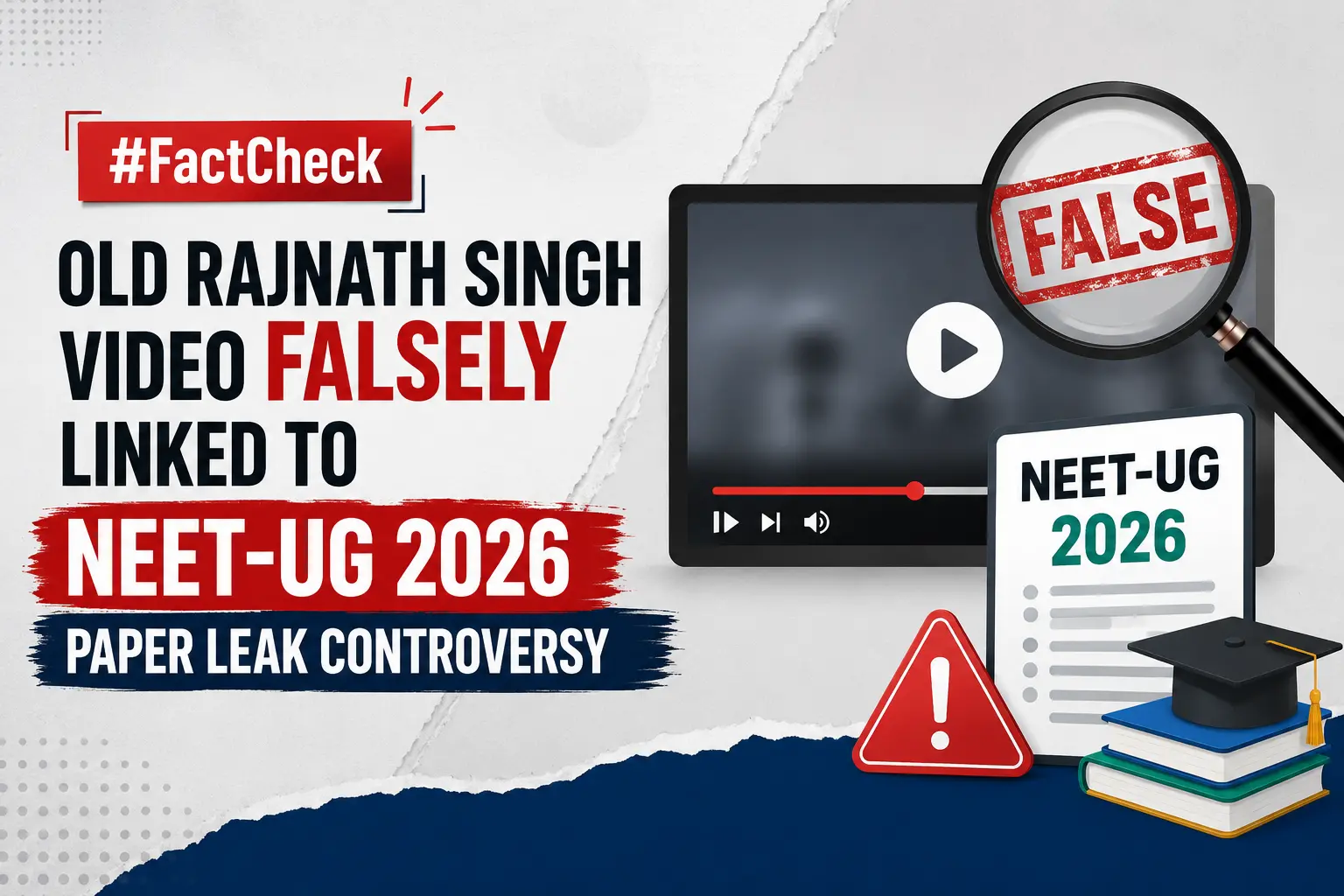
The Central Bureau of research (CBI) is currently probing the alleged leak of the NEET-UG 2026 examination paper, and several accused persons have already been arrested in connection with the case. Amid this, a video of senior BJP leader and Defence Minister Rajnath Singh is being widely shared on social media. In the clip, he is heard saying, “There will be no resignations. This is not a UPA government, this is an NDA government.” Several users linked the video to the NEET controversy and claimed that Rajnath Singh made the remark while responding to demands for Education Minister Dharmendra Pradhan’s resignation over the alleged paper leak. However, research by the CyberPeace Research Wing found the viral claim to be false. An old video of Rajnath Singh is being misleadingly shared with a false context.
Claim
A Facebook user named “Ravi Kumar Huddi Baba” shared the viral clip on May 13, 2026, claiming that Rajnath Singh was defending the Modi government over demands for the resignation of the education minister in the NEET-UG paper leak case.

Fact Check
To verify the claim, relevant keyword searches were carried out using Google Open Search tools. No credible news reports were found confirming that Rajnath Singh had made any such statement regarding the NEET controversy or demands for Dharmendra Pradhan’s resignation. Had such a statement been made recently, it would likely have been widely reported by mainstream media outlets. A review of Rajnath Singh’s official social media accounts also yielded no such statement or video related to the NEET issue.
During the research, the full version of the viral clip was traced to an old press conference held on June 24, 2015, where Rajnath Singh and then Union Minister Ravi Shankar Prasad were briefing the media about Cabinet decisions. During the interaction, a journalist questioned them regarding resignations linked to controversies at the time. Responding to the question, Rajnath Singh made the now-viral remark. The complete press conference video is available on the BJP’s official YouTube channel and was streamed on June 24, 2015 itself. The viral portion can be heard after the 23-minute mark in the video.

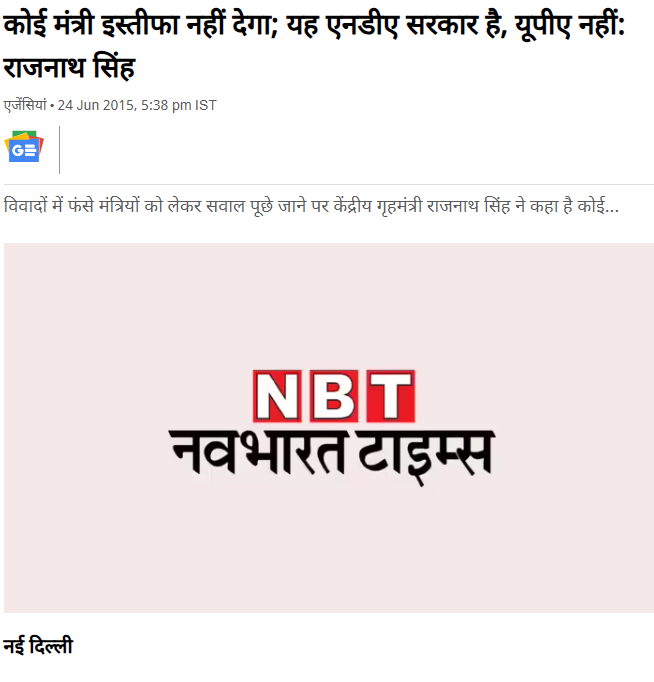
Further searches led to an old report published by Navbharat Times on June 24, 2015. The report stated that Rajnath Singh had made the “NDA, not UPA” remark while responding to questions regarding ministers embroiled in controversies at that time.
Conclusion
The viral claim is false. Rajnath Singh has not made any recent statement linking the NEET-UG 2026 paper leak case with demands for the education minister’s resignation. The viral clip is actually from a 2015 press conference and is being shared with misleading and false context.

Introduction
The Ministry of Electronics and Information Technology ( MeitY) through its Information Security Education & Awareness ( ISEA ) came up with an advisory regarding the growing cases of e-challan fraud. Cybercriminals are exploiting the beliefs of individuals by attracting them into clicking malicious links under the impression of paying traffic fines. Cybercriminals employ sending phishing messages and impersonating official e-challan notifications as a primary method. These messages are crafted in such a way that portrays a sense of urgency, provoking individuals to click on a link for spontaneous payment. For building trust, the messages are deviously created by scammers depicting official communication, which in actuality are fake messages targeting individuals for committing online financial fraud.
Unveiling the E-Challan Scam
Scammers send a text message to your phones that closely resembles e-challan alerts. The text appears from the traffic police, informing the netizens of a traffic violation that requires a fine payment. These messages contain a link and a text message urging the recipient to settle the fine by clicking on the links to make the payment. Scammers have started trapping innocent individuals through such fake messages. These scammers are creating and sending fake messages that look like traffic challan alert messages. However, it is a completely deceptive and fake message. Such messages contain malicious links to fake website, leading users to visit the fake website and enter their bank account details, or make the payment which ultimately leads to financial loss to victims. Cyber scammers have meticulously copied the format used by the traffic authorities however a close examination can help us spot the trap. The modus operandi of such type of scam is to get the targeted individuals to click on a malicious link for payment of traffic e-challan. Once you click on such malicious payment link to pay for the e-challan the individuals unknowingly will end up paying the cyber criminals instead of the police in a bid to discharge the traffic e-challan.
How to spot a fake E-Challan?
- Verify the Vehicle Number: Make sure that the vehicle number mentioned in the message matches your vehicle’s number. Cross-check this information with your vehicle’s number plate or the smart card ( blue book) issued by the Regional Transport Office ( RTO).
- Verify the E-challan Number: Verify the validity of the e-challan number by logging into the official traffic police website or app. Legitimate e-challans will have a corresponding record that can be cross-checked for authenticity. The challan number can be verified by logging in to the official e-challan website. It is always advisable to Visit the official government website to check if you have actually been fined.
- Inspect the Message Content: Give attention to the language inculcated in the message. Hackers' messages may contain grammatical errors or unusual phrases. For example, cybercriminals might encourage victims to visit the RTO office in person. Trying to build up confidence among the victims. Also, it is important that you do not make such payments in haste. Vehicle owners must check such messages carefully before clicking on any link.
Best Practices to Stay Safe
- Be aware of unbidden messages: Be cautious when you receive unsolicited e- challan notifications. Abstain yourself by clicking on links or downloading attachments from unknown sources.
- Always stick to legitimate or official websites: The scammers use links which look similar to the official link, and a casual glance can miss the difference. Hence it is strictly advisable to visit the official websites only. Also do note that government websites will always have the domain '.gov.in'. The official website of Traffic Challan is https://echallan.parivahan.gov.in/
- Get it cross-checked through official channels: Always cross-check the authenticity of an e-challan by directly accessing official channels, such as the official traffic police website or application.
- Connect with the RTO directly: If in doubt, independently connect with the Regional Transport Office ( RTO) using official contact details to verify the authenticity of the e-challan. It is best not to solely rely on information received from suspicious messages.
- Software update: Make sure that your device’s security software is up to date to protect against malware and phishing scams.
Conclusion:
Cybercriminals are exploiting the fear of traffic fines to trick individuals into clicking on malicious links and revealing their personal and financial information. These scams can lead to significant financial losses for the victims. To stay safe, it is important to be cautious of unsolicited messages, verify the authenticity of e-challans through official channels, and avoid clicking on links or downloading attachments from unknown sources. Awareness is the first line of defence in the evolving landscape of online threats.
References:
- https://economictimes.indiatimes.com/news/new-updates/ahmedabad-residents-duped-out-of-lakhs-in-e-challan-scam-cops-arrest-jharkhand-man/articleshow/103528317.cms
- https://economictimes.indiatimes.com/wealth/save/new-traffic-e-challan-fraud-heres-how-to-identify-scam-messages-and-avoid-getting-duped/articleshow/104960817.cms
- https://www.ndtv.com/india-news/explained-the-new-e-challan-scam-how-we-can-escape-it-4342129
