
#FactCheck-Viral Video Does Not Show Lover Cutting Off Electricity to Girlfriend’s Village; It Shows Power Line Repair Work in Assam
Executive Summary:
A video is being shared on social media with the claim that a man cut off the electricity supply to his girlfriend’s village after getting angry with her. A research by CyberPeace’s research wing found that the video is actually from Baksa district in Assam, where a lineman named Anwar was repairing an electric line.
Claim:
The viral video is 10 seconds long and shows a man climbing an electricity pole and cutting an electric wire. The video is being shared on social media with the claim that the man cut off the electricity supply to his girlfriend’s entire village after her phone line was busy.
https://www.instagram.com/reels/Dcamn0aGBJ-/

Fact Check:
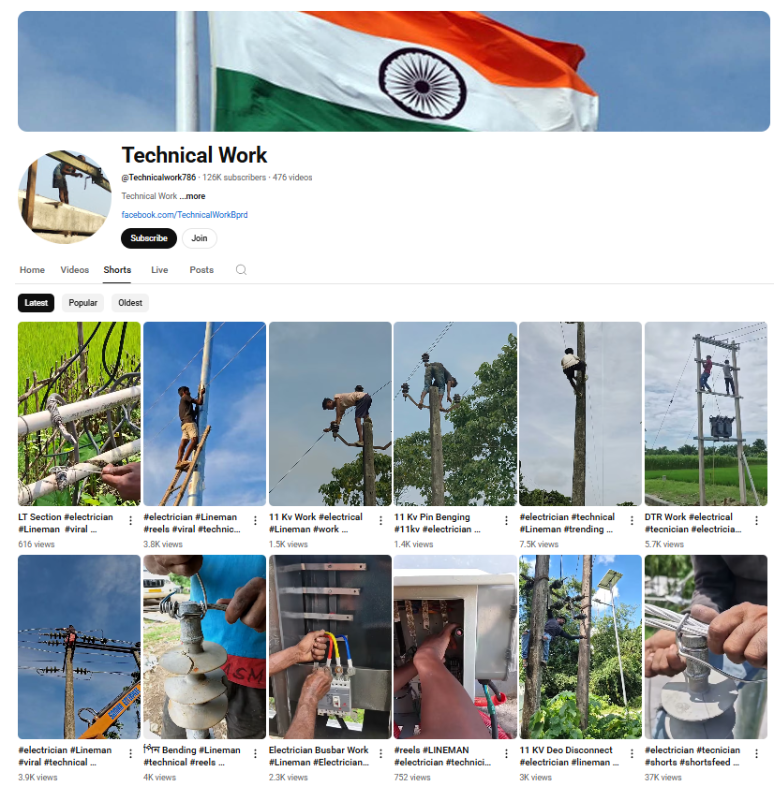
To investigate the viral claim that a man cut off the electricity supply to his girlfriend’s village after getting angry with her, we conducted a reverse image search using keyframes from the video. During the search, we found the original video uploaded on the YouTube account named ‘Technical Work’ on July 17, 2025. According to the video description, the video is related to electrical work.
https://www.youtube.com/shorts/iHtG5xwHtKI

Additionally, we found several videos related to electrical work uploaded on the same YouTube account. We also found a Facebook page associated with this YouTube account.
Conclusion
The evidence gathered during our research makes it clear that the viral claim that a man cut off the electricity supply to his girlfriend’s village after getting angry with her is completely false. In reality, the video shows electricity workers repairing a power line in Assam.

Related Blogs

Executive Summary:
The ongoing conflict between Iran and the US-Israel has entered its 19th day. Meanwhile, a video is being widely shared on social media claiming that Iran is carrying out continuous drone attacks at Dubai International Airport. The clip shows visuals of massive fire and explosion However, research by the CyberPeace has found the claim to be misleading. Our research revealed that the video has been available on the internet since 2020. In reality, the footage shows a fire at a market in Ajman, UAE, and not explosions at Dubai Airport in 2026. Although there were recent reports of a fire near DXB (Dubai Airport) following a drone attack, this video is not related to that incident.
Claim:
On social media platform X (formerly Twitter), a user shared the viral video on March 17, 2026, writing:
“Dubai International Airport – Iran is dropping drones continuously.”
Post link, archive link, and screenshot are given below:

Fact Check:
To verify the viral claim, we extracted keyframes from the video and conducted a reverse image search using Google Lens. During the research, we found the same video on a YouTube channel, where it was uploaded on August 6, 2020. The caption read: “Ajman fruits and vegetables market caught in fire.”

Based on this clue, it became clear that the viral video has no connection with the ongoing Iran-US-Israel conflict. In the next step, we searched using relevant keywords and found a report published on August 5, 2020, on the website of Gulf News, which contained visuals similar to the viral video.

According to the Gulf News report, a major fire broke out at a public market in the new industrial area of Ajman at around 6:30 pm. The blaze was later brought under control by Ajman Civil Defence with assistance from teams in Dubai, Sharjah, and Umm Al Quwain.
Conclusion:
Our research found that the viral video has been online since 2020 and shows a fire at a market in Ajman, UAE. It is not related to any recent incident at Dubai Airport.

Introduction
In today’s time, everything is online, and the world is interconnected. Cases of data breaches and cyberattacks have been a reality for various organisations and industries, In the recent case (of SAS), Scandinavian Airlines experienced a cyberattack that resulted in the exposure of customer details, highlighting the critical importance of preventing customer privacy. The incident is a wake-up call for Airlines and businesses to evaluate their cyber security measures and learn valuable lessons to safeguard customers’ data. In this blog, we will explore the incident and discuss the strategies for protecting customers’ privacy in this age of digitalisation.
Analysing the backdrop
The incident has been a shocker for the aviation industry, SAS Scandinavian Airlines has been a victim of a cyberattack that compromised consumer data. Let’s understand the motive of cyber crooks and the technique they used :
Motive Behind the Attack: Understanding the reasons that may have driven the criminals is critical to comprehending the context of the Scandinavian Airlines cyber assault. Financial gain, geopolitical conflicts, activism, or personal vendettas are common motivators for cybercriminals. Identifying the purpose of the assault can provide insight into the attacker’s aims and the possible impact on both the targeted organisation and its consumers. Understanding the attack vector and strategies used by cyber attackers reveals the amount of complexity and possible weaknesses in an organisation’s cybersecurity defences. Scandinavian Airlines’ cyber assault might have included phishing, spyware, ransomware, or exploiting software weaknesses. Analysing these tactics allows organisations to strengthen their security against similar assaults.
Impact on Victims: The Scandinavian Airlines (SAS) cyber attack victims, including customers and individuals related to the company, have suffered substantial consequences. Data breaches and cyber-attack have serious consequences due to the leak of personal information.
1)Financial Losses and Fraudulent Activities: One of the most immediate and upsetting consequences of a cyber assault is the possibility of financial loss. Exposed personal information, such as credit card numbers, can be used by hackers to carry out illegal activities such as unauthorised transactions and identity theft. Victims may experience financial difficulties and the need to spend time and money resolving these concerns.
2)Concerns about privacy and personal security: A breach of personal data can significantly impact the privacy and personal security of victims. The disclosed information, including names, addresses, and contact information, might be exploited for nefarious reasons, such as targeted phishing or physical harassment. Victims may have increased anxiety about their safety and privacy, which can interrupt their everyday life and create mental pain.
3) Reputational Damage and Trust Issues: The cyber attack may cause reputational harm to persons linked with Scandinavian Airlines, such as workers or partners. The breach may diminish consumers’ and stakeholders’ faith in the organisation, leading to a bad view of its capacity to protect personal information. This lack of trust might have long-term consequences for the impacted people’s professional and personal relationships.
4) Emotional Stress and Psychological Impact: The psychological impact of a cyber assault can be severe. Fear, worry, and a sense of violation induced by having personal information exposed can create emotional stress and psychological suffering. Victims may experience emotions of vulnerability, loss of control, and distrust toward digital platforms, potentially harming their overall quality of life.
5) Time and Effort Required for Remediation: Addressing the repercussions of a cyber assault demands significant time and effort from the victims. They may need to call financial institutions, reset passwords, monitor accounts for unusual activity, and use credit monitoring services. Resolving the consequences of a data breach may be a difficult and time-consuming process, adding stress and inconvenience to the victims’ lives.
6) Secondary Impacts: The impacts of an online attack could continue beyond the immediate implications. Future repercussions for victims may include trouble acquiring credit or insurance, difficulties finding future work, and continuous worry about exploiting their personal information. These secondary effects can seriously affect victims’ financial and general well-being.
Apart from this, the trust lost would take time to rebuild.

Takeaways from this attack
The cyber-attack on Scandinavian Airlines (SAS) is a sharp reminder of cybercrime’s ever-present and increasing menace. This event provides crucial insights that businesses and people may use to strengthen cybersecurity defences. In the lessons that were learned from the Scandinavian Airlines cyber assault and examine the steps that may be taken to improve cybersecurity and reduce future risks. Some of the key points that can be considered are as follows:
Proactive Risk Assessment and Vulnerability Management: The cyber assault on Scandinavian Airlines emphasises the significance of regular risk assessments and vulnerability management. Organisations must proactively identify and fix possible system and network vulnerabilities. Regular security audits, penetration testing, and vulnerability assessments can help identify flaws before bad actors exploit them.
Strong security measures and best practices: To guard against cyber attacks, it is necessary to implement effective security measures and follow cybersecurity best practices. Lessons from the Scandinavian Airlines cyber assault emphasise the importance of effective firewalls, up-to-date antivirus software, secure setups, frequent software patching, and strong password rules. Using multi-factor authentication and encryption technologies for sensitive data can also considerably improve security.
Employee Training and Awareness: Human mistake is frequently a big component in cyber assaults. Organisations should prioritise employee training and awareness programs to educate employees about phishing schemes, social engineering methods, and safe internet practices. Employees may become the first line of defence against possible attacks by cultivating a culture of cybersecurity awareness.
Data Protection and Privacy Measures: Protecting consumer data should be a key priority for businesses. Lessons from the Scandinavian Airlines cyber assault emphasise the significance of having effective data protection measures, such as encryption and access limits. Adhering to data privacy standards and maintaining safe data storage and transfer can reduce the risks connected with data breaches.
Collaboration and Information Sharing: The Scandinavian Airlines cyber assault emphasises the need for collaboration and information sharing among the cybersecurity community. Organisations should actively share threat intelligence, cooperate with industry partners, and stay current on developing cyber threats. Sharing information and experiences can help to build the collective defence against cybercrime.
Conclusion
The Scandinavian Airlines cyber assault is a reminder that cybersecurity must be a key concern for organisations and people. Organisations may improve their cybersecurity safeguards, proactively discover vulnerabilities, and respond effectively to prospective attacks by learning from this occurrence and adopting the lessons learned. Building a strong cybersecurity culture, frequently upgrading security practices, and encouraging cooperation within the cybersecurity community are all critical steps toward a more robust digital world. We may aim to keep one step ahead of thieves and preserve our important information assets by constantly monitoring and taking proactive actions.
Introduction
India’s data centre sector is rapidly emerging as strategic national infrastructure at the centre of the country’s AI ambitions, fuelled by a combination of technological advancements and the global political economy. Estimates suggest that national data centre capacity is expected to rise from 1.2 GW in 2025 to almost 8 GW by 2030. With a funding of ₹10,372 crore, the IndiaAI Mission aims to establish domestic compute power and expand GPU infrastructure throughout the nation. Simultaneously, the Digital Personal Data Protection (DPDP) Act, 2023 has introduced a form of “soft localisation,” empowering the government to mandate domestic storage for sensitive categories of data.
Together, this push for infrastructure aims to transform India from a passive data market into an active shaper of global data flows. Yet India’s current policy model differs significantly from the approaches being adopted in other major digital economies. A comparison with Singapore and the European Union reveals that while India is focused on aggressive data centre expansion, other jurisdictions are increasingly prioritising sustainability, efficiency, and digital sovereignty.
This raises a critical policy question: can India scale its AI infrastructure ambitions while accounting for the governance and resource challenges that other markets are now attempting to correct?
India’s Incentive-Led AI Infrastructure Push
India’s current approach to data centre expansion is fundamentally facilitative. The state is acting as an enabler of rapid private investment through fiscal incentives and infrastructure prioritisation.
The Union Budget 2022 had classified data centres as “infrastructure,” which enables developers to access cheaper institutional financing and long-term capital. The Union Budget 2026 further introduced tax holidays for foreign cloud providers using Indian facilities for global operations. At the state level, governments such as Maharashtra and Uttar Pradesh are aggressively competing to attract hyperscale investments through electricity duty exemptions, expedited approvals, and “essential service” status designed to guarantee uninterrupted operations.
This approach reflects India’s broader strategic positioning. As global demand for AI compute accelerates, India seeks to establish itself not only as a major digital market, but as a sovereign compute hub for the Global South.
The IndiaAI Mission demonstrates this ambition clearly. By seeking to scale domestic GPU capacity to 100,000 units, the government is recognising that compute infrastructure is increasingly becoming geopolitically strategic. AI leadership will now depend on the ability to control and secure the physical infrastructure powering advanced AI systems.
However, while India’s policy framework strongly incentivises capacity creation, it remains relatively underdeveloped in areas such as sustainability benchmarks, resource management, and operational accountability.
Singapore and the European Union: Governance After Scale
Singapore and the European Union offer models of digital infrastructure governance as rapid infrastructure growth starts to raise resource and sovereignty issues.
With the limited energy resources and land at its disposal, Singapore has shifted from unrestricted data centre growth to a tightly managed sustainability-first model. Through the Data Centre Call for Application (DC-CFA) framework, only projects meeting strict efficiency and economic value criteria are approved. For instance, new facilities are expected to maintain Power Usage Effectiveness (PUE) levels of 1.3 or lower and submit detailed water efficiency plans to comply with advanced environmental standards. The country has also developed tropical cooling standards that allow facilities to run at higher ambient temperatures, reducing cooling energy consumption significantly. Rather than uninhibited growth, Singapore is now geared towards growth efficiency.
The European Union, on the other hand, is pursuing a sovereignty-oriented governance model in response to geopolitical pressures. However, it is still introducing energy reporting requirements and waste heat recovery rules into digital infrastructure rules through the revised Energy Efficiency Directive and proposed EU Cloud and AI Development Act. Simultaneously, the Digital Markets Act (DMA) is being used to investigate hyperscale cloud providers for potential “gatekeeper” behaviour, reflecting concerns about excessive concentration of digital infrastructure power in the hands of a few non-European firms. This approach shows that sovereignty and energy efficiency can go hand-in-hand.
These models illustrate an important trend: digital infrastructure governance is shifting from the promotion of investment to sustainability, competition regulation and strategic autonomy.
India’s Emerging Governance Challenge
India’s current trajectory and global geopolitical tensions suggest that pressures regarding sustainability and sovereignty are set to intensify over the next decade.
AI infrastructure is resource-intensive by design. For example, a single modern AI server rack can consume up to 250 kilowatts (kW) of power, compared to a traditional enterprise server rack which typically requires only 15 kW. Despite the use of water use effectiveness (WUE) technologies, the sheer volume of heat transfer means that AI data centres can still put immense pressure on local water resources, especially in warmer climates. These figures juxtaposed against hyperscale clusters mean the volumes of electricity, cooling systems, land, water, and high-density compute rise by significant orders of magnitude. Yet most Indian policies remain overwhelmingly focused on fiscal incentives rather than long-term resource governance.
This creates the risk of a reactive policy cycle in which sustainability standards are introduced only after resource pressures become acute. Urban concentration, grid stress, water scarcity, and energy reliability may eventually force abrupt regulatory interventions which can lead to higher compliance costs and uncertainty in operations.
At the same time, India’s push for sovereign AI infrastructure also raises broader questions around digital sovereignty and institutional capacity. Procuring GPUs alone does not create an AI ecosystem. Secure hosting environments, skilled infrastructure personnel, cybersecurity preparedness, and interoperable governance mechanisms are equally essential.
This makes workforce development a strategic human resource development issue rather than simply an industrial challenge. Without sufficient thermal engineers, cybersecurity professionals, and digital infrastructure specialists, India’s infrastructure ambitions may struggle to translate into long-term resilience.
Building Governance into the Expansion Phase
India’s current “pre-regulatory” moment also presents a significant opportunity. Because the sector is still evolving, both policymakers and infrastructure actors have the ability to shape governance standards before constraints become restrictive.
It is vital to establishing national sustainability benchmarks through public-private technical partnerships, possibly under the aegis of of NITI Aayog, the Bureau of Energy Efficiency (BEE) and MeitY, before the next resource pressures dictate reactive regulation. Pilot “sustainability sandboxes” focused on liquid immersion cooling, renewable integration, battery energy storage systems, and water-efficient operations could help create evidence-based policy frameworks tailored to Indian conditions. Similarly, Likewise, collaborations with skilling institutions like NSDC and NIELIT can contribute to the development of dedicated digital infrastructure academies for thermal engineering, cybersecurity, and AI infrastructure management.
This would support India to progress towards a sovereign AI infrastructure stack, bringing together compute capacity, sustainability, capacity building and governance resilience into a seamless ecosystem.
Conclusion
With AI systems become increasingly utilised in finance, healthcare, governance, and public services, the infrastructure ecosystem supporting them will become equally politically and strategically significant. The choices India makes today to operationalise sustainability, skilling, competition, and sovereign compute capacity will shape the foundations of its future AI economy.
The central challenge is no longer whether India can become a major AI infrastructure hub. It is whether the country can transition from an incentive-led expansion model toward a governance framework that balances scale with sustainability, sovereignty, democratic accountability, and long-term resilience.
That transition may ultimately define the success of India’s AI century.
References
https://indiaai.gov.in/news/cabinet-approves-india-ai-mission-at-an-outlay-of-rs-10-372-crore
https://www.midcindia.org/wp-content/uploads/2021/09/IT-ITES_Policy_2015.pdf
https://uplc.up.gov.in/en/page/uttar-pradesh-data-center-policy
