
#FactCheck-Old Video of Thalapathy Vijay Falsely Shared as His Visit to Delhi’s Jantar Mantar Protest
Executive Summary
A video of Tamil Nadu Chief Minister Thalapathy Vijay is being widely circulated on social media with the claim that he reached Jantar Mantar in New Delhi and participated in an ongoing protest. CyberPeace Research Wing’s research found the viral claim to be misleading. During the research, we found an official clarification issued by the Delhi Police, which clearly refuted the claim and stated that the video was being shared with a false context.
Claim
A user on social media platform Instagram shared the viral video claiming that Thalapathy Vijay had reached Delhi’s Jantar Mantar and joined a protest there.
https://www.instagram.com/reels/Da-tsmSpC-V/
https://archive.ph/submit/?url
https://www.instagram.com/reels/Da-tsmSpC-V/

Fact Check
To verify the claim, we extracted multiple keyframes from the viral video and conducted a reverse image search using Google Lens. During the research, we found a similar image posted on Instagram on May 5, 2026, which contained visuals matching the viral video. The post did not mention any connection with a protest at Delhi’s Jantar Mantar.
https://www.instagram.com/p/DX8cmt6oqP9/

Further research revealed that the first major on-ground protest of the Cockroach Janta Party (CJP) was organised at Jantar Mantar on June 6, 2026. This confirms that the viral video, which is being linked to the CJP protest, is being shared with an incorrect context.

During further verification, we found a report published by BBC Tamil on May 4, 2026, which carried visuals similar to the viral video. https://www.bbc.com/tamil/articles/c202nd32v5ro

According to the BBC report, TVK (Tamilaga Vettri Kazhagam) leader Vijay won from the Perambur and Tiruchirappalli East assembly constituencies during the Tamil Nadu Assembly elections. The visuals in the viral video are related to Vijay’s political activities in Tamil Nadu and are not from Delhi’s Jantar Mantar. Additionally, the Delhi Police issued an official clarification stating that the claim linking the video to Jantar Mantar was false.
https://x.com/DCPNewDelhi/status/2078932755023577234?s=20

Conclusion
CyberPeace Research Wing’s research found that the viral video of Thalapathy Vijay is not from a protest at Delhi’s Jantar Mantar. The video is being circulated with a false and misleading claim. The Delhi Police has also officially denied the claim. Users are advised not to share such misleading content without verification.

Related Blogs

Introduction
Social media platforms serve as an ideal breeding ground for cybercrime. A new fraud called ‘WhatsApp Pink’ has emerged, promising new features and an improved UI. Several law enforcement and government agencies have already issued severe caution against the program, which is used to hack mobile phones and steal personal information.
What is a pink WhatsApp Scam?
WhatsApp is on a roll with new features, but the messaging app is also experiencing an increase in a new type of scam. The WhatsApp Pink scam, as it is known, is gaining steam. Police and government organisations in several states, including Mumbai, Kerala, and Karnataka, have warned about the scam. A North Region cybercrime wing tweet warned, “WHATSAPP PINK – A Red Alert for Android Users.” The government’s cybersecurity organisations have warned about the rise in pink WhatsApp scams.
Scammers and hackers target WhatsApp users with fake messages via the network in this scam. According to reports, the message contains a link directing users to download WhatsApp Pink, a bogus messaging program. According to sources, scammers are targeting many people with the promise that the next version will have a better interface and additional features.
The application also steals critical financial information such as OTP, bank account information, and contact information. When people open the link, harmful software is installed on their mobile phones, and scammers get access to the phones. The user may even lose access to their phone by downloading the app.
According to the advisory
The news about ‘New Pink Look WhatsApp with extra features’ recently circulating among WhatsApp users is a hoax that can lead to hacking of your mobile through malicious software.” It is uncommon for fraudsters to devise new tricks and methods to entice naive consumers into falling into their trap and committing cyber fraud. It is the users’ responsibility to be Aware, Alert, and Attentive to these types of frauds in order to be safe and secure in the digital world.”
The link that is present in the message, according to a notice from the police, is a phishing effort. By clicking the link, the user runs the risk of having their device compromised, which might allow scammers to steal their device information or use it without their permission.
Users run the possibility of suffering negative outcomes if they click the Pink WhatsApp link, as the Mumbai Police have warned. These dangers include financial loss, identity theft, spam attacks, unauthorised access to contact information and saved images, and even total loss of control over mobile devices.
Guidelines against the Scam
- If a user has installed the fake WhatsApp, the authorities have instructed that they uninstall it immediately by going into the mobile settings, selecting WhatsApp with the pink logo in Apps, and then uninstalling it.
- Users have been advised to exercise caution when clicking links from untrustworthy websites unless they have previously verified their legitimacy. Users are advised to only download and update software from reliable sites such as the official Google Play Store, the iOS App Store, and so on.
- individuals using the site have been told not to send any links or communications to other persons until they have received proper authentication or verification.
- To avoid misuse, users are advised not to disclose any personal or financial information, including passwords, login information, and credit or debit card information, to anybody online. Furthermore, in order to defend themselves against fraud attempts, users are encouraged to stay up to date on the most recent news and changes in order to be informed and careful about cybercriminal activities.
Why do Scammer target WhatsApp
WhatsApp is the world’s most popular messaging service; it can reach out to considerably more prospective victims than it could with another tool. A scammer’s victims are almost certainly using WhatsApp. If all their victims are in one app, the criminal can easily handle their activities.
Conclusion
WhatsApp users may reduce their chances of being victims of the pink WhatsApp scam significantly by following the guidelines issued by the advisory. WhatsApp has become the primary target for scams, as there is a large number of the population using WhatsApp so it will be easy for the Scammer to steal critical personal information and target another victim through WhatsApp. The pink WhatsApp Scam is exactly like it.

Introduction
In the age of social media, the news can spread like wildfire. A recent viral claim contained that police have started a nationwide scheme of free travel service for women at night. It stated that any woman who is alone and cannot find a vehicle to go home between 10 PM and 06 AM can contact the provided numbers and request a free vehicle. The viral message further contained the request to share and forward this information to everyone to get the women to know about the free vehicle service offered by police at night. However, upon fact check the claim was found to be misleading.
Social Impact of Misleading Information
The fact that such misleading information gets viral at a fast speed is because of its ability to impact and influence people through emotional resonance. Especially during a time when women's safety is a topic discussed in media sensationalism due to recently highlighted rape or sexual violence incidents, such fake viral claims often spark widespread public concern, causing emotional resonance to people and they unknowingly share or forward such messages in the spike of emotional and sensational appeal contained in such messages. The emotional nature of these viral texts often overrides scepticism, leading to immediate sharing without verification.
Such nature of viral messages often tends to bring people to protest, raise awareness and create support networks, but in spite of emotional resonance people get targeted by misinformation and become the unintended superspreaders of fake news fueled by emotional and social media-driven reactions. Women’s safety in society is a sensitive topic and when people discover such viral claims to be misleading and fake, it often hurts the sentiments of society leading to significant social impacts, including distrust in social media, unnecessary panic and confusion.
CyberPeace Policy Vertical Advisory for Social Media Users
- Think before Sharing: All netizens must practice caution while sharing anything and double-check its authenticity before sharing/forwarding or reposting it on your social media stories.
- Don't be unintended superspreaders of Misinformation: Misinformation with emotional resonance and widespread sharing by netizens can lead to them becoming "superspreaders of misinformation" and making it viral quickly. Hence you must avoid such unintended consequences by following the best practices of being vigilant and informed by reliable sources.
- Exercise vigilance and scepticism: It is important that netizens exercise vigilance and they build cognitive abilities to recognise the red flags of misleading information. You can do so by following the official communication channels, looking for any discrepancy in the content of susceptible information and double-checking its authenticity before sharing it with anyone.
- Verify the information from official sources: Follow the official communication channels of concerned authorities for any kind of information, circulars, notifications etc. In case of finding any piece of information to be susceptible or misleading, intimate it to the relevant authority and the fact-checking organizations.
- Stay in touch with expert organizations: Cybersecurity experts and civil society organisations possess the unique blend of large-scale impact potential and technical expertise. Netizens can stay updated about recent developments in the tech-policy sphere and learn about internet best practices, and measures to counter misinformation through methods such as prebunking, debunking and more.
Connect with CyberPeace
As an expert organisation, we have the ability to educate and empower huge numbers, along with the skills and policy acumen needed to be able to not just make people aware of the problem but also teach them how to solve it for themselves. At CyberPeace we regularly produce fact-check reports, blogs & advisories, and insights on prebunking & debunking measures and capacity-building programs with the aim of empowering netizens at the heart of our initiatives. CyberPeace has established the largest network of CyberPeace Corps volunteers globally. These volunteers play a crucial role in assisting victims, raising awareness, and promoting proactive measures.
References:

Executive Summary
A video is being shared on social media with the claim that an Indian Air Force (IAF) MiG-29 fighter jet crashed while landing due to the pilot’s negligence. The claim further alleges that no casualties were reported in the incident and that the IAF is concealing the incident because it is losing fighter jets at a high rate. The video is being widely shared on social media.
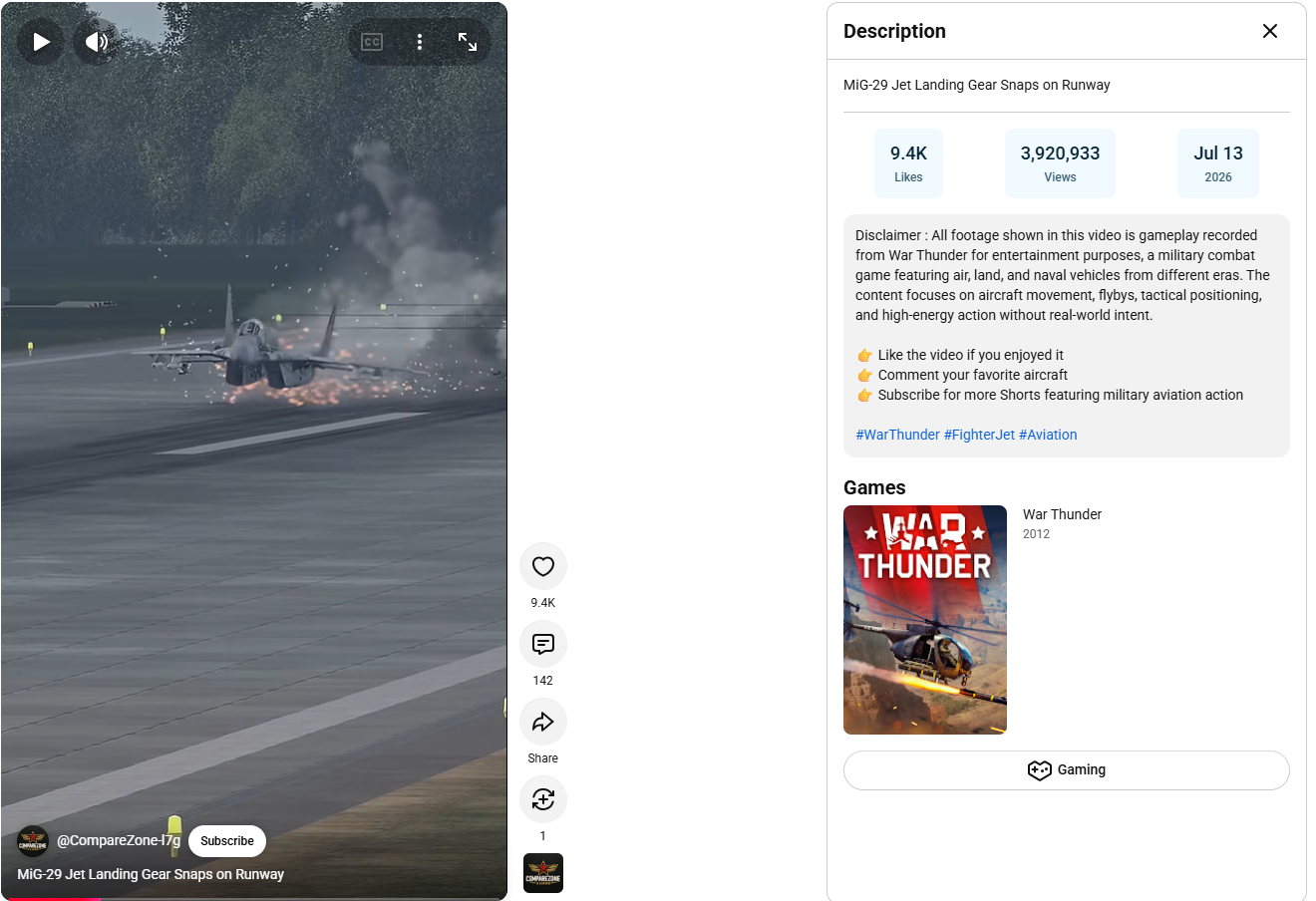
CyberPeace Research found the claim to be false. Our Research revealed that the video is not footage of an actual IAF MiG-29 crash, but gameplay footage from the video game War Thunder, which is being shared with a false and misleading claim.
Claim:
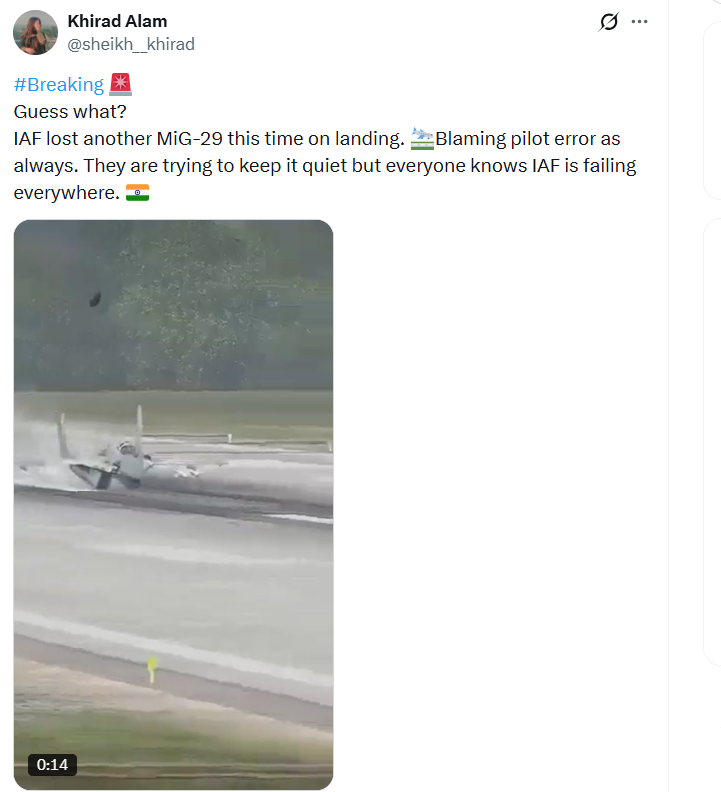
An Indian Air Force MiG-29 fighter jet crashed while landing, with pilot error being blamed for the incident. The post further claims that the IAF is trying to conceal the incident.
https://x.com/sheikh__khirad/status/2100447634599342114?s=20
Fact Check
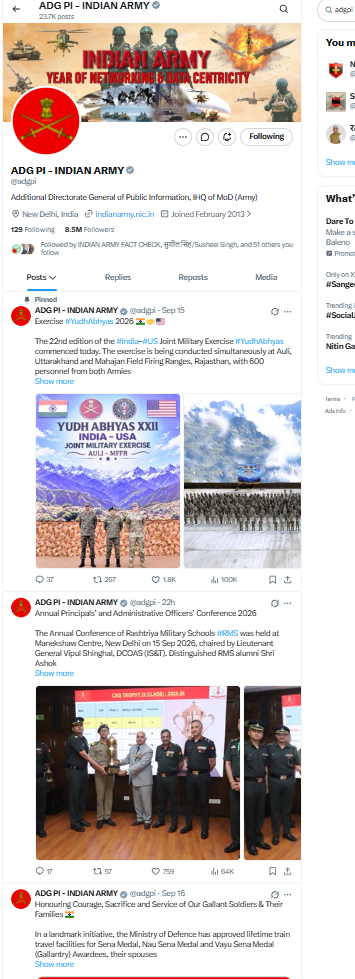
To verify the claim, we conducted a Google search using relevant keywords. However, we did not find any credible media report supporting the claim. We also checked the official X account of the Indian Army, but found no post confirming the claim.
https://x.com/adgpi
As part of our further research, we conducted a reverse image search of keyframes from the video. During the search, we found a YouTube channel where similar visuals had been uploaded.
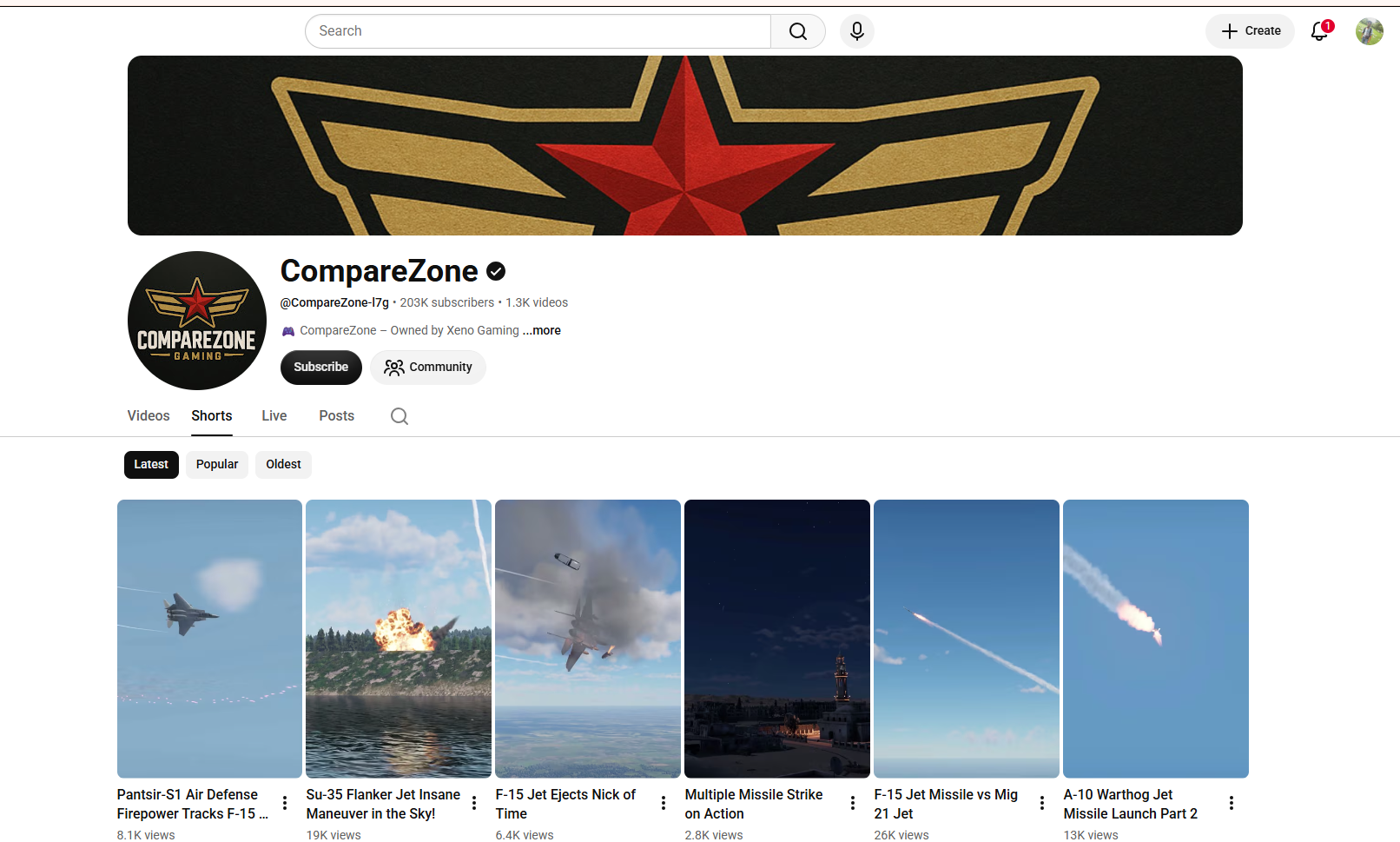
We found that the channel regularly posts gaming-related content. At the end of our research, we found the original version of the viral video on the YouTube channel. It was published on July 13, 2026. The video description also clearly states that the footage is gaming content and not a real-life incident.
https://www.youtube.com/shorts/dVu0eMztePo
Conclusion
Our research found that the video being shared with the claim that an IAF MiG-29 fighter jet crashed during landing does not depict a real incident. The video is actually gameplay footage from the video game War Thunder.Therefore, gaming footage is being falsely presented on social media as footage of an Indian Air Force MiG-29 crashing during landing. The incident shown in the video is not real.
