
#FactCheck -Deepfake Video of Tharoor Misleads Social Media Users
Executive Summary
A video of senior Congress leader Shashi Tharoor is widely circulating on social media, allegedly showing him praising Pakistan’s diplomatic stance over the ICC T20 World Cup issue. Many users are sharing the clip believing it to be genuine. However, research by the CyberPeace found the claim to be false. The viral video of Tharoor is a deepfake, and the Congress leader himself has described it as fabricated and fake.
Claim
A Facebook page named “Vok Sports” shared the video on February 11, 2026, claiming that Tharoor praised Pakistan. In the viral clip, he is purportedly heard saying in English that Pakistan’s diplomatic handling of the matter was “brilliant” and that it had outmanoeuvred the Indian cricket board, adding that good diplomacy could make a weak nation appear powerful.
The video was widely shared by social media users as authentic. (Archive links and post details provided.)
Fact Check
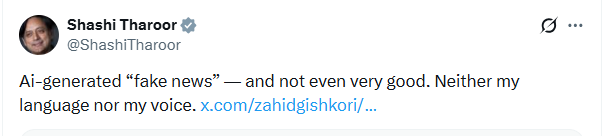
To verify the claim, we first scanned Tharoor’s official X (formerly Twitter) handle. We found a post dated February 12 in which he responded to a Pakistani journalist who had shared the video. Tharoor stated that the clip was AI-generated “fake news,” adding that neither the language nor the voice in the video was his.
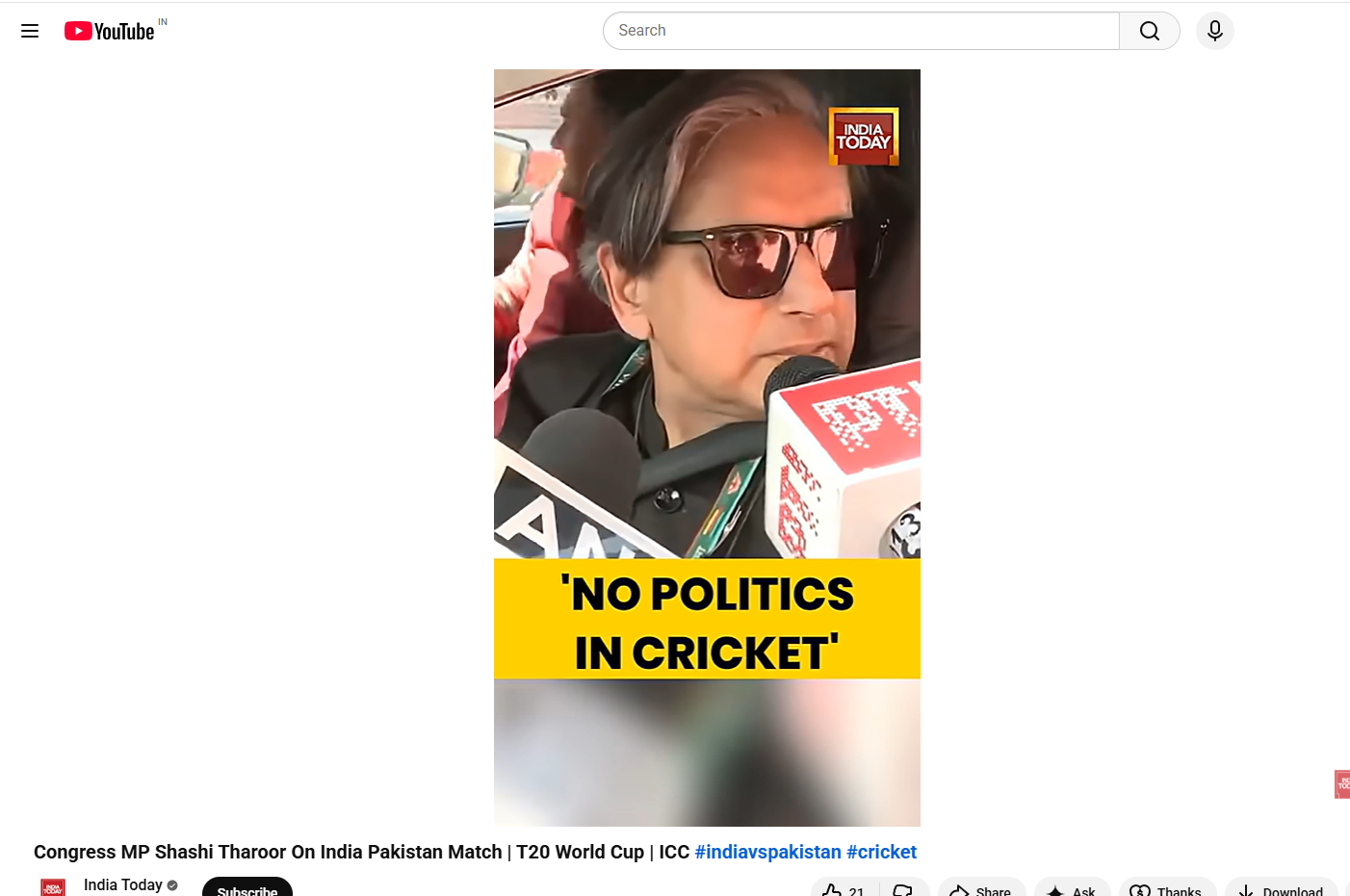
A reverse image search using Google Lens led the Desk to a video uploaded on February 10, 2026, by India Today on its official YouTube channel. The visuals in this original video exactly matched those seen in the viral clip showing Tharoor speaking to the media. However, upon analysing the original footage, we found that Tharoor was speaking in Hindi about the controversy surrounding the T20 World Cup. He stated that politics should not be mixed with cricket or sports and did not praise Pakistan or the Pakistan Cricket Board at any point. This indicates that the audio in the viral clip had been manipulated and replaced. In the original video, Tharoor said that politicians should conduct politics separately, diplomats should handle diplomacy, and cricket players should focus on the game, expressing hope that cricket would move forward with the match.
- https://www.youtube.com/watch?v=GkA1mLlAT8Q&t=3s
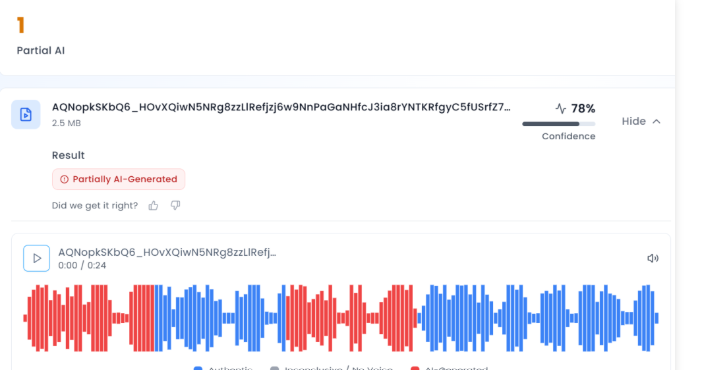
To further verify the authenticity of the video, several AI detection tools were used. Analysis through Aurigin.ai suggested a 78 percent probability that the audio in the viral clip was AI-generated.
Conclusion
The CyberPeace confirmed that the viral video is a deepfake. Tharoor did not praise Pakistan’s diplomatic stance during the T20 World Cup controversy, and the circulating clip has been digitally manipulated.

Related Blogs

Executive Summary:
The picture that went viral with the false story that Dhoni was supporting the Congress party, actually shows his joy over Chennai Super Kings' victory in the achievement of 6 million followers on X (formerly known as Twitter) in 2020. Dhoni's gesture was misinterpreted by many, which resulted in the spread of false information. The Research team of CyberPeace did an in-depth investigation of the photo's roots and confirmed its authenticity through a reverse image search, highlighting how news outlets and CSK's official social media channels shared it. The case illustrates the value of fact verification and the role of real information in preventing the fake news epidemic.

Claims:
An image of former Indian Cricket captain Mahendra Singh Dhoni, showed him urging people to vote for the Congress party, wearing the Chennai Super Kings (CSK) jersey and showing his right palm visible and gesturing the number 'one' with his left index finger. In reality he is celebrating Chennai Super Kings' milestone achievement on X (formerly Twitter) in 2020. Many people are sharing the misinterpretation knowingly or unknowingly over social media platforms.


Fact Check:
After receiving the post, we ran a reverse image search of the image and found a news article published by NDTV. According to the news outlet, Dhoni and his teammates were celebrating CSK's milestone of reaching six million followers on X (formerly known as Twitter) in the photos.

In the image it is written as a tweet of @chennaiipl, to get an idea we dig into the official account of Chennai Super Kings on X (formerly known as Twitter). And Voila! we found the exact post which surfaced on the X (formerly known as Twitter) on 5th October 2020.

Additionally, we found a video posted on the X (formerly known as Twitter) handle of CSK, featuring other cricketers celebrating the Six Million Followers milestone for which they are thanking the audience for their support. Again, it was posted on Oct 05, 2020. The caption of the video is written as “Chennai Super #SixerOnTwitter! A big thanks to all the super fans for each and every bouquet and brickbat throughout the last decade. All the #yellove to you. #WhistlePodu”

Therefore it is easy to conclude that the viral image of MS Dhoni supporting Congress is wrong and misleading.
Conclusion:
The information that circulated online media regarding a picture of Mahendra Singh Dhoni supporting the Congress Party has been proven to be untrue. The actual photograph was of Dhoni congratulating the Chennai Super Kings for having six million followers on social media in the year 2020. This highlights the need for checking the facts of any news circulating online.
- Claim: A photo allegedly depicting former Indian cricket captain Mahendra Singh Dhoni encouraging people to support the Congress party in elections surfaced online.
- Claimed on: X (Formerly known as Twitter)
- Fact Check: Fake & Misleading

Executive Summary
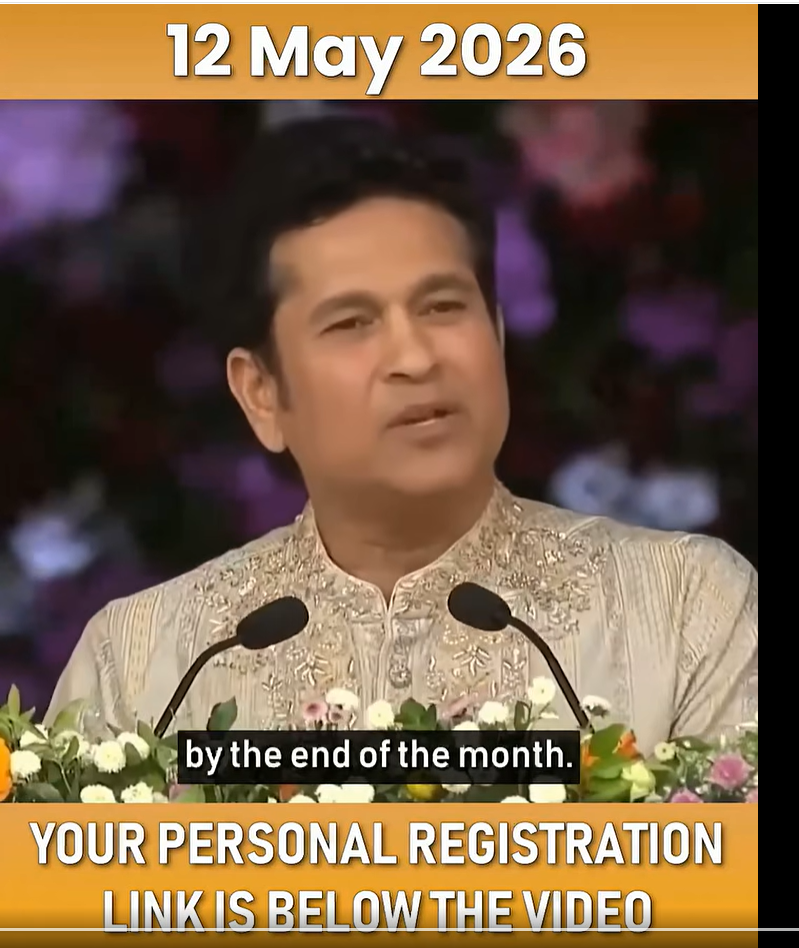
A video featuring former Indian cricketer Sachin Tendulkar is being widely circulated on social media with the date “12-5-2026” displayed on the screen. In the viral clip, Tendulkar appears to promote an investment scheme, allegedly saying that people investing in the scheme today could earn Rs 80 lakh by the end of the day. Throughout the video, he is seen speaking about investment opportunities and financial returns. However, research conducted by CyberPeace Research Wing found that the video is AI-generated and misleading. The original footage was actually from an event marking the centenary celebrations of Sri Sathya Sai Baba.
Claim
A Facebook user shared the viral video on May 12, 2026, claiming that Sachin Tendulkar was endorsing a high-return investment scheme. The post quickly gained traction on social media platforms.
Fact Check
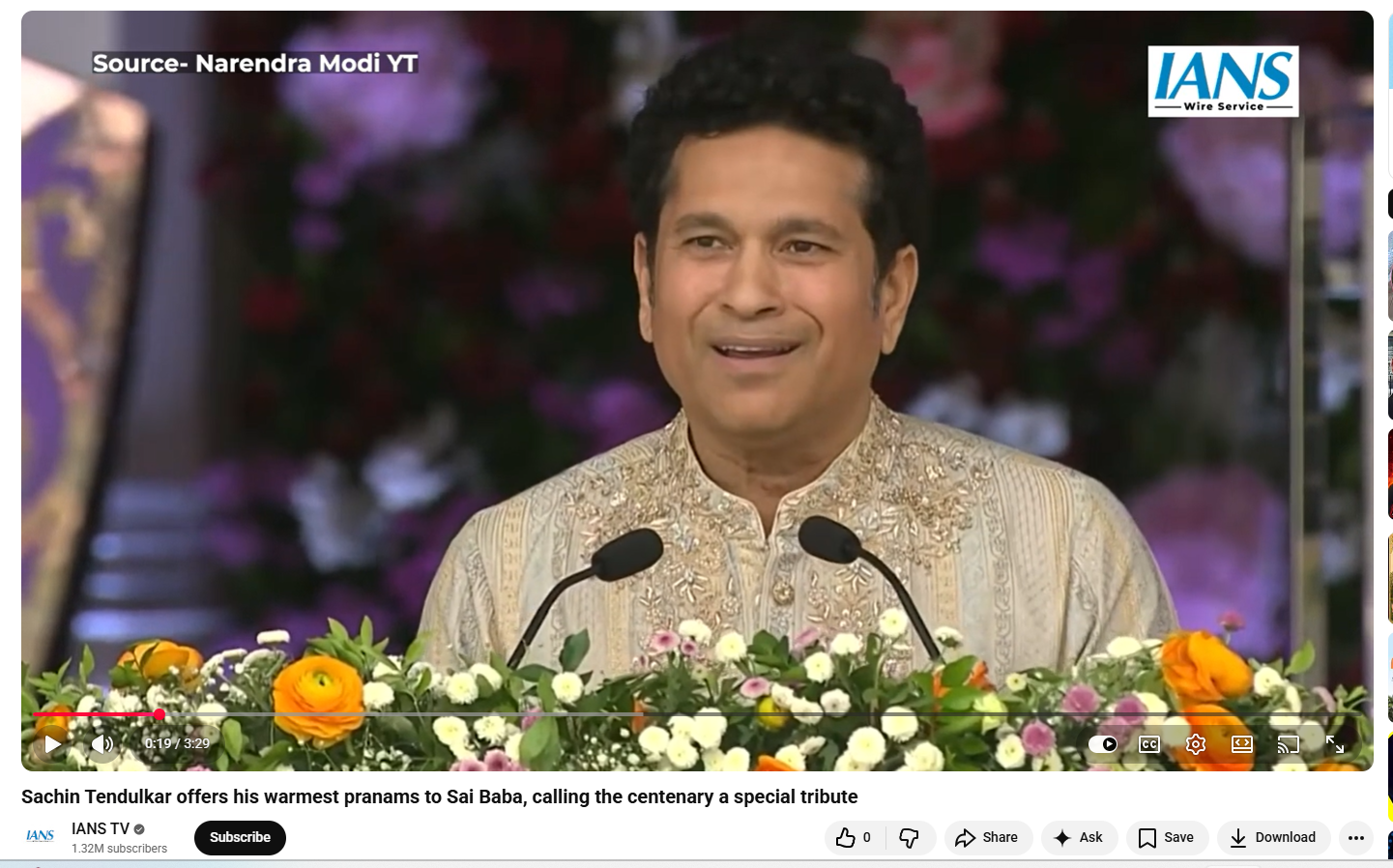
To verify the claim, we searched the internet using relevant keywords but found no credible media reports suggesting that Tendulkar had endorsed any such investment scheme. As part of our research, we extracted key frames from the viral clip and conducted a reverse image search. During the search, we found the original video uploaded on November 19, 2025, on the YouTube channel of IANS. According to the video description, Tendulkar was attending an event organized to mark the centenary year celebrations of Sri Sathya Sai Baba.
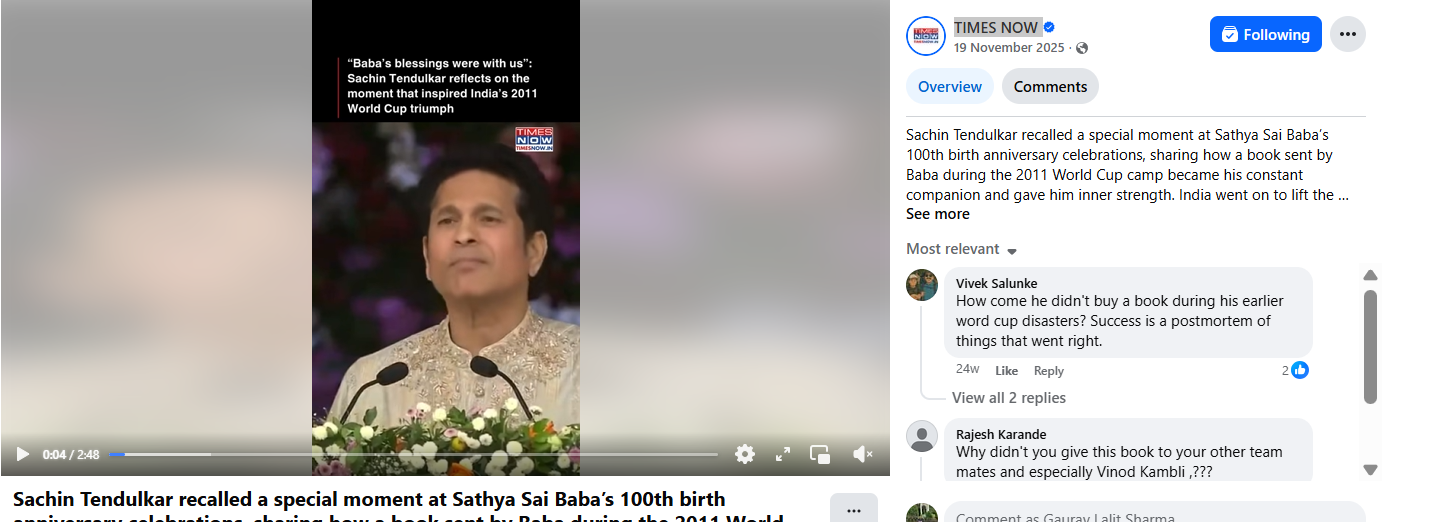
We further found a similar version of the same video uploaded on November 19, 2025, on the official Facebook page of Times Now, confirming that the footage was unrelated to any investment or financial scheme.
Conclusion
Our research found that the viral video has been manipulated using AI-generated audio or editing techniques to falsely portray Sachin Tendulkar promoting an investment scheme. The original video was from a public event related to Sri Sathya Sai Baba’s centenary celebrations and had no connection to any financial investment platform.

Introduction
MGM Resorts, which is an international company, has suffered an ongoing cyberattack which led to the shutdown of a number of its computer systems, including its website, in response to a cybersecurity issue. MGM Resorts International is in touch with external cybersecurity experts to resolve the issue since it has affected its entire Computer systems. MGM is a larger entity and operates thousands of hotel rooms across Las Vegas and the United States. MGM Resorts shared about the incident and posted that MGM recently identified a cybersecurity issue affecting some of the Company's systems. Promptly after detecting the issue, they quickly began an investigation with assistance from leading external cybersecurity experts. MGM has notified law enforcement and took prompt action to protect systems and data, including putting down certain systems. MGM further stated that the investigation is ongoing.
The issue
Basic operations such as the online reservation and booking system MGM have been affected and shut down due to the cybersecurity issue faced by a lot of visitors. Since earlier times, casino security has been the state of the art as they were very vulnerable to attacks by robbers and con artists. This is what we have also seen in a lot of movies. In today's time, con artists and robbers are now strengthened by cyber tactics. This is exactly what was seen in the case of the MGM attack.
MGM Resorts is home to best-in-class amenities and facilities for guests, but with the increase in tourist traction, the vulnerabilities and the scope of cyber attacks have also increased. This is also because of open wifis in the establishments and the transition of casinos to e-casinos, thus causing a major shift towards digital and technology-based intervention for better customer experience and streamlining a lot of operations.
How real is the threat?
As reported by MGM Resorts, the following systems were impacted in the cyber security attack:
- Slots Machines: The slot machines placed in the casino suddenly went offline and displayed an error message for the players. Some players who were already using the slot machines lost their bets and were unable to withdraw their winnings.
- Room Keys: Some of the guests reported that the room keys became unresponsive, and in some cases, the replacement keys were also inactive for some time, causing massive chaos at the reception.
- Booking Status: All the bookings in today's time are made online; this was one of the worst-hit segments of the cyber attacks. Most of the bookings made automatically were put on hold, and the confirmations could be made only from the hotel reception, thus causing massive cancelling of the bookings and both the hotel and customers losing out on money.
- MGM App: The official app of MGM Resorts was completely down, thus causing a situation of confusion and panic among the guests. The users also received notifications to speak to different customer care executives, but some of the numbers were unattentive and seemed to be operated by bad actors.
- Data breach: The main focus of the cyber attack was dedicated to committing a data breach. The attack led to the breach of personal data of most of the users registered on the app or on the system of MGM Resorts.
Conclusion
The cyber attack on the tourism industry is a major and growing concern for the industry and its customers. Seeing the volatility of the data and the regular inflow of personal information this makes the hotel's cyber security system a vulnerable choice for bad actors. The cyber attack was no less than a fire sale, where in all the segments of the services offered were impacted. Similar attacks were reported by MGM in 2019 and 2020, and subsequently, the safety measures were also deployed, but the bad actors have hit the resorts chain owners again, in such cases the most paramount defence is having a safe and regularly updated firewall, upskilling of staff for IT issues and attacks, active reporting and investigation mechanisms for assisting the LEAs. In the times of rising cyberattacks, one needs to be critical of their data management and digital footprints. The sooner we adopt safe, secure and resilient cyber hygiene practices, the safer our future will be.
References:
https://www.bleepingcomputer.com/news/security/mgm-resorts-shuts-down-it-systems-after-cyberattack/
https://www.cnbc.com/2023/09/12/mgm-resorts-cybersecurity-incident-forces-system-outage.html
