
#FactCheck: Old Kolkata Student Protest Video Falsely Linked to CJP Protests in Delhi
Executive Summary
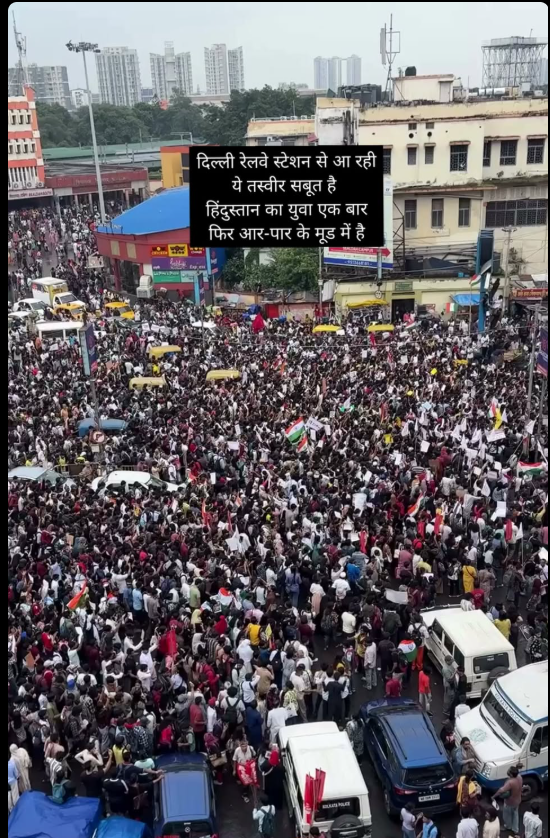
A video is going viral on social media in the name of the protests organised by the ‘Cockroach Janata Party’ (CJP) in Delhi on October 10 and 11. The video is being shared as footage from Delhi Railway Station, with the claim that the protests led to a massive traffic jam outside the station. CyberPeace Research conducted a detailed analysis of the viral video and found the claim to be misleading. The video is not from Delhi but from Sealdah Railway Station in Kolkata, where students held a protest in July 2026. The old video from that time is now being circulated in connection with the protests in Delhi, falsely linking the two events.
Claim
On October 10, 2026, the Facebook page ‘Atrangi Khabar’ shared a video with the following caption:“Massive Protest and Traffic Jam: Huge Crowd Gathers Outside Delhi Railway Station, Several Passengers Miss Their Trains! A massive traffic jam occurred outside Delhi Railway Station on Saturday due to a large-scale protest.
As a result, railway passengers faced severe difficulties reaching the station, and several passengers even missed their trains because of the traffic congestion. The video clearly shows a huge crowd filling the roads and an atmosphere of chaos all around.”
https://www.facebook.com/reel/2176543963241315/?s=single_unit
Fact Check
To verify the authenticity of the viral video, we first extracted several keyframes and searched them using Google Lens. We found that the video had been uploaded on multiple platforms on earlier dates. An Instagram account named ‘Faruk Biswas’ (faruk.biswas.581730) had shared the video on July 24, 2026, identifying it as footage of a student protest in Kolkata.
https://www.instagram.com/reels/DbLd3N3of7a/

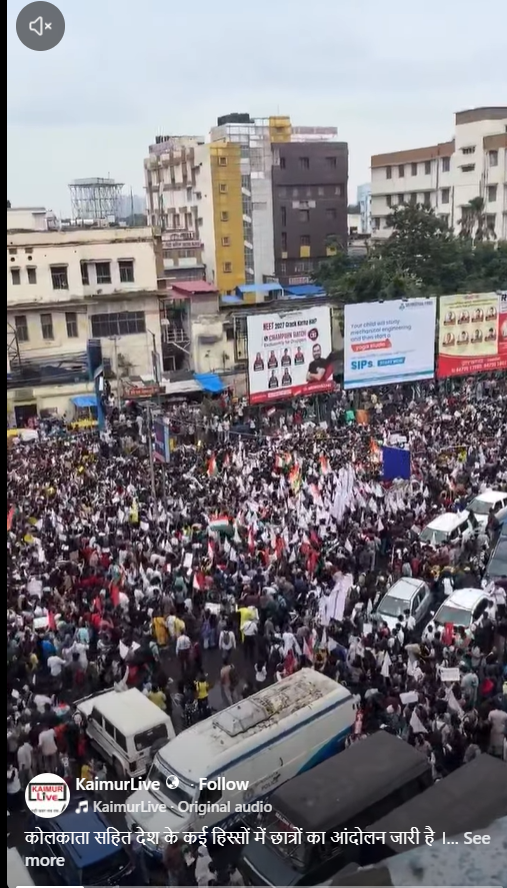
During our search, we also found the same video on a Facebook page named ‘KaimurLive’. The caption accompanying the video read, “Student protests continue in Kolkata and several other parts of the country. Today, a massive gathering of students was seen on the streets of Kolkata. #NEETPaperLeak”
http://facebook.com/reel/2024661971511084
Conclusion
Our research found the viral post to be misleading. An old video from Sealdah Railway Station in Kolkata is being falsely shared as footage from Delhi Railway Station. The original video dates back to July 2026 and has no connection to the protests held in Delhi on October 10 and 11, 2026.

Related Blogs
.webp)
Introduction
The automobile business is fast expanding, with vehicles becoming sophisticated, interconnected gadgets equipped with cutting-edge digital technology. This integration improves convenience, safety, and efficiency while also exposing automobiles to a new set of cyber risks. Electric vehicles (EVs) are equipped with sophisticated computer systems that manage various functions, such as acceleration, braking, and steering. If these systems are compromised, it could result in hazardous situations, including the remote control of the vehicle or unauthorized access to sensitive data. The automotive sector is evolving with the rise of connected car stakeholders, exposing new vulnerabilities for hackers to exploit.
Why Automotive Cybersecurity is required
Cybersecurity threats to automotives result from hardware, software and overall systems redundancy. Additional concerns include general privacy clauses that justify collecting and transferring data to “third-party vendors”, without explicitly disclosing who such third parties are and the manner of processing personal data. For example, infotainment platform data may show popular music and the user’s preferences, which may be used by the music industry to improve marketing strategies. Similarly, it is lesser known that any data relating to behavioural tracking data, such as driving patterns etc., are also logged by the original equipment manufacturer.
Hacking is not limited to attackers gaining control of an electronic automobile; it includes malicious actors hacking charging stations to manipulate the systems. In Russia, EV charging stations were hacked in Moscow to display pro-Ukraine and anti-Putin messages such as “Glory to Ukraine” and “Death to the enemy” in the backdrop of the Russia-Ukraine war. Other examples include instances from the Isle of Wight, where hackers controlled the EV monitor to show inappropriate content and display high voltage fault codes to EV owners, preventing them from charging their vehicles with empty batteries.
UN Economic Commission for Europe releases Regulation 155 for Automobiles
UN Economic Commission for Europe Regulation 155 lays down uniform provisions concerning the approval of vehicles with regard to cybersecurity and cybersecurity management systems (CSMS). This was originally a part of the Commission.s Work Paper (W.P.) 29 that aimed to harmonise vehicular regulations for vehicles and vehicle equipment. Regulation 155 has a two-prong objective; first, to ensure cybersecurity at the organisational level and second, to ensure adequate designs of the vehicle architecture. A critical aspect in this context is the implementation of a certified CSMS by all companies that bring vehicles to market. Notably, this requirement alters the perspective of manufacturers; their responsibilities no longer conclude with the start of production (SOP). Instead, manufacturers are now required to continuously monitor and assess the safety systems throughout the entire life cycle of a vehicle, including making any necessary improvements.
This Regulation reflects the highly dynamic nature of software development and assurance. Moreover, the management system is designed to ensure compliance with safety requirements across the entire supply chain. This is a significant challenge, considering that suppliers currently account for over 70 per cent of the software volume.
The Regulation, which is binding in nature for 64 member countries, came into force in 2021. UNECE countries were required to be compliant with the Regulations by July 2022 for all new vehicles and by July 2024, the Regulation was set to apply to all vehicles. It is believed that the Regulation will become a de facto global standard, since vehicles authorised in a particular country may not be brought into the global market or the market of any UNECE member country based on any other authorisation. In such a scenario, OEMs of non-member countries may be required to give a “self-declaration”, declaring the equipment’s conformity with cybersecurity standards.
Conclusion
To compete and ensure trust, global car makers must deliver a robust cybersecurity framework that meets evolving regulations. The UNECE regulations in this regard are driving this direction by requiring automotive original equipment manufacturers (OEMs) to integrate vehicle cybersecurity throughout the entire value chain. The ‘security by design' approach aims to build a connected car that is trusted by all. Automotive cybersecurity involves measures and technologies to protect connected vehicles and their onboard systems from growing digital threats.
References:
- “Electric vehicle cyber security risks and best practices (2023)”, Cyber Talk, 1 August 2023. https://www.cybertalk.org/2023/08/01/electric-vehicle-cyber-security-risks-and-best-practices-2023/#:~:text=EVs%20are%20equipped%20with%20complex,unauthorized%20access%20to%20sensitive%20data.
- Gordon, Aaron, “Russian Electric Vehicle Chargers Hacked, Tell Users “PUTIN IS A D*******D”, Vice, 28 February 2022. https://www.vice.com/en/article/russian-electric-vehicle-chargers-hacked-tell-users-putin-is-a-dickhead/
- “Isle of Wight: Council’s electric vehicle chargers hacked to show porn site”, BBC, 6 April 2022. https://www.bbc.com/news/uk-england-hampshire-61006816
- Sandler, Manuel, “UN Regulation No. 155: What You Need to Know about UN R155”, Cyres Consulting, 1 June 2022. https://www.cyres-consulting.com/un-regulation-no-155-requirements-what-you-need-to-know/?srsltid=AfmBOopV1pH1mg6M2Nn439N1-EyiU-gPwH2L4vq5tmP0Y2vUpQR-yfP7#A_short_overview_Background_knowledge_on_UN_Regulation_No_155
- https://unece.org/wp29-introduction?__cf_chl_tk=ZYt.Sq4MrXvTwSiYURi_essxUCGCysfPq7eSCg1oXLA-1724839918-0.0.1.1-13972

Introduction:
The Indian Ministry of Communications has come up with a feature known as "Quick SMS Header Information" to provide citizens with more control over their messaging services. This feature would help users access crucial information about the sender through text message, therefore making the details readily available at their fingertips.
The Quick SMS Header service is the key to providing users with the feature to ensure that they are receiving messages from the correct source. Users can instantly learn all the necessary data about the sender of a certain SMS. This data is invaluable for making the distinction between real messages and suspicious spam or phishing, so the user can have a higher level of defense against online threats and scam activities.
Importance of Checking the Header:
1. Authenticity Verification: SMS header data represents another way to confirm the sender. This feature keeps the end user from wrongly assuming that the SMS is from a trusted source or an unknown sender. Hence, the end user is able to make a choice about the authenticity of the message.
2. Mitigating Spam and Phishing: The rise of SMS and phishing scams has created some significant hurdles for users in the process of differentiating between real and fake messages. Through the Quick SMS Header Information service, people will be able to look up any suspicious messages in order to be able to take appropriate steps to prevent links that lead to malicious websites or requests for personal information.
3. Enhancing User Security: The SMS header information plays an important role in ensuring that the user is secure and has no privacy issues. The checking of the message headers will help us limit the possibilities of bad activities and reduce the chances of being a victim of cybercriminals.
4. Empowering Consumer Awareness: This feature is designed to encourage the people involved to take responsibility for the security of their devices and establish a safer and more dependable digital platform.
Benefits:
- Enhanced Transparency: By giving access to the header information to the users, it is transparency that is promoted within the telecommunications ecosystem.
- Empowered Decision-Making: Now that users have information about the SMS header, they can make informed decisions regarding their communications and privacy.
- Efficient Resolution of Concerns: The Quick SMS Header Information serves the purpose of providing the needed resolution by telling us the message’s origin in cases where users come across any suspicious messages.
- User-Friendly Interface: With its easy and clear process, this feature caters to users of all technical proficiency levels, ensuring accessibility for all.
Working:
1. Compose Your SMS: Write a message with the header you wish to find the information about. For example, if you want to know details about a header labeled "SBIINB," your SMS should be in the format "DETAILS OF SBIINB." Note, all letters are in capital only.

2. Send it to 1909: Once your message is ready, send it to: 1909. Please note, this may charge you depending upon your current plan.

3. Receive Response: The response to your SMS will be sent to you by the concerned telecommunication service provider or directly by 1909, a few seconds after you have sent your message. This response will have the data associated with the header above.

Another method to find SMS header information:
TRAI (Telecom Regulatory Authority of India) has made a tool on the webpage (https://smsheader.trai.gov.in/) to check for the SMS header associated with the message.
TRAI has also mandated header registration for messages pertaining to transactional or promotional purposes. This has helped people identify the SMS header by simply looking into the database as made by TRAI.
Steps:
1. Go to https://smsheader.trai.gov.in/. The page looks like as shown below:

2. Enter your Email, Name and complete the captcha under the Download/View Header Details and click on continue

3. Enter the OTP received on your email with the captcha and click on continue
4. Now enter your SMS header in the format of AA-AAAA, where “AA” is your prefix and “AAAA” is your header name. For example, we have taken “AX-HDFCBK” as our sample header, so “AX” is our prefix and “HDFCBK” is our header name.

5. As soon as we press enter, the site returns the query with the information of the header, as shown below

Conclusion:
The importance of checking SMS headers is something that simply cannot be overemphasized. This is the principal procedure for identifying incoming messages as authentic, and on that basis, the users are able to make informed choices about the messages they receive. It also contributes to the rise of user safety and privacy.
The development of more transparent controls and a stronger decision-making process will make it easier for users to handle their digital lives. The Quick SMS Header Information service is easy and convenient to use, as its interface is simple and understandable for users of all technical levels.
In addition to this, TRAI's attempt to make available an online tool for the maintenance of a comprehensive database of SMS headers strengthens its position towards ensuring security for its users in the telecommunications sector.
Executive Summary:
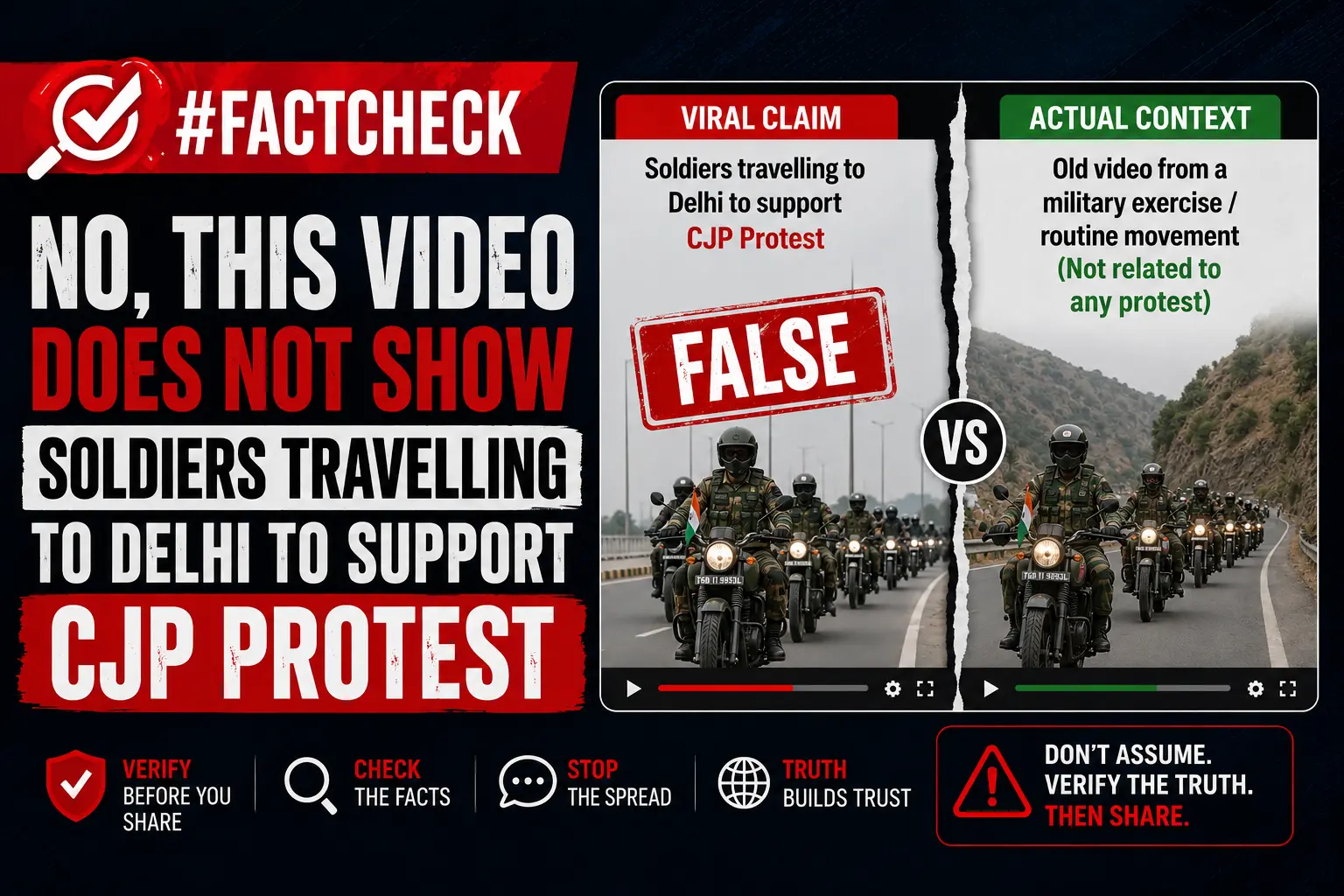
A video showing a convoy of soldiers travelling on motorcycles is being widely shared on social media with the claim that the personnel were heading towards Delhi’s Jantar Mantar to support the ongoing protest led by the Cockroach Janata Party (CJP). CyberPeace Research Wing’s research found the claim to be false. The viral video is not related to the CJP protest at Jantar Mantar. The footage predates the ongoing demonstration and is being circulated with a misleading claim.
Claim:
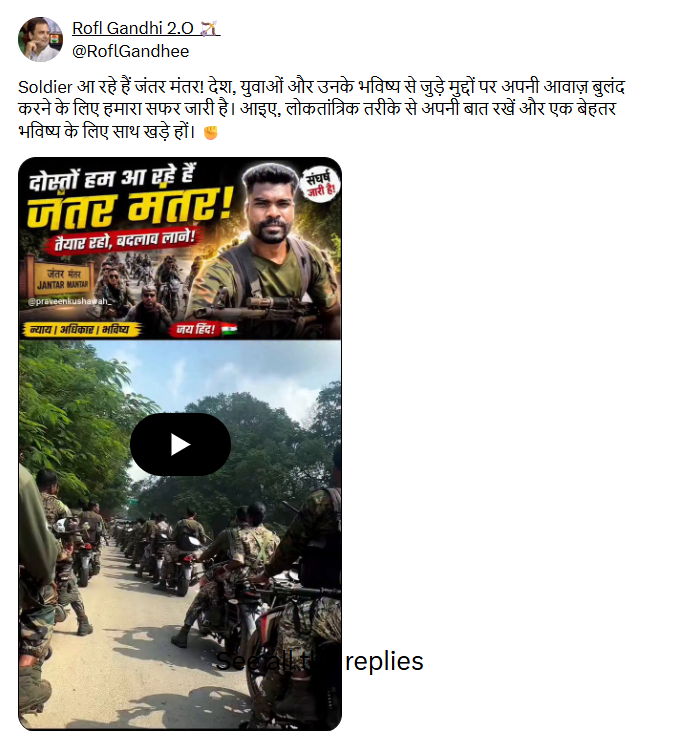
A social media user shared the viral video claiming that soldiers were travelling towards Delhi’s Jantar Mantar to support the youth participating in the CJP protest over issues related to the country’s education system. The post claimed that the soldiers were joining the protest to raise their voice on issues concerning the nation, youth, and their future.
https://x.com/RoflGandhee/status/2079986496556204066?s=20
A reverse image search using Google Lens led the Desk to a video uploaded on a YouTube channel named Commando Journey. Upon comparison, the Desk found that the YouTube video contained the same visuals as the viral video under research. Further verification of the video details revealed that the footage predates the ongoing Cockroach Janata Party (CJP) protest at Jantar Mantar. The protest, which began in June 2026, has been demanding the resignation of Union Education Minister Dharmendra Pradhan over alleged irregularities in examinations. The video was uploaded on the YouTube channel in February 2026, several months before the CJP protest began, confirming that it has been falsely linked to the recent demonstration.
https://www.youtube.com/shorts/cMvai580gdo
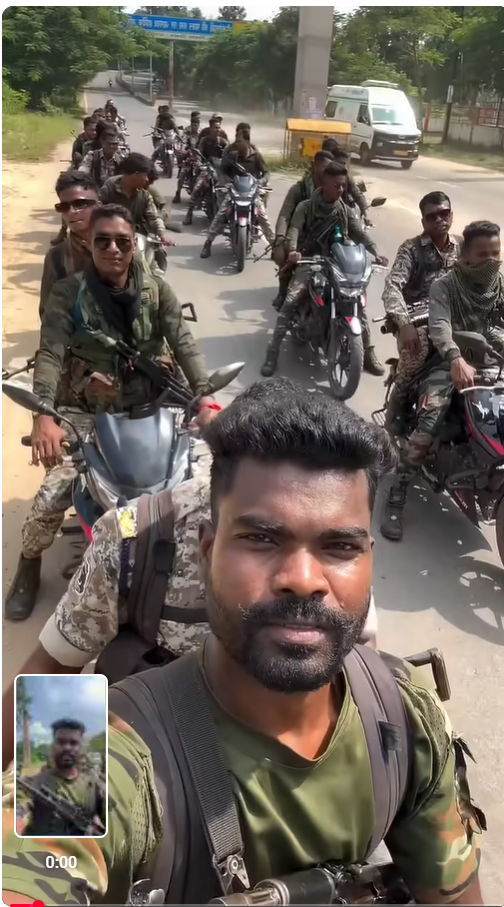
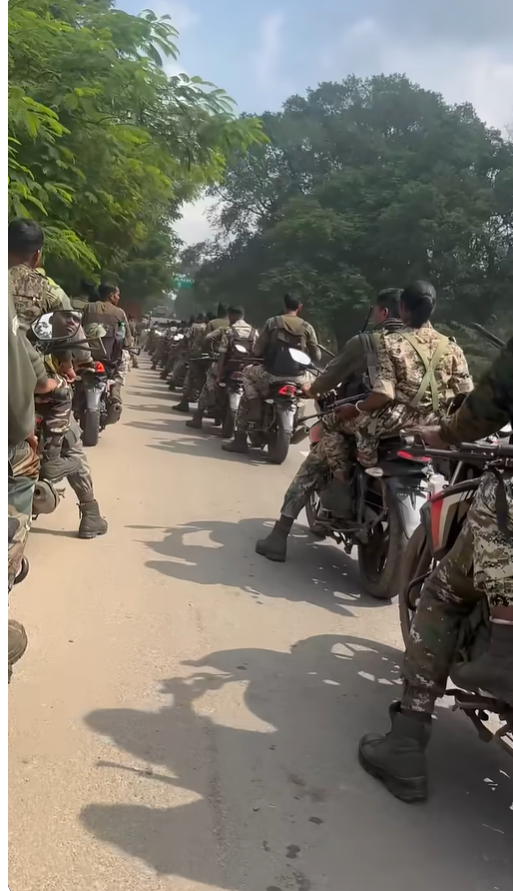
As part of the next phase of the research, the Desk reviewed several other videos uploaded on the same YouTube channel. During the analysis, the Desk identified multiple videos featuring visuals matching those seen in the viral clip. However, these videos were also uploaded before the CJP protest in Delhi, with one of the videos dating back to October 2025.
https://www.youtube.com/shorts/7eDc9TqOpzM
Conclusion
While the Desk could not independently verify the exact origin and context of the video, the research established that the footage predates the CJP protest and has been falsely linked to the demonstration. Based on the findings, the Desk concluded that the video shared on social media does not show soldiers travelling to Delhi’s Jantar Mantar to support the Cockroach Janata Party (CJP) protest. The footage is unrelated to the ongoing protest and has been circulated with a misleading claim.
