
#FactCheck: Viral Avalanche Video Is from Peru, Not the Nepal-Tibet Floods
Executive Summary
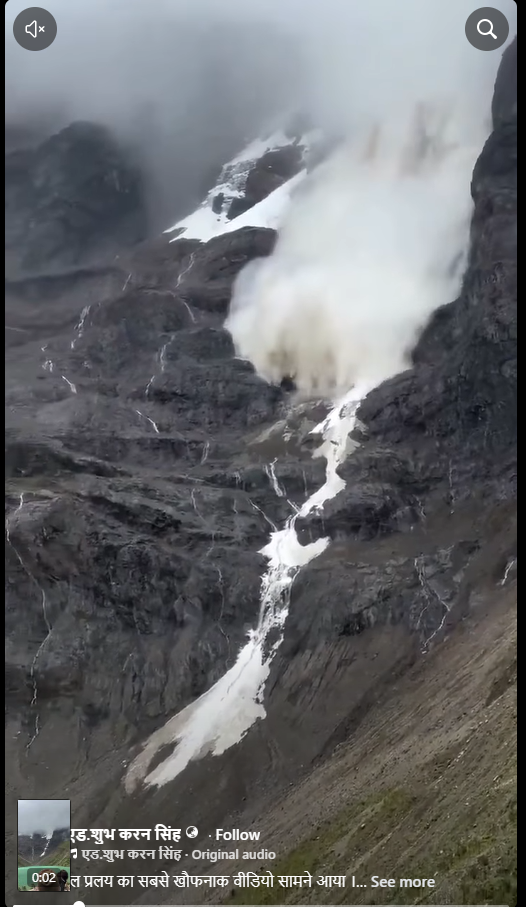
A video showing an avalanche is going viral on social media, with users linking it to the devastating floods that struck Nepal-Tibet on August 26, 2026. Some users are sharing the video claiming that it is the first video of the Nepal floods and that it shows the same glacier whose collapse caused the devastating flooding in Nepal. However, a research by CyberPeace’s Research Wing found that the video is actually from Peru, where the incident took place in July 2026. The video has no connection to the floods that occurred in Nepal-Tibet.
Claim:
Facebook user ‘Adv. Shubh Karan Singh’ shared the video with the caption: “The most terrifying video of the Nepal deluge has emerged. This is the glacier that caused the tragedy in Nepal. The glacier fell into a river in Nepal from the Tibetan side, and this glacier is responsible for the flooding in Nepal.”
https://www.facebook.com/reel/1550707740405005
Fact Check
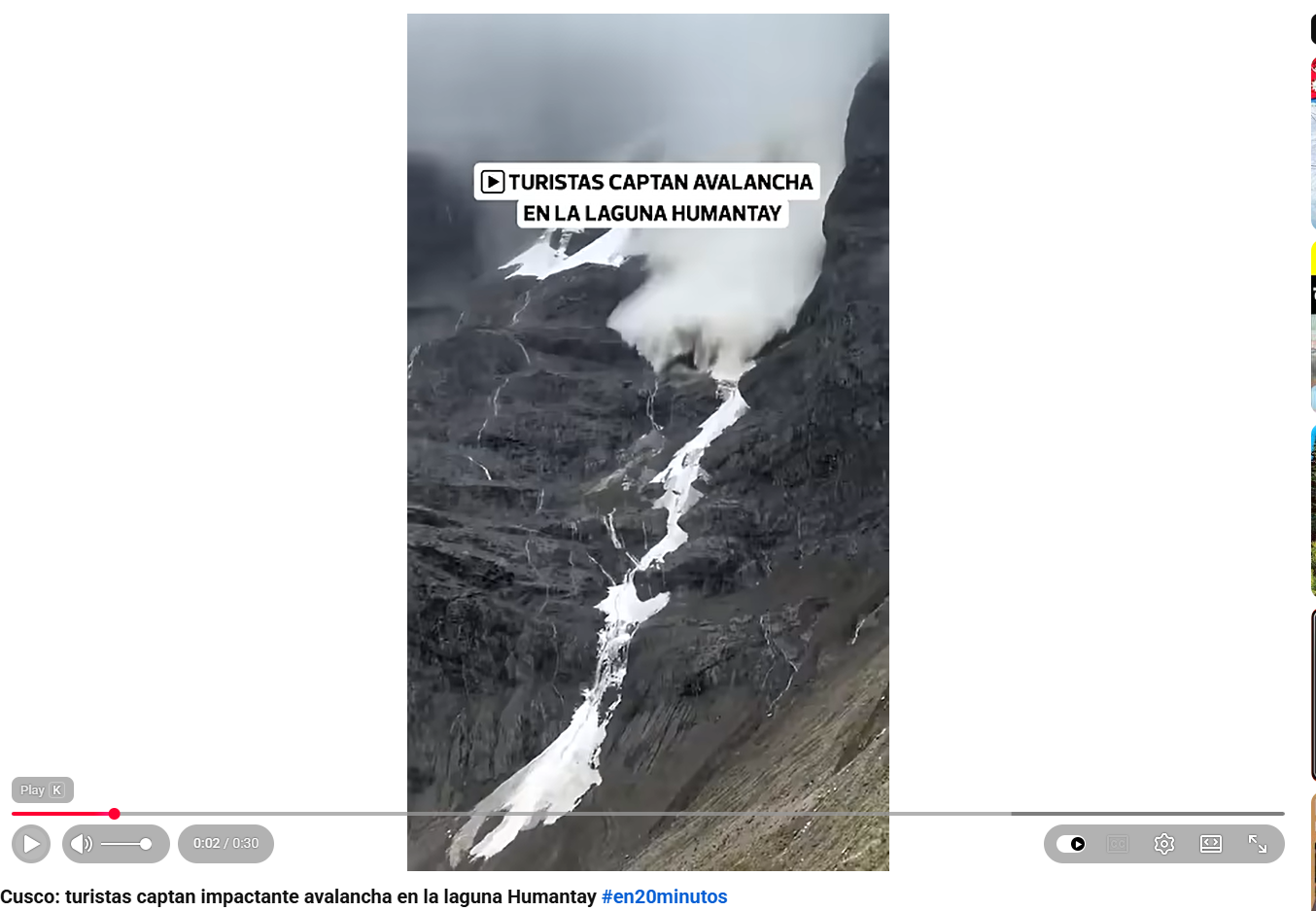
To investigate the viral claim, we conducted a reverse image search of keyframes from the video using Google Lens. We found that the video was posted on the YouTube channel of Peruvian news portal Diario Correo on July 28, 2026. The video was identified as being from Cusco. According to the information provided with the video, tourists in Cusco captured the avalanche at Humantay Lagoon on camera.
https://youtu.be/CM6ugW6v834?si=XEqWDZ2MqTtqrf3r
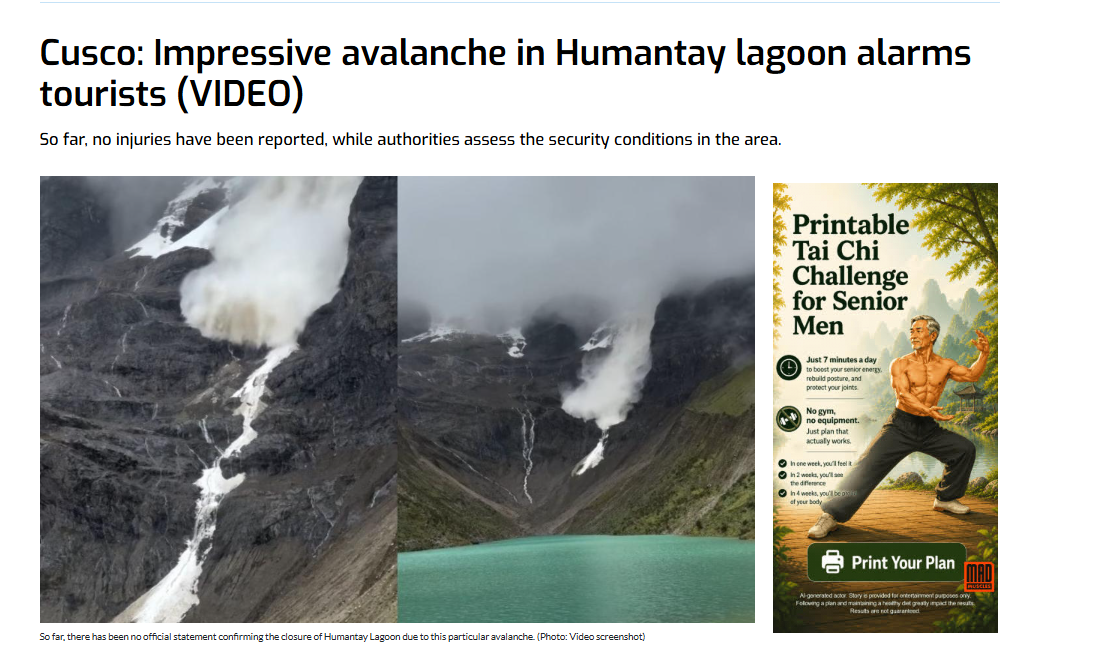
A report published by the Peruvian news website Perú 21 on July 27, 2026, used a keyframe from the viral video. According to the report, “A recent snowstorm near Humantay Lagoon, one of Cusco’s main tourist attractions, startled tourists visiting the area. Videos shared on social media show snow and chunks of ice falling down the mountain slopes, while tourists can be seen moving away from the area as a precaution. According to the information available so far, no injuries or missing persons have been reported following the fall of the ice mass.”
https://peru21.pe/peru/avalancha-en-laguna-humantay-sorprende-turistas-en-cusco/
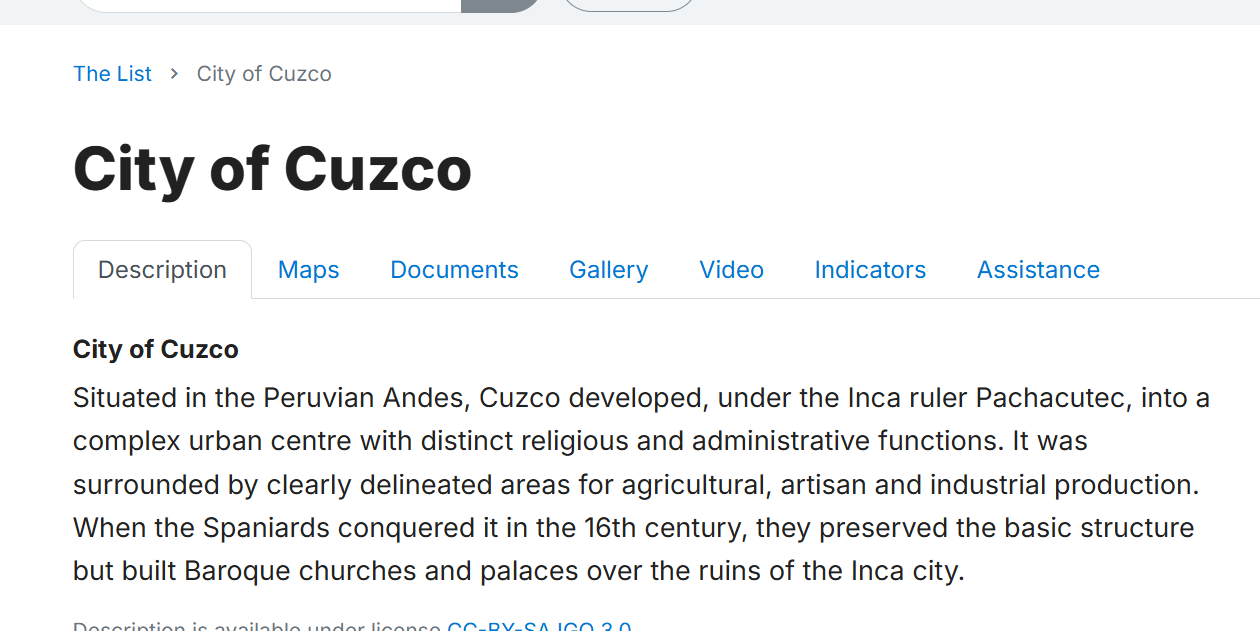
According to information available on the UNESCO website, Cusco is located in the Peruvian Andes. The Peruvian Andes are a vast mountain range that stretches from north to south across Peru.
https://whc.unesco.org/en/list/273
Conclusion:
Our research found that the viral claim is false and misleading. The video being circulated as the “first video” of the devastating floods in Nepal and Tibet does not show a glacier collapse in the region or have any connection to the floods reported there on August 26, 2026. Through a reverse image search of keyframes, we traced the video to Cusco, Peru, where it was recorded in July 2026. Reports published by Peruvian media outlets identified the footage as showing an avalanche near Humantay Lagoon, a popular tourist destination in Cusco. The incident was captured on camera by tourists visiting the area, and there were no reports of injuries or missing persons at the time. Independent information from UNESCO also confirms that Cusco is located in the Peruvian Andes. Therefore, the viral video is an old video from Peru and is being falsely linked to the Nepal-Tibet floods. There is no evidence to support the claim that the footage shows the glacier collapse responsible for the flooding in Nepal.

Related Blogs

Introduction
The hospitality industry is noted to be one of the industries most influenced by technology. Hotels, restaurants, and travel services are increasingly reliant on digital technologies to automate core operations and customer interactions. The shift to electronic modes of conducting business has made the industry a popular target for cyber threats. In light of increasing cyber threats, safeguarding personal and sensitive personal data on the part of the hospitality industry becomes significant not only from a customer standpoint but also from an organisational and legal perspective.
Role of cybersecurity in the hospitality industry
A hospitality industry-based entity (“HI entity”) deploys several technologies not only to automate operations but to also deliver excellent customer experiences. Technologies such as IoTs that enable smart controls in rooms, Point-of-Sale systems that manage reservations, Call Accounting Systems that track and record customer calls, keyless entry systems, and mobile apps that facilitate easy booking and service requests are popularly used in addition to operative technologies such as Property Management Systems, Hotel Accounting Systems, Local Area Networks (LAN).{1} These technologies collect vast volumes of data daily due to the nature of operations. Such data necessarily includes personal information such as names, addresses, phone numbers, email IDs etc. and sensitive information such as gender, bank account and payment details, health information pertaining to food allergens etc. Resultantly, the breach and loss of such critical data impacts customer trust and loyalty and in turn, their retention within the business. Lack of adequate cybersecurity measures also impacts the reputation and goodwill of an HI entity since customers are more likely to opt for establishments that prioritise the protection of their data. In 2022, cybercriminals syphoned 20GB of internal documents and customer data from Marriott Hotels, which included credit card information and staff information such as wage data, corporate card number and even a personnel assessment file. A much larger breach was seen in 2018, where 383 million booking records and 5.3 million unencrypted passport numbers were stolen from Marriott’s servers.{2}
Cybersecurity is also central to safeguarding trade secrets and key confidential trade information. An estimate of US $6 trillion per year on average amounts to losses generated from cybercrimes.{3} The figure, however, does not include the cost of breach, expenses related to incident response, legal fees, regulatory fines etc which may be significantly higher for a HI entity when loss of potential profits is factored in.
Cybersecurity is also central from a legal standpoint. Legal provisions in various jurisdictions mandate the protection of guest data. In India, the Digital Personal Data Protection Act 2023, imposes a penalty of up to Rs. 50 Crores on a breach in observing obligations to take reasonable security safeguards to prevent personal data breach.{4} Similarly, the General Data Protection Regulation (GDPR) of the European Union also has guidelines for protecting personal data. Several other industry-specific rules, such as those pertaining to consumer protection, may also be applicable.
Breaches and Mitigation
There are several kinds of cyber security threats faced by an HI entity. “Fake Booking” is a popular method of cyber attack, whereby attackers build and design a website that is modelled exactly after the hotel’s legitimate website. Many customers end up using such malicious phishing websites thereby exposing their personal and sensitive personal data to threats. Additionally, the provision of free wifi within hotel premises, usually accessible freely to the public, implies that a malicious actor may introduce viruses and updates bearing malware. Other common cyber threats include denial of service (DoS) attacks, supply chain attacks, ransomware threats, SQL injection attacks (a type of attack where malicious code is inserted into a database to manipulate data and gain access to information), buffer overflow or buffer overrun (when the amount of data exceeds its storage capacity, implying that the excess data overflows into other memory locations and corrupt or overwrites data in those locations).
One of the best ways to manage data breaches is to leverage newer technologies that operate on a “privacy by design” model. An HI entity must deploy web application firewalls (WAF) that differ from regular firewalls since they can filter the content of specific web applications and prevent cyber attacks. Another method to safeguard data is by deploying a digital certificate which binds a message/instruction to the owner/generator of the message. This is useful in preventing any false claims fraud by customers. Digital certificates may be deployed on distributed ledger technologies such as blockchain, that are noted for their immutability, transparency and security. Self-sovereign identities or Identifiers (SSI) are also a security use-concept of blockchain whereby individuals own and control their personal data, thereby eliminating reliance on central authorities.{5} In the hospitality industry, SSIs enhance cybersecurity by securely storing identity-related information on a decentralised network, thereby reducing the risk of data breaches. Users can selectively share their information, ensuring privacy and minimising data exposure. This approach not only protects guests' personal details but also streamlines authentication processes, making interactions safer and more efficient.
From a less technical standpoint, cybersecurity insurance may be opted for by a hotel to secure themselves and customer information against breach. Through such insurance, a hotel may cover the liability that arises from breaches caused by both first- and third-party actions.{6} Additionally, Payment Cards Industry Data Security Standards should be adhered to, since these standards ensure that businesses should apply best practices when processing credit card data through optimised security. Employee training and upskilling in basic, practical cybersecurity measures and good practices is also a critical component of a comprehensive cybersecurity strategy.
References:
- [1] The Growing Importance of Cybersecurity in the Hospitality Industry”, Alfatec, 11 September 2023 https://www.alfatec.ai/academy/resource-library/the-growing-importance-of-cybersecurity-in-the-hospitality-industry
- [2] Vigliarolo, Brandon, “Marriott Hotels admit to third data breach in 4 years”, 6 July 2022 https://www.theregister.com/2022/07/06/marriott_hotels_suffer_yet_another/#:~:text=In%20the%20case%20of%20the,of%20an%20individual%20organization%20ever.
- [3] Shabani, Neda & Munir, Arslan. (2020). A Review of Cyber Security Issues in the Hospitality Industry. 10.1007/978-3-030-52243-8_35. https://www.researchgate.net/publication/342683038_A_Review_of_Cyber_Security_Issues_in_Hospitality_Industry/citation/download
- [4] The Digital Personal Data Protection Act 2023 https://www.meity.gov.in/writereaddata/files/Digital%20Personal%20Data%20Protection%20Act%202023.pdf
- [5] “What is self-sovereign identity?”, Sovrin, 6 December 2018 https://sovrin.org/faq/what-is-self-sovereign-identity/
- [6] Yasar, Kinza, “Cyber Insurance”, Tech Target https://www.techtarget.com/searchsecurity/definition/cybersecurity-insurance-cybersecurity-liability-insurance

Executive Summary
A video is going viral on social media showing ‘injured’ security personnel being carried into ambulances. The clip is being shared with claims that a terrorist attack recently took place in Kishtwar. The video surfaced nearly a year after the terror attack in Pahalgam on April 22, 2025, adding to confusion among users online. Research by CyberPeace Research Wing found that the claim is false. The viral video is actually from a mock drill conducted in Kishtwar, not a real terror incident.
Claim
An Instagram user ‘thenewjbharat’ shared the video on April 30, 2026, claiming that a terrorist attack had taken place again in Kishtwar.
https://www.instagram.com/thenewjbharat/

Fact Check
To verify the claim, we extracted keyframes from the viral video and conducted a reverse image search using Google Lens. This led us to the same clip uploaded on April 24, 2026 by an Instagram user ‘kishtwar_breaking_news’. According to the post, the video shows a mock drill conducted by local authorities to assess emergency preparedness. Officials and rescue teams participated in the exercise.

We also found a related news video uploaded on April 23, 2026, by the YouTube channel of Daily Excelsior, which featured visuals matching the viral clip. The report confirmed that the drill was carried out to evaluate readiness for emergency situations.

Conclusion
Our research confirms that the viral video does not show a real terrorist attack. It is footage from a mock drill conducted in Kishtwar and is being falsely shared with misleading claims.

Executive Summary
A photo is going viral on social media showing a young man dressed in traditional Arab attire warmly embracing an elderly woman. The post claims that the man flew in from Saudi Arabia to Kerala just to meet his “Hindu mother,” portraying the image as a heartwarming example of communal harmony. However, research by the CyberPeace found that the claim being shared with the image is misleading.
Claim
The viral post narrates an emotional story, alleging that years ago a Hindu woman from Kerala worked in Saudi Arabia caring for children and loved a young boy like her own son. After she returned to India, the boy—now grown up—reportedly searched for her for months, booked a flight, and finally reached Kerala to reunite with her. The post describes an emotional reunion filled with tears, affection, and a bond beyond religion and nationality.
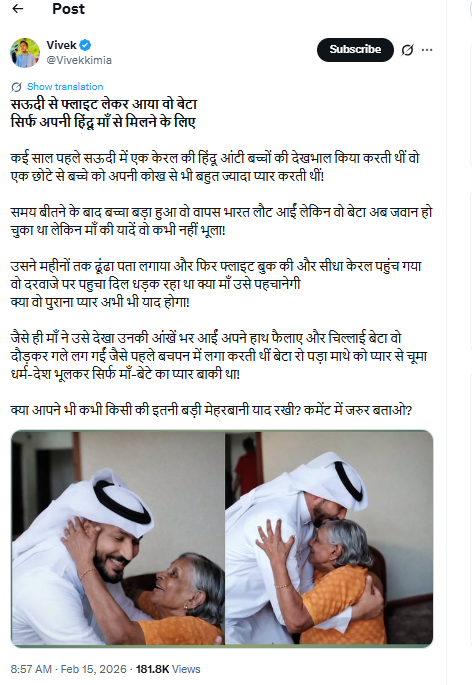
Fact Check
A reverse image search of the viral picture led us to a video uploaded on August 18, 2023, on the YouTube channel of social media influencer Hashim Abbas. In the video, he is seen meeting and hugging the elderly woman while extending Onam greetings.
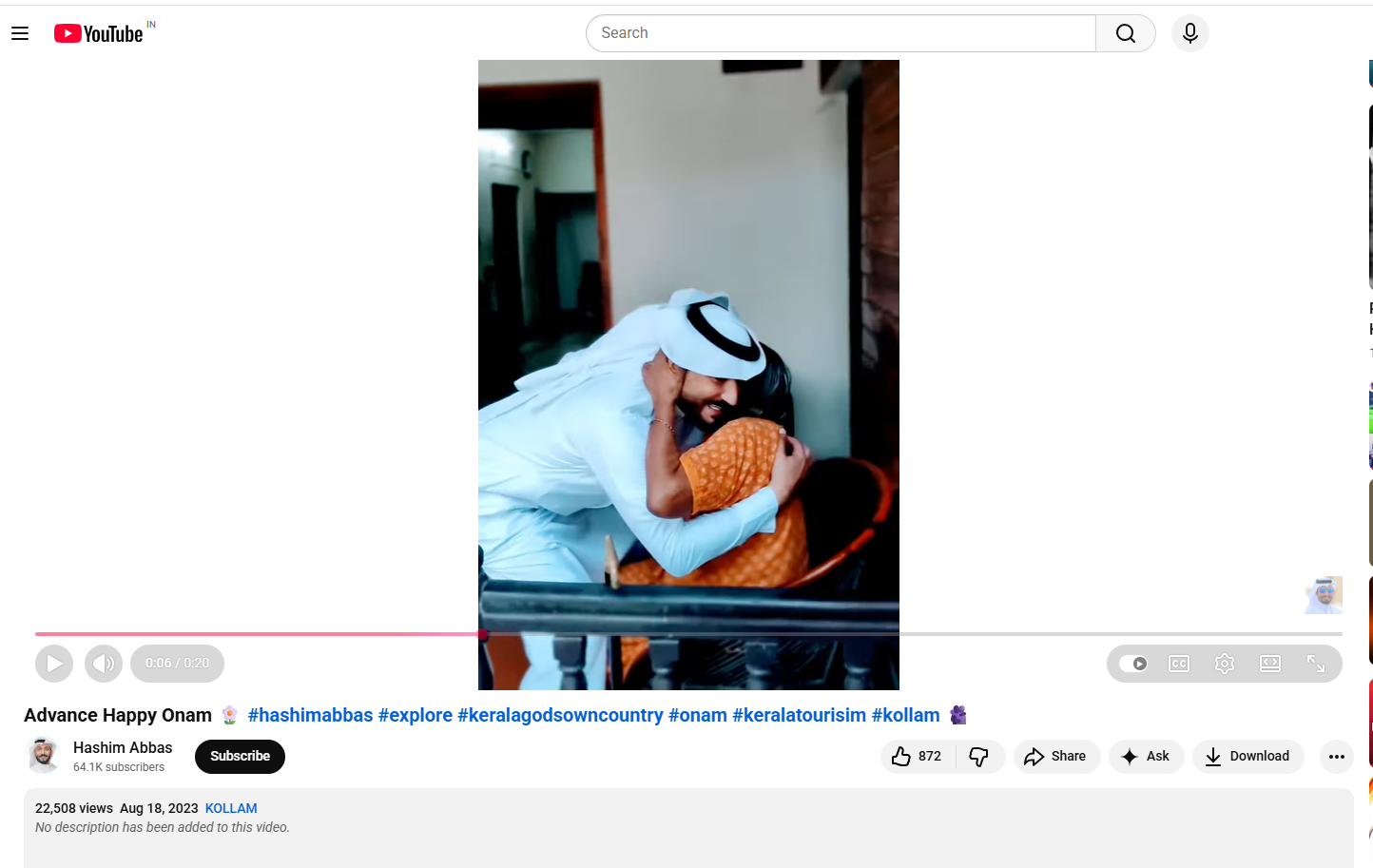
Further examination of Hashim Abbas’ social media accounts revealed several other videos from his Kerala visit. Our research also found that Abbas played a significant role in the Malayalam film Kondotty Pooram.

Additionally, we found a video posted on August 13, 2023, by actress and theatre artist Sandhya Rajendran, daughter of veteran Malayalam actress Vijayakumari. The video shows Vijayakumari teaching Onam songs to Hashim Abbas.

Conclusion
The evidence clearly establishes that the viral claim is misleading. The man seen in the image is Hashim Abbas, who was meeting senior Malayalam actress Vijayakumari to extend Onam greetings. The emotional story about a son flying from Saudi Arabia to reunite with his Hindu mother is fictional and not connected to the viral image.
