
#FactCheck-Claim of Jaguar Jet Failing to Land During IAF Drill Is Fake; Viral Video Digitally Manipulated
Executive Summary
A video circulating on social media claims that a Jaguar fighter jet of the Indian Air Force (IAF) failed to land during a takeoff and landing exercise held on April 22, 2026, at the Purvanchal Expressway in Uttar Pradesh. The claim suggests that the incident disrupted preparations for “Operation Sindoor.” However, an research by the CyberPeace Research Wing has found the claim to be false.
Claim
The video was shared by a Facebook user, ‘Meera MJ,’ alleging that the Jaguar aircraft could not land during the exercise conducted near Sultanpur. To verify the authenticity of the video, multiple keyframes were extracted and analyzed using reverse image search tools. This led to the original footage shared by ANI on its official X (formerly Twitter) handle on April 22, 2026. The authentic video of the air show does not show any such incident of a failed landing.

Fact Check
A detailed review of ANI’s social media posts also revealed no evidence supporting the viral claim. This strongly indicates that the circulating clip has been digitally manipulated by altering the original footage.

Further corroboration came from a report published by Bhaskar.com, which extensively covered the air show. According to the report, the event featured successful operations by multiple aircraft, including the C-295 transport aircraft landing on the expressway airstrip, followed by Jaguar jets taking off. Sukhoi and Mirage fighter jets also performed takeoff and landing drills, while M17 helicopters carried out commando mock operations. Additionally, the M32 Bhishma aircraft conducted ‘touch and go’

Conclusion:
The viral claim that a Jaguar fighter jet failed to land during the Indian Air Force drill is baseless. The video being circulated is digitally manipulated and does not reflect any real incident.

Related Blogs

Introduction
In a world perpetually in motion, the currents of the information superhighway surge ceaselessly, molding perceptions, shaping realities, and often blurring the lines that tether truth to its moorings. At the heart of this relentless churn lies a conundrum that has become all too familiar, in which veracity is obscured by the shadow-play of misinformation. Emblematic of this dilemma is the narrative of Virat Kohli, a name that has become synonymous not only with cricketing brilliance but with the complexities of a modern era where digital echo chambers amplify half-truths and outright fabrications with alarming efficacy.
It is within this intricate fabric of the digital realm that the saga of Virat Kohli—a titan of cricket whose arsenal of strokes and strategic acumen have captivated audiences worldwide—takes on a dimension that transcends the sport. The speculative murmurs have been converted into roaring waves of misinformation, crafting a narrative that, while devoid of truth, assumes a disconcerting life. This digital osmosis, the transmutation from a quiet inkling to a deafening chorus of credibility, exemplifies the troublesome dynamic that has come to define our interactions with news media in the 21st century.
Fact check: Viral Misinformation
A viral post about Virat Kohli's mother suffering from liver issues has gone viral on social media. The claim came after Kohli withdrew from the India-England test series citing 'personal reasons'. Vikas Kohli, brother of Virat Kohli, clarified on Instagram that the viral news about their mother is false. He clarified that their mother is doing well and the viral claim is false. Vikas Kohli's Instagram page dismissed the viral claim, stating that he noticed the fake news and requested the media not to spread such news without proper information.
Fake Health Crisis
As this virulent strain of rumour regarding the health of Saroj Kohli, Virat Kohli’s mother, began to swell into the digital domain, it brought to the forefront a critical examination of the checks and balances within our networks of communication. Saroj, whose resilience and nurturing presence had been an anchor in the athlete's storied journey, undeservedly became the nucleus of a fictitious tale of despair, giving us pause to reflect on the ethical boundaries of storytelling in the world of clicks and views.
Vikas Kohli—the elder brother of Virat Kohli—took to social media, the very platform from which the falsehood originated, to stand as the bulwark against the spread of this groundless narrative.
The Consequences
The consequences of such falsehoods and their rapid dissemination are manifold, affecting individuals and communities in profound ways. The motivations behind the proliferation of deceitful stories are as labyrinthine as the networks they traverse - from manipulation and economic incentives to the pursuit of sheer sensationalism or cynical entertainment, each strand intertwines to form an intricate web wherein truth struggles to assert itself.
Conclusion
In the ceaseless expanses of the digital cosmos, where one can easily drift into the void of falsities, let the narrative of Virat Kohli stand as a sentinel, a reminder of our duty to navigate these waters with vigilance and to preserve the sanctity of truth. Amidst the vast ocean of content that laps in our consciousness, it is precisely this unwavering dedication to facts that will act as our compass, enabling us to discern the credible beacons from the deceptive mirages and ultimately ensuring that our discourse remains moored in the bedrock of reality.
References
- https://www.thequint.com/news/webqoof/virat-kohli-mother-sick-liver-disease-fact-check
- https://indianexpress.com/article/sports/cricket/ind-vs-eng-virat-kohlis-brother-dismisses-fake-news-circulating-about-their-mother-9136144/
- https://www.outlookindia.com/amp/story/sports/ind-vs-eng-virat-kohlis-brother-slams-fake-news-on-their-mothers-health

Introduction
The Online Lottery Scam involves a scammer reaching out through email, phone or SMS to inform you that you have won a significant amount of money in a lottery, instructing you to contact an agent at a specific phone number or email address that actually belongs to the fraudster. Once the agent is reached out to, the recipient will need to cover processing charges in order to claim the lottery reward. Upfront Paying is required in order to receive your reward. However, actual rewards come at no cost. Additionally, such defective 'offers’ often contain phishing attacks, tricking users into clicking on malicious links.
Modus Operandi
The common lottery fraud starts with a message stating that the receiver has won a large lottery prize. These messages are frequently crafted to imitate official correspondence from reputable institutions, sweepstakes, or foreign administrations. The scammers request the receiver to give personal information like name, address, and banking details, or to make a payment for taxes, processing fees, or legal procedures. After the victim sends the money or discloses their personal details, the scammers may vanish or persist in requesting more payments for different reasons.
Tactics and Psychological Manipulation
These fraudulent techniques mostly rely on psychological manipulation to work. Fraudsters by persuading the victims create the fake sense of emergency that they must act quickly in order to get the lottery prize. Additionally, they prey on people's hopes for a better life by convincing them that this unanticipated gain has the power to change their destiny. Many people fall prey to the scam because they are driven by the desire to get wealthy and fail to recognize the warning indications. Additionally, fraudsters frequently use convincing language and fictitious documentation that appears authentic, hence users need to be extra cautious and recognise the early signs of such online fraudulent activities.
Festive Season and Uptick in Deceptive Online Scams
As the festive season begins, there is a surge in deceptive online scams that aim at targeting innocent internet users. A few examples of such scams include, free Navratri garba passes, quiz participation opportunities, coupons offering freebies, fake offers of cheap jewellery, counterfeit product sales, festival lotteries, fake lucky draws and charity appeals. Most of these scams are targeted to lure the victims for financial gain.
In 2023, CyberPeace released a research report on the Navratri festivities scam where we highlighted the ‘Tanishq iPhone 15 Gift’ scam which involved fraudsters posing as Tanishq, a well-known jewellery brand, and offering fake iPhone 15 as Navratri gifts. Victims were lured into clicking on malicious links. CyberPeace issued a detailed advisory within the report, highlighting that the public must exercise vigilance, scrutinise the legitimacy of such offers, and take precautionary measures to shield themselves from falling prey to such deceptive cyber schemes.
Preventive Measures for Lottery Scams
To avoid lottery scams ,users should avoid responding to messages or calls about fake lottery wins, verify the source of the lottery, maintain confidentiality by not sharing sensitive personal details, approach unexpected windfalls with scepticism, avoid upfront payment requests, and recognize manipulative tactics by scammers. Ignoring messages or calls about fake lottery wins is a smart move. Verifying the source and asking probing questions is also crucial. Users are also advisednot to click on such unsolicited links of lottery prizes received in emails or messages as such links can be phishing attempts. These best practices can help protect the victims against scammers who pressurise victims to act quickly that led them to fall prey to such scams.
Must-Know Tips to Prevent Lottery Scams
● It is advised to steer clear of any communication that offers lotteries or giveaways, as these are often perceived as too good to be true.
● It is advised to refrain from transferring money to individuals/entities who are unknown without verifying their identity and credibility.
● If you have already given the fraudsters your bank account details, it is crucial to alert your bank immediately.
● Report any such incidents on the National Cyber Crime Reporting Portal at cybercrime.gov.in or Cyber Crime Helpline Number 1930.
Introduction
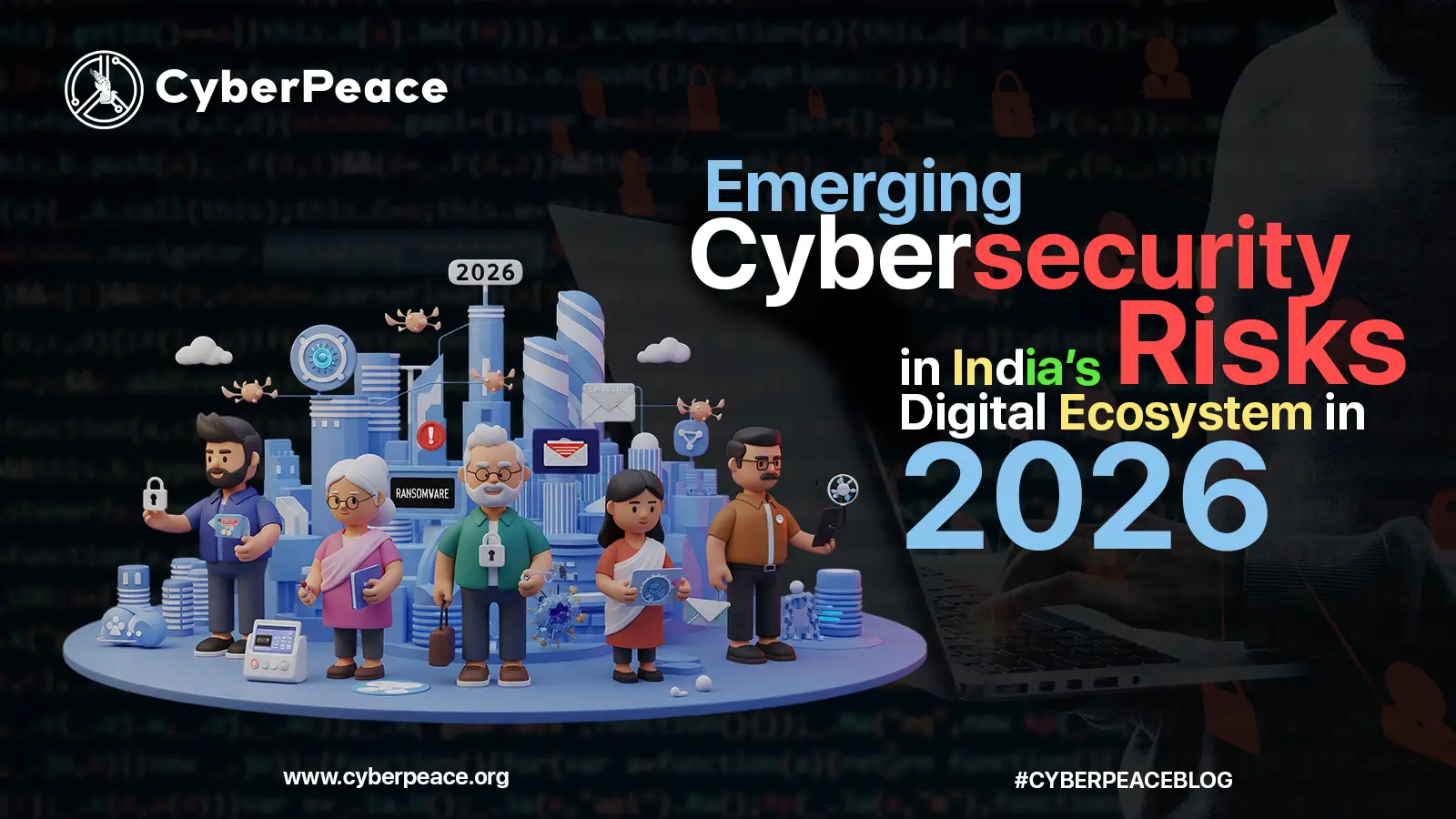
The digital landscape of the nation has reached a critical point in its evolution. The rapid adoption of technologies such as cloud computing, mobile payment systems, artificial intelligence, and smart infrastructure has led to a high degree of integration between digital systems and governance, commercial activity, and everyday life. As dependence on these systems continues to grow, a wide range of cyber threats has emerged that are complex, multi-layered, and closely interconnected. By 2026, cyber security threats directed at India are expected to include an increasing number of targeted, well-organised, and strategic cyber attacks. These attacks are likely to focus on exploiting the trust placed in technology, institutions, automation, and the fast pace of technological change.
1. Social Engineering 2.0: Hyper-Personalised AI Phishing & Mobile Banking Malware
Cybercriminals have moved from generalised methods to hyper-targeted attacks through AI-based psychological manipulation. In addition to social media profiles, data breaches, and digital/tracking footprints, the latest types of cybercrimes expected in 2026 will involve AI-based analysis of this information to create and increase the use of hyper-targeted phishing emails.
Phishing emails are capable of impersonating banks, employers, and even family members, with all the same regionally or culturally relevant tone, language, and context as would be done if these persons were sending the emails in person.
With malicious applications disguised as legitimate service apps, cybercriminals have the ability to intercept and capture One-Time Passwords (OTPs), hijack user sessions, and steal money from user accounts in a matter of minutes.
These types of attempts or attacks are successful not only because of their technical sophistication, but because they take advantage of human trust at scale, giving them an almost limitless reach into the financial systems of people around the world through their computers and mobile devices.
2. Cloud and Supply Chain Vulnerabilities
As Indian organisations increasingly migrate to cloud infrastructure, cloud misconfigurations are emerging as a major cybersecurity risk. Weak identity controls, exposed storage, and improper access management can allow attackers to bypass traditional network defences. Alongside this, supply chain attacks are expected to intensify in 2026.
In supply chain attacks, cybercriminals compromise a trusted software vendor or service provider to infiltrate multiple downstream organisations. Even entities with strong internal security can be affected through third-party dependencies. For India’s startup ecosystem, government digital platforms, and IT service providers, this presents a systemic risk. Strengthening vendor risk management and visibility across digital supply chains will be essential.
3. Threats to IoT and Critical Infrastructure
By implementing smart cities, digital utilities, and connected public services, IoT has opened itself up to increased levels of operational technology (OT) through India’s initiative. However, there is currently a lack of adequate security in the form of strong authentication, encryption, and update methods available on many IoT devices. By the year 2026, attackers are going to be able to exploit these vulnerabilities much more than they already are.
Cyberattacks on critical infrastructure such as energy, transportation, healthcare, and telecom systems have far-reaching consequences that extend well beyond data loss; they directly affect the provision of essential services, can damage public safety, and raise concerns over national security. Effectively securing critical infrastructure needs to involve dedicated security solutions to deal with the specific needs of critical infrastructure, in contrast to conventional IT security.
4. Hidden File Vectors and Stealth Payload Delivery
SVG File Abuse in Stealth Attacks
Cybercriminals are continually searching for ways to bypass security filters, and hidden file vectors are emerging as a preferred tactic. One such method involves the abuse of SVG (Scalable Vector Graphics) files. Although commonly perceived as harmless image files, SVGs can contain embedded scripts capable of executing malicious actions.
By 2026, SVG-based attacks are expected to be used in phishing emails, cloud file sharing, and messaging platforms. Because these files often bypass traditional antivirus and email security systems, they provide an effective stealth delivery mechanism. Indian organisations will need to rethink assumptions about “safe” file formats and strengthen deep content inspection capabilities.
5. Quantum-Era Cyber Risks and “Harvest Now, Decrypt Later” Attacks
Although practical quantum computers are still emerging, quantum-era cyber risks are already a present-day concern. Adversaries are believed to be intercepting and storing encrypted data now with the intention of decrypting it in the future once quantum capabilities mature—a strategy known as “harvest now, decrypt later.” This poses serious long-term confidentiality risks.
Recognising this threat, the United States took early action during the Biden administration through National Security Memorandum 10, which directed federal agencies to prepare for the transition to quantum-resistant cryptography. For India, similar foresight is essential, as sensitive government communications, financial data, health records, and intellectual property could otherwise be exposed retrospectively. Preparing for quantum-safe cryptography will therefore become a strategic priority in the coming years.
6. AI Trust Manipulation and Model Exploitation
Poisoning the Well – Direct Attacks on AI Models
As artificial intelligence systems are increasingly used for decision-making—ranging from fraud detection and credit scoring to surveillance and cybersecurity—attackers are shifting focus from systems to models themselves. “Poisoning the well” refers to attacks that manipulate training data, feedback mechanisms, or input environments to distort AI outputs.
In the context of India's rapidly growing digital ecosystem, compromised AI models can result in biased decisions, false security alerts or denying legitimate services. The big problem with these types of attacks is they may occur without triggering conventional security measures. Transparency, integrity and continuous monitoring of AI systems will be key to creating and maintaining stakeholder confidence in the decision-making process of the automated systems.
Recommendations
Despite the increasing sophistication of malicious cyber actors, India is entering this phase with a growing level of preparedness and institutional capacity. The country has strengthened its cyber security posture through dedicated mechanisms and relevant agencies such as the Indian Cyber Crime Coordination Centre, which play a central role in coordination, threat response, and capacity building. At the same time, sustained collaboration among government bodies, non-governmental organisations, technology companies, and academic institutions has expanded cyber security awareness, skill development, and research. These collective efforts have improved detection capabilities, response readiness, and public resilience, placing India in a stronger position to manage emerging cyber threats and adapt to the evolving digital environment.
Conclusion
By 2026, complexity, intelligence, and strategic intent will increasingly define cyber threats to the digital ecosystem. Cyber criminals are expected to use advanced methods of attack, including artificial intelligence assisted social engineering and the exploitation of cloud supply chain risks. As these threats evolve, adversaries may also experiment with quantum computing techniques and the manipulation of AI models to create new ways of influencing and disrupting digital systems. In response, the focus of cybersecurity is shifting from merely preventing breaches to actively protecting and restoring digital trust. While technical controls remain essential, they must be complemented by strong cybersecurity governance, adherence to regulatory standards, and sustained user education. As India continues its digital transformation, this period presents a valuable opportunity to invest proactively in cybersecurity resilience, enabling the country to safeguard citizens, institutions, and national interests with confidence in an increasingly complex and dynamic digital future.
References
- https://www.seqrite.com/india-cyber-threat-report-2026/
- https://www.uscsinstitute.org/cybersecurity-insights/blog/ai-powered-phishing-detection-and-prevention-strategies-for-2026
- https://www.expresscomputer.in/guest-blogs/cloud-security-risks-that-should-guide-leadership-in-2026/130849/
- https://www.hakunamatatatech.com/our-resources/blog/top-iot-challenges
- https://csrc.nist.gov/csrc/media/Presentations/2024/u-s-government-s-transition-to-pqc/images-media/presman-govt-transition-pqc2024.pdf
- https://www.cyber.nj.gov/Home/Components/News/News/1721/214
