
#FactCheck: AI-Generated Footage Fuels False Claim of Strike on Al Udeid Air Base
Executive Summary
The ongoing conflict between the US-Israel and Iran has entered its third week. During this period, Iran reportedly targeted the US military base at Al Udeid in Qatar. Amid this, a video is going viral on social media showing people, vehicles, and chaos following an alleged attack. Some users are sharing it as footage of an Iranian missile strike on the Al Udeid Air Base. However, an research by the CyberPeacefound that the viral video is not real but AI-generated.
Claim:
An Instagram user “thenewscartel” shared the video on March 17, 2026, with the caption: “Al Udeid Air Base, Qatar (March 16, 2026): Iran launched ballistic missiles and drones at the US military’s largest Middle East base near Doha as retaliation for US-Israel strikes in Tehran. Qatar’s Defense Ministry confirmed multiple launches. Most were intercepted by Qatari air defense. One missile landed near the base or in an uninhabited area. No casualties or major damage reported. Explosions were heard in Doha, and smoke was seen in the sky.”

Fact Check:
To verify the claim, we closely examined the viral video. We observed multiple visual inconsistencies—one person appears to be walking in reverse, another disappears and reappears, and the body shapes of people distort as they begin to run. These anomalies strongly indicate AI manipulation. We then analyzed the video using the AI detection tool Zhuque AI, which indicated an approximately 80 percent likelihood that the video is AI-generated.

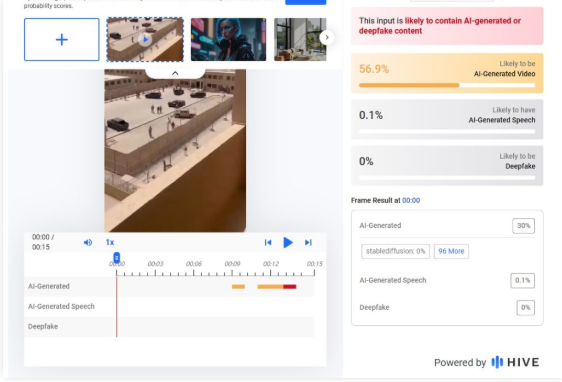
Further analysis using Hive Moderation showed around a 57 percent probability of the video being AI-generated.
Conclusion:
Our research found that the viral video being shared as footage of an Iranian attack on the US military base at Al Udeid in Qatar is AI-generated and not related to any real incident.

Related Blogs
Introduction
In June 2026, the Government of India temporarily restricted access to Telegram amid concerns that the platform had been used to facilitate examination related malpractice, including the alleged circulation of leaked question papers during the NEET UG re examination. The move reignited a familiar debate about the responsibility of digital platforms for unlawful activities carried out through them.
Critics of such restrictions raise a fundamental question: if a traffic accident occurs on a road, do we shut down the road? If theft takes place inside a shopping mall, do we close the entire mall? By the same logic, is it reasonable to block a communication platform because some individuals misuse it? These questions lie at the heart of a broader conflict between state interests in maintaining public order and the protection of digital rights, privacy, and freedom of communication in an increasingly interconnected world.
The controversy surrounding Telegram therefore extends beyond a single examination or messaging application. It raises a deeper and more pressing question: who should bear responsibility for illegal acts committed through encrypted digital platforms, and where should the law draw the line between effective enforcement and the preservation of fundamental digital freedoms?
Beyond mere communication for millions of students in India, Telegram is a classroom in the digital sense, an archive for their notes, practice papers, lecture recordings, and community groups that hundreds of millions of candidates refer to every single day. Therefore, why on a routine day in June 2026 did the messaging app top every other channel? Temporary internet restriction on the platform had become necessary to stop examination-related malpractice like leakage of question papers and was temporarily suspended, with reports suggesting that this move by the government was on the occasion of the NEET-UG re-examination.
This ban once again brings up a bigger question that cannot be contained within one particular examination. When has it become okay to hold a communication platform responsible and accountable for illegal acts committed over it? Or are the perpetrators solely to blame, and the service can be prohibited? Ultimately, where is the line drawn between public interest, law enforcement, and digital rights and privacy?
End-to-End Encryption: Architecture and Benefits
At the heart of these discussions of Telegram and other apps lies a technology referred to as "end-to-end encryption" or "E2EE." Quite literally, it means a message is locked with cryptography on the sender's device and can only be unlocked by the intended recipient. Not even the tech platform running the communication app can decipher it for everyone else; it just looks like random gibberish.
The Process
This kind of modern communication relies on public key cryptography. Each person has a public key they can share with anyone and a private key that stays only on their devices. When they send you a message, it is scrambled with crypto that can be unlocked by only your private key. WhatsApp and Signal, for example, use the Signal Protocol, which features "perfect forward secrecy" and is designed to protect communications from ever being unlocked even if one key is compromised. Telegram's approach is a bit unique. By default, Telegram messages aren't encrypted with end-to-end crypto; this only comes via an optional feature called "Secret Chats," a key difference in the regulatory debate.
The Dark Side: Crime, Misuse, and the Moderation Dilemma
The very features that make end-to-end messaging popular among everyday people are privacy, speed, anonymity, and mass reach which also make end-to-end messaging popular among criminals. That, unfortunately, is the catch for policymakers globally: The technology designed to protect innocent users is also the technology that facilitates criminal activity.
3.1 Criminal Abuse
Telegram, in particular, has frequently come under fire for its role in hosting a spectrum of criminal activities, most notably in the recent controversy in India regarding NEET-UG 2026 examination papers where channels allegedly advertised leaked question papers for enormous sums, convincing desperate candidates. In these instances, messages could be altered or deleted using Telegram’s message editing feature, fabricating evidence of prior leaks. However, this extends to illicit marketplaces, drug trafficking, financial fraud, money laundering, and distributing other prohibited content. Telegram's usage in disseminating extremist propaganda and aiding criminal organizations is also frequently cited, leading to bans or restrictions in countries ranging from Brazil to Nepal to Somalia to Vietnam.
3.2 The Moderation Dilemma
But the difficulty is not just with misuse; it’s also about effective moderation. Moderation, however, requires content transparency. Strong encryption is built to obscure just that. Many end-to-end messaging services like Signal and WhatsApp emphasize that even if they wanted to, they would have been able to decipher the content of a user’s message due to their architecture. Telegram has been in scrutiny for years due to its limited cooperation with law enforcement agencies because its default chats are not completely end-to-end encrypted, though there has been an attempt by Pavel Durov, the platform’s founder, to increase cooperation following his 2024 arrest in France.
This gives policymakers the following challenge: How can governments require increased access to fight crime without forcing tech companies to weaken security for everyone? As cryptographers point out, a specific "backdoor" intended to allow access to law enforcement officials can be easily exploited by hackers, foreign governments, and any other actor with nefarious intent.
Comparison of Regulatory Approaches Worldwide
4.1 Authoritarian Countries' Responses
China, for instance, has had the app blocked as part of its strategy to control access to the internet since 2015, and Iran did so in 2018 when the app was used to help organize protests against the government. An infamous Russian bid to block Telegram in 2018 turned into a cautionary story. Trying to censor the service disrupted the IPs of millions of computers, including significant services like those run by Amazon and Google. The move was met by a surge of users turning to VPNs to get access. It’s an expensive, disruptive, and incomplete form of censorship.
4.2 Democratic Countries' Approaches
Democratic jurisdictions generally prefer targeted interventions. Telegram was suspended in Brazil in 2022 and 2023, though again, only in response to a judge’s order in relation to particular investigations, and was lifted when it came into compliance. The EU’s approach has been to build on an established approach of regulation by use of a broader legislative framework, including the Digital Services Act and the Digital Markets Act, aimed at platform liability rather than outlawing encryption outright.
Meanwhile, the proposed scanning of encrypted communications has run into strong judicial headwinds, with the European courts stressing the danger of backdoors to privacy.
4.3 The United Kingdom Approach
The UK offers a middle way. With its Investigatory Powers Act, the government can oblige tech companies to collaborate in legitimate investigations. But this came to a head earlier this year with the case of Apple and the government's attempts to force it to unlock encrypted iCloud backups. Apple not only refused to reduce its encryption but also decided instead to disable some of its features for British users. This has created a problem for democracies across the world: how to balance access for investigators against the need to maintain the security that makes our systems safer.
Judicial and Legislative Perspectives: India and Beyond
In the Indian context, to have a perspective about the legal frameworks concerning content moderation, let’s explore some of the foundational decisions from the Supreme Court. Three decisions have laid the building block for digital rights laws: the first being Shreya Singhal v. Union of India (2015), where Section 69A of the IT Act, 2000, was upheld, but only by laying rigorous conditions on the review process and chance of challenging the said decision. Another important decision in this sphere is Justice K.S. Puttaswamy v. Union of India (2017) which stated that the right to privacy is fundamental in nature under Article 21 of the Constitution and stipulated the constitutional requirements of legality, legitimacy, and proportionality against the state’s interventions in fundamental rights. The most recent important case law to consider, in this context, would be Anuradha Bhasin v. Union of India (2020) which set certain limitations, such as any internet shut-downs or orders have to be temporary, proportional, and have scope for appeal. Further, the Supreme Court demanded transparency around any and all orders of blocking.
These principles of proportionality and legal limitations are highly pertinent to the Telegram issue, especially since Section 69A confers powers to block information in case of concerns about public order, national security, etc., but activists often cite this power to target specific content rather than entire platforms like Telegram. The ban on Telegram in June 2026 and disabling of message editing will force authorities to justify not only their statutory authority but also the need for proportionate means.
These aspects are amplified by IT Rules, 2021, which mandate that some instant messaging platforms may require identification of the ‘first originator’ of messages, and the Digital Personal Data Protection Act, 2023, to protect digital personal data by ensuring it does not undermine national security exceptions to this end.
Moreover, the use of encryption to ensure secure and private communications is becoming an important point of legal discourse globally. Recently, the European Court of Human Rights in Podchasov v. Russia (2024) held that mandating decryption on devices as a tool of investigative power constituted a disproportionate interference with an individual's right to privacy implying that while states may indeed have authority to regulate communication and digital services, any such measures limiting the scope of encryption will have to meet strict requirements of legality, necessity, and proportionality to be legally justifiable.
Constitutional Validity of the Ban
The government's case for a constitutional ban on Telegram rests upon its ability to satisfy the proportionality framework established by Puttaswamy and Anuradha Bhasin.
- Legitimate aim: The state's strong suit. This is the government's best argument. Protection of the integrity of NEET-UG, a high-stakes test with close to 2.4 million students, can indeed be a legitimate state objective. Given that there is evidence of channels that allegedly were involved in selling leaked question papers, the action is presumably justifiable under section 69A for preventing the incitement or occurrence of public disorder or preventing cognizable offenses.
- Necessity: The National Testing Agency (NTA) itself admitted that localized removal of suspicious accounts on Telegram had already mitigated the risks, while Telegram insisted that it had independently taken down numerous channels. The fact that the block affected more than 150 million users in India, where the medium is widely used for personal communication and is also utilized on other platforms like WhatsApp, Discord, and Instagram to a similar or higher extent, raises the responsibility to justify a strict platform-wide ban. Moreover, there is a significant legal question regarding the state’s authority under section 69A to direct Telegram to disable its message-editing capability.
- Proportionality and process: The block, even though it was temporary and intended to ensure fairness in the examination system, severely undermined legitimate uses of the platform by students who used it to share educational materials and organize study groups. Moreover, the opaqueness around the section 69A order is itself hard to reconcile with the transparency requirements set out in Anuradha Bhasin.
Thus, while the objectives of preventing exam fraud may be legitimate, the necessity and proportionality of single platform-wide bans remain highly suspect under Indian constitutional law.
Policy Recommendations and the Path Forward
The Telegram controversy points to the need for a better balancing act in platform governance in India. Firstly, instead of blanket platform shutdowns, action should target specific channels, bots, or URLs, as may be the case. Secondly, any attempt to dictate changes to features, such as disabling message editing, should be based on specific statutory provisions, not an expansive reading of Section 69A. Furthermore, there is a dire need for increased transparency; blocking orders must state the justification for the order, what is being blocked, and for how long, as far as possible. In the long run, stricter cross-border cooperation via streamlined MLATs, or through the appointment of local legal representatives by foreign platforms, would facilitate easier enforcement. Ultimately, all major blocking decisions must be accompanied by proportionality assessments. Lastly, India must resist pressure to provide access to encryption backdoors; while this might ease investigative burdens, doing so would severely jeopardise the cybersecurity of India, its businesses, and citizens.
Conclusion
The Telegram ban is an example of the tricky equilibrium between protection of public interest and protection of digital liberties in our hyper-connected world. While the intent to counter exam fraud is justifiable, a blanket ban on any platform has much broader implications on questions of necessity, proportionality and transparency. India has a well-developed constitutional and legal framework to deal with this issue already, and the challenge will be to see if those powers are used appropriately.
References
Cases:
- Shreya Singhal v. Union of India (2015) 5 SCC 1 — Supreme Court of India
- Justice K.S. Puttaswamy v. Union of India (2017) 10 SCC 1 — Supreme Court of India (Nine-Judge Bench)
- Anuradha Bhasin v. Union of India (2020) 3 SCC 637 — Supreme Court of India
- Podchasov v. Russia, European Court of Human Rights (Application No. 33696/19, February 2024)
- Apple Inc. v. United States (In re Search of an Apple iPhone, C.D. Cal. 2016)
- Telegram Messenger Inc. v. Union of India & Anr., Delhi High Court (June 2026) — Sub judice
Legislation & Rules:
- Information Technology Act, 2000 (India) — Sections 69A, 79
- IT (Procedure and Safeguards for Blocking Access to Information by Public) Rules, 2009
- IT (Intermediary Guidelines and Digital Media Ethics Code) Rules, 2021
- Digital Personal Data Protection Act, 2023 (India) & DPDP Rules, 2025
- EU Digital Services Act, 2022 (Regulation 2022/2065)
- EU Digital Markets Act, 2022 (Regulation 2022/1925)
- EU Child Sexual Abuse Regulation (CSAR) Proposal — In Trilogue, June 2026
- UK Investigatory Powers Act, 2016
Policy Sources:
- Internet Freedom Foundation, Statement on Telegram Block, 16 June 2026
- European Commission, ProtectEU Security Strategy, June 2025
- MeitY Section 69A Blocking Order re: Telegram (June 2026)
- NTA Press Release on NEET-UG 2026 Re-Examination, 16 June 2026

Executive Summary:
Amid the ongoing conflict in West Asia involving the United States, Israel and Iran, a video is being widely circulated on social media with the claim that Iran attacked the headquarters of tech giants Apple and Microsoft in Israel. The clip shows a building engulfed in flames, with firefighters attempting to douse the fire. However, research by the CyberPeace found that the viral video is AI-generated and is being falsely linked to the ongoing conflict to spread misinformation.
Claim:
An Instagram user ‘bharat_updatenews’ shared the video on March 19, 2026, claiming that Iran had launched an attack on major tech company headquarters, including Apple and Microsoft, in Israel. The post suggested that the incident had raised serious security concerns and was being widely reported by international media.
Link: https://www.instagram.com/bharat_updatenews/reel/DWEUhLEAKaw

Fact Check:
To verify the claim, we extracted keyframes from the viral video and conducted a reverse search using Google Lens. During this process, we found the same video on a TikTok account named ‘dailyupdate122’, where it had been uploaded on March 15, 2026.

The video on this account was clearly labelled as “AI-generated media.” The account also featured several other AI-generated videos, raising doubts about the authenticity of the viral clip. Following this, we analysed the video using the AI detection tool Hive Moderation. The results indicated that the video is nearly 100 percent AI-generated. The tool further suggested with over 98 percent probability that the clip may have been created using OpenAI’s Sora or a similar AI video generation model.

Conclusion:
The viral claim that Iran attacked Apple and Microsoft headquarters in Israel is false. The video circulating online is AI-generated and has no connection to the ongoing conflict in West Asia.

Technology has revolutionized our lives, offering countless benefits and conveniences that make our daily lives more accessible and connected. However, with these benefits come potential challenges and risks that can impact our digital experiences. In this article, we have gathered expert advice on the impact of technology use in our daily lives, including the importance of warranties and tech protection in safeguarding our technology investments. Our experts offer invaluable insights and guidance on using technology safely and effectively while protecting us from unexpected costs or problems. Whether you’re a casual user or a technology enthusiast, our experts’ insights will help you navigate the world of technology with confidence and peace of mind.
How to protect kids from online abuse in the modern era of technology?
“As parents, it’s important to acknowledge that online child abuse is a widespread problem that we need to address. But does this mean we should ban technology from our children’s lives? Absolutely not! Technology is an integral part of our children’s lives, providing numerous benefits. Instead, we should think of practical ways to minimize the risks of online abuse. Many parents today depend on parental control apps like Mobicip to safeguard their children’s online activities and build healthy digital habits. These apps allow parents to supervise their child’s online behavior, restrict screen time, prevent access to certain websites and applications, filter inappropriate content, and get instant notifications about dangerous interactions or inappropriate content. Parents feel reassured and free of worry, knowing that their children’s online surroundings are secure and protected. In addition to using a parental control app, we must also focus on building a strong connection with our kids. By initiating conversations about their digital lives, we can understand their digital world, educate them about the potential risks and dangers of the internet, and teach them how to stay safe. By being proactive and engaged in our children’s digital lives, we can protect them from online abuse while still allowing them to benefit from technology.”
How to increase engagement in online classes via technology?
“Online classes have gained immense popularity in recent years due to their many advantages. However, online educators face several challenges that can impede the effectiveness of their classes, one of which is the lack of engagement from students. To address this challenge, it is crucial to adopt certain strategies that can increase student engagement and create a more meaningful learning environment.
One effective strategy is to limit the number of chokepoints that students may face while enrolling in a class. This can be achieved by using booking and scheduling technology that provides students with a hassle-free experience. The system sends regular reminders and notifications to learners about upcoming classes and assignments, helping them stay organized and committed to their learning.
Technology plays a vital role in improving communication between students and teachers and in increasing student engagement and participation during a session. Utilizing technology such as polling, chat boxes, and breakout rooms enables learners to actively participate in the class and share their perspectives, leading to more effective learning.
Personalization is also essential in creating a meaningful learning environment. A scheduling system can help create customized learning paths for each student, where they can progress at their own pace and focus on topics that interest them. This ensures that each student receives individual attention and is able to learn in a way that suits their learning style.
Moreover, gamification techniques can be used to make the learning process more fun and engaging. This includes using badges, points, and leaderboards to motivate learners to achieve their goals while competing with each other.”
Dr. Sukanya Kakoty, Omnify
How to choose the best due diligence software for your business?
“With a variety of solutions on the market, finding the best due diligence software for your business can be a tedious task. In addition to the software’s capabilities meeting your needs, there are other factors to consider when picking the right solution for your business. As due diligence involves the sharing of sensitive information, security is a key factor to consider. When browsing solutions, it is important to consider if their security features are up to industry standards. User-friendliness is another factor to consider when adopting a new due diligence software. Introducing a new tool should increase team efficiency, not disrupt your existing workflow. When searching for the perfect due diligence solution, pick one that meets the above criteria and more. DealRoom is a lifecycle deal management solution, providing pipeline, diligence, integration, and document management all under one platform. DealRoom’s user-friendly and intuitive features allow for customizable workflows to fit the specific needs of each user. DealRoom also offers industry-leading security features, including data encryption, granular permissions, and detailed audit logs, guaranteeing that your information is always protected. When choosing the best due diligence software for your business, consider a user-friendly, flexible, and secure solution.”
Why are backups important, and what is the safest way of doing them?
“Backups are important for several reasons. They help to protect against data loss, which can be caused by a variety of reasons, such as hardware failure, software corruption, natural disasters, or cyber-attacks. Backups also help to ensure that important data is available when needed, such as in the case of an emergency or system failure. Additionally, backups provide a way to recover deleted or corrupted files. This is also important because the loss of data can result in consequences such as financial loss, damage to reputation, and even legal issues. If not these, then loss of data may also lead to emotional effects in certain cases. A backup, however, can restore data quickly and avoid any significant disruption, emotional or otherwise. The safest way of doing backups is by following the 3-2-1 backup rule. This rule states that you should have at least three copies of your data, stored on at least two different storage media, with one copy stored offsite. This provides redundancy in case of a failure of one storage medium or location.
There are several methods of backing up data, including:
- External hard drives or USB drives: These are inexpensive and portable, making them a popular choice for personal backups. However, they can be lost or damaged, so it is important to keep them in a safe location and make regular backups.
- Cloud backups: These store data on remote servers, which can be accessed from anywhere with an internet connection. This provides an offsite backup solution, but it is important to choose a reputable provider and to ensure that the data is encrypted and secure.
- Network-attached storage (NAS): These are devices that connect to a network and provide centralized storage for multiple devices. They can be configured to automatically back up data from multiple devices on the network.
- Tape backups: These are less common but are still used by some businesses for the long-term storage of large amounts of data.
Regardless of the backup method chosen, it is important to regularly test backups regularly to ensure that they can be successfully restored in case of an emergency.”
What are the best trending electric toys for kids in 2023?
“Augmented Reality (AR) Toys: These toys blend the physical and digital world, providing an immersive experience. Popular examples include AR-enabled building sets and interactive storybooks that come to life through an app.
Educational Robotics: Robotics toys like the LEGO Mindstorms Robot Inventor and Sphero’s programmable robots have gained popularity for teaching coding, engineering, and problem-solving skills through hands-on play.”
Aside from security, what are some of the features of a VPN?
“Accessing geo-restricted content: One of the main benefits of using a VPN is its ability to bypass geographical restrictions in the world of flight prices, content, gaming, and more. Many websites and online services are only available in certain countries or regions. With a VPN, you can change your virtual location and access content that is otherwise blocked or unavailable in your country. Imagine you’re playing a game with friends; by using a VPN, you can improve your gaming experience by connecting to a server closer to the game’s host location and bypassing regional restrictions to access features unavailable in your region.
Increased privacy and anonymity: While security and privacy go hand in hand, VPNs offer more than just encryption. They also provide a level of anonymity by masking your IP address and making it difficult for websites and online services to track your online activity. This can be particularly useful for users who are concerned about their online privacy or who want to avoid targeted ads.
Faster internet speeds: Believe it or not, using a VPN can actually improve your internet speed in certain situations. If your internet service provider (ISP) is throttling your internet speed, a VPN can help you bypass this by encrypting your traffic and hiding it from your ISP. Additionally, some VPN providers offer dedicated servers that are optimized for faster speeds, reducing buffering and improving download and upload speeds.”
How does creating a website can help a home business?
“As a digital marketing consultant, I once worked with a client who had a home-based bakery business. She struggled to reach new customers beyond her local community and wanted to expand her reach and grow her business. After assessing her needs, I recommended that she create a website for her business. With the website, she could showcase her unique baked goods, provide a platform for online ordering, and expand her reach to customers beyond her local community. The website was designed to be visually appealing and user-friendly while effectively showcasing the brand and products in an attractive way. Additionally, the website was optimized for search engines and integrated with social media platforms to increase visibility and drive traffic to the site. Within a few months of launching the website, she saw an increase in orders. Customers could easily place orders through the website and leave reviews, which provided social proof and helped build trust with potential customers. Also used data analytics to track customer behavior and make data-driven decisions to improve the website and marketing strategy. The website became a valuable asset for her business, helping her to expand her reach, increase sales, and gather valuable customer data. Overall, creating a website helped her home-based business to grow and thrive in a competitive marketplace.”
Lito James, MassivePeak.com
How can technology be utilized to enhance productivity for remote teams working from home?
“Our team facilitates strategic planning sessions and we’re frequently working with teams that are working remotely. Here are a few of our best tips for productivity:
- Clear strategy: As teams have fewer touch points, it’s critical they are aligned and bought into the direction of the organization.
- Clear big rocks for the week. Make sure you’re not just busy but doing things that will move the needle on your strategic goals
- Clear accountability: Basecamp or other project management tools to help make sure nothing falls through the cracks
- Clear communication: Schedule the right meetings, so you are connecting at the right times to deliver important work and align on important topics.
- Clear agendas: When you do meet, make sure you’re coming together, staying focused, and getting the most important information across
Creating the right strategy and the right structure to keep it moving forward will help your team drive your most important outcomes, regardless of if you’re working in an office or remotely.
Anthony Taylor, SME Strategy Consulting
How to monitor your kids’ activities online?
“As a father of two kids and the founder of TheSweetBits.com, a website dedicated to providing guides on software and apps, I have extensive experience in monitoring my children’s online activities. Over the years, I have tested and reviewed numerous parental control apps and software to ensure my children’s online safety. When it comes to monitoring your kids’ activity online, it’s crucial to find a balance between keeping them safe and respecting their privacy. One of the most effective ways to achieve this balance is by using parental control software that allows you to set limits on their device usage, restrict access to inappropriate content, and monitor their online activity. However, it’s important to note that parental control software is not a substitute for good communication with your kids. You should have regular conversations with them about online safety and the potential dangers of the internet. By establishing trust and open communication, you can work together to create a safe and responsible online environment for your family. As I always say, ‘Parental control software is just one tool in the toolbox of responsible parenting’.”
How to plan the best online date with the help of technology?
“To plan a date online with the help of technology, we recommend using a reservation app like OpenTable to make dinner reservations. Not only will this let her know you thought ahead with the smaller details, but it will also ensure a smooth date by eliminating a long waiting time for a table to open up.”
What are the benefits of teaching kids to code and how to make it fun?
“The ability to code has become increasingly important in the modern world due to the rapid advancement of technology and its integration into nearly every aspect of our lives. This is something that will only continue as our children grow up and enter the world at large as the demand for workers with coding skills continues to grow rapidly. Teaching kids to code offers numerous benefits beyond just developing technical skills and getting them future-ready. It promotes problem-solving abilities, critical thinking, and logical reasoning, all of which are essential in today’s digital age. Additionally, coding can increase creativity and encourage children to think outside the box. However, it’s important to make coding fun and engaging for kids rather than a dull and tedious task. One way to make it exciting is to introduce gamification elements, such as incorporating fun characters or adding game-like challenges, and there are loads of great apps to get them started with. We love CodeSpark Academy, Lego Boost, and Tynker. Another approach is to encourage group work or peer learning, where children can work together to solve problems and learn from each other. Ultimately, making coding fun and enjoyable can ignite children’s interest in technology and set them on a path to explore new and exciting opportunities in the future.”
Are dating apps useful in the modern dating era and how to find the correct one?
“Dating apps have become a popular tool for modern daters to find potential partners. However, they also come with their own set of problems. One of the biggest issues with current dating apps is that they focus too much on superficial factors such as sexual attraction, rather than deeper compatibility and true attraction. This can lead to frustration and disappointment for users who are seeking more meaningful connections. Fortunately, AI technology is starting to offer solutions to these problems. By using machine learning algorithms and data analysis, apps like Iris Dating are able to help users find potential matches based on more than just superficial qualities. Iris uses a process called “iris training” to learn each user’s unique preferences and suggest compatible matches accordingly. This approach allows users to connect with people to whom they are really attracted, leading to more meaningful and lasting relationships. When it comes to finding the right dating app, it’s important to do your research and choose one that aligns with your values and preferences. Look for apps that prioritize true attraction and use AI technology to help you find meaningful matches. Don’t be afraid to try out multiple apps until you find one that feels right for you. Overall, while dating apps have their flaws, AI-powered apps like Iris offer hope for a more personalized and meaningful dating experience. By leveraging the power of technology, we can make the search for love a little bit easier and a lot more enjoyable.”
What are some IT risk management tips for home businesses?
“As more and more people turn to home-based businesses, IT security for these operations is becoming an increasingly important concern. From data breaches to cyberattacks, the risks you face as a home business owner are the same as those faced by larger enterprises. So, what are some IT risk management tips for home businesses? First, consider using a virtual private network or VPN to enhance the security of your online communications. Additionally, enable two-factor authentication for all of your accounts, including any cloud services you use. Practice good password hygiene, regularly updating passwords and avoiding easily guessable or common passwords. Finally, consider investing in cybersecurity insurance to protect your business in the event of a cyberattack or data breach. By taking these steps to mitigate IT risks, you can help ensure your home business stays secure and successful. Below are some additional suggestions to help you stay vigilant and set up your home business for longevity.
-Keep Your Software Up to Date: One of the best ways to reduce your risk of being hacked is to keep your software up to date. This includes both your operating system and any applications you have installed.
-Use a Firewall: A firewall is a piece of software that helps to block incoming connections from untrusted sources. By blocking these connections, you can help to prevent hackers from gaining access to your system.
-Use Anti-Virus Software: In addition to using a firewall, you should also use anti-virus software. Anti-virus software helps to protect your system from viruses and other malware. These programs work by scanning your system for known threats and then quarantining or deleting any files that are found to be infected.
-Back Up Your Data Regularly: Finally, it is important to back up your data regularly. This way, if your system is ever compromised, you will not lose any important files or data.
-Encrypt Your Data: If you are storing sensitive data on your computer, it is important to encrypt it to protect it from being accessed by unauthorized individuals. Encryption is a process of transforming data into a format that cannot be read without a decryption key. There are many different encryption algorithms that you can use, so make sure to choose one that is appropriate for the type of data you are encrypting.”
What are the benefits of giving your child a smartphone?
“If you’re teetering back and forth on getting your child a smartphone, consider these benefits as you make your decision:
• Connection. Smartphones keep kids in contact with friends and family—for fun and function! From school to extracurricular activities, kids can easily let their parents and caregivers know about late pickups, ride requests, and other changes of plans.
• Safety. If your child or someone they’re with gets hurt, their smartphone could save a life! And with built-in GPS, their location is always accessible. Plus, parental controls and other smartphone safeguards offer even more protection.
• Convenience. Life is a little easier when your child has a smartphone, plain and simple! You can call each other, send texts, and always know where they are.
• Acceptance. These days, it’s uncommon for kids to not have smartphones. With a smartphone, your child feels belonging and inclusion among their peers.
• Development. Having something as valuable as a smartphone teaches children responsibility and accountability. And with a smartphone of their own, your child will learn how to use technology in an appropriate, safe, and disciplined way.
• Education. Smartphones are incredible teaching tools! Educational apps, videos, and games can keep kids sharp. Plus, smartphones can introduce them to new hobbies and interests!”
How is technology promoting health and wellness?
“Technology has revolutionized the healthcare industry and is playing an increasingly important role in promoting health and wellness. Here are some ways in which technology has helped:
Wearable technology: Wearable devices, such as fitness trackers and smartwatches, are becoming increasingly popular. These devices can track a person’s physical activity, sleep patterns, heart rate, and more. They provide valuable insights into a person’s health and wellness and can help motivate them to make positive lifestyle changes.
Telehealth: Telemedicine allows patients to receive medical care remotely through video conferencing, phone calls, or other digital means. It has also allowed fitness professionals to work with more people who aren’t in a local market via video conferencing, webinars, etc.
Mobile Apps: There are a plethora of mobile apps available that promote health and wellness. These apps can help users track their diet and exercise, manage chronic conditions, and access medical information.
Virtual Reality: Virtual reality (VR) is being used in healthcare to treat conditions such as anxiety, phobias, and PTSD. VR can also be used for physical therapy and rehabilitation.
Overall, technology is playing an increasingly important role in promoting health and wellness, and it is likely that we will see even more innovative uses of technology in the healthcare industry in the future.”
