
#FactCheck: AI-Manipulated Video Falsely Shows Ravish Kumar Criticising CJP, AAP Leaders
Executive Summary
A video of journalist Ravish Kumar is being widely shared on social media. The video is being circulated with the claim that Kumar criticised Abhijeet Deepak, the CJP and Aam Aadmi Party (AAP) leaders over the CJP’s alleged absence from the ongoing student protest in Jharkhand. The CyberPeace Research Wing found the claim to be false. The research established that the original video of Ravish Kumar was digitally manipulated using artificial intelligence (AI), and altered audio was added before it was shared with a misleading claim.
Claim
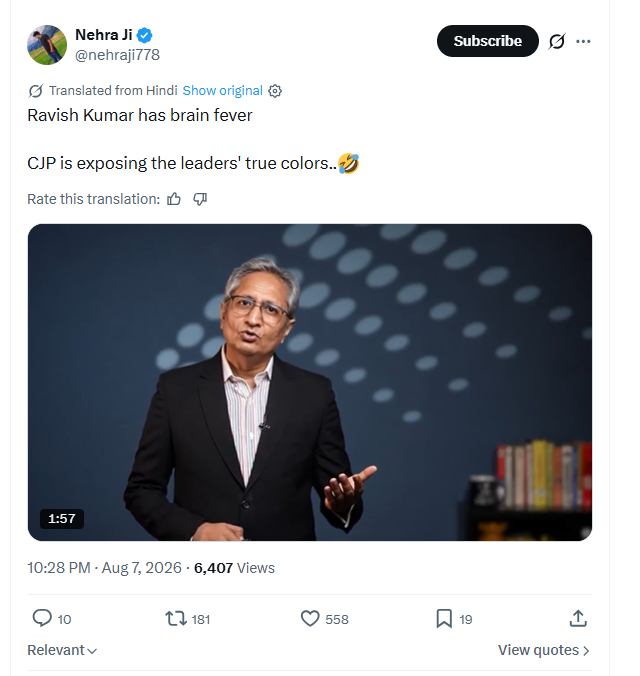
A user on X (formerly Twitter) shared the viral video on August 7, 2026, with the caption: “Ravish Kumar has brain fever. CJP is exposing the leaders’ true colors.”
https://x.com/nehraji778/status/2085772474915164506
Factcheck
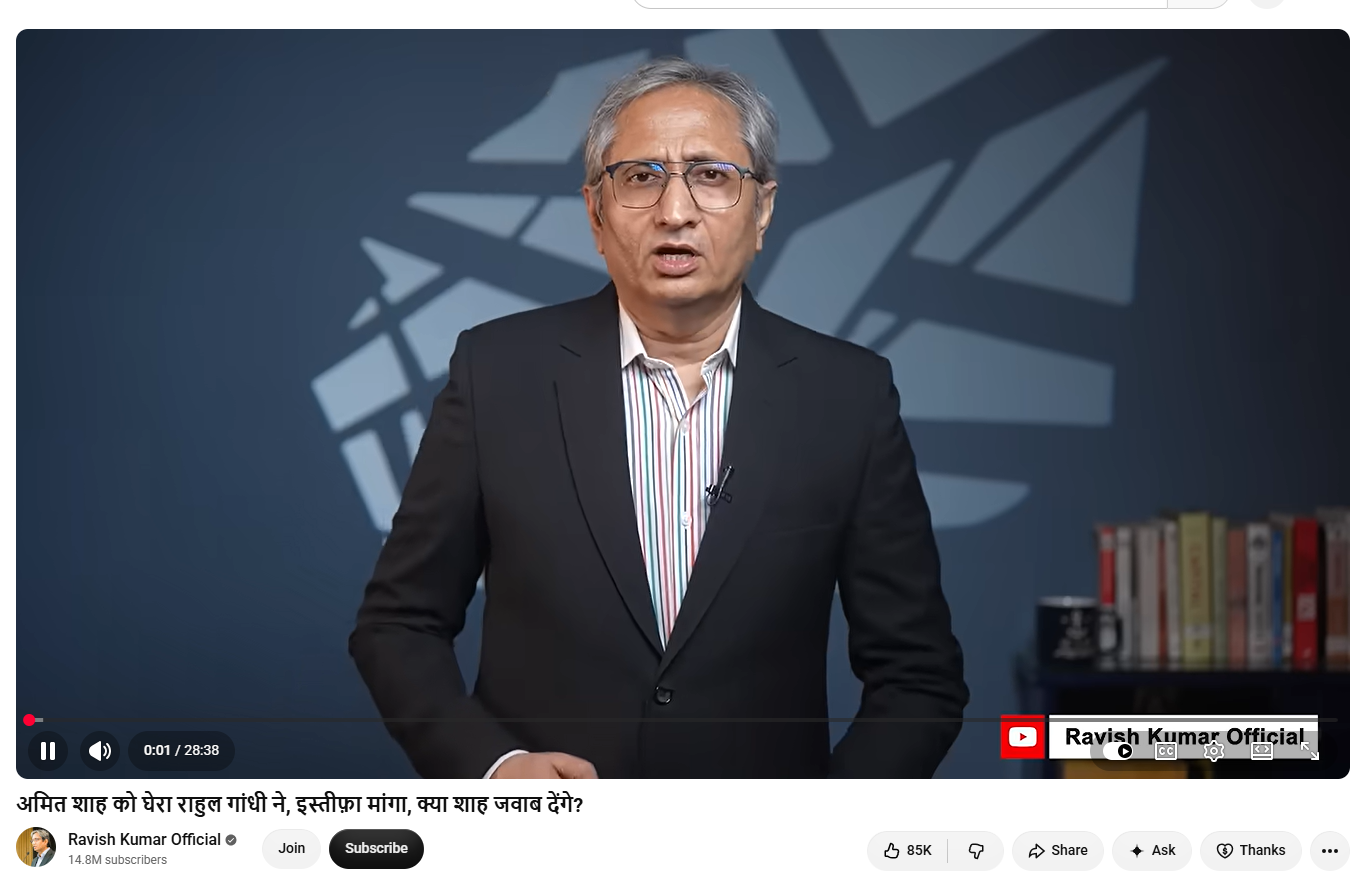
To verify the claim, we extracted several keyframes from the viral video and conducted a reverse image search using Google Lens. During the search, we found a video uploaded on Ravish Kumar’s official YouTube channel on July 29, 2026.
The visuals in the original video match those seen in the viral clip. Ravish Kumar can be seen wearing the same clothes and appearing in almost the same frame as in the viral video.
https://www.youtube.com/watch?v=Rdn_hfyZVRM
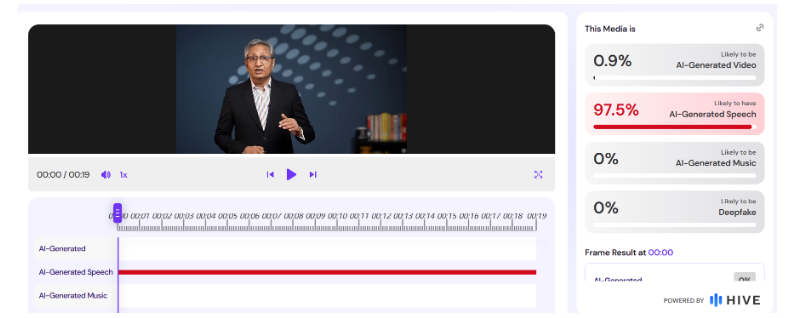
In the next step, we analysed the viral video using Hive Moderation. The tool indicated a 97 per cent probability that the video was AI-generated.
Conclusion
The research found that the viral claim is false. The visuals are taken from a genuine video of Ravish Kumar, but the original footage has been digitally manipulated and altered audio has been added using AI. The modified video is being circulated with a misleading claim that Kumar criticised Abhijeet Deepak, CJP and AAP leaders over the Jharkhand student protest.

Related Blogs
.webp)
Introduction
India's digital governance system is experiencing a significant transformation. The Department of Telecommunications (DoT) has extended the deadline for implementing SIM binding requirements for messaging platforms to December 31, 2026, while also stepping back from earlier proposals such as mandatory periodic web logouts.
The government extended the current proposal but decided to cancel its previous requirement, which mandated messaging platforms to implement mandatory logout periods. The authorities implemented this action to control the increasing occurrence of digital impersonation, financial fraud, online scams and identity theft, which occurs through messaging applications.
The authorities are said to have implemented this action to control the increasing occurrence of digital impersonation, financial fraud, online scams and identity theft, which occurs through messaging applications.
What Has Changed
The SIM binding mandate, which the Telecommunication Cyber Security framework introduced in late 2025 requires messaging platforms to maintain user account connections with active SIM cards that match their registered mobile numbers.
Platforms received a brief period for compliance with the original rules. Industry stakeholders, which included messaging services and device manufacturers, reported that they faced major technical and operational problems when trying to constantly verify SIM status on different devices and operating systems.
The government postponed the compliance date to December 2026 to give organisations extra time for the gradual implementation of requirements. The policy now permits platforms to use risk-based or adaptive logout mechanisms, which enable security management without enforcing standard security procedures through their web messaging application platforms.
Why the Extension Was Necessary
The extension operates as a recognition of both technical feasibility constraints and ecosystem's complex nature. Multiple devices at present enable messaging platforms to function which includes smartphones and desktops and web interfaces with real time synchronization. The system needs complete operational system and hardware component integration to maintain active SIM verification throughout all environments because stakeholders estimated that this process would take time to achieve proper results.
The operating system providers and smartphone manufacturers expressed their worries about system limitations, which include testing procedures and compatibility problems.
The government recognised through its deadline extension that security requirements need technical feasibility and scalability to function properly without causing service interruptions or requiring immediate implementation.
Security Rationale Behind SIM Binding
The SIM binding system serves its main purpose to enhance accountability while it protects digital communication systems from unauthorised use. Authorities have identified that messaging accounts can remain active even after the associated SIM card is removed, deactivated, or moved across regions. The situation creates paths for criminals to commit fraud and impersonation while perpetrating cybercrime across international borders because they can use digital identities that are hard to trace.
The SIM binding system exists to solve this problem by
- requiring active, Virtual KYC-verified SIMs to authenticate messaging accounts.
- Users cannot access the system until they connect their active SIM.
- The system maintains the capacity to track and authenticate digital identities.
The measure aims to eliminate a security gap that digital communication systems currently use for fraudulent activities and identity theft.
Shift Toward Risk-Based Regulation
The current development marks a major change because it no longer applies fixed rules that used to determine what organisations must do, but now uses risk assessment methods. The previous plan, which required users to log out every six hours from web sessions, has been replaced by platforms that now log users out based on their risk assessment. The shift demonstrates that cybersecurity needs to implement security measures that require specific context and need to match the existing environment. Organisations face challenges when trying to apply standard rules because users exhibit various behaviours while using different devices on multiple platforms.
The risk-based model enables platforms to detect suspicious activity through dynamic monitoring, which establishes strict security measures for high-risk situations while preserving system access during periods of low risk.
Implications for the Digital Ecosystem
The extension, together with its related policy alterations, creates significant effects for organisations. The extra time allows the industry to create systems that can work together with different ecosystems while testing their implementation process and matching their required operational standards.
The shift shows policymakers that they should adopt a process that combines multiple rounds of assessment with stakeholder input to develop their regulations.
The upcoming changes will create invisible effects for users, which will determine the future methods of digital identity verification and the security functions of communication platforms.
Conclusion
The extension of the SIM binding deadline represents a new approach to regulations instead of being a regulatory rollback. The process requires both dedicated efforts and actual implementation to create secure digital environments.
India needs to establish secure and scalable user-friendly systems while advancing its digital infrastructure development. The current developments show progress toward achieving a solution that protects cybersecurity needs while considering technological facts and user experience. Organisations face two main obstacles in modern interdependent systems: they must protect their systems while maintaining user trust and system protection, and their capability to operate over extended periods.
References
- https://www.thehindu.com/sci-tech/technology/government-shelves-periodic-web-logout-for-chat-apps-extends-sim-binding-to-december-31/article70811929.ece
- https://www.gadgets360.com/telecom/news/dot-sim-binding-mandate-extension-2026-report-11301917

Executive Summary
Several social media users shared an India Today news clipping showing an exclusive interaction between senior journalist Rajdeep Sardesai and Bangladeshi journalist Mahfuz Anam. In the purported conversation, Anam was heard claiming that India’s intelligence agency RAW was trying to prevent Bangladesh from joining the Mecca Pact. He was also allegedly heard saying that New Delhi was promoting an alternative defence pact with Bangladesh involving a Middle Eastern country and Israel. However, the CyberPeace Research Wing found that the viral video had been digitally manipulated using AI-generated audio. The original video, uploaded by India Today, showed Anam in conversation with Sardesai in 2024, discussing Bangladesh’s July uprising and the developments that followed.
Claim
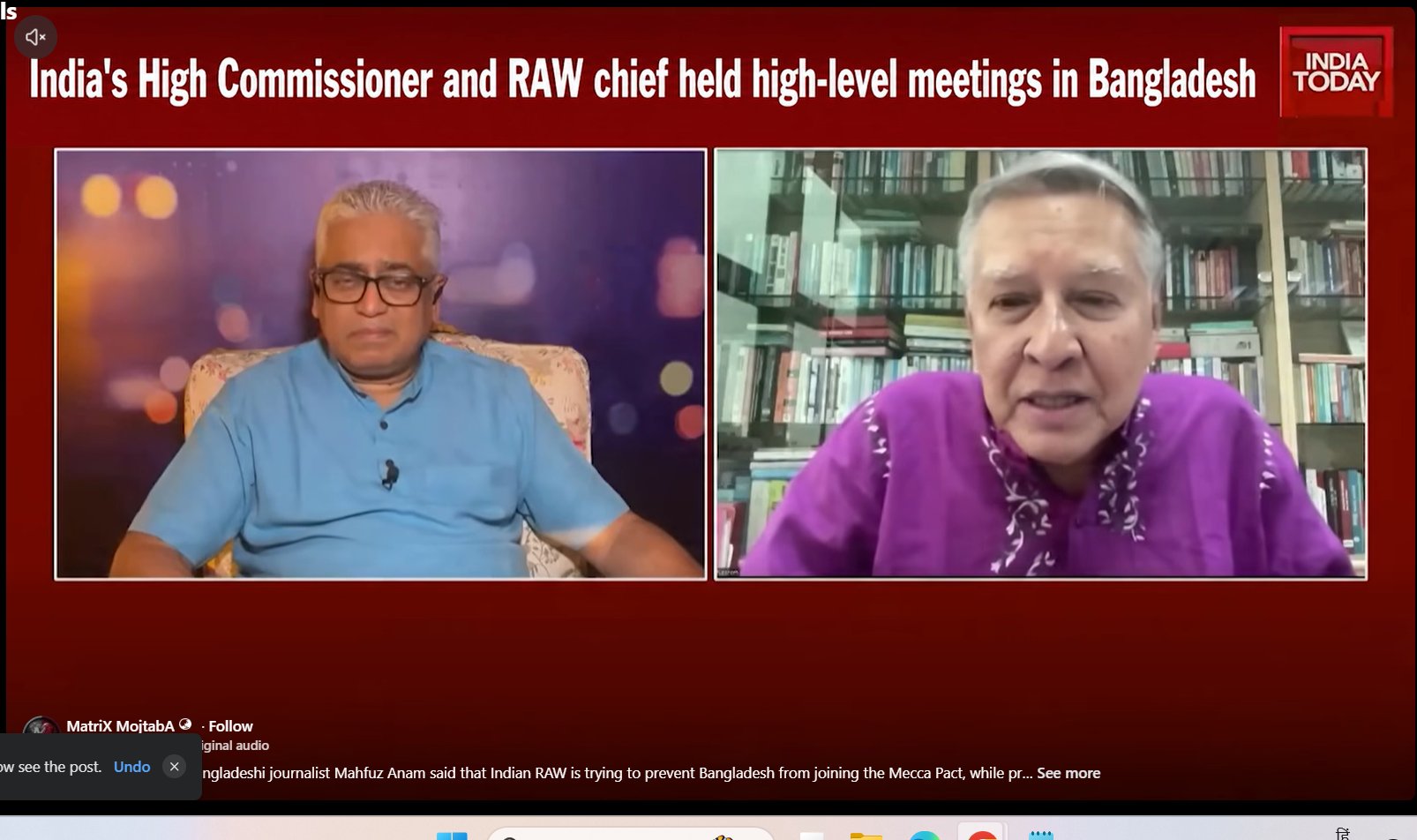
A Facebook page, ‘MatriX MojtabA’, shared an India Today news clipping on August 12 showing senior journalist Rajdeep Sardesai interviewing Bangladeshi journalist Mahfuz Anam. In the purported conversation, Anam was heard saying that RAW was trying to prevent Bangladesh from joining the Mecca Pact. He was also allegedly heard claiming that New Delhi was promoting an alternative defence pact with Bangladesh involving a Middle Eastern country and Israel.
https://www.facebook.com/reel/1804199927691664/
Fact Check
Based on the clue that the viral clip was taken from an exclusive conversation between Mahfuz Anam and India Today, the Desk conducted a customised keyword search on Google. The search led to an extended version of the same interaction uploaded on India Today’s official YouTube channel. The Desk identified the original footage by comparing the background setting and the clothes worn by both Sardesai and Anam, which appeared identical in the viral and original clips. However, an analysis of the original video established that it was an old recording from August 2024. The video showed Anam and Sardesai discussing Bangladesh’s July 2024 uprising and the developments that followed. The Desk analysed the complete 14-minute-and-three-second video and found that Anam did not mention RAW or the Mecca Pact anywhere in the interaction. The Mecca Pact was signed by Pakistan, Saudi Arabia and Turkey on August 7, 2026. This established that the statement attributed to Anam in the viral video was not part of the original conversation and had been digitally manipulated.
https://www.youtube.com/watch?v=gEoyTkOZ8xE
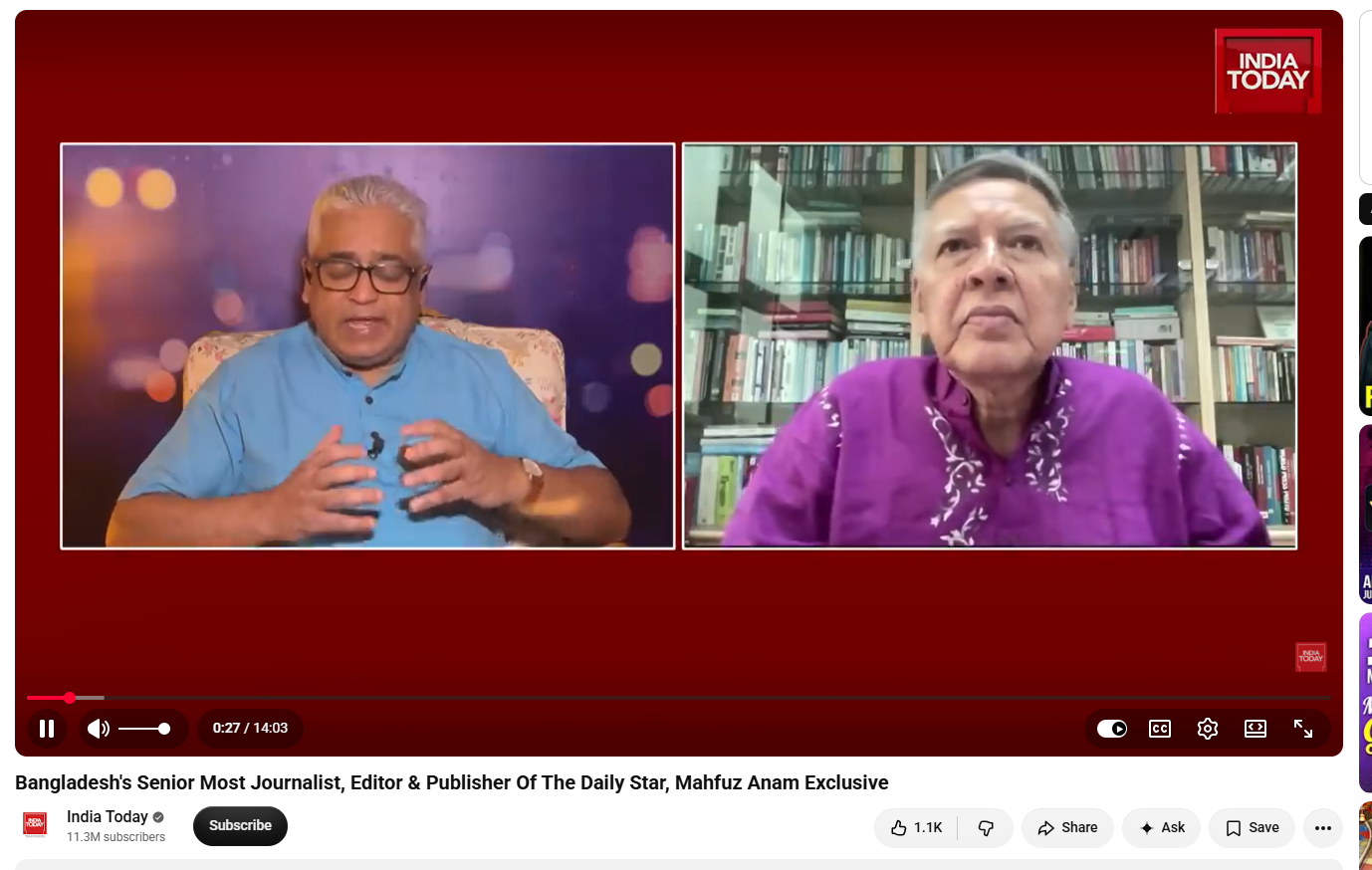
Further, after finding indications that the audio in the viral clip may have been AI-generated, the Desk extracted the audio from the video and analysed it using Resemble AI, an AI audio detection tool. The analysis indicated that the audio was AI-generated and did not contain Mahfuz Anam’s original statement.
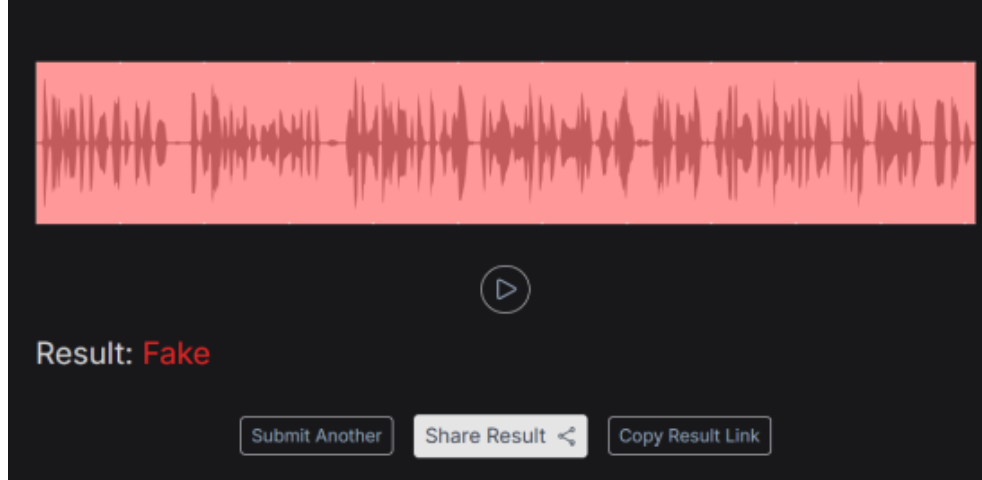
Conclusion
The viral video showing Bangladeshi journalist Mahfuz Anam purportedly claiming that India’s RAW was trying to prevent Bangladesh from joining the Mecca Pact is digitally manipulated. The audio in the viral clip was replaced with AI-generated audio to attribute a false statement to Anam. The original India Today video, recorded in 2024, shows Anam speaking with Rajdeep Sardesai about Bangladesh’s July uprising and the developments that followed. He does not make any remarks about RAW, the Mecca Pact or an alternative defence pact involving India, a Middle Eastern country and Israel.
Executive Summary
A photo allegedly showing injuries to Seema Haider has been widely circulated on social media. Users are claiming that her husband Sachin Meena assaulted her. However, a fact-check by CyberPeace Research Wing has found the claim to be false. The research reveals that the viral image is AI-generated and is being shared with a misleading narrative.
Claim
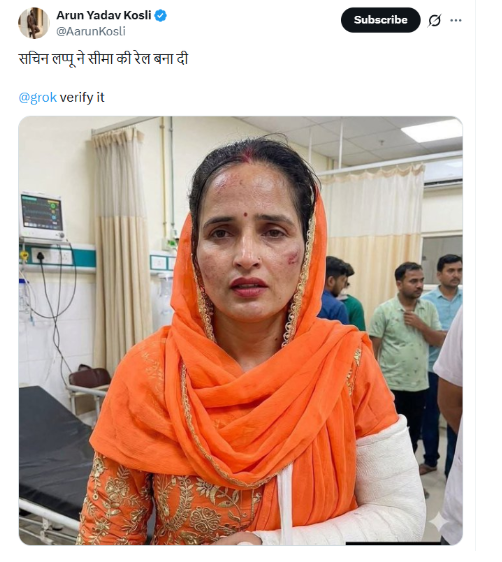
On X (formerly Twitter), a user shared the image on May 14, 2026, claiming that Sachin Meena assaulted Seema Haider.
Fact Check
A keyword-based search on Google did not return any credible media reports supporting the viral claim.
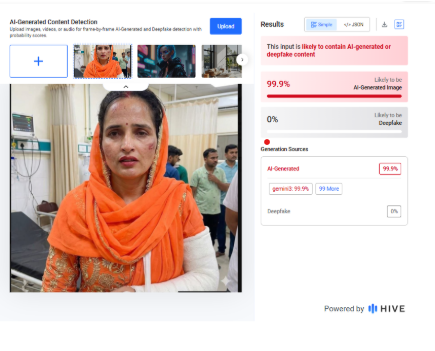
A closer visual examination of the image raised suspicions of AI generation. The image was first analysed using the AI detection tool Hive Moderation, which indicated a 99% probability that the image is AI-generated.
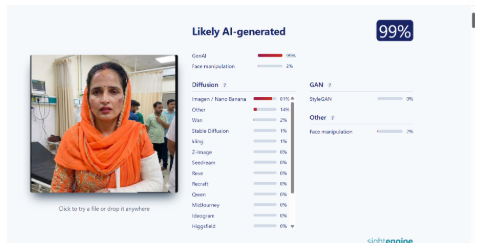
Further analysis using another AI detection tool, Sightengine, also produced similar results, confirming a 99% likelihood that the image was generated using AI tools.
Conclusion
The viral image is AI-generated and misleading. The claim that Sachin Meena assaulted Seema Haider is false and has no factual basis.
