
#FactCheck-AI-Generated Video Falsely Shared as Scenes of Flood Devastation in Nepal
Executive Summary
Nepal witnessed severe devastation after floods struck the country on August 26, 2026. Amid this, a video showing a bridge being swept away by floodwaters is being widely shared on social media. Some users are sharing the video claiming that it shows scenes of destruction caused by the floods in Nepal.A research done by the Research Wing of the CyberPeace found that the video being shared with the claim of flood devastation in Nepal is AI-generated. However, it is true that the floods in Nepal have claimed hundreds of lives.
Claim
A user on X shared the video with the caption: “Scenes of devastation in Nepal after the disaster.”
https://www.instagram.com/reels/Dch-EmYNUwz/
https://perma.cc/5VY5-ZFCN?type=standard

Fact Check
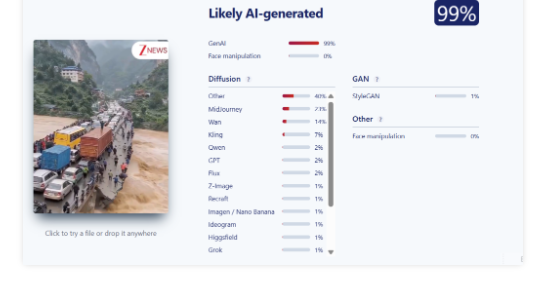
We closely examined the video showing the bridge being swept away. A person can be seen standing on top of a truck, which appears unnatural in such a situation. Moreover, even as the bridge collapses, the people on it do not appear to fall directly into the water. These observations led us to suspect that the video was likely AI-generated.
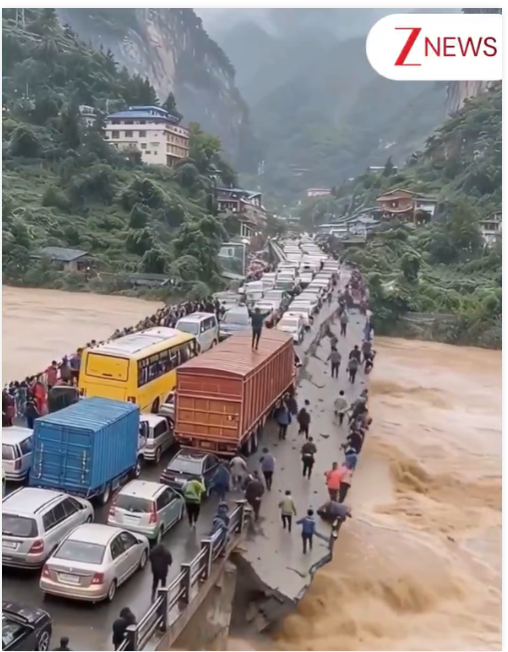
We scanned the viral video using the AI detection tool ‘WasItAI’, which identified it as 99 percent AI-generated.
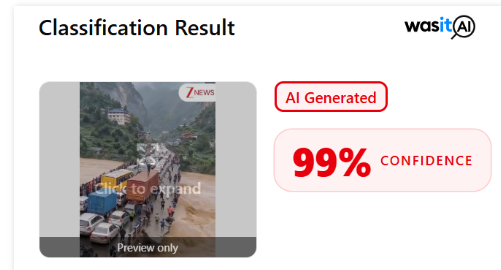
Meanwhile, another AI detection tool, Sightengine, also identified the video as 99 percent AI-generated.
Conclusion:
A video being shared with the claim that it shows devastation caused by floods in Nepal is actually from the shooting of an Indonesian TV serial, while another viral video is AI-generated.

Related Blogs
Executive Summary
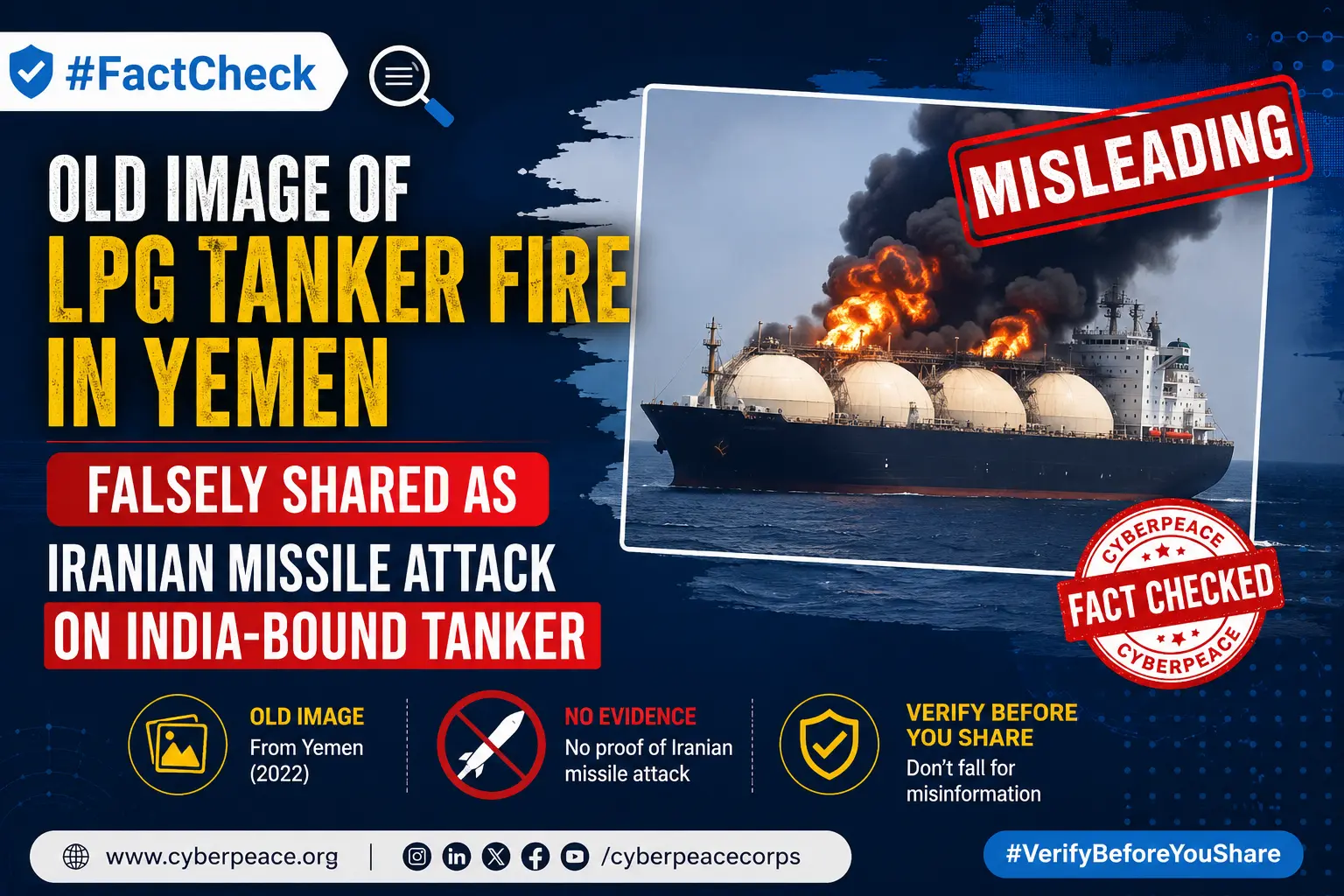
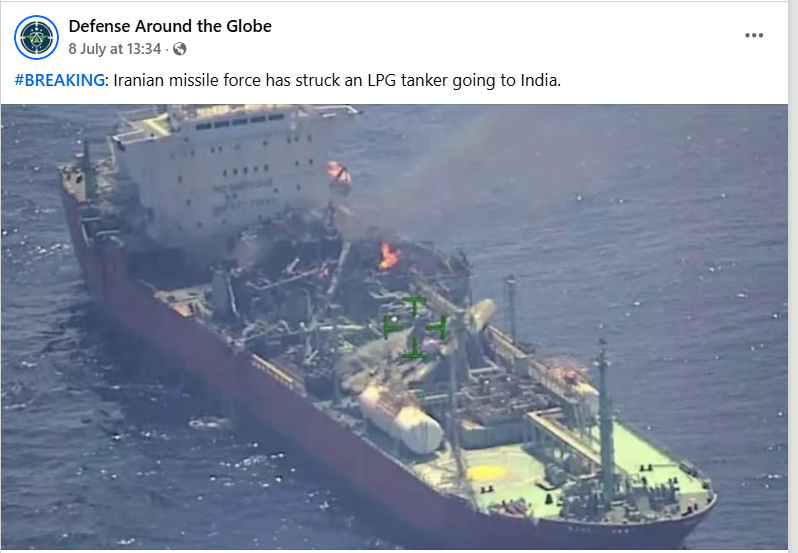
An image is being widely shared on social media with the claim that Iranian missile forces targeted an LPG tanker heading towards India, causing a massive fire onboard. CyberPeace Research Wing ’s research found the claim to be misleading. The research revealed that the viral image is not related to any recent Iran-India development or any missile attack. The image actually shows a fire incident involving the Cameroon-flagged LPG tanker MV Falcon near the coast of Aden, Yemen, in October 2025, and is being circulated with a false context.
Claim
A Facebook user shared the viral image on July 8, 2026, claiming: “Iranian missile force has struck an LPG tanker going to India.” The post link, archive link, and screenshot are provided below.
Fact Check
To verify the viral claim, we conducted a keyword-based search on Google. However, we did not find any credible media report confirming that an India-bound LPG tanker was targeted by Iranian missile forces. During the research, we extracted keyframes from the viral image and conducted a reverse image search using Google Lens. The search led us to a report published by NDTV on October 20, 2025, which contained the same visuals as the viral image. The report link and screenshot are provided below.
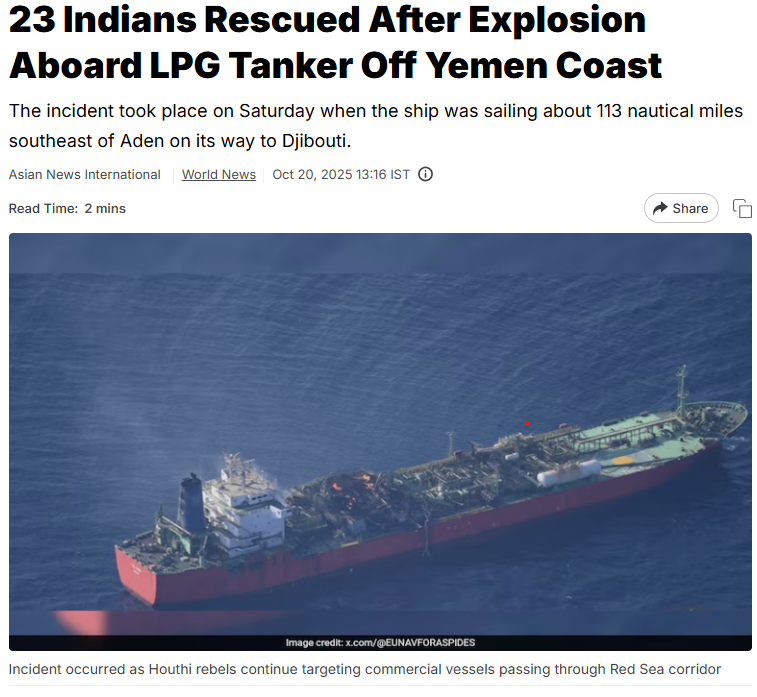
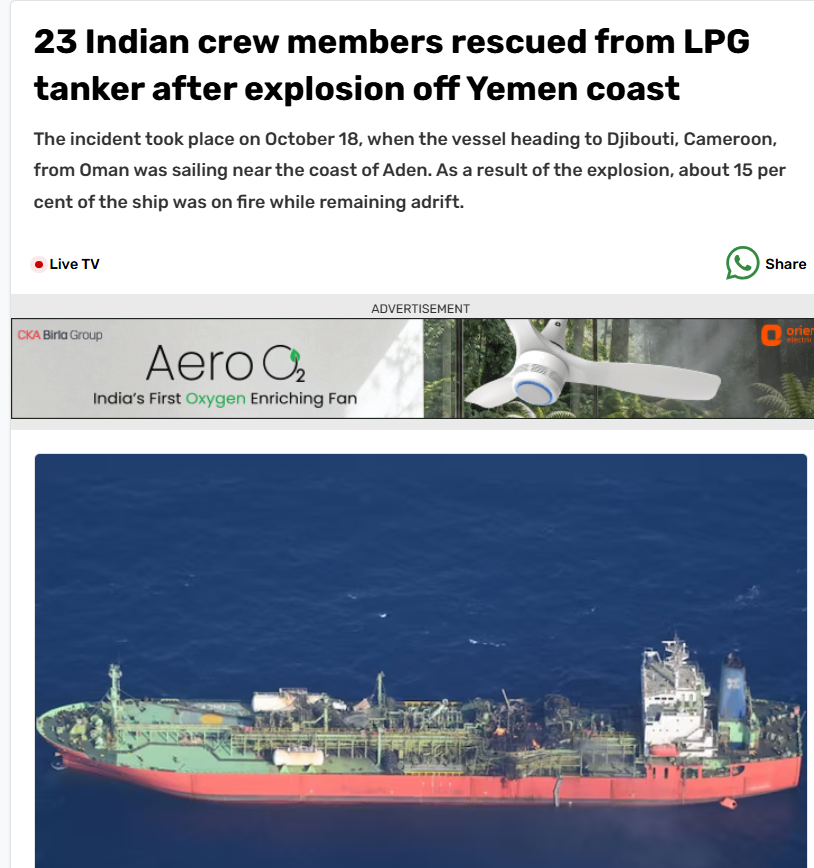
According to the NDTV report, a fire broke out onboard the Cameroon-flagged LPG tanker MV Falcon following an explosion near the coast of Aden, Yemen. The incident involved 23 Indian crew members, who were rescued safely. The incident occurred on October 18, 2025, at around 07:00 UTC, when the vessel was sailing approximately 113 nautical miles southeast of Aden while heading towards Djibouti. Following the explosion, the vessel went adrift and around 15% of the ship was engulfed in flames. Further verification through keyword searches led us to an India Today report published on October 20, 2025, which also confirmed that the MV Falcon caught fire after an explosion off the coast of Aden, Yemen. The report stated that all 23 Indian crew members onboard were rescued. The report also mentioned that authorities had initiated an research into the incident and ruled out speculation that the explosion was caused by a Houthi attack. The report link and screenshot are provided below.
Conclusion
Our research found that the viral claim is misleading. The image being shared as proof of an Iranian missile strike on an India-bound LPG tanker is actually from an unrelated incident that occurred in October 2025. The image shows the fire that broke out onboard the Cameroon-flagged LPG tanker MV Falcon near Aden, Yemen, following an explosion. The old image is being circulated with a false narrative linking it to Iran and India.

Executive Summary
As West Bengal heads for vote counting on May 4, 2026, following the second phase of Assembly polling held on April 29, a video is being widely shared on social media. The clip shows security personnel baton-charging civilians, with users claiming it depicts force being used during the West Bengal Assembly Elections 2026. Research by CyberPeace Research Wing found that the viral claim is misleading. The video is actually from Bangladesh and is being falsely linked to the West Bengal elections to spread confusion.
Claim
A Facebook user named “Adv Mohd Salman” shared the clip on April 29, 2026, using Bengal-related hashtags and claiming that voters standing in line were beaten to influence the election outcome. The post alleged that free and fair voting rights were being suppressed.

Fact Check
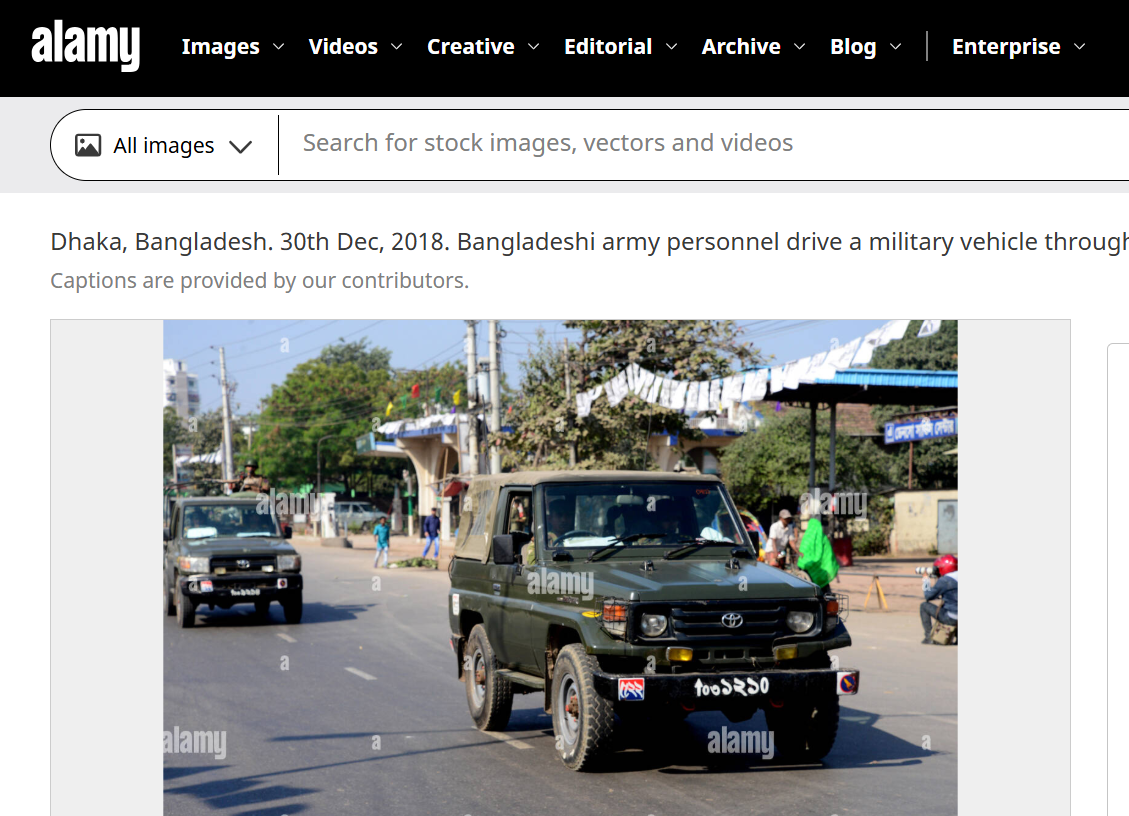
To verify the claim, we closely examined the viral video. A vehicle visible in the footage had a registration number written in a non-Hindi script. Using Google Lens reverse image search, we found a matching image uploaded on Alamy on December 30, 2018. The image showed a military vehicle with the same script and registration style seen in the viral clip.
According to the description on the platform, the image was taken in Dhaka during Bangladesh’s national elections and showed Bangladeshi army personnel moving through a street near a polling station. This confirms that the viral footage is not related to the 2026 West Bengal Assembly elections.
Conclusion
Our research confirms that the video showing security personnel baton-charging civilians is from Bangladesh, not West Bengal. It is being falsely shared as footage from the 2026 West Bengal Assembly elections to mislead users.
.webp)
Executive
An Indian official is seen allegedly speaking at a United Nations Security Council (UNSC) meeting, where he is purportedly defending India’s supply of weapons to Israel. The video claims that India is fulfilling its defence export commitments despite allegations concerning the supply of small arms, ammunition and military vehicles to Israel since October 2023, including shipments by government-owned companies. CyberPeace Research Wing found that Permanent Representative of India to the UN Parvathaneni Harish did not make any such statement at the UNSC. His AI-manipulated video is being circulated on social media with a misleading claim.
Claim
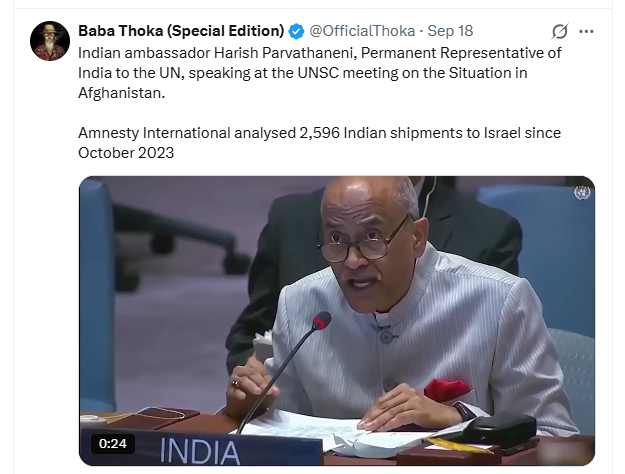
Indian ambassador Harish Parvathaneni, Permanent Representative of India to the UN, speaking at the UNSC meeting on the Situation in Afghanistan. Amnesty International analysed 2,596 Indian shipments to Israel since October 2023
https://x.com/OfficialThoka/status/2100656814660743174?s=20
Fact Check
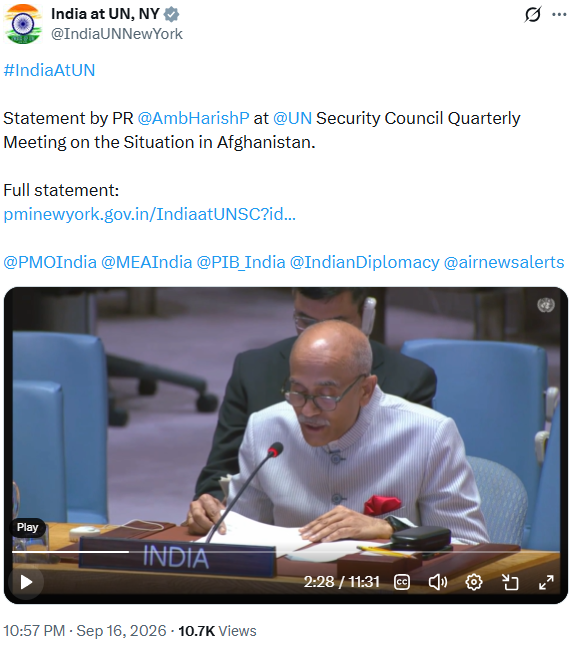
To investigate the video, we first converted it into keyframes and then conducted a reverse image search of those frames using Google Lens. We found the original video posted on the official X handle of the Permanent Mission of India to the United Nations. The post was accompanied by the caption: “#IndiaAtUN Statement by Permanent Representative Parvathaneni Harish at the quarterly UN Security Council meeting on the situation in Afghanistan.” We reviewed Parvathaneni Harish’s complete statement but found no such remarks as those shown in the video being circulated on social media. In his address, Harish did not make any reference to supplying weapons to Israel.
https://x.com/IndiaUNNewYork/status/2100275501851877641?s=20
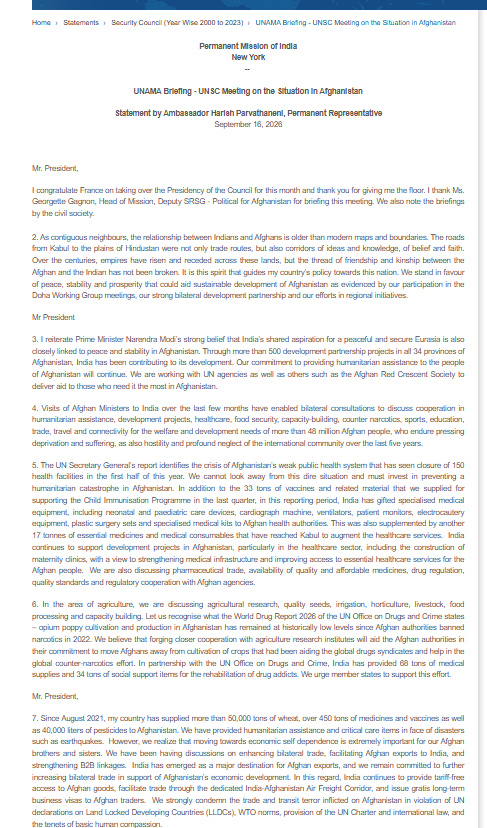
Our investigation found that Parvathaneni Harish, Permanent Representative of India to the United Nations, had issued a statement on the situation in Afghanistan and India-Afghanistan relations. We also found the text version of his statement on the official website of the Permanent Mission of India to the United Nations. In his statement, Harish referred to the historical ties between India and Afghanistan, noting that the relationship between the two countries predates modern maps and borders. He also spoke about India’s policy towards Afghanistan and its commitment to peace, stability and prosperity. In addition, he highlighted India’s participation in the meetings of the Doha Contact Group, its strong bilateral development partnership with Afghanistan, and its efforts through regional initiatives. However, a review of Harish’s complete statement shows that it contains no remarks resembling those attributed to him in the video being shared on social media. His official statement also makes no mention of India’s alleged supply of weapons to Israel or the 2,596 shipments cited by Amnesty International. This establishes that the video being circulated on social media is presenting Harish’s actual statement in a misleading context.
https://pminewyork.gov.in/IndiaatUNSC?id=NTYzNA
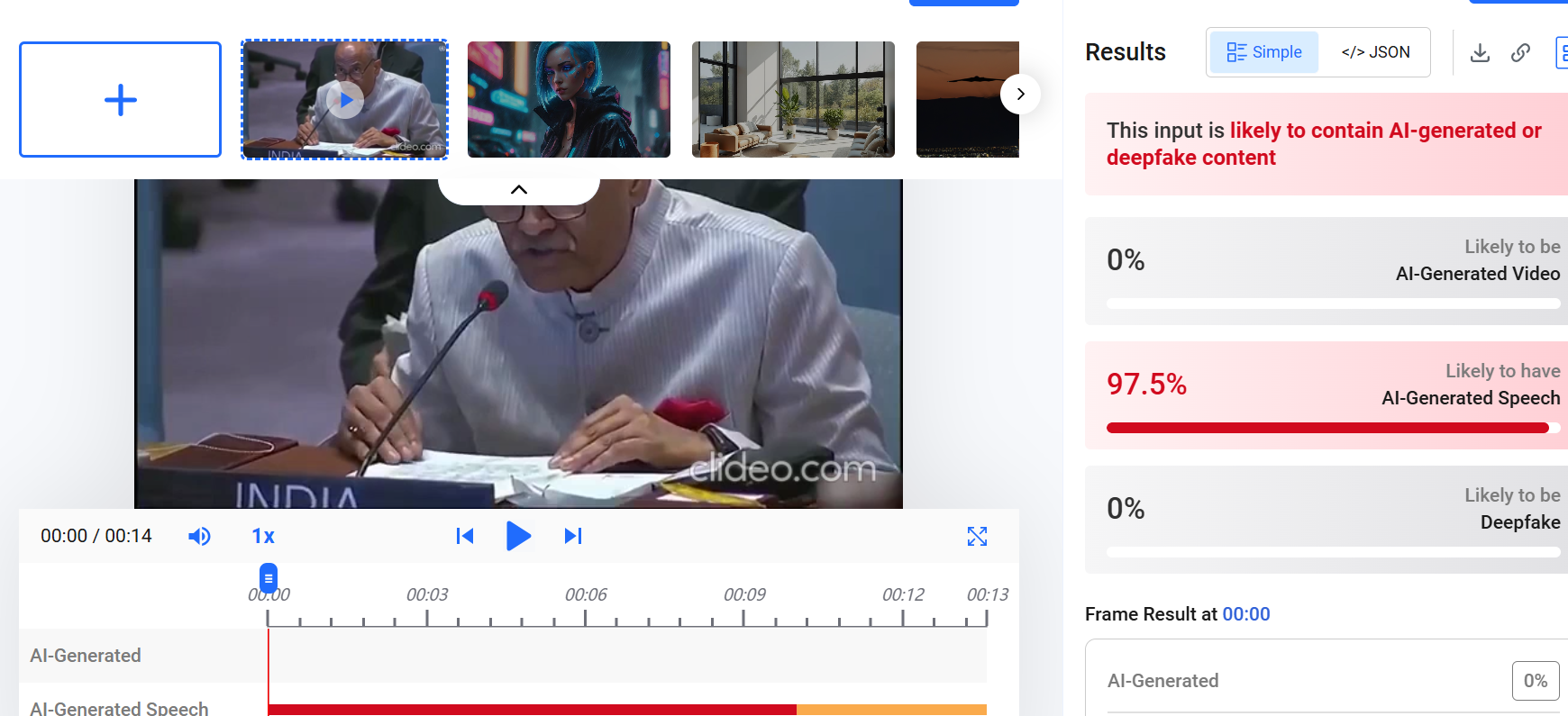
Hive Moderation’s analysis found no signs of manipulation in the video’s visuals. However, the analysis indicated a 97% probability that the speech used in the video was AI-generated.
Conclusion
Our research found that Parvathaneni Harish, Permanent Representative of India to the United Nations, did not make the statement attributed to him in the video being circulated on social media. His official statement at the UN Security Council meeting on the situation in Afghanistan focused on India-Afghanistan relations, peace, stability, development cooperation and regional initiatives, and contained no reference to India supplying weapons to Israel or to the 2,596 shipments mentioned in the viral video.
Further analysis by Hive Moderation found a 97% probability that the speech used in the video was AI-generated, while the visuals showed no signs of manipulation. These findings indicate that the video has been digitally manipulated by replacing or altering the original speech and is being presented with a misleading claim.Therefore, the claim that Parvathaneni Harish defended India’s alleged supply of weapons to Israel during a UNSC meeting is false and misleading.
