
#FactCheck: AI-Generated Video Falsely Shared as Real Footage of a Baby Elephant Being Rescued from a Railway Track
Executive Summary
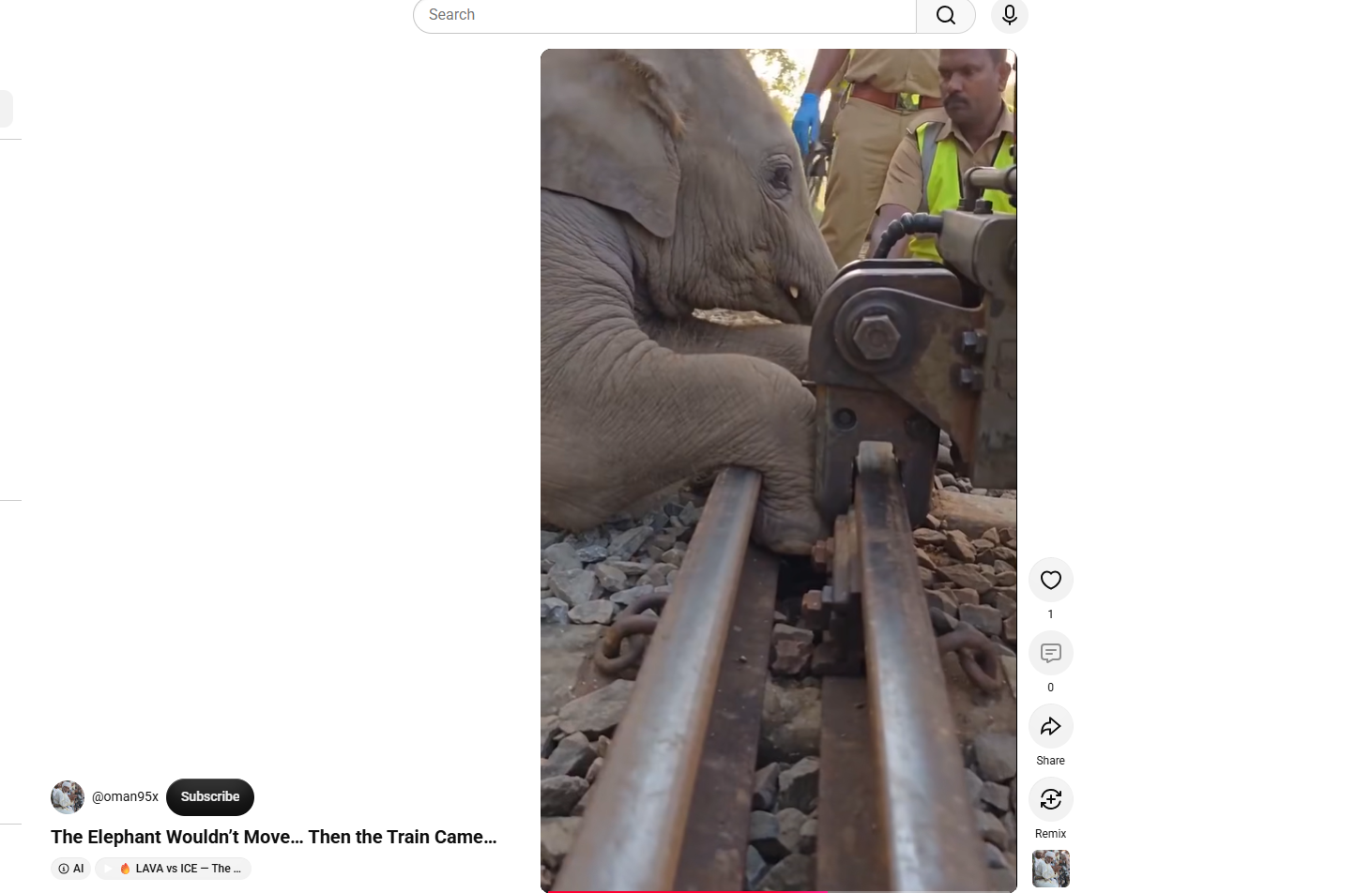
A video is being shared on social media showing a baby elephant apparently trapped in a railway track. In the video, its leg can be seen stuck between the tracks, while a train appears to be approaching. The video further shows rescuers using a hydraulic machine to remove part of the railway track and safely free the baby elephant. CyberPeace Research found that the viral claim is false. Our research found that the video is AI-generated and is being shared on social media with a false and misleading claim.
Claim:
A user on Facebook shared the video claiming that an elephant’s leg got stuck in a railway track, following which people risked their lives to safely rescue the animal. The post link, archive link and screenshot are provided below.
https://www.facebook.com/reel/992948767150505

Fact Check
During our research, we conducted a reverse image search of different keyframes from the viral video. However, we did not find any credible media report or other authentic source related to the incident. However, during our research, we found some social media posts featuring the same video. These posts have labelled the video as AI-generated content.
https://www.youtube.com/shorts/TCQ2n6LDr_Q
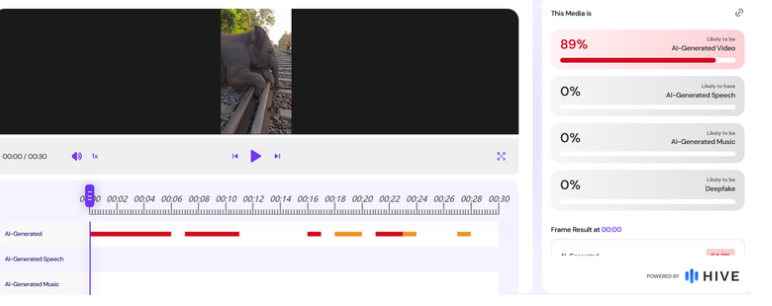
We then scanned the viral video using the Hive Detect tool. According to the tool’s analysis, the video was identified as potentially AI-generated with an 89% score.
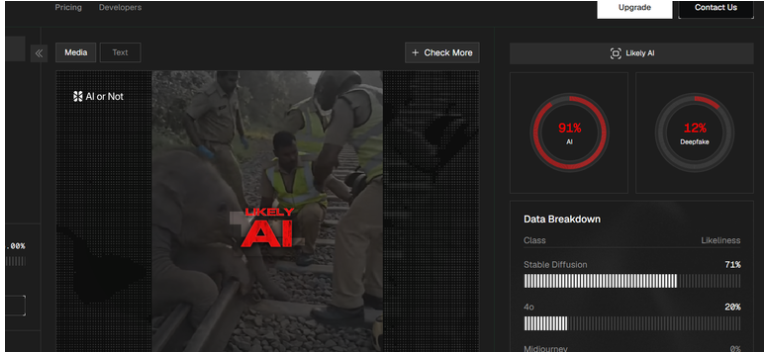
At the end of our research, we also examined the video using the AIorNot tool. According to its analysis, the visuals in the video were identified as AI-generated with a 91% probability.
Conclusion
Our research found that the video being shared on social media does not depict a real incident. During our research into the source and context of the video, we found no credible information supporting the claim. Furthermore, an analysis of the video using AI detection tools also confirmed that it is AI-generated.

Related Blogs

Executive Summary:
A viral online video claims of an attack on Prime Minister Benjamin Netanyahu in the Israeli Senate. However, the CyberPeace Research Team has confirmed that the video is fake, created using video editing tools to manipulate the true essence of the original footage by merging two very different videos as one and making false claims. The original footage has no connection to an attack on Mr. Netanyahu. The claim that endorses the same is therefore false and misleading.

Claims:
A viral video claims an attack on Prime Minister Benjamin Netanyahu in the Israeli Senate.


Fact Check:
Upon receiving the viral posts, we conducted a Reverse Image search on the keyframes of the video. The search led us to various legitimate sources featuring an attack on an ethnic Turkish leader of Bulgaria but not on the Prime Minister Benjamin Netanyahu, none of which included any attacks on him.

We used AI detection tools, such as TrueMedia.org, to analyze the video. The analysis confirmed with 68.0% confidence that the video was an editing. The tools identified "substantial evidence of manipulation," particularly in the change of graphics quality of the footage and the breakage of the flow in footage with the change in overall background environment.


Additionally, an extensive review of official statements from the Knesset revealed no mention of any such incident taking place. No credible reports were found linking the Israeli PM to the same, further confirming the video’s inauthenticity.
Conclusion:
The viral video claiming of an attack on Prime Minister Netanyahu is an old video that has been edited. The research using various AI detection tools confirms that the video is manipulated using edited footage. Additionally, there is no information in any official sources. Thus, the CyberPeace Research Team confirms that the video was manipulated using video editing technology, making the claim false and misleading.
- Claim: Attack on the Prime Minister Netanyahu Israeli Senate
- Claimed on: Facebook, Instagram and X(Formerly Twitter)
- Fact Check: False & Misleading

Executive Summary:
A video circulating on Social media has claimed that Iran has launched a missile strike destroying Ben Gurion Airport in Tel Aviv. With rising tensions in geopolitics, the video quickly became popular. However, our research has detailed inspections through digital verification tools and visual analysis showed that the video is AI-generated. No incident or damage ever occurred.

Claim:
A viral video circulating on social media platforms claims to show Tel Aviv’s Ben Gurion Airport destroyed following an Iranian missile strike. The video is being shared with captions suggesting it is the last recorded visuals from the attack, with some users asserting it as evidence of escalating conflict between Iran and Israel.

Fact Check:
After looking into the video that purported to show the destruction of Tel Aviv's Ben Gurion Airport in an Iranian missile strike, we researched the topic whether the claim is accurate or not. The video depicts a damaged airport terminal, with debris and fires, but a visual analysis determined that there were a number of suspicious characteristics: asymmetrical layout, artificial-looking smoke patterns, and the absence of activity or humans—those are all typical indications of AI generation. Our research traced the origins of the video to an Instagram post, with a date of May 27, 2025, made by what seems to be a user who frequently shares AI-generated images.


In order to verify our conclusions, we used Hive Moderation, an AI content detection tool, which produced a result of an 80% probability that the video is altered, and this level of probability strongly supports the idea that the footage is not real. Additionally, reports from popular organizations like India Today and Reuters supported these results. All findings resulting from our research established that the video is synthetic and unrelated to any event occurring at Ben Gurion Airport, and therefore debunked a false narrative propagated on social media.

To confirm, we also compared the visuals with a real aerial image of Tel Aviv’s Ben Gurion Airport available on aviation stock sites.


Fig: Google Maps image of Tel Aviv’s Ben Gurion Airport
The visuals from the viral video are not real locations or scenes of Aviv’s Ben Gurion Airport's true location and configuration therefore it is fake and misleading.
Conclusion:
After thorough research it is concluded that the viral video is fake and it is not an actual missile strike at Ben Gurion Airport. The video is made with AI, and posted by a content creator of synthetic content well before any conflict update. There is no official confirmation or credible news coverage to substantiate the claim, with a high probability of AI-detection, and it has been proven to be digitally manipulated. Therefore, the claim is untrue and misleading.
- Claim: A video shows Iran's missile strike destroying Tel Aviv’s Ben Gurion Airport.
- Claimed On: Social Media
- Fact Check: False and Misleading
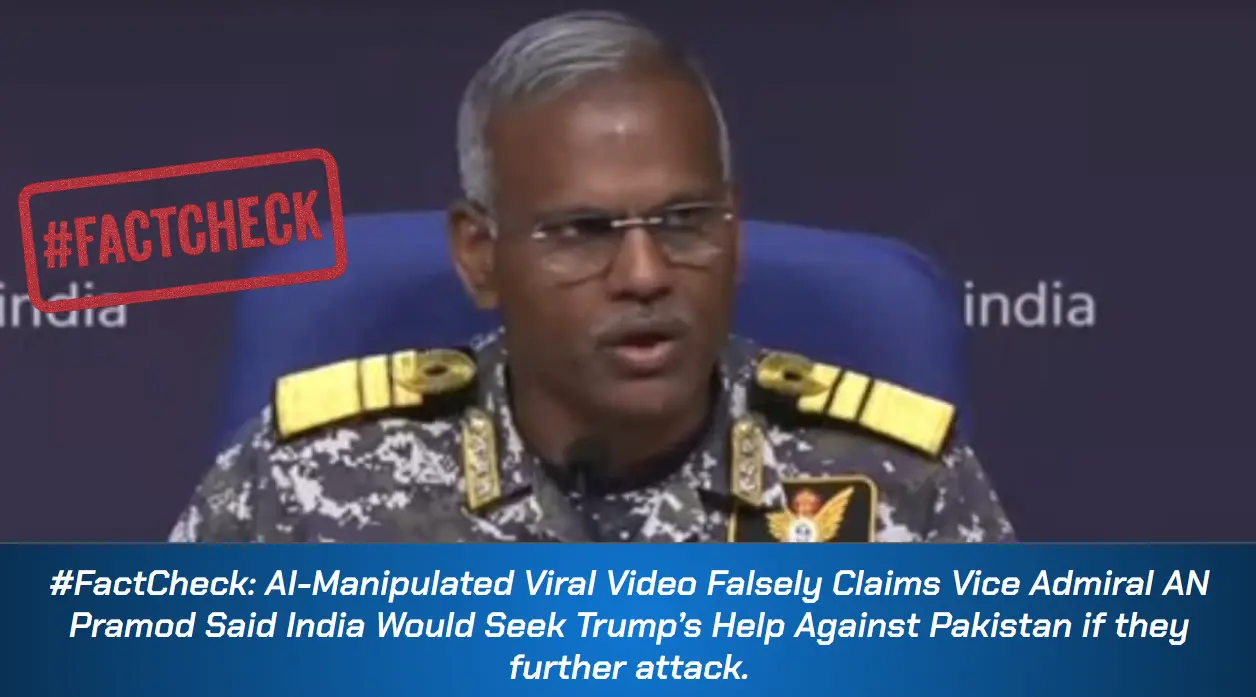
Executive Summary:
A viral video (archived link) circulating on social media claims that Vice Admiral AN Pramod stated India would seek assistance from the United States and President Trump if Pakistan launched an attack, portraying India as dependent rather than self-reliant. Research traced the extended footage to the Press Information Bureau’s official YouTube channel, published on 11 May 2025. In the authentic video, the Vice Admiral makes no such remark and instead concludes his statement with, “That’s all.” Further analysis using the AI Detection tool confirmed that the viral clip was digitally manipulated with AI-generated audio, misrepresenting his actual words.
Claim:
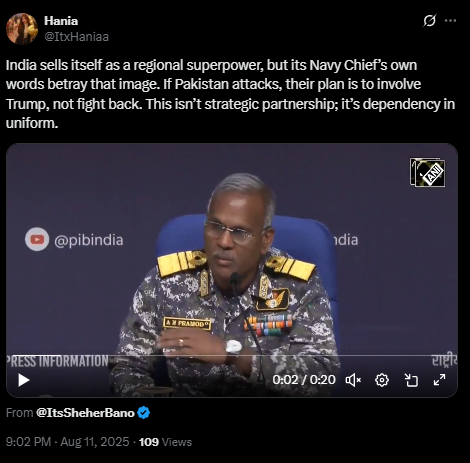
In the viral video an X user posted with the caption
”India sells itself as a regional superpower, but its Navy Chief’s own words betray that image. If Pakistan attacks, their plan is to involve Trump, not fight back. This isn’t strategic partnership; it’s dependency in uniform”.
In the video the Vice Admiral was heard saying
“We have worked out among three services, this time if Pakistan dares take any action, and Pakistan knows it, what we are going to do. We will complain against Pakistan to the United States of America and President Trump, like we did earlier in Operation Sindoor.”
Fact Check:
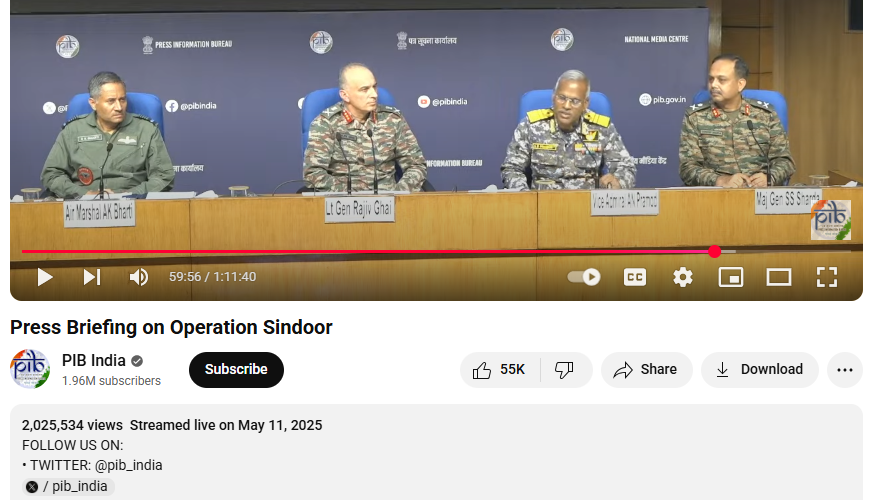
Upon conducting a reverse image search on key frames from the video, we located the full version of the video on the official YouTube channel of the Press Information Bureau (PIB), published on 11 May 2025. In this video, at the 59:57-minute mark, the Vice Admiral can be heard saying:
“This time if Pakistan dares take any action, and Pakistan knows it, what we are going to do. That’s all.”
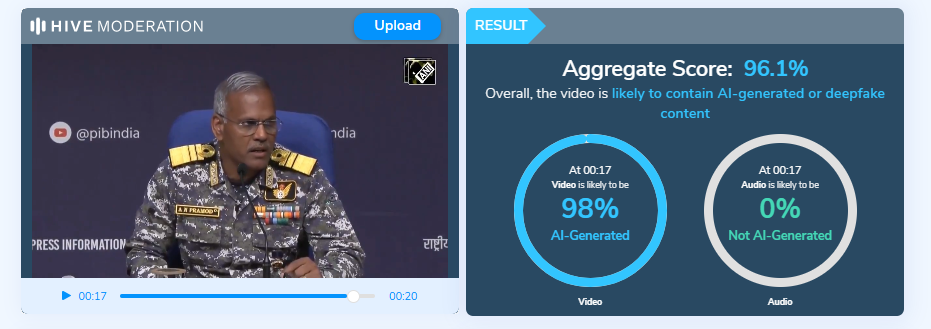
Further analysis was conducted using the Hive Moderation tool to examine the authenticity of the circulating clip. The results indicated that the video had been artificially generated, with clear signs of AI manipulation. This suggests that the content was not genuine but rather created with the intent to mislead viewers and spread misinformation.
Conclusion:
The viral video attributing remarks to Vice Admiral AN Pramod about India seeking U.S. and President Trump’s intervention against Pakistan is misleading. The extended speech, available on the Press Information Bureau’s official YouTube channel, contained no such statement. Instead of the alleged claim, the Vice Admiral concluded his comments by saying, “That’s all.” AI analysis using Hive Moderation further indicated that the viral clip had been artificially manipulated, with fabricated audio inserted to misrepresent his words. These findings confirm that the video is altered and does not reflect the Vice Admiral’s actual remarks.
Claim: Fake Viral Video Claiming Vice Admiral AN Pramod saying that next time if Pakistan Attack we will complain to US and Prez Trump.
Claimed On: Social Media
Fact Check: False and Misleading
