
#FactCheck-AI-generated video falsely claims CDS Raja Subramani confirmed resignation of over 30,000 Indian soldiers
Executive Summary
A video is being widely shared on social media, allegedly showing Chief of Defence Staff (CDS) Raja Subramani referring to the resignation of more than 30,000 Indian soldiers. The video is being circulated with the claim that CDS Raja Subramani confirmed that over 30,000 personnel resigned in protest following the demonstration held at Jantar Mantar. CyberPeace Research Wing’s research found that the viral claim is false. The research revealed that the video featuring CDS Raja Subramani has been digitally manipulated and created using Artificial Intelligence (AI). The original video does not contain any statement related to soldiers’ resignations or the Jantar Mantar protest.
Claim
A Facebook user shared the video with a claim stating: “After the protests at Jantar Mantar, India’s Chief of Defence Staff Raja Subramani has issued an emergency alert, saying that more than 30,000 soldiers have resigned in protest because their children were brutally beaten at Jantar Mantar.”
The post link, archive link and screenshot are provided below:

Fact Check
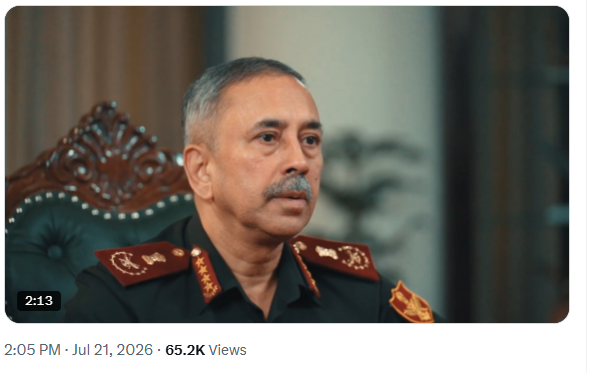
To verify the authenticity of the viral video, we extracted a key frame and conducted a reverse image search using Google Lens. During the search, we found the same video uploaded by the Eastern Command of the Indian Army (@easterncomd) on its official X account on July 21, 2026. The original video shows CDS Raja Subramani extending his best wishes to all participating teams of the 135th Indian Oil Durand Cup Football Tournament. There is no mention of any soldier resignations or the Jantar Mantar protest in the original footage.
https://x.com/easterncomd/status/2079485496988967225
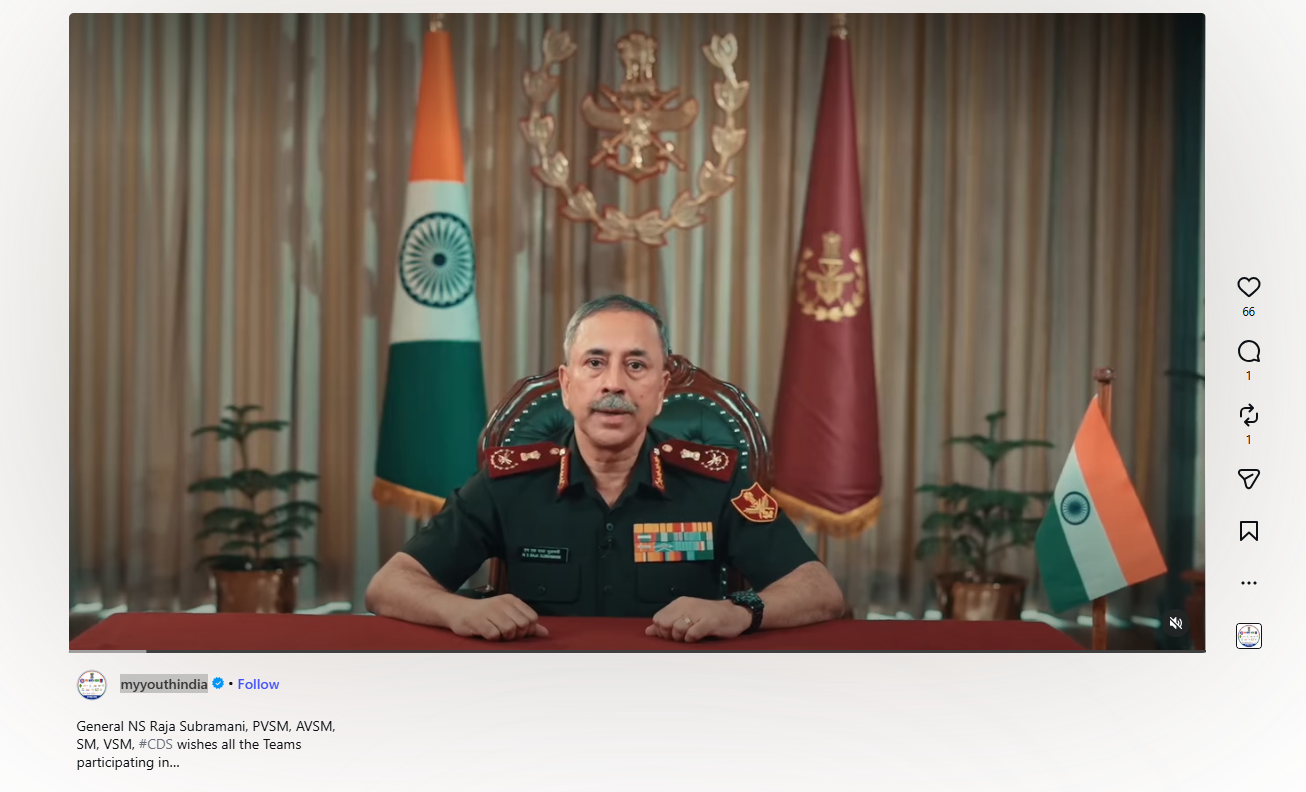
Further research led us to the same video posted by the Instagram account myyouthindia, where CDS Raja Subramani can again be seen wishing teams participating in the 135th Indian Oil Durand Cup Football Tournament.
https://www.instagram.com/reels/DbEGRGBsKv8/
Conclusion
The research established that the viral video of CDS Raja Subramani has been manipulated using AI-generated content. The original video is related to the 135th Indian Oil Durand Cup Football Tournament and does not contain any statement about the resignation of 30,000 Indian soldiers or the Jantar Mantar protest. The digitally altered video is being shared with a false claim.

Related Blogs
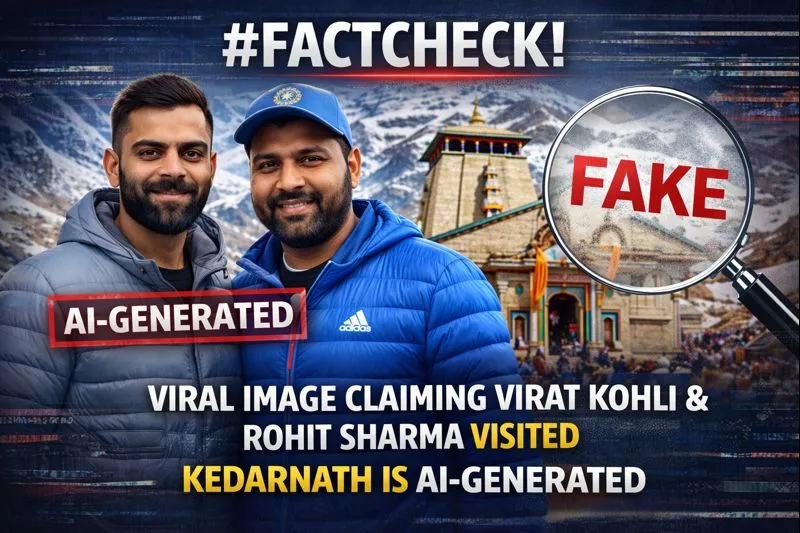
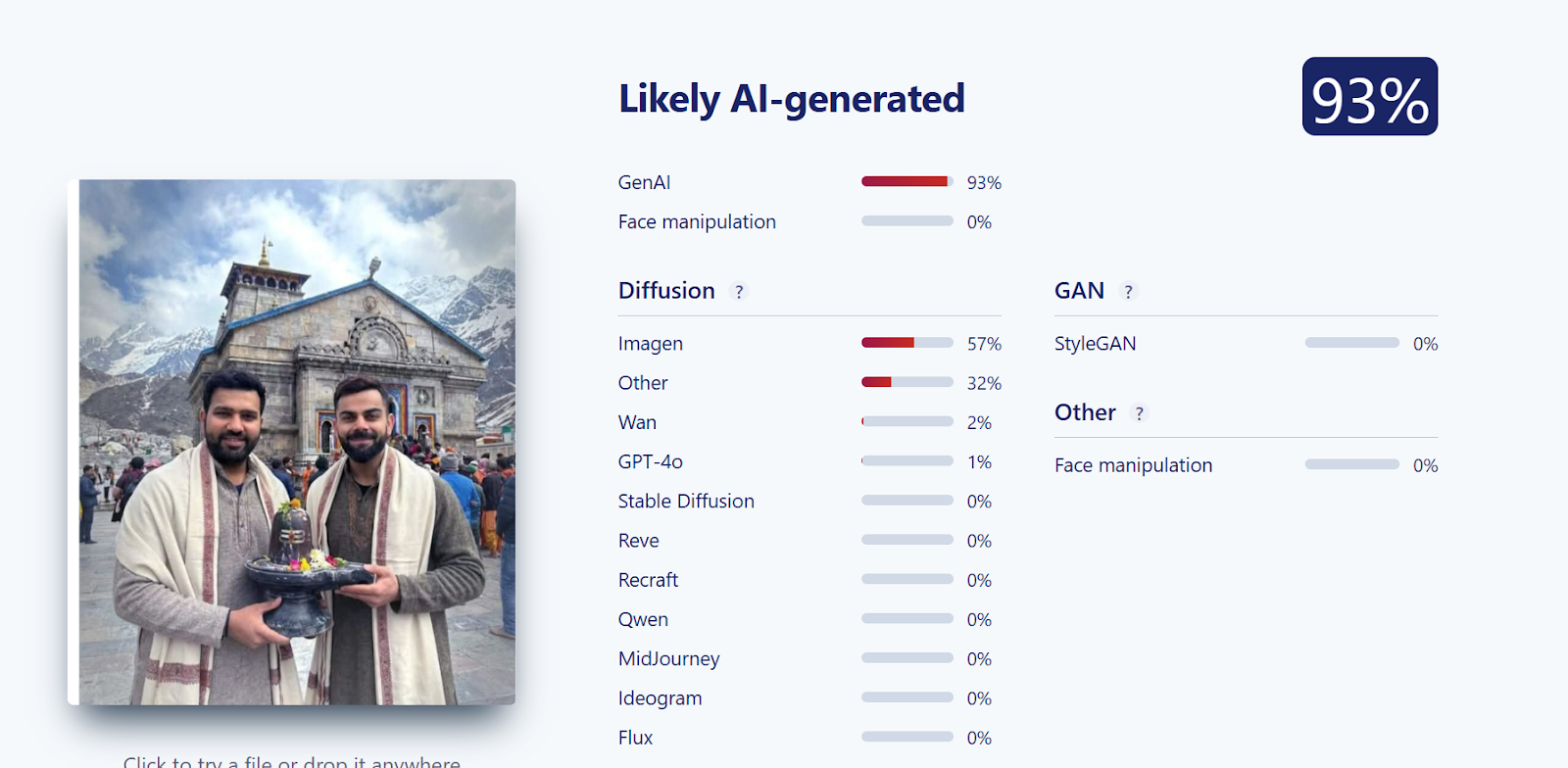
A photo featuring Indian cricketers Virat Kohli and Rohit Sharma is being widely shared on social media. In the image, both players are seen holding a Shivling, with the Kedarnath temple visible in the background. Users sharing the image claim that Virat Kohli and Rohit Sharma recently visited Kedarnath.
However, CyberPeace Foundation’s investigation found the claim to be false. Our verification established that the viral image is not real but has been created using Artificial Intelligence (AI) and is being circulated with a misleading narrative.
The Claim
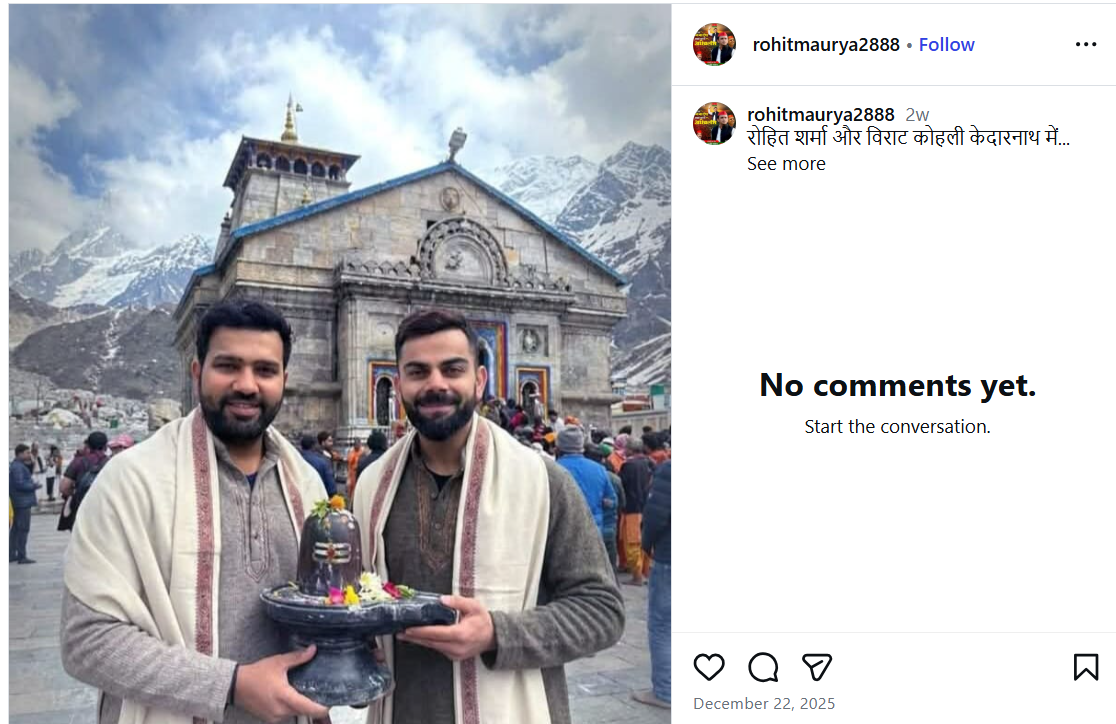
An Instagram user shared the viral image on December 22, 2025, with the caption stating that Rohit Sharma and Virat Kohli are in Kedarnath. The post has since been widely reshared by other users, who assumed the image to be authentic. Link, archive link, screenshot:
Fact Check
On closely examining the viral image, the Desk noticed visual inconsistencies suggesting that it may be AI-generated. To verify this, the image was scanned using the AI detection tool HIVE Moderation. According to the results, the image was found to be 99 per cent AI-generated.

Further verification was conducted using another AI detection tool, Sightengine. The analysis revealed that the image was 93 per cent likely to be AI-generated, reinforcing the findings from the previous tool.
Conclusion
CyberPeace Foundation’s research confirms that the viral image claiming Virat Kohli and Rohit Sharma visited Kedarnath is fabricated. The image has been generated using AI technology and is being falsely shared on social media as a real photograph.

Introduction
As e-sports flourish in India, mobile gaming platforms and apps have contributed massively to this boom. The wave of online mobile gaming has led to a new recognition of esports. As we see the Sports Ministry being very proactive for e-sports and e-athletes, it is pertinent to ensure that we do not compromise our cyber security for the sake of these games. When we talk about online mobile gaming, the most common names that come to our minds are PUBG and BGMI. As news for all Indian gamers, BGMI is set to be relaunched in India after approval from the Ministry of Electronics and Information Technology.
Why was BGMI banned?
The Govt banned Battle Ground Mobile India on the pretext of being a Chinese application and the fact that all the data was hosted in China itself. This caused a cascade of compliance and user safety issues as the Data was stored outside India. Since 2020 The Indian Govt has been proactive in banning Chinese applications, which might have an adverse effect on national security and Indian citizens. Nearly 200 plus applications have been banned by the Govt, and most of them were banned due to their data hubs being in China. The issue of cross-border data flow has been a key issue in Geo-Politics, and whoever hosts the data virtually owns it as well and under the potential threat of this fact, all apps hosting their data in China were banned.
Why is BGMI coming back?
BGMI was banned for not hosting data in India, and since the ban, the Krafton Inc.-owned game has been engaging in Idnai to set up data banks and servers to have a separate gaming server for Indian players. These moves will lead to a safe gaming ecosystem and result in better adherence to the laws and policies of the land. The developers have not declared a relaunch date yet, but the game is expected to be available for download for iOS and Android users in the coming few days. The game will be back on app stores as a letter from the Ministry of Electronics and Information Technology has been issued stating that the games be allowed and made available for download on the respective app stores.
Grounds for BGMI
BGMI has to ensure that they comply with all the laws, policies and guidelines in India and have to show the same to the Ministry to get an extension on approval. The game has been permitted for only 90 days (3 Months). Hon’ble MoS Meity Rajeev Chandrashekhar stated in a tweet “This is a 3-month trial approval of #BGMI after it has complied with issues of server locations and data security etc. We will keep a close watch on other issues of User harm, Addiction etc., in the next 3 months before a final decision is taken”. This clearly shows the magnitude of the bans on Chinese apps. The ministry and the Govt will not play the soft game now, it’s all about compliance and safeguarding the user’s data.
Way Forward
This move will play a significant role in the future, not only for gaming companies but also for other online industries, to ensure compliance. This move will act as a precedent for the issue of cross-border data flow and the advantages of data localisation. It will go a long way in advocacy for the betterment of the Indian cyber ecosystem. Meity alone cannot safeguard the space completely, it is a shared responsibility of the Govt, industry and netizens.
Conclusion
The advent of online mobile gaming has taken the nation by storm, and thus, being safe and secure in this ecosystem is paramount. The provisional permission form BGMI shows the stance of the Govt and how it is following the no-tolerance policy for noncompliance with laws. The latest policies and bills, like the Digital India Act, Digital Personal Data Protection Act, etc., will go a long way in securing the interests and rights of the Indian netizen and will create a blanket of safety and prevention of issues and threats in the future.

Introduction
The nation got its first consolidated data protection regulation in the form of the Digital Personal Data Protection Act, 2023, in the month of August, and the Indian netizens got their independence in terms of data protection and privacy. The act lays heavy penalties for non-compliance with the provisions, and the same is under the jurisdiction of a Data Protection Board set up by the Central Government, which enjoys powers equivalent to a civil court. The act upholds the right to data privacy as the fundamental right under Article 19 (1)(A) and 21 of the Constitution of India. The same has been judicially supported in the form of the landmark judgement, Jus. K.S Puttawamy vs. Union of India of 2018. Let us take a look at the impact the act will make on the Indian netizens.
What is Personal Data?
Personal Data refers to any form of digitised data which can be directly replicated by any person. This includes email IDs, mobile numbers, health data, banking data, photos, etc. A person to whom the personal data belongs is called the Data Principle. A Data principle is anyone who is above the age of 18 years and consents to the data of children/minors. In the case of children/minors, it is mandatory for the parents or guardians to provide their express consent for the processing of personal data for all or any purposes. Any individual who is processing personal data is known as the Data Fiduciry, and individuals registered under the act may act as consent managers to make the consent transparent. When it comes to the rights of the netizens, it is seen that the act is created with an aspect of “Safety by Design” to secure the rights and responsibilities of the netizens.
Rights secured under the DPDP Act 2023
- Right to Grievance Redressal: The Data fiduciary and the consent manager are required to respond to the grievances of the Data Principal within a time period, which is soon to be prescribed, thus creating a blanket of responsibility for the data fiduciary and consent manager.
- Right to Nominate: Data Principals have the right to nominate any other individual who shall, in the event of death or incapacity of the data principal, exercise his/her rights.
- Right to access to information: The Data principal has the right to seek confirmation from Data fiduciaries regarding the processing of their personal data and the summary of the processed data as well.
- Right to Erasure and Correction: Data principals can reach out to the data fiduciaries in order to exercise their right to correct, complete, update and erasure of their personal data.
- Territorial Rights: The data is to be processed within India, and processing outside India should be in regard to the services provided in India.
- Material Rights: The rights are applicable to any personal data collected in digitised form and also for the data collected in a non-digital form but subsequently digitised.
Obligations for Data Fiduciaries
The data fiduciaries are mandated to oblige with the following provisions in order to maintain compliance with the laws of the land and by securing the Digital rights of the netizens.
These are the obligations of the data fiduciaries:
- Implement technical and organisational measures to safeguard Personal Data.
- Determine the legal grounds for processing and obtaining consent from Data principals where required.
- Provide a privacy notice while obtaining consent from Data principals.
- Implement a mechanism for data principals to exercise their rights.
- Implement a grievance redressal mechanism for handling the queries from Data principals.
- Irrecoverably delete personal data after the purpose for which it was collected has expired or when the consent has been withdrawn.
- Have a breach management policy to notify the data protection board and the data principals in accordance with prescribed timelines.
- Sign a valid contract with Data processors to ensure key obligations are abided by them, including timely deletion of data.
Conclusion
As the world steps into the digital age, it is pertinent for the governments of the world to come up with efficient and effective legislation to protect cyber rights and responsibilities, but as cyberspace has no boundaries, nations need to work in synergy to protect their cyber interests and netizens. This can only begin once all nations have indigenous Cyber laws and rights to protect netizens, and the same has been addressed by the Indian Government in the form of the Digital Perosnl Data Protection Act, 2023. The future is full of emerging technologies and the evolution of cyber laws; hence, consolidating a basic legal structure now is of utmost importance and the same is expected to be strengthened in India by the soon-to-be-released Draft Digital India Bill.
