#FactCheck-AI-Generated Image Falsely Shows Donald Trump Raising Fist During Washington Incident
Executive Summary
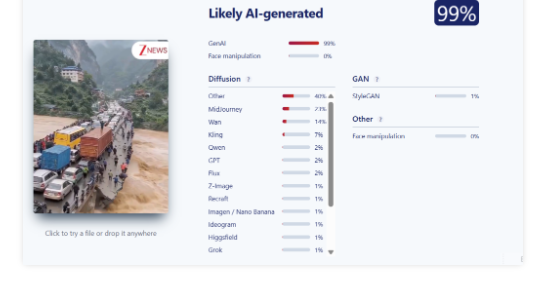
A photo of Donald Trump is going viral on social media, showing him raising his fist. Users claim the image was taken during a press event in Washington, when security personnel were escorting him out amid reports of gunfire. Research by CyberPeace Research Wing found that the viral image is AI-generated and is being shared with misleading claims.
Claim
On April 26, 2026, an X user shared the image with the caption: “Thank You, Lord our God, for protecting our President.” The post suggests that Trump made the gesture during a chaotic evacuation at a Washington event.

Fact Check
Reports confirm that Trump and senior officials were hurried away from the White House Correspondents’ Association dinner on April 25 after gunshots were reportedly heard from a floor above the ballroom. However, no authentic visuals show Trump raising his fist during the evacuation.
- https://www.nytimes.com/2024/07/14/arts/design/trump-photo-raised-fist.html
- https://edition.cnn.com/2025/04/11/politics/trump-obama-portrait-white-house


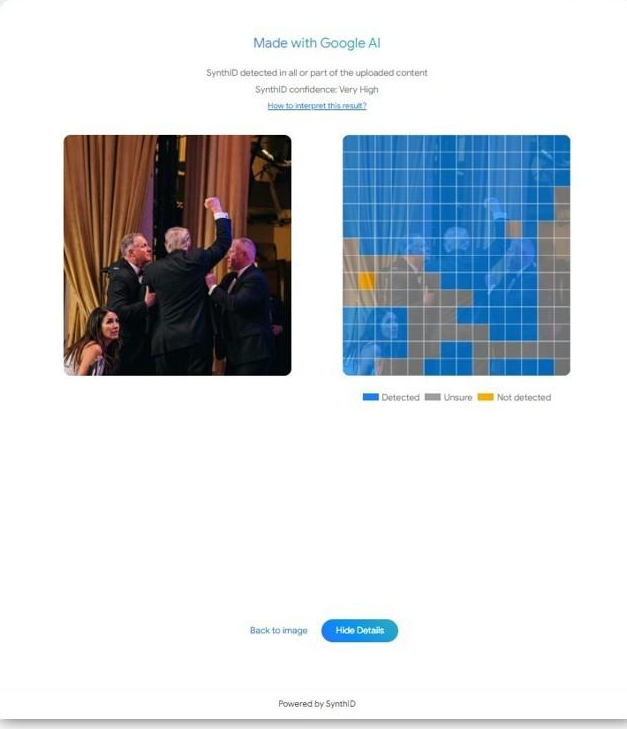
Further analysis of the viral image indicates signs of digital manipulation. Google’s SynthID detection tool flagged the file as containing SynthID—an invisible watermark embedded in content generated using Google’s AI tools.
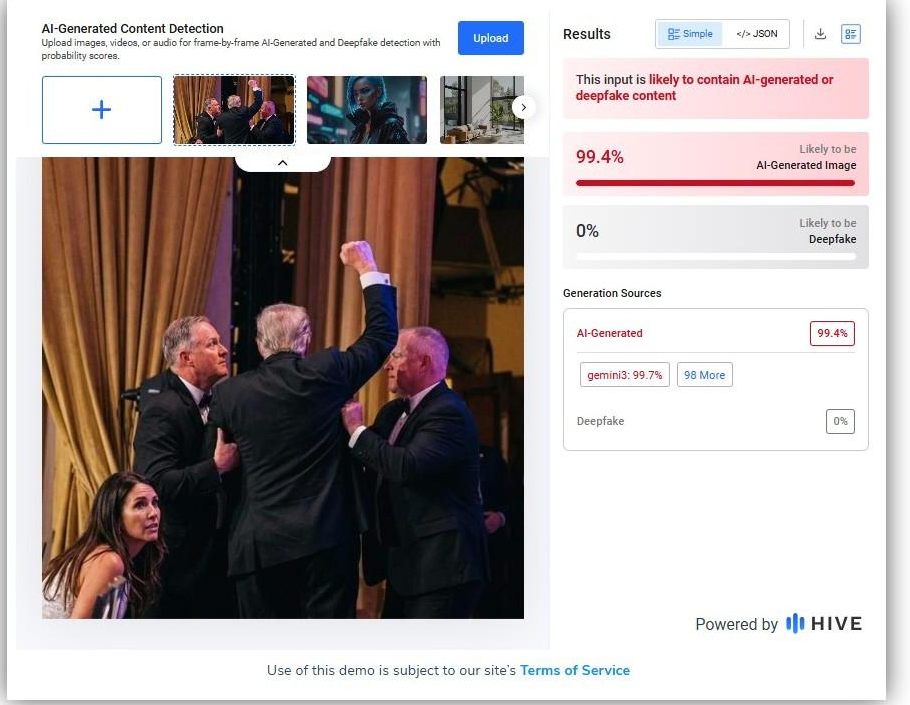
Additionally, AI detection platform Hive Moderation assessed that the image is likely AI-generated or a deepfake.
Conclusion
The research confirms that the viral image of Donald Trump raising his fist during a Washington incident is not real. It was created using AI and is being circulated with a misleading narrative.
Related Blogs

Introduction:
Apple is known for its unique innovations and designs. Apple, with the introduction of the iPhone 15 series, now will come up with the USB-C by complying with European Union(EU) regulations. The standard has been set by the European Union’s rule for all mobile devices. The new iPhone will now come up with USB-C. However there is a little caveat here, you will be able to use any USB-C cable to charge or transfer from your iPhone. European Union approved new rules to make it compulsory for tech companies to ensure a universal charging port is introduced for electronic gadgets like mobile phones, tablets, cameras, e-readers, earbuds and other devices by the end of next year.
The new iPhone will now come up with USB-C. However, Apple being Apple, will limit third-party USB-C cables. This means Apple-owned MFI-certified cable will have an optimised charging speed and a faster data transfer speed. MFI stands for 'Made for iPhone/iPad' and is a quality mark or testing program from Apple for Lightning cables and other products. The MFI-certified product ensures safety and improved performance.
European Union's regulations on common charging port:
The new iPhone will have a type-c USB port. EU rules have made it mandatory that all phones and laptops need to have one USB-C charging port. IPhone will be switching to USB-C from the lightning port. European Union's mandate for all mobile device makers to adopt this technology. EU has set a deadline for all new phones to use USB-C for wired charging by the end of 2024. These EU rules will be applicable to all devices, such as tablets, digital cameras, headphones, handheld video game consoles, etc. And will apply to devices that offer wired charging. The EU rules require that phone manufacturers adopt a common charging connection. The mobile manufacturer or relevant industry has to comply with these rules by the end of 2024. The rules are enacted with the intent to save consumers money and cut waste. EU stated that these rules will save consumers from unnecessary charger purchases and tonnes of cut waste per year. With the implementation of these rules, the phone manufacturers have to comply with it, and customers will be able to use a single charger for their different devices. It will strengthen the speed of data transfer in new iPhone models. The iPhone will also be compatible with chargers used by non-apple users, i.e. USB-C.
Indian Standards on USB-C Type Charging Ports in India
The Bureau of Indian Standards (BIS) has also issued standards for USB-C-type chargers. The standards aim to provide a solution of a common charger for all different charging devices. Consumers will not need to purchase multiple chargers for their different devices, ultimately leading to a reduction in the number of chargers per consumer. This would contribute to the Government of India's goal of reducing e-waste and moving toward sustainable development.
Conclusion:
New EU rules require all mobile phone devices, including iPhones, to have a USB-C connector for their charging ports. Notably, now you can see the USB-C port on the upcoming iPhone 15. These rules will enable the customers to use a single charger for their different Apple devices, such as iPads, Macs and iPhones. Talking about the applicability of these rules, the EU common-charger rule will cover small and medium-sized portable electronics, which will include mobile phones, tablets, e-readers, mice and keyboards, digital cameras, handheld videogame consoles, portable speakers, etc. Such devices are mandated to have USB-C charging ports if they offer the wired charging option. Laptops will also be covered under these rules, but they are given more time to adopt the changes and abide by these rules. Overall, this step will help in reducing e-waste and moving toward sustainable development.
References:
https://www.bbc.com/news/technology-66708571

Introduction
In recent years, India has seen tremendous growth in its space industry. The satellite infrastructure of India now provides key services to a variety of sectors, including communication, navigation, broadcasting, disaster management and national security operations. Satellite communications globally will connect remote communities, aid in the delivery of Digital Governance and support India's strategic military capabilities. Given the expanding space ecosystem in India with the involvement of the public sector, private sector and research institutions, the security of satellite communications is becoming increasingly important.
At the same time, as satellite communication technologies become more pervasive, the risk of cyber threats targeting space systems increases. Cyberattacks against satellites, ground terminals or communication networks may critically impact, disrupt, damage, and/or destroy essential services, and expose sensitive information. To mitigate these risks, CERT-In (Computer Emergency Response Team), in collaboration with the SatCom Industry Association of India released a Cyber Security Framework and Guidelines for Space Platforms/Systems, including Satellite Communication, in 2026. This framework aims to establish and enhance cybersecurity measures throughout India's space ecosystem, while guiding how to better prepare for and respond to the growing volume of cyber threat activity targeting Space Systems.
Overview of the CERT-In Space Cybersecurity Framework
CERT-In introduced a dedicated cybersecurity framework for space systems in February 2026. Developed in collaboration with industry stakeholders, the framework provides guidelines to strengthen the security of satellite communication infrastructure across India. Although the guidelines are advisory in nature, they are designed to promote best practices and encourage organisations to adopt robust cybersecurity measures.
The framework targets a wide range of stakeholders involved in satellite communication operations. These include government agencies, satellite operators, ground station operators, equipment manufacturers, technology vendors, and emerging space startups. By outlining cybersecurity principles, technical controls, and governance mechanisms, the framework aims to create a coordinated approach to protecting space assets.
Another key objective of the guidelines is to foster collaboration between the public and private sectors. As India’s space industry expands and private participation increases, maintaining a secure and resilient ecosystem becomes essential. The framework, therefore, emphasises risk management, incident reporting, and continuous monitoring to strengthen the overall cybersecurity posture of the space sector.
Key Components of Satellite Communication Systems
Satellite communication systems are made up of multiple interconnected devices that can be used to deliver communication services. The cybersecurity framework groups these elements into three categories: the space segment, the ground segment, and the user segment.
The space segment is everything related to the satellite itself, including the satellite's onboard systems. This includes the satellite's communication payload, telemetry systems, antennas, power systems, and software that controls its operation. Because satellites operate in remote parts of space with very little opportunity for maintenance, securing these systems is critical in order to guard against unauthorized access to or control of these systems.
The ground segment comprises the terrestrial infrastructure responsible for controlling the satellite's operations. It consists of satellite mission control centres, ground stations, network gateways and data processing facilities. The ground stations send commands to the satellites and receive telemetry data from the satellites, which makes the ground station a very important physical interface point between the satellite asset located in outer space and a terrestrial network.
The user segment contains any device terminal being used by either an individual or an organisation that is accessing a satellite service. Examples of user devices are satellite phones, VSAT terminals, modems, and IoT devices connected to satellite networks. Since these devices connect directly to the communication networks, vulnerabilities in user equipment could also represent a significant threat to the cybersecurity of satellite communications.
Major Cyber Threats to Space Infrastructure
The space systems that support the delivery of satellite communications are being increasingly targeted with multiple types of cyber threats. A major category includes cyber-attacks on communication links between satellites and ground stations. Cyber criminals can attempt to jam the satellite’s communication link, intercept communication signals, or re-transmit previously sent communication signals in order to disrupt the operation of the affected satellites.
Attacks on the systems that control the satellite are serious threats to satellite operations. Cybercriminals and hostile actors can perform command injection attacks where commands are sent to a satellite, and the satellite responds through some undesired action. If cybercriminals are able to gain access to the telemetry or command channels, they can potentially disrupt the operation of the satellite or alter the telemetry data being received from the satellite.
The ground infrastructure that supports satellite communications is still a major target for cybercriminals. Mission control networks and data centres are susceptible to malware, ransomware, phishing, and insider threats. Attackers will frequently target ground stations because they provide a connection point to terrestrial networks and can exploit vulnerabilities from the ground station’s IT systems into the satellite control systems. The combination of these threats illustrates the need for an overall security strategy that encompasses all parts of the satellite communications ecosystem.
Key Security Principles and Measures
A comprehensive overview of multiple principles designed to increase the security of satellite communications is provided in the CERT-In Framework on Cybersecurity for Satellite Communications. The first of these principles, security by design, refers to ensuring that all cybersecurity controls associated with a system are implemented at the time of the system's initial design and development, not afterwards; therefore, security controls should be incorporated throughout the entire lifecycle of a satellite system.
The second principle, which is known as Defense-in-Depth, consists of implementing many different layers or tiers of security controls to protect a system against cyber threats or attacks. An example of the different categories of security controls includes physical security, network security, and access control, among others. By combining security controls across multiple categories, an organisation may be able to reduce the chance that one single vulnerability will result in the loss of the entire system.
The third principle in the Framework, Zero Trust Architecture (ZTA): Users and/or devices located within a network should not be able to rely on implicit trust. Therefore, every request for access to the network will be verified and continuously monitored for potential threats.
The previous two principles stated that secure satellite communications should be conducted using strong encryption and authentication methods, as well as secure communications methods, and that an enterprise monitoring system would be put into place to help detect anomalies or suspicious behaviour.
Conclusion
India is taking an important step toward protecting its expanding space ecosystem by creating a cybersecurity framework to safeguard cyberspace systems from cyber threats. The CERT-In guidelines offer a structured means of reducing the likelihood of cyber threats impacting satellite communication infrastructure through secure system design, continuous monitoring of systems and creating consistent partnerships among organisations. As well as providing evidence that both government and private sector organisations share a collective responsibility for the protection of space assets, both sectors participate in a collaborative effort.
India will need to implement rigorous cybersecurity measures as it expands its space infrastructure in order to ensure the continued availability of critical space infrastructure and ultimately develop its existing commercial satellite business operations with the highest level of safety and security.
References
- https://www.cert-in.org.in/s2cMainServlet?pageid=GUIDLNVIEW02&refcode=CISG-2026-01
- https://www.pib.gov.in/PressReleasePage.aspx?PRID=2233122®=3&lang=1
.webp)
Introduction: The Internet’s Foundational Ideal of Openness
The Internet was built as a decentralised network to foster open communication and global collaboration. Unlike traditional media or state infrastructure, no single government, company, or institution controls the Internet. Instead, it has historically been governed by a consensus of the multiple communities, like universities, independent researchers, and engineers, who were involved in building it. This bottom-up, cooperative approach was the foundation of Internet governance and ensured that the Internet remained open, interoperable, and accessible to all. As the Internet began to influence every aspect of life, including commerce, culture, education, and politics, it required a more organised governance model. This compelled the rise of the multi-stakeholder internet governance model in the early 2000s.
The Rise of Multistakeholder Internet Governance
Representatives from governments, civil society, technical experts, and the private sector congregated at the United Nations World Summit on Information Society (WSIS), and adopted the Tunis Agenda for the Information Society. Per this Agenda, internet governance was defined as “… the development and application by governments, the private sector, and civil society in their respective roles of shared principles, norms, rules, decision-making procedures, and programmes that shape the evolution and use of the Internet.” Internet issues are cross-cutting across technical, political, economic, and social domains, and no one actor can manage them alone. Thus, stakeholders with varying interests are meant to come together to give direction to issues in the digital environment, like data privacy, child safety, cybersecurity, freedom of expression, and more, while upholding human rights.
Internet Governance in Practice: A History of Power Shifts
While the idea of democratizing Internet governance is a noble one, the Tunis Agenda has been criticised for reflecting geopolitical asymmetries and relegating the roles of technical communities and civil society to the sidelines. Throughout the history of the internet, certain players have wielded more power in shaping how it is managed. Accordingly, internet governance can be said to have undergone three broad phases.
In the first phase, the Internet was managed primarily by technical experts in universities and private companies, which contributed to building and scaling it up. The standards and protocols set during this phase are in use today and make the Internet function the way it does. This was the time when the Internet was a transformative invention and optimistically hailed as the harbinger of a utopian society, especially in the USA, where it was invented.
In the second phase, the ideal of multistakeholderism was promoted, in which all those who benefit from the Internet work together to create processes that will govern it democratically. This model also aims to reduce the Internet’s vulnerability to unilateral decision-making, an ideal that has been under threat because this phase has seen the growth of Big Tech. What started as platforms enabling access to information, free speech, and creativity has turned into a breeding ground for misinformation, hate speech, cybercrime, Child Sexual Abuse Material (CSAM), and privacy concerns. The rise of generative AI only compounds these challenges. Tech giants like Google, Meta, X (formerly Twitter), OpenAI, Microsoft, Apple, etc. have amassed vast financial capital, technological monopoly, and user datasets. This gives them unprecedented influence not only over communications but also culture, society, and technology governance.
The anxieties surrounding Big Tech have fed into the third phase, with increasing calls for government regulation and digital nationalism. Governments worldwide are scrambling to regulate AI, data privacy, and cybersecurity, often through processes that lack transparency. An example is India’s Information Technology (Intermediary Guidelines and Digital Media Ethics Code) Rules, 2021, which was passed without parliamentary debate. Governments are also pressuring platforms to take down content through opaque takedown orders. Laws like the UK’s Investigatory Powers Act, 2016, are criticised for giving the government the power to indirectly mandate encryption backdoors, compromising the strength of end-to-end encryption systems. Further, the internet itself is fragmenting into the “splinternet” amid rising geopolitical tensions, in the form of Russia’s “sovereign internet” or through China’s Great Firewall.
Conclusion
While multistakeholderism is an ideal, Internet governance is a playground of contesting power relations in practice. As governments assert digital sovereignty and Big Tech consolidates influence, the space for meaningful participation of other stakeholders has been negligible. Consultation processes have often been symbolic. The principles of openness, inclusivity, and networked decision-making are once again at risk of being sidelined in favour of nationalism or profit. The promise of a decentralised, rights-respecting, and interoperable internet will only be fulfilled if we recommit to the spirit of Multi-Stakeholder Internet Governance, not just its structure. Efficient internet governance requires that the multiple stakeholders be empowered to carry out their roles, not just talk about them.
References
- https://www.newyorker.com/magazine/2024/02/05/can-the-internet-be-governed
- https://www.internetsociety.org/wp-content/uploads/2017/09/ISOC-PolicyBrief-InternetGovernance-20151030-nb.pdf
- https://itp.cdn.icann.org/en/files/government-engagement-ge/multistakeholder-model-internet-governance-fact-sheet-05-09-2024-en.pdf\
- https://nrs.help/post/internet-governance-and-its-importance/
- https://daidac.thecjid.org/how-data-power-is-skewing-internet-governance-to-big-tech-companies-and-ai-tech-guys/