
#FactCheck -Old Video of Benjamin Netanyahu Running in Knesset Falsely Linked to Iran-Israel Tensions
Executive Summary
Amid the ongoing tensions between the United States, Israel, and Iran, a video circulating on social media claims that Israeli Prime Minister Benjamin Netanyahu was seen running after Iran launched an attack on Israel. However, research by the CyberPeace found the viral claim to be misleading. Our research revealed that the video has no connection with the current tensions between the United States, Israel, and Iran. In reality, the clip dates back to 2021, when Netanyahu was rushing inside Israel’s parliament to cast his vote after arriving late.
Claim:
On the social media platform X (formerly Twitter), a user shared the video on March 5, 2026, claiming that Netanyahu had fled and gone into hiding due to fear of Iran. The post included inflammatory remarks suggesting that Iran had demonstrated its power and that Netanyahu had abandoned his country out of fear.

Fact Check
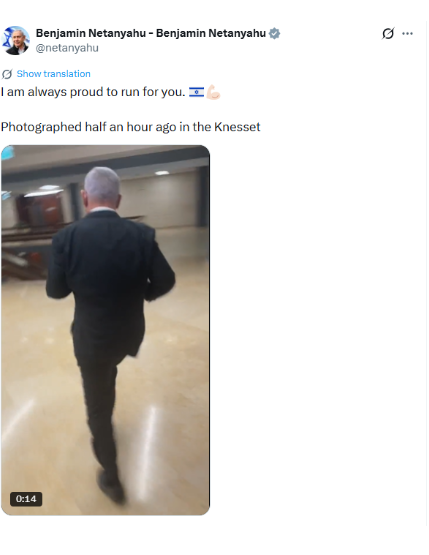
To verify the authenticity of the video, we extracted several keyframes and conducted a reverse image search on Google. During the research, we found the same video on the official X account of Benjamin Netanyahu, posted on December 14, 2021. In the post, Netanyahu wrote in Hebrew, which translates to,“I am always proud to run for you. Photographed half an hour ago in the Knesset.”
Further research also led us to a Hebrew news website where the same video was published.
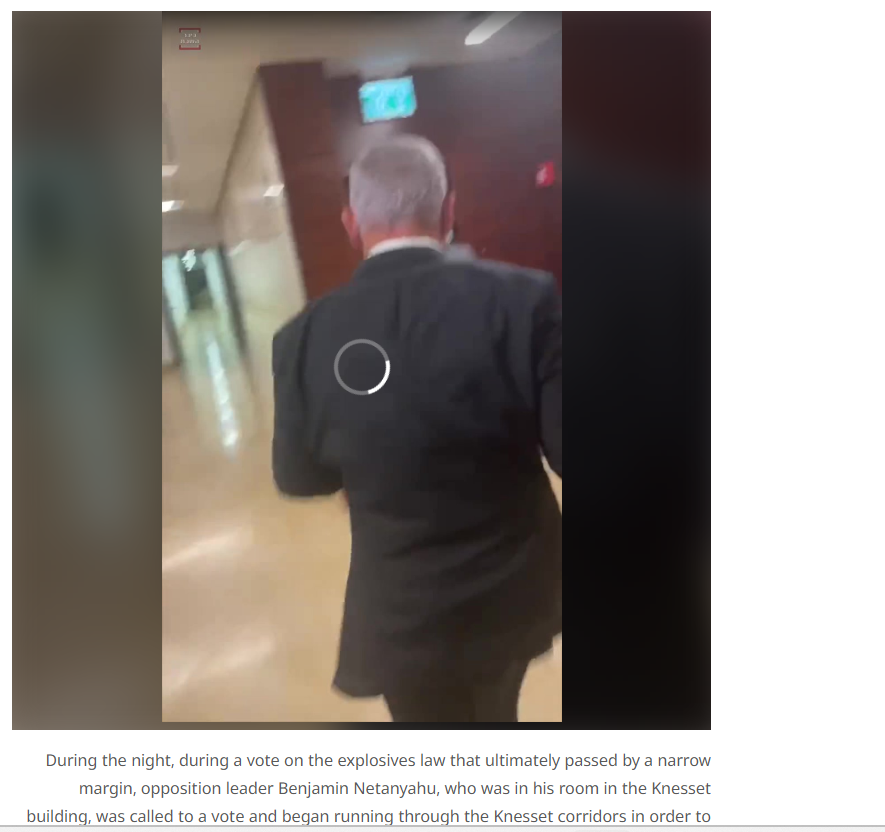
According to the report, voting in the Knesset (Israel’s parliament) continued throughout the night, and an explosives-related bill was passed by a very narrow margin. At the time, opposition leader Benjamin Netanyahu was in his room inside the Knesset building. When he was called for the vote, he hurried through the parliament corridors to reach the chamber in time to cast his vote.
Conclusion:
Our research found that the viral video is unrelated to the ongoing tensions involving the United States, Israel, and Iran. The footage is from 2021 and shows Benjamin Netanyahu rushing inside the Knesset to participate in a parliamentary vote after being called in at the last moment.

Related Blogs

Introduction
Governments worldwide are enacting cybersecurity laws to enhance resilience and secure cyberspace against growing threats like data breaches, cyber espionage, and state-sponsored attacks in the digital landscape. As a response, the EU Council has been working on adopting new laws and regulations under its EU Cybersecurity Package- a framework to enhance cybersecurity capacities across the EU to protect critical infrastructure, businesses, and citizens. Recently, the Cyber Solidarity Act was adopted by the Council, which aims to improve coordination among EU member states for increased cyber resilience. Since regulations in the EU play a significant role in shaping the global regulatory environment, it is important to keep an eye on such developments.
Overview of the Cyber Solidarity Act
The Act sets up a European Cyber Security Alert System consisting of Cross-Border Cyber Hubs across Europe to collect intelligence and act on cyber threats by leveraging emerging technology such as Artificial Intelligence (AI) and advanced data analytics to share warnings on cyber threats with other cyber data centres across the national borders of the EU. This is expected to assist authorities in responding to cyber threats and incidents more quickly and effectively.
Further, it provides for the creation of a new Cybersecurity Emergency Mechanism to enhance incident response systems in the EU. This will include testing the vulnerabilities in critical sectors like transport, energy, healthcare, finance, etc., and creating a reserve of private parties to provide mutual technical assistance for incident response requests from EU member-states or associated third countries of the Digital Europe Programme in case of a large-scale incident.
Finally, it also provides for the establishment of a European Cybersecurity Incident Review Mechanism to monitor the impact of the measures under this law.
Key Themes
- Greater Integration: The success of this Act depends on the quality of cooperation and interoperability between various governmental stakeholders across defence, diplomacy, etc. with regard to data formats, taxonomy, data handling and data analytics tools. For example, Cross-Border Cyber Hubs are mandated to take the interoperability guidelines set by the European Union Agency for Cybersecurity (ENISA) as a starting point for information-sharing principles with each other.
- Public-Private Collaboration: The Act provides a framework to govern relationships between stakeholders such as the public sector, the private sector, academia, civil society and the media, identifying that public-private collaboration is crucial for strengthing EUs cyber resilience. In this regard, National Cyber Hubs are proposed to carry out the strengthening of information sharing between public and private entities.
- Centralized Regulation: The Act aims to strengthen all of the EU's cyber solidarity by outlining dedicated infrastructure for improved coordination and intelligence-sharing regarding cyber events among member states. Equal matching contribution for procuring the tools, infrastructure and services is to be made by each selected member state and the European Cybersecurity Competence Centre, a body tasked with funding cybersecurity projects in the EU.
- Setting a Global Standard: The underlying rationale behind strengthening cybersecurity in the EU is not just to protect EU citizens from cyber-threats to their fundamental rights but also to drive norms for world-class standards for cybersecurity for essential and critical services, an initiative several countries rely on.
Conclusion
In the current digital landscape, governments, businesses, critical sectors and people are increasingly interconnected through information and network connection systems and are using emerging technologies like AI, exposing them to multidimensional vulnerabilities in cyberspace. The EU in this regard continues to be a leader in setting standards for the safety of participants in the digital arena through regulations regarding cybersecurity. The Cyber Solidarity Act’s design including cross-border cooperation, public-private collaboration, and proactive incident-monitoring and response sets a precedent for a unified approach to cybersecurity. As the EU’s Cybersecurity Package continues to evolve, it will play a crucial role in ensuring a secure and resilient digital future for all.
Sources
- https://www.consilium.europa.eu/en/press/press-releases/2024/12/02/cybersecurity-package-council-adopts-new-laws-to-strengthen-cybersecurity-capacities-in-the-eu/
- https://data.consilium.europa.eu/doc/document/PE-94-2024-INIT/en/pdf
- https://digital-strategy.ec.europa.eu/en/policies/cybersecurity-strategy
- https://www.weforum.org/stories/2024/10/cybersecurity-regulation-changes-nis2-eu-2024/
Executive Summary
A video of US Secretary of State Marco Rubio is rapidly going viral on social media, in which he can allegedly be heard making a statement regarding the 2025 India-Pakistan conflict. Along with the video, it is being claimed that the US played a crucial role in ending the conflict between the two countries, but India was the first to initiate a ceasefire with Pakistan. Users are sharing this video believing it to be true.
Research by the CyberPeace Research Wing revealed that the video has been digitally manipulated. Rubio did state that the United States played a role in ending the conflict, but he never said that India was the first to request a ceasefire from Pakistan. This alleged statement was not part of the original video and was added later to alter the clip.
Claim
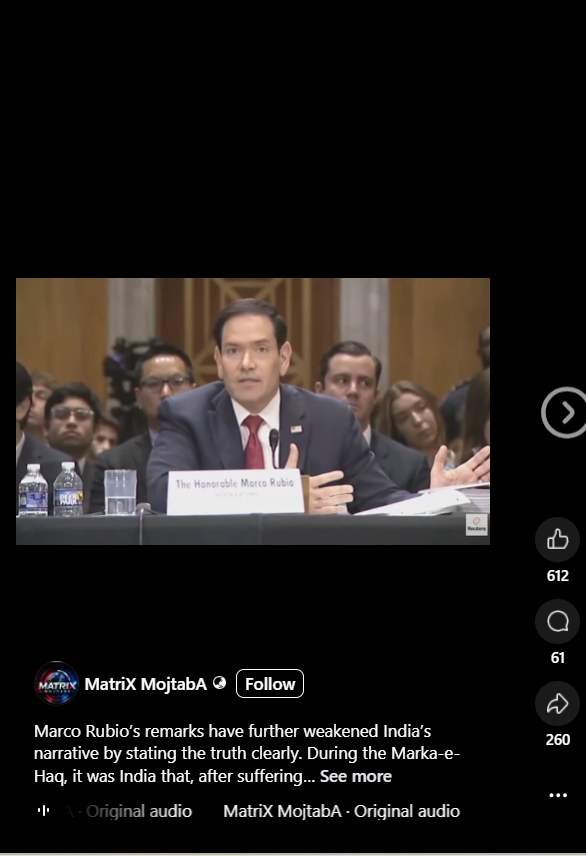
A user on a Facebook page shared the viral video and wrote, "Marco Rubio's statement has clearly brought out the truth, weakening India's claim. During 'Maarka-e-Haq', after suffering heavy losses, India was the first party to request a ceasefire from Pakistan. This highlights the gap between India's public claims and the ground reality, where the military..." The post link, archive link, and screenshot can be seen below. https://www.facebook.com/reel/1015648544746728
https://www.facebook.com/reel/1015648544746728
Fact Check
We investigated the viral video using the InVid tool and extracted several of its keyframes. These keyframes were then subjected to a reverse image search via Google Lens. The investigation revealed that the exact same video had been shared on social media previously, showing the same background and setting. The post link and screenshot can be seen below.
https://www.facebook.com/reel/1015648544746728
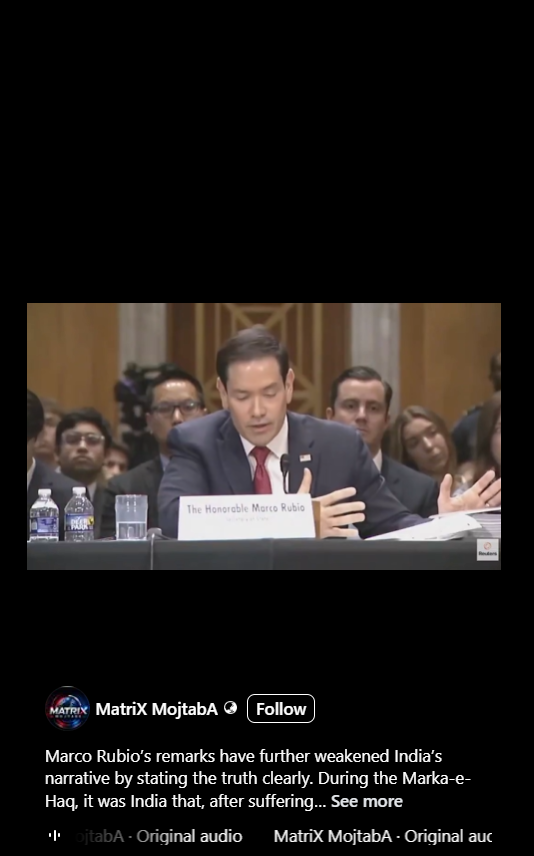
In the next step of our investigation, we found a video published on Reuters' official YouTube channel on June 2, 2026, whose background matches the viral video. However, nowhere in this original video is Marco Rubio heard saying that India was the first to request a ceasefire from Pakistan. The post link and screenshot can be seen below.
https://www.youtube.com/watch?v=qSpp5IYO6Cs
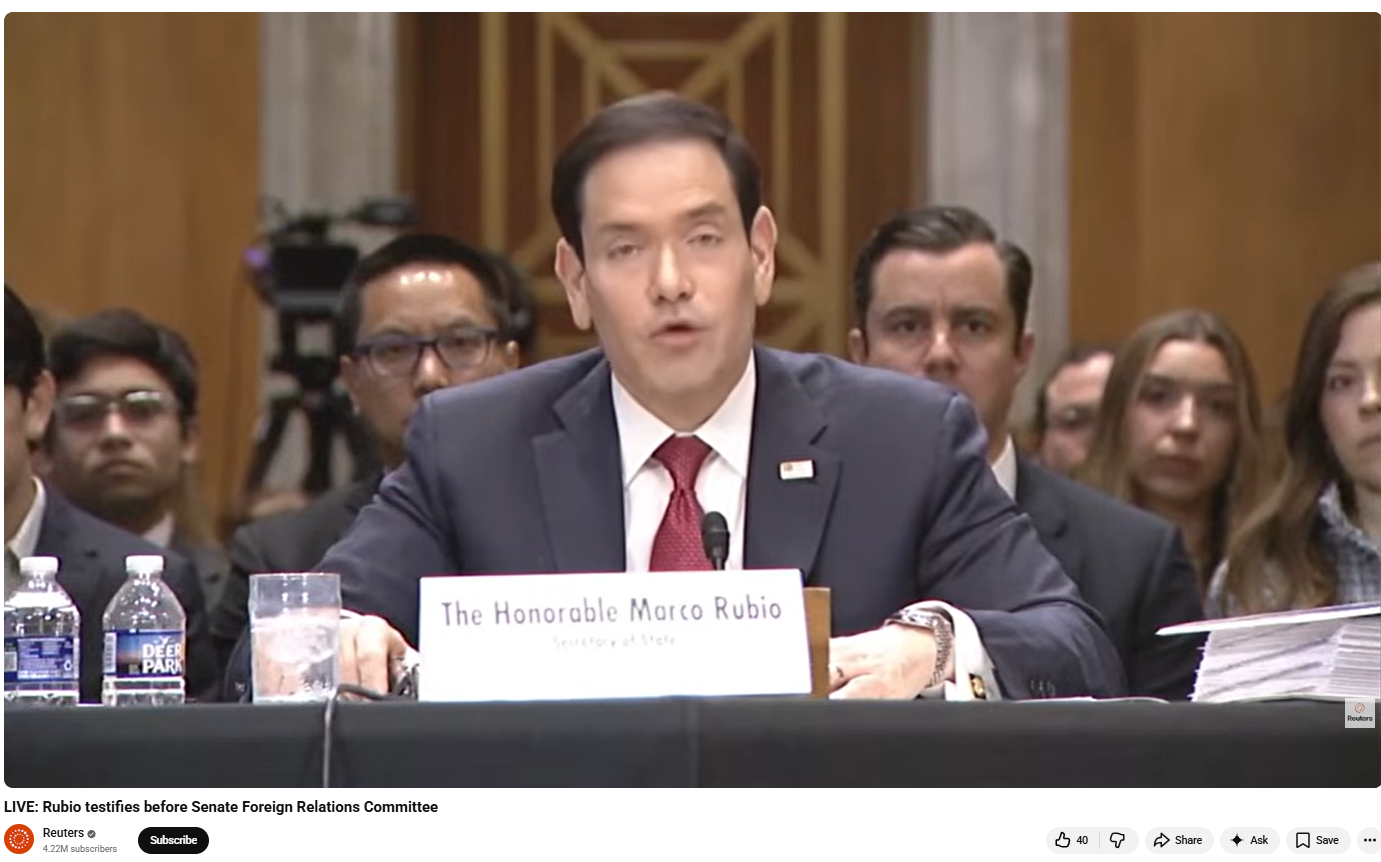
At the 2-hour 8-minute 55-second mark of the Reuters video, Rubio only states that the US played a role in ending the India-Pakistan conflict. Following this, he discusses the Thailand-Cambodia conflict. This makes it clear that the alleged statement in the viral video was digitally added or edited in, and is not part of the original footage.
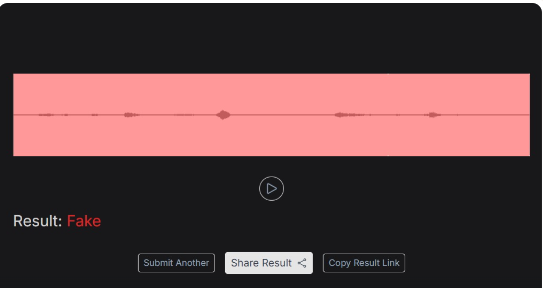
Taking the investigation further, we scanned the suspicious audio portion of the viral video using the AI detection tool 'Resemble AI'. According to the analysis results, clear signs of audio manipulation were detected.
Conclusion:
Our investigation revealed that the video has been digitally manipulated. Rubio did state that the United States played a role in ending the conflict, but he never said that India was the first to request a ceasefire from Pakistan. This alleged statement was not part of the original video and was altered by adding it later.

Executive Summary
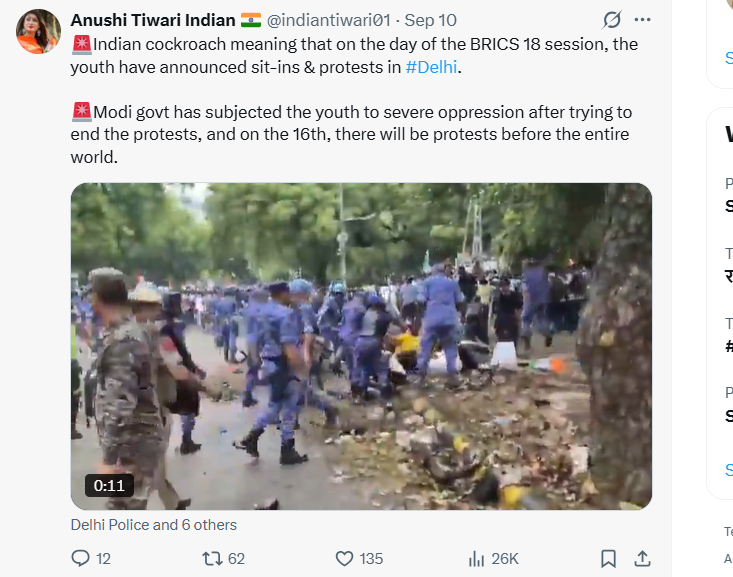
A video is being shared on social media with the claim that youths have announced sit-ins and protests in Delhi during the 18th BRICS Summit. The video is being shared with allegations that the Modi government attempted to suppress the protests and subjected the youth to severe oppression. It also claims that a large-scale protest would be held in Delhi on September 16. The video shows a large gathering of people, with police personnel seen taking action against them.
Research by CyberPeace found that the video is old and has been available online since at least July 20, 2026. According to earlier sources, the video shows police action against CJP protesters who were marching towards Parliament on July 20, 2026. Meanwhile, the 18th BRICS Summit is being held in New Delhi on September 12 and 13, 2026. Therefore, the old video is being misleadingly linked to police action during the BRICS Summit.
Claim:
A video is being shared on social media with the claim that youths have announced sit-ins and protests in Delhi during the 18th BRICS Summit and that the Modi government subjected them to severe oppression while attempting to suppress the protests.
https://x.com/indiantiwari01/status/2098058633825411110?s=20
FactCheck:
To verify the authenticity of the viral claim, we conducted a reverse image search of the keyframes from the video. During the search, we found the same video on the YouTube channel ANKIT'S PEACEFUL MIND, where it was published on July 20, 2026.
https://www.youtube.com/watch?v=uPsm9jueugY
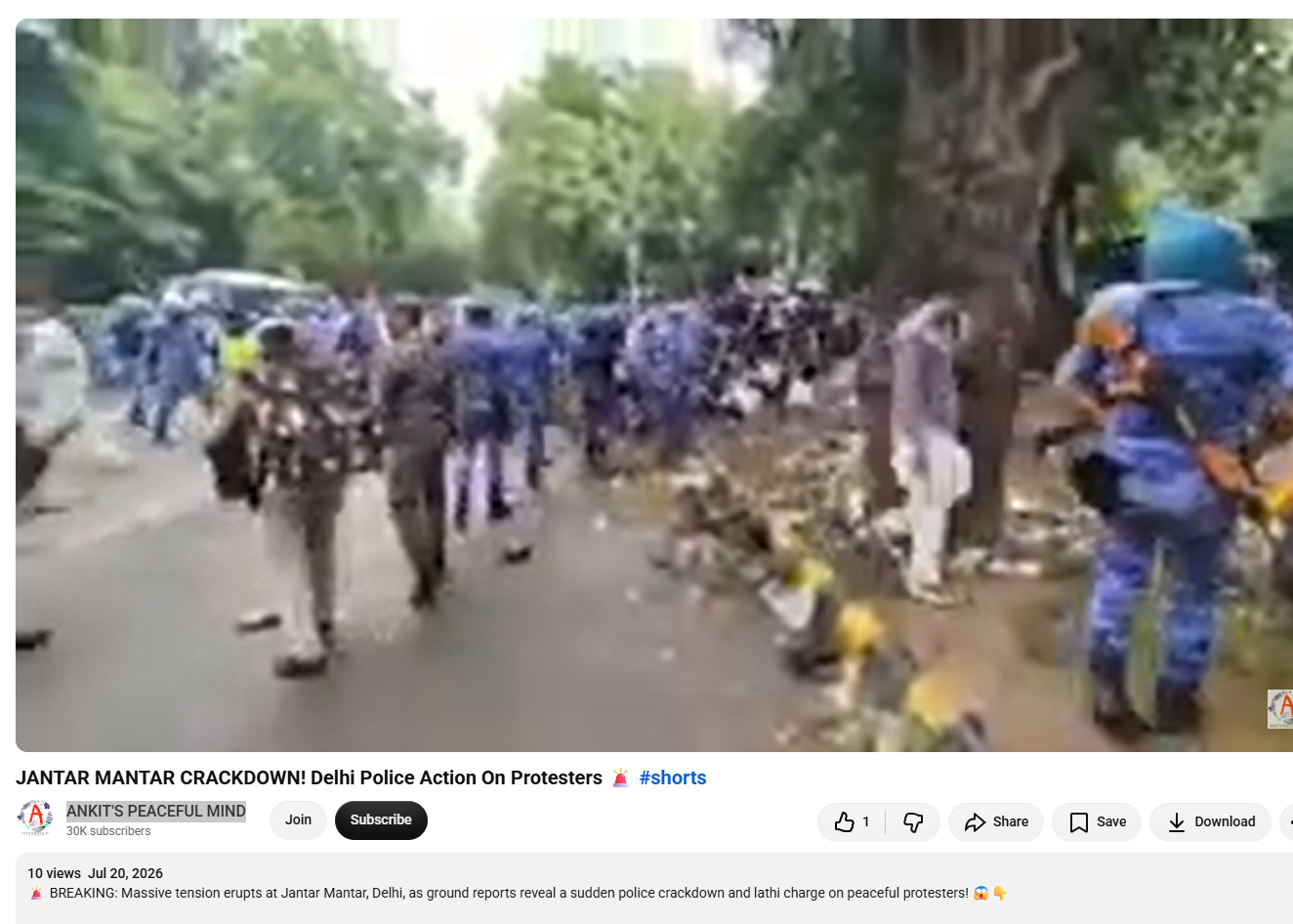
According to the video description, a tense situation unfolded at Jantar Mantar in Delhi, where police took action against people holding a peaceful protest and resorted to a lathi charge. The post claimed that thousands of youths, students and others had gathered in Delhi in support of environmental activist Sonam Wangchuk and the ongoing Ladakh movement. The situation reportedly escalated, leading to clashes between the protesters and the large number of security personnel deployed at the site.
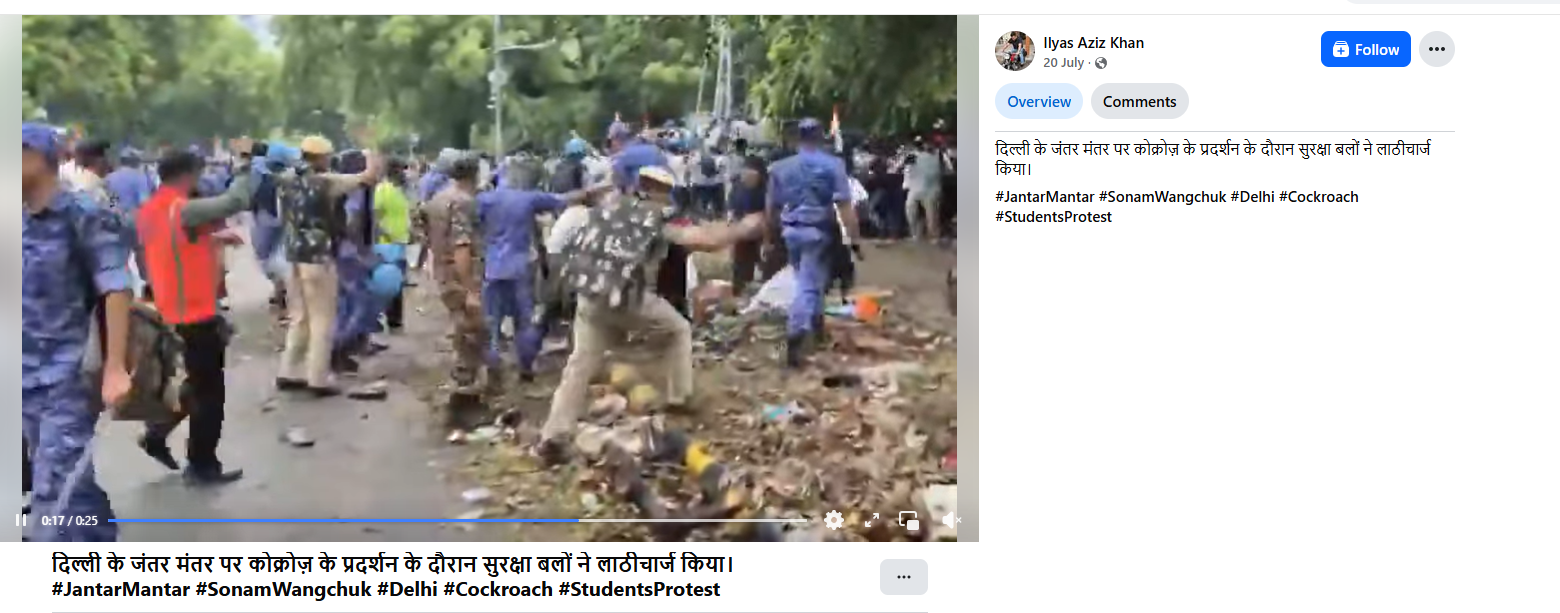
As part of the next step in our research, we found the same video on a Facebook page, where it was published on July 20. The video was also shared with the claim that security forces had resorted to a lathi charge against protesters during a CJP demonstration at Jantar Mantar in Delhi.
https://www.facebook.com/watch/?v=1583508539869113
Conclusion:
Our research found that the video being shared on social media is not related to any incident during the BRICS Summit. The video is old and has been available online since at least July 20, 2026. According to earlier sources, the video shows police action against CJP protesters who were marching towards Parliament on July 20. Meanwhile, the 18th BRICS Summit is being held in New Delhi on September 12 and 13, 2026. Therefore, sharing the old video as footage of police action against protesters during the BRICS Summit is misleading.
