
#FactCheck: Misleading Claim Amid West Asia Conflict: Old Yemen Video Shared as Iran’s Attack on Tel Aviv
Executive Summary
Amid the ongoing tensions in West Asia between the United States–Israel alliance and Iran since February 28, 2026, a video is rapidly going viral on social media. The clip shows buildings engulfed in flames and thick plumes of smoke following an attack. Several users are sharing it with the claim that it depicts Iran’s recent strike on Tel Aviv, Israel. However, an research by the CyberPeace found the claim to be misleading. The viral video is actually from August 2025, when Israel carried out airstrikes in Sanaa, the capital of Yemen. It has no connection to the current conflict.
Claim:
An Instagram user ‘iran_.news24’ posted the video on March 27, 2026, with the caption: “Iran has turned Israel’s largest city Tel Aviv into hell—fears that 200,000 people have died in the war so far.”
Fact Check
To verify the viral claim, keyframes of the video were extracted and searched using Google Lens. The same video was found posted on August 24, 2025, by a Facebook user ‘Mhmdmhywbalshrby5’. The accompanying text, when translated, stated that it showed Israeli bombardment of Sanaa, Yemen.

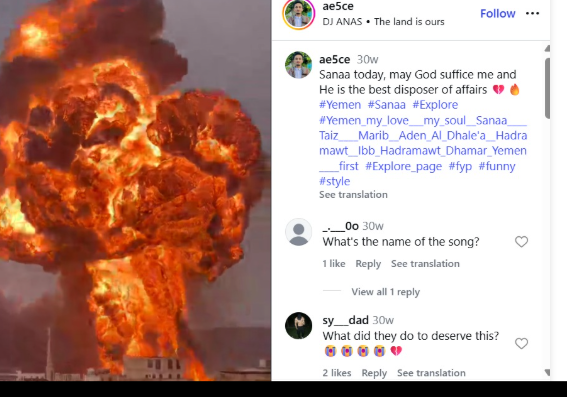
Similarly, another Instagram user ‘ae5ce’ had also shared the same video on August 24, 2025, identifying it as footage from Sanaa.
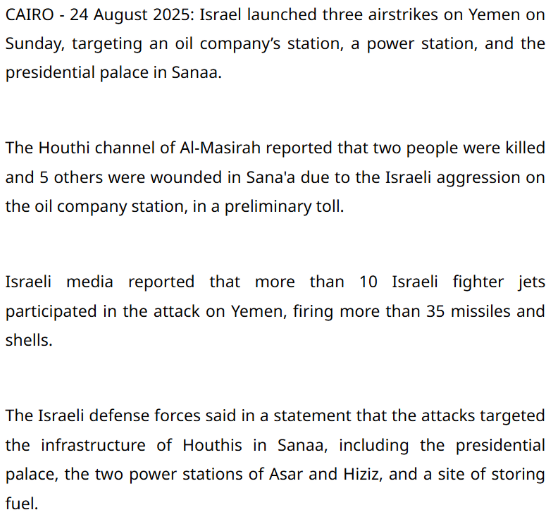
Media reports further support this finding. According to a report published by Egypt Today on August 24, 2025, Israel carried out multiple airstrikes in Sanaa targeting key locations, including an oil station, a power facility, and the presidential palace. Casualties were also reported. The strikes were said to be in response to attacks by Houthi forces.
Additionally, the New York Post shared another video of the same incident from a different angle on its X (formerly Twitter) handle on August 25, 2025.

Conclusion
The video being circulated with the claim of Iran attacking Tel Aviv is actually old footage from Israeli airstrikes in Yemen in August 2025. It is unrelated to the ongoing conflict.

Related Blogs
Introduction: Reasons Why These Amendments Have Been Suggested.
The suggested changes in the Information Technology (Intermediary Guidelines and Digital Media Ethics Code) Rules, 2021, are the much-needed regulatory reaction to the blistering emergence of synthetic information and deepfakes. These reforms are due to the pressing necessity to govern risks within the digital ecosystem as opposed to regular reformation.
The Emergence of the Digital Menace
Generative AI tools have also facilitated the generation of very realistic images, videos, audio, and text in recent years. Such artificial media have been abused to portray people in situations they are not in or in statements they have never said. The market size is expected to have a compound annual growth rate(CAGR) from 2025 to 2031 of 37.57%, resulting in a market volume of US$400.00 bn by 2031. Therefore, tight regulatory controls are necessary to curb a high prevalence of harm in the Indian digital world.
The Gap in Law and Institution
None of the IT Rules, 2021, clearly addressed synthetic content. Although the Information Technology Act, 2000 dealt with identity theft, impersonation and violation of privacy, the intermediaries were not explicitly obligated on artificial media. This left a loophole in enforcement, particularly since AI-generated content might get around the old system of moderation. These amendments bring India closer to the international standards, including the EU AI Act, which requires transparency and labelling of AI-driven content. India addresses such requirements and adapts to local constitutional and digital ecosystem needs.
II. Explanation of the Amendments
The amendments of 2025 present five alternative changes in the current IT Rules framework, which address various areas of synthetic media regulation.
A. Definitional Clarification: Synthetic Generation of Information Introduction.
Rule 2(1)(wa) Amendment:
The amendments provide an all-inclusive definition of what is meant by “synthetically generated information” as information, which is created, or produced, changed or distorted with the use of a computer resource, in a way that such information can reasonably be perceived to be genuine. This definition is intentionally broad and is not limited to deepfakes in the strict sense but to any artificial media that has gone through algorithmic manipulation in order to have a semblance of authenticity.
Expansion of Legal Scope:
Rule 2(1A) also makes it clear that any mention of information in the context of unlawful acts, namely, including categories listed in Rule 3(1)(b), Rule 3(1)(d), Rule 4(2), and Rule 4(4), should be understood to mean synthetically generated information. This is a pivotal interpretative protection that does not allow intermediaries to purport that synthetic versions of illegal material are not under the control of the regulation since they are algorithmic creations and not descriptions of what actually occurred.
B. Safe Harbour Protection and Content Removal Requirements
Amendment, rule 3(1)(b)- Safe Harbour Clarification:
The amendments add a certain proviso to the Rule (3) (1)(b) that explains a deletion or facilitation of access of synthetically produced information (or any information falling within specified categories) which the intermediaries have made in good faith as part of reasonable endeavours or at the receipt of a complaint shall not be considered a breach of the Section 79(2) (a) or (b) of the Information Technology Act, 2000. This coverage is relevant especially since it insures the intermediaries against liability in situations where they censor the synthetic contents in advance of a court ruling or governmental warnings.
C. Labelling and Metadata Requirements that are mandatory on Intermediaries that enable the creation of synthetic content
The amendments establish a new framework of due diligence in Rule 3(3) on the case of intermediaries that offer tools to generate, modify, or alter the synthetically generated information. Two fundamental requirements are laid down.
- The generated information must be prominently labelled or embedded with a permanent, unique metadata or identifier. The label or metadata must be:
- Visibly displayed or made audible in a prominent manner on or within that synthetically generated information.
- It should cover at least 10% of the surface of the visual display or, in the case of audio content, during the initial 10% of its duration.
- It can be used to immediately identify that such information is synthetically generated information which has been created, generated, modified, or altered using the computer resource of the intermediary.
- The intermediary in clause (a) shall not enable modification, suppression or removal of such label, permanent unique metadata or identifier, by whatever name called.
D. Important Social Media Intermediaries- Pre-Publication Checking Responsibilities
The amendments present a three-step verification mechanism, under Rule 4(1A), to Significant Social Media Intermediaries (SSMIs), which enables displaying, uploading or publishing on its computer resource before such display, uploading, or publication has to follow three steps.
Step 1- User Declaration: It should compel the users to indicate whether the materials they are posting are synthetically created. This puts the first burden on users.
Step 2-Technical Verification: To ensure that the user is truly valid, the SSMIs need to provide reasonable technical means, such as automated tools or other applications. This duty is contextual and would be based on the nature, format and source of content. It does not allow intermediaries to escape when it is known that not every type of content can be verified using the same standards.
Step 3- Prominent Labelling: In case the synthetic origin is verified by user declaration or technical verification, SSMIs should have a notice or label that is prominently displayed to be seen by users before publication.
The amendments provide a better system of accountability and set that intermediaries will be found to have failed due diligence in a case where it is established that they either knowingly permitted, encouraged or otherwise failed to act on synthetically produced information in contravention of these requirements. This brings in an aspect of knowledge, and intermediaries cannot use accidental errors as an excuse for non-compliance.
An explanation clause makes it clear that SSMIs should also make reasonable and proportionate technical measures to check user declarations and keep no synthetic content published without adequate declaration or labelling. This eliminates confusion on the role of the intermediaries with respect to making declarations.
III. Attributes of The Amendment Framework
- Precision in Balancing Innovation and Accountability.
The amendments have commendably balanced two extreme regulatory postures by neither prohibiting nor allowing the synthetic media to run out of control. It has recognised the legitimate use of synthetic media creation in entertainment, education, research and artistic expression by adopting a transparent and traceable mandate that preserves innovation while ensuring accountability.
- Overt Acceptance of the Intermediary Liability and Reverse Onus of Knowledge
Rule 4(1A) gives a highly significant deeming rule; in cases where the intermediary permits or refrains from acting with respect to the synthetic content knowing that the rules are violated, it will be considered as having failed to comply with the due diligence provisions. This description closes any loopholes in unscrupulous supervision where intermediaries can be able to argue that they did so. Standard of scienter promotes material investment in the detection devices and censor mechanisms that have been in place to offer security to the platforms that have sound systems, albeit the fact that the tools fail to capture violations at times.
- Clarity Through Definition and Interpretive Guidance
The cautious definition of the term “synthetically generated information” and the guidance that is provided in Rule 2(1A) is an admirable attempt to solve confusion in the previous regulatory framework. Instead of having to go through conflicting case law or regulatory direction, the amendments give specific definitional limits. The purposefully broad formulation (artificially or algorithmically created, generated, modified or altered) makes sure that the framework is not avoided by semantic games over what is considered to be a real synthetic content versus a slight algorithmic alteration.
- Insurance of non-accountability but encourages preventative moderation
The safe harbour clarification of the Rule 3(1)(b) amendment clearly safeguards the intermediaries who voluntarily dismiss the synthetic content without a court order or government notification. It is an important incentive scheme that prompts platforms to implement sound self-regulation measures. In the absence of such protection, platforms may also make rational decisions to stay in a passive stance of compliance, only deleting content under the pressure of an external authority, thus making them more effective in keeping users safe against dangerous synthetic media.
IV. Conclusion
The Information Technology (Intermediary Guidelines and Digital Media Ethics Code) Rules 2025 suggest a structured, transparent, and accountable execution of curbing the rising predicaments of synthetic media and deepfakes. The amendments deal with the regulatory and interpretative gaps that have always existed in determining what should be considered as synthetically generated information, the intermediary liabilities and the mandatory labelling and metadata requirement. Safe-harbour protection will encourage the moderation proactively, and a scienter-based liability rule will not permit the intermediaries to escape liability when they are aware of the non-compliance but tolerate such non-compliance. The idea to introduce pre-publication verification of Significant Social Media Intermediaries adds the responsibility to users and due diligence to the platform. Overall, the amendments provide a reasonable balance between innovation and regulation, make the process more open with its proper definitions, promote responsible conduct on the platform and transform India and the new standards in the sphere of synthetic media regulation. They collaborate to enhance the verisimilitude, defence of the users, and visibility of the systems of the digital ecosystem of India.
V. References
2. https://www.statista.com/outlook/tmo/artificial-intelligence/generative-ai/worldwide

Introduction
The most significant change seen in the Indian cyber laws this year was the passing of the Digital Personal Data Protection Act, 2023, in the parliament. DPDP Act is the first concrete form of legislation focusing on the protection of Digital Personal Data of Indian netizens in all aspects; the act is analogous to what GDPR is for Europe. The act lays down heavy compliance mandates for the intermediaries and data fiduciaries, this has made it difficult for the tech companies a lot of policy, legal and technical changes have to be made in order to implement the act to its complete efficiency. Recently, the big techs have addressed a letter to the Minister and Minister of State of Meity to extend the implementation timeline of the act. In other news, the union cabinet has given the green light for the much-awaited MoC with Japan focused on establishing a long-term Semiconductor Supply Chain Partnership.
Letter to Meity
The lobby of the big techs represented by a Trade Body named the Big Tech Asia Internet Coalition (AIC) this week wrote to the Ministry of Electronics and Information Technology (Meity), addressing it to the Minister Ashwini Vaishnav and Minister of State (MoS) Rajeev Chandershekhra recommending a 12-18 month extension on the implementation of the Digital Personal Data Protection Act. This request comes at a time when the government has been voicing its urgency to implement the act in order to safeguard Indian data at the earliest. The trade body represented big names, including Meta, Google, Microsoft, Apple and many more. These big techs essentially comprise the segment recognised under the DPDP as the Significant Data Fiduciaries due to the sheer volume of data processed, hosted, stored, etc. In the protective sense, the act has been designed to focus on preventing the exploitation of personal data of Indian netizens by the big techs, hence, they form an integral part of the Indian Data Ecosystem. The following reasons/complications concerning the implementation of the act were highlighted in the letter:
- Unrealistic Timelines: The AIC expressed that the current timeline for the implementation of the act seems unrealistic for the big techs to establish technological, policy and legal mechanisms to be in compliance with section 5 of the act, which talks about the Obligations of a Data Fiduciary and the particular notice to be shared with the data principles in accordance with the act.
- Technical Requirements: Members of AIC expressed that the duration for the implementation of the act is much less in comparison to the time required by the tech companies to set up/deploy relevant technical critical infrastructure, SoPs and capacity building for the same. This will cause a major hindrance in establishing the efficiency of the act.
- Data Rights: Right to Erasure, Correction, Deletion, Nominate, etc., are guaranteed under the DPDP, but the big techs are not sure about the efficient implementation of these rights and hence will need fundamental changes in the technology architecture of their platform, thus expressing concern of the early implementation of the act.
- Equivalency to GDPR: The DPDP is taken to be congruent to the European GDPR, but the DPDP focuses on a few more aspects, such as cross-border data flow and compliance mandates for the right to erasure, hence a lot of GDPR-compliant big techs also need to establish more robust mechanisms to maintain compliance to Indian DPDP.
Indo-Japan MoC
A Memorandum of Cooperation (MoC) on the Japan-India Semiconductor Supply Chain Partnership was signed in July 2023 between the Ministry of Electronics and Information Technology (MeitY) of India and the Ministry of Economy, Trade and Industry (METI) of Japan. This information was shared with the Union Cabinet, which is led by Prime Minister Narendra Modi. The Ministry of Commerce (MoC) aims to expand collaboration between Japan and India in order to improve the semiconductor supply chain. This is because semiconductors are critical to the development of industries and digital technologies. The Parties agree that the MoC will take effect on the date of signature and be in effect for five years. Bilateral cooperation on business-to-business and G2G levels on ways to develop a robust semiconductor supply chain and make use of complementary skills. The cooperation is aimed at harnessing indigenous talent and creating opportunities for higher employment avenues.
MeitY's purpose also includes promoting international cooperation within bilateral and regional frameworks in the frontier and emerging fields of information technology. MeitY has engaged in Memorandums of Understanding (MoUs), Memorandums of Covenants (MoCs), and Agreements with counterpart organisations/agencies of other nations with the aim of fostering bilateral collaboration and information sharing. Additionally, MeitY aims to establish supply chain resilience, which would enable India to become a reliable partner. An additional step towards mutually advantageous semiconductor-related commercial prospects and collaborations between India & Japan is the strengthening of mutual collaboration between Japanese and Indian enterprises through this Memorandum of Understanding. The “India-Japan Digital Partnership” (IJDP), which was introduced during PM Modi's October 2018 visit to Japan, was created in light of the two countries' complementary and synergistic efforts. Its goal is to advance both current areas of cooperation and new initiatives within the scope of S&T/ICT cooperation, with a particular emphasis on “Digital ICT Technologies."
Conclusion
As we move ahead into the digital age, it is pertinent to be aware and educated about the latest technological advancements, new forms of cybercrimes and threats and legal aspects of digital rights and responsibilities, whether it is the recommendation to extend the implementation of DPDP or the Indo-Japan MoC, both of these instances impact the Indian netizen and his/her interests. Hence, the indigenous netizen needs to develop a keen interest in the protection of the Indian cyber-ecosystem to create a safer future. In our war against technology, our best weapon is technology and awareness, thus implementing the same in our daily digital lifestyles and routines is a must.
References
- https://www.eetindia.co.in/cabinet-approves-moc-on-japan-india-semiconductor-supply-chain-partnership/
- https://www.moneycontrol.com/news/business/startup/trade-body-representing-big-tech-urges-govt-to-extend-dpdp-act-implementation-by-1-5-years-11605431.html
- https://www.google.com/url?rct=j&sa=t&url=https://www.eetindia.co.in/cabinet-approves-moc-on-japan-india-semiconductor-supply-chain-partnership/&ct=ga&cd=CAEYACoTOTI3Mzg4NzEyODgwMjI2ODk0MDIaOTBiYzUxNmI5YTRjYTE1NTpjb206ZW46VVM&usg=AOvVaw2lEO7-cIBZ_ox1xV39LGLs
.webp)
What is Deepfake
Deepfakes have been, a fascinating but unsettling phenomenon that is now prominent in this digital age. These incredibly convincing films have drawn attention and blended in well with our high-tech surroundings. The lifelike but completely manufactured quality of deepfake videos has become an essential component of our digital environment as we traverse the broad reaches of our digital society. While these works have an undoubtedly captivating charm, they have important ramifications. Come along as we examine the deep effects that misuse of deepfakes can have on our globalized digital culture. After many actors now business tycoon Ratan Tata has become the latest victim of deepfake. Tata called out a post from a user that used a fake interview of him in a video recommending Investments.
Case Study
The nuisance of deep fake is sparing none from actors politicians to entrepreneurs everyone is getting caught in the Trap. Soon after the actresses Rashmika Mandana, Katrina Kaif, Kajol and other actresses fell prey to the rising scenario of deepfake, a new case from the industry emerged, which took Mr. Ratan Tata on storm. Business tycoon Ratan Tata has become the latest victim of deepfake. He took to his social media sharing an image of the interview that asked people to invest money in a project in a post on Instagram. Ratan Tata called out a post from a user that used a fake interview of him in a video recommending these Investments.
This nuisance that has been created because of the deepfake is sparing nobody from actors to politicians to entrepreneurs now everyone is getting caught in the trap the latest victim being Ratan Tata. Tech magnate Ratan Tata is the most recent victim of this deepfake phenomenon. The millionaire was seen in the video, which was posted by the Instagram user, giving his followers a once-in-a-million opportunity to "exaggerate investments risk-free."
In the stated video, Ratan Tata was seen giving everyone in India advice mentioning to the public regarding the opportunity to increase their money with no risk and a 100% guarantee. The caption of the video clip stated, "Go to the channel right now."
Tata annotated both the video and the screenshot of the caption with the word "FAKE."
Ongoing Deepfake Assaults in India
Deepfake videos continue to target celebrities, and Priyanka Chopra is also a recent victim of this unsettling trend. Priyanka's deepfake adopts a different strategy than other examples, including actresses like Rashmika Mandanna, Katrina Kaif, Kajol, and Alia Bhatt. Rather than editing her face in contentious situations, the misleading film keeps her looking the same but modifies her voice and replaces real interview quotes with made-up commercial phrases. The deceptive video shows Priyanka promoting a product and talking about her yearly salary, highlighting the worrying development of deepfake technology and its possible effects on prominent personalities.
Prevention and Detection
In order to effectively combat the growing threat posed by deepfake technology, people and institutions should place a high priority on developing critical thinking abilities, carefully examining visual and auditory cues for discrepancies, making use of tools like reverse image searches, keeping up with the latest developments in deepfake trends, and rigorously fact-check reputable media sources. Important actions to improve resistance against deepfake threats include putting in place strong security policies, integrating cutting-edge deepfake detection technologies, supporting the development of ethical AI, and encouraging candid communication and cooperation. We can all work together to effectively and mindfully manage the problems presented by deepfake technology by combining these tactics and making adjustments to the constantly changing terrain.
Conclusion
The current instance involving Ratan Tata serves as an example of how the emergence of counterfeit technology poses an imminent danger to our digital civilization. The fake video, which was posted to Instagram, showed the business tycoon giving financial advice and luring followers with low-risk investment options. Tata quickly called out the footage as "FAKE," highlighting the need for careful media consumption. The Tata incident serves as a reminder of the possible damage deepfakes can do to prominent people's reputations. The issue, in Ratan Tata's instance specifically, demands that public personalities be more mindful of the possible misuse of their virtual identities. We can all work together to strengthen our defenses against this sneaky phenomenon and maintain the trustworthiness of our internet-based culture in the face of ever-changing technological challenges by emphasizing preventive measures like strict safety regulations and the implementation of state-of-the-art deepfake detection technologies.
References
- https://economictimes.indiatimes.com/magazines/panache/ratan-tata-slams-deepfake-video-that-features-him-giving-risk-free-investment-advice/articleshow/105805223.cms
- https://www.ndtv.com/india-news/ratan-tata-flags-deepfake-video-of-his-interview-recommending-investments-4640515
- https://www.businesstoday.in/bt-tv/short-video/viralvideo-business-tycoon-ratan-tata-falls-victim-to-deepfake-408557-2023-12-07
- https://www.livemint.com/news/india/false-ratan-tata-calls-out-a-deepfake-video-of-him-giving-investment-advice-11701926766285.html
