#FactCheck- Old US Troops Homecoming Video Falsely Linked to Iran Ceasefire
Executive Summary
Talks between the United States and Iran over a ceasefire reportedly held in Islamabad on Saturday ended without a resolution. Meanwhile, a video circulating on social media claims to show US troops returning home following a ceasefire in the Middle East conflict.
However, a research by the CyberPeace found the claim to be false. The viral video is not linked to any recent ceasefire. It actually dates back to March and shows the return of Iowa National Guard troops after months of deployment in the Middle East.
Claim
An X (formerly Twitter) user posted the video on April 7, 2026, claiming,“Another victory for Iran: American soldiers have started arriving home. After leaving the Middle East, American soldiers are saying, ‘Why did we fight for Israel? If Iran is talking about peace, we will also stand with them.’”

Fact Check
To verify the claim, we extracted keyframes from the viral video and conducted a reverse image search using Google Lens. This led us to posts by Newsradio 1040 WHO, which had shared the same footage on March 12 across Facebook and Instagram.


In its caption, the radio station stated that nearly 600 Iowa soldiers had returned home after a nine-month deployment in the Middle East as part of Operation Inherent Resolve. The segment, narrated by journalist Claire Burnett, explained that the soldiers belonged to the 2nd Brigade Combat Team, 34th Infantry Division, and had been deployed to Iraq and Syria. The footage was recorded at the 132nd Wing base of the Iowa Air National Guard in Des Moines.

For further confirmation, a March 12 report by KCCI 8 News also showed the same aircraft and troops, verifying the authenticity and timeline of the footage
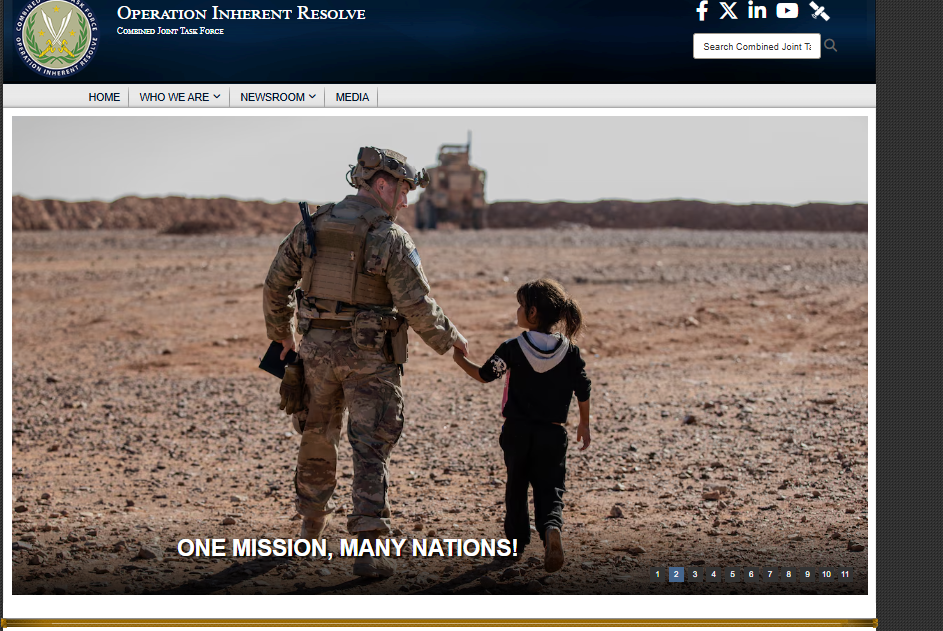
Operation Inherent Resolve, launched in 2014, is a US-led campaign aimed at supporting local forces in the fight against the Islamic State (ISIS) and ensuring its lasting defeat.
https://www.kcci.com/article/iowans-welcome-national-guard-unit-home-from-deployment-in-middle-east/70729105

Conclusion
The viral claim is false and misleading. The video does not show US troops returning due to any recent ceasefire between the United States and Iran. Instead, it captures the routine homecoming of Iowa National Guard soldiers in March after completing a scheduled deployment in the Middle East.There is no evidence linking the footage to current geopolitical developments or any ceasefire agreement. The claim has been taken out of context and shared with a misleading narrative to create confusion around ongoing international events.
Related Blogs

Introduction
The G7 nations, a group of the most powerful economies, have recently turned their attention to the critical issue of cybercrimes and (AI) Artificial Intelligence. G7 summit has provided an essential platform for discussing the threats and crimes occurring from AI and lack of cybersecurity. These nations have united to share their expertise, resources, diplomatic efforts and strategies to fight against cybercrimes. In this blog, we shall investigate the recent development and initiatives undertaken by G7 nations, exploring their joint efforts to combat cybercrime and navigate the evolving landscape of artificial intelligence. We shall also explore the new and emerging trends in cybersecurity, providing insights into ongoing challenges and innovative approaches adopted by the G7 nations and the wider international community.
G7 Nations and AI
Each of these nations have launched cooperative efforts and measures to combat cybercrime successfully. They intend to increase their collective capacities in detecting, preventing, and responding to cyber assaults by exchanging intelligence, best practices, and experience. G7 nations are attempting to develop a strong cybersecurity architecture capable of countering increasingly complex cyber-attacks through information-sharing platforms, collaborative training programs, and joint exercises.
The G7 Summit provided an important forum for in-depth debates on the role of artificial intelligence (AI) in cybersecurity. Recognising AI’s transformational potential, the G7 nations have participated in extensive discussions to investigate its advantages and address the related concerns, guaranteeing responsible research and use. The nation also recognises the ethical, legal, and security considerations of deploying AI cybersecurity.
Worldwide Rise of Ransomware
High-profile ransomware attacks have drawn global attention, emphasising the need to combat this expanding threat. These attacks have harmed organisations of all sizes and industries, leading to data breaches, operational outages, and, in some circumstances, the loss of sensitive information. The implications of such assaults go beyond financial loss, frequently resulting in reputational harm, legal penalties, and service delays that affect consumers, clients, and the public. The increase in high-profile ransomware incidents has garnered attention worldwide, Cybercriminals have adopted a multi-faceted approach to ransomware attacks, combining techniques such as phishing, exploit kits, and supply chain Using spear-phishing, exploit kits, and supply chain hacks to obtain unauthorised access to networks and spread the ransomware. This degree of expertise and flexibility presents a substantial challenge to organisations attempting to protect against such attacks.

Focusing On AI and Upcoming Threats
During the G7 summit, one of the key topics for discussion on the role of AI (Artificial Intelligence) in shaping the future, Leaders and policymakers discuss the benefits and dangers of AI adoption in cybersecurity. Recognising AI’s revolutionary capacity, they investigate its potential to improve defence capabilities, predict future threats, and secure vital infrastructure. Furthermore, the G7 countries emphasise the necessity of international collaboration in reaping the advantages of AI while reducing the hazards. They recognise that cyber dangers transcend national borders and must be combated together. Collaboration in areas such as exchanging threat intelligence, developing shared standards, and promoting best practices is emphasised to boost global cybersecurity defences. The G7 conference hopes to set a global agenda that encourages responsible AI research and deployment by emphasising the role of AI in cybersecurity. The summit’s sessions present a path for maximising AI’s promise while tackling the problems and dangers connected with its implementation.
As the G7 countries traverse the complicated convergence of AI and cybersecurity, their emphasis on collaboration, responsible practices, and innovation lays the groundwork for international collaboration in confronting growing cyber threats. The G7 countries aspire to establish robust and secure digital environments that defend essential infrastructure, protect individuals’ privacy, and encourage trust in the digital sphere by collaboratively leveraging the potential of AI.
Promoting Responsible Al development and usage
The G7 conference will focus on developing frameworks that encourage ethical AI development. This includes fostering openness, accountability, and justice in AI systems. The emphasis is on eliminating biases in data and algorithms and ensuring that AI technologies are inclusive and do not perpetuate or magnify existing societal imbalances.
Furthermore, the G7 nations recognise the necessity of privacy protection in the context of AI. Because AI systems frequently rely on massive volumes of personal data, summit speakers emphasise the importance of stringent data privacy legislation and protections. Discussions centre around finding the correct balance between using data for AI innovation, respecting individuals’ privacy rights, and protecting data security. In addition to responsible development, the G7 meeting emphasises the importance of responsible AI use. Leaders emphasise the importance of transparent and responsible AI governance frameworks, which may include regulatory measures and standards to ensure AI technology’s ethical and legal application. The goal is to defend individuals’ rights, limit the potential exploitation of AI, and retain public trust in AI-driven solutions.
The G7 nations support collaboration among governments, businesses, academia, and civil society to foster responsible AI development and use. They stress the significance of sharing best practices, exchanging information, and developing international standards to promote ethical AI concepts and responsible practices across boundaries. The G7 nations hope to build the global AI environment in a way that prioritises human values, protects individual rights, and develops trust in AI technology by fostering responsible AI development and usage. They work together to guarantee that AI is a force for a good while reducing risks and resolving social issues related to its implementation.
Challenges on the way
During the summit, the nations, while the G7 countries are committed to combating cybercrime and developing responsible AI development, they confront several hurdles in their efforts. Some of them are:
A Rapidly Changing Cyber Threat Environment: Cybercriminals’ strategies and methods are always developing, as is the nature of cyber threats. The G7 countries must keep up with new threats and ensure their cybersecurity safeguards remain effective and adaptable.
Cross-Border Coordination: Cybercrime knows no borders, and successful cybersecurity necessitates international collaboration. On the other hand, coordinating activities among nations with various legal structures, regulatory environments, and agendas can be difficult. Harmonising rules, exchanging information, and developing confidence across states are crucial for effective collaboration.
Talent Shortage and Skills Gap: The field of cybersecurity and AI knowledge necessitates highly qualified personnel. However, skilled individuals in these fields need more supply. The G7 nations must attract and nurture people, provide training programs, and support research and innovation to narrow the skills gap.
Keeping Up with Technological Advancements: Technology changes at a rapid rate, and cyber-attacks become more complex. The G7 nations must ensure that their laws, legislation, and cybersecurity plans stay relevant and adaptive to keep up with future technologies such as AI, quantum computing, and IoT, which may both empower and challenge cybersecurity efforts.
Conclusion
To combat cyber threats effectively, support responsible AI development, and establish a robust cybersecurity ecosystem, the G7 nations must constantly analyse and adjust their strategy. By aggressively tackling these concerns, the G7 nations can improve their collective cybersecurity capabilities and defend their citizens’ and global stakeholders’ digital infrastructure and interests.

Introduction
When Tamil Nadu Police arrested a man from Vellore in May 2026 on suspicion of being the point person helping Indian youth to be smuggled into cyber scam compounds in Cambodia, the papers led with the accused. They shouldn't have led with the accused but with the system. The arrest, one in a long string of them in Tamil Nadu, Madurai, and other states, is not simply another one-off policing victory. Rather, the arrest gives us an insight into a larger, darker world: an international criminal organisation that has successfully combined human trafficking and cybercrime, a new trend in criminality that specialists are calling 'cyber slavery.'
What Is Cyber Slavery?
“Cyber slavery” involves trafficking persons under the pretence of employment, forcing them into committing online fraud to serve criminal enterprises. Victims are not merely victims of the work they are forced to do; they are often turned into culprits as they become complicit in victimising others. Trafficked victims are compelled to participate in frauds targeted at unsuspecting victims all around the globe. These activities, organised into robust criminal schemes, involve victims of sex or labour trafficking who are forced into operating romance scams or the so-called "pig butchering" scams that defraud people of their investment in cryptocurrency, all in heavily secured complexes guarded with threats of violence and torture. The extent of the problem is enormous, with the UN Office of the High Commissioner for Human Rights estimating in a 2023 report that there are over 100,000 victims of cyber scam compounds in Cambodia and another 120,000 in Myanmar. Schemes throughout Southeast Asia were projected to commit as much as $39.9 billion in fraudulent schemes a year.
Why Southeast Asia? The Geography of Organised Crime
In order to answer why Cambodia, Myanmar, Laos, and the surrounding regions have developed into the cyber slavery hub of the world, we can draw together an array of structural reasons:
- Casino clampdown and crime diversification: Cambodia's ban on online gambling in 2019 broke down established casino-related criminal networks. This saw old casinos and Special Economic Zones turn into cyber scam compound operations.
- Corruption and state complicity: A pre-existing environment of corruption and involvement of politically linked figures permitted scamming networks to flourish, and the armed groups in the border areas of Myanmar are reportedly complicit in these operations through supplying land and protection for the networks to operate in.
- Poor governance in the border areas: The lack of state control in the frontier areas of Myanmar provided the criminal networks with a secure sanctuary in which they could operate with impunity and cross borders to escape crackdowns and move their operations.
- Post-pandemic growth: The economic stress associated with the COVID-19 pandemic led to an increase in the supply of vulnerable individuals available to fill the scam networks, as well as unprecedented profit margins on scams.
The Recruitment Pipeline: How Are Indian Youth Trapped?
The typical journey from an Indian town or village to a locked compound in Southeast Asia follows the same narrative:
- The bait: On platforms like Facebook, WhatsApp, and Telegram, gangs lure with posts of lucrative overseas employment for IT work, customer service, data entry, and digital marketing with attractive, albeit feasible, pay packages (Rs. 80,000 to Rs. 1.5 lakh per month) and destinations such as Thailand and Singapore added for a veneer of genuineness.
- The recruiters: Local agents who gain trust, arrange visas and flight tickets, and collect the application fees are key intermediaries. Cases registered in Vellore and Madurai hint at recruitment agents receiving a commission for each person successfully smuggled into a trap, linked to larger travel and immigration networks.
- The lie: Victims are assured that they will be working legitimately in Thailand, but on reaching the border and crossing over, they find themselves pushed into scam compounds in neighbouring countries and have their passports, mobile phones and devices confiscated, thus rendering any escape attempt futile.
- The trap: In the interim, fake interviews, false job promises and convincing flight tickets serve to maintain the facade until the victims are forced to participate in cyber-fraud schemes.
The Architecture of Coercion: Life Inside the Scam Compounds
It is in these compounds that the fates of the victims become known. Survivor accounts, investigations and UN human rights reports provide evidence of these circumstances. These compounds are often surrounded by barbed wire fences, monitored with cameras and heavily guarded. Once a potential victim is captured, they are stripped of their passports and any other electronic devices, preventing them from being able to contact the outside world or to escape. Workers are allocated stringent targets, ranging from the number of potential victims they must solicit for scams and the amount of money they must acquire through such scams. Failure to do so, or perceived disobedience, may lead to beatings, electroshock treatment, starvation and long periods in confinement. These beatings are supplemented with psychological torture, with scammers assuring their victims that they owe money for their journey, stay and training. This method of debt bondage keeps people at the compound even when the opportunity for escape is presented to them. The victims are then forced to take part in more complex online scams, which involve romance scams, fake investment scams, and impersonation scams using scripts and with supervision. In some cases, families will be encouraged to pay for their captive relatives' release by ransom, whereas those who refuse to comply or meet performance requirements may be sold and transferred to another compound as a piece of property within a transnational criminal network.
Cybercrime Is No Longer Just About Hacking
This emergency challenges the existing notion of cybercrime. The scam compound of Southeast Asia is not about a lonely hacker or a standalone breach; it is a form of organised cyber slavery in which trafficked individuals are made to commit financial fraud on an industrial level.
The probe of India's NIA found that recruitment is done in the Indian states of Bihar and Uttar Pradesh. Transport agents in Chennai and Madurai provide logistics, and Dubai and Bangkok act as transit points on the way to Cambodia, Laos, and Vietnam. It makes use of cryptocurrency wallets, shadow banking, and shell companies for the movement of funds across international borders. Companies such as the Huione Group has been accused of facilitating billions of dollars in financial transactions for scam infrastructure before receiving sanctions from the U.S.
To illustrate the threat landscape, the U.S. Treasury imposed sanctions on 19 entities spread across Myanmar and Cambodia and said that cyber scam operations looted $10 billion worth last year. Also, cryptocurrency transactions related to trafficking crimes jumped by 85% last year, which speaks to the expanding nature of the global criminal infrastructure.
India's Exposure: A National Vulnerability
The scale of exposure for India is large and expanding. The most likely victims are educated, and aspirational young men and women from Tier 2 and Tier 3 cities, seeking work abroad, which perfectly aligns with the primary target of such human trafficking networks.
Repeated incidents of people from Tamil Nadu falling victim to these networks have come to light. As far back as 2022, the chief minister wrote to the prime minister that close to 300 Indians, roughly 50 Tamils included, were being held in Myanmar. The Madurai-Cambodia case that came to light in 2026 revealed an entire network spanning Cambodia, Laos, and Vietnam, with authorities believing that thousands of Indians might have been trafficked there over the past three years. Such cases from Kerala, Karnataka, Andhra Pradesh, and some northern Indian states have been reported. Last year, India had to charter Air Force flights to rescue over 549 Indians from cyber scam centres along the Myanmar-Thailand border.
The Indian embassy in Phnom Penh assisted the Indian nationals along with the CBI, MEA, and NIA in the rescue of 67 Indians in September 2024; however, these operations are largely reactive in the face of the vast and evolving transboundary crisis.
Prevention
The best solution is awareness. The following are tangible signs that a job offer might be a lead to trafficking:
Red Flags within the job offer:
- Receiving unsolicited recruitment messages on WhatsApp, Telegram or Instagram from unknown numbers/contacts.
- Offer of unbelievably high salaries in undefined roles like ‘data entry,’ ‘online marketing’ or ‘customer service’ outside India.
- Request for upfront money to cover costs of visas, travel, accommodation, and training.
- Job offers to places in Thailand or Singapore involving complex transit routes through other countries.
- An interview process entirely through messaging apps, where the company has no real office address or registration number.
- Urgency and/or confidentiality required.
Verification:
- Check if the recruiter is registered on MEA's e-Migrate portal-this is a portal where MEA lists authorised overseas recruiters.
- Verify the authenticity of the company through its business registration with official registries in the foreign country.
- Contact the Indian Embassy/Consulate in that foreign country if something doesn't add up about the offer.
- Do not hand over your passport to your employer on arrival; it is standard practice for recruiters working as traffickers to confiscate it.
What to do if trapped:
- Contact the closest Indian embassy or consulate immediately.
- Call the MEA overseas helpline: 1800-11-3090.
- Lodge a report on the National Cybercrime Reporting Portal (cybercrime.gov.in).
Policy Imperatives
On their own, individual consciousness cannot undo such a massive criminal infrastructure. India has to enforce the Emigration Act rigorously, implement mandatory licensing of recruitment agents and create a specialised task force consisting of NIA, CBI, MEA and the states’ cybercrime units. Pre-departure orientations should also become mandatory for migrant workers who go to Southeast Asia. Globally, India needs to work more closely with Cambodia, Myanmar, Thailand and Laos via intel sharing protocols, victim repatriations and action against scam compounds. Financial probes must be on par with enforcement investigations to catch up with the perpetrators’ network, the cryptocurrency and hawala channels that facilitate money laundering and finance trafficking operations, as that would severely hit these networks.
Conclusion
This arrest of the recruiter in Vellore is just a small piece of a larger network. What we see in these instances is the marriage of cybercrime, trafficking, and financial fraud into a larger transnational ecosystem that systematically preys on the economic vulnerability of individuals. These young Indians are not simply falling for scams; they are being systematically targeted, recruited, trafficked, and forced into these criminal operations by a networked structure. The scam compounds in Cambodia and along the border of Myanmar and Thailand are only the end of a process that very likely starts with a convincing job offer on social media. Fighting cyber slavery will not be as simple as more arrests; we need education and international efforts, as well as policy responses that match the scope and scale of the problem.
References
- https://the420.in/78415-2vellore-man-cambodia-cyber-slavery-trafficking-case/
- https://the420.in/madhan-vadivel-cambodia-cyber-slavery-trafficking-racket-investigation/
- https://www.newsonair.gov.in/tamil-nadu-police-arrest-key-recruiter-in-cambodia-cyber-slavery-racket/
- https://kashmirdotcom.in/2026/05/16/cambodia-linked-human-trafficking-cyber-slavery-racket-nia-chargesheets-five-including-absconding-kingpin/
- https://www.aljazeera.com/news/2025/7/16/more-than-1000-arrested-in-cambodian-cyber-scam-raids
- https://www.pbs.org/newshour/world/why-southeast-asias-online-scam-industry-is-so-hard-to-shut-down
- https://www.cfr.org/articles/how-myanmar-became-global-center-cyber-scams
- https://www.amlrightsource.com/resources/scam-states-the-cybercrime-corruption-complex-in-southeast-asia-and-the-collapse-of-anti-money-laundering-enforcement
- https://newlinesinstitute.org/global-security-mil-priorities/cybercrimes-human-trafficking-and-cryptocurrency-in-southeast-asias-special-economic-zones/
- https://www.theweek.in/news/india/2026/03/21/lured-by-jobs-sold-into-slavery-indias-crackdown-on-cyber-trafficking-continues.html

Executive Summary:
A viral video claiming the crash site of Air India Flight AI-171 in Ahmedabad has misled many people online. The video has been confirmed not to be from India or a recent crash, but was filmed at Universal Studios Hollywood on a TV or movie set meant to look like a plane crash set piece for a movie.

Claim:
A video that purportedly shows the wreckage of Air India Flight AI-171 after crashing in Ahmedabad on June 12, 2025, has circulated among social media users. The video shows a large amount of aircraft wreckage as well as destroyed homes and a scene reminiscent of an emergency, making it look genuine.

Fact check:
In our research, we took screenshots from the viral video and used reverse image search, which matched visuals from Universal Studios Hollywood. It became apparent that the video is actually from the most famous “War of the Worlds" set, located in Universal Studios Hollywood. The set features a 747 crash scene that was constructed permanently for Steven Spielberg's movie in 2005. We also found a YouTube video. The set has fake smoke poured on it, with debris scattered about and additional fake faceless structures built to represent a scene with a larger crisis. Multiple videos on YouTube here, here, and here can be found from the past with pictures of the tour at Universal Studios Hollywood, the Boeing 747 crash site, made for a movie.


The Universal Studios Hollywood tour includes a visit to a staged crash site featuring a Boeing 747, which has unfortunately been misused in viral posts to spread false information.

While doing research, we were able to locate imagery indicating that the video that went viral, along with the Universal Studios tour footage, provided an exact match and therefore verified that the video had no connection to the Ahmedabad incident. A side-by-side comparison tells us all we need to know to uncover the truth.


Conclusion:
The viral video claiming to show the aftermath of the Air India crash in Ahmedabad is entirely misleading and false. The video is showing a fictitious movie set from Universal Studios Hollywood, not a real disaster scene in India. Spreading misinformation like this can create unnecessary panic and confusion in sensitive situations. We urge viewers to only trust verified news and double-check claims before sharing any content online.
- Claim: Massive explosion and debris shown in viral video after Air India crash.
- Claimed On: Social Media
- Fact Check: False and Misleading