
#FactCheck- Indian Navy Video from Seychelles Exercise Passed Off as Anti-Piracy Action
Executive Summary
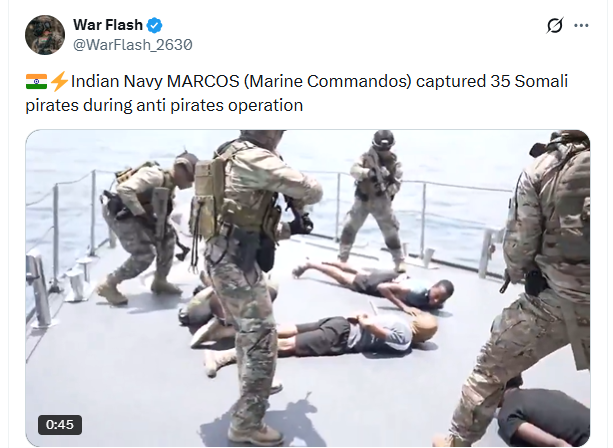
A video showing armed personnel detaining individuals on board a ship is being widely shared on social media with the claim that Indian Navy’s MARCOS captured 35 Somali pirates during a recent anti-piracy operation. However, research by the CyberPeace Research Wing found the claim to be misleading. The viral video is actually from the joint military exercise ‘LAMITIYE 2026’, held in Seychelles in March, involving the Indian Armed Forces and the Seychelles Defence Forces.
Claim
Users on X (formerly Twitter) shared the clip with captions such as: “Indian Navy MARCOS captured 35 Somali pirates,” presenting it as footage of a recent anti-piracy mission.
Fact Check
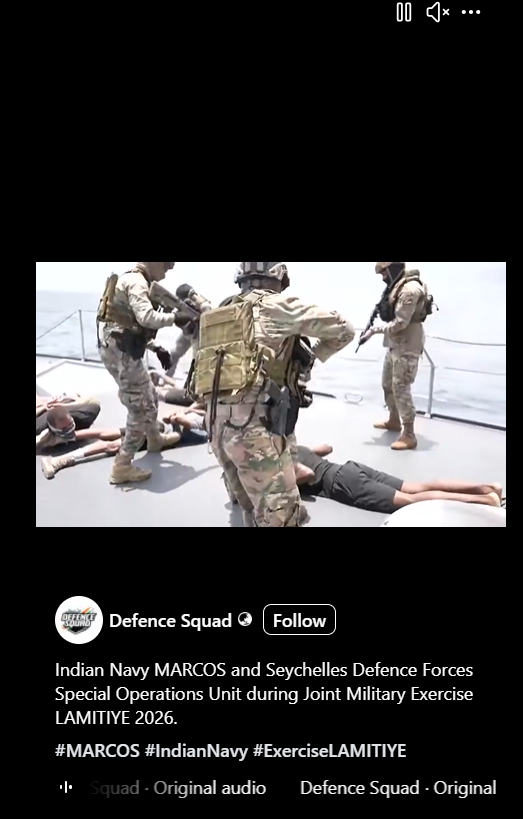
To verify the claim, we extracted keyframes from the viral video and conducted a reverse image search. This led us to the same video posted on March 20 by a Facebook page named “Defence Squad.” The caption identified the visuals as showing Indian Navy MARCOS and the Seychelles Defence Forces’ Special Operations Unit during the joint military exercise LAMITIYE 2026.
Link:
- https://www.facebook.com/reel/1263962865936234
- https://www.facebook.com/reel/1263962865936234
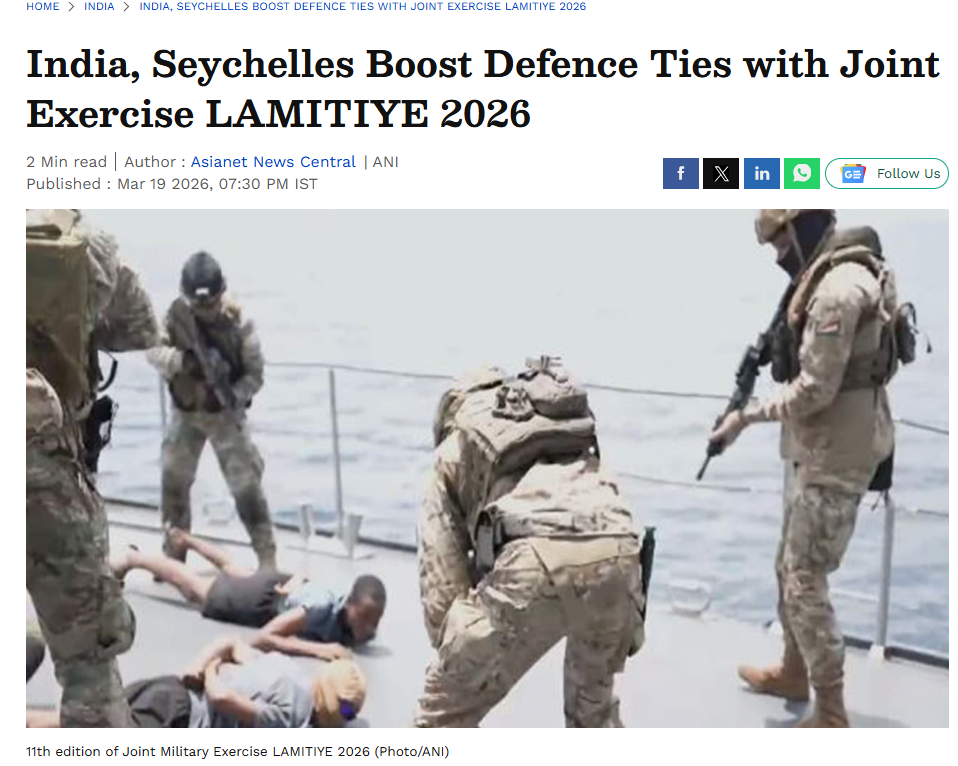
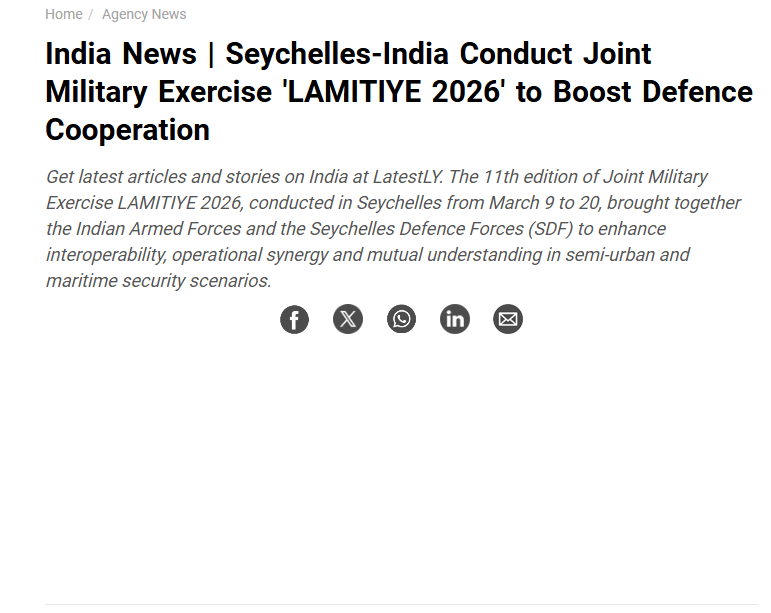
Further keyword searches led to multiple news reports carrying screenshots from the same video. These reports confirmed that the 11th India-Seychelles joint military exercise, LAMITIYE 2026, was conducted in Seychelles from March 9 to March 20.
We did not find any recent reports about the Indian Navy capturing Somali pirates. However, in March 2024, the Indian Navy had captured 35 Somali pirates who had hijacked a bulk carrier and taken hostages. The suspects were later handed over to Mumbai Police for legal proceedings.
Conclusion
The viral claim is misleading. The video being circulated as footage of an anti-piracy operation by the Indian Navy does not show the capture of Somali pirates. Instead, it is from the India-Seychelles joint military exercise ‘LAMITIYE 2026’, conducted in March with the participation of the Indian Armed Forces and the Seychelles Defence Forces. While the Indian Navy had indeed captured 35 Somali pirates in a separate incident in March 2024, there are no credible or recent reports linking such an operation to the viral video. The clip has been taken out of context and is being shared with a false narrative, leading to misinformation about a routine military exercise.

Related Blogs

Executive Summary
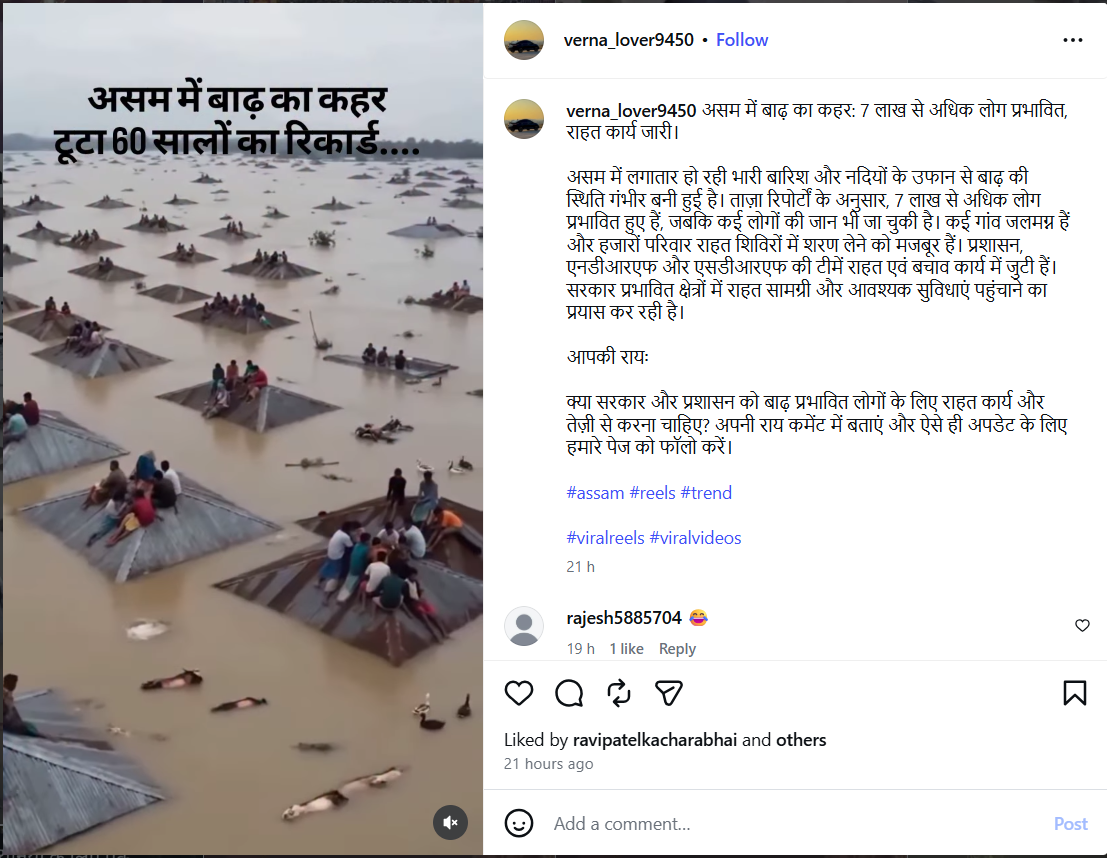
A video is being widely shared on social media showing a flood-affected area. In the video, several houses appear to be almost completely submerged in water, with only their triangular rooftops visible above the surface. Several people can be seen sitting on these rooftops, while ducks and other animals appear to be floating in the water. The video is being shared with the claim that it shows the real situation during the recent floods in Assam. CyberPeace Research Wing’s research found the claim to be misleading. The research revealed that the viral video is not from any real flood incident but was created using Artificial Intelligence (AI). Although the flood situation in Assam is real and several parts of the state have been affected, the viral video has no connection with those events. The AI-generated video is being falsely shared as an actual visual from the Assam floods.
Claim
A user on Instagram shared the viral video on July 27, 2026, claiming that Assam continues to face severe flooding, with more than seven lakh people affected. The post link, archive link and screenshot are provided below.
https://www.instagram.com/reel/DbSVmAApQf6/
FactCheck
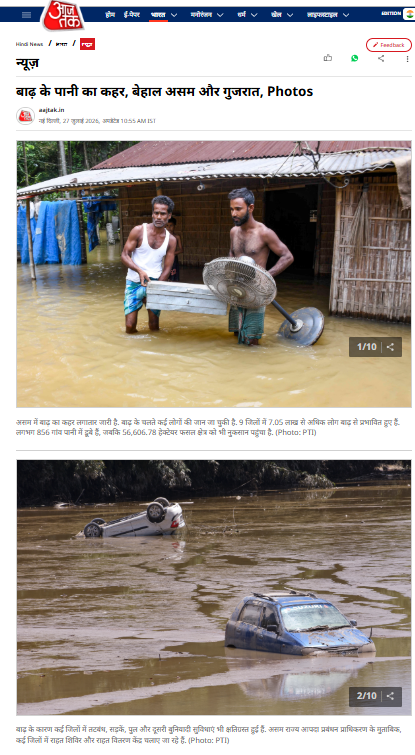
To verify the authenticity of the viral claim, we extracted several key frames from the video and conducted a reverse image search using Google Lens. The search did not reveal any credible news report, official source, or reliable information confirming that the video showed real flood visuals from Assam. During the research, we found a report published by Aaj Tak on July 27, 2026. According to the report, the flood situation in Assam remained severe, with several deaths reported and more than 7.05 lakh people affected across nine districts of the state. The report link and screenshot are provided below.
As the video appeared suspicious, we analysed it using the AI detection tool HIVE Moderation. The tool’s analysis indicated a 98.8 percent probability that the video was AI-generated, suggesting that it was not a real recording.

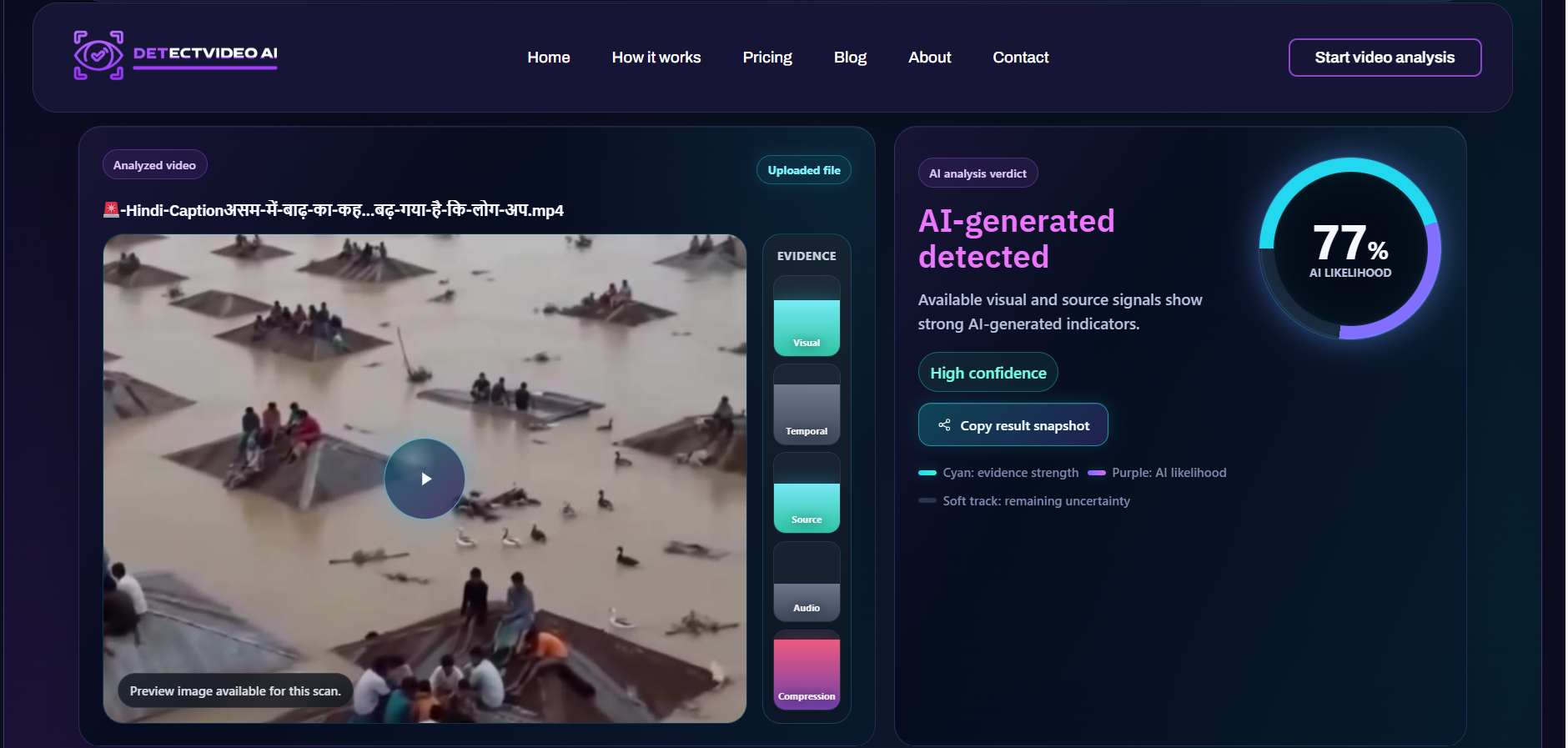
Further research was carried out using another AI detection tool, DetectVideo.AI, which found a 77 percent likelihood of the video being AI-generated.
For additional verification, we extracted key frames from the viral video and analysed them using another AI detection tool, AI or Not. The tool’s assessment indicated a 96 percent probability that the visuals were AI-generated.

Conclusion
The research established that the viral video is not from a real flood incident but was created using AI. While flooding in Assam is a real situation, this AI-generated video is unrelated to the actual floods and is being circulated on social media with a misleading claim.
Executive Summary:
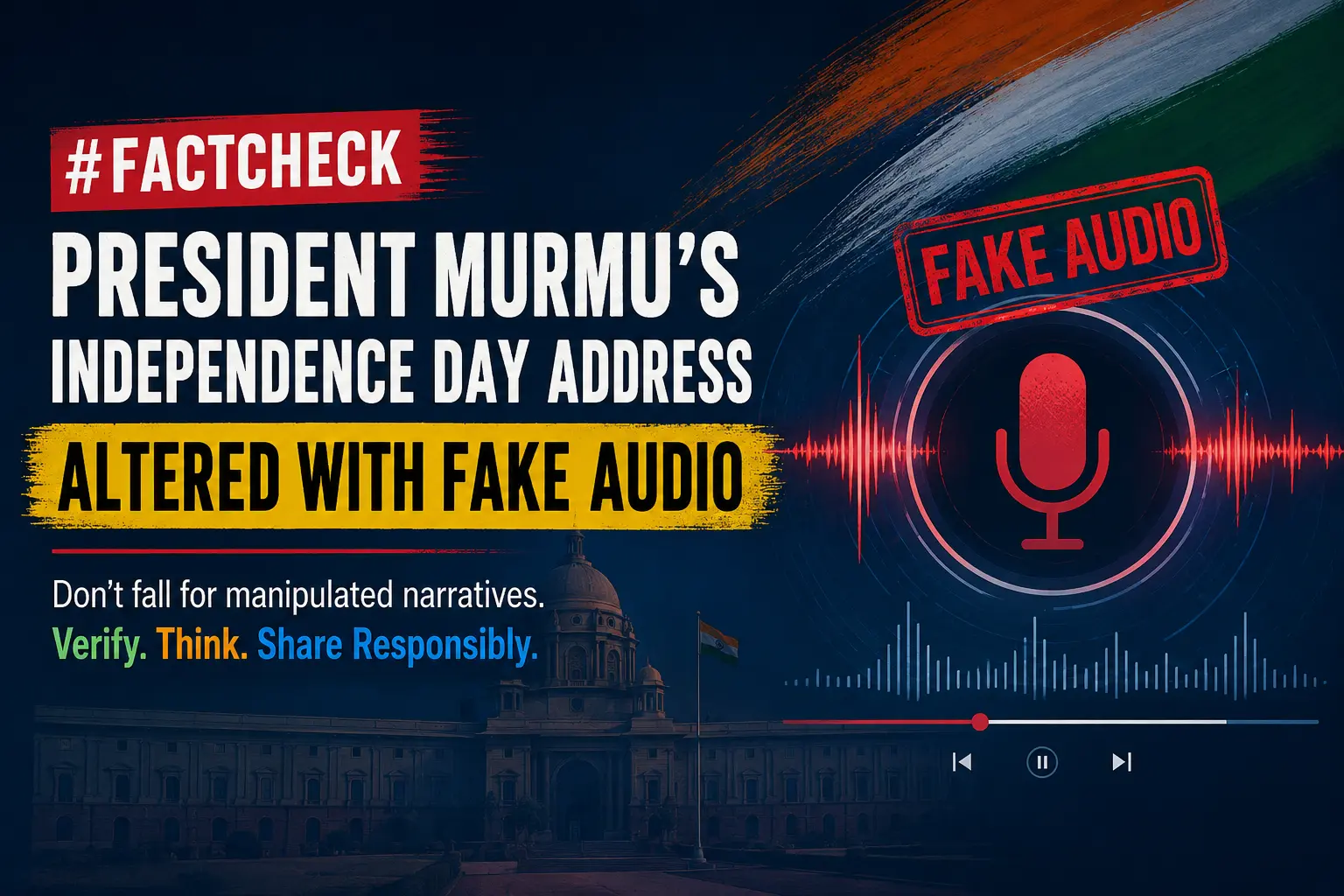
A video is going viral on social media with the claim that President Droupadi Murmu has allegedly demanded an independent inquiry into the loss of Rafale jets. In the video clip, Murmu can allegedly be heard saying that India should investigate the reasons behind the loss of the aircraft and learn from its mistakes. A research by the research wing of the CyberPeace revealed that the viral video has been tampered with. President Droupadi Murmu had made no such statement.
Claim:
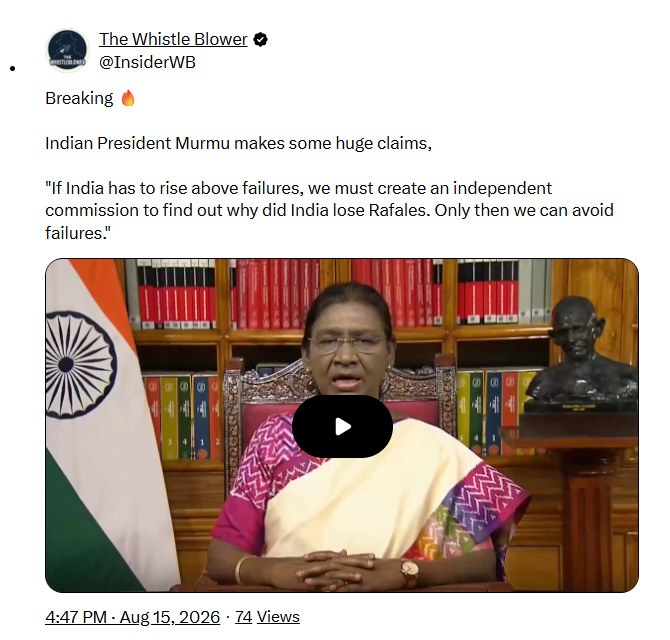
A video being shared on social media claims that President Droupadi Murmu has demanded the formation of an independent commission to investigate the causes behind the loss of India’s Rafale aircraft. In the viral video, Murmu can allegedly be heard stating that such an inquiry would help India avoid similar failures in the future.
https://archive.ph/UbLYj#selection-295.0-295.214
https://x.com/InsiderWB/status/2088669027258552509
Fact Check
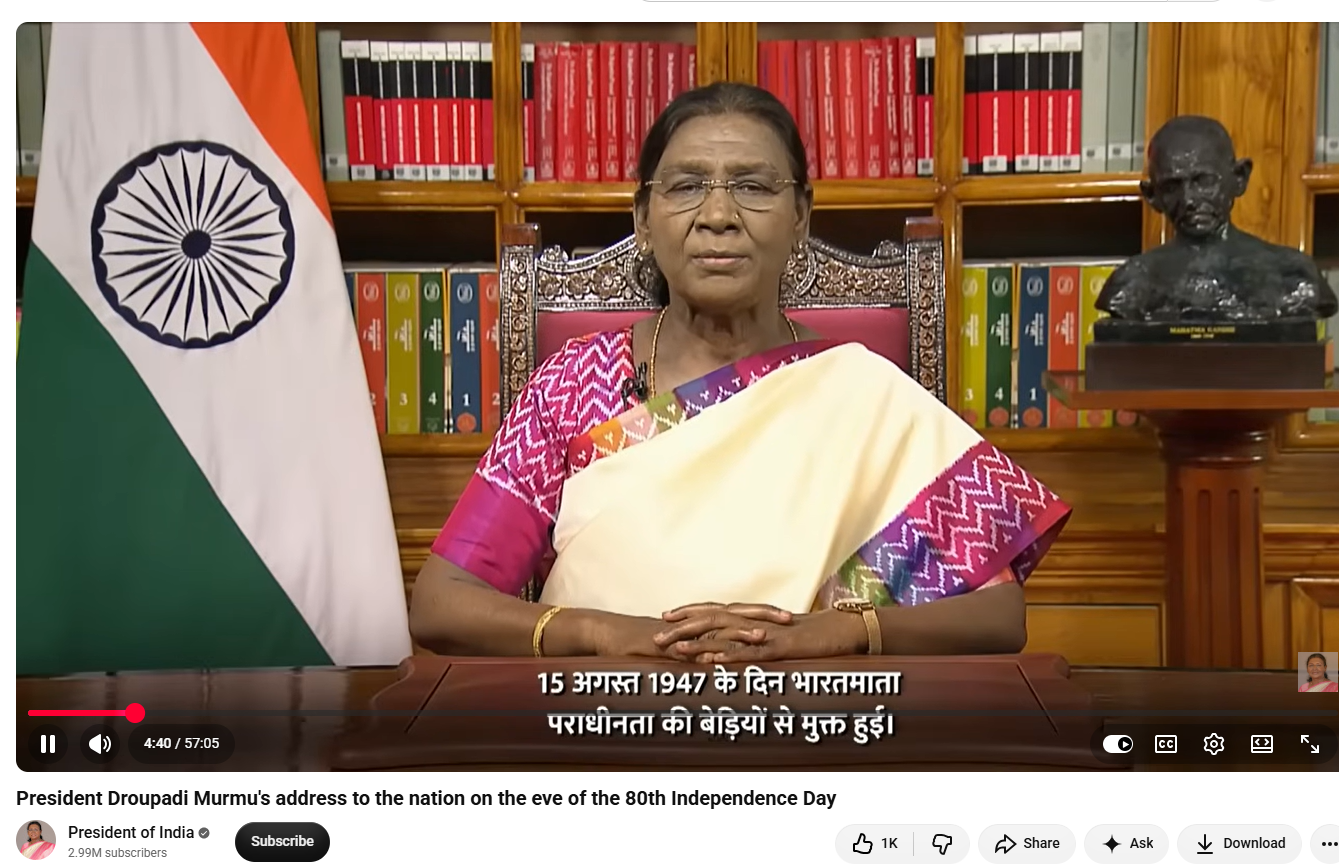
During the research, we first conducted a customized keyword search using terms like "President Murmu", "Rafale jets", and "inquiry". During this search, we found no reliable media reports or official statements confirming the claim that President Droupadi Murmu had demanded an independent probe into the loss of Rafale aircraft. Upon performing a reverse image search on keyframes of the viral video, we found the original video of President Droupadi Murmu’s address to the nation uploaded on the official YouTube channel of the President of India on August 14, 2026. This address was delivered on the eve of India's 80th Independence Day. In the original video, President Murmu can be seen speaking in the exact same outfit and against the same background as visible in the viral clip. However, a review of the complete speech revealed no mention of Rafale aircraft or any demand for an independent inquiry into their alleged loss.
https://www.youtube.com/watch?v=BggdVYCyH6c
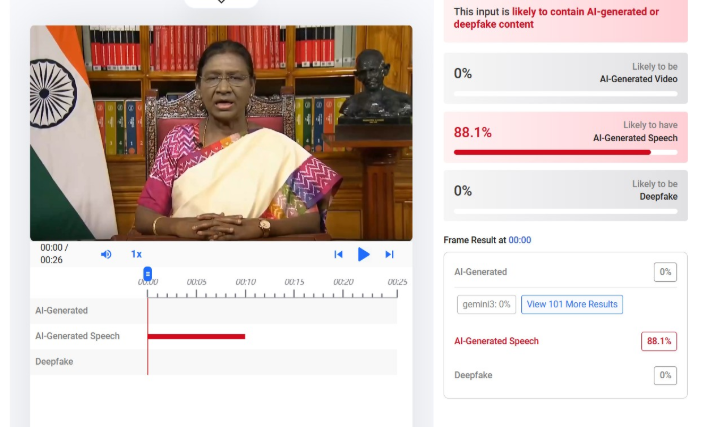
Following this, we analyzed the viral clip using several AI detection tools. Hive Moderation indicated a high probability that the video contained AI-generated or deepfake content.
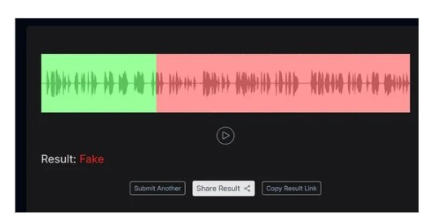
Meanwhile, Resemble AI flagged the audio as fake.
Conclusion
The statement regarding an independent probe into the alleged loss of Rafale aircraft in the viral video has been falsely attributed to President Droupadi Murmu. The clip appears to be manipulated using AI-generated video and audio. There is no such statement in the President's original Independence Day address.

Introduction
Prebunking is a technique that shifts the focus from directly challenging falsehoods or telling people what they need to believe to understanding how people are manipulated and misled online to begin with. It is a growing field of research that aims to help people resist persuasion by misinformation. Prebunking, or "attitudinal inoculation," is a way to teach people to spot and resist manipulative messages before they happen. The crux of the approach is rooted in taking a step backwards and nipping the problem in the bud by deepening our understanding of it, instead of designing redressal mechanisms to tackle it after the fact. It has been proven effective in helping a wide range of people build resilience to misleading information.
Prebunking is a psychological strategy for countering the effect of misinformation with the goal of assisting individuals in identifying and resisting deceptive content, hence increasing resilience against future misinformation. Online manipulation is a complex issue, and multiple approaches are needed to curb its worst effects. Prebunking provides an opportunity to get ahead of online manipulation, providing a layer of protection before individuals encounter malicious content. Prebunking aids individuals in discerning and refuting misleading arguments, thus enabling them to resist a variety of online manipulations.
Prebunking builds mental defenses for misinformation by providing warnings and counterarguments before people encounter malicious content. Inoculating people against false or misleading information is a powerful and effective method for building trust and understanding along with a personal capacity for discernment and fact-checking. Prebunking teaches people how to separate facts from myths by teaching them the importance of thinking in terms of ‘how you know what you know’ and consensus-building. Prebunking uses examples and case studies to explain the types and risks of misinformation so that individuals can apply these learnings to reject false claims and manipulation in the future as well.
How Prebunking Helps Individuals Spot Manipulative Messages
Prebunking helps individuals identify manipulative messages by providing them with the necessary tools and knowledge to recognize common techniques used to spread misinformation. Successful prebunking strategies include;
- Warnings;
- Preemptive Refutation: It explains the narrative/technique and how particular information is manipulative in structure. The Inoculation treatment messages typically include 2-3 counterarguments and their refutations. An effective rebuttal provides the viewer with skills to fight any erroneous or misleading information they may encounter in the future.
- Micro-dosing: A weakened or practical example of misinformation that is innocuous.
All these alert individuals to potential manipulation attempts. Prebunking also offers weakened examples of misinformation, allowing individuals to practice identifying deceptive content. It activates mental defenses, preparing individuals to resist persuasion attempts. Misinformation can exploit cognitive biases: people tend to put a lot of faith in things they’ve heard repeatedly - a fact that malicious actors manipulate by flooding the Internet with their claims to help legitimise them by creating familiarity. The ‘prebunking’ technique helps to create resilience against misinformation and protects our minds from the harmful effects of misinformation.
Prebunking essentially helps people control the information they consume by teaching them how to discern between accurate and deceptive content. It enables one to develop critical thinking skills, evaluate sources adequately and identify red flags. By incorporating these components and strategies, prebunking enhances the ability to spot manipulative messages, resist deceptive narratives, and make informed decisions when navigating the very dynamic and complex information landscape online.
CyberPeace Policy Recommendations
- Preventing and fighting misinformation necessitates joint efforts between different stakeholders. The government and policymakers should sponsor prebunking initiatives and information literacy programmes to counter misinformation and adopt systematic approaches. Regulatory frameworks should encourage accountability in the dissemination of online information on various platforms. Collaboration with educational institutions, technological companies and civil society organisations can assist in the implementation of prebunking techniques in a variety of areas.
- Higher educational institutions should support prebunking and media literacy and offer professional development opportunities for educators, and scholars by working with academics and professionals on the subject of misinformation by producing research studies on the grey areas and challenges associated with misinformation.
- Technological companies and social media platforms should improve algorithm transparency, create user-friendly tools and resources, and work with fact-checking organisations to incorporate fact-check labels and tools.
- Civil society organisations and NGOs should promote digital literacy campaigns to spread awareness on misinformation and teach prebunking strategies and critical information evaluation. Training programmes should be available to help people recognise and resist deceptive information using prebunking tactics. Advocacy efforts should support legislation or guidelines that support and encourage prebunking efforts and promote media literacy as a basic skill in the digital landscape.
- Media outlets and journalists including print & social media should follow high journalistic standards and engage in fact-checking activities to ensure information accuracy before release. Collaboration with prebunking professionals, cyber security experts, researchers and advocacy analysts can result in instructional content and initiatives that promote media literacy, prebunking strategies and misinformation awareness.
Final Words
The World Economic Forum's Global Risks Report 2024 identifies misinformation and disinformation as the top most significant risks for the next two years. Misinformation and disinformation are rampant in today’s digital-first reality, and the ever-growing popularity of social media is only going to see the challenges compound further. It is absolutely imperative for all netizens and stakeholders to adopt proactive approaches to counter the growing problem of misinformation. Prebunking is a powerful problem-solving tool in this regard because it aims at ‘protection through prevention’ instead of limiting the strategy to harm reduction and redressal. We can draw parallels with the concept of vaccination or inoculation, reducing the probability of a misinformation infection. Prebunking exposes us to a weakened form of misinformation and provides ways to identify it, reducing the chance false information takes root in our psyches.
The most compelling attribute of this approach is that the focus is not only on preventing damage but also creating widespread ownership and citizen participation in the problem-solving process. Every empowered individual creates an additional layer of protection against the scourge of misinformation, not only making safer choices for themselves but also lowering the risk of spreading false claims to others.
References
- [1] https://www3.weforum.org/docs/WEF_The_Global_Risks_Report_2024.pdf
- [2] https://prebunking.withgoogle.com/docs/A_Practical_Guide_to_Prebunking_Misinformation.pdf
- [3] https://ijoc.org/index.php/ijoc/article/viewFile/17634/3565
