
#FactCheck -False Claim About Indian Ships Paying Iran in Yuan to Pass Strait of Hormuz Goes Viral Amid Geopolitical Tensions
Executive Summary
Amid the ongoing geopolitical tensions involving the US, Israel, and Iran, and reports of disruptions in the Strait of Hormuz affecting cargo ship movement and global crude oil prices, several posts on social media have made a viral claim. The posts allege that Indian cargo vessels are being allowed to pass through the Strait of Hormuz after payments to Iran were made in Chinese currency, the yuan. The claim has been widely circulated from certain social media accounts, suggesting a shift in India’s trade and payment arrangements. However, a fact-check by CyberPeace Research Wing has found the claim to be false.
Claim
A social media user “MEHF voice 2.0” shared a viral post (archived link), claiming that an Indian oil tanker secured passage through the Strait of Hormuz by making payments in Chinese yuan. The post further suggested that India had formed a new alignment with China, bypassing the US dollar system.

Fact Check
Due to US sanctions, Iran is excluded from the international banking network SWIFT, which prevents direct trade settlements in US dollars or euros. As a result, India and Iran conduct trade through a specially designed rupee–rial payment mechanism. According to a Ministry of Commerce and Industry release (based on a written reply in Parliament), India and Iran established this arrangement to facilitate bilateral trade using local currencies instead of the US dollar.

Further, information from the Indian Embassy in Tehran notes that rupee-based payments are processed through UCO Bank and Iranian banks with vostro accounts, enabling trade settlement outside sanctioned banking channels. IDBI Bank has also been part of efforts to expand rupee-based transactions with Iran.
The Ministry of External Affairs’ official fact-check handle has also debunked this claim, confirming that it is false.

Conclusion
The viral claim that Indian oil tankers are paying in Chinese yuan to pass through the Strait of Hormuz is false. India and Iran conduct trade settlements through a rupee–rial payment mechanism, not through the Chinese currency.

Related Blogs

Introduction
The Computer Emergency Response Team (CERT-in) is a nodal agency of the government established and appointed as a national agency in respect of cyber incidents and cyber security incidents in terms of the provisions of section 70B of the Information Technology (IT) Act, 2000. CERT-In has issued a cautionary note to Microsoft Edge, Adobe and Google Chrome users. Users have been alerted to many vulnerabilities by the government's cybersecurity agency, which hackers might use to obtain private data and run arbitrary code on the targeted machine. Users are advised by CERT-In to apply a security update right away in order to guard against the problem.
Vulnerability note
Vulnerability notes CIVN-2023-0361, CIVN-2023-0362 and CIVN-2023-0364 for Google Chrome for Desktop, Microsoft Edge and Adobe respectively, include more information on the alert. The problems have been categorized as high-severity issues by CERT-In, which suggests applying a security upgrade right now. According to the warning, there is a security risk if you use Google Chrome versions earlier than v120.0.6099.62 on Linux and Mac, or earlier than 120.0.6099.62/.63 on Windows. Similar to this, the vulnerability may also impact users of Microsoft Edge browser versions earlier than 120.0.2210.61.
Cause of the Problem
These vulnerabilities are caused by "Use after release in Media Stream, Side Panel Search, and Media Capture; Inappropriate implementation in Autofill and Web Browser UI, “according to the explanation in the issue note on the CERT-In website. The alert further warns that individuals who use the susceptible Microsoft Edge and Google Chrome browsers could end up being targeted by a remote attacker using these vulnerabilities to send a specially crafted request.” Once these vulnerabilities are effectively exploited, hackers may obtain higher privileges, obtain sensitive data, and run arbitrary code on the system of interest.
High-security issues: consequences
CERT-In has brought attention to vulnerabilities in Google Chrome, Microsoft Edge, and Adobe that might have serious repercussions and put users and their systems at risk. The vulnerabilities found in widely used browsers, like Adobe, Microsoft Edge, and Google Chrome, present serious dangers that might result in data breaches, unauthorized code execution, privilege escalation, and remote attacks. If these vulnerabilities are taken advantage of, private information may be violated, money may be lost, and reputational harm may result.
Additionally, the confidentiality and integrity of sensitive information may be compromised. The danger also includes the potential to interfere with services, cause outages, reduce productivity, and raise the possibility of phishing and social engineering assaults. Users may become less trusting of the impacted software as a result of the urgent requirement for security upgrades, which might make them hesitant to utilize these platforms until guarantees of thorough security procedures are provided.
Advisory
- Users should update their Google Chrome, Microsoft Edge, and Adobe software as soon as possible to protect themselves against the vulnerabilities that have been found. These updates are supplied by the individual software makers. Furthermore, use caution when browsing and refrain from downloading things from unidentified sites or clicking on dubious links.
- Make use of reliable ad-blockers and strong, often updated antivirus and anti-malware software. Maintain regular backups of critical data to reduce possible losses in the event of an attack, and keep up with best practices for cybersecurity. Maintaining current security measures with vigilance and proactiveness can greatly lower the likelihood of becoming a target for prospective vulnerabilities.
References

Executive Summary
A video is being widely shared on social media with the claim that a female journalist was assaulted by the Delhi Police. The video is being shared with the claim that a female police officer from the Delhi Police is seen assaulting and misbehaving with a female journalist. In the video, a woman wearing a police uniform can be seen allegedly assaulting another woman. Research by the Research Wing of CyberPeace found that the video is actually from a movie shoot. Social media users are sharing it with a misleading claim.
Claim
Social media users shared the video with the caption: “A female journalist is being beaten up by the Delhi Police. What will happen to ordinary people?”
https://www.facebook.com/reel/1599067985010003
https://archive.ph/mgCqt

Fact Check
While investigating the video being shared with the claim that a female journalist was assaulted by the Delhi Police, we conducted a reverse image search of its keyframes. During the search, we found the same video on a Facebook page called ‘CineEdge Media-Behind the Scenes’. The video was uploaded on the page on June 26, 2026. The description and hashtags used with the video indicate that it is not footage of an actual police action, but is related to a film shoot.
https://www.facebook.com/reel/1542614027395118

In addition, the bio of the aforementioned Facebook page states that it posts videos featuring film acting sequences, action thrillers, and behind-the-scenes footage from movies
https://www.facebook.com/profile.php?id=61578948364025&sk=reels_tab

As part of the research, we also examined the CineEdge Media YouTube account. We found that the account has uploaded videos related to films and acting

Conclusion
The evidence gathered during our research makes it clear that the video being shared with the claim that a female journalist was assaulted by the Delhi Police is actually footage from a movie shoot. The video was found on a social media page that shares film-related content, including acting sequences, action scenes and behind-the-scenes footage. Therefore, the claim that the video shows a female journalist being assaulted by the Delhi Police is misleading.
Introduction
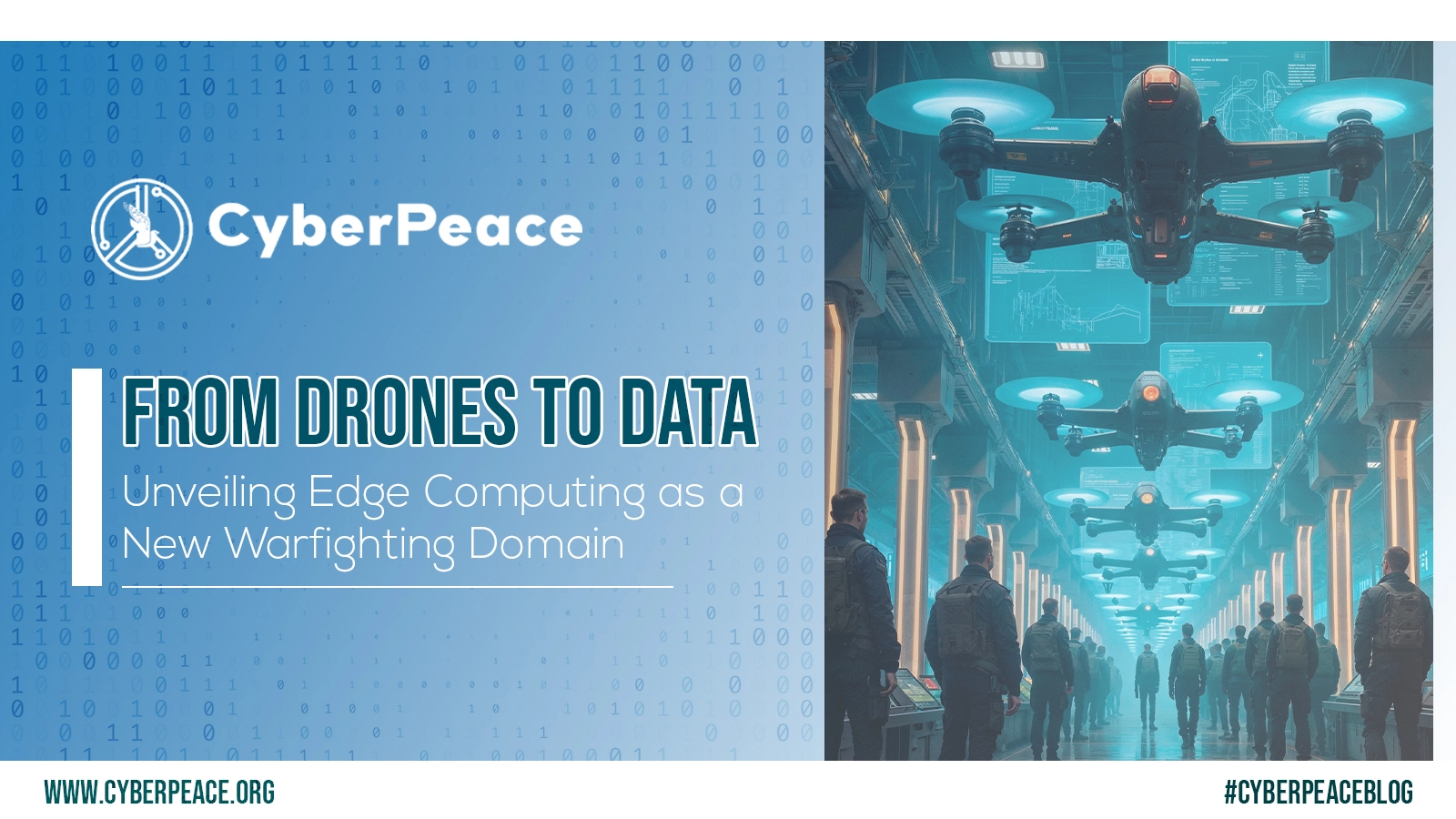
In real-time warfare scenarios of this modern age, where actions occur without delay, the relevance of edge computing emerges as paramount. By processing data close to the source in the battlefield with the help of a drone or through video imaging from any military vehicle or aircraft, the concept of edge computing allows the military to point targets faster and strike with accuracy. It also enables local processing to relay central data, helping ground troops get intelligence inputs to act rapidly in critical mission scenarios.
As the global security landscape experiences a significant transformation in different corners of the world, it presents unprecedented challenges in the present scenario. In this article, we will try to understand how countries can maintain their military capabilities with the help of advanced technologies like edge computing.
Edge Computing in Modern Warfare
Edge computing involves the processing and storage of data at the point of collection on the battlefield, for example, through vehicles and drones, instead of relying on centralized data centers. This enables faster decision-making in real-time. This approach creates a resilient and secure network by reducing reliance on potentially compromised external connections, supporting autonomous systems, precision-based targeting, and data sharing among military personnel, drones, and command centers amidst a challenging environment.
A report released by the US Department of Defence in March 2025 found a crucial reality surrounding the operation of hardware relying on outdated industrial-age processes in the digital era. In the case of applications with video, edge computing helps to deliver significant advantages to a wide range of crucial military operations, which include:
- Situational awareness with real-time data processing that provides improved battlefield visibility and proper threat detection.
- Autonomous warfare systems such as drones, which use a tactical edge cloud computing to get the capability to navigate faster.
- Developing a strong communication and networking capability to secure low-latency communication for troops to stay connected in challenging environments.
- Ensuring predictive maintenance with the help of effective sensors to carry out edge detection and attrition at an early point, thereby reducing equipment failures.
- Developing effective targeting and weapons systems to ensure faster processing to enable precision-based targeting and response, besides a strong logistics and supply chain that can provide real-time tracking to improve delivery accuracy and resource management.
This report also highlighted that the DoD is rapidly updating its software and investing in AI enablers like data sets or MLOps tools. This also stresses the breaking down of integration barriers by enforcing MOSA (Modular Open Systems Approaches), APIs (Application Programming Interface), and modular interfaces to ensure interoperability across platforms, sensors, and networks to make software-defined warfare an effective strategy.
Developing Edge with Artificial Intelligence for Future Warfare
A significant insight from the work of the US Department of Defense is its emphasis on the importance of edge computing in shaping the future of warfare. In that context, the Annual Threat Assessment Report highlights a key limitation of traditional AI strategies that rely on centralised cloud computing, since these might not be suitable for modern battlefields with congested networks and limited bandwidth. The need for real-time data processing requires a distributed and edge-based AI solution to address contemporary threats. This report also directly supports the deployment of effective edge with AI in a defined, disrupted, intermittent, and limited-bandwidth (DDIL) environment. In that case, when the communication networks fail, the edge servers at the edge of the network offer crucial advantages that cloud-dependent systems cannot. This ability to analyse data and make decisions without consistent connectivity and operate with limited computational resources is a strategic necessity.
The scenario of warfare is a phenomenon that requires maintaining a strong strategic and tactical approach, which, in the present times, is being examined through the domain of digital platforms. Modern warfare patterns demand faster decision-making and edge computing deliveries by shifting the power of distant servers to the frontlines. The US military is already moving in the direction of deploying edge-enabled systems to prove the nature of sensors and networks to compute at the tactical edge to transform warfighting.
However, it can be understood with the help of an example, as creating fusion in the skies with F-35s. As they have showcased the capability of edge computing by fusing sensor data with MADL (Multi-Functional Advanced Data Link) to create a unified picture, making the squadrons a force multiplier. An example of this was visible when an F-35 relayed real-time tracking data, enabling a navy ship to neutralise a missile beyond its range.
Conclusion: The Way Ahead
As the changing nature of warfare moves towards adopting software-defined systems, where edge computing thrives as a futuristic military technology, it calls for the need for integration across all domains of warfighting. But at the same time, several imperatives do emerge, such as:
- Developing an open architecture that enables both flexibility and innovation.
- Ensuring an effective connectivity that actually combines a confluence of legacy systems.
- Developing interoperability among the systems that can function in synergy with all platforms and can function across all domains.
- Prioritising edge-native AI development systems, where it is also necessary to ensure the shift to adopting cloud-based AI models to create solutions optimised from the ground up for edge deployment.
- Investing in edge infrastructure to establish a robust edge computing infrastructure that enables rapid deployment by testing and updating AI capabilities across diverse hardware platforms. Like the way the military training academies in India are developing training infrastructures for training officer cadets or personnel to handle drones and all forms of advanced warfare tactics emerging in this age.
- Fostering talent and expertise by embracing commercial solutions where software talent could be enabled across the enterprises with expertise in edge computing capabilities and AI. In this case, the role of the commercial sector can help to drive innovations in edge AI, and the only way to move in this direction is by leveraging these advances through partnerships and collaborative efforts.
Taking the example of the ARPANET, which once seeded the modern internet, edge computing can also help to create a transformative network effect within the digital battlespace. In conclusion, future conflicts will be defined by the speed and accuracy provided by the edge, as nations integrating AI and robust edge infrastructures can hold a strong advantage in the multi-domain battlefields in the future.
References
- https://www.idsa.in/mpidsanews/rk-narangs-article-what-the-regions-first-drone-warfare-taught-us-published-in-the-new-indian-express
- https://latentai.com/blog/software-defined-warfare-why-edge-ai-is-critical-to-americas-defense-future/
- https://www.boozallen.com/s/insight/blog/how-the-us-military-is-using-edge-computing.html
- https://capsindia.org/wp-content/uploads/2022/08/RK-Narang-3.pdf
- https://www.newindianexpress.com/opinions/2025/May/12/what-the-regions-first-drone-warfare-taught-us
- https://www.maris-tech.com/blog/edge-computing-in-the-military-challenges-and-solutions/#:~:text=In%20modern%20warfare%2C%20decisions%20need,enables%20precision%20targeting%20and%20response
- https://cassindia.com/digital-soldiers/
