
#FactCheck -AI-Generated Video Falsely Shows PM Modi Praising Christianity
Executive Summary:
A video of Prime Minister Narendra Modi is going viral across multiple social media platforms. In the clip, PM Modi is purportedly heard praising Christianity and stating that only Jesus Christ can lead people to heaven.Several users are sharing and commenting on the video, believing it to be genuine. The CyberPeace researched the viral claim and found it to be false. The circulating video has been created using artificial intelligence (AI).
Claim:
On January 29, 2026, a Facebook user named ‘Khaju Damor’ posted the viral video of PM Modi. The post gained traction, with many users sharing and commenting on it as if it were authentic. (Links and archived versions provided)

Fact Check:
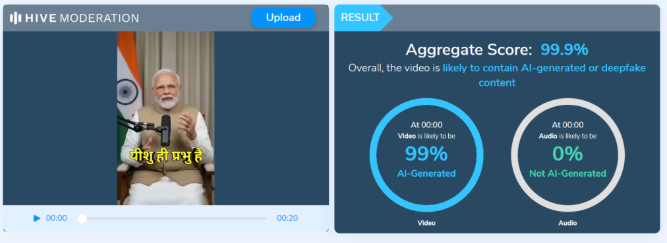
As part of our research , we first closely examined the viral video. Upon careful observation, several inconsistencies were noticed. The Prime Minister’s facial expressions and hand movements appeared unnatural. The lip-sync and overall visual presentation also raised suspicions about the clip being digitally manipulated. To verify this further, we analyzed the video using the AI detection tool Hive Moderation. The tool’s analysis indicated a 99% probability that the video was AI-generated.
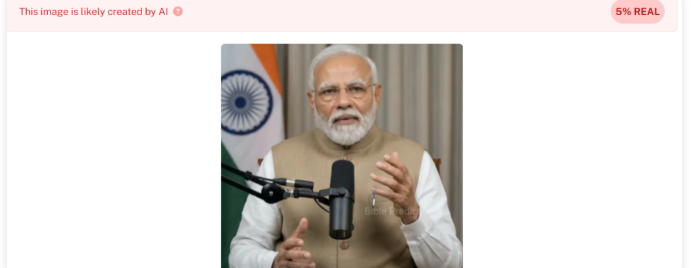
To independently confirm the findings, we also ran the clip through another detection platform, Undetectable.ai. Its analysis likewise indicated a very high likelihood that the video was created using artificial intelligence.
Conclusion:
Our research confirms that the viral video of Prime Minister Narendra Modi praising Christianity and making the alleged statement about heaven is fake. The clip has been generated using AI tools and does not depict a real statement made by the Prime Minister.

Related Blogs

Executive Summary:
BrazenBamboo’s DEEPDATA malware represents a new wave of advanced cyber espionage tools, exploiting a zero-day vulnerability in Fortinet FortiClient to extract VPN credentials and sensitive data through fileless malware techniques and secure C2 communications. With its modular design, DEEPDATA targets browsers, messaging apps, and password stores, while leveraging reflective DLL injection and encrypted DNS to evade detection. Cross-platform compatibility with tools like DEEPPOST and LightSpy highlights a coordinated development effort, enhancing its espionage capabilities. To mitigate such threats, organizations must enforce network segmentation, deploy advanced monitoring tools, patch vulnerabilities promptly, and implement robust endpoint protection. Vendors are urged to adopt security-by-design practices and incentivize vulnerability reporting, as vigilance and proactive planning are critical to combating this sophisticated threat landscape.
Introduction
The increased use of zero-day vulnerabilities by more complex threat actors reinforces the importance of more developed countermeasures. One of the threat actors identified is BrazenBamboo uses a zero-day vulnerability in Fortinet FortiClient for Windows through the DEEPDATA advanced malware framework. This research explores technical details about DEEPDATA, the tricks used in its operations, and its other effects.
Technical Findings
1. Vulnerability Exploitation Mechanism
The vulnerability in Fortinet’s FortiClient lies in its failure to securely handle sensitive information in memory. DEEPDATA capitalises on this flaw via a specialised plugin, which:
- Accesses the VPN client’s process memory.
- Extracts unencrypted VPN credentials from memory, bypassing typical security protections.
- Transfers credentials to a remote C2 server via encrypted communication channels.
2. Modular Architecture
DEEPDATA exhibits a highly modular design, with its core components comprising:
- Loader Module (data.dll): Decrypts and executes other payloads.
- Orchestrator Module (frame.dll): Manages the execution of multiple plugins.
- FortiClient Plugin: Specifically designed to target Fortinet’s VPN client.
Each plugin operates independently, allowing flexibility in attack strategies depending on the target system.
3. Command-and-Control (C2) Communication
DEEPDATA establishes secure channels to its C2 infrastructure using WebSocket and HTTPS protocols, enabling stealthy exfiltration of harvested data. Technical analysis of network traffic revealed:
- Dynamic IP switching for C2 servers to evade detection.
- Use of Domain Fronting, hiding C2 communication within legitimate HTTPS traffic.
- Time-based communication intervals to minimise anomalies in network behavior.
4. Advanced Credential Harvesting Techniques
Beyond VPN credentials, DEEPDATA is capable of:
- Dumping password stores from popular browsers, such as Chrome, Firefox, and Edge.
- Extracting application-level credentials from messaging apps like WhatsApp, Telegram, and Skype.
- Intercepting credentials stored in local databases used by apps like KeePass and Microsoft Outlook.
5. Persistence Mechanisms
To maintain long-term access, DEEPDATA employs sophisticated persistence techniques:
- Registry-based persistence: Modifies Windows registry keys to reload itself upon system reboot.
- DLL Hijacking: Substitutes legitimate DLLs with malicious ones to execute during normal application operations.
- Scheduled Tasks and Services: Configures scheduled tasks to periodically execute the malware, ensuring continuous operation even if detected and partially removed.
Additional Tools in BrazenBamboo’s Arsenal
1. DEEPPOST
A complementary tool used for data exfiltration, DEEPPOST facilitates the transfer of sensitive files, including system logs, captured credentials, and recorded user activities, to remote endpoints.
2. LightSpy Variants
- The Windows variant includes a lightweight installer that downloads orchestrators and plugins, expanding espionage capabilities across platforms.
- Shellcode-based execution ensures that LightSpy’s payload operates entirely in memory, minimising artifacts on the disk.
3. Cross-Platform Overlaps
BrazenBamboo’s shared codebase across DEEPDATA, DEEPPOST, and LightSpy points to a centralised development effort, possibly linked to a Digital Quartermaster framework. This shared ecosystem enhances their ability to operate efficiently across macOS, iOS, and Windows systems.
Notable Attack Techniques
1. Memory Injection and Data Extraction
Using Reflective DLL Injection, DEEPDATA injects itself into legitimate processes, avoiding detection by traditional antivirus solutions.
- Memory Scraping: Captures credentials and sensitive information in real-time.
- Volatile Data Extraction: Extracts transient data that only exists in memory during specific application states.
2. Fileless Malware Techniques
DEEPDATA leverages fileless infection methods, where its payload operates exclusively in memory, leaving minimal traces on the system. This complicates post-incident forensic investigations.
3. Network Layer Evasion
By utilising encrypted DNS queries and certificate pinning, DEEPDATA ensures that network-level defenses like intrusion detection systems (IDS) and firewalls are ineffective in blocking its communications.
Recommendations
1. For Organisations
- Apply Network Segmentation: Isolate VPN servers from critical assets.
- Enhance Monitoring Tools: Deploy behavioral analysis tools that detect anomalous processes and memory scraping activities.
- Regularly Update and Patch Software: Although Fortinet has yet to patch this vulnerability, organisations must remain vigilant and apply fixes as soon as they are released.
2. For Security Teams
- Harden Endpoint Protections: Implement tools like Memory Integrity Protection to prevent unauthorised memory access.
- Use Network Sandboxing: Monitor and analyse outgoing network traffic for unusual behaviors.
- Threat Hunting: Proactively search for indicators of compromise (IOCs) such as unauthorised DLLs (data.dll, frame.dll) or C2 communications over non-standard intervals.
3. For Vendors
- Implement Security by Design: Adopt advanced memory protection mechanisms to prevent credential leakage.
- Bug Bounty Programs: Encourage researchers to report vulnerabilities, accelerating patch development.
Conclusion
DEEPDATA is a form of cyber espionage and represents the next generation of tools that are more advanced and tunned for stealth, modularity and persistence. While Brazen Bamboo is in the process of fine-tuning its strategies, the organisations and vendors have to be more careful and be ready to respond to these tricks. The continuous updating, the ability to detect the threats and a proper plan on how to deal with incidents are crucial in combating the attacks.
References:

A video circulating widely on social media claims that Indian cricketer Virat Kohli made a sarcastic remark about fast bowler Prasidh Krishna ahead of the New Zealand series. In the clip, Kohli is allegedly heard saying that he expected to be the top scorer of the series, but lost all hope after seeing Prasidh Krishna’s name in the squad.
Users sharing the video claim that Kohli publicly commented on Prasidh Krishna in this manner.
Research by the CyberPeace Foundation has found the viral claim to be false. Our probe revealed that the viral clip has been digitally manipulated. The video is originally from a 2024 advertisement featuring Virat Kohli, in which his voice has been altered using deepfake (AI-generated) technology and falsely presented with a misleading narrative.
Claim
The video was shared on Instagram on January 6, 2025, with users claiming that Kohli made the remark after the New Zealand squad was announced. The post included the altered audio suggesting Kohli’s disappointment over Prasidh Krishna’s selection. Link, archive link

Fact Check:
To verify the claim, we extracted key frames from the viral video and conducted a Google Reverse Image Search. This led us to the original video posted by Virat Kohli himself on X (formerly Twitter) on April 15, 2024. The original clip was part of a brand advertisement, and no such statement about the New Zealand series or Prasidh Krishna was made in it. Link and Screenshot

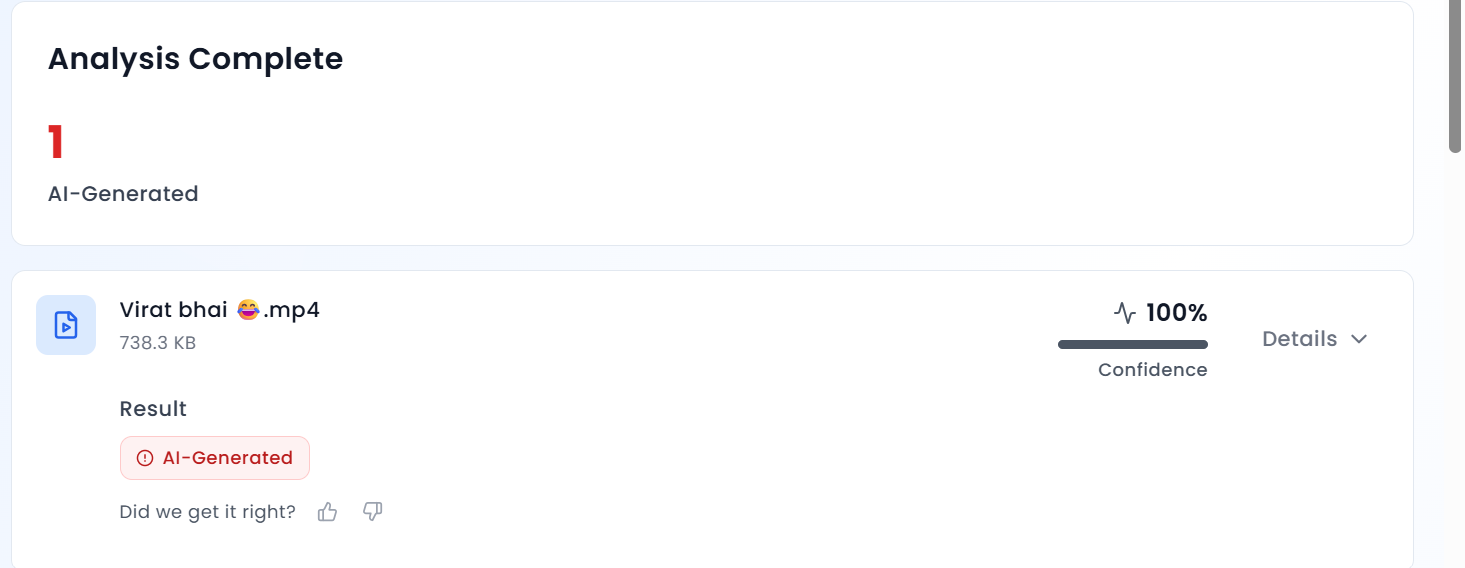
A close review of the viral clip raised suspicions due to the unnatural tone and inconsistencies in Kohli’s voice. To confirm this, we analysed the video using the AI detection tool Aurigin AI. The tool’s results showed that the audio in the viral clip is 100 percent AI-generated, confirming that Kohli’s voice was artificially manipulated.
Conclusion
The CyberPeace Foundation’s research confirms that the viral video claiming Virat Kohli mocked Prasidh Krishna is fake and misleading. The clip is taken from an old advertisement and has been doctored using deepfake technology to alter Kohli’s voice. The video is being circulated on social media with a false claim, and Virat Kohli has made no such statement regarding the New Zealand series or Prasidh Krishna.

Introduction
Google’s search engine is widely known for its ability to tailor its search results based on user activity, enhancing the relevance of search outcomes. Recently, Google introduced the ‘Try Without Personalisation’ feature. This feature allows users to view results independent of their prior activity. This change marks a significant shift in platform experiences, offering users more control over their search experience while addressing privacy concerns.
However, even in this non-personalised mode, certain contextual factors including location, language, and device type, continue to influence results. This essentially provides the search with a baseline level of relevance. This feature carries significant policy implications, particularly in the areas of privacy, consumer rights, and market competition.
Understanding the Feature
When users engage with this option of non-personalised search, it will no longer show them helpful individual results that are personalisation-dependent and will instead provide unbiased search results. Essentially,this feature provides users with neutral (non-personalised) search results by bypassing their data.
This feature allows the following changes:
- Disables the user’s ability to find past searches in Autofill/Autocomplete.
- Does not pause or delete stored activity within a user’s Google account. Users, because of this feature, will be able to pause or delete stored activity through data and privacy controls.
- The feature doesn't delete or disable app/website preferences like language or search settings are some of the unaffected preferences.
- It also does not disable or delete the material that users save.
- When a user is signed in, they can ‘turn off the personalisation’ by clicking on the search option at the end of the webpage. These changes, offered by the feature, in functionality, have significant implications for privacy, competition, and user trust.
Policy Implications: An Analysis
This feature aligns with global privacy frameworks such as the GDPR in the EU and the DPDP Act in India. By adhering to principles like data minimisation and user consent, it offers users control over their data and the choice to enable or disable personalisation, thereby enhancing user autonomy and trust.
However, there is a trade-off between user expectations for relevance and the impartiality of non-personalised results. Additionally, the introduction of such features may align with emerging regulations on data usage, transparency, and consent. Policymakers play a crucial role in encouraging innovations like these while ensuring they safeguard user rights and maintain a competitive market.
Conclusion and Future Outlook
Google's 'Try Without Personalisation' feature represents a pivotal moment for innovation by balancing user privacy with search functionality. By aligning with global privacy frameworks such as the GDPR and the DPDP Act, it empowers users to control their data while navigating the complex interplay between relevance and neutrality. However, its success hinges on overcoming technical hurdles, fostering user understanding, and addressing competitive and regulatory scrutiny. As digital platforms increasingly prioritise transparency, such features could redefine user expectations and regulatory standards in the evolving tech ecosystem.
