
#FactCheck- AI-Generated Image of PM Modi Misleadingly Shared as Assam Campaign Shoot Setup
Executive Summary
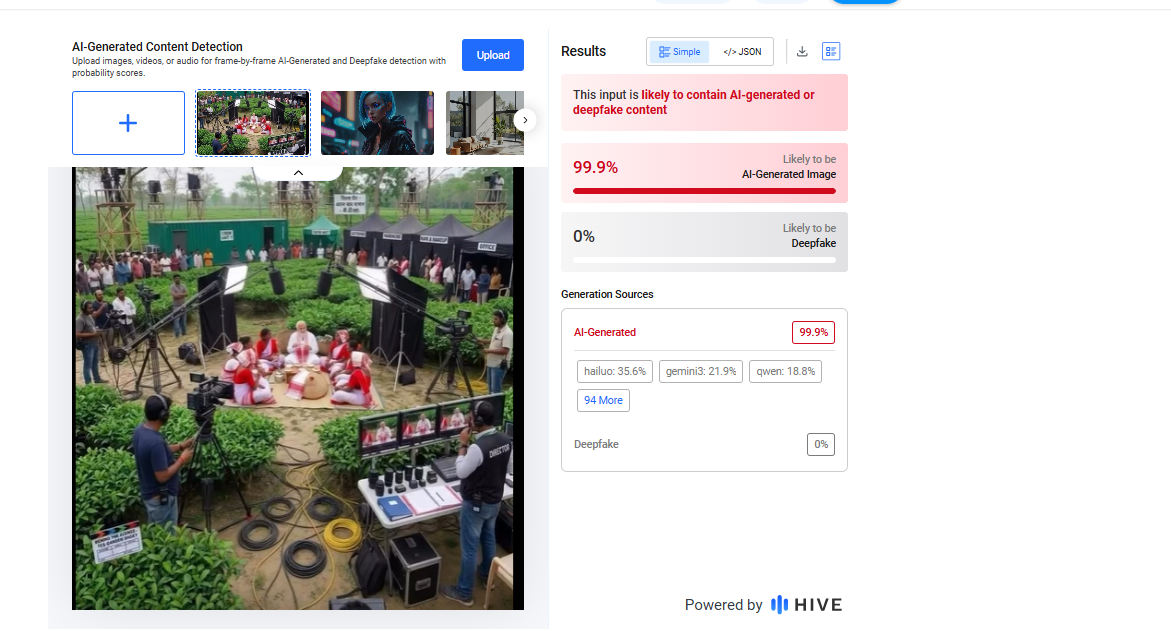
An image of Prime Minister Narendra Modi is being widely circulated on social media. The picture is being shared with the claim that during an election campaign in Assam, a full-fledged shooting set was arranged in a tea garden where Modi interacted with women workers, complete with cameras, microphones, lights, and a director-led production team. However, research by the CyberPeace has found the claim to be false. Our research reveals that the viral image is AI-generated and is being shared with a misleading narrative.
Claim
An Instagram user shared the viral image with the caption suggesting that such a large-scale “shoot” setup had been arranged and questioned the cost involved.
Post link:

Fact Check
To verify the claim, we conducted a keyword-based search on Google. However, we did not find any credible media reports supporting the claim that such a shooting setup was arranged during Prime Minister Modi’s visit to Assam. Upon closely examining the viral image, we noticed several visual inconsistencies that raised suspicion about it being artificially generated. To confirm this, we analyzed the image using the AI detection tool Hive Moderation, which indicated that the image is approximately 99% AI-generated.
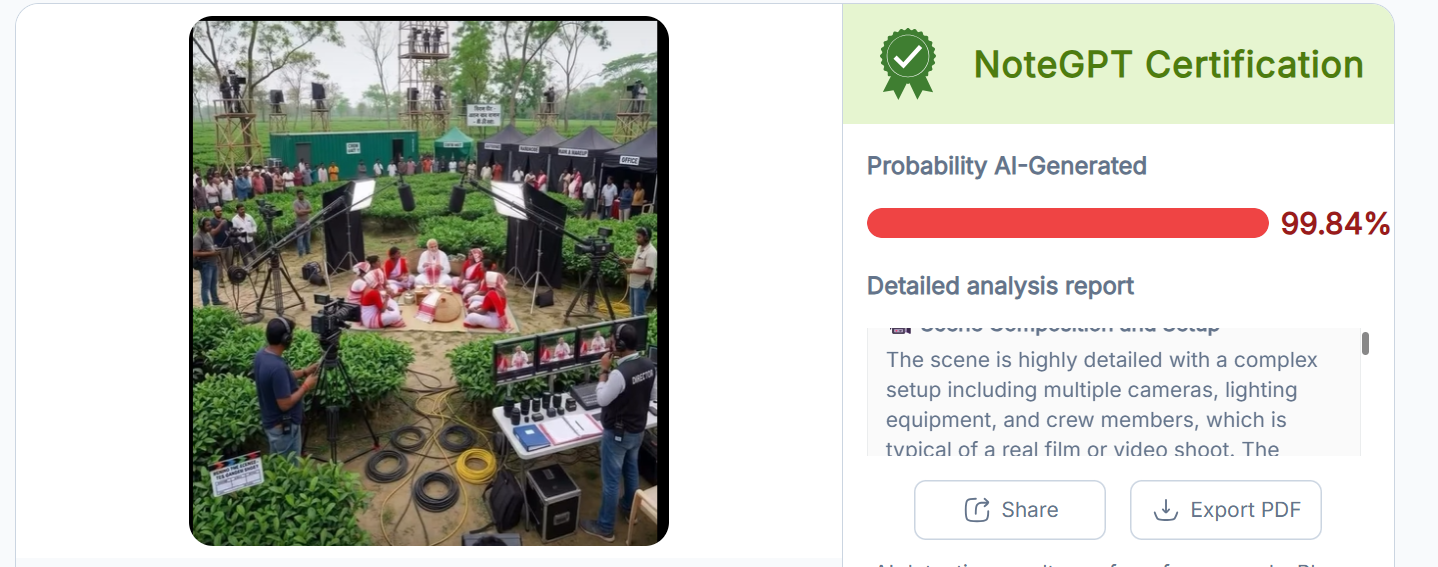
To further validate the findings, we also tested the image using another AI detection tool, NoteGPT, which similarly classified the image as 99% AI-generated.
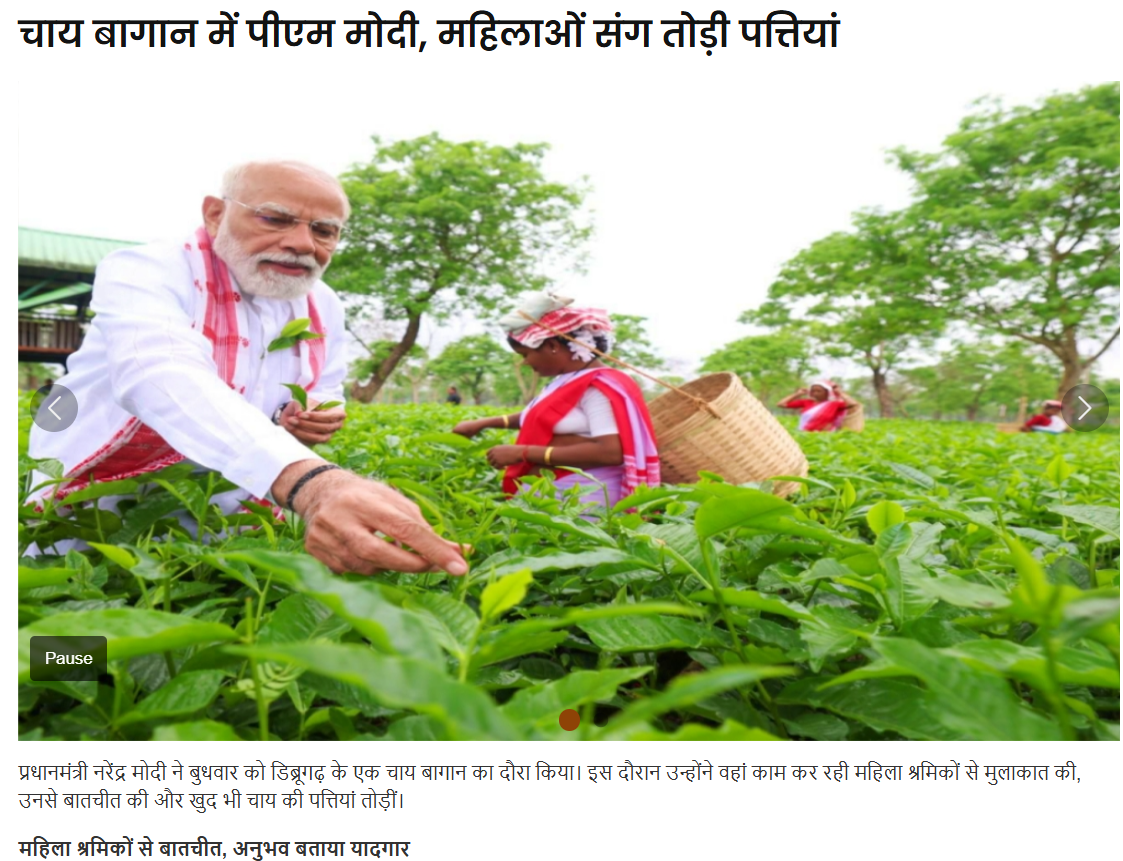
For context, ahead of the 2026 Assam Assembly elections, Prime Minister Narendra Modi has been on a campaign visit to the state. According to a report by DD News, he visited a tea garden in Dibrugarh, where he interacted with women workers and even plucked tea leaves himself.
Conclusion
Our research clearly establishes that the viral image of Prime Minister Narendra Modi is not authentic and has been digitally created using AI tools. There is no evidence to support the claim that a staged shooting setup involving cameras, lights, and a production crew was arranged during his visit. The image is being circulated with a misleading narrative to create a false impression. This case highlights how AI-generated visuals can be used to distort real events and spread misinformation.

Related Blogs

Introduction
A new dawn in the realm of cyber security and criminal justice is on the horizon. Maharashtra's Deputy Chief Minister, Devendra Fadnavis, has recently announced the advent of the country's most sophisticated cyber lab—a bastion against the dark arts of cybercrime. This announcement, made with the gravitas befitting a statesman, was not merely a bureaucratic note; it was a clarion call to a future where technology and law converge to create a safer society.
The cyber lab, poised to be the largest and most modern of its kind, is not just a facility—it is a symbol of the state's commitment to harnessing the power of technology in the ceaseless battle against crime. Fadnavis, who also holds the state's home portfolio, underscored the significance of this initiative during a function where he also emphasised the need for the Maharashtra police to brace themselves for the enforcement of three transformative criminal laws set to take effect from the first of July 2024.
In compliance with the New Laws
These laws—the Bharatiya Nyaya Sanhita, the Bharatiya Nagarik Suraksha Sanhita, and the Bharat Sakshya Act—They are not mere statutory texts; they are the architects of a new edifice of criminal justice, designed with the mortar of modern electronic and technical evidence to buttress the conviction rates and fortify the legal system.
At the inauguration of the Evidence Management Centre (EMC) and the Evidence Dispatch Van (EDV) in Navi Mumbai, Fadnavis spoke with an air of prescience about the radical shifts these new acts will engender. The EMC, a paragon of innovation with its no-human-intervention ethos, is set to revolutionise the procedure of handling evidence, thereby amplifying the likelihood of securing convictions in an era increasingly marred by cyber frauds and hacking escapades.
Recent Trend
The Deputy Chief Minister's vision extends beyond the present, into a realm where blockchain technology becomes an ally of law enforcement, rendering evidence tampering an obsolete concern. Under the new legislative framework, expert collection of evidence is mandated for crimes with sentences exceeding seven years, a move that underscores the gravity with which digital and electronic evidence is now regarded.
The Cyber Lab
The Navi Mumbai police Commissionerate stands as the vanguard of this new legal era, being the first in the country to align with the upcoming laws. As digital transactions burgeon, so too does the evil of cybercrime. Fadnavis assures us that the cyberlaw, a veritable nexus of modernity, will bring together banks, non-banking financial companies (NBFCs), and social media platforms on a unified platform to detect and thwart crimes with alacrity.
This announcement was made in the presence of Maharashtra's Director General of Police, Rashmi Shukla, and Navi Mumbai's police commissioner, Milind Bharambe, both of whom are key figures in the conception of this project. Their attendance shows the collective resolve of Maharashtra's law enforcement to elevate its capabilities in cybercrime prevention.
Conclusion
The establishment of this cyber lab is a vivid thread woven with the intent to protect the digital integrity of its citizens. It is a testament to the state's foresight and its unwavering commitment to staying abreast of the evolving landscape of crime and technology. As we stand on the cusp of this new era, we are reminded that the fight against crime is perennial, but with such pioneering initiatives, victory is not just a possibility—it is an inevitability.
References
- https://indianexpress.com/article/cities/mumbai/navi-mumbai-cyber-lab-criminal-laws-fadnavis-9206801/
- https://www.the420.in/why-maharashtras-new-cyber-lab-could-be-a-game-changer-for-national-security/
- https://apacnewsnetwork.com/2024/03/navi-mumbai-to-host-indias-most-advanced-crime-busting-lab-boosting-conviction-rates-maharashtra-deputy-cm-fadnavis-announces/

Introduction
India plans to draft the first AI regulations framework. The draft will be discussed and debated in June-July this year as stated by Union Minister of Skill Development and Entrepreneurship Rajeev Chandrasekhar. He aims to harness AI for economic growth, healthcare, and agriculture, ensuring its significant impact. The Indian government plans to fully utilise AI for economic growth, focusing on healthcare, drug discovery, agriculture, and farmer productivity.
Government Approach to Regulating AI
Chandrasekhar stated that the government's approach to AI regulation involves establishing principles and a comprehensive list of harms and criminalities. They prefer clear platform standards to address bias and misuse during model training rather than regulating AI at specific stages of its development. Union Minister Chandrasekhar also highlights the importance of legal compliance and the risks faced by entrepreneurs who disregard regulations in the digital economy. He warned of "severe consequences" for non-compliance.
Addressing the opening session of the two-day Nasscom leadership summit in Mumbai, the Union minister added that the intention is to harness AI for economic growth and address potential risks and harms. Mr. Chandrasekhar stated that the government is committed to developing AI-skilled individuals. He also highlighted the importance of a global governance framework that deals with the safety and trust of AI.
Union Minister Chandrasekhar also said that 900 million Indians online and 1.3 billion people will be connected to the global internet soon, providing India with both an opportunity and a responsibility to collaborate on regulations to establish legal safeguards that protect consumers and citizens. He further added that the framework is being retrofitted to address the complexity and impact of AI in safety infrastructure. The goal is to ensure legal guardrails for Al, a kinetic enabler of the digital economy, safety and trust, and accountability for those using the AI platform.
Prioritizing Safety and Trust in AI Development
Union minister Chandrasekhar announced that the framework will be discussed at the upcoming Global Partnership on Artificial Intelligence (GPAI) event, a multi-stakeholder initiative with 29 member countries aiming to bridge the gap between theory and practice on AI by supporting research on AI-related priorities. Chandrasekhar emphasises the importance of safety and trust in generative AI development. He believes that every platform must be legally accountable for any harm it causes or enables and should not enable criminality. He advocated for safe and trustworthy AI.
Conclusion
India is drafting its first AI regulation framework, as highlighted by Union Minister Rajeev Chandrasekhar. This framework aims to harness the potential of AI while ensuring safety, trust, and accountability. The framework will focus on principles, comprehensive standards, and legal compliance to navigate the complexities of AI's impact on sectors like healthcare, agriculture, and the digital economy. India recognises the need for robust legal safeguards to protect citizens and foster innovation and economic growth while fostering a culture of trustworthy AI development.
References:
- https://www.livemint.com/ai/artificial-intelligence/india-to-come-up-with-ai-regulations-framework-by-june-july-this-year-rajeev-chandrasekhar-msde-11708409300377.html
- https://timesofindia.indiatimes.com/business/india-business/india-to-develop-draft-ai-framework-by-june-july-chandrasekhar/articleshow/107865548.cms
- https://newsonair.gov.in/News?title=Government-to-come-out-with-draft-regulatory-framework-for-Artificial-Intelligence-by-July-2024&id=477637
.webp)
Introduction
India has always been celebrated as the land of abundance, once known as the ‘golden bird’ that attracted the world with its prosperity and wisdom. In the current century, as the world moves deeper into the age where every nation is redefining its strength through advancements in every sector, including technology, India is preparing for a powerful transformation. “Viksit Bharat 2047” is an initiative aimed at achieving India's aspiration of becoming a developed nation by its centennial year of independence. India’s growth story is shifting as it takes a step towards development in every field and advances progress both in terms of generating economic growth and breakthroughs in technologies across industries.
Today, when technology touches every aspect of our lives, ‘Cyber Security’ becomes a key area that will significantly drive progress and hold strong importance under the Viksit Bharat vision, especially with the rise of emerging technologies such as AI, quantum computing, cryptography, 5G & 6G, robotics and automation, Internet of Things (IoT), augmented reality (AR) & virtual reality (VR) etc.
Key Initiatives Taken by the Centre
Indian Cyber Crime Coordination Centre:
The Indian Cybercrime Coordination Centre (I4C) was established by the Ministry of Home Affairs (MHA) to provide a framework for law enforcement agencies (LEAs) to deal with cybercrime in a coordinated and comprehensive manner. I4C is actively working on initiatives to combat emerging threats in cyberspace, and it has become a strong pillar of India’s cybersecurity and cybercrime prevention. The ‘National Cyber Crime Reporting Portal’, equipped with a 24x7 cybercrime helpline number 1930, is one of the key components of the I4C.
Recently under I4C, key initiatives were launched to strengthen cybersecurity. The Cyber Fraud Mitigation Centre (CFMC) has been incorporated to bring together banks, financial institutions, telecom companies, Internet Service Providers, and law enforcement agencies on a single platform to tackle online financial crimes efficiently. The Cyber Commandos Program will establish a specialised wing of trained Cyber Commandos in states, Union Territories, and Central Police Organisations to counter rising cyber threats. The Samanvay platform, a web-based Joint Cybercrime Investigation Facility System, has been introduced as a one-stop data repository for cybercrime to foster data sharing and collaboration. The Suspect Registry Portal, connected to the National Cybercrime Reporting Portal (NCRP), has been designed to track cybercriminals and strengthen fraud risk management.
India’s AI Mission:-
The Indian Cabinet has approved a comprehensive national-level IndiaAI Mission. The mission aims to strengthen the Indian AI innovation ecosystem by democratizing computing access, improving data quality, developing indigenous AI capabilities, attracting top AI talent, enabling industry collaboration, providing startup risk capital, ensuring socially impactful AI projects, and bolstering ethical AI. Through India AI Mission, the government is facilitating the development of India’s own foundational models, including Large Language Models (LLMs) and problem-specific AI solutions tailored to Indian needs.
The mission is implemented by the 'IndiaAI' Independent Business Division (IBD) under the Digital India Corporation (DIC) and consists of several components, such as IndiaAI Compute Capacity, IndiaAI Innovation Centre (IAIC), IndiaAI Datasets Platform, IndiaAI Application Development Initiative, IndiaAI Future Skills, IndiaAI Startup Financing, and Safe & Trusted AI. The main objective is to create and nurture an ecosystem for India’s AI innovation.
Startup India:-
With more than 1.59 lakh startups recognised by the Department for Promotion of Industry and Internal Trade (DPIIT) as of January 15, 2025, India has firmly established itself as the third-largest startup ecosystem in the world. Startup India is a flagship initiative launched by the Government of India on 16th January 2016 to build a strong ecosystem for nurturing innovation and startups in the country, which will drive economic growth and generate large-scale employment opportunities.
Key Regulations:-
The Centre, in order to better regulate the cyber domain, has come up with significant regulations. To protect the personal data of citizens, the Digital Personal Data Protection Act, 2023 has been enacted. The Intermediary Guidelines 2021 lay down obligations on social media platforms and intermediaries to ensure accountability and user safety. The Telecommunications Act 2023 has also been enacted. Further, the Promotion and Regulation of Online Gaming Bill 2025, passed by Parliament on 21st August 2025, aims to address related concerns. In addition, Cert-In issues guidelines & advisories from time to time, in order to strengthen cybersecurity.
CyberPeace Outlook
CyberPeace has been at the forefront in transforming policy, technology, and ethical growth in the cyber landscape through its key initiatives. In 2023, CyberPeace hosted the Global CyberPeace Summit in collaboration with Civil 20 and G20 India, with knowledge support from the United Service Institution of India and participation from MeitY, NCIIPC, CERT-In, Zoom, Meta, InMobi, ICANN, Internet Society, MANRS, APNIC, and leading universities, which helped shape critical global conversations on trust, safety, and collaboration in cyberspace.
Viksit Bharat 2047 is more than just a vision for economic success; it is a pledge to create a nation that is technologically secure, resilient, and globally competitive. In this journey, cybersecurity will be at the heart of India's digital reboot, securing its innovation, empowering its citizens, and ensuring its future.
References
- https://www.cyberpeace.org/resources/blogs/i4c-foundation-day-celebration-shri-amit-shah-launches-key-initiatives-to-tackle-cybercrime
- https://www.cyberpeace.org/resources/blogs/indiaai-mission
- https://bharatarticles.com/viksit-bharat-2047-vision-challenges-and-roadmap-to-a-developed-india/
- https://www.pib.gov.in/PressReleasePage.aspx?PRID=2012355
- https://www.pib.gov.in/PressReleasePage.aspx?PRID=2093125
