
#FactCheck - Viral Video of Anti-RSS Slogans Is From 2022 Telangana, Not Uttar Pradesh
Executive Summary
A video showing a group of people wearing Muslim caps raising provocative slogans against the Rashtriya Swayamsevak Sangh (RSS) is being widely shared on social media. Users sharing the clip claim that the incident took place recently in Uttar Pradesh. However, CyberPeace research found the claim to be false. The probe established that the video is neither recent nor related to Uttar Pradesh. In fact, the footage dates back to 2022 and is from Telangana. The slogans heard in the video were raised during a protest against Goshamahal MLA T. Raja Singh, and the clip is now being circulated with a misleading claim.
Claim
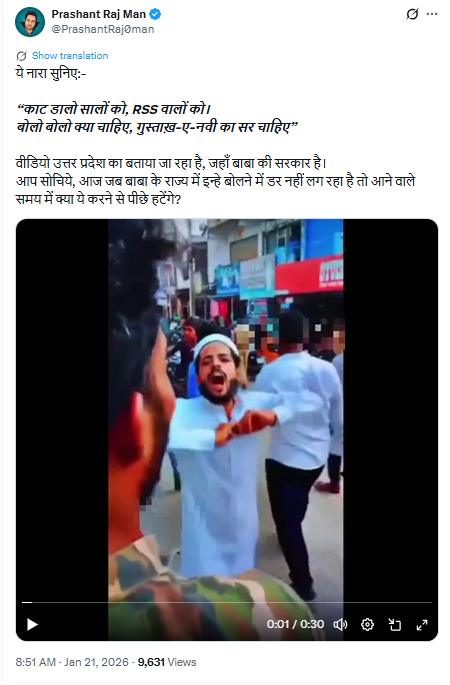
On January 21, 2026, a user on social media platform X (formerly Twitter) shared the video claiming it showed people in Uttar Pradesh chanting slogans such as, “Kaat daalo saalon ko, RSS walon ko” and “Gustakh-e-Nabi ka sar chahiye.” The post suggested that such slogans were being raised openly in Uttar Pradesh despite strict law enforcement. Links to the post and its archive are provided below.
Fact Check:
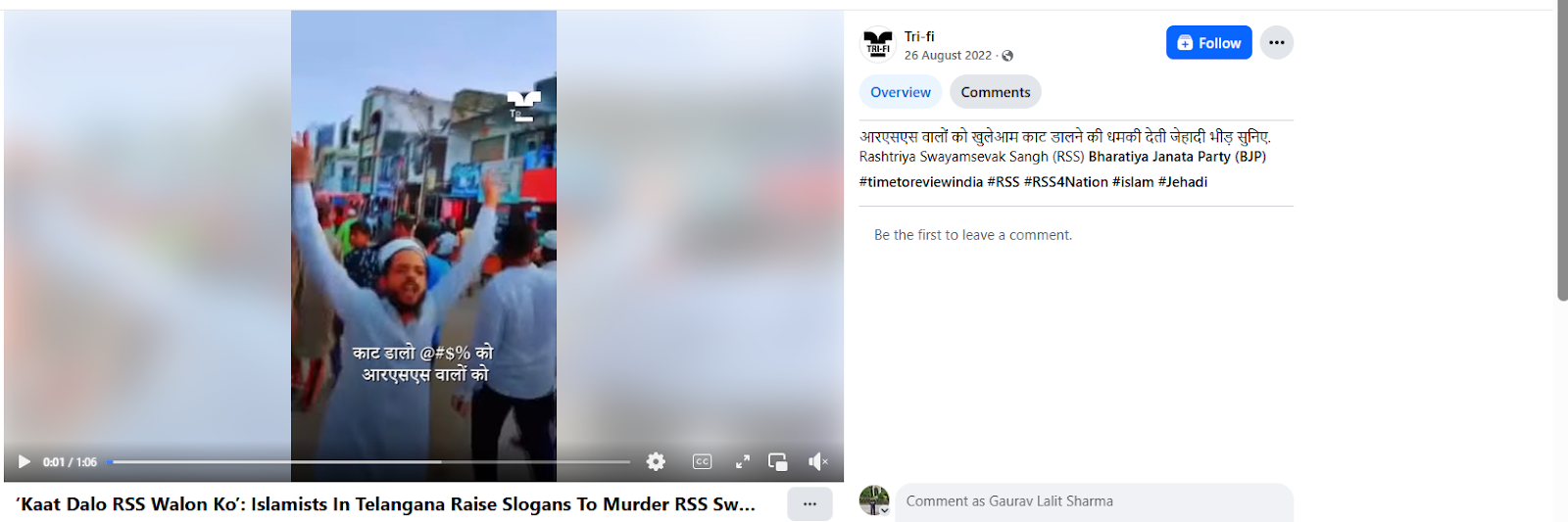
To verify the claim, CyberPeace research conducted a reverse image search using keyframes from the viral video. The same footage was found on a Facebook account where it had been uploaded on August 26, 2022, indicating that the video is not recent.
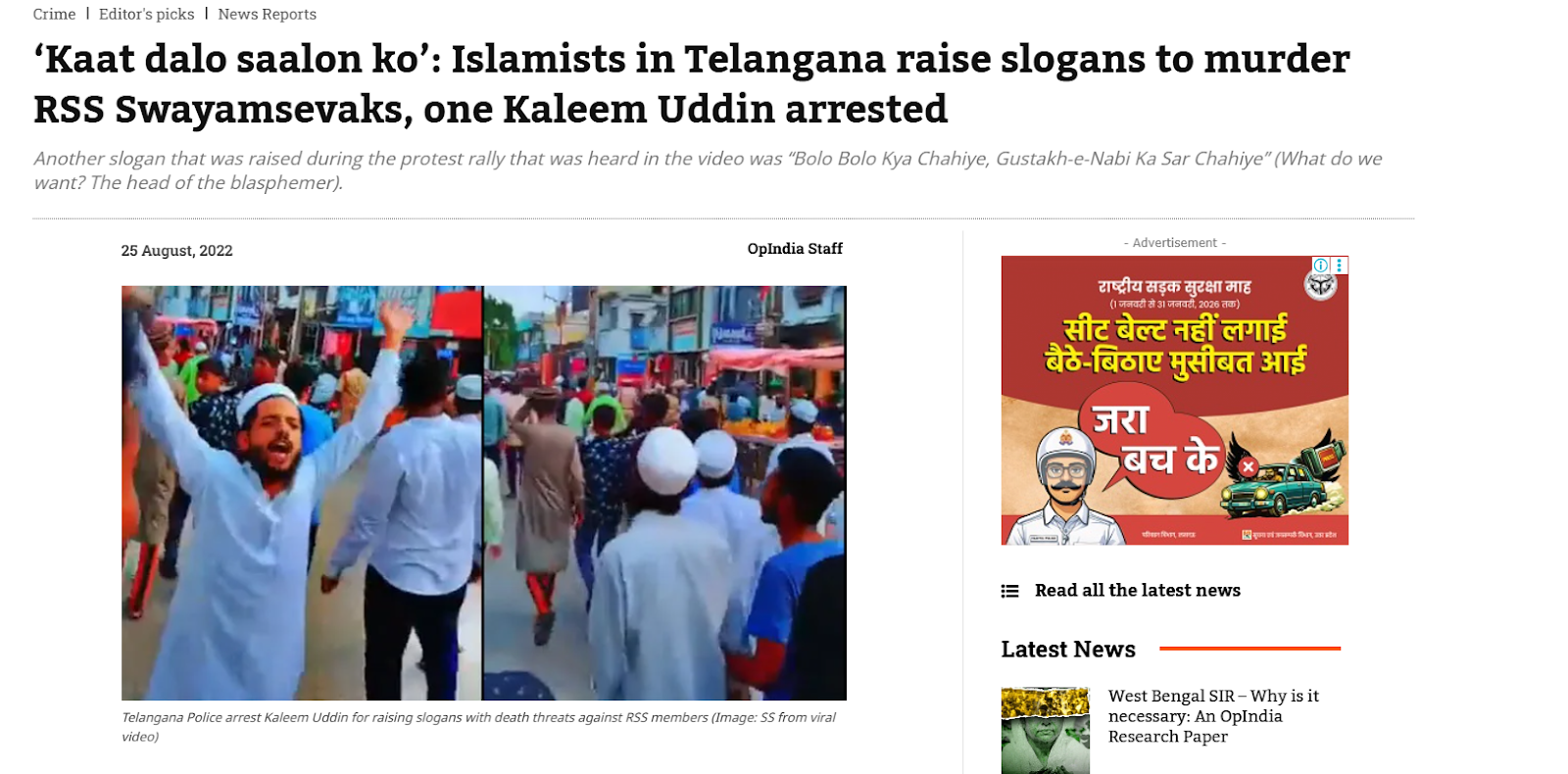
Further verification led the team to a report published by news portal OpIndia on August 25, 2022, which featured identical visuals from the viral clip. According to the report, the video showed a protest march organised against BJP MLA T. Raja Singh following his alleged controversial remarks about Prophet Muhammad. The report identified one of the individuals in the video as Kaleem Uddin, who was allegedly heard raising the slogan “Kaat daalo saalon ko,” to which the crowd responded “RSS walon ko.” The slogan was linked to incitement against RSS members.
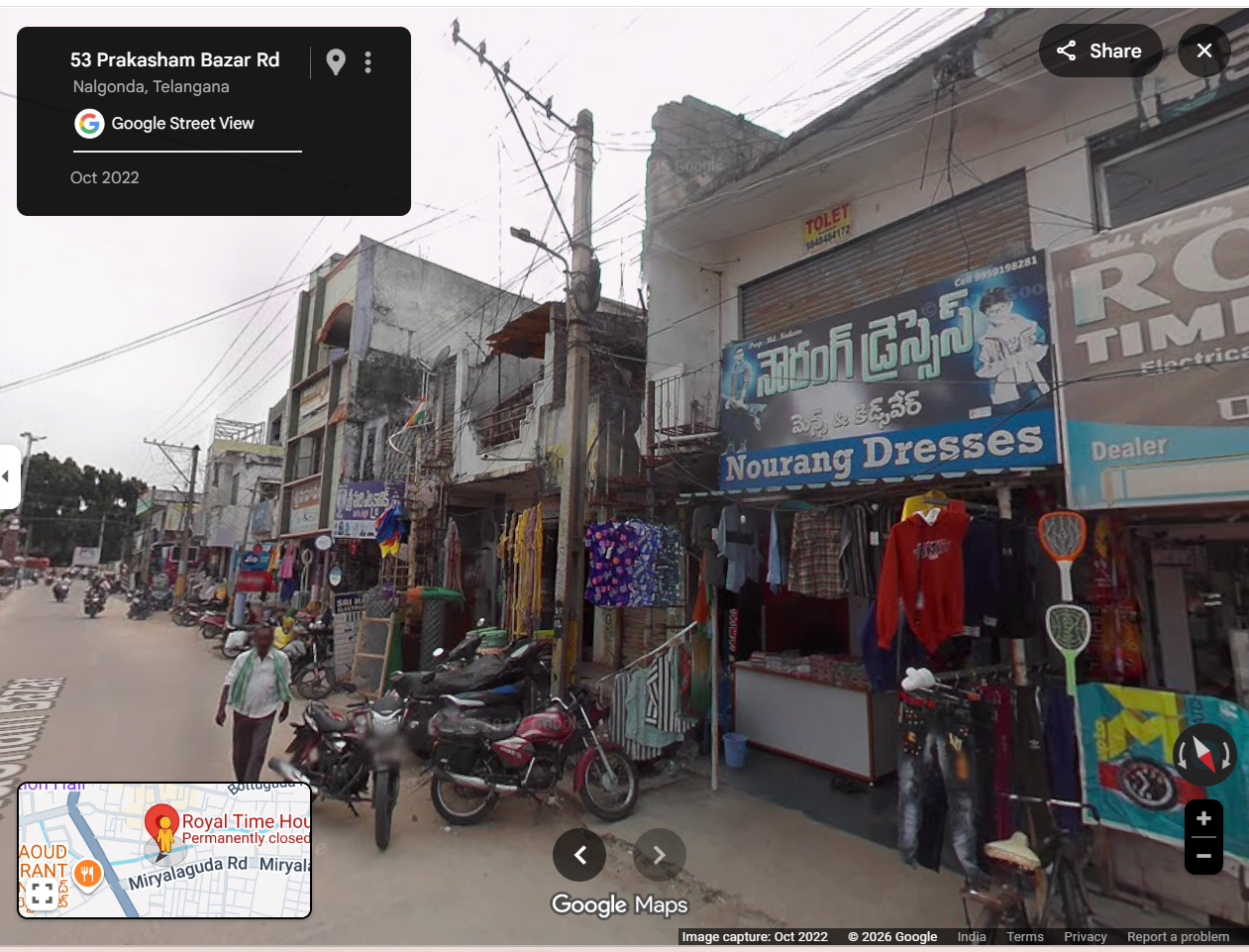
To confirm the location, the video was examined closely. A shop sign reading “Royal Time House” was visible in the footage. Using Google Street View, the same shop was located in Nalgonda, Telangana, conclusively establishing that the video was filmed there and not in Uttar Pradesh.
Conclusion
CyberPeace research confirmed that the viral video is from 2022 and was recorded in Telangana, not Uttar Pradesh. The clip is being falsely circulated with a misleading claim to give it a communal and political angle.

Related Blogs

Executive Summary
A video is being widely shared on social media claiming that a leopard dragged away a passenger from a moving train. Several users are circulating the clip as a real incident. However, CyberPeace Research Wing research found the claim to be false. Our research revealed that the viral video is not real and was generated using Artificial Intelligence (AI).
Claim
An X user (formerly Twitter) shared the viral clip with the caption:“A leopard snatched a man from a moving train.”The link, archived version, and screenshot of the post are provided below.

Fact Check
On closely examining the video, several visual inconsistencies were noticed. The leopard’s body appears distorted at multiple points in the clip. In some frames, parts of the animal’s body seem to merge into the background, while in others, sections appear incomplete or disappear entirely — something not typically seen in authentic footage. In the final part of the video, where the leopard is allegedly shown attacking a passenger, the person’s hands, limbs, and body also appear blurred and distorted. Additionally, unusual and selective blurring can be observed throughout the video, indicating possible editing or AI manipulation.
To further verify the clip, we scanned the viral video using the AI detection tool Sightengine. According to the results, the video showed an 86 percent probability of being AI-generated.

As part of the research , we also analysed the clip using another AI detection platform, UndetectableTM AI, which likewise indicated that the viral video was AI-generated.

Conclusion
Our research found that the viral video claiming to show a leopard dragging away a passenger from a moving train is fake. The clip is AI-generated and does not depict a real incident.
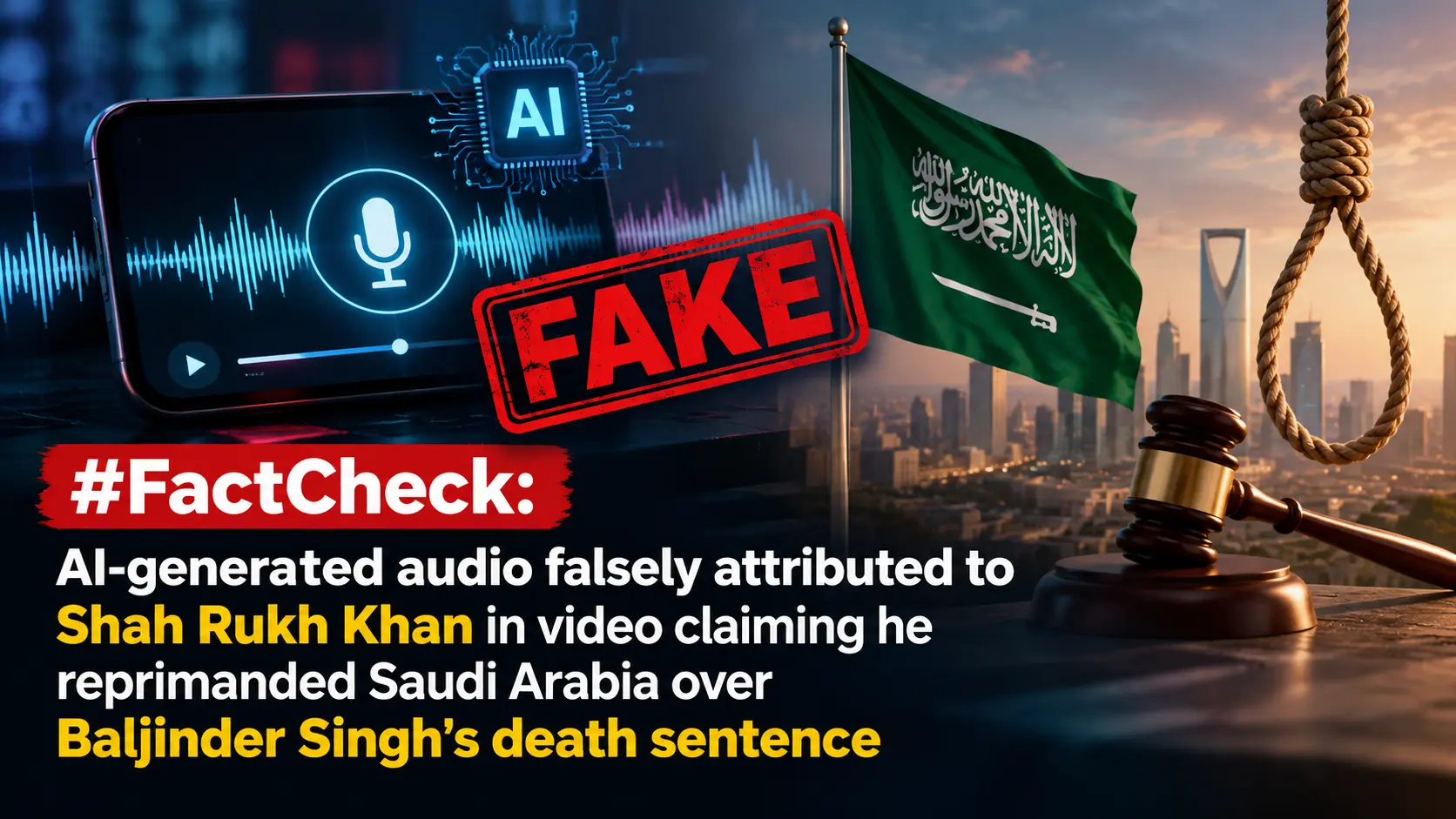
Executive Summary
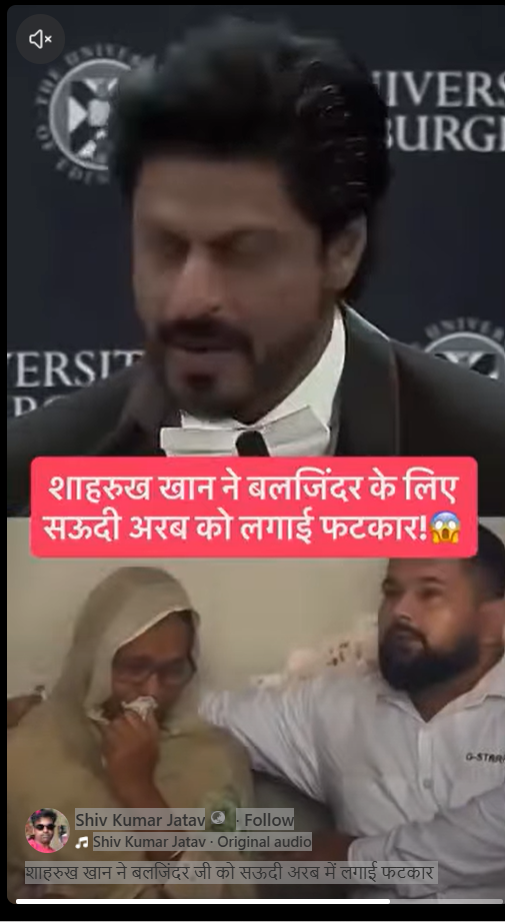
A video is being shared on social media with the claim that actor Shah Rukh Khan reprimanded Saudi Arabia over the death sentence awarded to Baljinder Singh.In the viral video, Shah Rukh Khan is purportedly heard saying, “Our simple and innocent brother Baljinder Singh, a resident of Sujanpur in Punjab’s Pathankot district, has been sentenced to death in Saudi Arabia after being falsely implicated in a drug case as part of a deep conspiracy. But stay strong, my brother.
Nothing will happen to you. I will definitely save you. Your brother is alive, and I swear that I will not let you die alone on that dreaded noose. Instead, I will put all my strength on the line and risk my life to pull you out of that hellish prison and bring you safely back to the soil of Punjab and the land of India.”
CyberPeace Research Wing’s research found the claim to be false. Our research found that the audio used in the viral video is AI-generated.
Claim:
A video is being shared on social media with the claim that actor Shah Rukh Khan reprimanded Saudi Arabia over the death sentence awarded to Baljinder Singh.
https://www.facebook.com/reel/1491107586179716
Fact Check
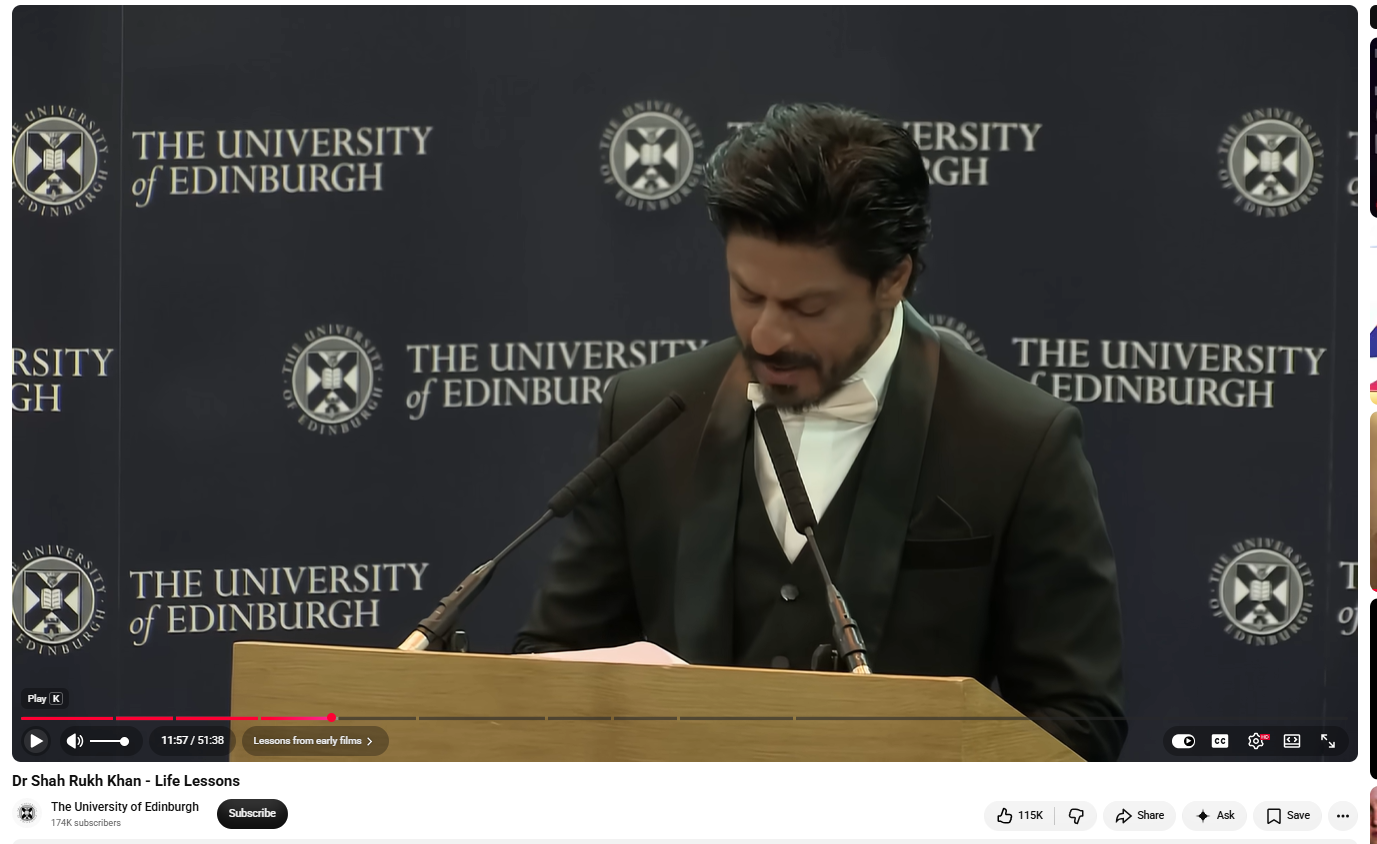
To verify the claim that Shah Rukh Khan reprimanded Saudi Arabia over the death sentence awarded to Baljinder Singh, we first conducted a Google search using relevant keywords. During the search, we did not find any information related to the viral claim in any credible media report.A reverse image search of the keyframes from the video led us to a video uploaded on The University of Edinburgh’s YouTube account on October 16, 2015, which contains the same segment seen in the viral clip. Notably, the background in the original video is identical to that seen in the viral clip.
In the original video, Shah Rukh Khan can be seen speaking about “life lessons”. During the event, he was conferred an honorary doctorate by the University of Edinburgh. In his address, he shared several unique lessons about life through some of his popular film characters. Shah Rukh Khan spoke about the importance of embracing one’s individuality, while combining humour with self-reflection. He also spoke about facing one’s fears and maintaining self-confidence amid challenges. Sharing anecdotes from his journey in films, Shah Rukh Khan explained how different characters had taught him to look at life from new perspectives.However, he makes no mention of Baljinder Singh anywhere in the video.
https://www.youtube.com/watch?v=VnnXAiTOLbo
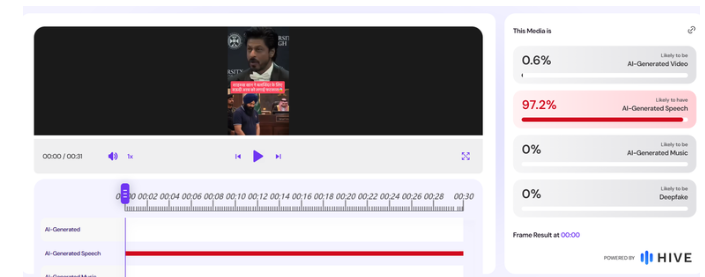
We then checked the viral video using Hive Detect, an AI detection tool. The tool’s analysis indicated that the voice of Shah Rukh Khan in the video was AI-generated, with a 97.2 per cent probability.
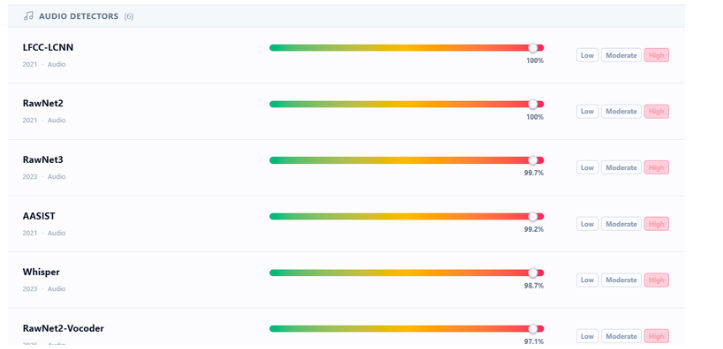
Additionally, six detectors on another AI detection tool, Deepfake-O-Meter, identified Shah Rukh Khan’s voice in the video as highly likely to be AI-generated.
Conclusion
The evidence gathered during our research makes it clear that the claim that Shah Rukh Khan reprimanded Saudi Arabia over the death sentence awarded to Baljinder Singh is false. The audio of Shah Rukh Khan in the viral video is AI-generated.

Executive Summary
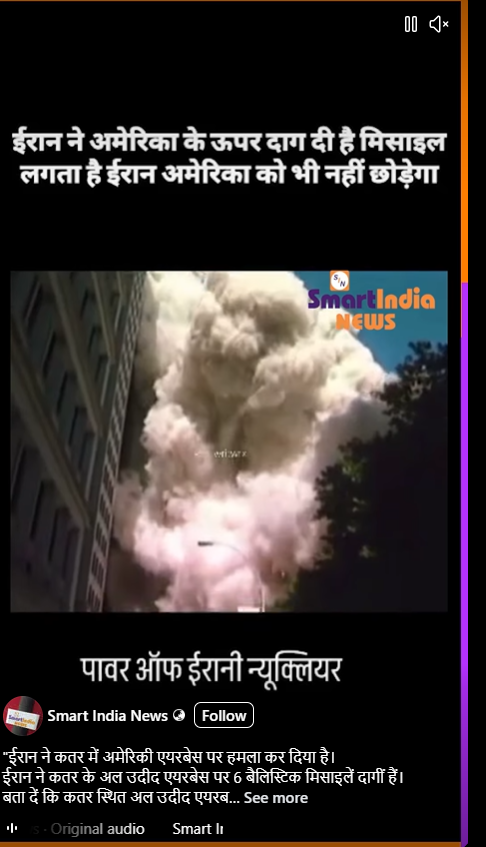
A video showing thick smoke rising from a building and people running in panic is being shared on social media. The video is being circulated with the claim that it shows Iran launching a missile attack on the United States.CyberPeace’s research found the claim to be misleading. Our probe revealed that the video is not related to any recent incident. The viral clip is actually from the September 11, 2001 terrorist attacks on the World Trade Center in the United States and is being falsely shared as footage of an alleged Iranian missile strike on the US.
Claim:
An Instagram user shared the video claiming, “Iran has attacked a US airbase in Qatar. Iran has fired six ballistic missiles at the Al Udeid Airbase in Qatar. Al Udeid Airbase is the largest US military base in West Asia.”
Links to the post and its archived version are provided below.
Fact Check:
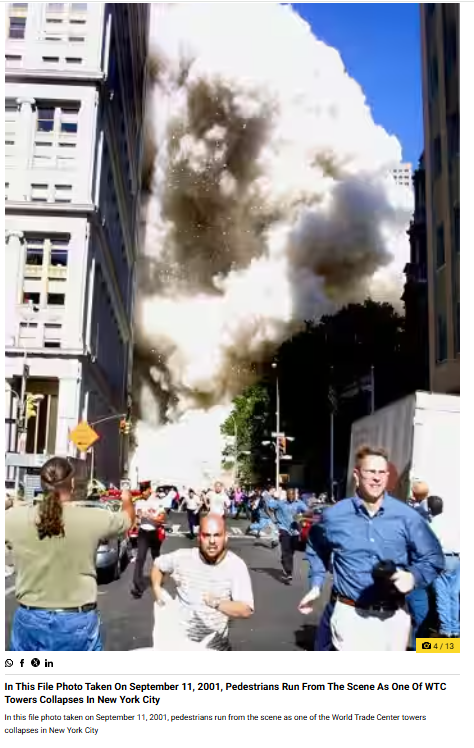
To verify the claim, we extracted key frames from the viral video and ran a reverse image search using Google Lens. During the search, we found visuals matching the viral clip in a report published by Wion on September 11, 2021. The report, titled “In pics | A look back at the scenes from the 9/11 attacks,” included an image that closely resembled the visuals seen in the viral video. The caption of the image stated that it was a file photo from September 11, 2001, showing pedestrians running as one of the World Trade Center towers collapsed in New York City.
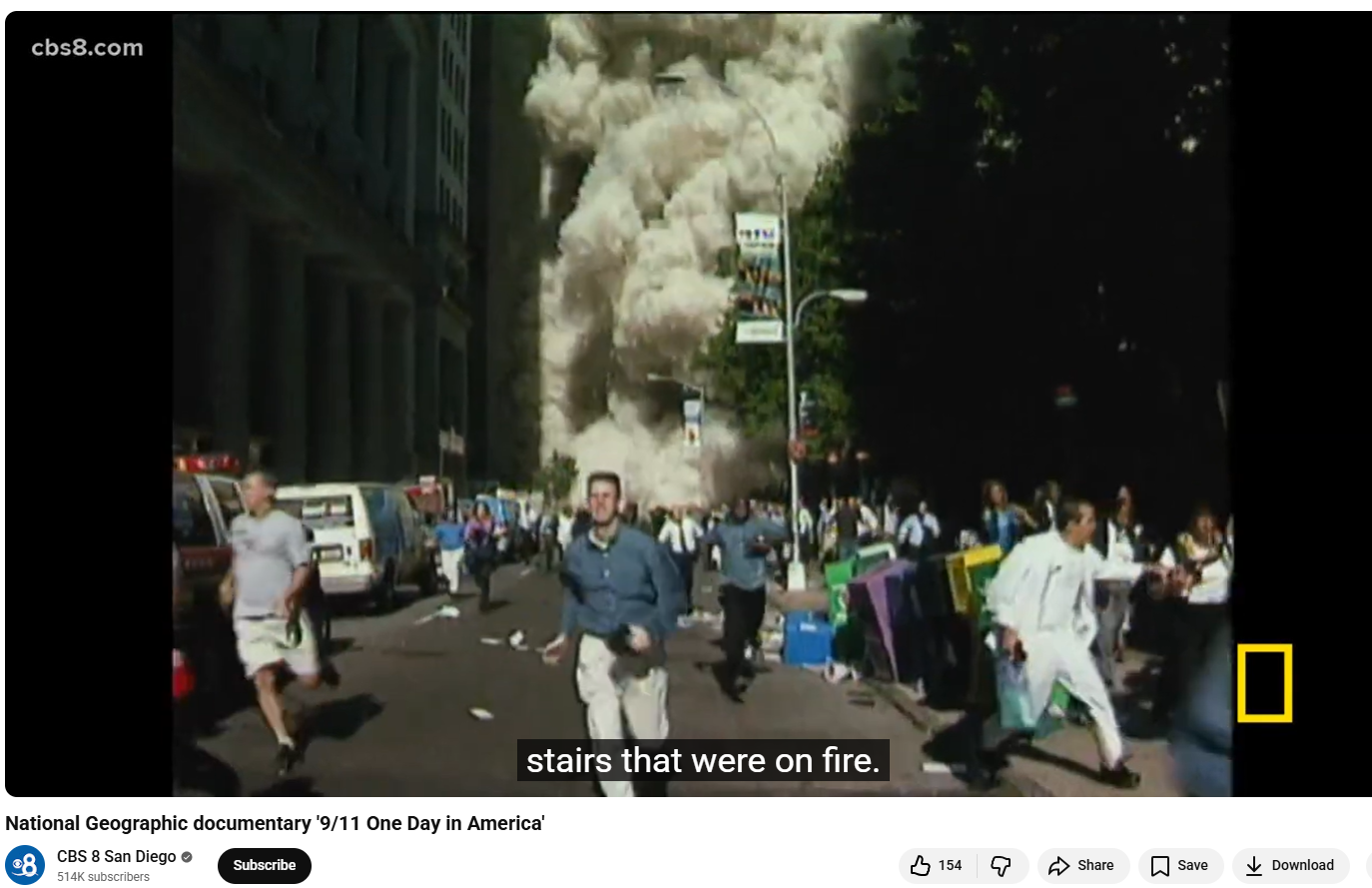
Further research led us to the same footage on the YouTube channel CBS 8 San Diego. At the 01:11 timestamp of the video, visuals matching the viral clip can be clearly seen.
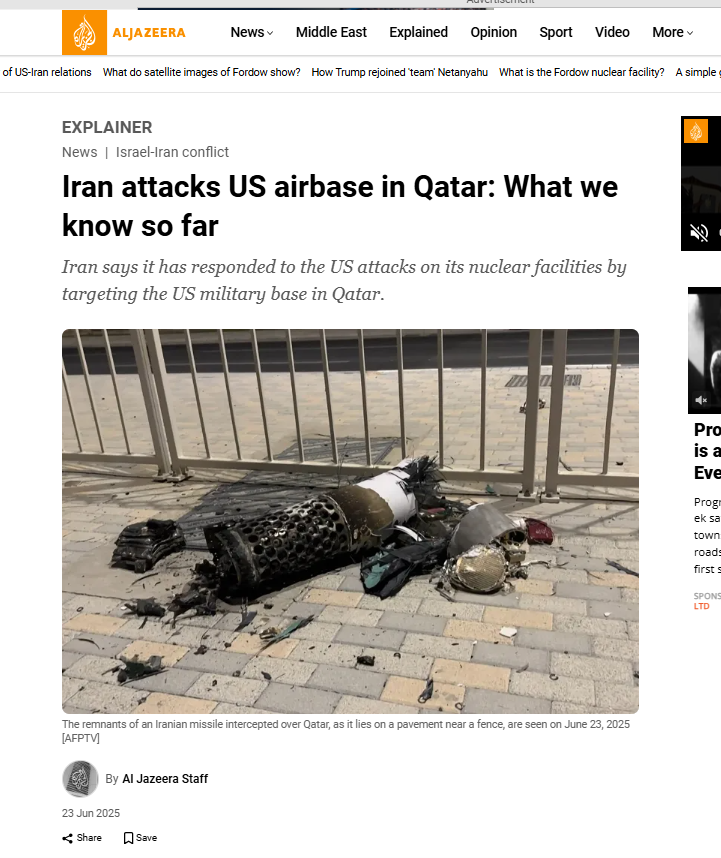
We also found an Al Jazeera report dated June 23, 2025, which confirmed that Iran had attacked US forces stationed at the Al Udeid airbase in Qatar in retaliation for US strikes on Iran’s uclear facilities. However, the visuals used in the viral video do not correspond to this incident.
Conclusion
The viral video does not show a recent Iranian attack on a US airbase in Qatar. The clip actually dates back to the September 11, 2001 terrorist attacks on the World Trade Center in the United States. Old 9/11 footage has been falsely shared with a misleading claim linking it to Iran’s alleged missile strike on the US.
