
#FactCheck - AI-Generated Video Falsely Claims Death of Iran’s Supreme Leader
Executive Summary
Iran’s Supreme Leader Ayatollah Ali Khamenei was reportedly killed in a major attack carried out by Israel and the United States, with claims circulating that Iranian state media confirmed his death early Sunday morning. Amid these claims, a video is being widely shared on social media. The viral video shows a body trapped under debris. Users sharing the clip claim that the body seen in the footage is that of Ayatollah Ali Khamenei. However, research conducted by CyberPeace found the viral claim to be false. Our research revealed that the video is not authentic but AI-generated.
Claim:
On March 1, 2026, an Instagram user shared the viral video with the caption: “Shaheed Ayatollah Sayyid Ali Hosseini Khamenei — Neither fled nor hid in a bunker, embraced death like a brave man.” The link to the post and its archived version are provided below along with a screenshot.

Fact Check:
Upon closely examining the viral video, we noticed several visual irregularities and technical inconsistencies. This raised suspicion about its authenticity. We then scanned the video using the AI detection tool Hive Moderation. The results indicated that approximately 83 percent of the content showed signs of being AI-generated.
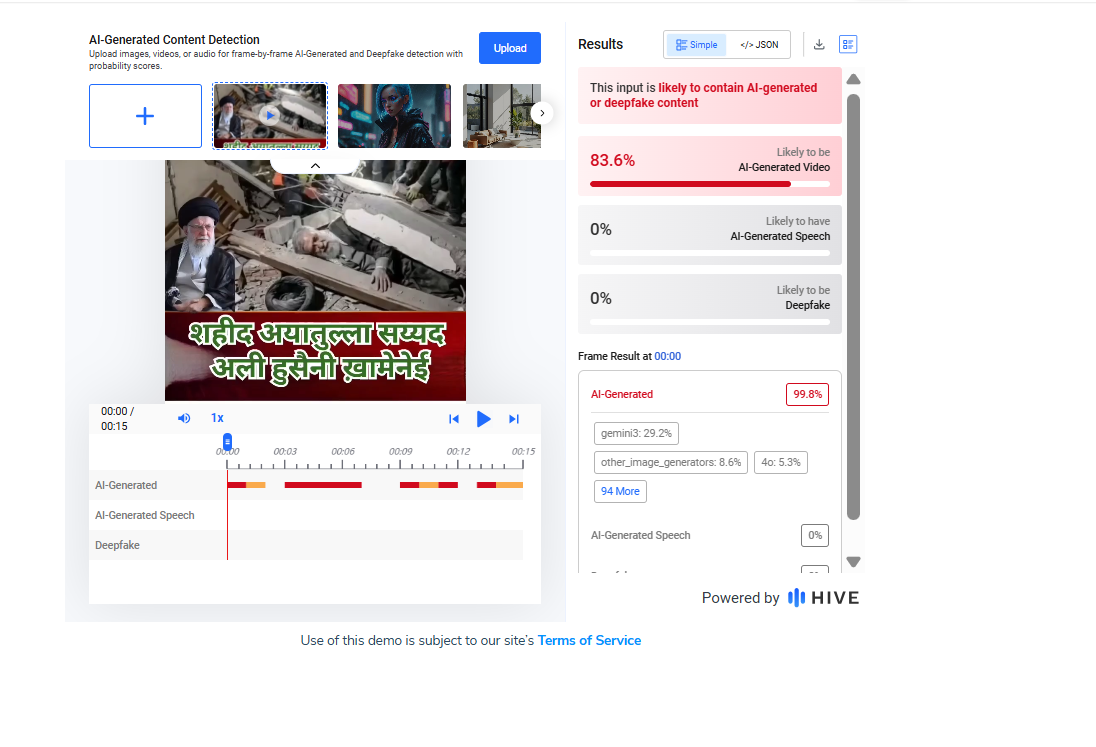
To further verify the claim, we also analyzed the video using another AI detection tool, WasItAI. The findings similarly suggested that the video was generated using artificial intelligence.

Conclusion:
Our research establishes that the viral video is not real. It has been artificially generated using AI and is being shared with misleading claims.

Related Blogs

Executive Summary
A video showing two men attempting to break into a house, only to be confronted by armed personnel who force them to kneel, is being widely shared on social media in the context of the upcoming West Bengal Assembly elections. The clip is being circulated with claims that it shows Central Reserve Police Force personnel intervening after workers of the Trinamool Congress allegedly tried to intimidate locals. However, an research by the CyberPeace Research Wing found that the claim is false. The viral video has no connection to India or the West Bengal elections and is being shared with a misleading narrative.
Claim
A Facebook user named Devashish Ajitkumar Bhattacharya shared the video on April 20, 2026, with the caption suggesting that TMC workers attempted to threaten people but were stopped by CRPF personnel deployed in West Bengal.
- Archive link: https://perma.cc/R42V-49FV

Fact Check
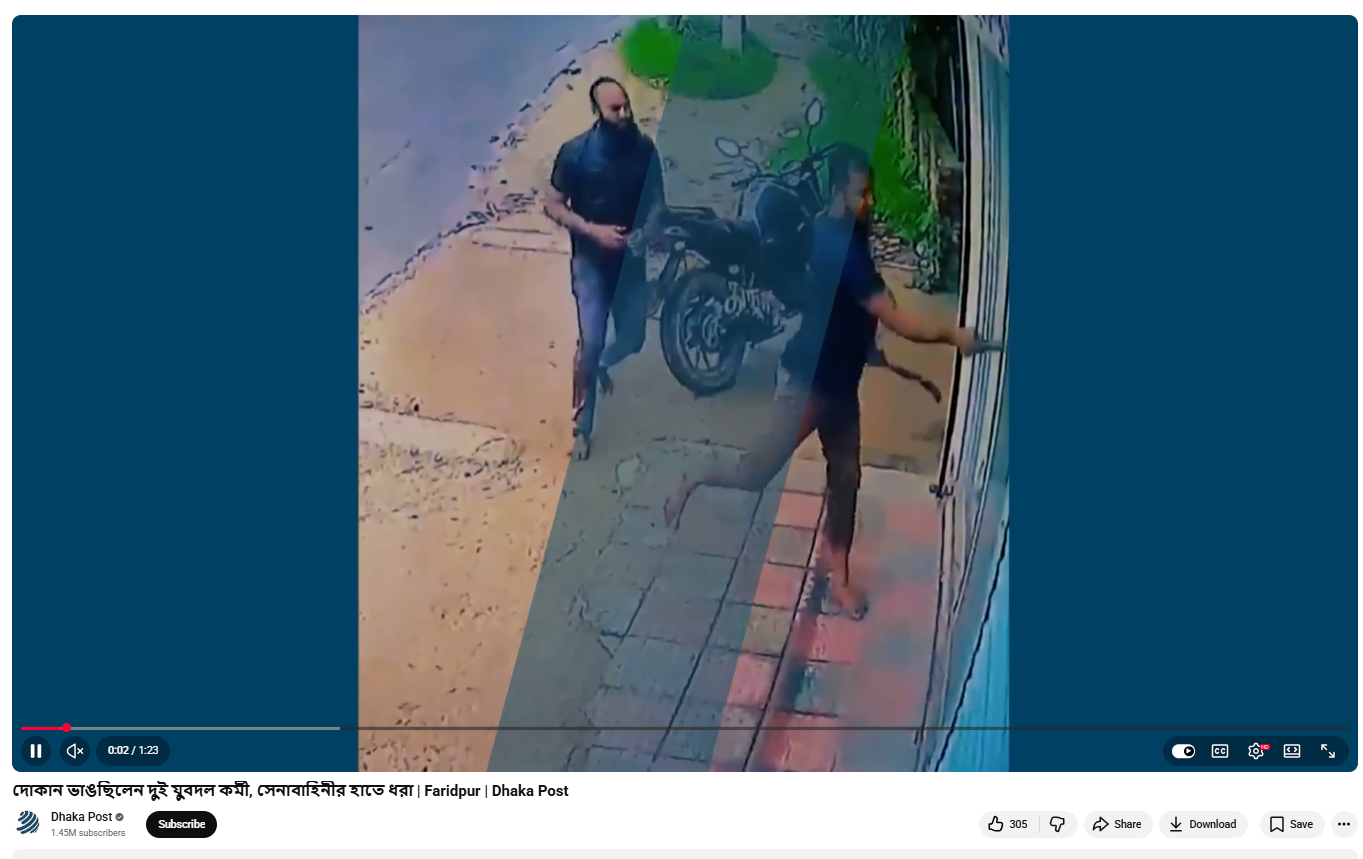
To verify the claim, we extracted keyframes from the viral video and conducted a reverse image search. This led us to the same video uploaded on August 17, 2024, on the official YouTube channel of Bangladeshi news outlet Dhaka Post. The details accompanying the video confirmed that the incident took place in Bangladesh.
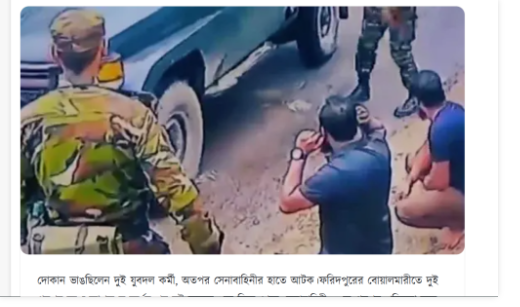
Further research led us to a report published on August 17, 2024, by 24 Hours Khobor, which stated that the incident occurred in Faridpur, Bangladesh. According to the report, a clash broke out between two groups, following which the army intervened and arrested two individuals identified as Tutul Hossain and Dukhu Mia. Both were later sent to jail by a court.
Conclusion
The viral claim linking the video to the West Bengal Assembly elections is false. The footage does not show any incident involving CRPF personnel or political workers in India. Instead, it is from an unrelated घटना in Bangladesh that took place in 2024. The video has been taken out of context and is being circulated with a misleading narrative to create confusion around the ongoing election environment.
.webp)
Executive Summary:
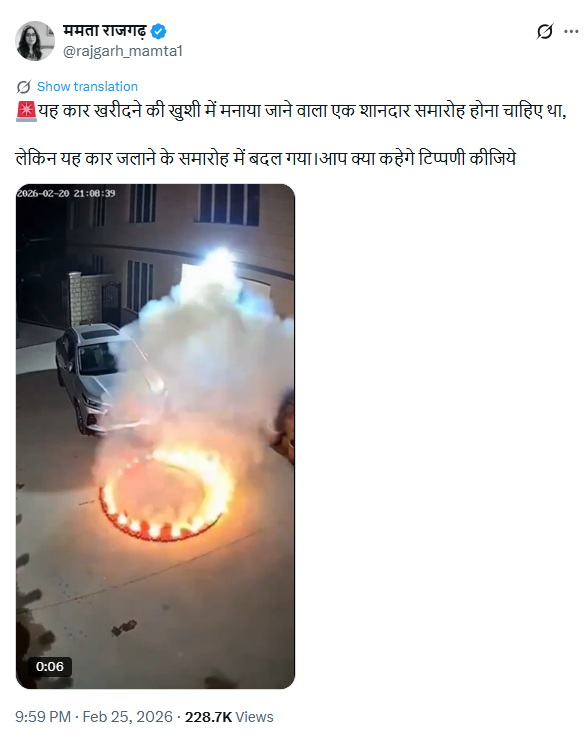
A video showing a car catching fire is rapidly going viral on social media. In the clip, a family can be seen bursting firecrackers in front of a newly purchased car. Moments later, the vehicle also appears to catch fire. The video is being shared with the claim that the family was celebrating the purchase of a new car with fireworks, which accidentally led to the vehicle going up in flames. Many users are circulating the clip as footage of a real incident. However, an research by the CyberPeace found that the video is not from a real-life event but has been created using Artificial Intelligence (AI).
Claim
On February 25, 2026, an X user named “Mamta Rajgarh” shared the viral video with the caption:“This was supposed to be a grand celebration for buying a new car, but it turned into a ceremony of burning the car. What do you say? Comment below.”
- Post link: https://x.com/rajgarh_mamta1/status/2026696175311786408?s=20
- Archived link: https://perma.cc/22AA-KBS4
Fact Check:
To verify the claim, we conducted a keyword search on Google but found no credible news reports supporting the alleged incident. Upon closely examining the video, we noticed several technical inconsistencies. The car’s number plate is unclear, a common flaw often seen in AI-generated content. Additionally, the sequence of events appears unnatural — the firecrackers seem to extinguish first, and only after a delay does the car suddenly catch fire. These irregularities raised suspicion that the video may have been artificially generated. To further verify, we analyzed the clip using AI detection tools. Hive Moderation indicated a 98.7 percent likelihood that the video was generated using Artificial Intelligence.
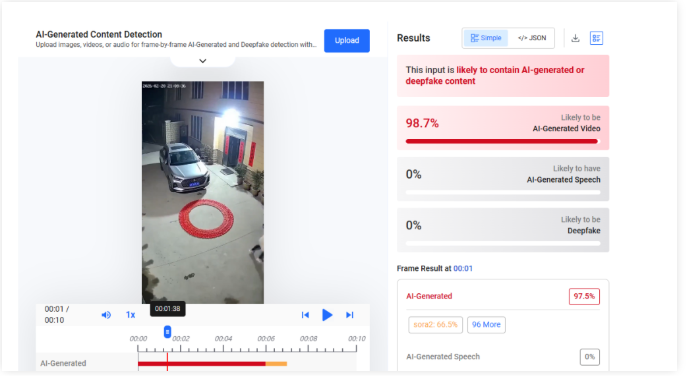
Another AI detection tool, Undetectable.ai, suggested a 77 percent probability that the video was AI-generated.
Conclusion
Our research confirms that the viral video does not depict a real incident. It has been created using Artificial Intelligence and is being misleadingly shared as genuine footage.

Introduction
The advent of AI-driven deepfake technology has facilitated the creation of explicit counterfeit videos for sextortion purposes. There has been an alarming increase in the use of Artificial Intelligence to create fake explicit images or videos for sextortion.
What is AI Sextortion and Deepfake Technology
AI sextortion refers to the use of artificial intelligence (AI) technology, particularly deepfake algorithms, to create counterfeit explicit videos or images for the purpose of harassing, extorting, or blackmailing individuals. Deepfake technology utilises AI algorithms to manipulate or replace faces and bodies in videos, making them appear realistic and often indistinguishable from genuine footage. This enables malicious actors to create explicit content that falsely portrays individuals engaging in sexual activities, even if they never participated in such actions.
Background on the Alarming Increase in AI Sextortion Cases
Recently there has been a significant increase in AI sextortion cases. Advancements in AI and deepfake technology have made it easier for perpetrators to create highly convincing fake explicit videos or images. The algorithms behind these technologies have become more sophisticated, allowing for more seamless and realistic manipulations. And the accessibility of AI tools and resources has increased, with open-source software and cloud-based services readily available to anyone. This accessibility has lowered the barrier to entry, enabling individuals with malicious intent to exploit these technologies for sextortion purposes.
The proliferation of sharing content on social media
The proliferation of social media platforms and the widespread sharing of personal content online have provided perpetrators with a vast pool of potential victims’ images and videos. By utilising these readily available resources, perpetrators can create deepfake explicit content that closely resembles the victims, increasing the likelihood of success in their extortion schemes.
Furthermore, the anonymity and wide reach of the internet and social media platforms allow perpetrators to distribute manipulated content quickly and easily. They can target individuals specifically or upload the content to public forums and pornographic websites, amplifying the impact and humiliation experienced by victims.
What are law agencies doing?
The alarming increase in AI sextortion cases has prompted concern among law enforcement agencies, advocacy groups, and technology companies. This is high time to make strong Efforts to raise awareness about the risks of AI sextortion, develop detection and prevention tools, and strengthen legal frameworks to address these emerging threats to individuals’ privacy, safety, and well-being.
There is a need for Technological Solutions, which develops and deploys advanced AI-based detection tools to identify and flag AI-generated deepfake content on platforms and services. And collaboration with technology companies to integrate such solutions.
Collaboration with Social Media Platforms is also needed. Social media platforms and technology companies can reframe and enforce community guidelines and policies against disseminating AI-generated explicit content. And can ensure foster cooperation in developing robust content moderation systems and reporting mechanisms.
There is a need to strengthen the legal frameworks to address AI sextortion, including laws that specifically criminalise the creation, distribution, and possession of AI-generated explicit content. Ensure adequate penalties for offenders and provisions for cross-border cooperation.
Proactive measures to combat AI-driven sextortion
Prevention and Awareness: Proactive measures raise awareness about AI sextortion, helping individuals recognise risks and take precautions.
Early Detection and Reporting: Proactive measures employ advanced detection tools to identify AI-generated deepfake content early, enabling prompt intervention and support for victims.
Legal Frameworks and Regulations: Proactive measures strengthen legal frameworks to criminalise AI sextortion, facilitate cross-border cooperation, and impose offender penalties.
Technological Solutions: Proactive measures focus on developing tools and algorithms to detect and remove AI-generated explicit content, making it harder for perpetrators to carry out their schemes.
International Cooperation: Proactive measures foster collaboration among law enforcement agencies, governments, and technology companies to combat AI sextortion globally.
Support for Victims: Proactive measures provide comprehensive support services, including counselling and legal assistance, to help victims recover from emotional and psychological trauma.
Implementing these proactive measures will help create a safer digital environment for all.

Misuse of Technology
Misusing technology, particularly AI-driven deepfake technology, in the context of sextortion raises serious concerns.
Exploitation of Personal Data: Perpetrators exploit personal data and images available online, such as social media posts or captured video chats, to create AI- manipulation violates privacy rights and exploits the vulnerability of individuals who trust that their personal information will be used responsibly.
Facilitation of Extortion: AI sextortion often involves perpetrators demanding monetary payments, sexually themed images or videos, or other favours under the threat of releasing manipulated content to the public or to the victims’ friends and family. The realistic nature of deepfake technology increases the effectiveness of these extortion attempts, placing victims under significant emotional and financial pressure.
Amplification of Harm: Perpetrators use deepfake technology to create explicit videos or images that appear realistic, thereby increasing the potential for humiliation, harassment, and psychological trauma suffered by victims. The wide distribution of such content on social media platforms and pornographic websites can perpetuate victimisation and cause lasting damage to their reputation and well-being.
Targeting teenagers– Targeting teenagers and extortion demands in AI sextortion cases is a particularly alarming aspect of this issue. Teenagers are particularly vulnerable to AI sextortion due to their increased use of social media platforms for sharing personal information and images. Perpetrators exploit to manipulate and coerce them.
Erosion of Trust: Misusing AI-driven deepfake technology erodes trust in digital media and online interactions. As deepfake content becomes more convincing, it becomes increasingly challenging to distinguish between real and manipulated videos or images.
Proliferation of Pornographic Content: The misuse of AI technology in sextortion contributes to the proliferation of non-consensual pornography (also known as “revenge porn”) and the availability of explicit content featuring unsuspecting individuals. This perpetuates a culture of objectification, exploitation, and non-consensual sharing of intimate material.
Conclusion
Addressing the concern of AI sextortion requires a multi-faceted approach, including technological advancements in detection and prevention, legal frameworks to hold offenders accountable, awareness about the risks, and collaboration between technology companies, law enforcement agencies, and advocacy groups to combat this emerging threat and protect the well-being of individuals online.
