
#Fact Check: Old Video Shared to Fuel Netanyahu Death Rumours
Executive Summary:
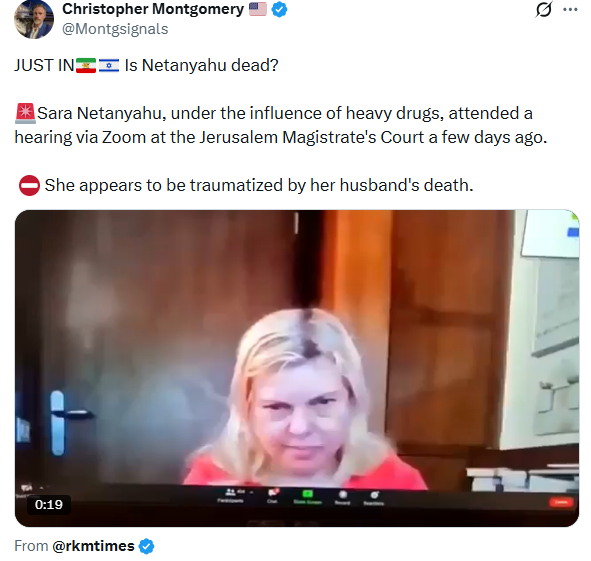
A video featuring Sara Netanyahu, wife of Israeli Prime Minister Benjamin Netanyahu, is being widely circulated on social media. In the clip, she is seen attending an online meeting and repeatedly closing her eyes. The video is being shared with claims that it is recent and shows her under the influence of drugs. Some posts also suggest that Prime Minister Netanyahu has died. However, research by the CyberPeace found that the claim is misleading. The video is not recent and has been online since 2020.
Claim:
Social media users are sharing the video claiming that Sara Netanyahu appeared intoxicated following the alleged death of Prime Minister Benjamin Netanyahu. The clip is also being falsely presented as a recent development. An X user, Christopher Montgomery (@Montgsignals), shared the video with the caption suggesting that Netanyahu may have died and that his wife appeared in a drug-influenced state during a recent court hearing via Zoom.
Fact Check:
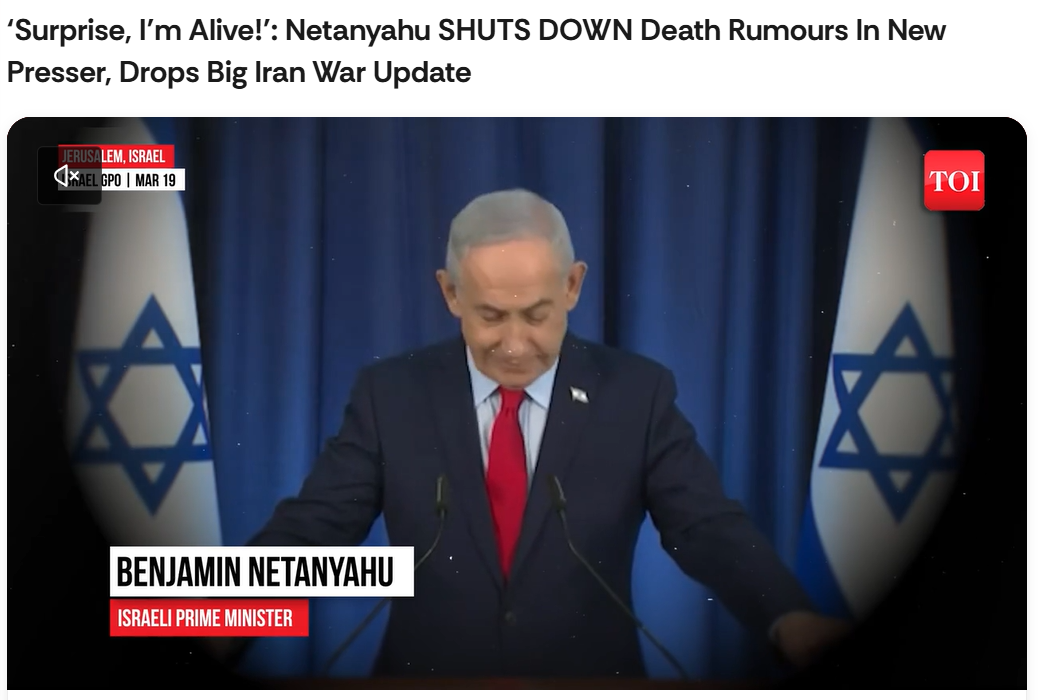
To verify the claim, we first examined reports regarding the alleged death of Benjamin Netanyahu. There is no credible evidence supporting this claim. In fact, on March 20, Netanyahu himself addressed the media and dismissed such rumours, confirming that he is alive.
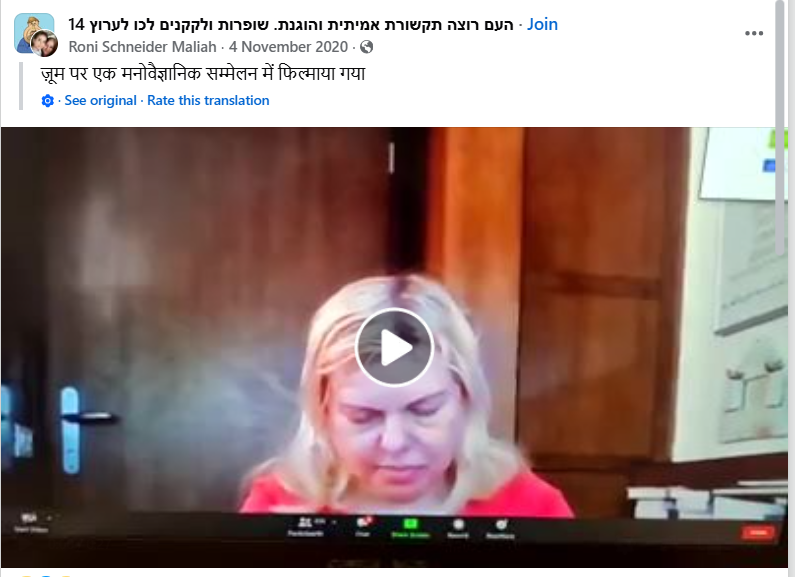
We then analyzed the viral video by extracting keyframes and conducting a reverse search. This led us to the same video posted on a Facebook account under the name Roni Schneider Malia on November 4, 2020. The Hebrew caption associated with the post translates to: “Filmed during a psychological conference on Zoom.”
This confirms that the video is old and unrelated to any recent developments.
Conclusion:
The viral claim is misleading. The video of Sara Netanyahu is not recent but has been available online since 2020. It is being falsely linked to baseless claims about Prime Minister Benjamin Netanyahu’s death

Related Blogs

Executive Summary:
A video that circulated on social media to show Iranian President Ebrahim Raisi inside a helicopter moments before the tragic crash on May 20, 2024, has equally been proven to be fake. The validation of information leaves no doubt, that the video was shot in January 2024, which showed Raisi’s visiting Nemroud Reservoir Dam project. As a means of verifying the origin of the video, the CyberPeace Research Team conducted reverse image search and analyzed the information obtained from the Islamic Republic News Agency, Mehran News, and the Iranian Students’ News Agency. Further, the associated press pointed out inconsistencies between the part in the video that went viral and the segment that was shown by Iranian state television. The original video is old and it is not related to the tragic crash as there is incongruence between the snowy background and the green landscape with a river presented in the clip.

Claims:
A video circulating on social media claims to show Iranian President Ebrahim Raisi inside a helicopter an hour before his fatal crash.


Fact Check:
Upon receiving the posts, in some of the social media posts we found some similar watermarks of the IRNA News agency and Nouk-e-Qalam News.

Taking a cue from this, we performed a keyword search to find any credible source of the shared video, but we found no such video uploaded by the IRNA News agency on their website. Recently, they haven’t uploaded any video regarding the viral news.
We closely analyzed the video, it can be seen that President Ebrahim Raisi was watching outside the snow-covered mountain, but in the internet-available footage regarding the accident, there were no such snow-covered mountains that could be seen but green forest.
We then checked for any social media posts uploaded by IRNA News Agency and found that they had uploaded the same video on X on January 18, 2024. The post clearly indicates the President’s aerial visit to Nemroud Dam.

The viral video is old and does not contain scenes that appear before the tragic chopper crash involving President Raisi.
Conclusion:
The viral clip is not related to the fatal crash of Iranian President Ebrahim Raisi's helicopter and is actually from a January 2024 visit to the Nemroud Reservoir Dam project. The claim that the video shows visuals before the crash is false and misleading.
- Claim: Viral Video of Iranian President Raisi was shot before fatal chopper crash.
- Claimed on: X (Formerly known as Twitter), YouTube, Instagram
- Fact Check: Fake & Misleading
.png)
Introduction
The fast-paced development of technology and the wider use of social media platforms have led to the rapid dissemination of misinformation with characteristics such as diffusion, fast propagation speed, wide influence, and deep impact through these platforms. Social Media Algorithms and their decisions are often perceived as a black box introduction that makes it impossible for users to understand and recognise how the decision-making process works.
Social media algorithms may unintentionally promote false narratives that garner more interactions, further reinforcing the misinformation cycle and making it harder to control its spread within vast, interconnected networks. Algorithms judge the content based on the metrics, which is user engagement. It is the prerequisite for algorithms to serve you the best. Hence, algorithms or search engines enlist relevant items you are more likely to enjoy. This process, initially, was created to cut the clutter and provide you with the best information. However, sometimes it results in unknowingly widespread misinformation due to the viral nature of information and user interactions.
Analysing the Algorithmic Architecture of Misinformation
Social media algorithms, designed to maximize user engagement, can inadvertently promote misinformation due to their tendency to trigger strong emotions, creating echo chambers and filter bubbles. These algorithms prioritize content based on user behaviour, leading to the promotion of emotionally charged misinformation. Additionally, the algorithms prioritize content that has the potential to go viral, which can lead to the spread of false or misleading content faster than corrections or factual content.
Additionally, popular content is amplified by platforms, which spreads it faster by presenting it to more users. Limited fact-checking efforts are particularly difficult since, by the time they are reported or corrected, erroneous claims may have gained widespread acceptance due to delayed responses. Social media algorithms find it difficult to distinguish between real people and organized networks of troll farms or bots that propagate false information. This creates a vicious loop where users are constantly exposed to inaccurate or misleading material, which strengthens their convictions and disseminates erroneous information through networks.
Though algorithms, primarily, aim to enhance user engagement by curating content that aligns with the user's previous behaviour and preferences. Sometimes this process leads to "echo chambers," where individuals are exposed mainly to information that reaffirms their beliefs which existed prior, effectively silencing dissenting voices and opposing viewpoints. This curated experience reduces exposure to diverse opinions and amplifies biased and polarising content, making it arduous for users to discern credible information from misinformation. Algorithms feed into a feedback loop that continuously gathers data from users' activities across digital platforms, including websites, social media, and apps. This data is analysed to optimise user experiences, making platforms more attractive. While this process drives innovation and improves user satisfaction from a business standpoint, it also poses a danger in the context of misinformation. The repetitive reinforcement of user preferences leads to the entrenchment of false beliefs, as users are less likely to encounter fact-checks or corrective information.
Moreover, social networks and their sheer size and complexity today exacerbate the issue. With billions of users participating in online spaces, misinformation spreads rapidly, and attempting to contain it—such as by inspecting messages or URLs for false information—can be computationally challenging and inefficient. The extensive amount of content that is shared daily means that misinformation can be propagated far quicker than it can get fact-checked or debunked.
Understanding how algorithms influence user behaviour is important to tackling misinformation. The personalisation of content, feedback loops, the complexity of network structures, and the role of superspreaders all work together to create a challenging environment where misinformation thrives. Hence, highlighting the importance of countering misinformation through robust measures.
The Role of Regulations in Curbing Algorithmic Misinformation
The EU's Digital Services Act (DSA) applicable in the EU is one of the regulations that aims to increase the responsibilities of tech companies and ensure that their algorithms do not promote harmful content. These regulatory frameworks play an important role they can be used to establish mechanisms for users to appeal against the algorithmic decisions and ensure that these systems do not disproportionately suppress legitimate voices. Independent oversight and periodic audits can ensure that algorithms are not biased or used maliciously. Self-regulation and Platform regulation are the first steps that can be taken to regulate misinformation. By fostering a more transparent and accountable ecosystem, regulations help mitigate the negative effects of algorithmic misinformation, thereby protecting the integrity of information that is shared online. In the Indian context, the Intermediary Guidelines, 2023, Rule 3(1)(b)(v) explicitly prohibits the dissemination of misinformation on digital platforms. The ‘Intermediaries’ are obliged to ensure reasonable efforts to prevent users from hosting, displaying, uploading, modifying, publishing, transmitting, storing, updating, or sharing any information related to the 11 listed user harms or prohibited content. This rule aims to ensure platforms identify and swiftly remove misinformation, and false or misleading content.
Cyberpeace Outlook
Understanding how algorithms prioritise content will enable users to critically evaluate the information they encounter and recognise potential biases. Such cognitive defenses can empower individuals to question the sources of the information and report misleading content effectively. In the future of algorithms in information moderation, platforms should evolve toward more transparent, user-driven systems where algorithms are optimised not just for engagement but for accuracy and fairness. Incorporating advanced AI moderation tools, coupled with human oversight can improve the detection and reduction of harmful and misleading content. Collaboration between regulatory bodies, tech companies, and users will help shape the algorithms landscape to promote a healthier, more informed digital environment.
References:
- https://www.advancedsciencenews.com/misformation-spreads-like-a-nuclear-reaction-on-the-internet/
- https://www.niemanlab.org/2024/09/want-to-fight-misinformation-teach-people-how-algorithms-work/
- Press Release: Press Information Bureau (pib.gov.in)
Executive Summary
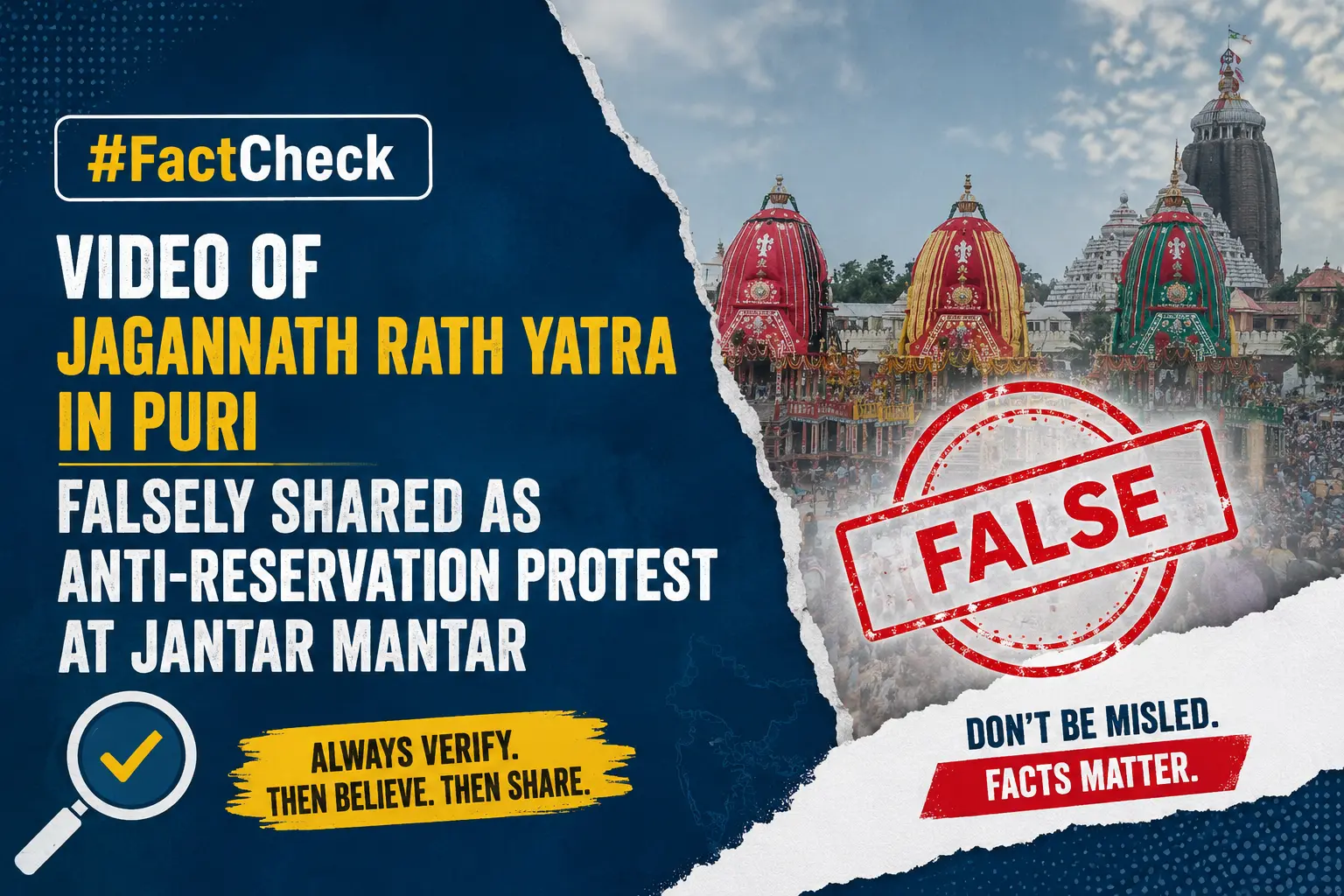
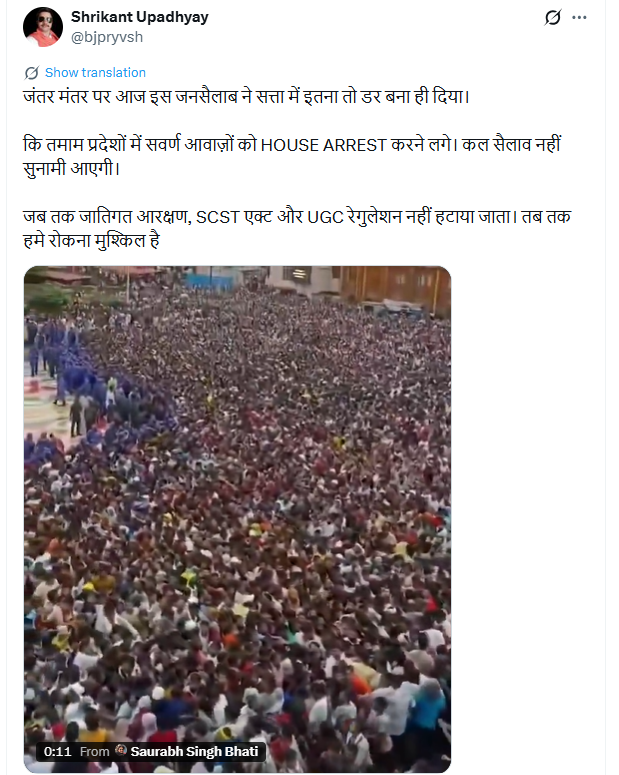
A video showing a massive crowd is being shared on social media with the claim that it shows an anti-reservation protest held at Jantar Mantar. However, a research done by the research wing of the CyberPeace revealed that the video is not from any anti-reservation protest at Jantar Mantar, but from the Jagannath Rath Yatra organized in Puri, Odisha.
Claim:
The video is being shared on X (formerly Twitter) with a viral caption that translates to: “Today, this massive gathering at Jantar Mantar created so much fear in the ruling government that upper-caste voices are being put under HOUSE ARREST across various states. Tomorrow will bring a tsunami, not just a surge. Until caste-based reservation, the SC/ST Act, and UGC regulations are removed, it will be difficult to stop us.”
https://x.com/bjpryvsh/status/2091554860785438887?s=20
Fact Check:
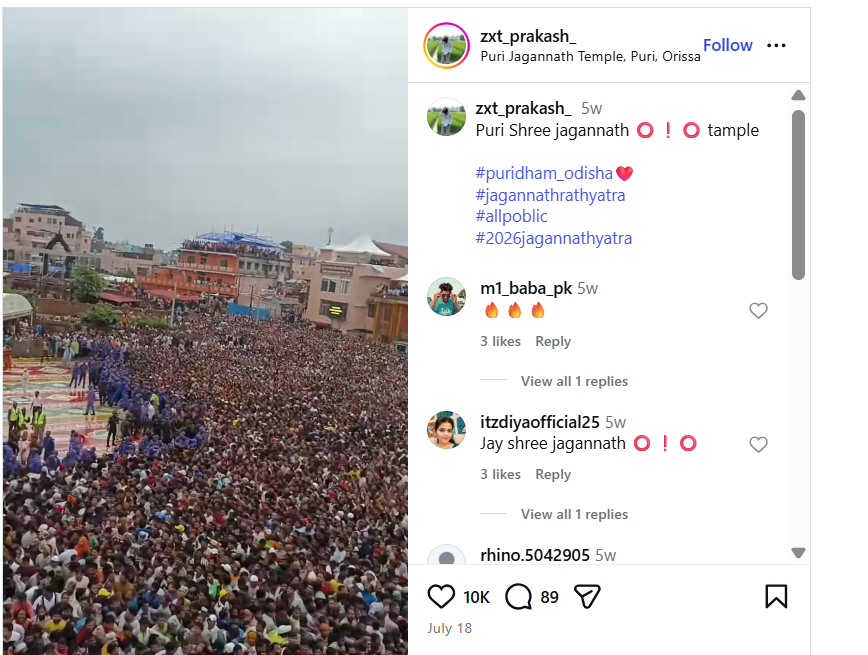
To investigate the viral video, reverse image searches were conducted using keyframes extracted from the clip. This led to an Instagram post uploaded on July 18. The caption accompanying the video clearly identified the footage as being from the Jagannath Rath Yatra in Puri, Odisha.
https://www.instagram.com/p/Da7tF2Etiae/
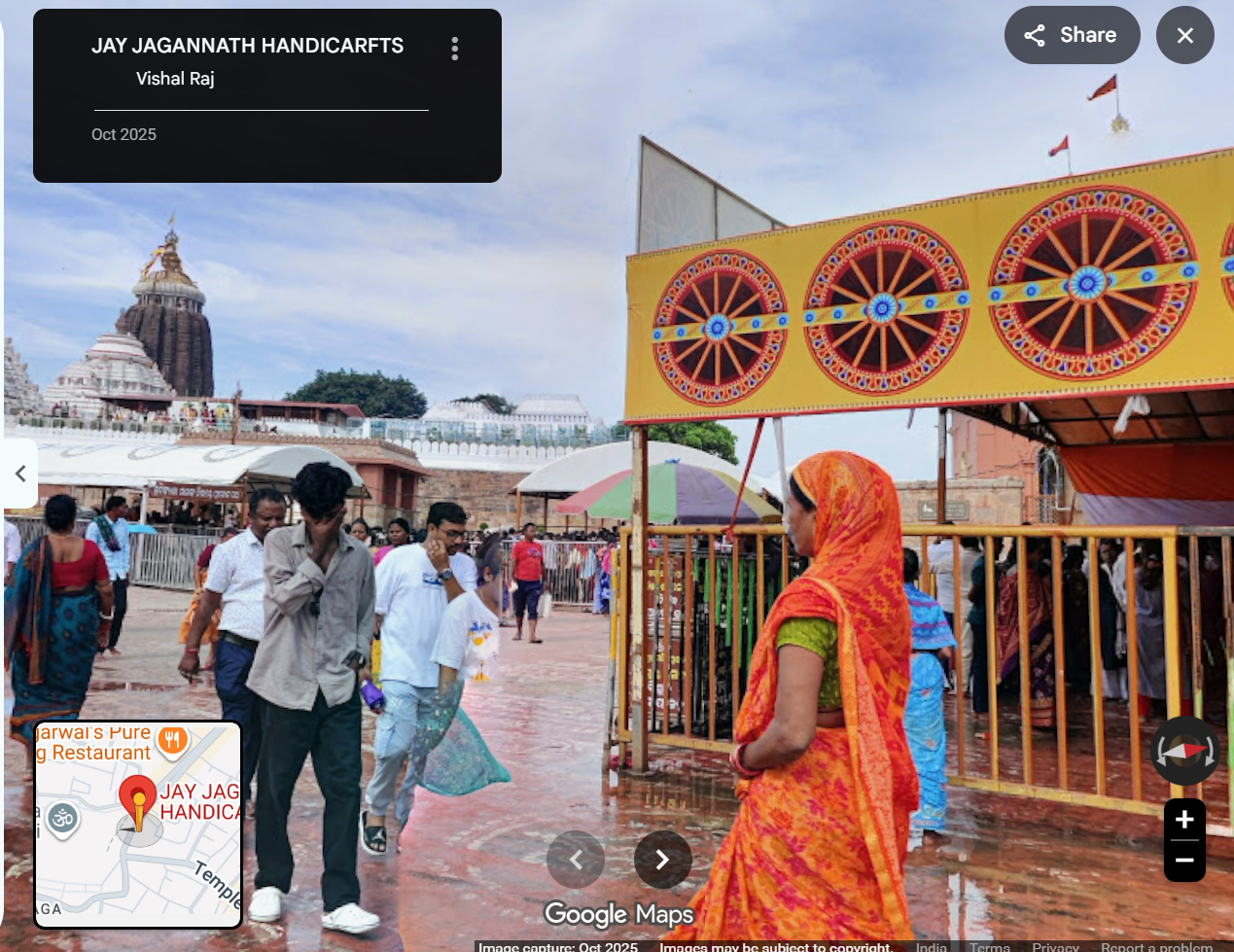
The visuals in the video were matched with the surroundings of the Jagannath Temple in Puri available on Google Maps Street View, confirming beyond doubt that the location in the video is near the Jagannath Temple in Puri.
https://www.google.com/maps/place/JAY+JAGANNATH+HANDICARFTS/@
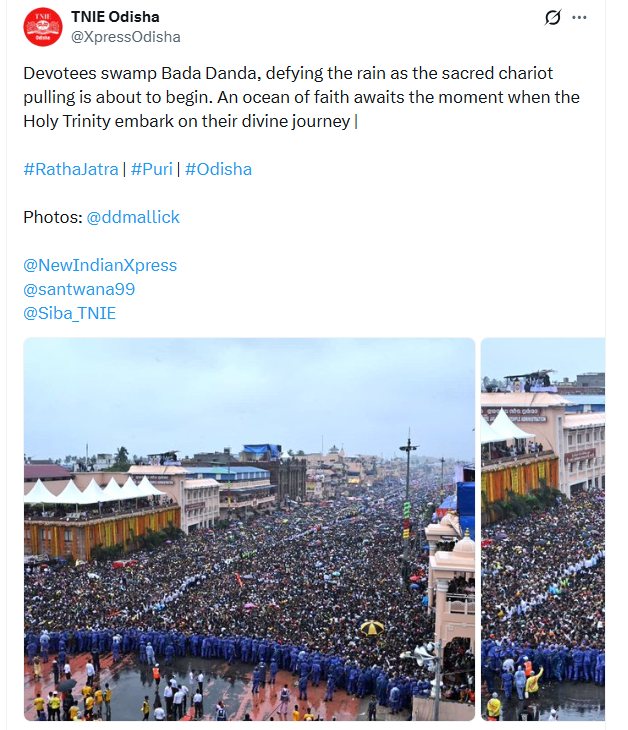
Similar visuals were found in photos uploaded by the X account of The New Indian Express Odisha on July 16, 2026. The imagery in these photographs closely matched the scenes in the viral video, and the caption stated that they were captured during the Jagannath Rath Yatra in Puri.
https://x.com/XpressOdisha/status/2077697637688775015
Conclusion:
Based on the evidence gathered during our research, it is clear that the video being falsely circulated as an anti-reservation protest at Jantar Mantar is actually footage of the Jagannath Rath Yatra in Puri, Odisha.
