
#FactCheck - AI-Generated Video Falsely Shows US Soldiers Surrendering to Iranian Forces
Executive Summary:
Amid the ongoing conflict between the United States, Israel, and Iran, a video circulating widely on social media claims to show American soldiers kneeling and surrendering to Iranian forces. In the clip, several soldiers appear to be sitting on their knees in front of armed personnel, creating the impression that they have been captured on the battlefield.
The video is being shared with the claim that the Iranian military has taken US soldiers prisoner during the war.
However, an research by the CyberPeace found that the claim is false. The viral clip is not authentic and has been generated using artificial intelligence. There is no credible evidence to support the claim that American soldiers have been captured by Iranian forces.
Claim
A Facebook user named “News Tick” shared the video on March 12, 2026, claiming that Iran had released footage of captured US soldiers. In the clip, the soldiers can be seen kneeling while armed personnel stand around them, giving the scene a highly dramatic appearance.

Fact Check
To verify the claim, we first searched the internet using relevant keywords. We found no credible reports from reputable news organizations confirming that US soldiers had been captured by Iran during the conflict. A closer examination of the video revealed several visual inconsistencies. The weapons carried by the soldiers appear unclear and oddly shaped. Additionally, the background looks unusually blurred and overly dramatic. The lighting and textures in the footage also appear artificial—common indicators of AI-generated visuals.
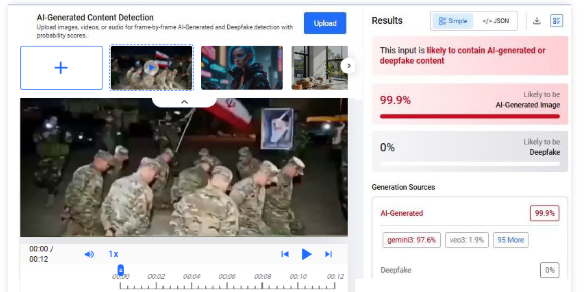
To confirm this suspicion, we analyzed the clip using multiple AI detection tools. The tool Hive Moderation indicated a 99% probability that the video was created using artificial intelligence.
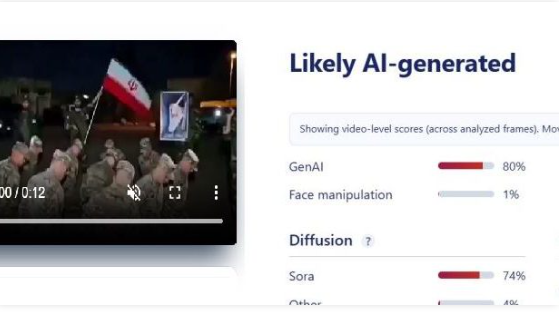
Further analysis using Sightengine also suggested that the video was likely AI-generated, estimating an 80% probability of AI creation.
Conclusion
Our research shows that the viral video claiming to depict American soldiers surrendering and being captured by Iranian forces is fake. The footage has been generated using AI and does not represent a real incident.

Related Blogs
Executive Summary
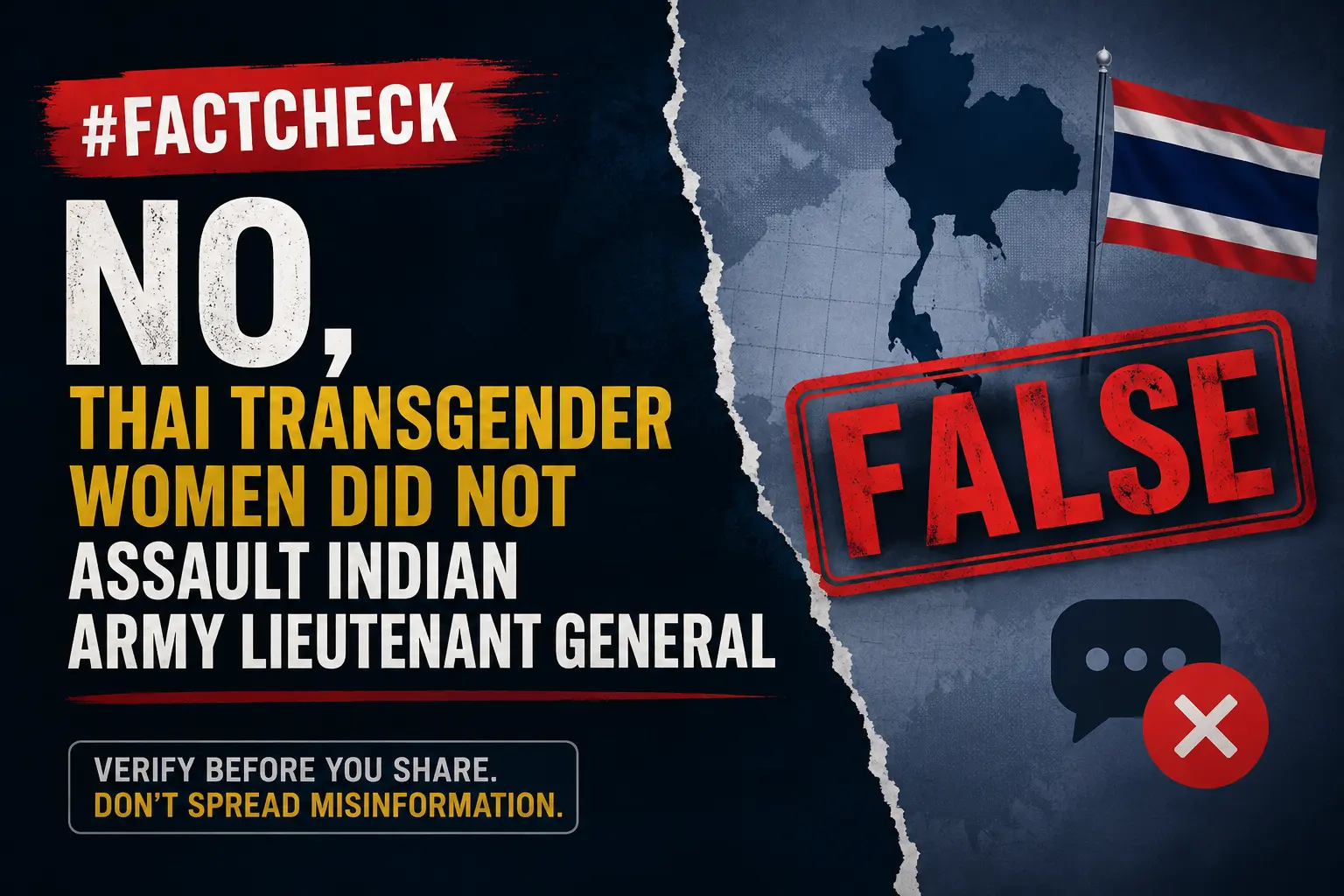
A video is rapidly going viral on social media, with the claim that transgender women assaulted an Indian Army officer in Thailand. The post further claims that the officer had failed to pay the agreed amount, following which the incident took place. A research by CyberPeace’s research wing found that the viral video is fake. In fact, the video shows an incident that took place in Pattaya, Thailand, in December 2025. The 52-year-old Indian national, Raj Jasuja, was allegedly assaulted by a group of transgender women following a dispute over payment for sexual services. Therefore, the claim made in the post is false.
Claim:
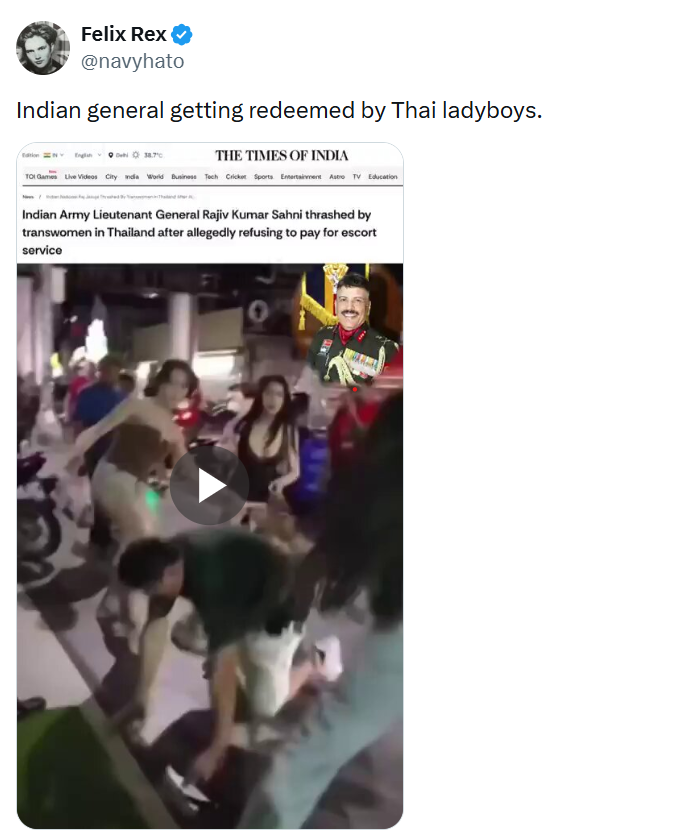
A video shared on social media claims that transgender women assaulted an Indian Army general in Thailand.
https://x.com/navyhato/status/2094322001490116659
https://archive.ph/Scfgd
Fact Check:
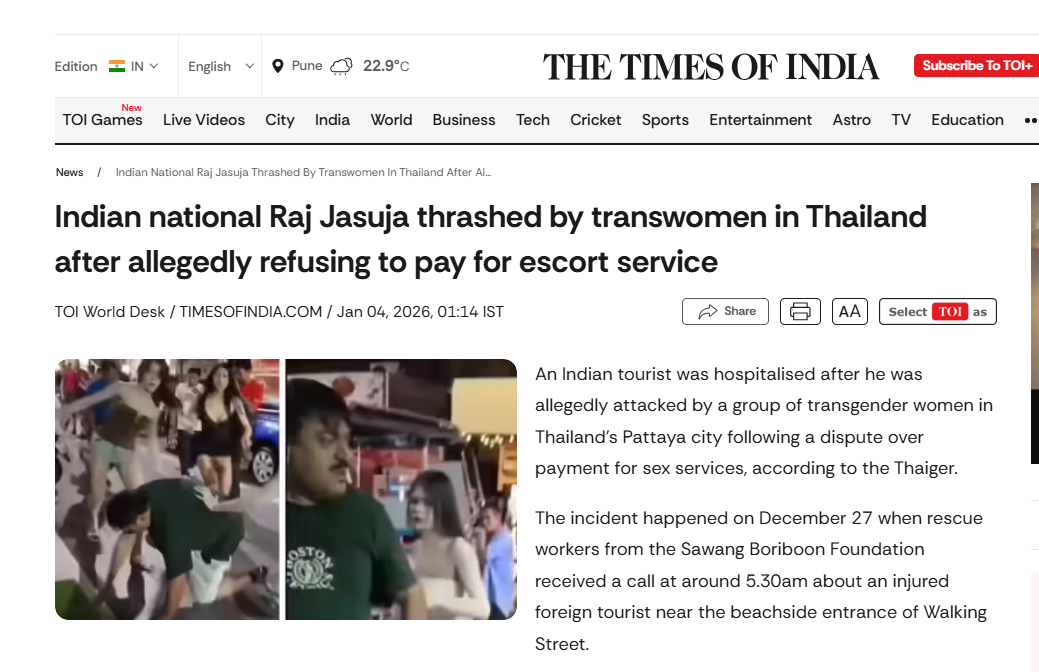
To verify the claim, we conducted a Google search using relevant keywords but found no credible media reports confirming that Indian Army Lieutenant General Rajiv Kumar Sahni was involved in the incident. During the subsequent research, we compared the viral screenshot with the original report published by The Times of India. The comparison revealed that the original headline, “Indian national Raj Jasuja thrashed by transwomen in Thailand after allegedly refusing to pay for escort service,” had been digitally altered to read, “Indian Army Lieutenant General Rajiv Kumar Sahni thrashed by transwomen in Thailand after allegedly refusing to pay for escort service.” Further, both the viral screenshot and the original report display the same breadcrumb trail — “News / Indian National Raj Jasuja Thrashed By Transwomen In T…”. This provides further evidence that the headline in the viral screenshot was digitally manipulated.
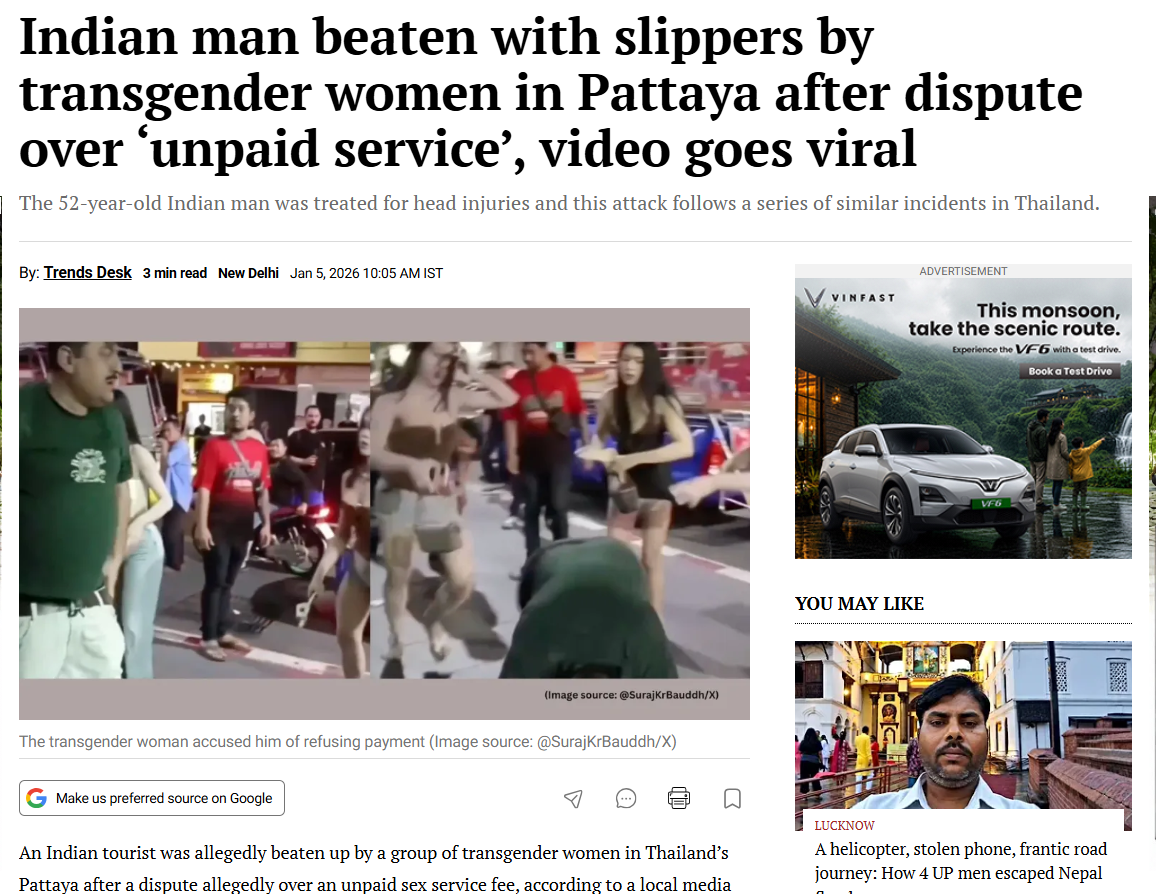
After establishing the context of the viral claim, we conducted a Google search using relevant keywords. During the search, we found a report published on The Indian Express website on January 5, 2026, which featured the same visuals as those seen in the viral video. According to the report, a 52-year-old Indian tourist was allegedly assaulted by a group of transgender women in Pattaya, Thailand. The incident reportedly stemmed from a dispute over an unpaid fee for sexual services. The viral video, recorded on December 27, shows three transgender women allegedly assaulting the man with slippers. According to the report, the dispute escalated after the man allegedly refused to pay the amount demanded and attempted to leave the spot in a car. One of the transgender women reportedly accused him of refusing to make the payment. He was subsequently kicked and beaten before emergency responders intervened.
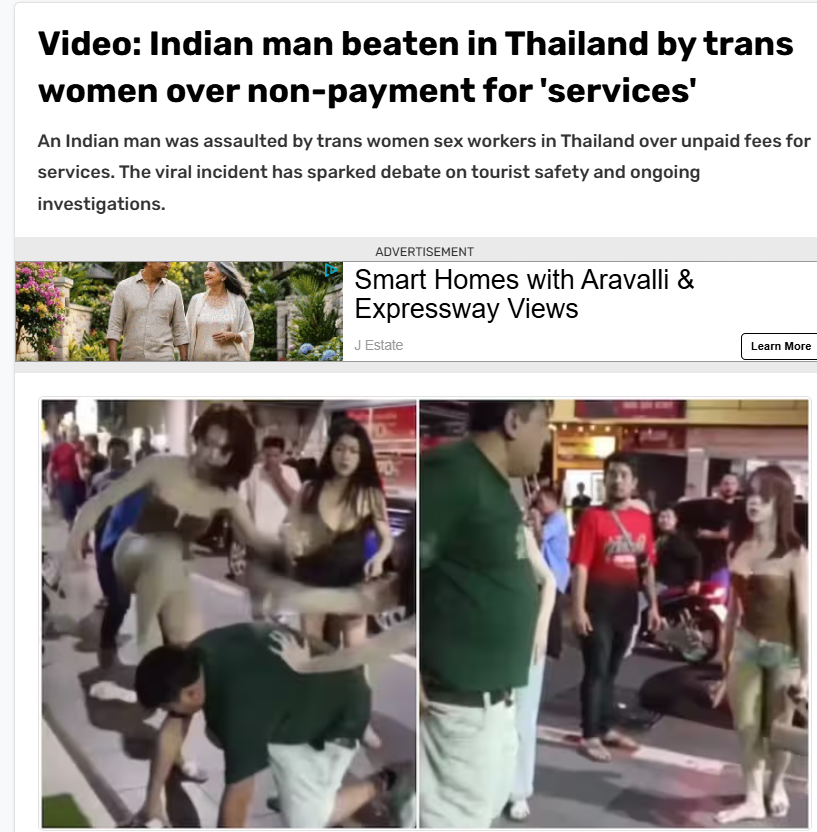
In the next step of our research, we found another report published on the India Today website on January 5, 2026. The report featured the same visuals as those seen in the viral video. According to the report, the incident took place on the morning of December 27, 2025, in the Walking Street area of Pattaya, Thailand.
Conclusion:
Our research found that the claim that Indian Army Lieutenant General Rajiv Kumar Sahni was assaulted in Thailand is false. The viral video actually shows an incident that took place in Pattaya, Thailand, in December 2025, in which 52-year-old Indian national Raj Jasuja was allegedly assaulted by a group of transgender women following a dispute over payment for sexual services. The viral post falsely links the incident to an Indian Army officer, thereby misrepresenting the identity of the person involved.
.webp)
Executive Summary:
Footage of the Afghanistan cricket team singing ‘Vande Mataram’ after India’s triumph in ICC T20 WC 2024 exposed online. The CyberPeace Research team carried out a thorough research to uncover the truth about the viral video. The original clip was posted on X platform by Afghan cricketer Mohammad Nabi on October 23, 2023 where the Afghan players posted the video chanting ‘Allah-hu Akbar’ after winning the ODIs in the World Cup against Pakistan. This debunks the assertion made in the viral video about the people chanting Vande Mataram.

Claims:
Afghan cricket players chanted "Vande Mataram" to express support for India after India’s victory over Australia in the ICC T20 World Cup 2024.

Fact Check:
Upon receiving the posts, we analyzed the video and found some inconsistency in the video such as the lip sync of the video.
We checked the video in an AI audio detection tool named “True Media”, and the detection tool found the audio to be 95% AI-generated which made us more suspicious of the authenticity of the video.


For further verification, we then divided the video into keyframes. We reverse-searched one of the frames of the video to find any credible sources. We then found the X account of Afghan cricketer Mohammad Nabi, where he uploaded the same video in his account with a caption, “Congratulations! Our team emerged triumphant n an epic battle against ending a long-awaited victory drought. It was a true test of skills & teamwork. All showcased thr immense tlnt & unwavering dedication. Let's celebrate ds 2gether n d glory of our great team & people” on 23 Oct, 2023.

We found that the audio is different from the viral video, where we can hear Afghan players chanting “Allah hu Akbar” in their victory against Pakistan. The Afghan players were not chanting Vande Mataram after India’s victory over Australia in T20 World Cup 2014.
Hence, upon lack of credible sources and detection of AI voice alteration, the claim made in the viral posts is fake and doesn’t represent the actual context. We have previously debunked such AI voice alteration videos. Netizens must be careful before believing misleading information.
Conclusion:
The viral video claiming that Afghan cricket players chanted "Vande Mataram" in support of India is false. The video was altered from the original video by using audio manipulation. The original video of Afghanistan players celebrating victory over Pakistan by chanting "Allah-hu Akbar" was posted in the official Instagram account of Mohammad Nabi, an Afghan cricketer. Thus the information is fake and misleading.
- Claim: Afghan cricket players chanted "Vande Mataram" to express support for India after the victory over Australia in the ICC T20 World Cup 2024.
- Claimed on: YouTube
- Fact Check: Fake & Misleading

Introduction
Apple launched Passkeys with iOS 16 as a more authentic and secure mechanism. It is safer than passwords, and it is more efficient in comparison to passwords. Apple users using iOS 16 passkeys features should enable two-factor authentication. The passkeys are an unchallenging mechanism than the passwords for the passkeys. The user just has to open the apps and websites, and then the biometric sensor automatically recognises the face and fingerprints. There can be a PIN and pattern used to log instead of passwords. The passkeys add an extra coating of protection to the user’s systems against cyber threats like phishing attacks by SMS and one-time password-based. In a report 9 to 5mac, there is confirmation that 95% of users are using passkeys. Also, with the passkeys, users’ experience will be better, and it is a more security-proof mechanism. The passwords were weak, reused credentials and credentials leaked, and the chances of phishing attacks were real.
What are passkeys?
Passkey is a digital key linked to users’ accounts and websites or applications. Passkeys allow the user to log into any application and website without entering passwords, usernames, or other details. The aim of this new feature is to replace the old long pattern of entering passwords for going through any websites and applications.
The passkeys are developed by Microsoft, Apple, and Google together, and it is also called FIDO Authentication (Fast identity online). It eliminates the need to remember passwords and the need for typing. So, the passkeys work as they replace the password with a unique digital key, which is tied to the account then, the key is stored in the device itself, and it is end-to-end encrypted. The passkeys will always be on the sites on which users specifically created them. the passkeys use the technology of cryptography for more security purposes. And the passkeys guarantee against the phish.
And since the passkeys follow FIDO standards so, this also can be used for third-party nonapple devices as the third-party device generate a QR code that enables the iOS user to scan that to log in. It will recognise the face of the person for authentication and then asks for permission on another device to deny or allow.
How are passkeys more secure than passwords?
The passkeys follow the public key cryptographic protocols that support the security keys, and they work against phishing and other cyber threats. It is more secure than SMS and apps based on one-time passwords. And another type of multi-factor authentication.
Why are passwords insecure?
The users create passwords easily, and it is wondering if they are secure. The very important passwords are short and easy to crack as they generally relate to the user’s personal information or popular words. One password is reused by the user to the different accounts, and then, in this case, hacking one account gives access to all accounts to the hackers. The problem is that passwords have inherent flaws, like they could be easily stolen.
Are passkeys about to become obligatory?
Many websites restrict the type of passwords, as some websites ask for mixtures of numbers and symbols, and many websites ask for two-factor authentication. There is no surety about the obligation of passkeys widespread as it is still a new concept and it will take time, so it is going to be optional for a while.
- There was a case of a Heartland payment system data breach, and Heartland was handling over 100 million monthly credit card transactions for 175,000 retailers at the time of the incident. Visa and MasterCard detected the hack in January 2009 when they notified Heartland of suspicious transactions. And this happened due to a password breach. The corporation paid an estimated $145 million in settlement for illegal payments. Today, data-driven breaches affect millions of people’s personal information.
- GoDaddy reported a security attack in November that affected the accounts of over a million of its WordPress customers. The attacker acquired unauthorised access to GoDaddy’s Managed WordPress hosting environment by hacking into the provisioning system in the company’s legacy Managed WordPress code.
Conclusion
The use of strong and unique passwords is an essential requirement to safeguard information and data from cyberattacks, but still, passwords have its own disadvantages. And by the replacement of passwords, a passkey, a digital key that ensures proper safety and there is security against cyberattacks and cybercrimes through passkey. There are cases above-mentioned that happened due to the password’s weaker security. And in this technology world, there is a need for something for protection and prevention from cybercrimes, and the world dumps passwords and adopts passkeys.
References
- https://www.cnet.com/tech/mobile/switch-to-passkeys-more-secure-than-passwords-on-ios-16-iphone-14/
- https://economictimes.indiatimes.com/magazines/panache/google-is-ending-passwords-rolls-out-passkeys-for-easy-log-in-how-to-set-it/articleshow/99988444.cms?from=mdr
- https://security.googleblog.com/2023/05/making-authentication-faster-than-ever.html#:~:text=Because%20they%20are%20based%20on,%2Dfactor%20authentication%20(MFA).
