
#FactCheck: Viral Video of Muslim Women Being Targeted in India Is From a Pakistani Short Film
Executive Summary:
A video is being shared on social media showing two women wearing burqas arguing with a man riding a motorcycle on a road and later slapping him. Social media users are sharing the video as being from India, claiming that Muslim women are being targeted in public places. The video is being widely circulated across various social media platforms with this claim. However, research by the CyberPeace Research Wing found that the viral video does not show an incident of Muslim women being targeted in India. The video is actually from the shooting of a short film in Pakistan.
Claim:
A Facebook user shared the viral video claiming, “Muslim girls are now being targeted while walking on the streets in our country. Seeing a Muslim girl, a love-struck man threw his mobile number in front of her while walking past. The viral video clearly shows what the boy did, and the girl's reaction is worth watching. Such acts are harming social harmony in our country.”
The archived link and screenshot of the post are provided below.
https://www.facebook.com/reel/1087774553785531

FactCheck
To verify the authenticity of the viral claim, we conducted a reverse image search of the keyframes from the video. During the search, we found the same video on a Pakistani Instagram account, @livinglegendsbiography, where it was posted on May 25, 2026. The caption of the post clearly stated that the video was part of a drama shoot featuring Heera Faisal and Rabia Faisal. The video itself also contains indications that it was staged. After the man is slapped, both women wearing burqas and the motorcycle rider can be seen laughing. This further confirms that the video is not from a real incident but was part of a scripted drama shoot. The link to the post and a screenshot are provided below.
https://www.instagram.com/reels/DYwXNp4I-eE/
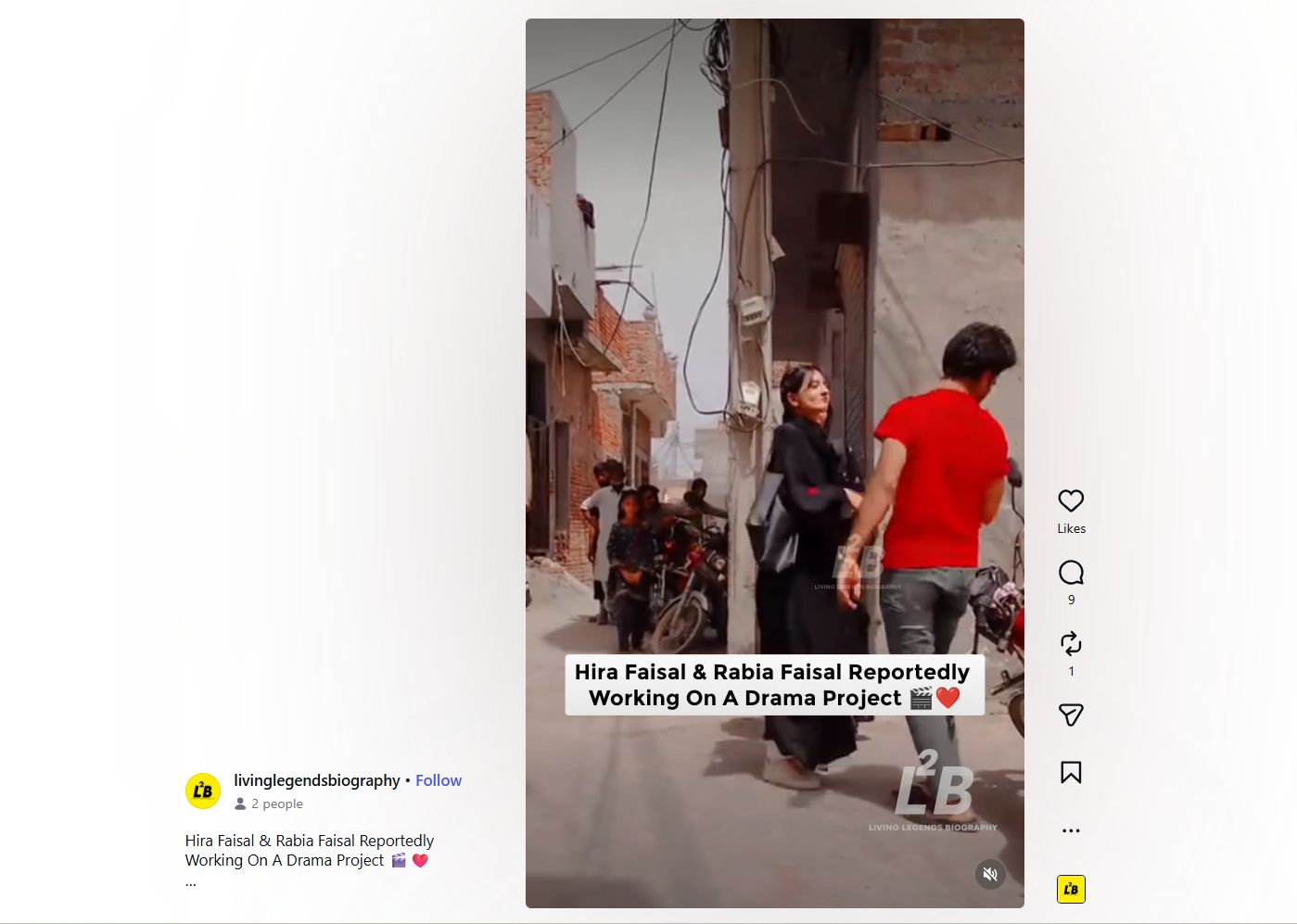
Continuing our research, we also found the trailer of the short film ‘Ghairat’ posted on Rabia Faisal’s Instagram account on July 5, 2026. The trailer features several scenes that closely resemble those seen in the viral video. According to the information provided in the post, the short film was released on July 20, 2026. This further confirms that the viral video is not from a real incident, but was part of the shooting of the short film. The link to the post and a screenshot are provided below.

Conclusion:
The evidence gathered during our research makes it clear that the video circulating on social media does not show a real incident of Muslim women being targeted in public places in India. During the research, we found the same video on a Pakistani Instagram account, where it was identified as part of a drama shoot featuring Heera Faisal and Rabia Faisal. We also found the trailer of the short film ‘Ghairat’ on Rabia Faisal’s account, which contains scenes resembling those seen in the viral video. Based on the available evidence, it is clear that the viral video was recorded during the shooting of a short film in Pakistan. Therefore, the claim that the video shows an incident of Muslim women being targeted in India is false.

Related Blogs

Executive Summary
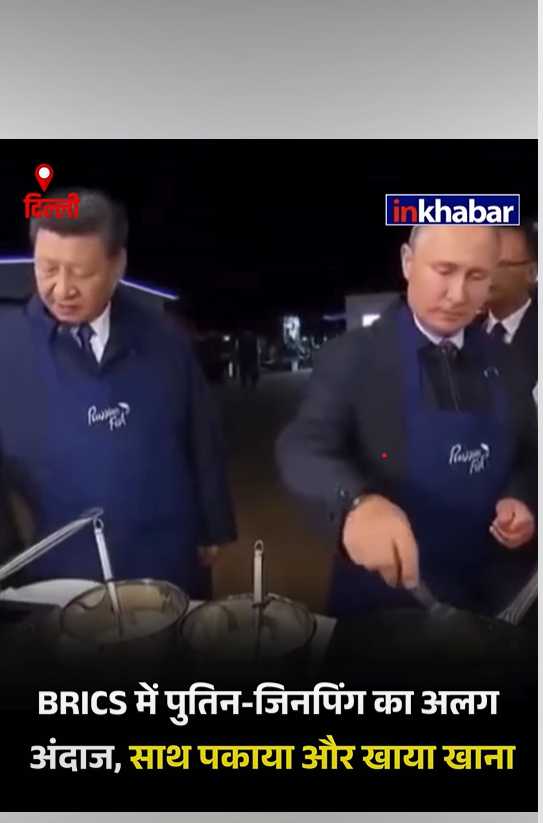
A video of Russian President Vladimir Putin and Chinese President Xi Jinping is being shared on social media. In the video, the two leaders can be seen cooking together and interacting with each other.The video is being linked to the BRICS Summit held at Bharat Mandapam in Delhi on September 12 and 13, 2026, with the claim that Putin and Xi Jinping were seen in this manner during the summit. The viral claim was found to be false in CyberPeace Research Wing’s research. Our research revealed that the video being shared on social media is not recent. The video dates back to 2018, when Russian President Vladimir Putin and Chinese President Xi Jinping cooked together during the Eastern Economic Forum held in Vladivostok, Russia.
Claim:
A Facebook user shared the viral video with the caption: “Russian President Vladimir Putin and Chinese President Xi Jinping enjoyed cooking and sharing a meal together in India. The special camaraderie between the two leaders was on display during the BRICS Summit.” The link to the post, along with an archive link and screenshot, is provided below.
https://www.instagram.com/reels/DdOFovfkelC/
Factcheck
To verify the authenticity of the viral claim, we conducted a reverse image search of the keyframes from the video. During the search, we found visuals matching the video on the Armenpress website, published on September 12, 2018. The link to the post and the screenshot are provided below.
https://armenpress.am/en/article/946878
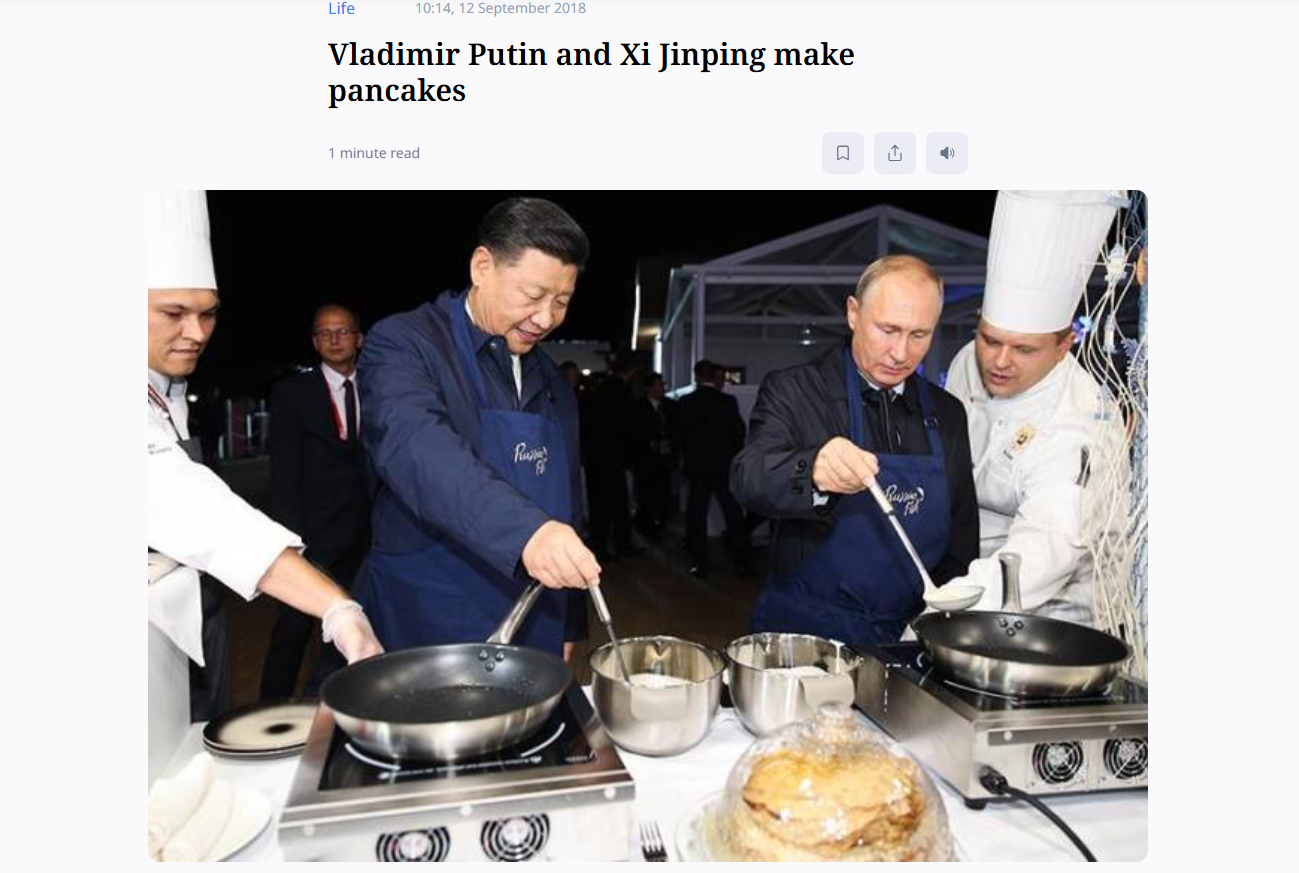
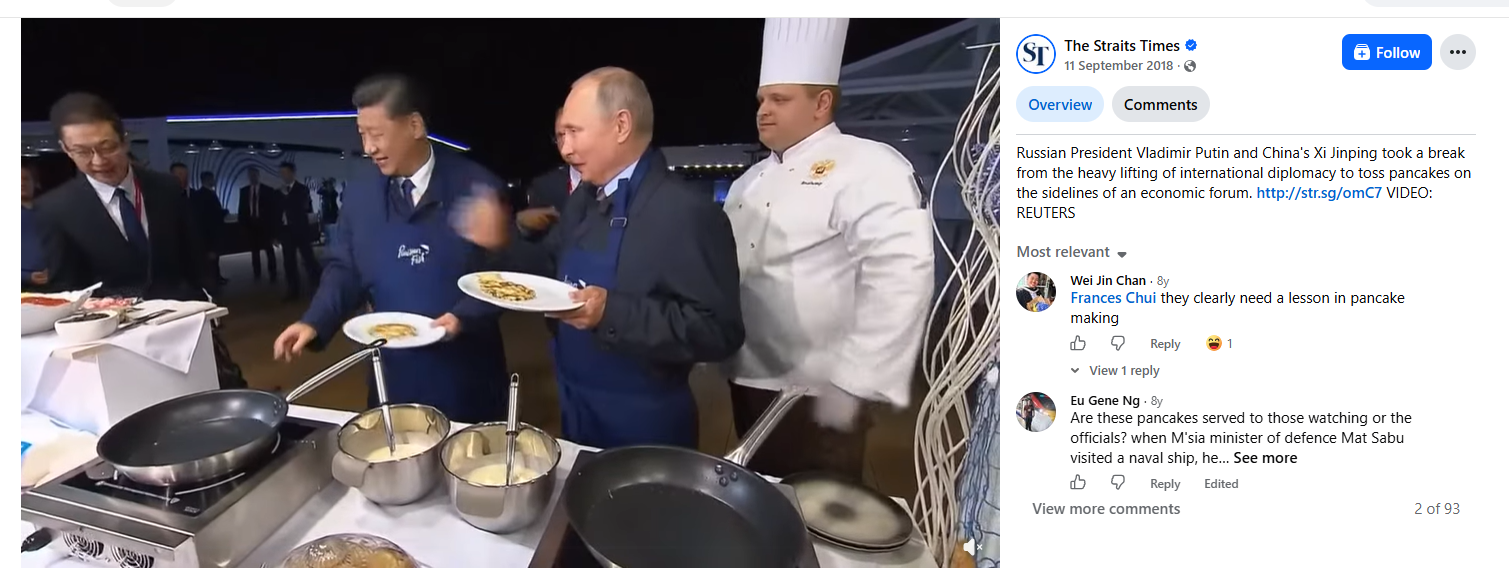
According to the report, Russian President Vladimir Putin and Chinese President Xi Jinping took a break from the hectic schedule of international diplomacy on Tuesday to make pancakes on the sidelines of an economic forum. Chinese President Xi Jinping was among the prominent leaders attending the event in Russia’s Far Eastern city of Vladivostok. The forum primarily focused on economic ties and issues related to North Korea.During the event, the two leaders made blini, a traditional Russian pancake, together at an exhibition called “Far East Street”, which showcased the region’s cultural and economic achievements. Photographs showed Putin and Xi Jinping wearing blue aprons as they poured pancake batter onto a griddle and flipped the pancakes. They later enjoyed the pancakes with caviar and vodka. As we continued our research, we found the same video on The Straits Times’ Facebook page, where it was published on September 11, 2018. According to the information provided with the video, Russian President Vladimir Putin and Chinese President Xi Jinping took a break from the hectic schedule of international diplomacy to make pancakes together on the sidelines of an economic forum. The link to the post and the screenshot are provided below.
https://www.facebook.com/watch/?v=1915270415222092
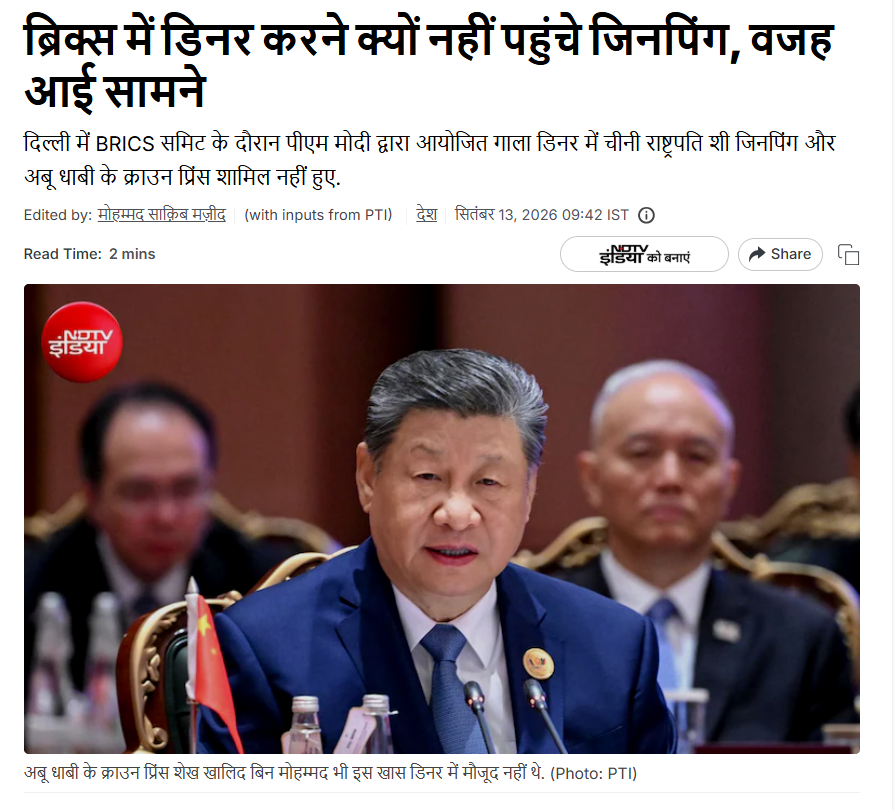
Meanwhile, for context, according to a report by a news agency, the BRICS Summit was underway in Delhi. Saturday was an important day of the summit, and Prime Minister Narendra Modi hosted a dinner for several heads of state, including Chinese President Xi Jinping. Several leaders, including Russian President Vladimir Putin, attended the special dinner. However, Chinese President Xi Jinping was not present. According to sources cited by the news agency, Xi Jinping did not attend the dinner.
https://ndtv.in/india/chinese-president-xi-jinping-skips-brics-gala-dinner-what-reason-12039666
Conclusion
Our research found that the video showing Russian President Vladimir Putin and Chinese President Xi Jinping making pancakes together is not recent and has no connection with the 2026 BRICS Summit held in Delhi. The claim circulating on social media is therefore false and misleading. Further research established that the video dates back to 2018, when Putin and Xi participated in the Eastern Economic Forum in Vladivostok, Russia. During the event, the two leaders were seen preparing traditional Russian pancakes, or blini, together at an exhibition showcasing the cultural and economic achievements of Russia’s Far East region. Therefore, the video is being shared with a false context by linking an old 2018 event to the recently held BRICS Summit.

Over the last decade, battlefields have percolated from mountains, deserts, jungles, seas, and the skies into the invisible networks of code and cables. Cyberwarfare is no longer a distant possibility but today’s reality. The cyberattacks of Estonia in 2007, the crippling of Iran’s nuclear program by the Stuxnet virus, the SolarWinds and Colonial Pipeline breaches in recent years have proved one thing: that nations can now paralyze economies and infrastructures without firing a bullet. Cyber operations now fall beyond the traditional threshold of war, allowing aggressors to exploit the grey zone where full-scale retaliation may be unlikely.
At the same time, this ambiguity has also given rise to the concept of cyber deterrence. It is a concept that has been borrowed from the nuclear strategies during the Cold War era and has been adapted to the digital age. At the core, cyber deterrence seeks to alter the adversary’s cost-benefit calculation that makes attacks either too costly or pointless to pursue. While power blocs like the US, Russia, and China continue to build up their cyber arsenals, smaller nations can hold unique advantages, most importantly in terms of their resilience, if not firepower.
Understanding the concept of Cyber Deterrence
Deterrence, in its classic sense, is about preventing action through the fear of consequences. It usually manifests in four mechanisms as follows:
- Punishment by threatening to impose costs on attackers, whether by counter-attacks, economic sanctions, or even conventional forces.
- Denial of attacks by making them futile through hardened defences, and ensuring the systems to resist, recover, and continue to function.
- Entanglement by leveraging interdependence in trade, finance, and technology to make attacks costly for both attackers and defenders.
- Norms can also help shape behaviour by stigmatizing reckless cyber actions by imposing reputational costs that can exceed any gains.
However, great powers have always emphasized the importance of punishment as a tool to showcase their power by employing offensive cyber arsenals to instill psychological pressure on their rivals. Yet in cyberspace, punishment has inherent flaws.
The Advantage of Asymmetry
For small states, smaller geographical size can be utilised as a benefit. Three advantages of this exist, such as:
- With fewer critical infrastructures to protect, resources can be concentrated. For example, Denmark, with a modest population of $40 million cyber budget, is considered to be among the most cyber-secure nations, despite receiving billions of US spending.
- Smaller bureaucracies enable faster response. The centralised cyber command of Singapore allows it to ensure a rapid coordination between the government and the private sector.
- Smaller countries with lesser populations can foster a higher public awareness and participation in cyber hygiene by amplifying national resilience.
In short, defending a small digital fortress can be easier than securing a sprawling empire of interconnected systems.
Lessons from Estonia and Singapore
The 2007 crisis of Estonia remains a case study of cyber resilience. Although its government, bank, and media were targeted in offline mode, Estonia emerged stronger by investing heavily in cyber defense mechanisms. Another effort in this case stood was with the hosting of NATO’s Cooperative Cyber Defence Centre of Excellence to build one of the world’s most resilient e-governance models.
Singapore is another case. Where, recognising its vulnerability as a global financial hub, it has adopted a defense-centric deterrence strategy by focusing on redundancy, cyber education, and international partnership rather than offensive capacity. These approaches can also showcase that deterrence is not always about scaring attackers with retaliation, it is about making the attacks meaningless.
Cyber deterrence and Asymmetric Warfare
Cyber conflict is understood through the lens of asymmetric warfare, where weaker actors exploit the unconventional and stronger foes. As guerrillas get outmanoeuvred by superpowers in Vietnam or Afghanistan, small states hold the capability to frustrate the cyber giants by turning their size into a shield. The essence of asymmetric cyber defence also lies in three principles, which can be mentioned as;
- Resilience over retaliation by ensuring a rapid recovery to neutralise the goals of the attackers.
- Undertaking smart investments focusing on limited budgets over critical assets, not sprawling infrastructures.
- Leveraging norms to shape the international opinions to stigmatize the aggressors and increase the reputational costs.
This also helps to transform the levels of cyber deterrence into a game of endurance rather than escalating it into a domain where small states can excel.
There remain challenges as well, as attribution problems persist, the smaller nations still depend on foreign technology, which the adversaries have sought to exploit. Issues over the shortage of talent have plagued the small states, as cyber professionals have migrated to get lucrative jobs abroad. Moreover, building deterrence capability through norms requires active multilateral cooperation, which may not be possible for all small nations to sustain.
Conclusion
Cyberwarfare represents a new frontier of asymmetric conflict where size does not guarantee safety or supremacy. Great powers have often dominated the offensive cyber arsenals, where small states have carved their own path towards security by focusing on defence, resilience, and international collaboration. The examples of Singapore and Estonia demonstrate the fact that the small size of a state can be its identity of a hidden strength in capabilities like cyberspace, allowing nimbleness, concentration of resources and societal cohesion. In the long run, cyber deterrence for small states will not rest on fearsome retaliation but on making attacks futile and recovery inevitable.
References
- https://bluegoatcyber.com/blog/asymmetric-warfare/
- https://digitalcommons.usf.edu/cgi/viewcontent.cgi?article=2268&context=jss
- https://www.linkedin.com/pulse/rising-tide-cyberwarfare-battle-between-superpowers-hussain/
- https://digitalcommons.odu.edu/cgi/viewcontent.cgi?article=1243&context=gpis_etds
- https://www.scirp.org/journal/paperinformation?paperid=141708
- https://digitalcommons.odu.edu/cgi/viewcontent.cgi?article=1243&context=gpis_etds
Introduction
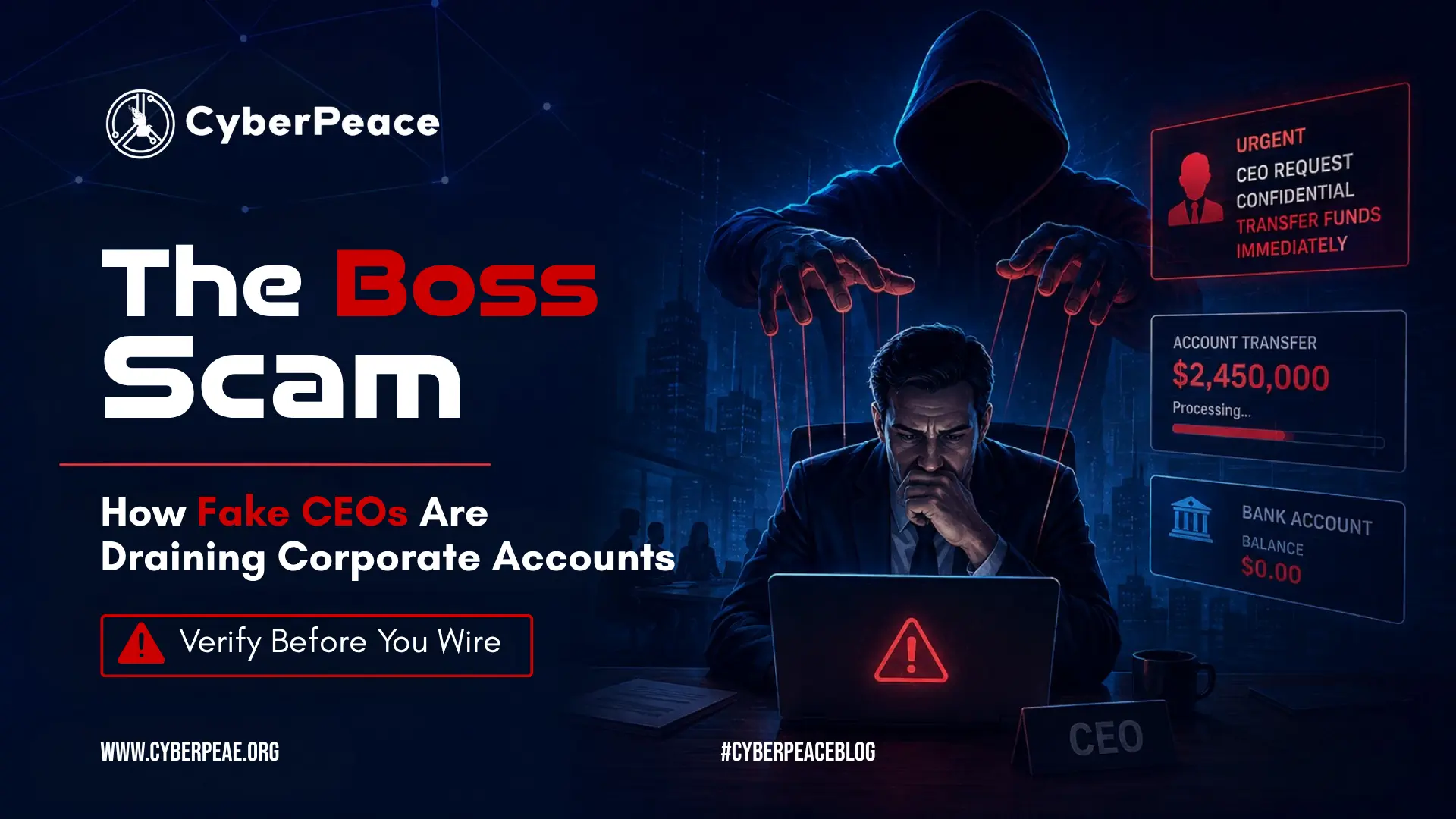
Imagine receiving a WhatsApp message from your CEO late on a Friday afternoon. The message is urgent: a confidential business deal requires an immediate wire transfer before markets close. The profile picture matches, the tone sounds familiar, and the account it came from has your CEO's name on it. Everything appears legitimate except it is not. This is the essence of the 'Boss Scam,' a sophisticated form of CEO impersonation fraud that has emerged as one of the most financially devastating cybercrime trends of 2025. India's Indian Cyber Crime Coordination Centre (I4C), under the Ministry of Home Affairs, issued an urgent national advisory on this threat in June 2025, warning that organisations across the country are falling victim to an evolved and technically advanced version of executive impersonation fraud that bypasses many traditional cybersecurity safeguards.
Understanding the Boss Scam
What Is CEO Impersonation Fraud?
CEO fraud, also known as Business Email Compromise (BEC) or executive impersonation fraud, is a targeted cyberattack in which criminals assume the digital identity of a high-ranking executive most commonly the Chief Executive Officer to deceive subordinate employees into authorising fraudulent financial transactions or divulging sensitive information. Unlike generic phishing campaigns that cast a wide net, CEO fraud is a precision attack. Cybercriminals invest significant time and resources researching their targets, studying organisational hierarchies, communication styles, and internal financial workflows before executing the scam. The attack is devastatingly effective because it weaponises one of the most powerful forces in any workplace: authority. An instruction that appears to originate from the CEO carries an implicit demand for immediate compliance, often bypassing normal checks and verification procedures. The FBI's Internet Crime Complaint Center (IC3) has consistently identified BEC as one of the most financially destructive categories of cybercrime, with adjusted losses of approximately USD 2.77 billion reported in 2024 alone across the United States.
The New and Evolved Variant: India's I4C Advisory
The variant identified by India's I4C represents a dangerous evolution of traditional CEO fraud. The earlier versions of this scam relied on spoofed email addresses or fake WhatsApp profiles that merely mimicked an executive's account. Employees were trained to spot tell-tale warning signs suspicious domains, unusual sender addresses, or spelling errors in email IDs. The latest
Boss Scam variant eliminates many of these red flags entirely by hijacking the executive's actual and legitimate WhatsApp account. This sophisticated attack begins not with the employee, but with the CEO. Cybercriminals approach senior executives through email or WhatsApp while posing as regulatory authorities in India's context, this includes impersonating officials from the Reserve Bank of India (RBI) or other government bodies. These messages claim an urgent compliance violation or regulatory breach requiring immediate remedial action. The communication contains a compressed ZIP archive, which the executive is prompted to open. Inside the archive are malicious executable (.exe) and Dynamic Link Library (.dll) files that, when run on a Windows system, deploy a Trojan dropper a form of malware capable of establishing persistent access on the device and hijacking active WhatsApp Web session tokens.
Once the session token is compromised, the attacker gains complete control over the executive's WhatsApp account without needing the phone, password, or any two-factor authentication code. The legitimate account is now in criminal hands, and any message sent from it appears entirely authentic to recipients.
How the Boss Scam Operates: A Step-by-Step Breakdown
Stage 1: Targeting the Executive: The operation begins with careful reconnaissance. Attackers study the target organisation's leadership, identify the CEO or a senior executive, and gather publicly available information about their communication patterns, business relationships, and company operations through LinkedIn, corporate websites, and news sources. They then contact the executive under a false regulatory identity, engineering a sense of crisis and urgency.
Stage 2: Malware Deployment:The fraudulent regulatory communication contains a ZIP file disguised as a compliance document, a security patch, or a mandatory software update. Upon execution on a Windows machine, the embedded malware installs itself and begins hijacking the WhatsApp Web session. Critically, in many documented cases, the CEO innocently forwards this regulatory message and the malicious attachment to their own finance officer or IT team, inadvertently widening the attack surface.
Stage 3: Account Takeover and Impersonation:With the CEO's legitimate WhatsApp account now under their control, cybercriminals send highly convincing messages to subordinate staff, particularly those in finance, accounts payable, or treasury functions. These messages carry the full weight of genuine executive authority correct name, profile photo, and account history making them extraordinarily difficult to distinguish from authentic communications.
Stage 4: The Financial Strike:The fraudulent instruction typically requests an urgent, confidential wire transfer to an unfamiliar account, often accompanied by requests for complete secrecy. The employee, believing the instruction to be genuine and fearing the consequences of non-compliance with a directive from their CEO, processes the transaction. By the time the fraud is discovered, the funds have been routed through multiple mule accounts, making recovery extremely difficult.
The Broader Landscape: Scale and Impact
The Boss Scam is not an isolated Indian phenomenon it represents the cutting edge of a global epidemic of executive impersonation fraud. According to the FBI's data, BEC has been the costliest category of cybercrime for several years running, with cumulative global losses that officials have described as exceeding USD 50 billion over the past decade. A 2025 fraud survey found that 90 per cent of U.S. companies experienced attempted cyber-fraud in 2024, with business email compromise and impersonation scams surging by 103 per cent year-on-year. The technological sophistication of these attacks has grown in lockstep with the availability of AI tools. In early 2024, a finance worker at a multinational firm in Hong Kong was tricked into authorising a payment of USD 25 million after attending a video conference in which the CFO and other senior executives were entirely fabricated using deepfake technology. In March 2025, a similar attack unfolded in Singapore, where a finance director authorised nearly USD 499,000 after joining a Zoom call populated entirely by AI-generated deepfakes of company executives. Deepfake attacks against businesses reportedly surged by 3,000 per cent in 2023, and voice cloning fraud rose by 680 per cent the following year. In India, the Telangana Cyber Security Bureau reported over 300 complaints related to the Boss Scam variant alone within a twenty-day period in June 2025. In one prominent case, formerPrime Minister I.K. Gujral's son, Naresh Gujral, reportedly lost approximately Rs 7.8 crorethrough a messaging-app impersonation scheme targeting his company's Chief Financial Officer.
Warning Signs Every Employee Must Recognise
Identifying a Boss Scam attempt requires situational awareness and healthy scepticism. The following red flags should prompt immediate caution:
● Any request for urgent or secret financial transfers received via WhatsApp or email, without prior discussion or formal documentation.
● Instructions to bypass standard approval procedures or to maintain secrecy from colleagues or senior management.
● Compressed files (.zip, .rar) or executable attachments received from any source, including apparently known contacts, claiming to be compliance documents or regulatory updates.
● Messages from executives at unusual hours, particularly those emphasising that a transaction must be completed immediately.
● Claims that a request comes from a government regulator, such as the RBI, delivered through informal channels like WhatsApp.
● Any communication that creates extreme urgency, invokes authority, and simultaneously demands confidentiality the classic triangle of social engineering manipulation. Protective Measures: Defending Against the Boss Scam
For Employees and Finance Teams
The I4C advisory and global cybersecurity authorities recommend several concrete steps that employees can take. The most important is to independently verify any urgent financial instruction through a direct voice call or in-person confirmation before taking action, regardless of how convincing the digital message appears. No financial transaction of significance should be authorised on the basis of a WhatsApp message or email alone.
For Organisations and Leadership
Organisations must implement multi-layered verification protocols for all wire transfers above a defined threshold, making dual authorisation and out-of-band verification mandatory. IT teams should deploy updated malware detection tools, enforce software restriction policies that block unauthorised executable files, and regularly audit devices for signs of compromise. WhatsApp linked devices should be reviewed periodically. Leadership must also commit to regular, mandatory cybersecurity awareness training for all staff, with particular attention to social engineering tactics. The I4C has also emphasised that legitimate regulatory bodies including the RBI , do not distribute software, compliance tools, or security patches via WhatsApp or email attachments. Any such communication must be treated as a potential attack vector and reported immediately.
Conclusion
The Boss Scam exploits organisational trust and human psychology rather than technical vulnerabilities and with deepfake technology now capable of replicating familiar voices and faces, traditional verification instincts are no longer reliable. The strongest defence is a culture of verification without embarrassment, where questioning an unusual instruction is seen as diligence, not insubordination. Awareness, clear protocols, and scepticism towards urgency remain our most powerful tools. If you've encountered such a scam, contact India's National Cybercrime Helpline at 1930 or report at cybercrime.gov.in.
References
- https://www.cybercrime.gov.in
- https://www.business-standard.com/india-news/boss-scam-ceo-impersonation-fraudgovt- advisory-i4c-126062300353_1.html
- https://www.indiatvnews.com/news/india/boss-scam-all-about-the-new-cyber-fraudtargeting- corporates-and-precautions-listed-by-mha-2026-06-23-1045827
- https://www.freepressjournal.in/business/boss-scam-on-whatsapp-new-ceo-fraudbypasses- traditional-cybersecurity-checks
- https://hyderabadmail.com/tgcsb-warns-boss-scam-ceo-impersonation-fraud-malwarealert/
- https://www.newkerala.com/news/a/rising-boss-scam-threat-targets-senior-executiveswarns- 242.html
- https://www.ic3.gov
- https://www.mcafee.com/learn/is-that-really-your-boss/
- https://abnormal.ai/glossary/ceo-fraud
- https://www.brside.com/blog/deepfake-ceo-fraud-50m-voice-cloning-threat-cfos
- https://www.eftsure.com/blog/cyber-crime/these-7-deepfake-ceo-scams-prove-that-nobusiness- is-safe/
- https://www.knowbe4.com/ceo-fraud
- https://trustpair.com/blog/ceo-fraud-how-to-protect-your-organization-from-fraudsters/
- https://hacked.com/services/executive-impersonation-and-ceo-fraud-protecting-high-networth- individuals/
- https://www.certifid.com/article/ceo-fraud
