
#FactCheck:AI-Generated Video of PM Modi Falsely Shared with Claim About Rising Sugar Prices
Executive Summary
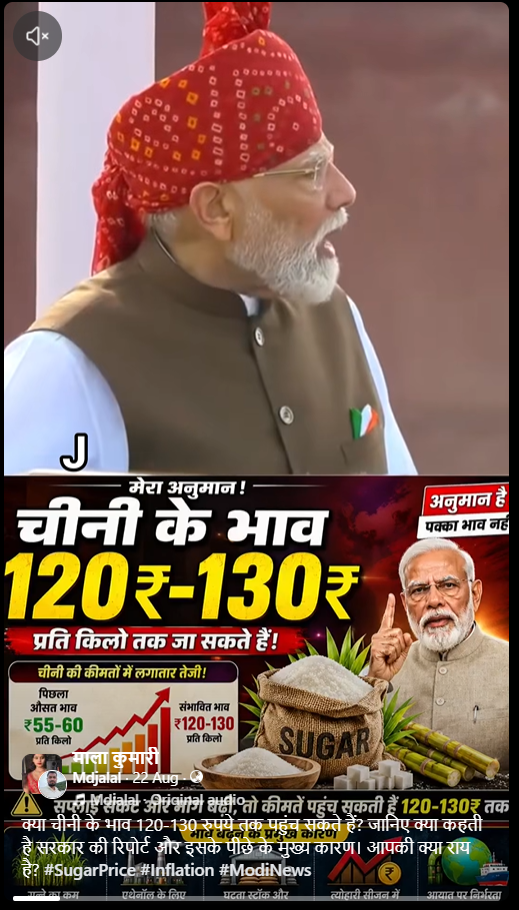
A video of Prime Minister Narendra Modi is being widely shared on social media with the claim that he warned about rising sugar prices, stating that if the supply crisis worsens, sugar prices could reach ₹130 per kg. In the viral clip, PM Modi can allegedly be heard speaking about the increase in sugar prices. However, a research done by the research wing of the CyberPeace revealed that the claim made with the viral video is false. The research found that the viral video is AI-generated and has been edited to spread misleading information on social media.
Claim:
On August 22, 2026, a video was shared on the social media platform Facebook with the caption: “Can sugar prices reach ₹120-₹130? Know what the government report says and the main reasons behind it. What is your opinion?”
https://www.facebook.com/reel/4384024895144864
FactCheck
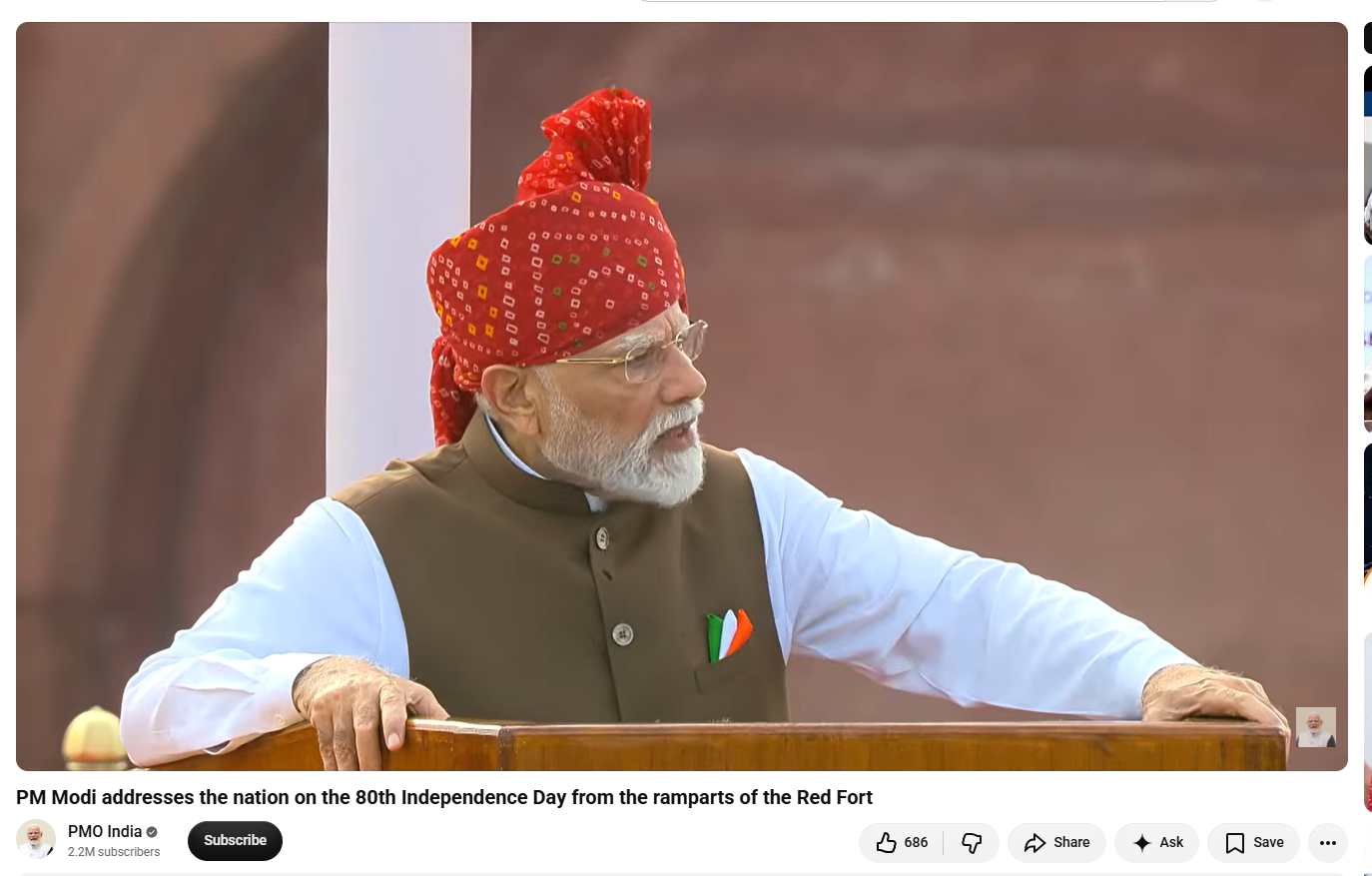
To verify the truth behind the viral claim, a keyword search was conducted on Google. No reliable news reports or official announcements were found confirming that PM Modi made any such statement regarding sugar prices. Keyframes extracted from the viral clip were subjected to a reverse image search using Google Lens. This led to the original video uploaded on the official YouTube channel of PMO India on August 15, 2026. In the nearly 1-hour and 39-minute long Independence Day address, PM Modi did not mention sugar prices anywhere during his speech.
https://www.youtube.com/watch?v=aDHjd3GUU7Y
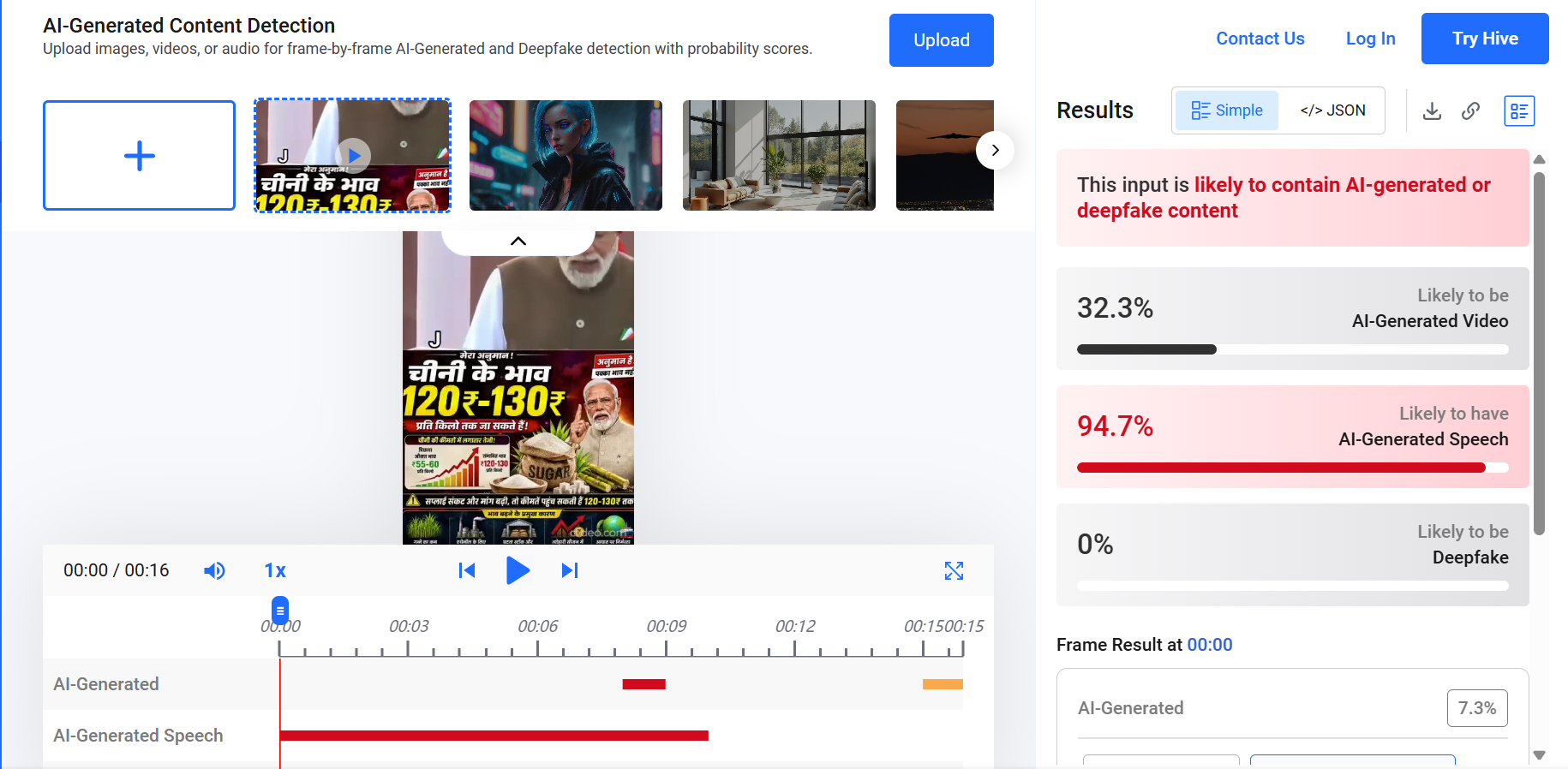
To further verify the authenticity of the video, it was scanned using the AI detection tool HIVE Moderation. The results indicated a 94% probability that PM Modi's speech in the video is AI-generated.
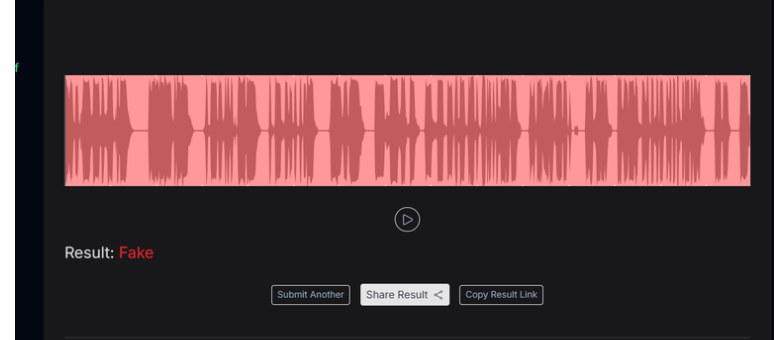
The audio of the viral video was analyzed using Resemble AI. The tool's analysis confirmed that the audio was AI-generated, indicating that the original voice track had been manipulated/cloned.
Conclusion:
Our research confirms that the claim associated with the viral video is false. The video has been created using AI tools and edited to mislead the public.

Related Blogs

Executive Summary:
In the digital world, people are becoming targets more and more of online scams, which rely on deception. One of the ways the social media is being used for the elections in recent time, is the "BJP - Election Bonus" offer that promises a cash prize of Rs. 5000 or more, through some easy questionnaire. This article provides the details of this swindle and reveals its deceptive tricks as well as gives a set of recommendations on how to protect yourself from such online fraud, especially during the upcoming elections.
False Claim:
The "BJP - Election Bonus" campaign boasts that by taking a few clicks of the mouse, users will get a cash prize. This scheme is nothing but a fake association with the Bharatiya Janata Party (BJP)’s Government and Prime Minister Shri Narendra Modi and therefore, it uses the images and brands of both of them to give the scheme an impression of legitimacy. The imposters are taking advantage of the public's trust for the Government and the widespread desire for remuneration to ensnare the unaware victims, specifically before the upcoming Lok Sabha elections.

The Deceptive Scheme:
- Tempting Social Media Offer: The fraud begins with an attractive link on the social media platforms. The scammers say that the proposal is related to the Bharatiya Janata Party (BJP) with the caption of “The official party has prepared many gifts for their supporters.” accompanied by an image of the Prime Minister Shri Narendra Modi.
- Luring with Money: The offer promises to give Rs.5,000 or more. This is aimed at drawing in people specifically during election campaigns; and people’s desire for financial gain.
- Tricking with Questions: When the link is clicked, the person is brought to the page with the simple questions. The purpose of these questions is to make people feel safe and believe that they have been selected for an actual government’s program.
- The Open-the-Box Trap: Finally, the questions are answered and the last instruction is to open-the-box for the prize. However, this is just a tactic for them to make you curious about the reward.
- Fake Reward and Spreading the Scam: Upon opening the box, the recipient will be greeted with the text of Rs. 5000. However, this is not true; it is just a way to make them share the link on WhatsApp, helping the scammers to reach more victims.
The fraudsters use political party names and the Prime Minister's name to increase the plausibility of it, although there is no real connection. They employ the people's desire for monetary help, and also the time of the elections, making them susceptible to their tricks.
Analytical Breakdown:
- The campaign is a cleverly-created scheme to lure people by misusing the trust they have in the Government. By using BJP's branding and the Prime Minister's photo, fraudsters aim to make their misleading offer look credible. Fake reviews and cash reward are the two main components of the scheme that are intended to lure users into getting involved, and the end result of this is the path of deception.
- Through sharing the link over WhatsApp, users become unaware accomplices that are simply assisting the scammers to reach an even bigger audience and hence their popularity, especially with the elections around the corner.
- On top of this, the time of committing this fraud is very disturbing, as the election is just round the corner. Scammers do this in the context of the political turmoil and the spread of unconfirmed rumors and speculation about the upcoming elections in the same way they did earlier. The fraudsters are using this strategy to take advantage of the political affiliations by linking their scam to the Political party and their Leaderships.
- We have also cross-checked and as of now there is no well established and credible source or any official notification that has confirmed such an offer advertised by the Party.
- Domain Analysis: The campaign is hosted on a third party domain, which is different from the official website, thus creating doubts. Whois information reveals that the domain has been registered not long ago. The domain was registered on 29th march 2024, just a few days back.

- Domain Name: PSURVEY[.]CYOU
- Registry Domain ID: D443702580-CNIC
- Registrar WHOIS Server: whois.hkdns.hk
- Registrar URL: http://www.hkdns.hk
- Updated Date: 2024-03-29T16:18:00.0Z
- Creation Date: 2024-03-29T15:59:17.0Z (Recently Created)
- Registry Expiry Date: 2025-03-29T23:59:59.0Z
- Registrant State/Province: Anhui
- Registrant Country: CN (China)
- Name Server: NORMAN.NS.CLOUDFLARE.COM
- Name Server: PAM.NS.CLOUDFLARE.COM
Note: Cybercriminals used Cloudflare technology to mask the actual IP address of the fraudulent website.
CyberPeace Advisory and Best Practices:
- Be careful and watchful for any offers that seem too good to be true online, particularly during election periods. Exercise caution at a high level when you come across such offers, because they are usually accompanied by dishonest schemes.
- Carefully cross-check the authenticity of every campaign or offer you’re considering before interacting with it. Do not click on suspicious links and do not share private data that can be further used to run the scam.
- If you come across any such suspicious activity or if you feel you have been scammed, report it to the relevant authorities, such as the local police or the cybercrime section. Reporting is one of the most effective instruments to prevent the spread of these misleading schemes and it can support the course of the investigations.
- Educate yourselves and your families on the usual scammers’ tricks, including their election-related strategies. Prompt people to think critically and a good deal of skepticism when they meet online offers and promotions that evoke a possibility to obtain money or rewards easily.
- Ensure that you are always on a high level of alert as you explore the digital field, especially during elections. The authenticity of the information you encounter should always be verified before you act on it or pass it over to someone else.
- In case you have any doubt or worry regarding a certain e-commerce offer or campaign, don’t hesitate to ask for help from reliable sources such as Cybersecurity experts or Government agencies. A consultation with credible sources will assist you in coming up with informed decisions and guarding yourself against being navigated by these schemes.
Conclusion:
The "BJP - Election Bonus" campaign is a real case study of how Internet fraud is becoming more popular day by day, particularly before the elections. Through the awareness of the tactics employed by these scammers and their abuse of the community's trust in the Government and political figures, we can equip ourselves and our communities to avert becoming the victim of such fraudulent schemes. As a team, we can collectively strive for a digital environment free of threats and breaches of security, even in times of high political tension that accompany elections.

Introduction
A famous quote, “Half knowledge is always dangerous”, but “Too much knowledge of anything can lead to destruction”. Recently very infamous spyware and malware named WyrmSpy and Dragon Egg were invented by a Chinese group of hackers APT41. The APT41 is a state-endorsed Clandstein active group based in the People’s Republic of China that has been active since 2012. In contrast to numerous countries-government supported, APT has a footprint record jeopardising both government organisations for clandestine activities as well as different private organisations or enterprises for their financial gain. APT41 group aims at Android devices through spyware wyrmspy and dragon egg, which masquerades as a legitimate application. According to the U.S. jury legal accusation from 2019 to 2020, the group was entangled in threatening over more than 100 public and private individuals and organisations in the United States and around the world.Moreover, a detailed analysis report was shared by the Lookout Threat Researchers, that has been actively monitoring and tracking both spyware and malware.
Briefing about how spyware attacks on Android devices take place
To begin with, this malware imitates a real source Android application to show some sort of notification. Once it is successfully installed on the user’s machine, proclaims multiple device’s permission to enable data filtration.
Wyrmspy complies with log files, photos, device locations, SMS(read and write), and audio recordings. It has also authenticated that there are no detection malware activities found on google play even after running multiple security levels. These malicious things are made with the intent to obtain rooting access privileges to the device and monitor activities to the specified commands received from the C2 servers.
Similarly, Dragon Egg can collect data files, contacts, locations, and audio recordings, and it also accesses camera photos once it successfully trade-off the device. Dragon egg receives a payload that is also known as “smallmload.jar”, which is either from APK(Android Packet Kit).
WyrmSpy initially masquerades as a default operation system application, and Dragon Egg simulates a third-party keyboard/ messaging application.
Overview of APT41 Chinese group background
APT41 is a Chinese-based stealth activity-carrying group that is said to be active since mid-2006. Rumours about APT41 that it was also a part of the 2nd Bureau of the People’s Liberation Army (PLA) General Staff Department’s (GSD) 3rd Department. Owning to that fact, 2006 has seen 140+ organisations’ security getting compromised, ranging from 20 strategically crucial companies.APT is also recognised for rationally plundering hundreds of terabytes of data from at least 141 organisations between 2006 and 2013. It typically begins with spear-phishing emails to the targeted victims. These sent emails contain official templates along with language pretending to be from a legitimate real source, carrying a malicious attachment. As the victim opens the attached file, the backdoor bestows the control of the targeted machine to the APT groups machine. Once there is an unauthorised gain of access, the attacker visits and revisits the victim’s machine. The group remains dormant for lengthy durations, more likely for months or even for years.
Advisory points need to adhere to while using Android devices
- The security patch update is necessary at least once a week
- Clearing up unwanted junk files.
- Cache files of every frequently used application need to clear out.
- Install only required applications from
Google play store. - Download only necessary APK files only it comes from trusted resources.
- Before giving device permission, it is advisable to run your files or URLs on VirusTotal.com this website will give a good closure to the malicious intent.
- Install good antivirus software.
- Individuals need to check the source of the email before opening an attachment to it.
- Never collect or add any randomly found device to your system
- Moreover, the user needs to keep track of their device activity. Rather than using devices just for entertainment purposes, it is more important to look for data protection on that device.
Conclusion
Network Crack Program Hacker Group (NCPH), which grew as an APT41 group with malicious intent, earlier performed the role of grey hat hacker, this group somehow grew up greedy to enhance more money laundering by hacking networks, devices, etc. As this group conducts a supply chain of attacks to gain unauthorised access to the network throughout the world, targeting hundreds of companies, including an extensive selection of industries such as social media, telecommunications, government, defence, education, and manufacturing. Last but not least, many more fraud-making groups with malicious intent will be forming and implementing in the future. It is on individuals and organisations to secure themselves but practise basic security levels to safeguard themselves against such threats and attacks.
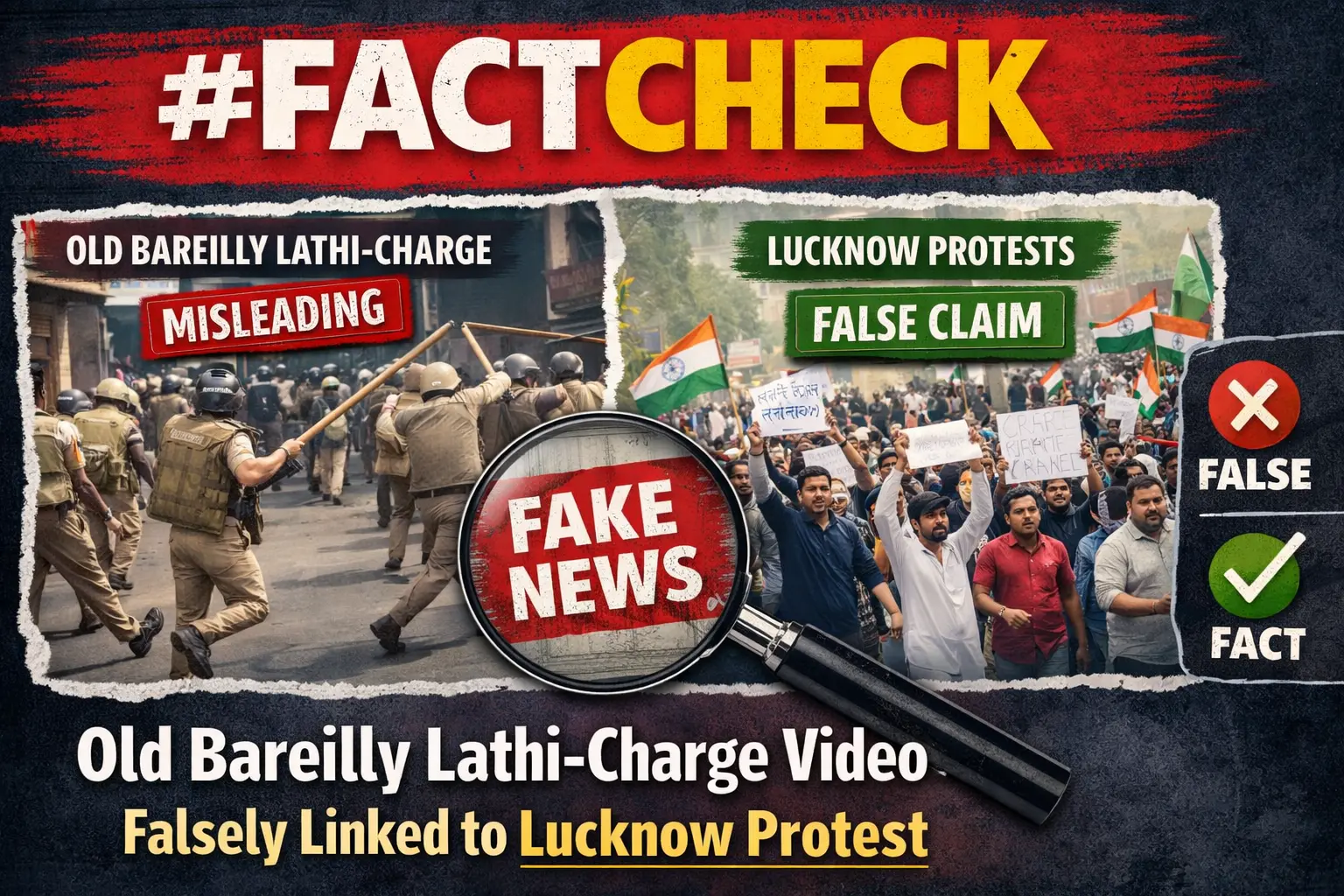
Executive Summary
A video is being widely shared on social media and linked to protests that allegedly took place in Lucknow after the reported killing of Iran’s Supreme Leader Ali Khamenei.Users claim that police in the capital of Uttar Pradesh baton-charged people who were protesting against the United States and Israel. The video is being widely circulated across social media platforms with this claim. However, research by CyberPeace found the claim to be false. Our verification revealed that the video is not from Lucknow but from Bareilly, and it is related to an incident that took place on September 26, 2025, when Uttar Pradesh Police baton-charged protesters during a rally held in support of the “I Love Mohammad” campaign.
Claim Post:
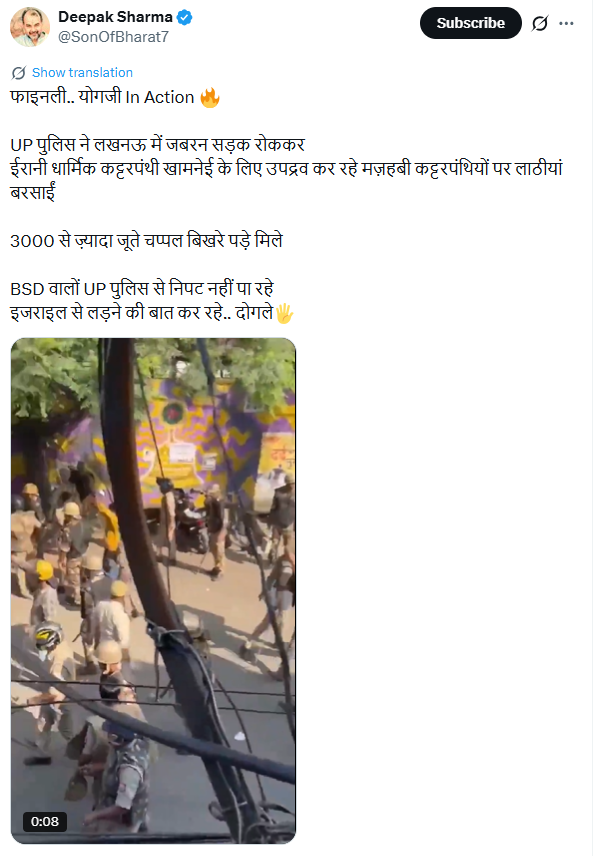
On March 3, 2026, an X (formerly Twitter) user shared the viral video claiming that the Uttar Pradesh Police took action against people blocking roads in Lucknow and creating unrest in support of Ali Khamenei.
Fact Check
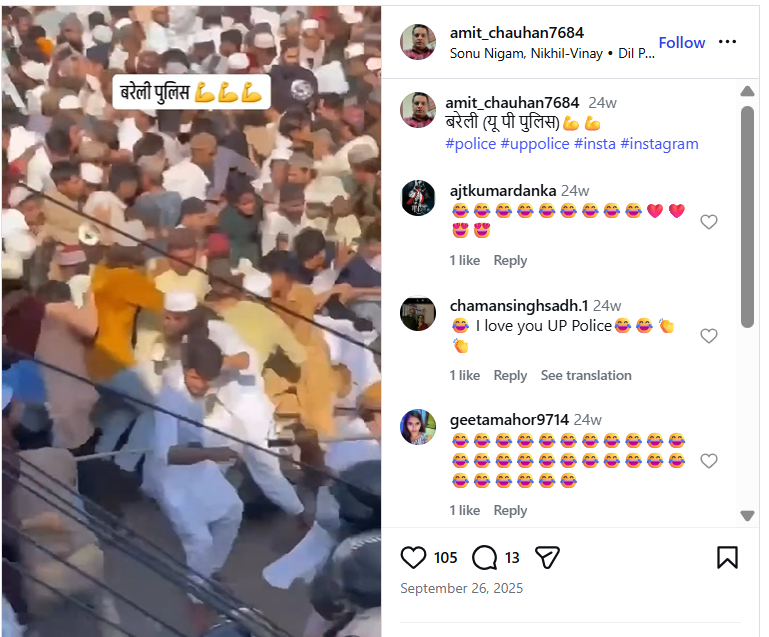
To verify the claim, we extracted key frames from the viral video and conducted a reverse image search using Google Lens. During the search, we found a similar video posted on Instagram on September 26, 2025, indicating that the footage predates the current claim.
Further research led us to the same video on the website of Aaj Tak, where it was published on September 26, 2025.
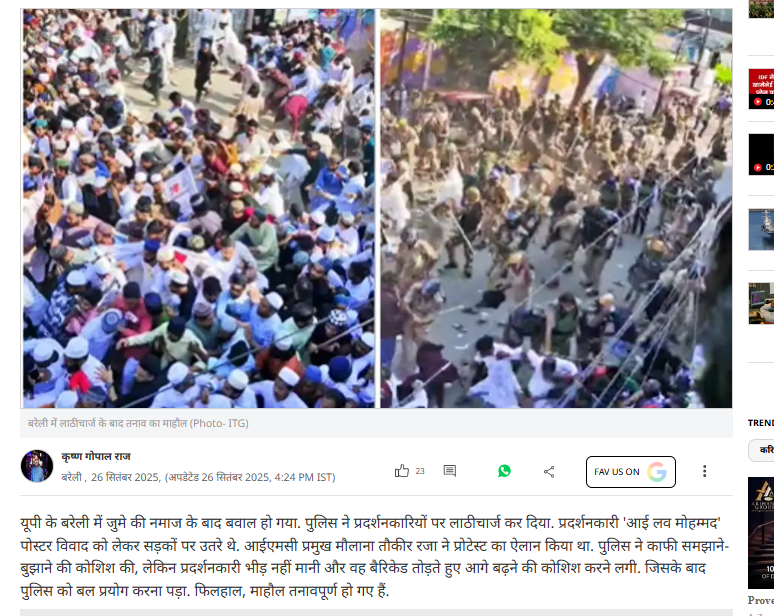
According to the report, protests erupted in Bareilly after Friday prayers over a controversy related to “I Love Mohammad” posters. Hundreds of people took to the streets carrying banners and posters. The report further stated that protesters, responding to a call by cleric Maulana Tauqeer Raza, attempted to break police barricades and move forward. Police initially tried to persuade the crowd to disperse, but when the situation escalated and the crowd refused to back down, officers resorted to baton-charging to control the situation. The incident reportedly led to tension in the area.
Conclusion:
Our research found that the viral video being shared as police action on protesters in Lucknow after the alleged killing of Ali Khamenei is misleading. The footage is actually from Bareilly and shows a police baton-charge during a protest rally held on September 26, 2025 in support of the “I Love Mohammad” campaign.
