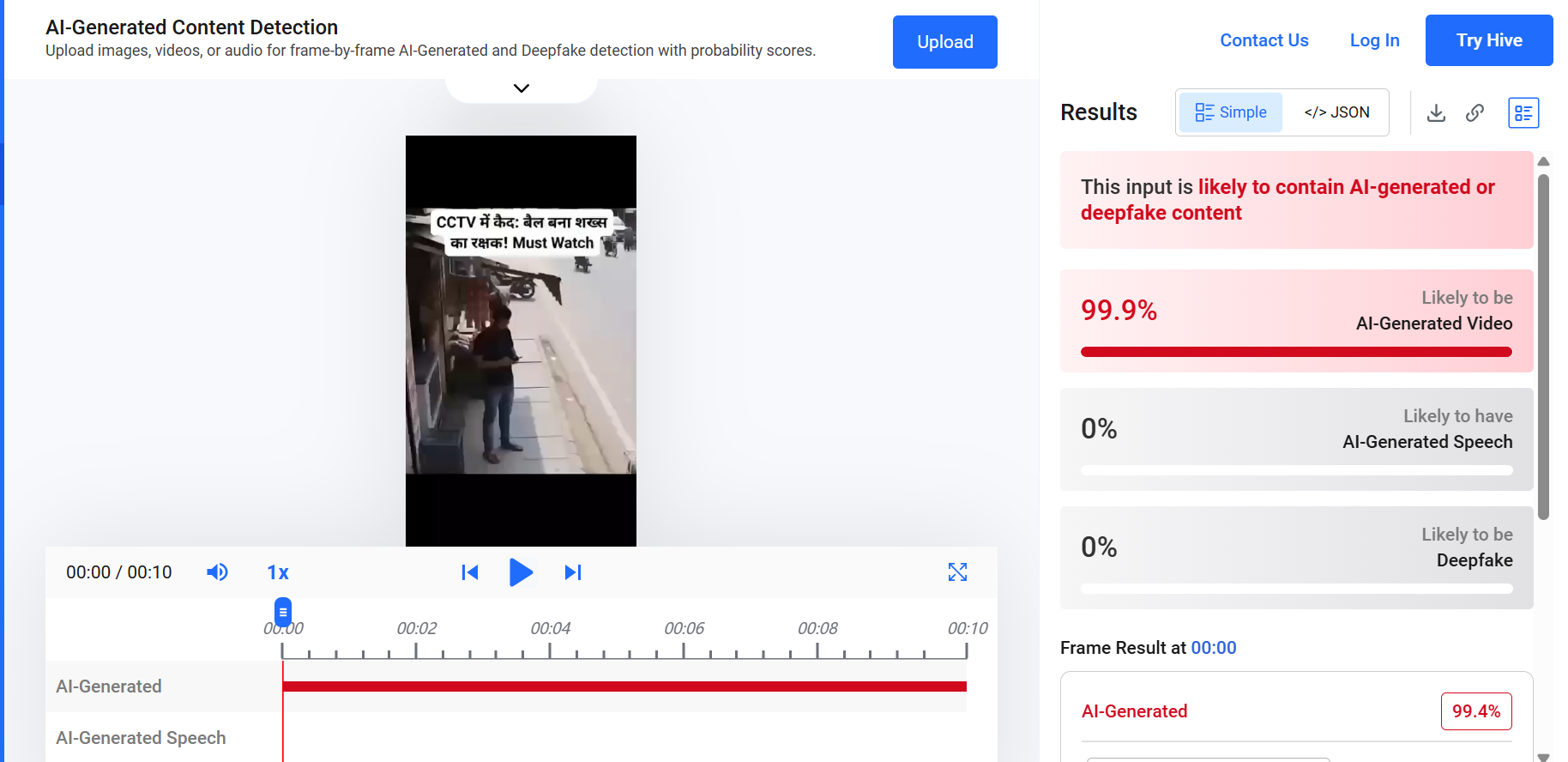
#FactCheck - Viral video of Defence Minister Rajnath Singh supporting Israeli attacks on Iran is a deepfake
Executive Summary:
A video of India’s Defence Minister Rajnath Singh is going viral on social media. The post claims that Rajnath Singh is openly supporting Israeli-American attacks against Iran. In the video, he can allegedly be heard saying that Prime Minister Narendra Modi had visited Israel before the war began and warned Tehran that disturbing peace would have serious consequences.
Research by CyberPeace found that the viral video is a deepfake created using Artificial Intelligence (AI). Rajnath Singh has not made any such statement about Iran or the Israel-US conflict.
Claim
A Facebook user “Sheikh Sadeque Ali” shared the video on March 2, 2026. The caption of the post reads, “Indian Defence Minister Rajnath Singh is supporting Israel’s attack on Iran. This clearly shows that India supports the killing of Muslims.”
In the viral video, Rajnath Singh appears to say in English: “Prime Minister Modi’s visit to Israel before the attack on Iran reflects India’s solidarity with its strategic partner… He warned Tehran that hostile actions would have serious consequences for regional peace.”

Fact Check:
To verify the claim, we extracted keyframes from the viral video and conducted a reverse image search. During the research , we found the original video on Rajnath Singh’s official YouTube channel. The video was uploaded on November 23, 2025.In the original video, Rajnath Singh was addressing a Sindhi community conference in Delhi. During his speech, he was talking about Sindhi culture and the history of Partition. He did not mention Israel, Iran or any Middle East conflict during the entire program.

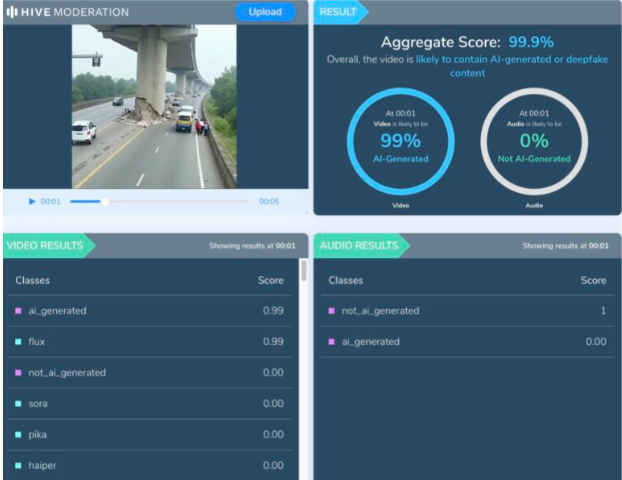
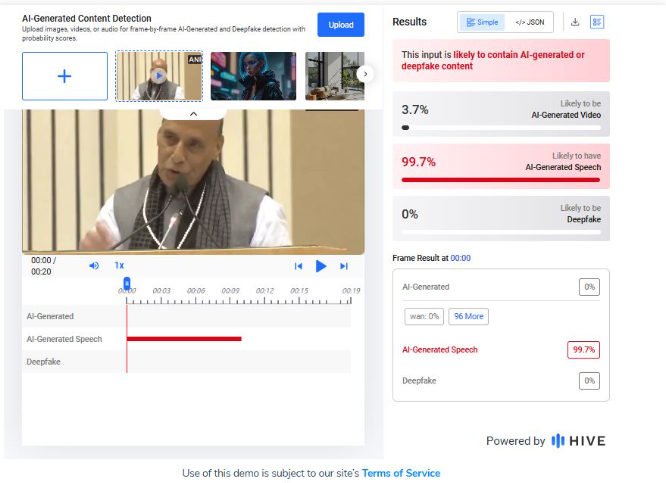
Upon closely examining the viral video, technical inconsistencies between the lip movements and the audio (lip-sync discrepancies) can be observed, which strongly indicate that the video may have been generated using AI. To verify this, we analysed the clip using several AI-detection tools. The AI detection tool Hive Moderation indicated that the video has a 99% probability of being AI-generated.
Conclusion:
Our research found that the viral video of Rajnath Singh is a deepfake. He has not made any statement supporting Israel or opposing Iran. The original video is from a Sindhi community event in Delhi, which has been digitally altered using AI to spread a misleading claim.
Related Blogs

Introduction
Ransomware is one of the serious cyber threats as it causes consequences such as financial losses, data loss, and reputation damage. Recently in 2023, a new ransomware called Akira ransomware emerged or surfaced. It has targeted and affected various enterprises or industries, such as BSFI, Construction, Education, Healthcare, Manufacturing, real estate and consulting, primarily based in the United States. Akira ransomware has targeted industries by exploiting the double-extortion technique by exfiltrating and encrypting sensitive data and imposing the threat on victims to leak or sell the data on the dark web if the ransom is not paid. The Akira ransomware gang has extorted a ransom ranging from $200,000 to millions of dollars.
Uncovering the Akira Ransomware operations and their targets
Akira ransomware gang has gained unauthorised access to computer systems by using sophisticated encryption algorithms to encrypt the Data. When such an encryption process is completed, the affected device or network will not be able to access its files or use its data.
The affected files by Akira ransomware showed the extension named “.akira”, and the file’s icon shows blank white pages. The Akira ransomware has developed a data leak site so as to extort victims. And it has also used the ransom note named “akira_readme.txt”.
Akira ransomware steeled the corporate data of various organisations, which the Akira ransomware gang used as leverage while threatening the affected organisation with high ransom demands. Akira Ransomware gang threaten the victims to leak their sensitive data or corporate data in the public domain if the demanded ransom amount is not paid. Akira ransomware gang has leaked the data of four organisations and the size ranges from 5.9GB to 259 GB of data leakage.
Akira Ransomware gang communicating with Victims
The Akira ransomware has provided a unique negotiation password to each victim to initiate communication. Where the ransomware gang deployed a chat system for the purpose of negotiation and demanding ransom from the affected organisations. They have deployed a ransom note as akira_readme.txt so as to provide information as to how they have affected the victim’s files or data along with links to the Akira data leak site and negotiation site.
How Akira Ransomware is different from Pegasus Spyware
Pegasus, developed in the year 2011, belongs to one of the most powerful family of spyware. Once it has infected, it can spear your phone and your text messages or emails. It has the ability to turn your phone into a surveillance device, from copying your messages to harvesting your photos and recording calls. In fact, it has the ability to record you through your phone camera or record your conversation by using your microphone, it also has the ability to track your pinpoint location. In contrast, newly Akira ransomware affects encrypting your files and preventing access to your Data and then asking for ransom n the pretext of leaking your data or for decryption.
How to recover from malware attacks
If affected by such type of malware attack, you can use anti-malware tools such as SpyHunter 5 or Malwarebytes to scan your system. These are the security software which can scan your system and remove suspicious malware files and entries. If you are unable to perform the scan or antivirus in normal mode due to malware in your system, you can use it in Safe Mode. And try to find a relevant decryptor which can help you to recover your files. Do not fall into a ransomware gang’s trap because there is no guarantee that they will help you to recover or will not leak your data after paying the ransom amount.
Best practices to be safe from such ransomware attacks
Conclusion
The Akira ransomware operation poses serious threats to various organisations worldwide. There is a high need to employ robust cybersecurity measures to safeguard networks and sensitive data. Organisations must ensure to keep their software system updated and backed up to a secure network on a regular basis. Paying the ransom is illegal mean instead you should report the incident to law enforcement agencies and can consult with cybersecurity professionals for the recovery method.

Introduction
Since users are now constantly retrieving critical data on their mobile devices, fraudsters are now focusing on these devices. App-based, network-based, and device-based vulnerabilities are the three main ways of attacking that Mobile Endpoint Security names as mobile threats. Composed of the following features: program monitoring and risk, connection privacy and safety, psychological anomaly and reconfiguration recognition, and evaluation of vulnerabilities and management, this is how Gartner describes Mobile Threat Defense (MTD).
The widespread adoption and prevalence of cell phones among consumers worldwide have significantly increased in recent years. Users of these operating system-specific devices can install a wide range of software, or "apps," from online marketplaces like Google Play and the Apple App Store. The applications described above are the lifeblood of cell phones; they improve users' daily lives and augment the devices' performance. The app marketplaces let users quickly search for and install new programs, but certain malicious apps/links/websites can also be the origin of malware hidden among legitimate apps. These days, there are many different security issues and malevolent attacks that might affect mobile devices.
Unveiling Malware Landscape
The word "malware" refers to a comprehensive category of spyware intended to infiltrate networks, steal confidential data, cause disruptions, or grant illegal access. Malware can take many forms, such as Trojan horses, worms, ransomware, infections, spyware, and adware. Because each type has distinct goals and features, security specialists face a complex problem. Malware is a serious risk to both people and businesses. Security incidents, monetary losses, harm to one's credibility, and legal repercussions are possible outcomes. Understanding malware's inner workings is essential to defend against it effectively. Malware analysis is helpful in this situation. The practice of deconstructing and analysing dangerous software to comprehend its behaviour, operation, and consequences is known as malware analysis.Major threats targeting mobile phones
Viruses: Viruses are self-renewing programs that can steal data, launch denial of service assaults, or enact ransomware strikes. They spread by altering other software applications, adding malicious code, and running it on the target's device. Computer systems all over the world are still infected with viruses, which attack different operating systems like Mac and Microsoft Windows, even though there is a wealth of antiviral programs obtainable to mitigate their impacts.
Worms: Infections are independent apps that propagate quickly and carry out payloads—such as file deletion or the creation of botnets—to harm computers. Worms, in contrast to viruses, usually harm a computer system, even if it's just through bandwidth use. By taking advantage of holes in security or other vulnerabilities on the target computer, they spread throughout computer networks.
Ransomware: It causes serious commercial and organisational harm to people and businesses by encrypting data and demanding payment to unlock it. The daily operations of the victim organisation are somewhat disrupted, and they need to pay a ransom to get them back. It is not certain, though, that the financial transaction will be successful or that they will receive a working translation key.
Adware: It can be controlled via notification restrictions or ad-blockers, tracks user activities and delivers unsolicited advertisements. Adware poses concerns to users' privacy even though it's not always malevolent since the information it collects is frequently combined with information gathered from other places and used to build user profiles without their permission or knowledge.
Spyware: It can proliferate via malicious software or authentic software downloads, taking advantage of confidential data. This kind of spyware gathers data on users' actions without their authorisation or agreement, including:Internet activityBanking login credentialsPasswordsPersonally Identifiable Information (PII)
Navigating the Mobile Security Landscape
App-Centric Development: Regarding mobile security, app-centric protections are a crucial area of focus. Application authorisations should be regularly reviewed and adjusted to guarantee that applications only access the knowledge that is essential and to lower the probability of data misuse. Users can limit hazards and have greater oversight over their confidentiality by closely monitoring these settings. Installing trustworthy mobile security apps also adds another line of protection. With capabilities like app analysis, real-time protection, and antivirus scanning, these speciality apps strengthen your gadget's protection against malware and other harmful activity.
Network Security: Setting priorities for secure communication procedures is crucial for safeguarding confidential data and thwarting conceivable dangers in mobile security. Avoiding unprotected public Wi-Fi networks is essential since they may be vulnerable to cyberattacks. To lessen the chance of unwelcome entry and data surveillance, promote the usage of reliable, password-protected networks instead. Furthermore, by encrypting data transfer, Virtual Private Networks (VPNs) provide additional protection and make it more difficult for malevolent actors to corrupt information. To further improve security, avoid using public Wi-Fi for essential transactions and hold off until a secure network is available. Users can strengthen their handheld gadgets against possible privacy breaches by implementing these practices, which can dramatically lower the risk of data eavesdropping and illegal access.
Constant development: Maintaining a robust mobile security approach requires a dedication to constant development. Adopt a proactive stance by continuously improving and modifying your security protocols. By following up on recurring outreach and awareness campaigns, you can stay updated about new hazards. Because cybersecurity is a dynamic field, maintaining one step ahead and utilising emerging technologies is essential. Stay updated with security changes, implement the newest safeguards, and incorporate new industry standard procedures into your plan. This dedication to ongoing development creates a flexible barrier, strengthening your resistance to constantly evolving mobile security threats.
Threat emergency preparedness: To start, familiarise yourself with the ever-changing terrain associated with mobile dangers to security. Keep updated on new threats including malware, phishing, and illegal access.
Sturdy Device Management: Put in place a thorough approach to device management. This includes frequent upgrades, safe locking systems, and additional safeguarding capabilities like remote surveillance and erasing.
Customer Alertness: Emphasise proper online conduct and acquaint yourself and your team with potential hazards, such as phishing efforts.
Dynamic Measures for a Robust Wireless Safety Plan
In the dynamic field of mobile assurances, taking a proactive strategy is critical. To strengthen safeguards, thoroughly research common risks like malware, phishing, and illegal access. Establish a strong device management strategy that includes frequent upgrades, safe locking mechanisms, and remote monitoring and deletion capabilities for added security.
Promoting user awareness by educating people so they can identify and block any hazards, especially regarding phishing attempts. Reduce the dangers of data eavesdropping and illegal access by emphasising safe communication practices, using Virtual Private Networks (VPNs), and avoiding public Wi-Fi for essential transactions.
Pay close attention to app-centric integrity by periodically checking and modifying entitlements. Downloading trustworthy mobile security apps skilled at thwarting malware and other unwanted activity will enhance your smartphone's defenses. Lastly, create an atmosphere of continuous development by keeping up with new threats and utilising developing technology to make your handheld security plan more resilient overall.
Conclusion
Mobile privacy threats grow as portable electronics become increasingly integrated into daily activities. Effective defense requires knowledge of the various types of malware, such as worms, ransomware, adware, and spyware. Tools for Mobile Threat Defense, which prioritise vulnerability assessment, management, anomaly detection, connection privacy, and program monitoring, are essential. App-centric development, secure networking procedures, ongoing enhancement, threat readiness, strong device control, and user comprehension are all components of a complete mobile security strategy. People, as well as organisations, can strengthen their defenses against changing mobile security threats by implementing dynamic measures and maintaining vigilance, thereby guaranteeing safe and resilient mobile surrounding.
References
https://www.titanfile.com/blog/types-of-computer-malware/
https://www.simplilearn.com/what-is-a-trojan-malware-article
https://www.linkedin.com/pulse/latest-anti-analysis-tactics-guloader-malware-revealed-ukhxc/?trk=article-ssr-frontend-pulse_more-articles_related-content-card
.webp)
Introduction
Google is set to change its storage and access of users' "Location History" in Google Maps, reducing the data retention period and making it impossible for the company to access it. This change will significantly impact "geofence warrants," a controversial legal tool used by authorities to force Google to hand over information about all users within a given location during a specific timeframe. This decision is a significant win for privacy advocates and criminal defense attorneys who have long decried these warrants.
The company aims to protect people's privacy by removing the repository of location data dating back months or years. Geofence warrants, which provide police with sensitive data on individuals, are considered dangerous and could turn innocent people into suspects.
Understanding Geofence Warrants
Geofence warrants, also known as reverse-location warrants, are used by law enforcement agencies to obtain locational data stored by tech companies within a specified geographical area and timeframe to identify devices near a crime scene. In contrast to general warrants, which allow law enforcement agencies to obtain data of one individual (usually the suspect), geofence warrants enable law enforcement authorities to obtain data for all individuals in a specific location and subsequently track and trace any device that may be linked to a crime scene. Geofence warrants have become a major issue, with law enforcement agencies utilising them to obtain location data from tech companies.
Privacy Concerns of Geofence Warrants
While Geofence warrants allow law enforcement agencies to determine and identify potential suspects, these warrants have sparked controversy for their invasive characteristics. Civil rights activities and various technology companies have raised concerns over the impact of these warrants on the rights of data principals. It is noted that geofence warrants mark a rise in cases of state surveillance and police harassment. Not only is any data principal in the vicinity of the crime scene classified as a potential suspect, but companies are also compelled to submit identifying personal data on every device/phone in a marked geographic space.
From Surveillance to Safeguards
Geofence warrants have become a contentious tool for law enforcement worldwide, with concerns over privacy and civil liberties, especially in sensitive situations like protests and healthcare. Google is considering allowing users to store their location data on their devices, potentially ending the use of geofence warrants, which law enforcement agencies use to obtain location data from tech companies.
Google is changing its handling of Location History data, moving it on-device instead of on its servers. The default data retention period will be reduced. Google Maps' product director, Marlo McGriff, stated that the company will automatically encrypt backed-up data for cloud backups, preventing anyone from reading it. When these changes are implemented, Google will have no geodata fishing options for users. Google confirmed that it will no longer be able to respond to new geofence warrants once these changes are implemented, as it will not have access to the relevant data. The changes were designed to put an end to dragnet searches of location data.
Conclusion
Google's decision to change storage and access policies for users' location history in Google Maps marks a pivotal step in the ongoing narrative of law enforcement's misuse of geofence warrants. This move aims to safeguard individual privacy by significantly restricting the data retention period and limiting Google's ability to comply with geofence warrants. This change is welcomed by privacy advocates and legal professionals who express concerns over the intrusive nature of these warrants, which may potentially turn innocent individuals into suspects based on their proximity to a crime scene. As technology companies take steps to enhance user privacy, the evolving landscape calls for a balance between law enforcement needs and protecting individual rights in an era of increasing digital surveillance.
References:
- https://telecom.economictimes.indiatimes.com/news/internet/google-to-end-geofence-warrant-requests-for-users-location-data/106081499
- https://www.forbes.com/sites/cyrusfarivar/2023/12/14/google-just-killed-geofence-warrants-police-location-data/?sh=313da3c32c86
- https://timesofindia.indiatimes.com/gadgets-news/explained-how-google-maps-is-preventing-authorities-from-accessing-users-location-history-data/articleshow/106086639.cms