
#FactCheck- Viral video of UP Police patrolling on e-rickshaw is AI-generated
Executive Summary
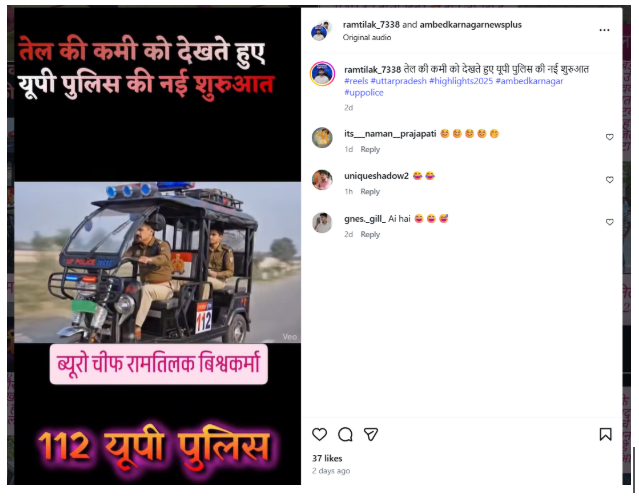
A video is being widely shared on social media showing a police officer driving an e-rickshaw, while two other policemen are seen in the back seat. Users sharing the clip claim that, due to a shortage of petrol, this is a new initiative by the Uttar Pradesh Police. However, research by CyberPeace found the viral claim to be false. Our research also confirms that the video is not real but AI-generated.
Claim
An Instagram user shared the viral video claiming that due to fuel shortages, Uttar Pradesh Police has started patrolling using e-rickshaws.
- Post link: https://www.instagram.com/reel/DWepKWXAeiE/
- Archive: https://archive.ph/QBNXs
Fact Check
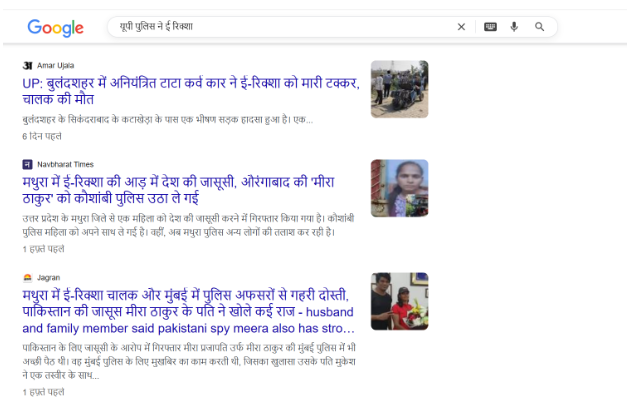
To verify the claim, we first conducted a keyword search on Google but found no credible media reports supporting this claim.
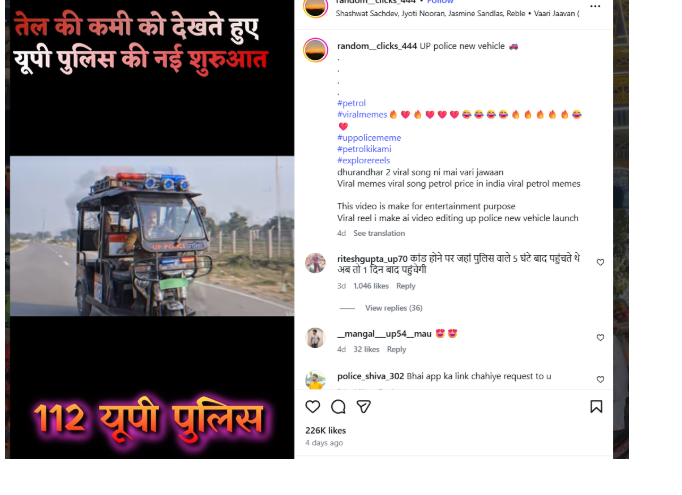
Next, we extracted keyframes from the viral video and performed a reverse image search using Google Lens. During this process, we found the same video uploaded on an Instagram channel on March 28, 2026. The uploader clearly mentioned that the video was created purely for entertainment purposes.
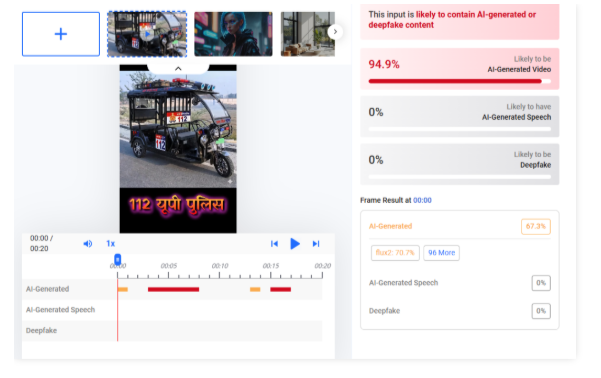
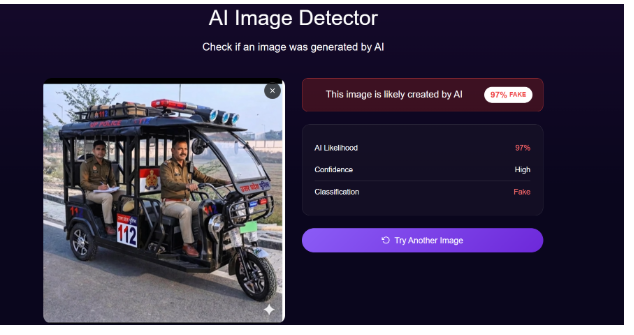
We further analyzed the video using AI detection tools. When scanned with Hive Moderation, the results indicated that the video is approximately 94% AI-generated.
In the next step, we also tested the clip using DeepAI. According to its analysis, the video is about 97% AI-generated.
Conclusion
Our research clearly shows that the viral video is not authentic. It is an AI-generated clip created for entertainment purposes, and the claim that Uttar Pradesh Police has started e-rickshaw patrolling due to petrol shortage is false.

Related Blogs
Executive Summary
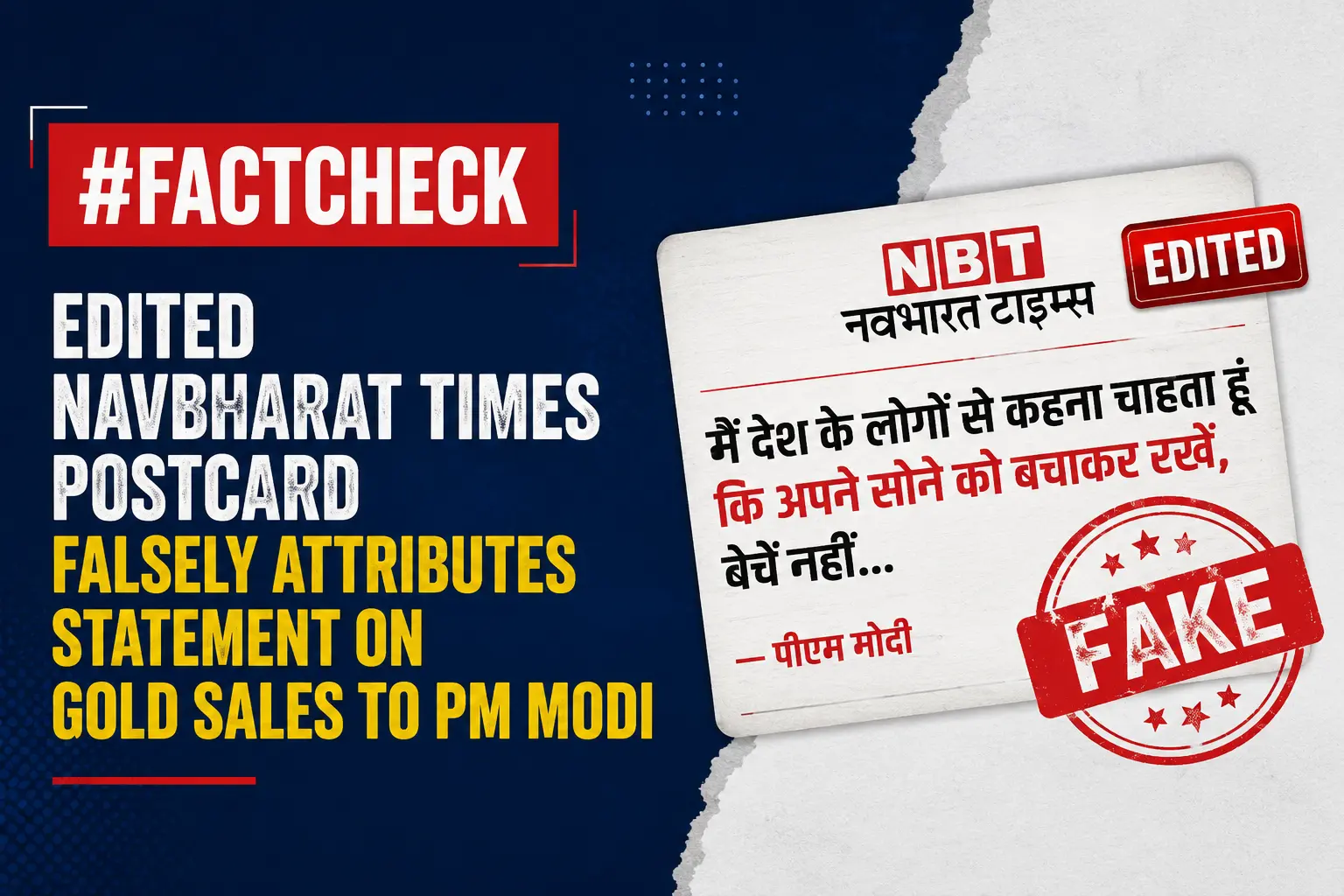
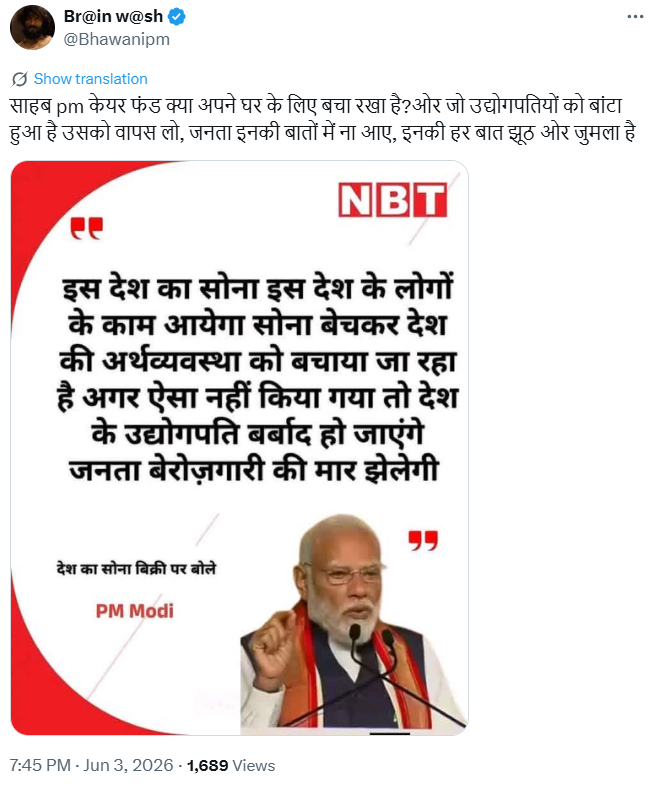
A postcard carrying the logo of Navbharat Times and featuring Prime Minister Narendra Modi is being widely shared on social media. The postcard quotes Modi as allegedly saying, “The gold of this country will be used for the people of this country. Gold is being sold to save the economy. If this is not done, the country's industrialists will be ruined and people will suffer from unemployment.”Based on this postcard, users are claiming that Prime Minister Modi justified the sale of the country's gold reserves by saying it was necessary to protect the economy and prevent industrialists from facing losses. However, CyberPeace Research Wing research found that Prime Minister Modi never made such a statement. The viral Navbharat Times postcard has been digitally edited.
Claim
An X user with the handle “Brainwash” shared the postcard and wrote: “Sir, have you kept the PM CARES Fund for your own household? Take back the money distributed to industrialists. People should not fall for these claims. Everything they say is false and mere rhetoric.”
https://x.com/Bhawanipm/status/2062259463084785666
Fact Check
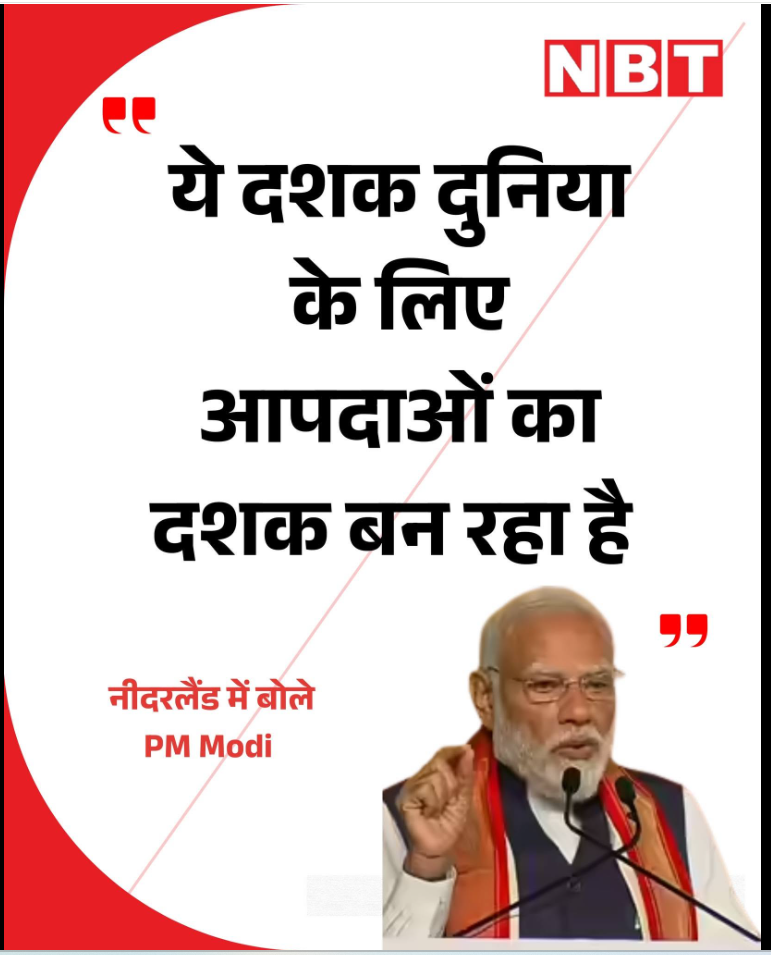
To verify the claim, we conducted keyword searches related to the purported statement. However, we found no credible reports, speeches, interviews, or official records in which Prime Minister Modi made such remarks about selling the country's gold reserves. We then examined the viral postcard and searched the social media handles of Navbharat Times for the original post. During this process, we found a similar postcard published on the Facebook page of Navbharat Times Uttar Pradesh on May 16, 2026. The design, layout, and image matched the viral postcard. However, the original post carried a completely different quote attributed to Prime Minister Modi.
The original postcard quoted Modi as saying: “This decade is becoming a decade of disasters for the world.”
https://www.facebook.com/photo/?fbid=1505172121619709&set=a.685493923587537
Conclusion
Prime Minister Narendra Modi has not made any statement claiming that the country's gold is being sold to save the economy or to protect industrialists from losses. The viral Navbharat Times postcard has been digitally edited, and the quote attributed to Modi is fabricated.
Executive Summary
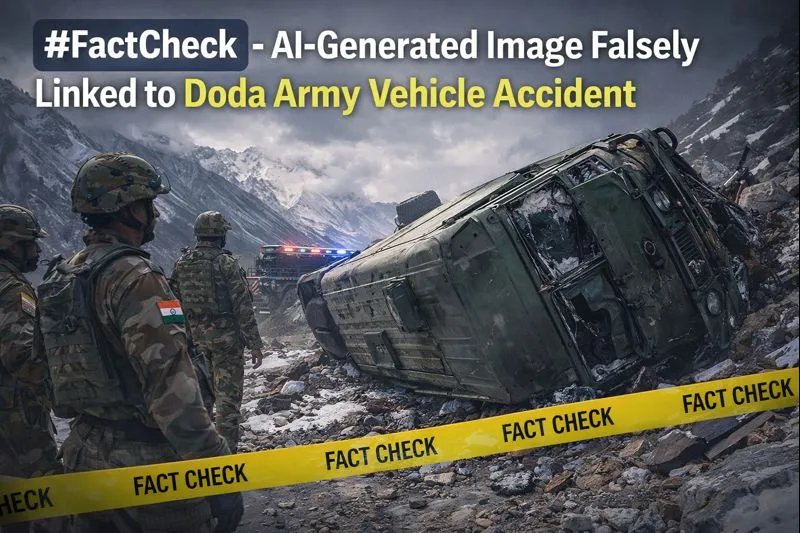
On January 22, an Indian Army vehicle met with an accident in Jammu and Kashmir’s Doda district, resulting in the death of 10 soldiers, while several others were injured. In connection with this tragic incident, a photograph is now going viral on social media. The viral image shows an Army vehicle that appears to have fallen into a deep gorge, with several soldiers visible around the site. Users sharing the image are claiming that it depicts the actual scene of the Doda accident.
However, an research by the CyberPeacehas found that the viral image is not genuine. The photograph has been generated using Artificial Intelligence (AI) and does not represent the real accident. Hence, the viral post is misleading.
Claim
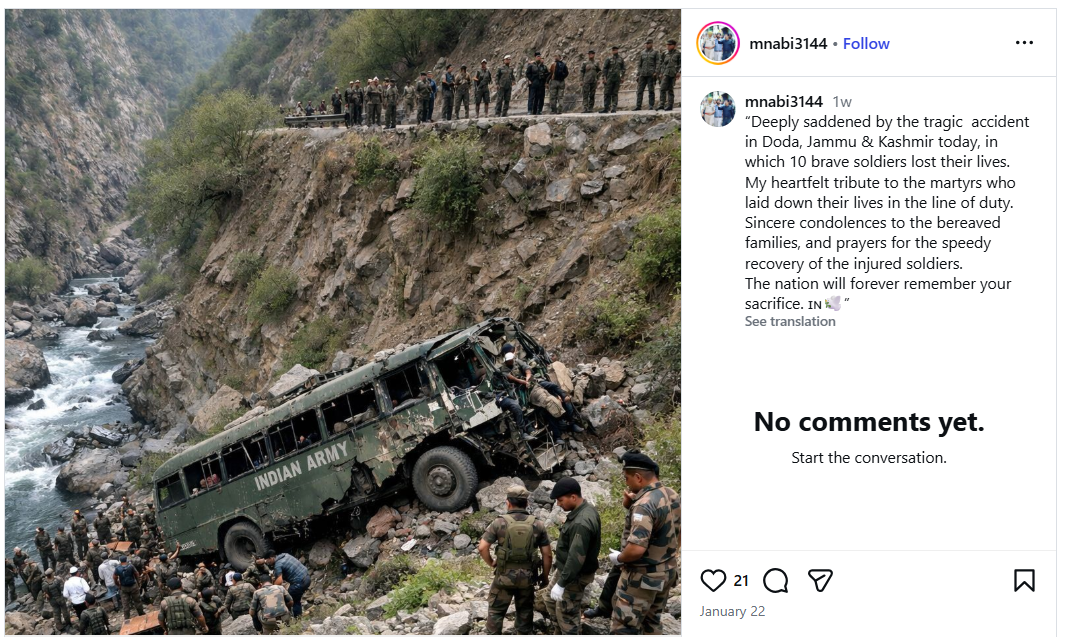
An Instagram user shared the viral image on January 22, 2026, writing:“Deeply saddened by the tragic accident in Doda, Jammu & Kashmir today, in which 10 brave soldiers lost their lives. My heartfelt tribute to the martyrs who laid down their lives in the line of duty.Sincere condolences to the bereaved families, and prayers for the speedy recovery of the injured soldiers.The nation will forever remember your sacrifice.”
The link and screenshot of the post can be seen below.
- https://www.instagram.com/p/DT0UBIRk_3k/
- https://archive.ph/submit/?url=https%3A%2F%2Fwww.instagram.com%2Fp%2FDT0UBIRk_3k%2F+
Fact Check:
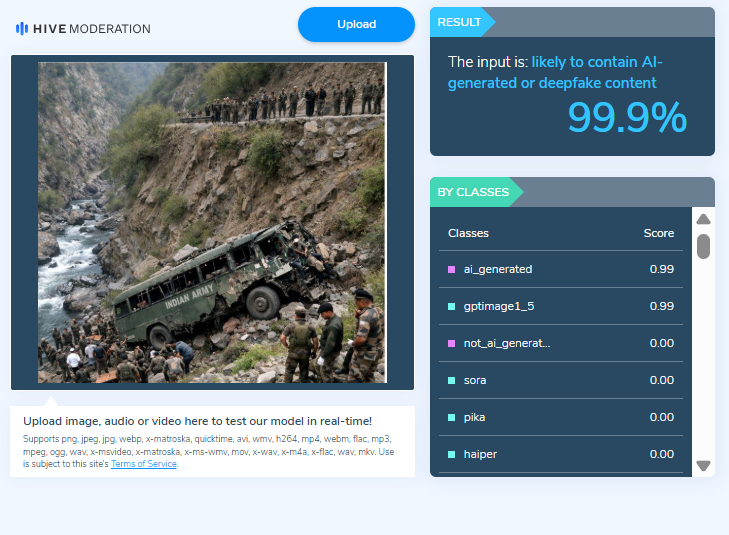
To verify the claim, we first closely examined the viral image. Several visual inconsistencies were observed. The structure of the soldier visible inside the damaged vehicle appears distorted, and the hands and limbs of people involved in the rescue operation look unnatural. These anomalies raised suspicion that the image might be AI-generated. Based on this, we ran the image through the AI detection tool Hive Moderation, which indicated that the image is over 99.9% likely to be AI-generated.
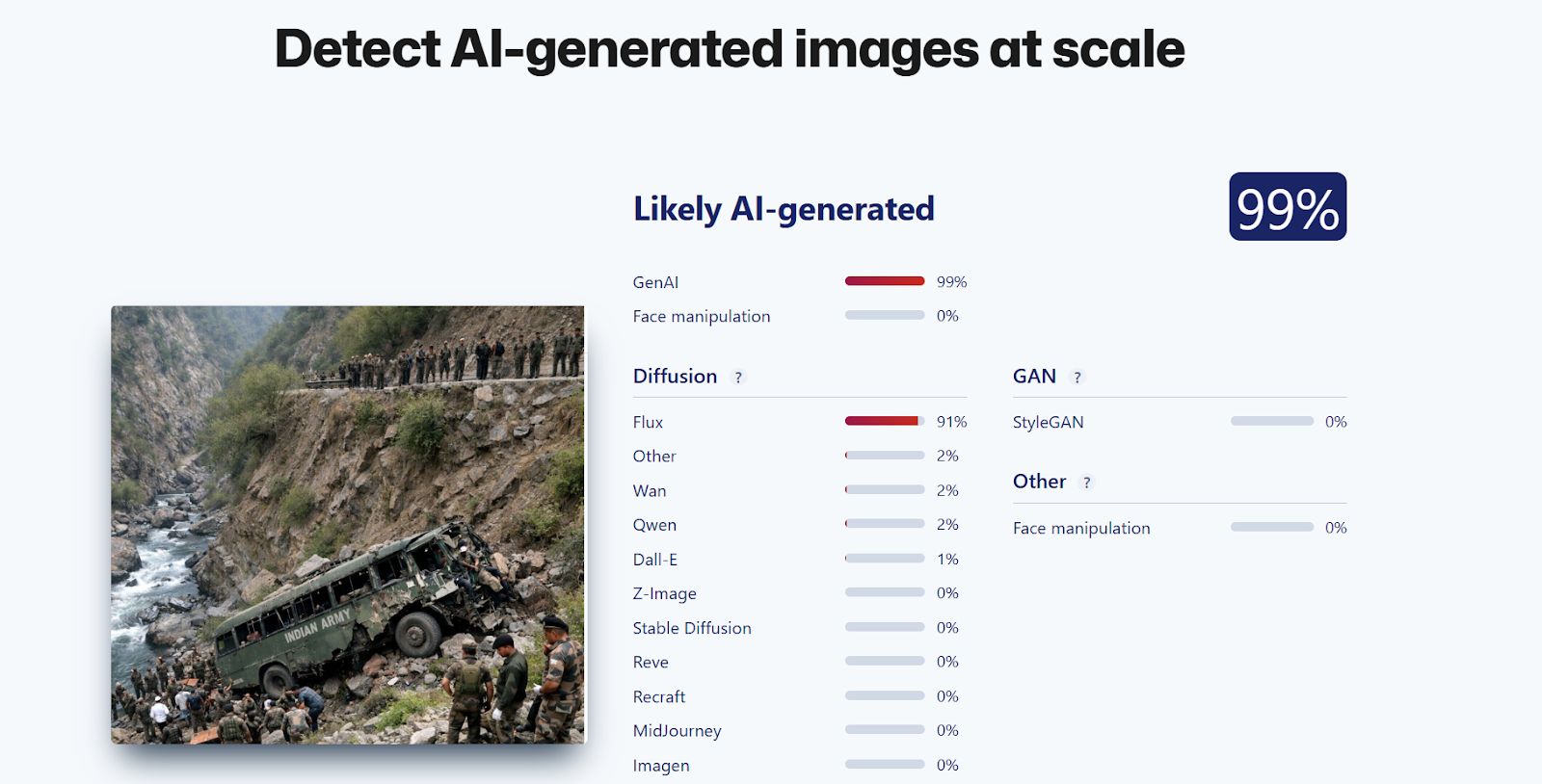
Another AI image detection tool, Sightengine, also flagged the image as 99% AI-generated.
During further research , we found a report published by Navbharat Times on January 22, 2026, which confirmed that an Indian Army vehicle had indeed fallen into a deep gorge in Doda district. According to officials, 10 soldiers were killed and 7 others were injured, and rescue operations were immediately launched.
However, it is important to note that the image circulating on social media is not an actual photograph from the incident.
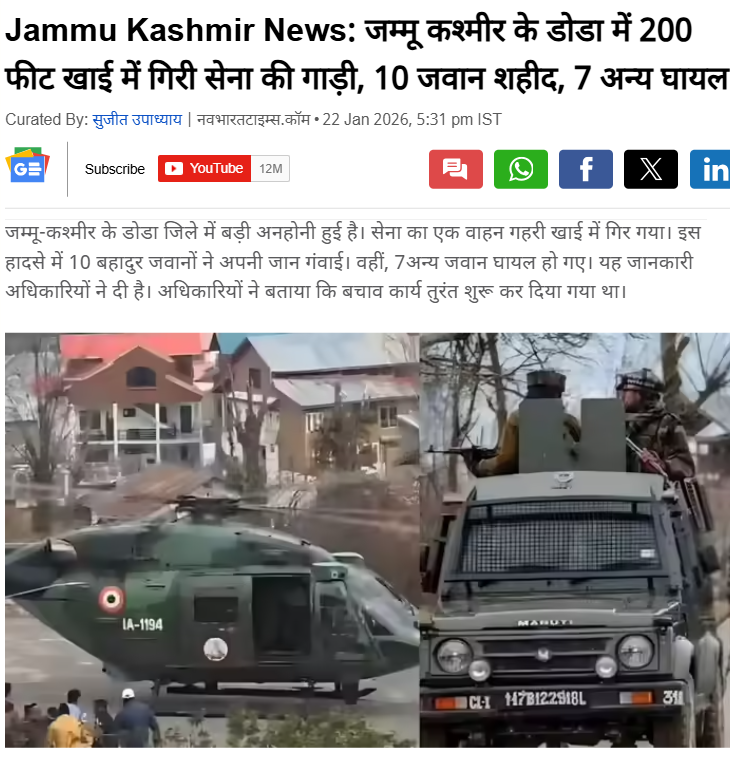
Conclusion
CyberPeace research confirms that the viral image linked to the Doda Army vehicle accident has been created using Artificial Intelligence. It is not a real photograph from the incident, and therefore, the viral post is misleading.
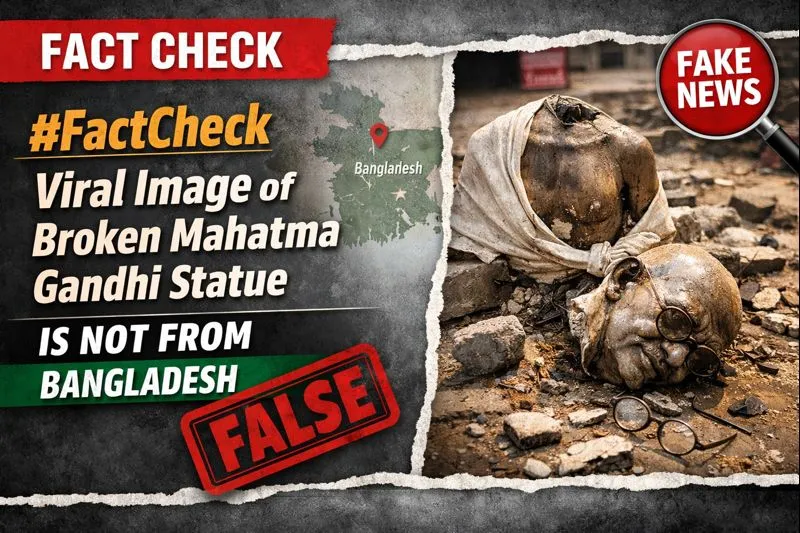
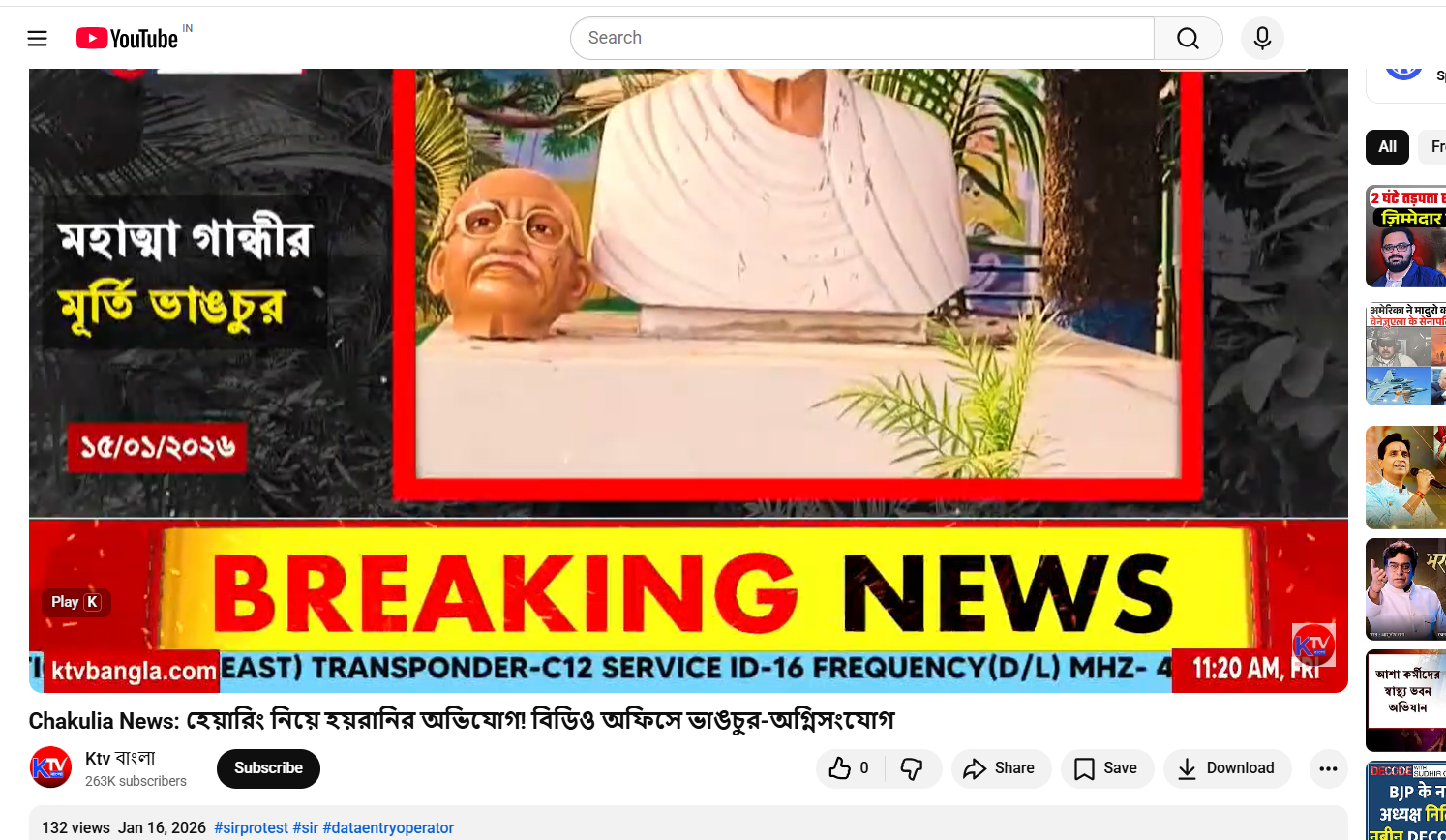
An image showing a damaged statue of Mahatma Gandhi, broken into two pieces, is being widely shared on social media. The image shows Gandhi’s statue with its head separated from the body, prompting strong reactions online.
Social media users are claiming that the incident occurred in Bangladesh, alleging that Mahatma Gandhi’s statue was deliberately vandalised there. The image is being described as a recent incident and is being circulated across platforms with provocative and inflammatory captions.
Cyber Peace Foundation’s research and verification found that the claim being shared online is misleading. Our rsearch revealed that the viral image is not from Bangladesh. The image is actually from Chakulia in Uttar Dinajpur district of West Bengal, India
Claim:
Social media users claim that Mahatma Gandhi’s statue was vandalised in Bangladesh, and that the viral image shows a recent incident from the country.One Facebook user shared the video on 19 January 2026, making derogatory remarks and falsely linking the incident to Bangladesh. The post has since been widely shared on social media platforms. (Archived links and screenshots are available.)
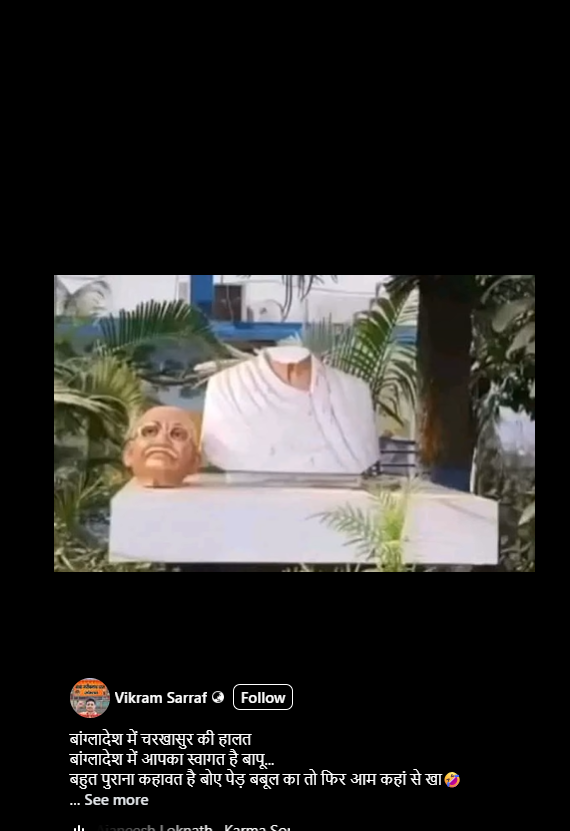
Fact Check:
Our research revealed that the viral image is not from Bangladesh. The image is actually from Chakulia in Uttar Dinajpur district of West Bengal, India. To verify the claim, we conducted a reverse image search using Google Lens on key frames from the viral video. This led us to a report published by ABP Live Bangla on 16 January 2026, which featured the same visuals. Link and screenshot
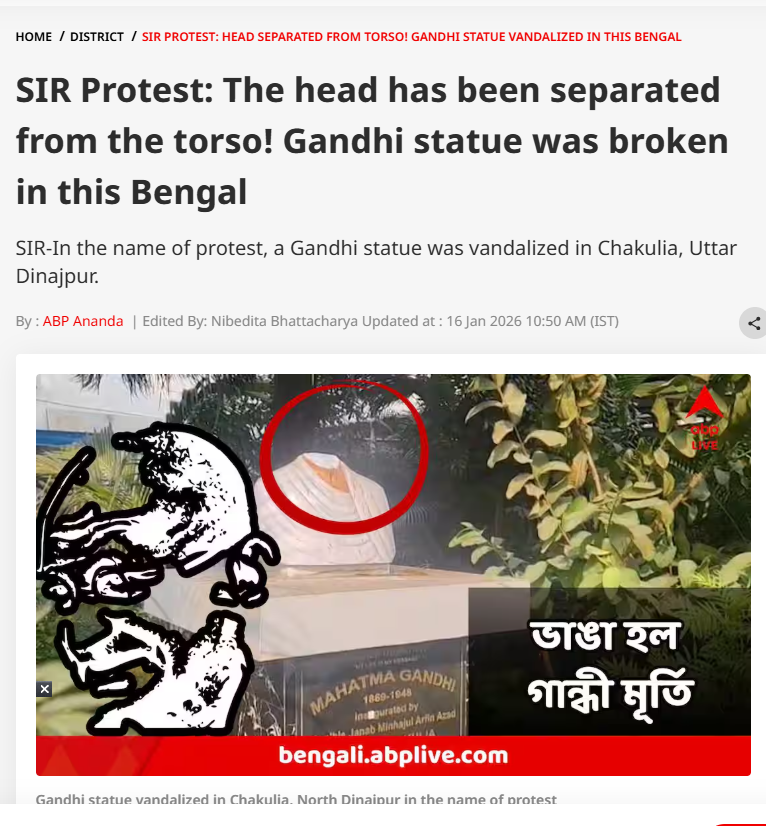
According to ABP Live Bangla, the statue of Mahatma Gandhi was damaged during a protest in Chakulia. The statue’s head was found separated from the body. While a portion of the broken statue remained at the site on Thursday night, it was reported missing by Friday morning. The report further stated that extensive damage was observed at BDO Office No. 2 in Golpokhar. Gandhi’s statue, located at the entrance of the administrative building, was found broken, and ashes were discovered near the premises. Government staff were seen clearing scattered debris from the site.
The incident reportedly occurred during a SIR (Special Intensive Revision) hearing at the BDO office, which was disrupted due to vandalism. In connection with the violence and damage to government property, 21 people have been arrested so far. In the next stage of verification, we found the same footage in a 16 January 2026 report by local Bengali news channel K TV, which also showed clear visuals of the damaged Mahatma Gandhi statue. Link and screenshot.
Conclusion:
The viral image of Mahatma Gandhi’s broken statue does not depict an incident from Bangladesh. The image is from Chakulia in West Bengal’s Uttar Dinajpur district, where the statue was damaged during a protest.
