
Valentine’s Day - Online Scams to Watch Out For
Introduction
Valentine’s Day celebrates the bond between people, their romantic love, and their deep relationships with others. The increasing use of digital platforms in modern relationships has created a situation where cybercriminals use this time of year to exploit human emotions for money-making schemes. The period around 14 February often sees a rise in online romance scams, phishing attacks, and fake shopping websites that specifically target people who are emotionally vulnerable and active online. People need to be aware of these scams because this awareness helps them protect their personal information and their financial resources.
The Rise of Romance Scams
Modern romance scams have evolved from their original form because criminals now execute their schemes through more advanced methods. Fraudsters create authentic-looking fake identities, which they use to deceive victims through dating applications, social media platforms and networking websites. The profiles use stolen images and fake job histories, together with convincing emotional stories, which help them establish trust with potential victims.
Scammers usually begin their deception after they have built an emotional connection with their targets. Once trust is established, they introduce a crisis or an opportunity that pressures the victim to act quickly. This is often presented as a problem that needs urgent help or a chance that should not be missed, such as:
- A sudden medical emergency that requires money for treatment
- Requests for travel expenses to finally come and meet in person
- Fake investment opportunities that promise quick or guaranteed returns
- Demands for customs, courier, or clearance fees to release a supposed package or gift
They make the victim give money to them and buy gift cards and handle personal banking details. The scam takes place for several weeks or months until the victim starts to show doubt about what is happening. The psychological manipulation that occurs in romance scams causes severe harm to their victims. Victims experience two types of damage because criminals steal their money, and they suffer emotional pain, and their social standing gets damaged.
Fake E-Commerce and “Valentine’s Deals”
Valentine's Day marks the beginning of a shopping rush, which leads people to buy various gifts, including flowers, jewellery and customised products, as well as making reservations for events. Cybercriminals create fake websites to exploit this demand by providing fake discounts and temporary promotional offers.
Common warning signs include:
- Newly registered domains that lack valid user reviews
- Websites that contain multiple spelling mistakes and display poor design
- Payment requests through methods that cannot be tracked
- Online platforms that lack secure payment processing systems
Consumers who make purchases on such sites face the risk of losing money while their card information is stolen for future fraudulent activities.
Phishing in the Name of Love
During the holiday season, phishing campaigns increase their focus on particular targets. Users may receive:
- Valentine's Day discount emails
- Messages that claim to show secret admirer intentions
- Links that lead to supposed romantic surprises
- Delivery notifications that inform about unreceived gifts
Malicious links result in credential theft, malware installation and unauthorised financial transactions. At first glance, these attacks show resemblance to authentic brands and logistics companies, which makes them hard to identify.
Investment and Crypto Romance Fraud
A rising type of romance scams now uses cryptocurrency and online trading platforms as their new approach. Scammers who establish trust with their victims will convince them to invest in digital assets that appear to generate high returns. The fake dashboards display excellent investment results to convince investors to commit more funds. The process stops when they block all withdrawal requests and stop all contact with the user. The combination of emotional manipulation with financial fraud shows how cybercrime develops according to technological advancements.
Why Seasonal Scams Work
Seasonal scams succeed because they match the predictable behaviour patterns that people exhibit during specific times of the year. During Valentine’s season:
- People experience their highest emotional vulnerability
- People shop more frequently through online platforms
- People use digital platforms at increased rates
- Users will decrease their level of scepticism while trying to establish connections with others
Cybercriminals use urgent situations together with emotional ties and social norms as their primary attack methods. The combination of psychological triggers and digital convenience creates fertile ground for deception.
CyberPeace Recommendations for Staying Safe This Valentine’s Season
The digital platforms provide people who search for connections with valuable opportunities to connect with others, yet users must remain careful about their online activities. People can protect themselves from online fraud by following these steps:
- They should confirm identity details before they give away their private data.
- They should not send money to people whom they met only through internet platforms.
- They should verify website ownership and examine customer feedback before making online purchases.
- They should activate multi-factor authentication for their social media accounts and financial accounts.
- People should treat unexpected links with great care, especially those links that create a sense of urgency.
- The Cybercrime reporting portal www.cybercrime.gov.in with 24x7 helpline 1930 is an effective tool at the disposal of victims of cybercrimes to report their complaints.
- In case of any cyber threat, issue or discrepancy, you can also seek assistance from the CyberPeace Helpline at +91 9570000066 or write to us at helpline@cyberpeace.net. Immediate reporting protects victims and helps to combat cybercrime.
Conlusion
Online safety during festive seasons requires shared responsibility among multiple parties. Digital resilience is strengthened through the combined efforts of platforms, financial institutions, regulators, and civil society organisations. The digital ecosystem becomes safer through three essential elements, which include awareness campaigns, stronger verification systems, and timely reporting mechanisms.
Valentine’s Day centres on the building of trust between people who want to connect with each other. To maintain trust in digital environments, users need to practice digital literacy skills, which should be shared by everyone. People who stay updated about cybersecurity threats can celebrate Valentine’s Day more safely, because their expressions of love remain protected from online scams.
References
- https://www.cloudsek.com/blog/valentines-day-cyber-attack-landscape-exploiting-love-through-digital-deception
- https://about.fb.com/news/2025/02/how-avoid-romance-scams-this-valentines-day/
- https://www.fbi.gov/contact-us/field-offices/sanfrancisco/fbi-san-francisco-warns-romance-scams-increasing-across-the-bay-area-this-valentines-day
- https://abc11.com/post/romance-scams-surge-ahead-valentines-day/18581079/
- https://www.moneycontrol.com/technology/5-common-online-scams-you-should-avoid-this-valentine-s-day-article-13820108.html

Related Blogs

Executive Summary:
A viral post currently circulating on various social media platforms claims that Reliance Jio is offering a ₹700 Holi gift to its users, accompanied by a link for individuals to claim the offer. This post has gained significant traction, with many users engaging in it in good faith, believing it to be a legitimate promotional offer. However, after careful investigation, it has been confirmed that this post is, in fact, a phishing scam designed to steal personal and financial information from unsuspecting users. This report seeks to examine the facts surrounding the viral claim, confirm its fraudulent nature, and provide recommendations to minimize the risk of falling victim to such scams.
Claim:
Reliance Jio is offering a ₹700 reward as part of a Holi promotional campaign, accessible through a shared link.

Fact Check:
Upon review, it has been verified that this claim is misleading. Reliance Jio has not provided any promo deal for Holi at this time. The Link being forwarded is considered a phishing scam to steal personal and financial user details. There are no reports of this promo offer on Jio’s official website or verified social media accounts. The URL included in the message does not end in the official Jio domain, indicating a fake website. The website requests for the personal information of individuals so that it could be used for unethical cyber crime activities. Additionally, we checked the link with the ScamAdviser website, which flagged it as suspicious and unsafe.


Conclusion:
The viral post claiming that Reliance Jio is offering a ₹700 Holi gift is a phishing scam. There is no legitimate offer from Jio, and the link provided leads to a fraudulent website designed to steal personal and financial information. Users are advised not to click on the link and to report any suspicious content. Always verify promotions through official channels to protect personal data from cybercriminal activities.
- Claim: Users can claim ₹700 by participating in Jio's Holi offer.
- Claimed On: Social Media
- Fact Check: False and Misleading
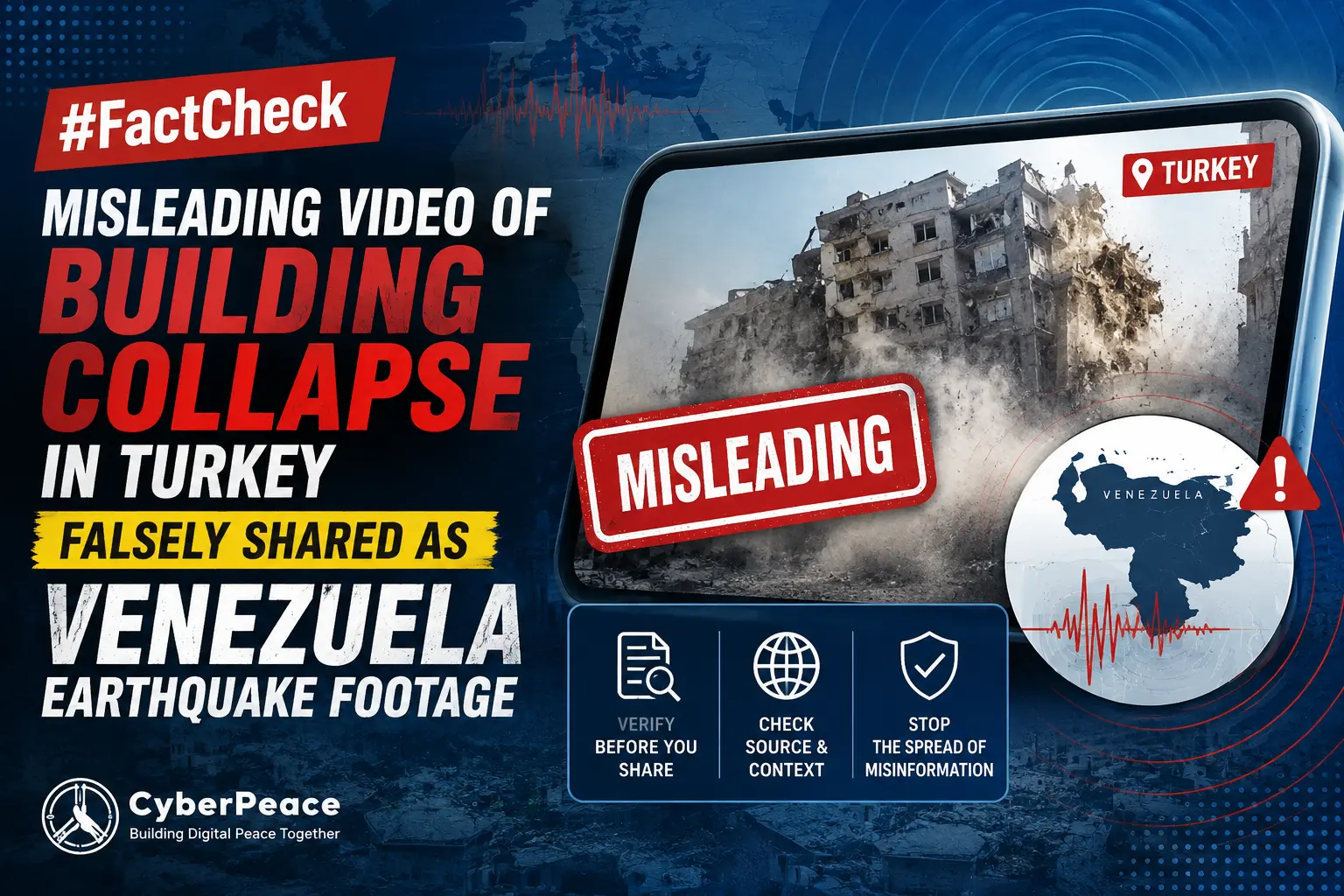
Executive Summary
A video is being widely shared on social media, claiming it shows a terrifying scene from a recent earthquake in Venezuela. The 9-second clip shows a multi-storey building collapsing like a house of cards, while people nearby are seen running in panic as chaos unfolds. The video is being widely circulated by users as evidence of massive destruction caused by the alleged earthquake in Venezuela. CyberPeace Research Wing research found the claim to be misleading. The viral video has no connection to any recent earthquake in Venezuela. In fact, the footage is from a completely different event that took place nearly three years ago in Turkey. It is being falsely shared with a wrong context on social media.
Claim:
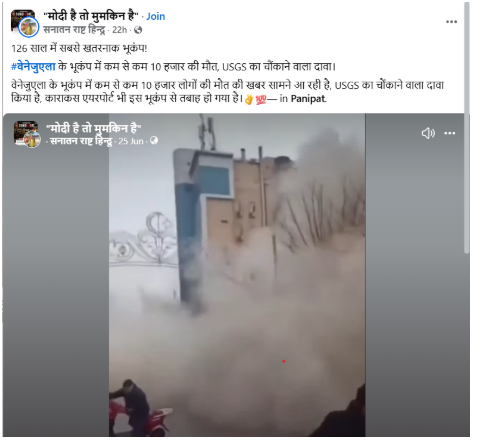
A Facebook user shared the viral video with the caption: “The most dangerous earthquake in 126 years! At least 10,000 deaths in Venezuela earthquake, shocking claim by USGS. Reports say massive destruction has occurred, Caracas airport has also been destroyed. Statement by Yogi Adityanath after Bharat Tiwari’s encounter.” The post link, archived link, and screenshots are provided below.
https://www.facebook.com/groups/2438255879794217/posts/4830038697282578/
FactCheck
To verify the claim, we performed a reverse image search of the video keyframes using Google Lens. During the search, we found the same video on WION’s Facebook page, where it was published on February 6, 2023. The original post link and screenshots are provided below. https://www.facebook.com/watch/?v=917786002738401
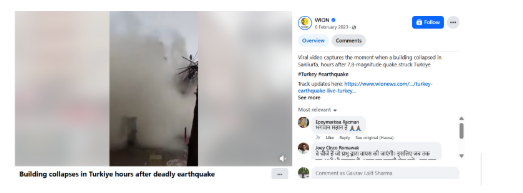
The original caption of the video clearly states that it shows a building collapse in Sanliurfa, Turkey, occurring hours after the 7.8-magnitude earthquake that struck the country. Based on clues from the Facebook post, we further searched using relevant keywords and found a report published by The Guardian on February 6, 2023, which also included the viral footage. https://www.theguardian.com/world/video/2023/feb/06/building-collapses-earthquake-aftershock-turkey-video
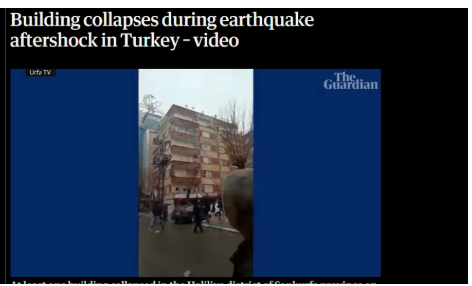
The report confirms that the video is from the aftermath of the devastating 2023 Turkey earthquake in Sanliurfa, not Venezuela.
Conclusion:
Our research confirms that the viral video has no connection to any recent earthquake in Venezuela. The footage is actually from the 2023 Turkey earthquake and is being falsely shared with a misleading context on social media.
.webp)
Executive
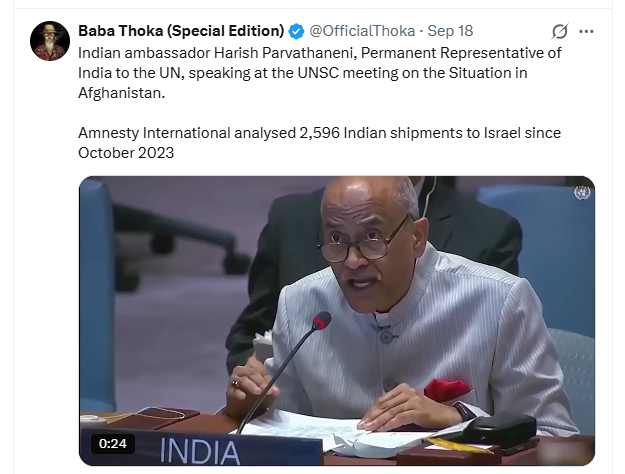
An Indian official is seen allegedly speaking at a United Nations Security Council (UNSC) meeting, where he is purportedly defending India’s supply of weapons to Israel. The video claims that India is fulfilling its defence export commitments despite allegations concerning the supply of small arms, ammunition and military vehicles to Israel since October 2023, including shipments by government-owned companies. CyberPeace Research Wing found that Permanent Representative of India to the UN Parvathaneni Harish did not make any such statement at the UNSC. His AI-manipulated video is being circulated on social media with a misleading claim.
Claim
Indian ambassador Harish Parvathaneni, Permanent Representative of India to the UN, speaking at the UNSC meeting on the Situation in Afghanistan. Amnesty International analysed 2,596 Indian shipments to Israel since October 2023
https://x.com/OfficialThoka/status/2100656814660743174?s=20
Fact Check
To investigate the video, we first converted it into keyframes and then conducted a reverse image search of those frames using Google Lens. We found the original video posted on the official X handle of the Permanent Mission of India to the United Nations. The post was accompanied by the caption: “#IndiaAtUN Statement by Permanent Representative Parvathaneni Harish at the quarterly UN Security Council meeting on the situation in Afghanistan.” We reviewed Parvathaneni Harish’s complete statement but found no such remarks as those shown in the video being circulated on social media. In his address, Harish did not make any reference to supplying weapons to Israel.
https://x.com/IndiaUNNewYork/status/2100275501851877641?s=20
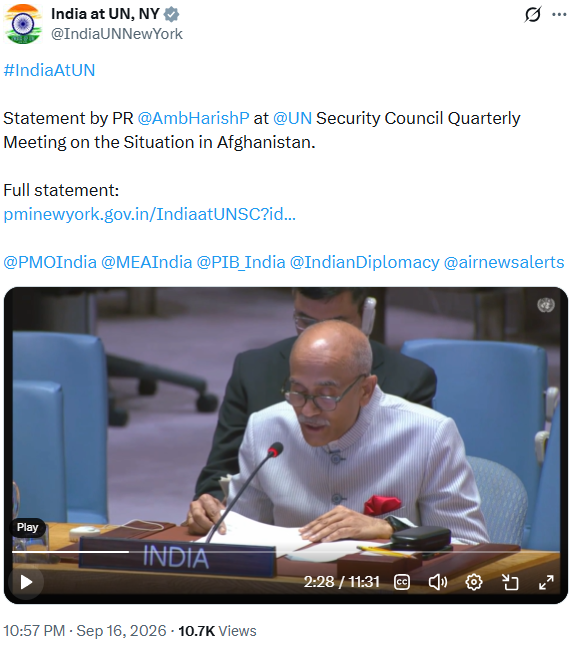
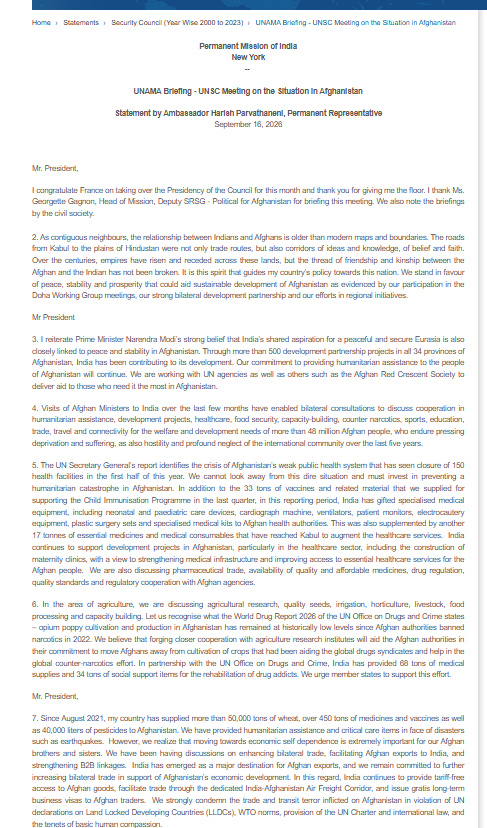
Our investigation found that Parvathaneni Harish, Permanent Representative of India to the United Nations, had issued a statement on the situation in Afghanistan and India-Afghanistan relations. We also found the text version of his statement on the official website of the Permanent Mission of India to the United Nations. In his statement, Harish referred to the historical ties between India and Afghanistan, noting that the relationship between the two countries predates modern maps and borders. He also spoke about India’s policy towards Afghanistan and its commitment to peace, stability and prosperity. In addition, he highlighted India’s participation in the meetings of the Doha Contact Group, its strong bilateral development partnership with Afghanistan, and its efforts through regional initiatives. However, a review of Harish’s complete statement shows that it contains no remarks resembling those attributed to him in the video being shared on social media. His official statement also makes no mention of India’s alleged supply of weapons to Israel or the 2,596 shipments cited by Amnesty International. This establishes that the video being circulated on social media is presenting Harish’s actual statement in a misleading context.
https://pminewyork.gov.in/IndiaatUNSC?id=NTYzNA
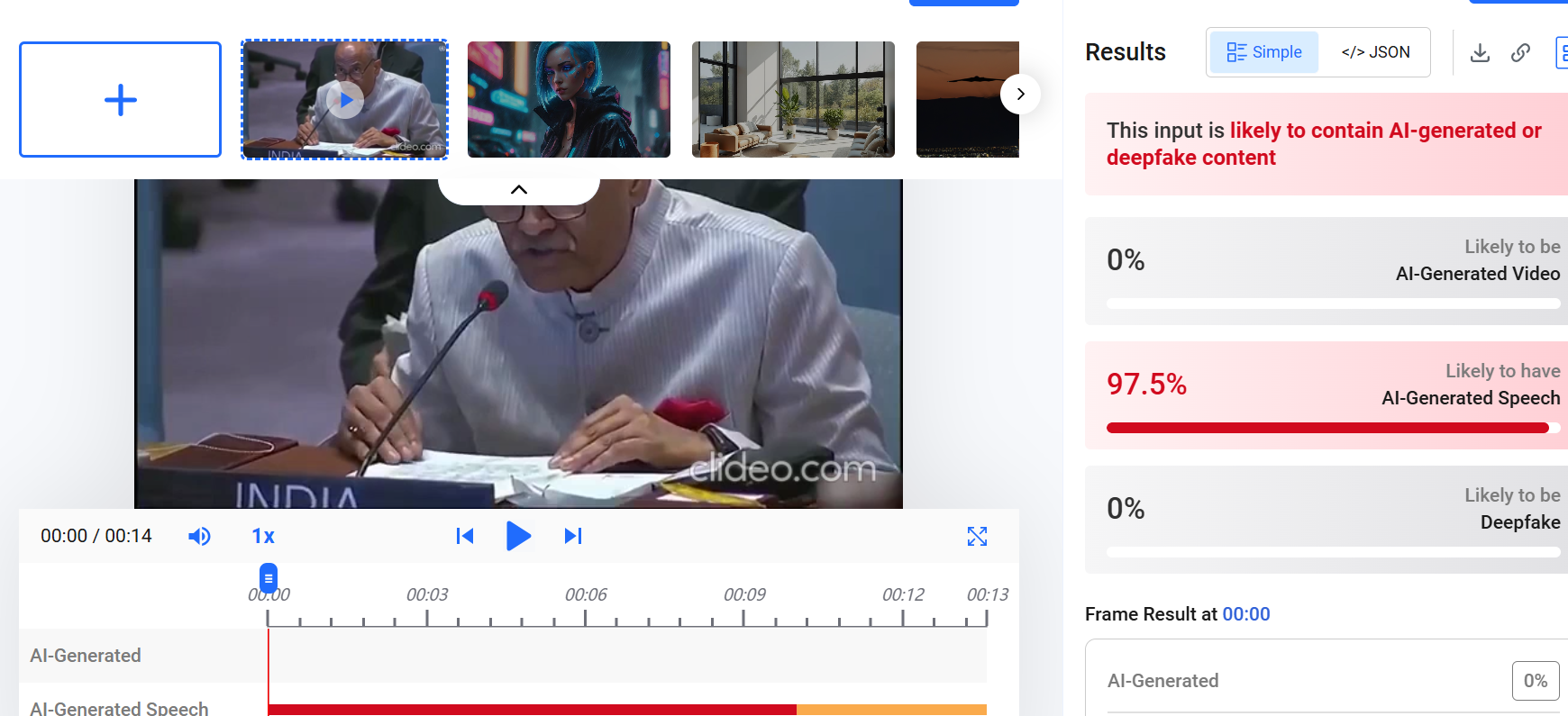
Hive Moderation’s analysis found no signs of manipulation in the video’s visuals. However, the analysis indicated a 97% probability that the speech used in the video was AI-generated.
Conclusion
Our research found that Parvathaneni Harish, Permanent Representative of India to the United Nations, did not make the statement attributed to him in the video being circulated on social media. His official statement at the UN Security Council meeting on the situation in Afghanistan focused on India-Afghanistan relations, peace, stability, development cooperation and regional initiatives, and contained no reference to India supplying weapons to Israel or to the 2,596 shipments mentioned in the viral video.
Further analysis by Hive Moderation found a 97% probability that the speech used in the video was AI-generated, while the visuals showed no signs of manipulation. These findings indicate that the video has been digitally manipulated by replacing or altering the original speech and is being presented with a misleading claim.Therefore, the claim that Parvathaneni Harish defended India’s alleged supply of weapons to Israel during a UNSC meeting is false and misleading.
