
#FactCheck- Viral video of fighter jet striking dam falsely linked to alleged Israeli attack on Iran; actually AI-generated content
Executive Summary
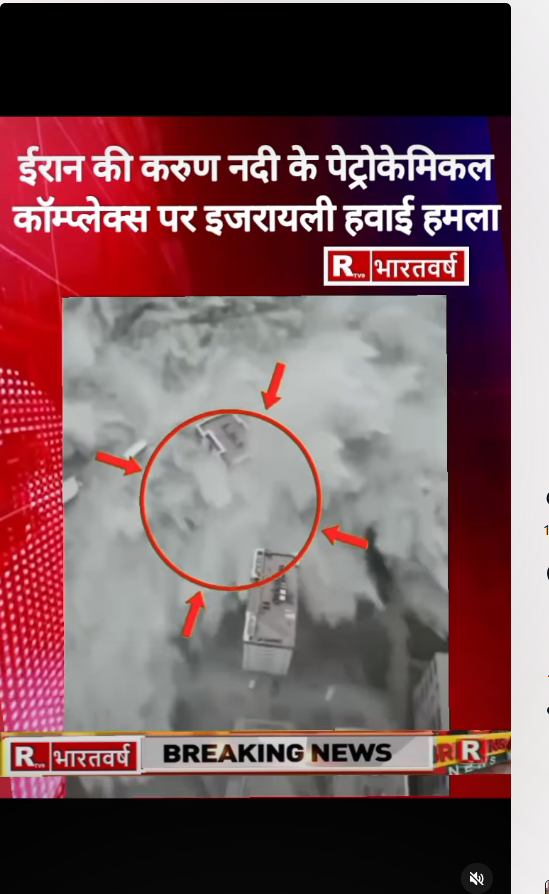
Amid escalating tensions between Iran and Israel, a video showing a fighter jet launching a missile at a massive dam, followed by its collapse and widespread flooding, is being widely shared on social media. Users are claiming that the video depicts a recent Israeli airstrike on a petrochemical plant located along Iran’s Karun River. CyberPeace Research Wing research found that the viral claim is false. The video is not related to any real-world incident and has been generated using artificial intelligence (AI).
Claim:
An Instagram user shared the viral video with a caption claiming that Israel carried out an airstrike on a petrochemical complex along Iran’s Karun River. The post further suggested that the facility is a key industrial site and that the attack caused widespread panic in the region. Post link:
https://www.instagram.com/reels/DZhNuiRx_v1/
https://www.instagram.com/reels/DZhNuiRx_v1/
Fact Check:
A reverse image search of keyframes from the video led to its appearance on a Facebook page named Warfare NextGen. The page clearly described the footage as “dramatic content,” indicating that it is not a real incident.
https://www.facebook.com/reel/1027249019882257

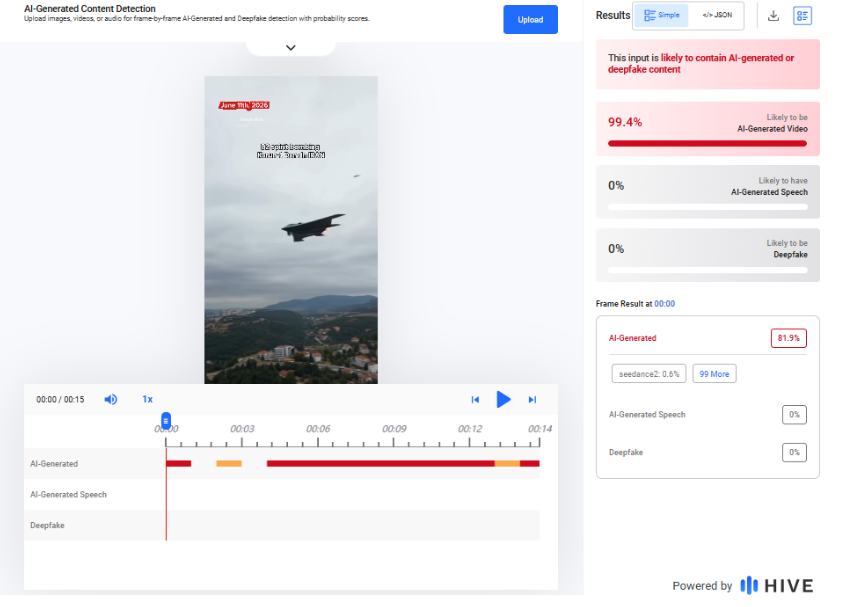
A closer analysis of the visuals also revealed several inconsistencies that raise doubts about its authenticity. To further verify the video, it was analyzed using the AI detection tool Hive Moderation, which indicated a 99.4% probability that the content is AI-generated.
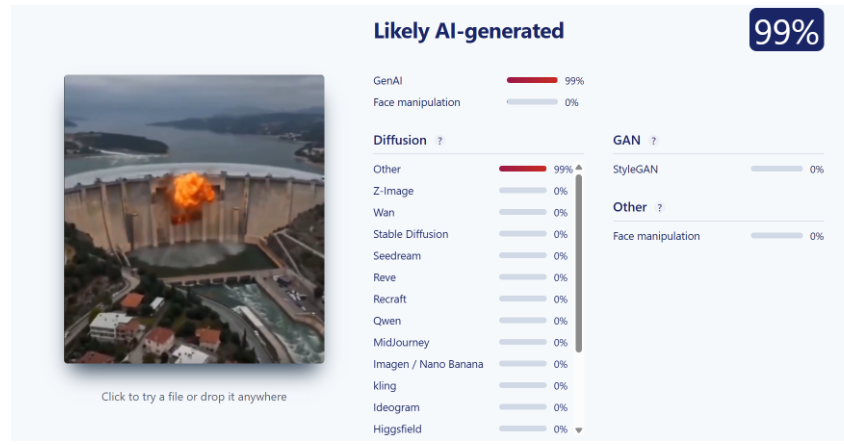
Additionally, a separate analysis using SIGHTENGINE also classified the video as approximately 99% AI-generated.
Conclusion:
The research confirms that the viral video is not a real incident. It has been created using artificial intelligence and is being falsely shared as a depiction of an Israeli strike on a petrochemical plant along Iran’s Karun River.

Related Blogs

Introduction
Cyber attacks are becoming increasingly common and most sophisticated around the world. India's Telecom operator BSNL has allegedly suffered a data breach. Reportedly, Hackers managed to steal sensitive information of BSNL customers and the same is now available for sale on the dark web. The leaked information includes names email addresses billing details contact numbers and outgoing call records of BSNL customers victims include both BSNL fibre and landline users. The threat actor using Querel has released a sample data set on a dark web forum and the data set contains 32,000 lines of leaked information the threat actor has claimed that the total number of lines across all databases amounts to approximately 2.9 Million.
The Persistent Threat to Digital Fortresses
As we plunge into the abyssal planes of the internet, where the shadowy tendrils of cyberspace stretch out like the countless arms of some digital leviathan, we find ourselves facing a stark and chilling revelation. At its murky depths lurks the dark web, a term that brings forth images of a clandestine digital netherworld where anonymity reigns supreme and the conventional rules of law struggle to cast their net. It is here, in this murky digital landscape, where the latest trophy of cyber larceny has been flagrantly displayed — the plundered data of Bharat Sanchar Nigam Ltd (BSNL), India's state-owned telecommunications colossus.
This latest breach serves not simply as a singular incident in the tapestry of cyber incursions but as a profound reminder of the enduring fragility of our digital bastions against the onslaught wielded by the ever-belligerent adversaries in cyberspace.
The Breach
Tracing the genesis of this worrisome event, we find a disconcerting story unfold. It began to surface when a threat actor, shrouded in the mystique of the digital shadows and brandishing the enigmatic alias 'Perell,' announced their triumph on the dark web. This self-styled cyber gladiator took to the encrypted recesses of this hidden domain with bravado, professing to have extracted 'critical information' from the inner sanctum of BSNL's voluminous databases. It is from these very vaults that the most sensitive details of the company's fibre network and landline customers originate.
A portion of the looted data, a mere fragment of a more extensive and damning corpus, was brandished like a nefariously obtained banner for all to see on the dark web. It was an ostentatious display, a teaser intended to tantalize and terrify — approximately 32,000 lines of data, a hint of the reportedly vast 2.9 million lines of data that 'Perell' claimed to have sequestered in their digital domain. The significance of this compromised information cannot be overstated; it is not mere bytes and bits strewn about in the cyber-wind. It constitutes the very essence of countless individuals, an amalgamation of email addresses, billing histories, contact numbers, and a myriad of other intimate details that, if weaponized, could set the stage for heinous acts of identity theft, insidious financial fraud, and precisely sculpted phishing schemes.
Ramifications
The ramifications of such a breach extend far beyond individual concerns of privacy invasion. This event signifies an alarming clarion call highlighting the susceptibility of our digital identities. In an era where the strands of our daily lives are ever more entwined with the World Wide Web, such penetrations are not merely an affront to corporate entities; they are a direct assault on the individual's inherent right to security and the implicit trust placed in the institutions that profess to shield their most private information.
Ripples of concern have emanated throughout the cybersecurity community, prompting urgent action from Cert-In, India's cyber security sentinel. Upon notification of this digital transgression, alarms were sounded, and yet, in a disconcerting turn, BSNL has remained enigmatic, adopting a silence that seems to belie the gravity of the situation. This reticence stands in contrast to the urgency for open dialogue and transparency — it is within the anvil of these principles that the foundations of trust are laid and sustained.
Conclusion
The narrative of the BSNL data breach transcends a singular tale of digital larceny or vulnerability; it unfolds as an insistent call to action, demanding a unified and proactive response to the perpetually morphing threat landscape that haunts our technologically dependent world. It is an uncomfortable reminder that in the intricately woven web of our online existence, we each stand as potential targets with our personal data held precariously as the coveted prize for those shadow-walkers and data marauders who dwell in the secretive realms of the internet's darkest corners.
References
Introduction
India has been a nation where technology penetration has been a little slower in the previous decades; however, that has changed now. Cyberspace has influenced and touched every country and has significantly diminished the gap between developing nations, developed nations, and underdeveloped nations. This has also been substantiated and strengthened during the Covid-19 pandemic as the world went into lockdown and the cyberspace was the only medium of communication and information. India witnessed a rise of 61% in terms of internet users, and a significant part of this number represented rural India.
New Standards
These standards have been released in threefold aspects covering – Digital Television Receivers, USB Type-C chargers, and Video Surveillance Systems, thus streamlining the use of gadgets and reduction of e-waste for the country.
1. Digital Television Receivers
The Indian standard IS 18112:2022 specification for digital television, and this standard would enable reception of free-to-air TV and radio channels just by connecting a dish antenna with LNB mounted on a suitable area with good signal reception. This will help in the transmission of knowledge about government initiatives and schemes, the educational content of Doordarshan, and the repository of Indian cultural programs. Doordarshan is in the process of phasing out analog transmission, and free-to-air channels will continue to be broadcast using digital satellite transmission. The keen aspects of educational and awareness programs run by the Govt and CSOs will impact more Indians than before as the Ministry of Information and Broadcast intends to increase their free channels of Doordarshan from 55 to 200 by the end of this year, which shows the importance of developments in the mass media industry.
2. USB Type C
Standard (IS/IEC 62680-1-3:2022) for USB Type-C receptacles, plugs, and cables adopting the existing global standard IEC 62680-1-3:2022. This standard provides for the requirements for USB type C ports and cables for use in various electronic devices like laptops, mobile phones, and other gadgets. This standard is similar to the new European standard, which is also aimed at the reduction of carbon emissions and e-waste; this move will result in ease for the industry and the end users. This will also contribute towards the strengthening of the cyber security aspects and prevent threats like ‘Juice Jacking’ to a massive extent.
3. Video Surveillance System
IS 16190, this standard provides a detailed outline of the aspects of a video surveillance system, such as requirements for its components like camera devices, interfaces, system requirements, and tests to ascertain the camera’s image quality on different devices. This series of standards would assist customers, installers, and users in establishing their requirements and determining the appropriate equipment required for their intended application and also provide means of evaluating the performance of the VSS objectively. This will also help in the improvement of surveillance by the individuals, and this will also help in the better investigation by Law enforcement agencies and faster apprehension of criminals, thus contributing to an overall safe society.
The Advantages
These standards are in power with the Internationally prevalent standards, thus taking the safety factors to the global aspect. This will also allow the Indian industry to create world-class products which can be shared all across the globe. This will open India to various opportunities and job avenues, thus opening the world to invest in India. The aspect of Atma Nirbhar Bharat and Digital India will be strengthened to a new level as the nation will be able to deliver products in power with quality in developed countries. The end Indian consumer will benefit the most from these upgraded standards in terms of Digital Televisions, Type ‘C’ USB chargers, and Video surveillance systems, as these impacts the consumers’ daily activities in terms of security and access to information.
- Reduction in Carbon Emission
- Production of World Class components and devices
- Boost to the economy and Atmanirbhar Bharat
- New avenues and opportunities for startups and MSMEs
- Better transmission of Knowledge
- Boosting FDI
- Improved quality of products for the end consumer
- New innovation hubs and exposure to global talents
This government move simply shows how India is working toward securing the Sustainable development Goals (SDG) by United Nations. This clearly shares the message to the world that India is ready for the future and will also be a helping hand to various developing and underdeveloped nations in the times to come.
Conclusion
These standards will significantly contribute towards the reduction of E-Waste and unnecessary accessories for daily use gadgets. This strengthens the reduction in carbon emissions and thus contributes towards the perseverance of the environment and working towards sustainable development goals. Such standards will lead the future towards securing the netizens and their new and evolving digital habits. In the current phase of cyberspace, the most essential aspect of establishing Critical Infrastructure as the same will act as a shield against the threats of cyberspace.

Executive Summary
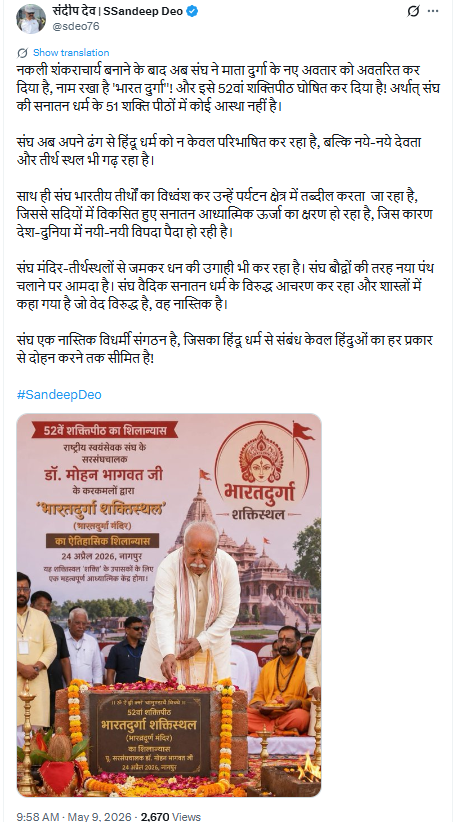
A picture of Mohan Bhagwat is going viral on social media, showing him allegedly laying the foundation stone of a so-called “52nd Shakti Peeth” named Bharatdurga. Users are claiming that the RSS chief insulted Sanatan Dharma by creating a new Shakti Peeth in Nagpur. Research by CyberPeace Research Wing found that the claim is false. The viral image is AI-generated, and Mohan Bhagwat did not inaugurate any “52nd Shakti Peeth.” In reality, he laid the foundation stone of the Bharatdurga Temple.
Claim
An X user named Sandeep Dev shared the viral image and alleged that after creating “fake Shankaracharyas,” the RSS had now introduced a new form of Goddess Durga called “Bharat Durga” and declared it the 52nd Shakti Peeth. The post further claimed that the RSS was redefining Hinduism and creating new religious sites.
Fact Check
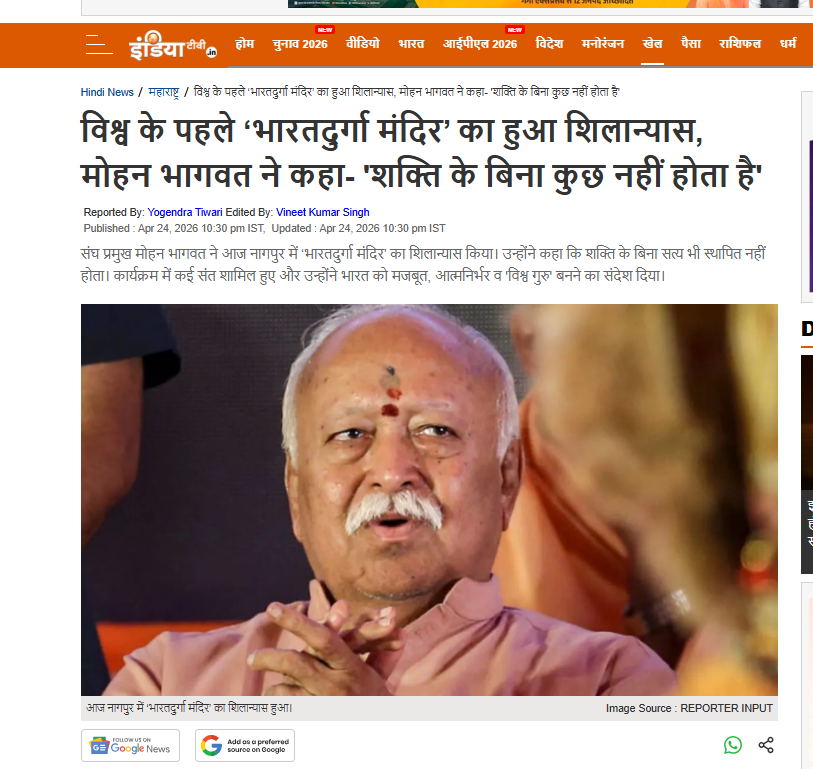
To verify the claim, we searched relevant keywords and found reports published on April 24, 2026, by India TV and Navbharat Times. According to these reports, Mohan Bhagwat laid the foundation stone of the world’s first Bharatdurga Temple in Nagpur during a ceremony organized at the Jamtha campus of Dr. Abaji Thatte Seva and Research Institute. Several prominent saints and religious leaders attended the event. Importantly, none of the reports described the temple as the “52nd Shakti Peeth.”
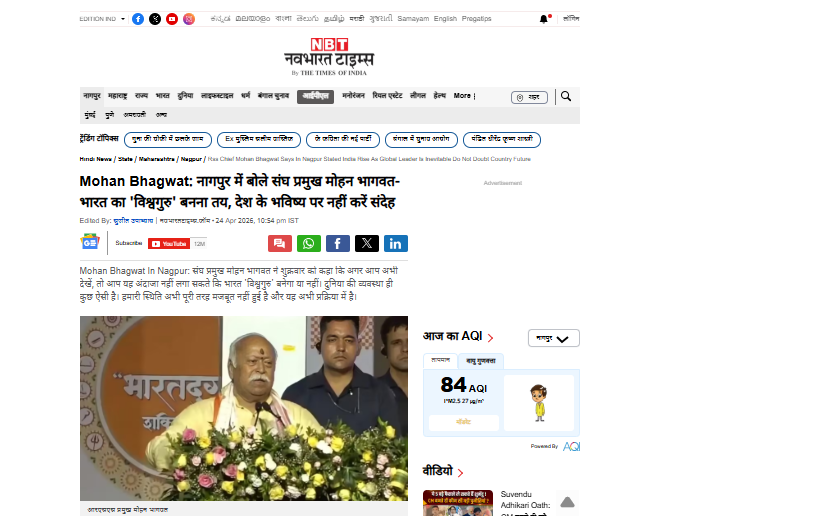
Further research led us to the full video of the foundation ceremony uploaded on the YouTube channel of Devendra Fadnavis. The stage backdrop and video thumbnail clearly mention “Bharatdurga Temple Foundation Ceremony.” However, the viral image frame was not visible anywhere in the authentic footage.

We also analyzed the viral image using AI detection tools, which indicated that the image was AI-generated.
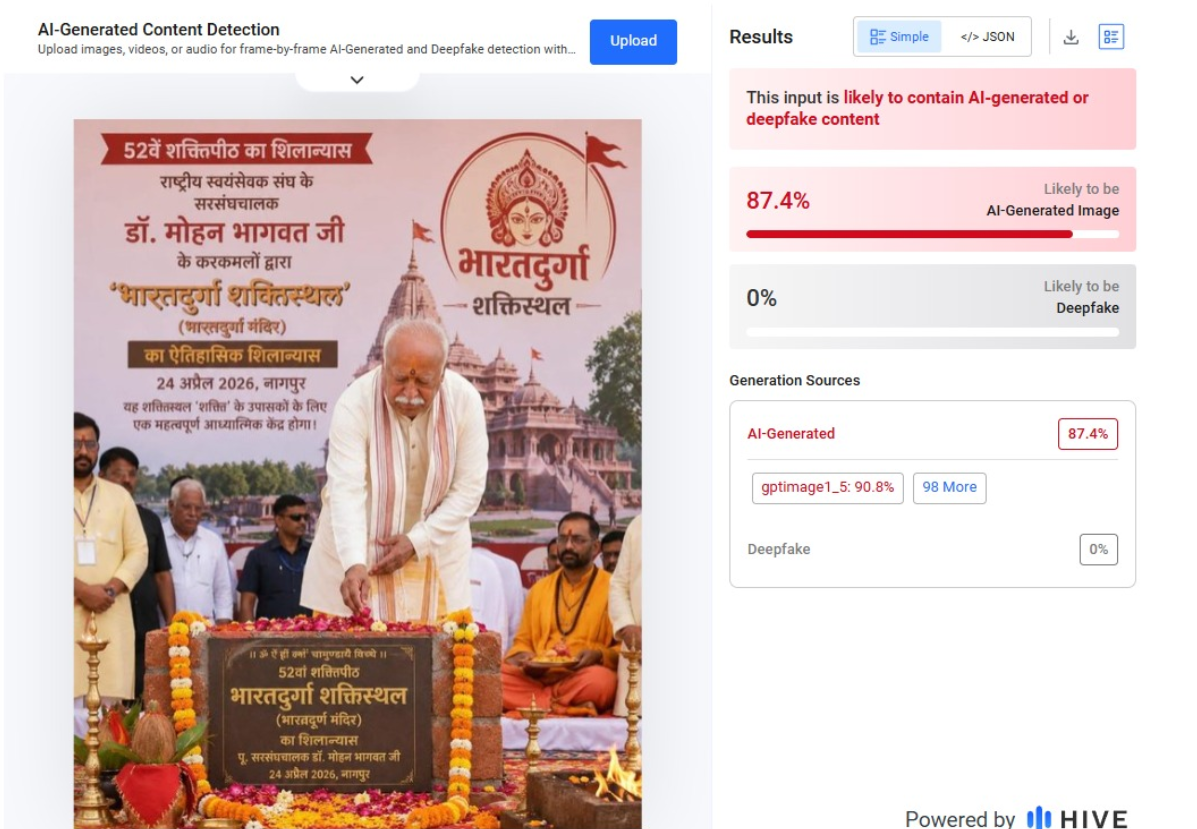
Conclusion
Our research confirms that the claim about Mohan Bhagwat laying the foundation of a “52nd Shakti Peeth” is false. The viral image is AI-generated. In reality, he participated in the foundation ceremony of the Bharatdurga Temple in Nagpur.
