#FactCheck- Viral ABP News clip and image from 2013 falsely linked to recent events involving US Embassy security claim
Executive Summary
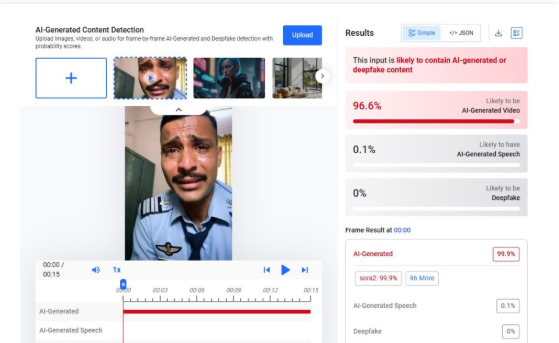
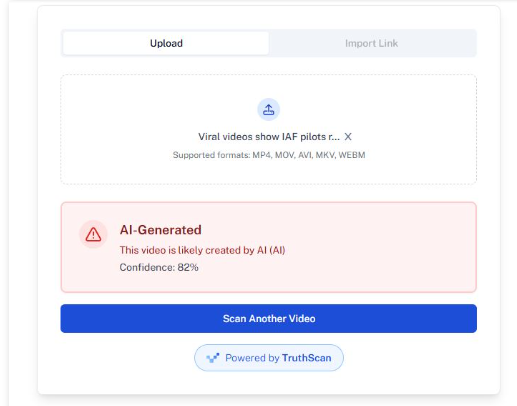
Amid ongoing tensions in West Asia and concerns over the safety of commercial vessels carrying Indian crew members, a purported ABP News video clip has been circulating on social media. The clip, along with an accompanying image, claims that in response to alleged US attacks on ships carrying Indian citizens, the Indian government removed security arrangements outside the US Embassy in New Delhi and withdrew identity cards issued to American diplomats. The viral post also includes an image showing a JCB machine near the US Embassy, which users are sharing as alleged evidence of recent government action against the United States CyberPeace Research Wing research found the claim to be misleading. The probe revealed that both the video clip and the image are not recent and are in fact related to events from 2013, during the diplomatic tensions following the arrest of Indian diplomat Devyani Khobragade.
Claim:
On X (formerly Twitter), a user shared the viral clip alleging that India strongly condemned the US over reported attacks on a vessel carrying Indian citizens and, in response, removed security from the US Embassy in New Delhi and revoked identity cards issued to American diplomats.
https://x.com/aadil_husssain2/status/2065184188157043053
https://ghostarchive.org/archive/A5Py5

Fact Check
A keyword search related to the alleged removal of security outside the US Embassy did not yield any recent credible reports supporting the claim. We also observed that the ABP News logo visible in the viral clip is an older version that is no longer in use, raising further doubts about its authenticity and timeline. To verify the footage, we checked ABP News’ official YouTube channel and found a report dated December 17, 2013. The report stated that Delhi Police had removed security barricades outside the US Embassy in New Delhi following diplomatic tensions between India and the United States over the arrest and treatment of Indian diplomat Devyani Khobragade in New York. The visuals in the 2013 report closely match multiple segments seen in the viral clip. The footage originally aired as part of ABP News’ “Fatafat” bulletin.
https://www.youtube.com/watch?v=Qrm_UcL1zOk&t=139s

Further search also led to a PTI-reported article published by Times of India on December 17, 2013. According to the report, barricades outside the US Embassy were removed as part of India’s response to the Khobragade incident. The report also mentioned that India had sought the return of identity cards issued to American consular officials and rolled back certain diplomatic privileges.
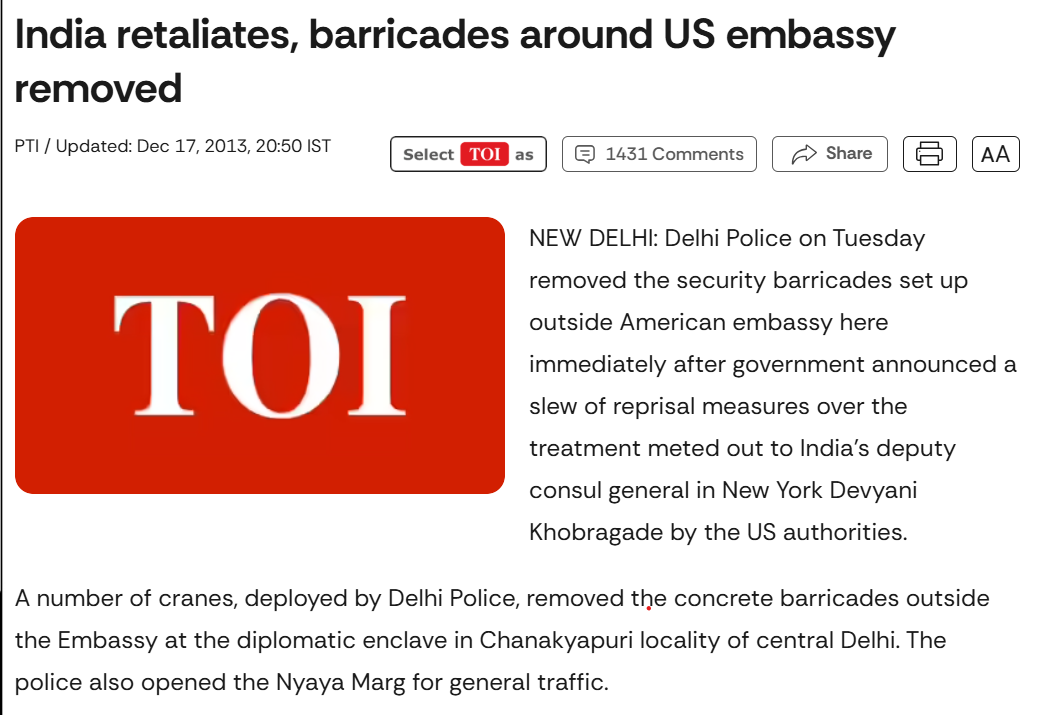
The image being shared alongside the claim, showing a JCB machine near the US Embassy, is also old. Getty Images carries photographs dated December 17, 2013 showing barricades being removed outside the US Embassy in New Delhi during the same diplomatic episode.

Conclusion:
The research clearly establishes that both the viral video clip and the accompanying image are not recent. These visuals are from 2013 and are linked to diplomatic developments following the Devyani Khobragade case. The claim linking them to recent events involving US Embassy security arrangements is misleading.
Related Blogs

Introduction
The term ‘super spreader’ is used to refer to social media and digital platform accounts that are able to quickly transmit information to a significantly large audience base in a short duration. The analogy references the medical term, where a small group of individuals is able to rapidly amplify the spread of an infection across a huge population. The fact that a few handful accounts are able to impact and influence many is attributed to a number of factors like large follower bases, high engagement rates, content attractiveness or virality and perceived credibility.
Super spreader accounts have become a considerable threat on social media because they are responsible for generating a large amount of low-credibility material online. These individuals or groups may create or disseminate low-credibility content for a number of reasons, running from social media fame to garnering political influence, from intentionally spreading propaganda to seeking financial gains. Given the exponential reach of these accounts, identifying, tracing and categorising such accounts as the sources of misinformation can be tricky. It can be equally difficult to actually recognise the content they spread for the misinformation that it actually is.
How Do A Few Accounts Spark Widespread Misinformation?
Recent research suggests that misinformation superspreaders, who consistently distribute low-credibility content, may be the primary cause of the issue of widespread misinformation about different topics. A study[1] by a team of social media analysts at Indiana University has found that a significant portion of tweets spreading misinformation are sent by a small percentage of a given user base. The researchers conducted a review of 2,397,388 tweets posted on Twitter (now X) that were flagged as having low credibility and details on who was sending them. The study found that it does not take a lot of influencers to sway the beliefs and opinions of large numbers. This is attributed to the impact of what they describe as superspreaders. The researchers collected 10 months of data, which added up to 2,397,388 tweets sent by 448,103 users, and then reviewed it, looking for tweets that were flagged as containing low-credibility information. They found that approximately a third of the low-credibility tweets had been posted by people using just 10 accounts, and that just 1,000 accounts were responsible for posting approximately 70% of such tweets.[2]
Case Study
- How Misinformation ‘Superspreaders’ Seed False Election Theories
During the 2020 U.S. presidential election, a small group of "repeat spreaders" aggressively pushed false election claims across various social media platforms for political gain, and this even led to rallies and radicalisation in the U.S.[3] Superspreaders accounts were responsible for disseminating a disproportionately large amount of misinformation related to the election, influencing public opinion and potentially undermining the electoral process.
In the domestic context, India was ranked highest for the risk of misinformation and disinformation according to experts surveyed for the World Economic Forum’s 2024 Global Risk Report. In today's digital age, misinformation, deep fakes, and AI-generated fakes pose a significant threat to the integrity of elections and democratic processes worldwide. With 64 countries conducting elections in 2024, the dissemination of false information carries grave implications that could influence outcomes and shape long-term socio-political landscapes. During the 2024 Indian elections, we witnessed a notable surge in deepfake videos of political personalities, raising concerns about the influence of misinformation on election outcomes.
- Role of Superspreaders During Covid-19
Clarity in public health communication is important when any grey areas or gaps in information can be manipulated so quickly. During the COVID-19 pandemic, misinformation related to the virus, vaccines, and public health measures spread rapidly on social media platforms, including Twitter (Now X). Some prominent accounts or popular pages on platforms like Facebook and Twitter(now X) were identified as superspreaders of COVID-19 misinformation, contributing to public confusion and potentially hindering efforts to combat the pandemic.
As per the Center for Countering Digital Hate Inc (US), The "disinformation dozen," a group of 12 prominent anti-vaccine accounts[4], were found to be responsible for a large amount of anti-vaccine content circulating on social media platforms, highlighting the significant role of superspreaders in influencing public perceptions and behaviours during a health crisis.
There are also incidents where users are unknowingly engaged in spreading misinformation by forwarding information or content which are not always shared by the original source but often just propagated by amplifiers, using other sources, websites, or YouTube videos that help in dissemination. The intermediary sharers amplify these messages on their pages, which is where it takes off. Hence such users do not always have to be the ones creating or deliberately popularising the misinformation, but they are the ones who expose more people to it because of their broad reach. This was observed during the pandemic when a handful of people were able to create a heavy digital impact sharing vaccine/virus-related misinformation.
- Role of Superspreaders in Influencing Investments and Finance
Misinformation and rumours in finance may have a considerable influence on stock markets, investor behaviour, and national financial stability. Individuals or accounts with huge followings or influence in the financial niche can operate as superspreaders of erroneous information, potentially leading to market manipulation, panic selling, or incorrect impressions about individual firms or investments.
Superspreaders in the finance domain can cause volatility in markets, affect investor confidence, and even trigger regulatory responses to address the spread of false information that may harm market integrity. In fact, there has been a rise in deepfake videos, and fake endorsements, with multiple social media profiles providing unsanctioned investing advice and directing followers to particular channels. This leads investors into dangerous financial decisions. The issue intensifies when scammers employ deepfake videos of notable personalities to boost their reputation and can actually shape people’s financial decisions.
Bots and Misinformation Spread on Social Media
Bots are automated accounts that are designed to execute certain activities, such as liking, sharing, or retweeting material, and they can broaden the reach of misinformation by swiftly spreading false narratives and adding to the virality of a certain piece of content. They can also artificially boost the popularity of disinformation by posting phony likes, shares, and comments, making it look more genuine and trustworthy to unsuspecting users. Bots can exploit social network algorithms by establishing false identities that interact with one another and with real users, increasing the spread of disinformation and pushing it to the top of users' feeds and search results.
Bots can use current topics or hashtags to introduce misinformation into popular conversations, allowing misleading information to acquire traction and reach a broader audience. They can lead to the construction of echo chambers, in which users are exposed to a narrow variety of perspectives and information, exacerbating the spread of disinformation inside restricted online groups. There are incidents reported where bot's were found as the sharers of content from low-credibility sources.
Bots are frequently employed as part of planned misinformation campaigns designed to propagate false information for political, ideological, or commercial gain. Bots, by automating the distribution of misleading information, can make it impossible to trace the misinformation back to its source. Understanding how bots work and their influence on information ecosystems is critical for combatting disinformation and increasing digital literacy among social media users.
CyberPeace Policy Recommendations
- Recommendations/Advisory for Netizens:
- Educating oneself: Netizens need to stay informed about current events, reliable fact-checking sources, misinformation counter-strategies, and common misinformation tactics, so that they can verify potentially problematic content before sharing.
- Recognising the threats and vulnerabilities: It is important for netizens to understand the consequences of spreading or consuming inaccurate information, fake news, or misinformation. Netizens must be cautious of sensationalised content spreading on social media as it might attempt to provoke strong reactions or to mold public opinions. Netizens must consider questioning the credibility of information, verifying its sources, and developing cognitive skills to identify low-credibility content and counter misinformation.
- Practice caution and skepticism: Netizens are advised to develop a healthy skepticism towards online information, and critically analyse the veracity of all information sources. Before spreading any strong opinions or claims, one must seek supporting evidence, factual data, and expert opinions, and verify and validate claims with reliable sources or fact-checking entities.
- Good netiquette on the Internet, thinking before forwarding any information: It is important for netizens to practice good netiquette in the online information landscape. One must exercise caution while sharing any information, especially if the information seems incorrect, unverified or controversial. It's important to critically examine facts and recognise and understand the implications of sharing false, manipulative, misleading or fake information/content. Netizens must also promote critical thinking and encourage their loved ones to think critically, verify information, seek reliable sources and counter misinformation.
- Adopting and promoting Prebunking and Debunking strategies: Prebunking and debunking are two effective strategies to counter misinformation. Netizens are advised to engage in sharing only accurate information and do fact-checking to debunk any misinformation. They can rely on reputable fact-checking experts/entities who are regularly engaged in producing prebunking and debunking reports and material. Netizens are further advised to familiarise themselves with fact-checking websites, and resources and verify the information.
- Recommendations for tech/social media platforms
- Detect, report and block malicious accounts: Tech/social media platforms must implement strict user authentication mechanisms to verify account holders' identities to minimise the formation of fraudulent or malicious accounts. This is imperative to weed out suspicious social media accounts, misinformation superspreader accounts and bots accounts. Platforms must be capable of analysing public content, especially viral or suspicious content to ascertain whether it is misleading, AI-generated, fake or deliberately misleading. Upon detection, platform operators must block malicious/ superspreader accounts. The same approach must apply to other community guidelines’ violations as well.
- Algorithm Improvements: Tech/social media platform operators must develop and deploy advanced algorithm mechanisms to detect suspicious accounts and recognise repetitive posting of misinformation. They can utilise advanced algorithms to identify such patterns and flag any misleading, inaccurate, or fake information.
- Dedicated Reporting Tools: It is important for the tech/social media platforms to adopt robust policies to take action against social media accounts engaged in malicious activities such as spreading misinformation, disinformation, and propaganda. They must empower users on the platforms to flag/report suspicious accounts, and misleading content or misinformation through user-friendly reporting tools.
- Holistic Approach: The battle against online mis/disinformation necessitates a thorough examination of the processes through which it spreads. This involves investing in information literacy education, modifying algorithms to provide exposure to varied viewpoints, and working on detecting malevolent bots that spread misleading information. Social media sites can employ similar algorithms internally to eliminate accounts that appear to be bots. All stakeholders must encourage digital literacy efforts that enable consumers to critically analyse information, verify sources, and report suspect content. Implementing prebunking and debunking strategies. These efforts can be further supported by collaboration with relevant entities such as cybersecurity experts, fact-checking entities, researchers, policy analysts and the government to combat the misinformation warfare on the Internet.
References:
- https://journals.plos.org/plosone/article?id=10.1371/journal.pone.0302201 {1}
- https://phys.org/news/2024-05-superspreaders-responsible-large-portion-misinformation.html#google_vignette {2}
- https://phys.org/news/2024-05-superspreaders-responsible-large-portion-misinformation.html#google_vignette {3}
- https://counterhate.com/research/the-disinformation-dozen/ {4}
- https://phys.org/news/2024-05-superspreaders-responsible-large-portion-misinformation.html#google_vignette
- https://journals.plos.org/plosone/article?id=10.1371/journal.pone.0302201
- https://www.nytimes.com/2020/11/23/technology/election-misinformation-facebook-twitter.html
- https://www.wbur.org/onpoint/2021/08/06/vaccine-misinformation-and-a-look-inside-the-disinformation-dozen
- https://healthfeedback.org/misinformation-superspreaders-thriving-on-musk-owned-twitter/
- https://www.ncbi.nlm.nih.gov/pmc/articles/PMC8139392/
- https://www.jmir.org/2021/5/e26933/
- https://www.yahoo.com/news/7-ways-avoid-becoming-misinformation-121939834.html

Introduction
Assisted Reproductive Technology (“ART”) refers to a diverse set of medical procedures designed to aid individuals or couples in achieving pregnancy when conventional methods are unsuccessful. This umbrella term encompasses various fertility treatments, including in vitro fertilization (IVF), intrauterine insemination (IUI), and gamete and embryo manipulation. ART procedures involve the manipulation of both male and female reproductive components to facilitate conception.
The dynamic landscape of data flows within the healthcare sector, notably in the realm of ART, demands a nuanced understanding of the complex interplay between privacy regulations and medical practices. In this context, the Information Technology (Reasonable Security Practices And Procedures And Sensitive Personal Data Or Information) Rules, 2011, play a pivotal role, designating health information as "sensitive personal data or information" and underscoring the importance of safeguarding individuals' privacy. This sensitivity is particularly pronounced in the ART sector, where an array of personal data, ranging from medical records to genetic information, is collected and processed. The recent Assisted Reproductive Technology (Regulation) Act, 2021, in conjunction with the Digital Personal Data Protection Act, 2023, establishes a framework for the regulation of ART clinics and banks, presenting a layered approach to data protection.
A note on data generated by ART
Data flows in any sector are scarcely uniform and often not easily classified under straight-jacket categories. Consequently, mapping and identifying data and its types become pivotal. It is believed that most data flows in the healthcare sector are highly sensitive and personal in nature, which may severely compromise the privacy and safety of an individual if breached. The Information Technology (Reasonable Security Practices And Procedures And Sensitive Personal Data Or Information) Rules, 2011 (“SPDI Rules”) categorizes any information pertaining to physical, physiological, mental conditions or medical records and history as “sensitive personal data or information”; this definition is broad enough to encompass any data collected by any ART facility or equipment. These include any information collected during the screening of patients, pertaining to ovulation and menstrual cycles, follicle and sperm count, ultrasound results, blood work etc. It also includes pre-implantation genetic testing on embryos to detect any genetic abnormality.
But data flows extend beyond mere medical procedures and technology. Health data also involves any medical procedures undertaken, the amount of medicine and drugs administered during any procedure, its resultant side effects, recovery etc. Any processing of the above-mentioned information, in turn, may generate more personal data points relating to an individual’s political affiliations, race, ethnicity, genetic data such as biometrics and DNA etc.; It is seen that different ethnicities and races react differently to the same/similar medication and have different propensities to genetic diseases. Further, it is to be noted that data is not only collected by professionals but also by intelligent equipment like AI which may be employed by any facility to render their service. Additionally, dissemination of information under exceptional circumstances (e.g. medical emergency) also affects how data may be classified. Considerations are further nuanced when the fundamental right to identity of a child conceived and born via ART may be in conflict with the fundamental right to privacy of a donor to remain anonymous.
Intersection of Privacy laws and ART laws:
In India, ART technology is regulated by the Assisted Reproductive Technology (Regulation) Act, 2021 (“ART Act”). With this, the Union aims to regulate and supervise assisted reproductive technology clinics and ART banks, prevent misuse and ensure safe and ethical practice of assisted reproductive technology services. When read with the Digital Personal Data Protection Act, 2023 (“DPDP Act”) and other ancillary guidelines, the two legislations provide some framework regulations for the digital privacy of health-based apps.
The ART Act establishes a National Assisted Reproductive Technology and Surrogacy Registry (“National Registry”) which acts as a central database for all clinics and banks and their nature of services. The Act also establishes a National Assisted Reproductive Technology and Surrogacy Board (“National Board”) under the Surrogacy Act to monitor the implementation of the act and advise the central government on policy matters. It also supervises the functioning of the National Registry, liaises with State Boards and curates a code of conduct for professionals working in ART clinics and banks. Under the DPDP Act, these bodies (i.e. National Board, State Board, ART clinics and banks) are most likely classified as data fiduciaries (primarily clinics and banks), data processors (these may include National Board and State boards) or an amalgamation of both (these include any appropriate authority established under the ART Act for investigation of complaints, suspend or cancellation of registration of clinics etc.) depending on the nature of work undertaken by them. If so classified, then the duties and liabilities of data fiduciaries and processors would necessarily apply to these bodies. As a result, all bodies would necessarily have to adopt Privacy Enhancing Technologies (PETs) and other organizational measures to ensure compliance with privacy laws in place. This may be considered one of the most critical considerations of any ART facility since any data collected by them would be sensitive personal data pertaining to health, regulated by the Information Technology (Reasonable Security Practices And Procedures And Sensitive Personal Data Or Information) Rules, 2011 (“SPDI Rules 2011”). These rules provide for how sensitive personal data or information are to be collected, handled and processed by anyone.
The ART Act independently also provides for the duties of ART clinics and banks in the country. ART clinics and banks are required to inform the commissioning couple/woman of all procedures undertaken and all costs, risks, advantages, and side effects of their selected procedure. It mandatorily ensures that all information collected by such clinics and banks to not informed to anyone except the database established by the National Registry or in cases of medical emergency or on order of court. Data collected by clinics and banks (these include details on donor oocytes, sperm or embryos used or unused) are required to be detailed and must be submitted to the National Registry online. ART banks are also required to collect personal information of donors including name, Aadhar number, address and any other details. By mandating online submission, the ART Act is harmonized with the DPDP Act, which regulates all digital personal data and emphasises free, informed consent.
Conclusion
With the increase in active opt-ins for ART, data privacy becomes a vital consideration for all healthcare facilities and professionals. Safeguard measures are not only required on a corporate level but also on a governmental level. It is to be noted that in the 262 Session of the Rajya Sabha, the Ministry of Electronics and Information Technology reported 165 data breach incidents involving citizen data from January 2018 to October 2023 from the Central Identities Data Repository despite publicly denying. This discovery puts into question the safety and integrity of data that may be submitted to the National Registry database, especially given the type of data (both personal and sensitive information) it aims to collate. At present the ART Act is well supported by the DPDP Act. However, further judicial and legislative deliberations are required to effectively regulate and balance the interests of all stakeholders.
References
- The Information Technology (Reasonable Security Practices And Procedures And Sensitive Personal Data Or Information) Rules, 2011
- Caring for Intimate Data in Fertility Technologies https://dl.acm.org/doi/pdf/10.1145/3411764.3445132
- Digital Personal Data Protection Act, 2023
- https://www.wolterskluwer.com/en/expert-insights/pharmacogenomics-and-race-can-heritage-affect-drug-disposition

Introduction
Digital Public Infrastructure (DPI) serves as the backbone of e-governance, enabling governments to deliver services more efficiently, transparently, and inclusively. By leveraging information and communication technology (ICT), digital governance systems reconfigure traditional administrative processes, making them more accessible and citizen-centric. However, the successful implementation of such systems hinges on overcoming several challenges, from ensuring data security to fostering digital literacy and addressing infrastructural gaps.
This article delves into the key enablers that drive effective DPI and outlines the measures already undertaken by the government to enhance its functionality. Furthermore, it outlines strategies for their enhancement, emphasizing the need for a collaborative, secure, and adaptive approach to building robust e-governance systems.
Key Enablers of DPI
Digital Public Infrastructure (DPI), the foundation for e-governance, relies on common design, robust governance, and private sector participation for efficiency and inclusivity. This requires common principles, frameworks for collaboration, capacity building, and the development of common standards. Some of the key measures undertaken by the government in this regard include:
- Data Protection Framework: The Digital Personal Data Protection (DPDP) Act of 2023 establishes a framework to ensure consent-based data sharing and regulate the processing of digital personal data. It delineates the responsibilities of data fiduciaries in safeguarding users' digital personal data.
- Increasing Public-Private Partnerships: Refining collaboration between the government and the private sector has accelerated the development, maintenance, expansion, and trust of the infrastructure of DPIs, such as the AADHAR, UPI, and Data Empowerment and Protection Architecture (DEPA). For example, the Asian Development Bank attributes the success of UPI to its “consortium ownership structure”, which enables the wide participation of major financial stakeholders in the country.
- Coordinated Planning: The PM-Gati Shakti establishes a clear coordination framework involving various inter-governmental stakeholders at the state and union levels. This aims to significantly reduce project duplications, delays, and cost escalations by streamlining communication, harmonizing project appraisal and approval processes, and providing a comprehensive database of major infrastructure projects in the country. This database called the National Master Plan, is jointly accessible by various government stakeholders through APIs.
- Capacity Building for Government Employees: The National e-Governance Division of the Ministry of Electronics and Information Technology routinely rolls out multiple training programs to build the technological and managerial skills required by government employees to manage Digital Public Goods (DPGs). For instance, it recently held a program on “Managing Large Digital Transformative Projects”. Additionally, the Ministry of Personnel, Public Grievances, and Pensions has launched the Integrated Government Online Training platform (iGOT) Karmayogi for the continuous learning of civil servants across various domains.
Digital Governance; Way Forward
E-governance utilizes information and communication technology (ICT) such as Wide Area Networks, the Internet, and mobile computing to implement existing government activities, reconfiguring the structures and processes of governance systems. This warrants addressing certain inter-related challenges such as :
- Data Security: The dynamic and ever-changing landscape of cyber threats necessitates regular advancements in data and information security technologies, policy frameworks, and legal provisions. Consequently, the digital public ecosystem must incorporate robust data cybersecurity measures, advanced encryption technologies, and stringent privacy compliance standards to safeguard against data breaches.
- Creating Feedback Loops: Regular feedback surveys will help government agencies improve the quality, efficiency, and accessibility of digital governance services by tailoring them to be more user-friendly and enhancing administrative design. This is necessary to build trust in government services and improve their uptake among beneficiaries. Conducting the decennial census is essential to gather updated data that can serve as a foundation for more informed and effective decision-making.
- Capacity Building for End-Users: The beneficiaries of key e-governance projects like Aadhar and UPI may have inadequate technological skills, especially in regions with weak internet network infrastructure like hilly or rural areas. This can present challenges in the access to and usage of technological solutions. Robust capacity-building campaigns for beneficiaries can provide an impetus to the digital inclusion efforts of the government.
- Increasing the Availability of Real-Time Data: By prioritizing the availability of up-to-date information, governments and third-party enterprises can enable quick and informed decision-making. They can effectively track service usage, assess quality, and monitor key metrics by leveraging real-time data. This approach is essential for enhancing operational efficiency and delivering improved user experience.
- Resistance to Change: Any resistance among beneficiaries or government employees to adopt digital governance goods may stem from a limited understanding of digital processes and a lack of experience with transitioning from legacy systems. Hand-holding employees during the transitionary phase can help create more trust in the process and strengthen the new systems.
Conclusion
Digital governance is crucial to transforming public services, ensuring transparency, and fostering inclusivity in a rapidly digitizing world. The successful implementation of such projects requires addressing challenges like data security, skill gaps, infrastructural limitations, feedback mechanisms, and resistance to change. Addressing these challenges with a strategic, multi-stakeholder approach can ensure the successful execution and long-term impact of large digital governance projects. By adopting robust cybersecurity frameworks, fostering public-private partnerships, and emphasizing capacity building, governments can create efficient and resilient systems that are user-centric, secure, and accessible to all.
References
- https://www.adb.org/sites/default/files/publication/865106/adbi-wp1363.pdf
- https://www.jotform.com/blog/government-digital-transformation-challenges/
- https://aapti.in/wp-content/uploads/2024/06/AaptixONI-DPIGovernancePlaybook_compressed.pdf
- https://community.nasscom.in/sites/default/files/publicreport/Digital%20Public%20Infrastructure%2022-2-2024_compressed.pdf
- https://proteantech.in/articles/Decoding-Digital-Public-Infrastructure-in-India/