
#FactCheck- Marco Rubio Video Digitally Manipulated to Falsely Claim India First Sought Ceasefire from Pakistan
Executive Summary
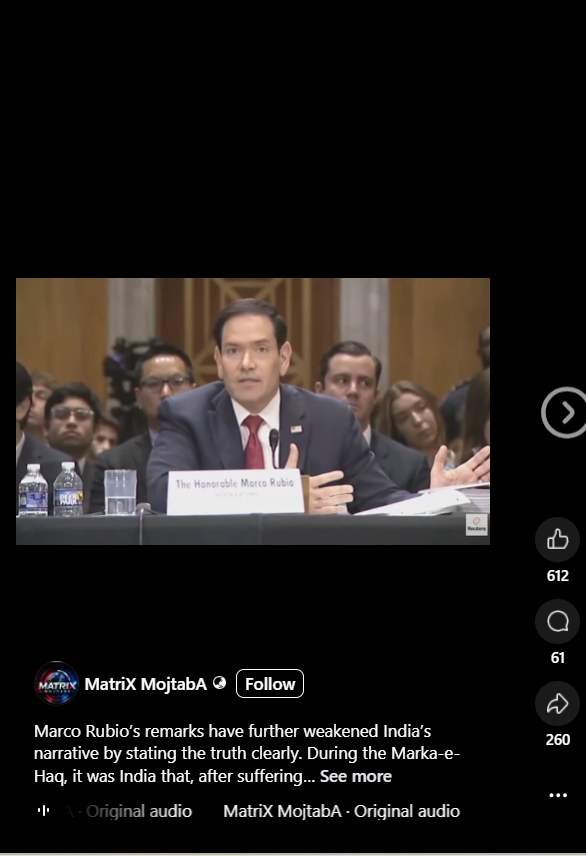
A video of US Secretary of State Marco Rubio is rapidly going viral on social media, in which he can allegedly be heard making a statement regarding the 2025 India-Pakistan conflict. Along with the video, it is being claimed that the US played a crucial role in ending the conflict between the two countries, but India was the first to initiate a ceasefire with Pakistan. Users are sharing this video believing it to be true.
Research by the CyberPeace Research Wing revealed that the video has been digitally manipulated. Rubio did state that the United States played a role in ending the conflict, but he never said that India was the first to request a ceasefire from Pakistan. This alleged statement was not part of the original video and was added later to alter the clip.
Claim
A user on a Facebook page shared the viral video and wrote, "Marco Rubio's statement has clearly brought out the truth, weakening India's claim. During 'Maarka-e-Haq', after suffering heavy losses, India was the first party to request a ceasefire from Pakistan. This highlights the gap between India's public claims and the ground reality, where the military..." The post link, archive link, and screenshot can be seen below. https://www.facebook.com/reel/1015648544746728
https://www.facebook.com/reel/1015648544746728
Fact Check
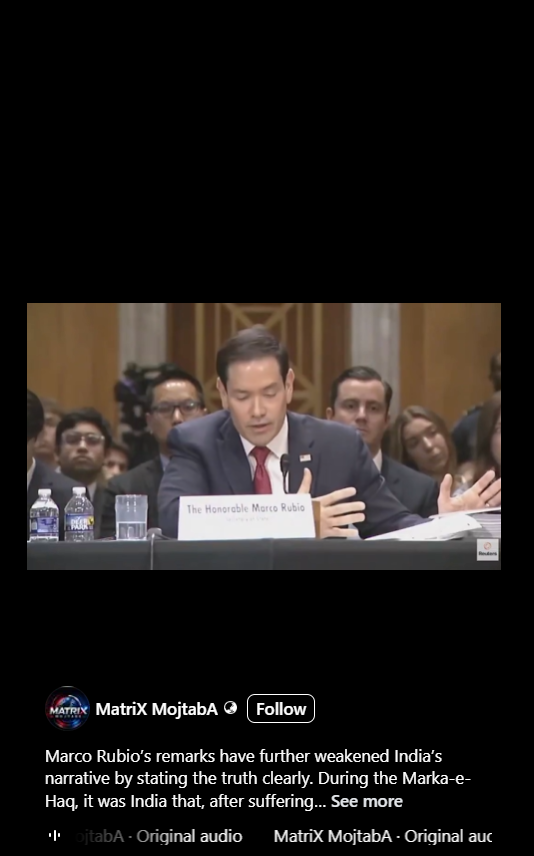
We investigated the viral video using the InVid tool and extracted several of its keyframes. These keyframes were then subjected to a reverse image search via Google Lens. The investigation revealed that the exact same video had been shared on social media previously, showing the same background and setting. The post link and screenshot can be seen below.
https://www.facebook.com/reel/1015648544746728
In the next step of our investigation, we found a video published on Reuters' official YouTube channel on June 2, 2026, whose background matches the viral video. However, nowhere in this original video is Marco Rubio heard saying that India was the first to request a ceasefire from Pakistan. The post link and screenshot can be seen below.
https://www.youtube.com/watch?v=qSpp5IYO6Cs
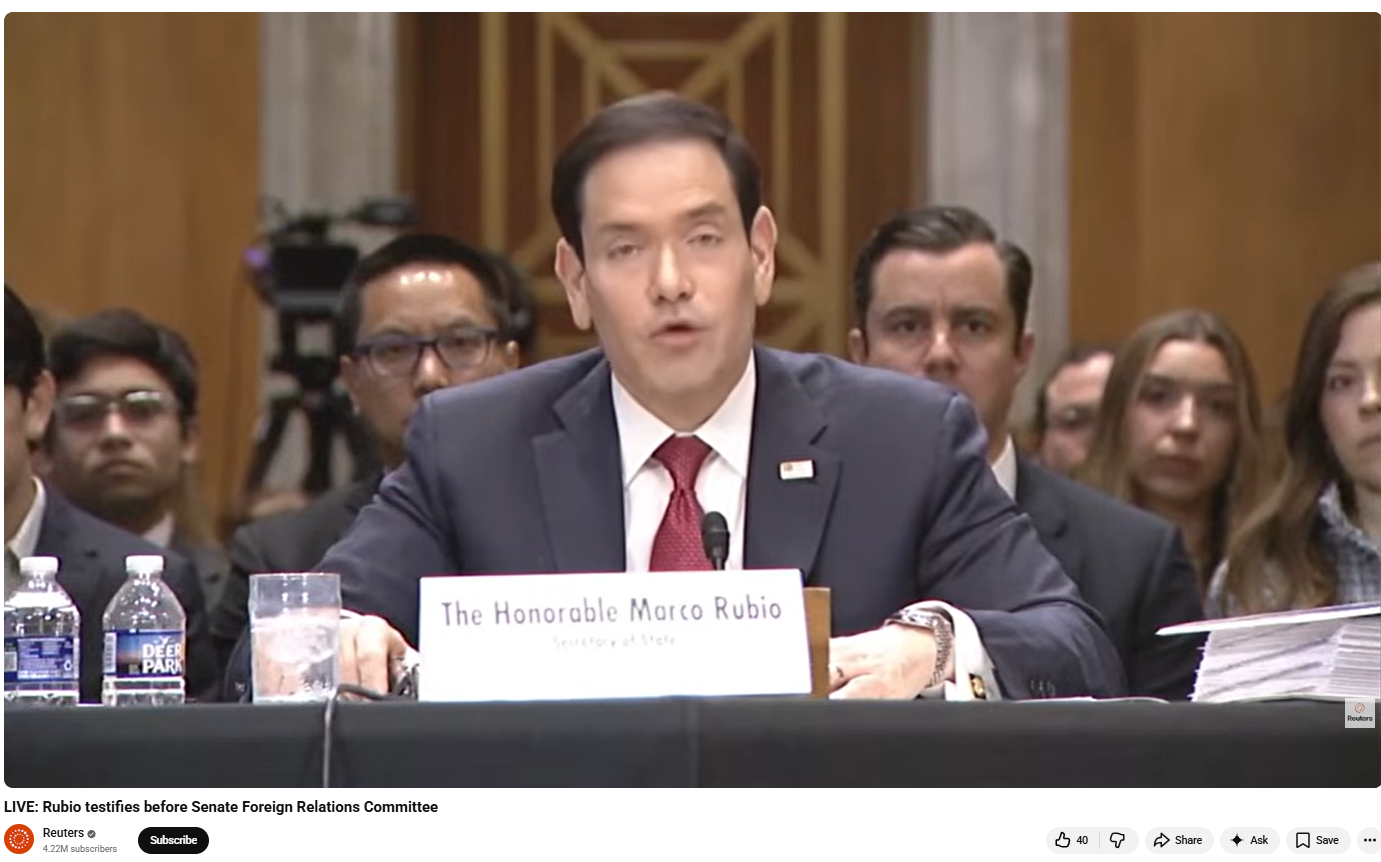
At the 2-hour 8-minute 55-second mark of the Reuters video, Rubio only states that the US played a role in ending the India-Pakistan conflict. Following this, he discusses the Thailand-Cambodia conflict. This makes it clear that the alleged statement in the viral video was digitally added or edited in, and is not part of the original footage.
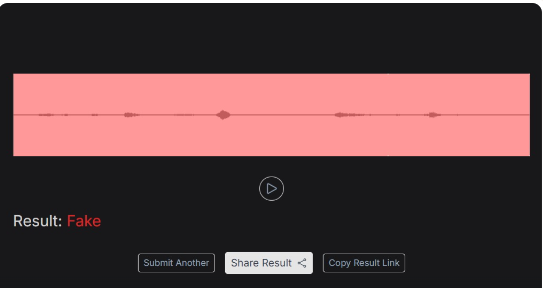
Taking the investigation further, we scanned the suspicious audio portion of the viral video using the AI detection tool 'Resemble AI'. According to the analysis results, clear signs of audio manipulation were detected.
Conclusion:
Our investigation revealed that the video has been digitally manipulated. Rubio did state that the United States played a role in ending the conflict, but he never said that India was the first to request a ceasefire from Pakistan. This alleged statement was not part of the original video and was altered by adding it later.

Related Blogs
Introduction
In a world where Artificial Intelligence (AI) is already changing the creation and consumption of content at a breathtaking pace, distinguishing between genuine media and false or doctored content is a serious issue of international concern. AI-generated content in the form of deepfakes, synthetic text and photorealistic images is being used to disseminate misinformation, shape public opinion and commit fraud. As a response, governments, tech companies and regulatory bodies are exploring ‘watermarking’ as a key mechanism to promote transparency and accountability in AI-generated media. Watermarking embeds identifiable information into content to indicate its artificial origin.
Government Strategies Worldwide
Governments worldwide have pursued different strategies to address AI-generated media through watermarking standards. In the US, President Biden's 2023 Executive Order on AI directed the Department of Commerce and the National Institute of Standards and Technology (NIST) to establish clear guidelines for digital watermarking of AI-generated content. This action puts a big responsibility on large technology firms to put identifiers in media produced by generative models. These identifiers should help fight misinformation and address digital trust.
The European Union, in its Artificial Intelligence Act of 2024, requires AI-generated content to be labelled. Article 50 of the Act specifically demands that developers indicate whenever users engage with synthetic content. In addition, the EU is a proponent of the Coalition for Content Provenance and Authenticity (C2PA), an organisation that produces secure metadata standards to track the origin and changes of digital content.
India is currently in the process of developing policy frameworks to address AI and synthetic content, guided by judicial decisions that are helping shape the approach. In 2024, the Delhi High Court directed the central government to appoint members for a committee responsible for regulating deepfakes. Such moves indicate the government's willingness to regulate AI-generated content.
China, has already implemented mandatory watermarking on all deep synthesis content. Digital identifiers must be embedded in AI media by service providers, and China is one of the first countries to adopt stern watermarking legislation.
Understanding the Technical Feasibility
Watermarking AI media means inserting recognisable markers into digital material. They can be perceptible, such as logos or overlays or imperceptible, such as cryptographic tags or metadata. Sophisticated methods such as Google's SynthID apply imperceptible pixel-level changes that remain intact against standard image manipulation such as resizing or compression. Likewise, C2PA metadata standards enable the user to track the source and provenance of an item of content.
Nonetheless, watermarking is not an infallible process. Most watermarking methods are susceptible to tampering. Aforementioned adversaries with expertise, for instance, can use cropping editing or AI software to delete visible watermarks or remove metadata. Further, the absence of interoperability between different watermarking systems and platforms hampers their effectiveness. Scalability is also an issue enacting and authenticating watermarks for billions of units of online content necessitates huge computational efforts and routine policy enforcement across platforms. Scientists are currently working on solutions such as blockchain-based content authentication and zero-knowledge watermarking, which maintain authenticity without sacrificing privacy. These new techniques have potential for overcoming technical deficiencies and making watermarking more secure.
Challenges in Enforcement
Though increasing agreement exists for watermarking, implementation of such policies is still a major issue. Jurisdictional constraints prevent enforceability globally. A watermarking policy within one nation might not extend to content created or stored in another, particularly across decentralised or anonymous domains. This creates an exigency for international coordination and the development of worldwide digital trust standards. While it is a welcome step that platforms like Meta, YouTube, and TikTok have begun flagging AI-generated content, there remains a pressing need for a standardised policy that ensures consistency and accountability across all platforms. Voluntary compliance alone is insufficient without clear global mandates.
User literacy is also a significant hurdle. Even when content is properly watermarked, users might not see or comprehend its meaning. This aligns with issues of dealing with misinformation, wherein it's not sufficient just to mark off fake content, users need to be taught how to think critically about the information they're using. Public education campaigns, digital media literacy and embedding watermarking labels within user-friendly UI elements are necessary to ensure this technology is actually effective.
Balancing Privacy and Transparency
While watermarking serves to achieve digital transparency, it also presents privacy issues. In certain instances, watermarking might necessitate the embedding of metadata that will disclose the source or identity of the content producer. This threatens journalists, whistleblowers, activists, and artists utilising AI tools for creative or informative reasons. Governments have a responsibility to ensure that watermarking norms do not violate freedom of expression or facilitate surveillance. The solution is to achieve a balance by employing privacy-protection watermarking strategies that verify the origin of the content without revealing personally identifiable data. "Zero-knowledge proofs" in cryptography may assist in creating watermarking systems that guarantee authentication without undermining user anonymity.
On the transparency side, watermarking can be an effective antidote to misinformation and manipulation. For example, during the COVID-19 crisis, misinformation spread by AI on vaccines, treatments and public health interventions caused widespread impact on public behaviour and policy uptake. Watermarked content would have helped distinguish between authentic sources and manipulated media and protected public health efforts accordingly.
Best Practices and Emerging Solutions
Several programs and frameworks are at the forefront of watermarking norms. Adobe, Microsoft and others' collaborative C2PA framework puts tamper-proof metadata into images and videos, enabling complete traceability of content origin. SynthID from Google is already implemented on its Imagen text-to-image model and secretly watermarks images generated by AI without any susceptibility to tampering. The Partnership on AI (PAI) is also taking a leadership role by building out ethical standards for synthetic content, including standards around provenance and watermarking. These frameworks become guides for governments seeking to introduce equitable, effective policies. In addition, India's new legal mechanisms on misinformation and deepfake regulation present a timely point to integrate watermarking standards consistent with global practices while safeguarding civil liberties.
Conclusion
Watermarking regulations for synthetic media content are an essential step toward creating a safer and more credible digital world. As artificial media becomes increasingly indistinguishable from authentic content, the demand for transparency, origin, and responsibility increases. Governments, platforms, and civil society organisations will have to collaborate to deploy watermarking mechanisms that are technically feasible, compliant and privacy-friendly. India is especially at a turning point, with courts calling for action and regulatory agencies starting to take on the challenge. Empowering themselves with global lessons, applying best-in-class watermarking platforms and promoting public awareness can enable the nation to acquire a level of resilience against digital deception.
References
- https://artificialintelligenceact.eu/
- https://www.cyberpeace.org/resources/blogs/delhi-high-court-directs-centre-to-nominate-members-for-deepfake-committee
- https://c2pa.org
- https://www.cyberpeace.org/resources/blogs/misinformations-impact-on-public-health-policy-decisions
- https://deepmind.google/technologies/synthid/
- https://www.imatag.com/blog/china-regulates-ai-generated-content-towards-a-new-global-standard-for-transparency
Executive Summary
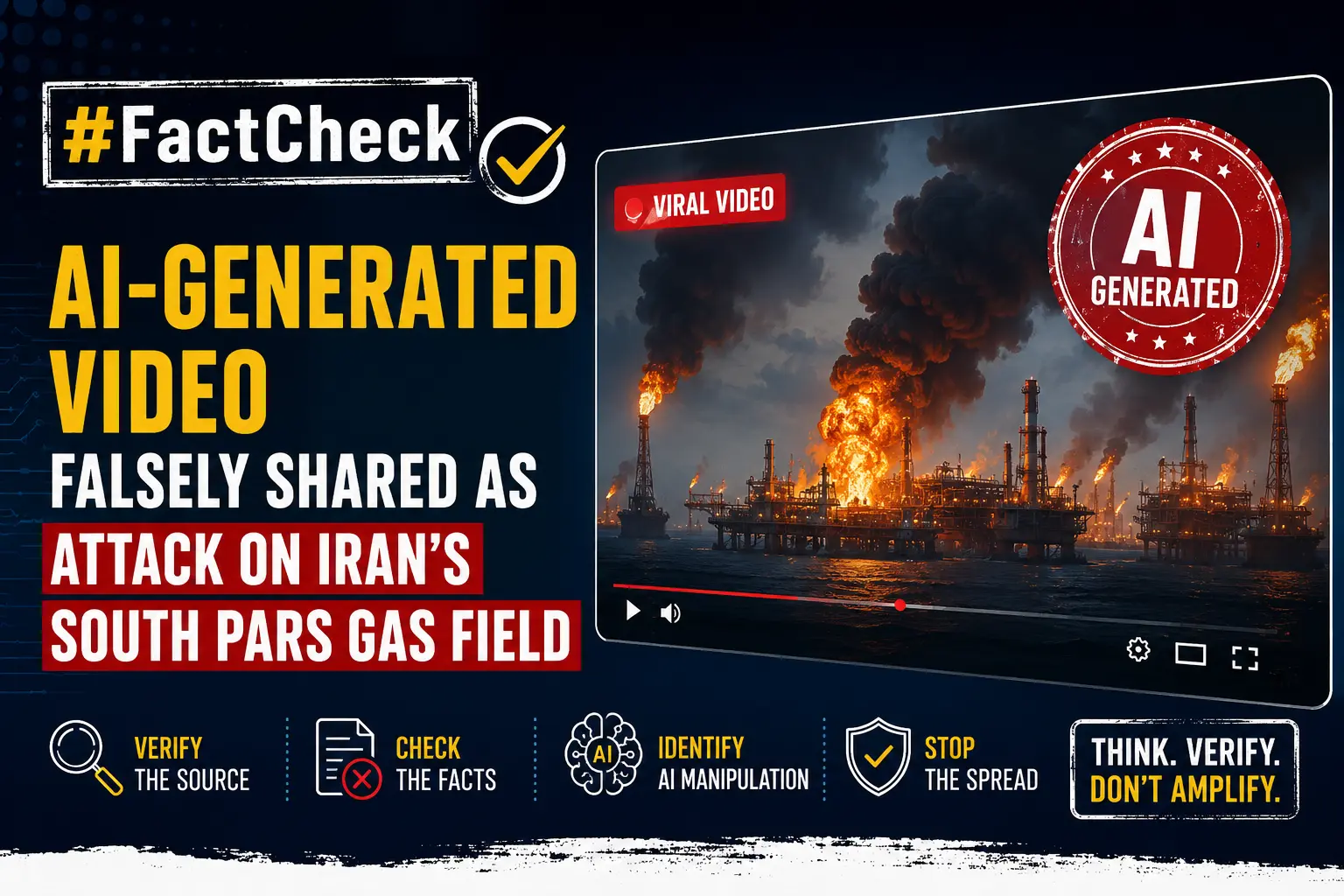
A video showing a massive explosion and fire at what appears to be a gas facility is being widely circulated on social media. In the footage, huge flames and thick smoke can be seen rising from the site, while workers and security personnel are seen running around in panic.
The video is being shared with the claim that it shows an attack on the South Pars natural gas field in Iran’s Bushehr province.
CyberPeace Research Wing’s research found the viral claim to be false. The research revealed that the video is not from a real incident but was created using Artificial Intelligence (AI) and is being circulated with a false narrative.
Claim
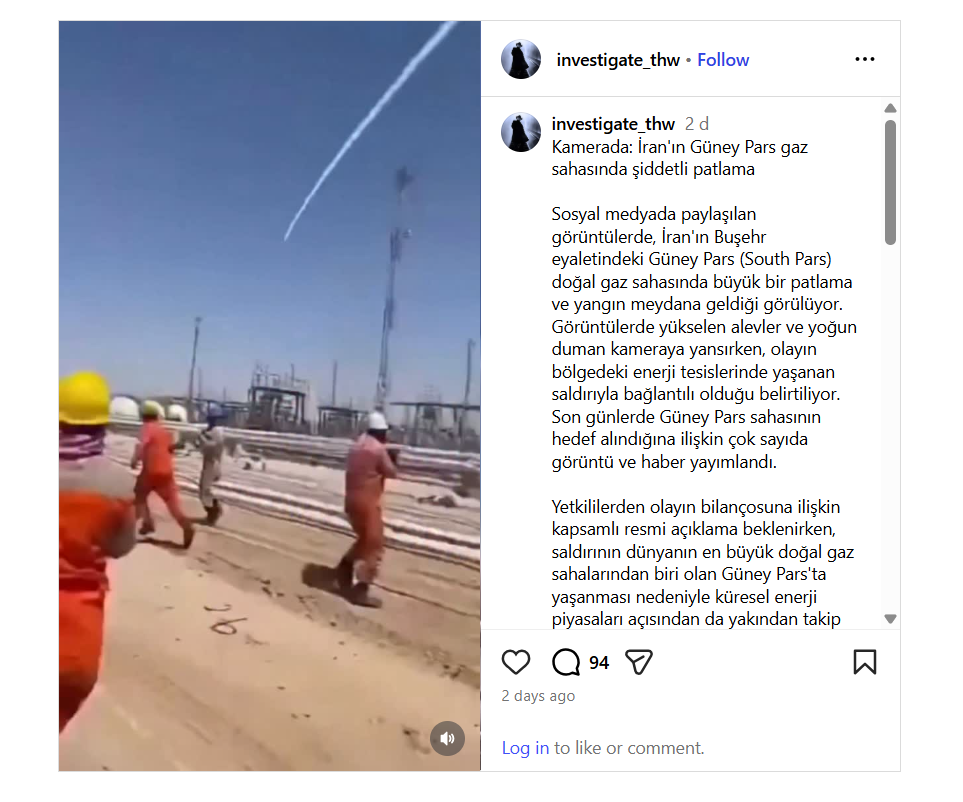
The viral video is being shared on social media with the claim that it shows an attack on energy facilities at the South Pars natural gas field in Iran’s Bushehr province.
Post Link:
https://www.instagram.com/reel/DanX_iJIfTu/?utm_source=ig_web_button_share_sheet
Fact Check
To verify the claim, we extracted multiple keyframes from the viral video and conducted a reverse image search using Google Lens. During the search, we did not find any credible news report or reliable source confirming that the video was related to any attack on Iran’s South Pars gas field.
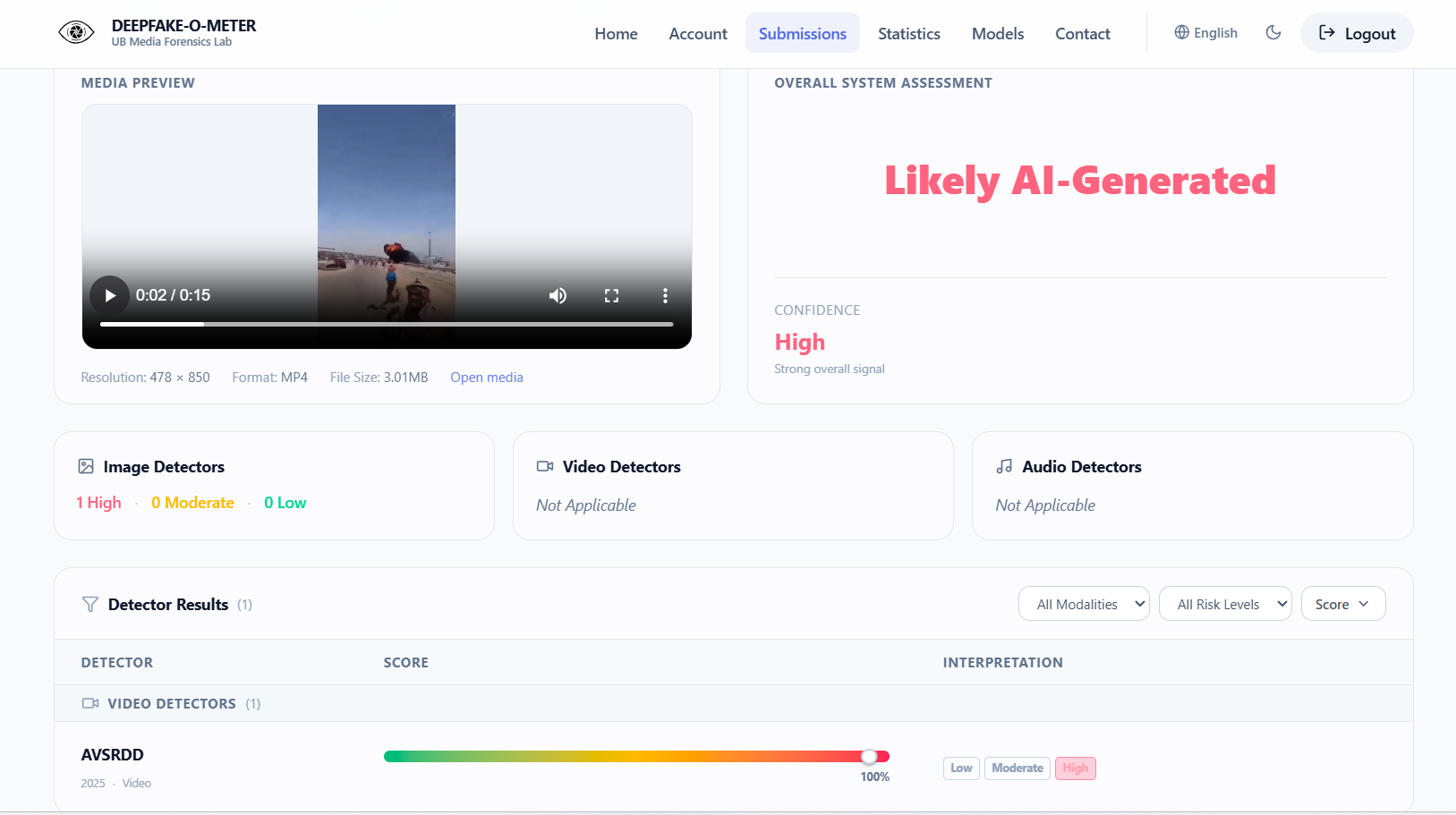
In the next step of the research, we analysed the video using the AI detection tool Deepfake-O-Meter. The tool’s results indicated that the viral video was approximately 100% likely to be AI-generated.

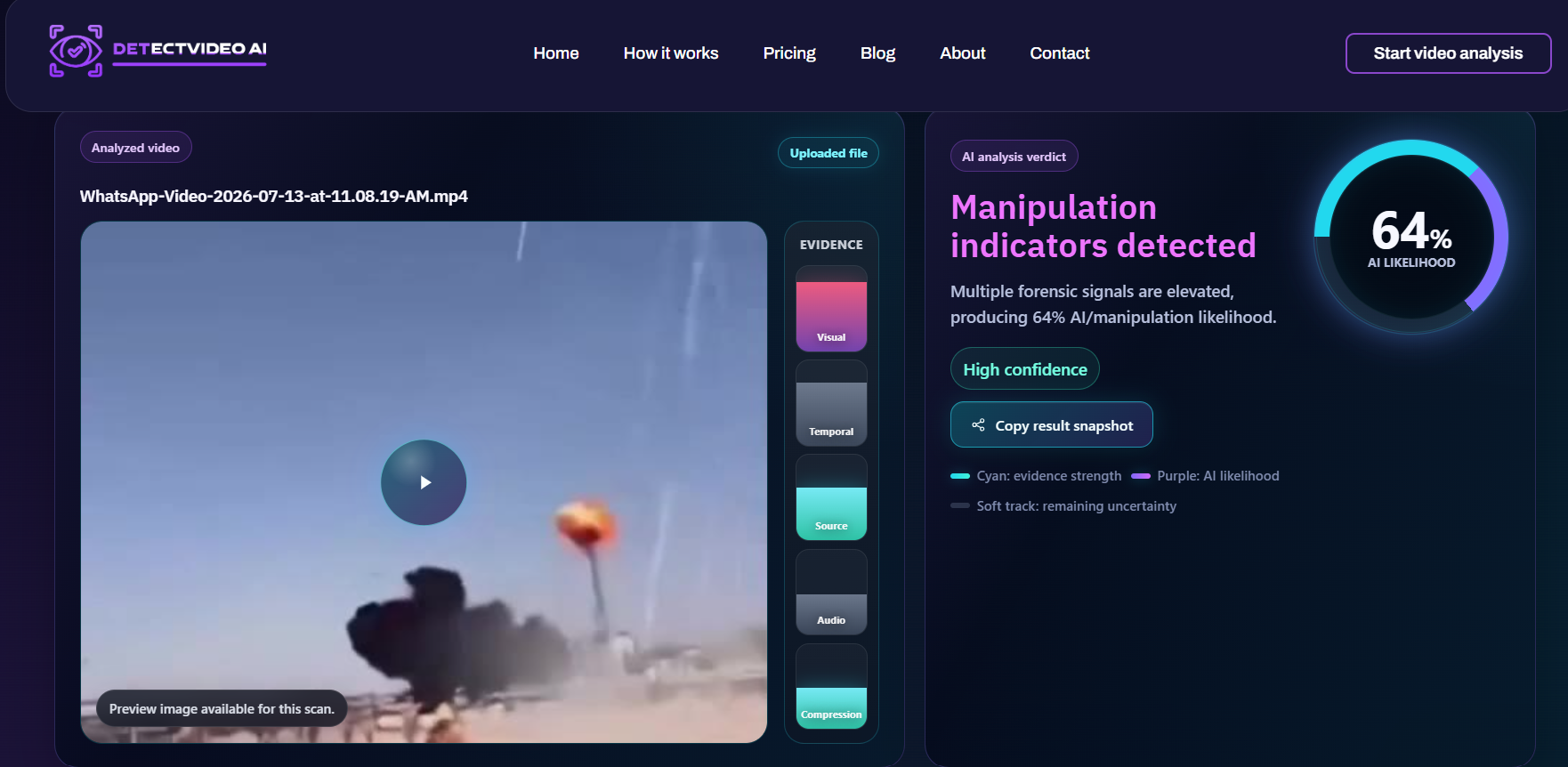
For further verification, we also checked the video using another AI detection tool, DetectVideo AI. The analysis showed that the video had a 64% probability of being AI-generated.
Conclusion
Our research found that the viral claim is false. The video does not show any real attack on Iran’s South Pars natural gas field. The footage was found to be AI-generated and is being shared on social media with a misleading claim.
Introduction
The rapid rise of AI tools has reshaped how health content spreads on platforms like Instagram Reels and YouTube Shorts. These sub-minute videos promise quick fixes for weight loss, glowing skin, or reduced anxiety, often delivered through polished visuals and confident AI-generated voiceovers. The result feels highly personalised, as if the advice is tailored to each viewer, even though it is usually generic and widely recycled.
Short-form videos tend to compress complex health topics into “one tip” solutions, such as drinking a specific detox drink daily or following a single workout for rapid fat loss. While appealing, this oversimplification removes essential context, including individual health conditions, long-term risks, and scientific nuance. For example, viral diet trends or fitness hacks may work for some but can be ineffective or even harmful for others.
Algorithms play a major role in amplifying such content. Videos that promise dramatic transformations or instant results are more likely to gain engagement, which pushes them to wider audiences. Repeated exposure then builds familiarity, making the advice seem more credible over time. Audiences often trust this content due to its clean presentation, authoritative tone, and frequent repetition. However, the risks include misinformation, unrealistic expectations, and potential harm from unverified practices. To approach such content critically, viewers should cross-check claims with credible medical sources, avoid relying on single tip solutions, and remember that real health advice is rarely one size fits all.
The Illusion of Personalisation
AI-generated health content often mimics personalisation through:
- Synthetic voiceovers that designers created to match different age groups through their voice output, which speak specifically to people who are 20 years old and younger.
- The script development process uses data that tracks currently popular search terms.
- Viewers can interpret information through visual elements, which show changes between two different states.
The process of "personalisation" uses generalised data that does not match individual health profiles to create targeted results. The videos fail to provide a medical assessment because they do not consider:
- Existing medical conditions
- Hereditary differences
- Personal habits and the impact of surrounding conditions
The users will think that general medical advice applies to their personal health needs, which will lead them to use this advice inappropriately.
Short-Form Content and Oversimplification
Short-form videos have time limitations, which result in reduced complex medical information development into basic medical stories. The typical patterns of evaluation include these two patterns of evaluation include:
- “One-tip solutions” (e.g., “Drink this before bed to burn fat”)
- Binary framing (“good vs bad foods”)
- The process of eliminating all disclaimers and side effects information
For example, the three diet methods here the three diet methods here
- Viral detox drinks that make the claim to "flush toxins" from the body
- Extreme calorie-cutting diet hacks
- Fitness shortcuts that guarantee users will see results within days
The content demonstrates a pattern of disregarding essential human body operation rules that include both metabolic patterns and human body operation over extended periods of time.
Algorithmic Amplification and Virality
The recommendation algorithms used by Instagram and YouTube deliver their most important results through three main factors, which include:
- Engagement (likes, shares, watch time)
- Retention rates
- Emotional or aspirational triggers
Health-related content that claims to deliver:
- Immediate body changes
- Needs minimal work from viewers
- Results in extreme physical changes
Attractive health-related content that displays extreme physical changes through quick transformations. The system produces a continuous cycle during which:
- Misleading content gains traction
- Algorithms amplify it further
- More creators replicate similar formats using AI tools
The system produces a secondary result that favours content that people share instead of content that has authentic credibility.
Why Do Users Trust AI-Generated Health Content?
Several psychological and technological factors contribute to trust:
- Professional Aesthetics - AI tools generate high-quality visual content together with authentic voiceover performance and expert-level script documentation, which replicates professional communication methods.
- Repetition and Familiarity - When people encounter identical recommendations multiple times, their belief in those recommendations increases through the illusory truth effect.
- Authority Signals
- Medical terminology serves as a standard term
- Medical professionals appear in stock footage through lab coat visuals
- The narrator delivers information through an assertive speaking style
- Perceived Personal Relevance - Algorithmic targeting makes users feel the content is "meant for them.
Real-World Examples of Viral Trends
The typical types of health misinformation that artificial intelligence systems spread through their enhanced capabilities include:
- Diet Trends: Keto shortcuts, extreme intermittent fasting variants
- Fitness Hacks: Spot reduction exercises (scientifically unsupported)
- Supplement Advice: Unverified claims about vitamins or herbal products
- Mental Health Tips: Oversimplified coping strategies that lack clinical evidence
The statement that drinking warm lemon water will detox your liver continues to be popular despite the fact that the liver has natural self-detoxification abilities.
Risks and Public Health Implications
The widespread consumption of such content creates multiple dangers, which include:
1. Physical Health Risks
- Nutritional deficiencies from extreme diets
- Injury from improper exercise techniques
- Delayed medical consultation
2. Psychological Impact
- Unrealistic body image expectations
- Anxiety due to conflicting advice
3. Misinformation Ecosystem
- The public loses confidence in evidence-based medicine
- Unverified or pseudoscientific practices spread throughout society
Regulatory and Ethical Concerns
The increase of AI-generated health materials connects to more extensive problems, which include:
- Who is responsible for the content
- Who is responsible for the platform
- How AI systems show their inner workings to users
Most platforms today do not have strict systems that can:
- Verify medical claims
- Display which health advice comes from artificial intelligence
- Punish users who spread false information multiple times
The absence of regulations allows misleading information to spread without consequences.
A CyberPeace Perspective: Building Digital Health Resilience
The problem needs complete involvement from several parties to create effective solutions that protect both online security and data integrity.
For Users
- Users should confirm claims by using trustworthy medical resources, which include the WHO and peer-reviewed studies.
- People should avoid using "quick solutions" until they receive guidance from certified experts.
- Users should exercise caution when they encounter content that does not include necessary warning signs.
For Platforms
- Platforms should implement systems that enable users to identify AI-generated content.
- Platforms should decrease the visibility of health information that contains false statements.
- Platforms should support authentic health content producers who have been validated.
For Policymakers
- Policymakers should create standards that govern AI-produced medical content.
- Policymakers need to enhance initiatives that teach people about the health information available online.
For Content Creators
- Content creators must show how they implement AI technologies.
- They should stay away from making claims that either go beyond what is needed or state things as absolute truth.
Conclusion
AI-generated health tips on short-form video platforms create complex research conditions that involve three scientific fields: technology, psychology and public health. The tools provide equal access to information, yet create higher risks for people to believe false information when they use the tools without responsible usage.
The challenge requires organisations to maintain user safety through accurate information management while providing users with transparent digital health services. The growing dependence of users on algorithm-based content requires educational institutions to develop students' critical thinking abilities and digital skills to minimise negative effects from AI-driven communication methods.
References
- https://pmc.ncbi.nlm.nih.gov/articles/PMC12924558/
- https://academic.oup.com/heapro/article/40/2/daaf023/8100645
- https://pmc.ncbi.nlm.nih.gov/articles/PMC12673052/
- https://www.frontiersin.org/journals/public-health/articles/10.3389/fpubh.2025.1713794/full
- https://www.who.int/teams/digital-health-and-innovation/digital-channels/combatting-misinformation-online
- https://link.springer.com/article/10.1186/s12982-025-00777-2
- https://www.washingtonpost.com/health/2026/04/21/chatbot-medical-advice-accurate/
