
#FactCheck- Brazil Explosion Video Falsely Linked to Attack on Israeli Defence Minister
Executive Summary
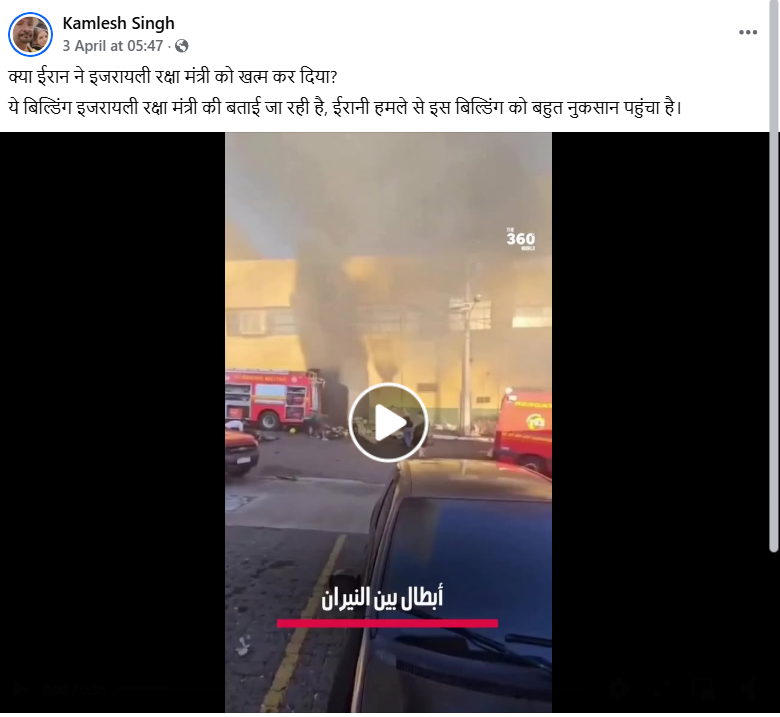
Amid reports of a two-week ceasefire announced on April 8, 2026, between the United States and Iran, a video showing a sudden explosion inside a building has gone viral on social media. The clip shows a fire brigade vehicle stationed outside a structure, with people entering the premises moments before a blast occurs. Social media users are sharing the video with claims that Iran carried out an attack on Israeli Defence Minister Yoav Gallant, alleging that the building shown is linked to Israel’s defence ministry.
However, a research by CyberPeace has found the claim to be false. The viral video is not recent and has no connection to Israel or any ongoing conflict.
Claim
A Facebook user shared the video on April 3, 2026, claiming that Iran had attacked Israeli Defence Minister Yoav Gallant and severely damaged a building associated with him.
Fact Check
To verify the claim, we extracted keyframes from the viral video and conducted a reverse image search. This led us to the same video posted on an X account named Fernanda Melchionna on December 31, 2025.
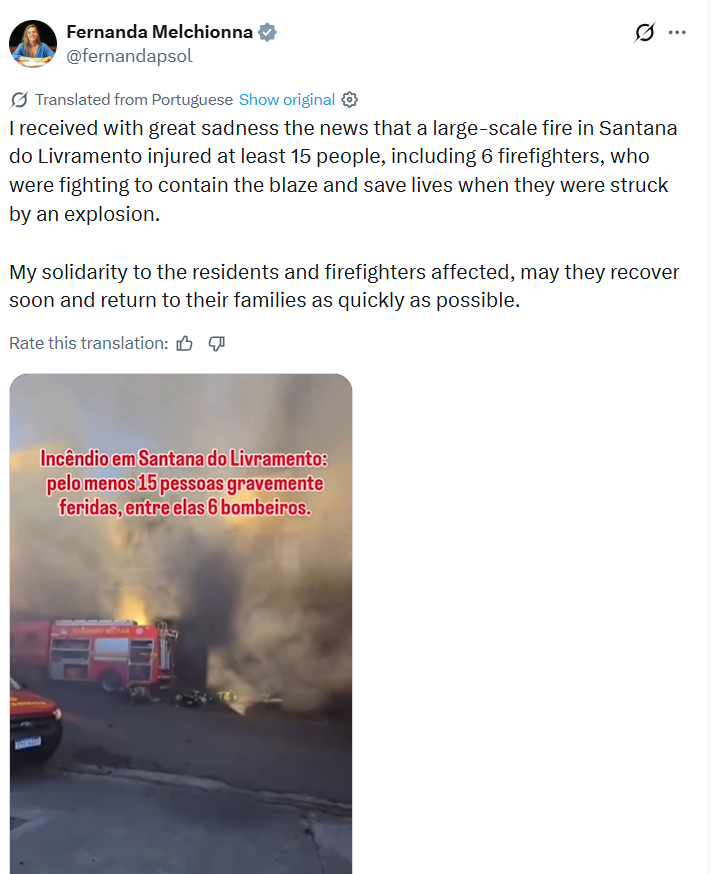
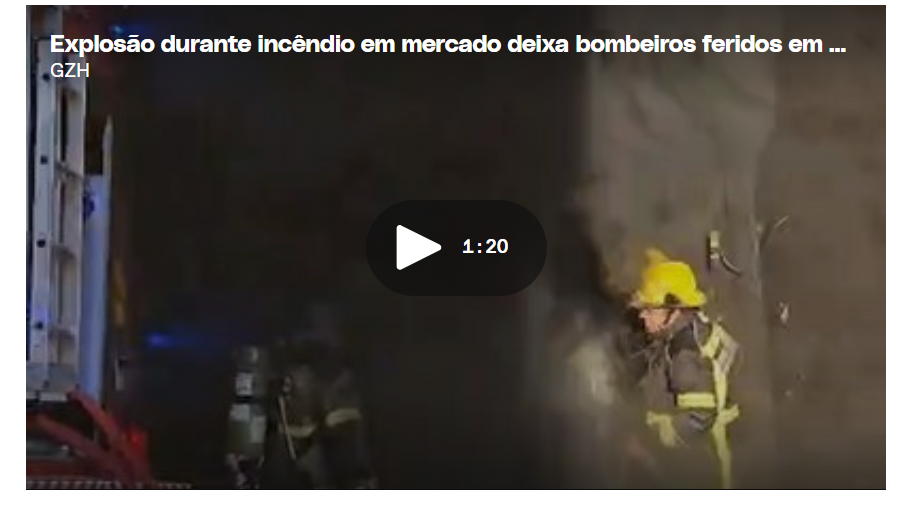
According to the available information, the video is from Santana do Livramento, where a major fire broke out in a supermarket. Further keyword searches led us to a report published on December 31, 2025, by the Brazilian news website GZH (gaúcha zh clicrbs). The report stated that a fire had erupted in a supermarket in Santana do Livramento, and firefighters had reached the spot to control the blaze. During the operation, an explosion occurred, leaving around 17 people injured. The injured were later taken to a hospital.
We also found the same video uploaded on the YouTube channel Terra Brasil on January 1, 2026, further confirming its origin and timeline.

Conclusion
The viral claim is false and misleading. The explosion video being shared as an attack on Israeli Defence Minister Yoav Gallant is unrelated to the ongoing Middle East situation. The footage is actually from December 2025 and shows an incident in Brazil, where a fire in a supermarket led to an explosion during firefighting operations. There is no evidence to suggest any such attack took place in Israel. The video has been taken out of context and circulated with a fabricated narrative to mislead users and exploit geopolitical tensions.

Related Blogs
Executive Summary
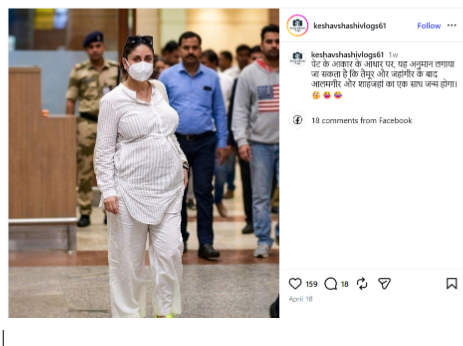
A photo of Bollywood actress Kareena Kapoor Khan is being widely shared on social media with the claim that she is pregnant again. In the viral image, Kareena appears with a visible baby bump, leading users to speculate about another pregnancy. However, research by the CyberPeace Research Wing found the claim to be misleading. The research revealed that the image is not recent and is actually from 2020, now being reshared with a false narrative.
Claim:
An Instagram user shared the viral image on April 18, 2026, and posted a caption jokingly suggesting that after Taimur and Jehangir, Kareena was expecting more children.
Fact Check:
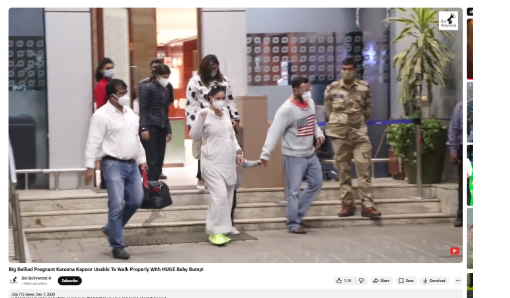
To verify the claim, relevant keyword searches were conducted online, but no credible media report was found supporting the claim that Kareena Kapoor Khan is currently pregnant. A reverse search of the viral visual led to an older video uploaded on the YouTube channel Bol Bollywood on December 7, 2020, where the same image was used.
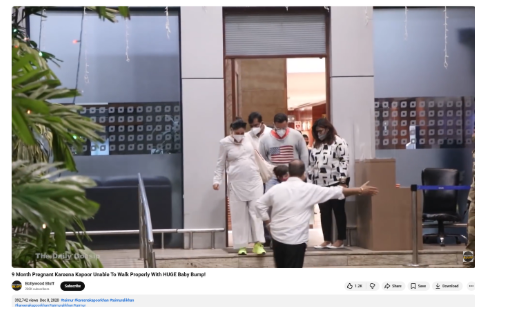
Further research also found a similar video report on the YouTube channel Bollywood Bluff, published on December 8, 2020, featuring the same visual and similar claims. These findings confirmed that the viral image is several years old and unrelated to any recent development.
Conclusion:
The claim that Kareena Kapoor Khan is pregnant again is misleading. The viral photo is not recent but an old image from 2020 that is being circulated with a false claim.

Executive Summary:
Recently, our team came across a video on social media that appears to show a saint lying in a fire during the Mahakumbh 2025. The video has been widely viewed and comes with captions claiming that it is part of a ritual during the ongoing Mahakumbh 2025. After thorough research, we found that these claims are false. The video is unrelated to Mahakumbh 2025 and comes from a different context and location. This is an example of how the information posted was from the past and not relevant to the alleged context.

Claim:
A video has gone viral on social media, claiming to show a saint lying in fire during Mahakumbh 2025, suggesting that this act is part of the traditional rituals associated with the ongoing festival. This misleading claim falsely implies that the act is a standard part of the sacred ceremonies held during the Mahakumbh event.

Fact Check:
Upon receiving the post we conducted a reverse image search of the key frames extracted from the video, and traced the video to an old article. Further research revealed that the original post was from 2009, when Ramababu Swamiji, aged 80, laid down on a burning fire for the benefit of society. The video is not recent, as it had already gone viral on social media in November 2009. A closer examination of the scene, crowd, and visuals clearly shows that the video is unrelated to the rituals or context of Mahakumbh 2025. Additionally, our research found that such activities are not part of the Mahakumbh rituals. Reputable sources were also kept into consideration to cross-verify this information, effectively debunking the claim and emphasizing the importance of verifying facts before believing in anything.


For more clarity, the YouTube video attached below further clears the doubt, which reminds us to verify whether such claims are true or not.

Conclusion:
The viral video claiming to depict a saint lying in fire during Mahakumbh 2025 is entirely misleading. Our thorough fact-checking reveals that the video dates back to 2009 and is unrelated to the current event. Such misinformation highlights the importance of verifying content before sharing or believing it. Always rely on credible sources to ensure the accuracy of claims, especially during significant cultural or religious events like Mahakumbh.
- Claim: A viral video claims to show a saint lying in fire during the Mahakumbh 2025.
- Claimed On: X (Formerly Known As Twitter)
- Fact Check: False and Misleading

Executive Summary:
In the digital world, people are becoming targets more and more of online scams, which rely on deception. One of the ways the social media is being used for the elections in recent time, is the "BJP - Election Bonus" offer that promises a cash prize of Rs. 5000 or more, through some easy questionnaire. This article provides the details of this swindle and reveals its deceptive tricks as well as gives a set of recommendations on how to protect yourself from such online fraud, especially during the upcoming elections.
False Claim:
The "BJP - Election Bonus" campaign boasts that by taking a few clicks of the mouse, users will get a cash prize. This scheme is nothing but a fake association with the Bharatiya Janata Party (BJP)’s Government and Prime Minister Shri Narendra Modi and therefore, it uses the images and brands of both of them to give the scheme an impression of legitimacy. The imposters are taking advantage of the public's trust for the Government and the widespread desire for remuneration to ensnare the unaware victims, specifically before the upcoming Lok Sabha elections.

The Deceptive Scheme:
- Tempting Social Media Offer: The fraud begins with an attractive link on the social media platforms. The scammers say that the proposal is related to the Bharatiya Janata Party (BJP) with the caption of “The official party has prepared many gifts for their supporters.” accompanied by an image of the Prime Minister Shri Narendra Modi.
- Luring with Money: The offer promises to give Rs.5,000 or more. This is aimed at drawing in people specifically during election campaigns; and people’s desire for financial gain.
- Tricking with Questions: When the link is clicked, the person is brought to the page with the simple questions. The purpose of these questions is to make people feel safe and believe that they have been selected for an actual government’s program.
- The Open-the-Box Trap: Finally, the questions are answered and the last instruction is to open-the-box for the prize. However, this is just a tactic for them to make you curious about the reward.
- Fake Reward and Spreading the Scam: Upon opening the box, the recipient will be greeted with the text of Rs. 5000. However, this is not true; it is just a way to make them share the link on WhatsApp, helping the scammers to reach more victims.
The fraudsters use political party names and the Prime Minister's name to increase the plausibility of it, although there is no real connection. They employ the people's desire for monetary help, and also the time of the elections, making them susceptible to their tricks.
Analytical Breakdown:
- The campaign is a cleverly-created scheme to lure people by misusing the trust they have in the Government. By using BJP's branding and the Prime Minister's photo, fraudsters aim to make their misleading offer look credible. Fake reviews and cash reward are the two main components of the scheme that are intended to lure users into getting involved, and the end result of this is the path of deception.
- Through sharing the link over WhatsApp, users become unaware accomplices that are simply assisting the scammers to reach an even bigger audience and hence their popularity, especially with the elections around the corner.
- On top of this, the time of committing this fraud is very disturbing, as the election is just round the corner. Scammers do this in the context of the political turmoil and the spread of unconfirmed rumors and speculation about the upcoming elections in the same way they did earlier. The fraudsters are using this strategy to take advantage of the political affiliations by linking their scam to the Political party and their Leaderships.
- We have also cross-checked and as of now there is no well established and credible source or any official notification that has confirmed such an offer advertised by the Party.
- Domain Analysis: The campaign is hosted on a third party domain, which is different from the official website, thus creating doubts. Whois information reveals that the domain has been registered not long ago. The domain was registered on 29th march 2024, just a few days back.

- Domain Name: PSURVEY[.]CYOU
- Registry Domain ID: D443702580-CNIC
- Registrar WHOIS Server: whois.hkdns.hk
- Registrar URL: http://www.hkdns.hk
- Updated Date: 2024-03-29T16:18:00.0Z
- Creation Date: 2024-03-29T15:59:17.0Z (Recently Created)
- Registry Expiry Date: 2025-03-29T23:59:59.0Z
- Registrant State/Province: Anhui
- Registrant Country: CN (China)
- Name Server: NORMAN.NS.CLOUDFLARE.COM
- Name Server: PAM.NS.CLOUDFLARE.COM
Note: Cybercriminals used Cloudflare technology to mask the actual IP address of the fraudulent website.
CyberPeace Advisory and Best Practices:
- Be careful and watchful for any offers that seem too good to be true online, particularly during election periods. Exercise caution at a high level when you come across such offers, because they are usually accompanied by dishonest schemes.
- Carefully cross-check the authenticity of every campaign or offer you’re considering before interacting with it. Do not click on suspicious links and do not share private data that can be further used to run the scam.
- If you come across any such suspicious activity or if you feel you have been scammed, report it to the relevant authorities, such as the local police or the cybercrime section. Reporting is one of the most effective instruments to prevent the spread of these misleading schemes and it can support the course of the investigations.
- Educate yourselves and your families on the usual scammers’ tricks, including their election-related strategies. Prompt people to think critically and a good deal of skepticism when they meet online offers and promotions that evoke a possibility to obtain money or rewards easily.
- Ensure that you are always on a high level of alert as you explore the digital field, especially during elections. The authenticity of the information you encounter should always be verified before you act on it or pass it over to someone else.
- In case you have any doubt or worry regarding a certain e-commerce offer or campaign, don’t hesitate to ask for help from reliable sources such as Cybersecurity experts or Government agencies. A consultation with credible sources will assist you in coming up with informed decisions and guarding yourself against being navigated by these schemes.
Conclusion:
The "BJP - Election Bonus" campaign is a real case study of how Internet fraud is becoming more popular day by day, particularly before the elections. Through the awareness of the tactics employed by these scammers and their abuse of the community's trust in the Government and political figures, we can equip ourselves and our communities to avert becoming the victim of such fraudulent schemes. As a team, we can collectively strive for a digital environment free of threats and breaches of security, even in times of high political tension that accompany elections.
