
#FactCheck- AI-Generated Video Falsely Claims Free Mobile Phones for Ration Card Holders
Executive Summary
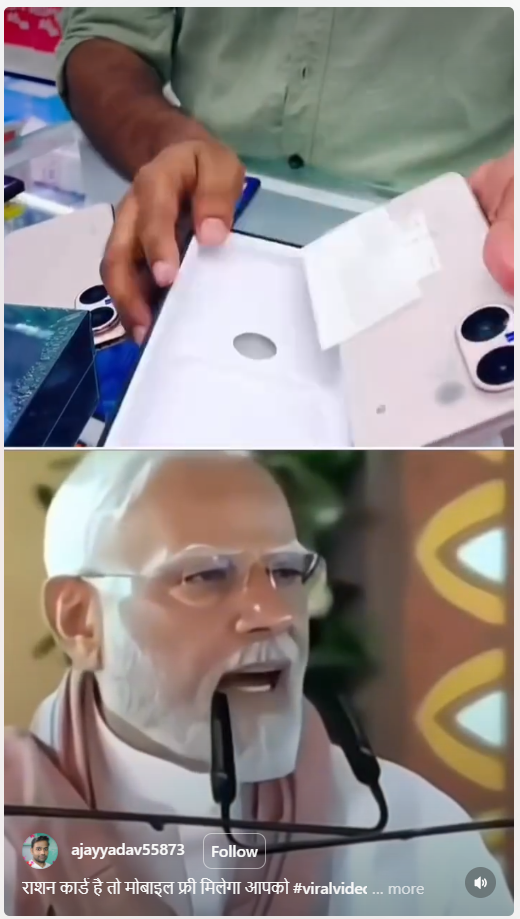
A video of Prime Minister Narendra Modi is being widely shared on social media, in which he appears to announce that all ration card holders will receive free mobile phones, provided no member of their family is a government employee. However, research by the CyberPeace has found this claim to be false. Our research reveals that the viral video is AI-generated and does not reflect any real announcement.
Claim:
An Instagram user shared the viral video with the caption, “If you have a ration card, you will get a free mobile phone.”
- Post link: https://www.instagram.com/reels/DWqDKWxy6lJ/
- Archived link: https://archive.ph/wip/dmpIf
Fact Check
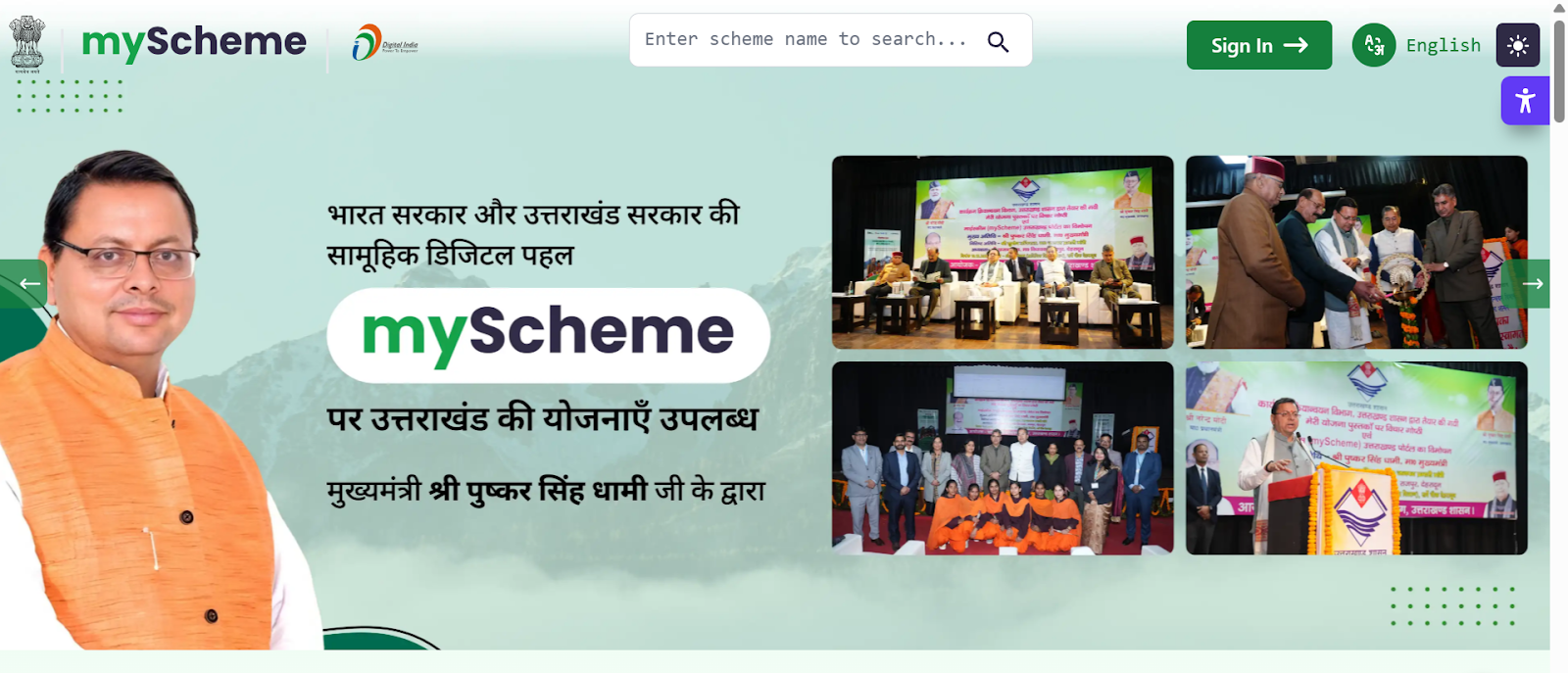
To verify the claim, we first conducted a keyword-based search on Google. However, we did not find any credible media reports supporting such an announcement, raising doubts about the authenticity of the video. We then checked the official government welfare schemes portal, myscheme.gov.in, which provides verified information about central government schemes. No such scheme offering free mobile phones to ration card holders was found on the platform.
Conclusion
Our research confirms that the viral video is fake and AI-generated. There is no official announcement or credible report suggesting that ration card holders will receive free mobile phones under any government scheme. The video has been digitally manipulated using artificial intelligence and is being circulated with a misleading claim. This serves as another example of how AI-generated content can be used to spread misinformation.

Related Blogs

Introduction
On April 30, 2025, the Supreme Court of India delivered a landmark judgment that cast a sharp light on one of the most overlooked yet pressing issues in modern governance—digital inequity. In a country that has a staggering 900 million Internet users, the ruling highlights a disheartening reality, a paradox that brings the “digital divide” to centre stage. While India may be the world’s second-largest online market, a significant segment of its population remains digitally disenfranchised. The judgment, delivered in response to two interconnected petitions, underscored that access to the internet is no longer a luxury but a lifeline integral to exercising fundamental rights. The court pointed out in clear terms that the government must build a digital ecosystem that is inclusive and accessible to all and attributed the right to digital access as an intrinsic part of the right to life and liberty under Article 21 as enshrined under the Indian Constitution.
Understanding the Context: What Prompted the Petitions?
The judgment springs out of two writ petitions, which sought instructions or guidelines for people with blindness or limited vision and acid attack survivors, respectively, to conduct digital Know Your Customer (KYC)/e-KYC/video KYC mandated by RBI’s KYC Master Directions, 2016, which were reserved for judgment on January 28. The court delivered the judgment on April 30, 2025, emphasising the fact that true inclusion in this digital era is confounded in an inclusive digital infrastructure, and it must provide reasonable accommodation to those who face impediments due to any disability or disfigurement.
In consonance with its view, it laid down various guidelines that ensure that all persons with disabilities or acid attack survivors are treated even when digital processes are involved in accordance with the provisions of the Right of Persons with Disabilities Act, 2016 (hereinafter referred to as “RPwD Act”)
Another major observation made by the Honourable SC judges is that the mode of facilitation of government services is through digital platforms, i.e., e-governance, and access to all these welfare schemes is the right of every citizen, irrespective of the fact that they suffer from any disability. The failure of the provisioning of e-governance of these facilities to these individuals is a gross failure of the objectives of these schemes.
Key Observations and Directives
The court directed the government to release fresh guidelines that establish alternative methods to conduct digital KYC/e-KYC for all persons who suffer any impairment, low vision, or disfigurement with greater sensitivity, particularly for acid-attack survivors. The court made its intention very clear that the right to digital access is intrinsic to the right to life and liberty. All the tasks that are included within the ambit of digital KYC, such as pen-on-paper signatures, screen signatures, and the brief window for OTP entry, create an inaccessible and exclusionary framework, violating not just the dignity but the legal rights granted protection under the RPwD Act, 2016. The ruling directs a fundamental reimagining of digital governance through the lens of inclusion, equality, and dignity.
Conclusion
The court is not mincing its words when it declares digital accessibility as a constitutional imperative; it has made it clear that bridging the digital divide is no longer optional but a legal duty. The decision marks the new beginning and a propeller of digital transformation, and a delightful amalgamation of digital access and the rights of people. The effect of this judgment will not be restricted to one class of people. Still, it will cater to all those individuals who face these obstacles on a daily basis due to the exclusionary nature of digital platforms.
References

Introduction:
With the rapid advancement in technologies, vehicles are also being transformed into moving data centre. There is an introduction of connectivity, driver assistance systems, advanced software systems, automated systems and other modern technologies are being deployed to make the experience of users more advanced and joyful. Software plays an important role in the overall functionality and convenience of the vehicle. For example, Advanced technologies like keyless entry and voice assistance, censor cameras and communication technologies are being incorporated into modern vehicles. Addressing the cyber security concerns in the vehicles the Ministry of Road Transport and Highways (MoRTH) has proposed standard Cyber Security and Management Systems (CSMS) rules for specific categories of four-wheelers, including both passenger and commercial vehicles. The goal is to protect these vehicles and their functions against cyber-attacks or vulnerabilities. This move will aim to ensure standardized cybersecurity measures in the automotive industry. These proposed standards will put forth certain responsibilities on the vehicle manufacturers to implement suitable and proportional measures to secure dedicated environments and to take steps to ensure cyber security.
The New Mandate
The new set of standards requires automobile manufacturers to install a new cybersecurity management system, which will be inclusive of protection against several cyberattacks on the vehicle’s autonomous driving functions, electronic control unit, connected functions, and infotainment systems. The proposed automotive industry standards aim to fortify vehicles against cyberattacks. These standards, expected to be notified by early next month, will apply to all M and N category vehicles. This includes passenger vehicles, goods carriers, and even tractors if they possess even a single electronic control unit. The need for enhanced cybersecurity in the automotive sector is palpable. Modern vehicles, equipped with advanced technologies, are highly prone to cyberattacks. The Ministry of Road Transport and Highways has thus taken a precautionary measure to safeguard all new-age commercial and private vehicles against cyber threats and vulnerabilities.
Cyber Security and Management Systems (CSMS)
The proposed standards by the Ministry of Road Transport and Highways (MoRTH) clarify that CSMS refers to a systematic risk-based strategy that defines organisational procedures, roles, and governance to manage and mitigate risks connected with cyber threats to vehicles, eventually safeguarding them from cyberattacks. According to the draft regulations, all manufacturers will be required to install a cyber security management system in their vehicles and provide the government with a certificate of compliance at the time of vehicle type certification.
Electrical vehicle charging system
Electric vehicle charging stations could also be susceptible and prone to cyber threats and vulnerabilities, which significantly requires to have in place standards to prevent them. It is highlighted that the Indian Computer Emergency Response Team (CERT-In), a designated authority to track and monitor cybersecurity incidents in India, had received reports of vulnerabilities in products and applications related to electric vehicle charging stations. Electric cars or vehicles becoming increasingly popular as the world shifts to green technology. EV owners may charge their cars at charging points in convenient spots. When you charge an EV at a charging station, data transfers between the car, the charging station, and the company that owns the device. This trail of data sharing and EV charging stations in many ways can be exploited by the bad actors. Some of the threats may include Malware, remote manipulation, and disturbing charging stations, social engineering attacks, compromised aftermarket devices etc.
Conclusion
Cyber security is necessary in view of the increased connectivity and use of software systems and other modern technologies in vehicles. As the automotive industry continues to adopt advanced technologies, it will become increasingly important that organizations take a proactive approach to ensure cybersecurity in the vehicles. A balanced approach between technology innovation and security measures will be instrumental in ensuring the cybersecurity aspect in the automotive industry. The recent proposed policy standard by the Ministry of Road Transport and Highways (MoRTH) can be seen as a commendable step to make the automotive industry cyber-resilient and safe for everyone.
References:
- https://economictimes.indiatimes.com/news/india/road-transport-ministry-proposes-uniform-cyber-security-system-for-four-wheelers/articleshow/105187952.cms
- https://www.financialexpress.com/business/express-mobility-cybersecurity-in-the-autonomous-vehicle-the-next-frontier-in-mobility-3234055/
- https://www.gktoday.in/morth-proposes-uniform-cyber-security-standards-for-four-wheelers/
- https://cybersecurity.att.com/blogs/security-essentials/the-top-8-cybersecurity-threats-facing-the-automotive-industry-heading-into-2023
Executive Summary:
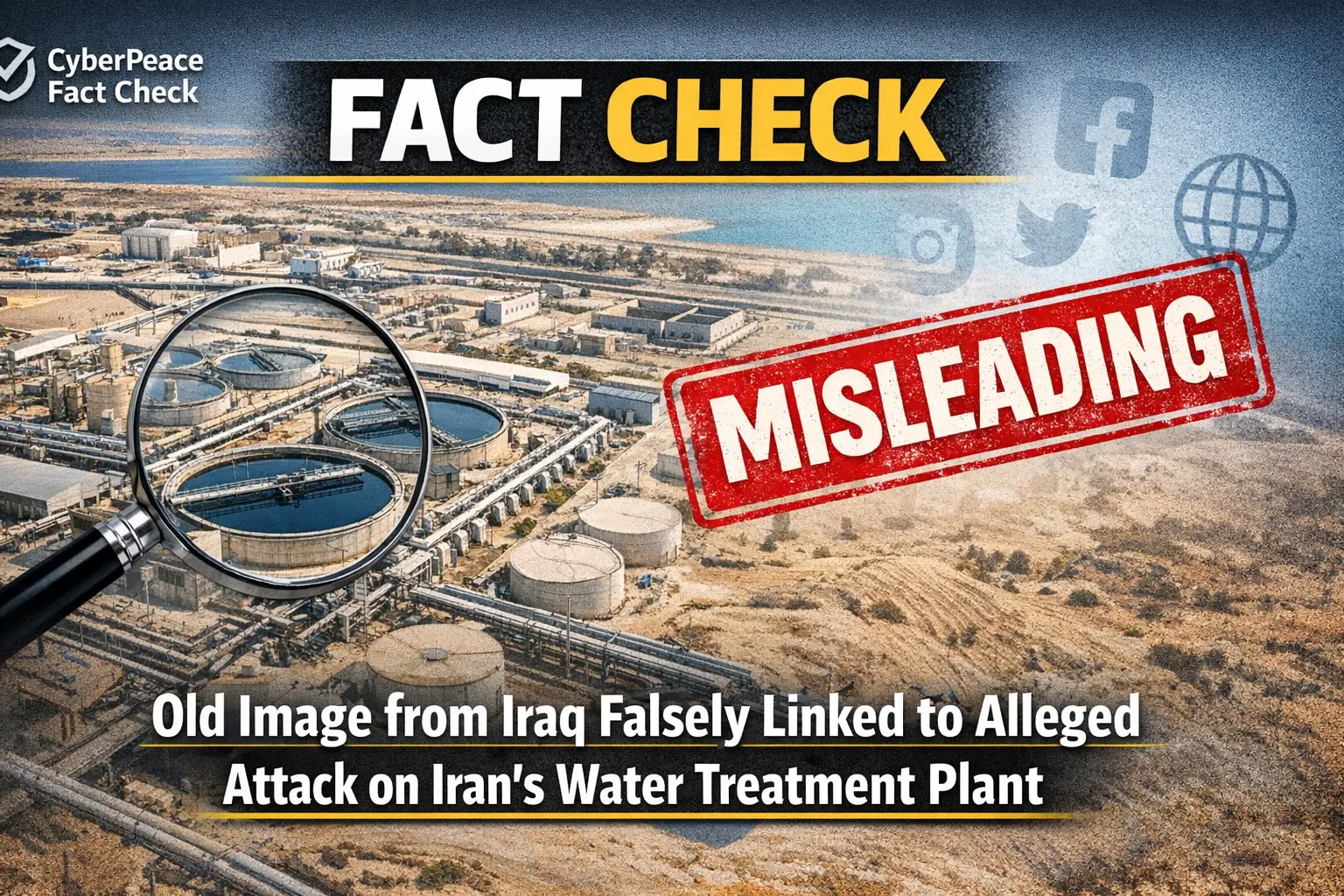
Amid the ongoing tensions and conflict involving the United States, Israel, and Iran, an image of a heavily damaged industrial facility is circulating widely on social media. Several users are sharing the picture claiming that it shows an Iranian water treatment or desalination plant destroyed in a US–Israel attack. Some media reports have also used the same image while reporting on the alleged attack on a freshwater desalination plant in Iran.
However, a research by the CyberPeace found that the claim is misleading. The viral image is not from Iran. It actually shows the aftermath of a drone attack on a warehouse belonging to a US company in Basra, Iraq.
Claim
X user “Shashank Shekhar Jha” shared the image on March 8, 2026, claiming that a freshwater desalination plant in Qeshm, Iran, had been destroyed.
Fact check
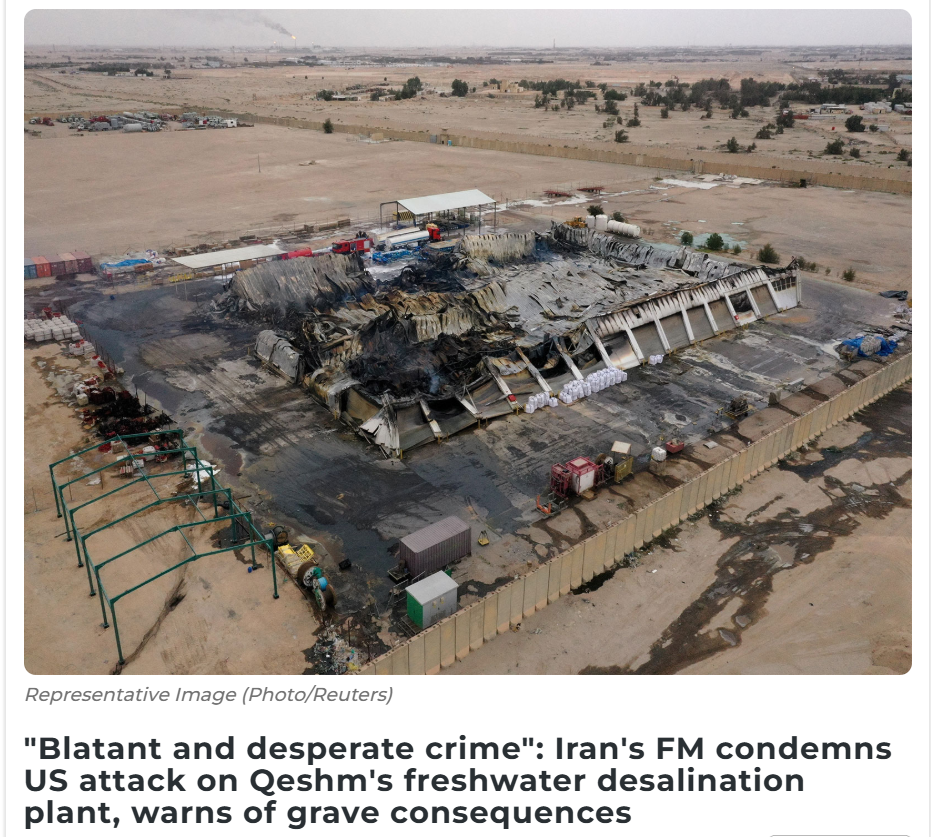
To verify the claim, we conducted a reverse image search using Google Lens. During the search, we found a report published on March 7, 2026, on the website of Asian News International (ANI). The report stated that Iran’s Foreign Minister Seyed Abbas Araghchi condemned a US attack on a freshwater desalination plant on Qeshm Island, calling it a “blatant and desperate crime.”
The report used the same viral image; however, the caption clearly mentioned that it was a representational image credited to Reuters.
https://www.aninews.in/news/world/middle-east/blatant-and-desperate-crime-irans-fm-condemns-us-attack-on-qeshms-freshwater-desalination-plant-warns-of-grave-consequences20260307212645/
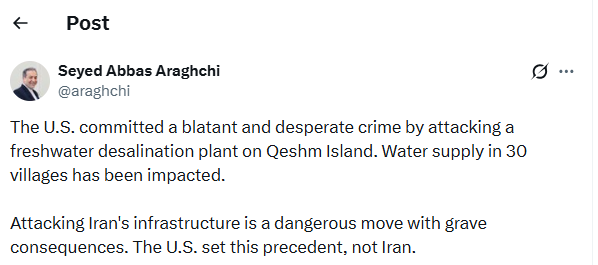
To further confirm the claim, we checked the official X account of Seyed Abbas Araghchi. In a post on March 7, he condemned the alleged attack on the desalination plant in Qeshm and stated that the strike had disrupted water supply to around 30 villages. However, the post did not include any image of the incident.
Conclusion
The viral image being shared as evidence of a US–Israel attack on Iran’s water treatment plant is misleading. The photo actually shows the aftermath of a drone strike on a warehouse belonging to a US company in Basra, Iraq, and has been wrongly linked to the situation in Iran.
