
#FactCheck- Old SCO Summit Video Misrepresented as Pakistan-Iran Meeting
Executive Summary
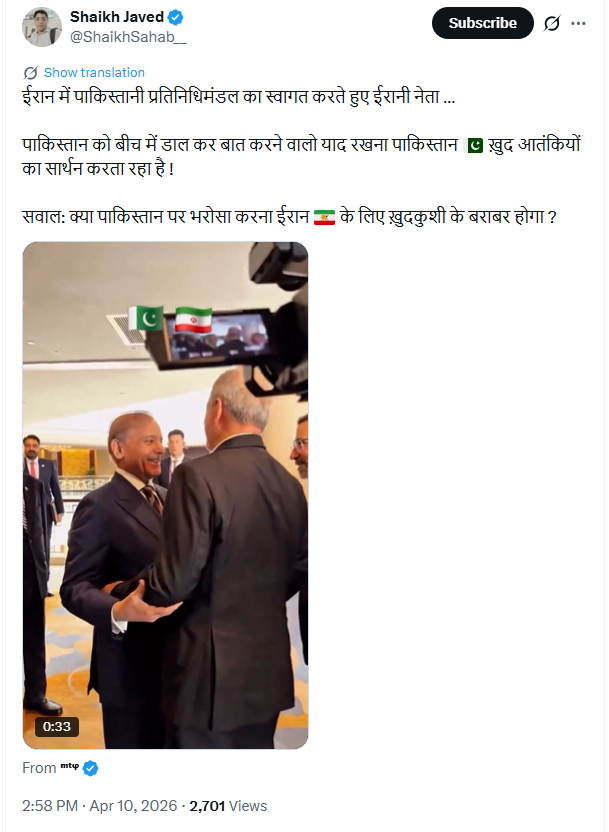
Amid reports of a two-week ceasefire announced on April 8, 2026, between the United States and Iran, and claims that Pakistan is facilitating peace talks between the two nations, a video showing leaders of Pakistan and Iran meeting has gone viral on social media. The video is being shared with the claim that Pakistani leaders received a grand welcome upon arriving in Iran for the April 11, 2026 talks. However, an research by the CyberPeace found the claim to be misleading. The viral video is not recent but dates back to September 2025.
Claim
An X (formerly Twitter) user shared the video on April 10, 2026, claiming that it shows Pakistani leaders being warmly welcomed in Iran.
Post link:
Fact Check
To verify the claim, we extracted keyframes from the viral video and conducted a reverse image search. This led us to the same video posted on a Facebook account named “Bhurgri Siddique” on September 1, 2025.
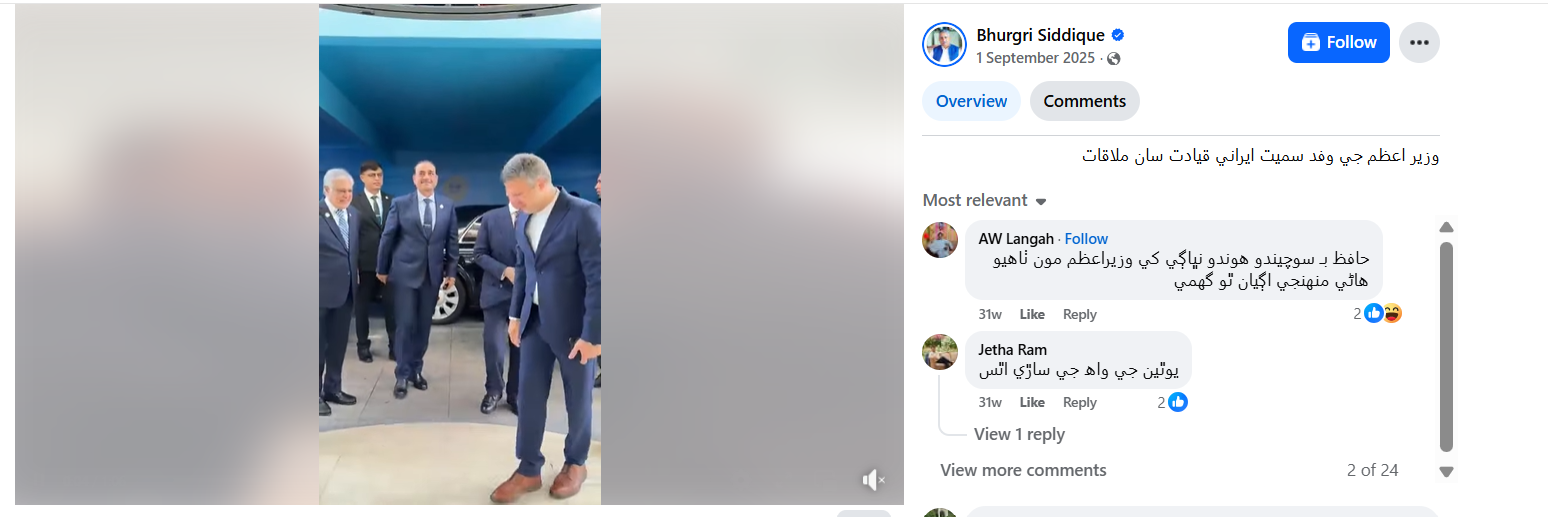
According to the available information, the video shows a meeting between a Pakistani delegation and Iranian leaders. Further keyword searches helped us locate a longer version of the same video on the official YouTube channel “HT Videos,” also uploaded on September 1, 2025. The video was from the Shanghai Cooperation Organisation Summit 2025 held in China, where leaders from various member countries, including Pakistan and Iran, had met.

Conclusion
The viral claim is misleading. The video does not show any recent meeting or welcome ceremony in Iran linked to the ongoing ceasefire talks. Instead, it is an old clip from September 2025, recorded during the SCO Summit in China. There is no evidence to suggest that the footage is related to current developments between the United States, Iran, and Pakistan. The video has been taken out of context and is being reshared with a false narrative to mislead users.

Related Blogs
Introduction
In recent years, the online gaming sector has seen tremendous growth and is one of the fastest-growing components of the creative economy, contributing significantly to innovation, employment generation and export earnings. India possesses a large pool of skilled young professionals, strong technological capabilities and a rapidly growing domestic market, which together provide an opportunity for the country to assume a leadership role in the global value chain of online gaming. With this, the online gaming industry has also faced an environment of exploitation, abuse, with notable cases of fraud, money laundering, and other emerging cybercrimes. In order to protect the interests of players, ensure fair play and competition, safe and secure online gaming environment, the need for introducing and establishing dedicated gaming regulation was a need of the hour.
On 20 August 2025, the Union government introduced a new bill, ‘Promotion and Regulation of Online Gaming Bill, 2025’ in Lok Sabha that seeks to prohibit online money gaming, including advertisements and financial transactions related to such platforms. From the introduction, the said bill was passed at 5 PM on the same date. Further, the upper house of parliament (Rajya Sabha) passed the bill on 21st August 2025. The bill can be seen as a progressive step towards building safer online gaming spaces for everyone, especially for our youth and combating the emerging cybercrime threats present in the online gaming landscape.
Key Highlights of the Bill
The Bill extends to the whole of India. It also applies to any online money gaming service offered within India or operated from outside the country but accessible in India.
- Definition of E-sports:
Section 2(1)(c) of the Bill defines e-sports as:-
(i) is played as part of multi-sports events;
(ii) involves organised competitive events between individuals or teams, conducted in multiplayer formats governed by predefined rules;
(iii) is duly recognised under the National Sports Governance Act, 2025, and registered with the Authority or agency under section 3;
(iv) has outcome determined solely by factors such as physical dexterity, mental agility, strategic thinking or other similar skills of users as players;
(v) may include payment of registration or participation fees solely for the purpose of entering the competition or covering administrative costs and may include performance-based prize money by the player; and
(vi)shall not involve the placing of bets, wagers or any other stakes by any person, whether or not such person is a participant, including any winning out of such bets, wagers or any other stakes;
- Prohibition of Online Money Gaming and Advertisement thereof
The Bill prohibits the offering of online money games and online money gaming services. It also bans all forms of advertisements or promotions connected to online money games. This includes endorsements by individuals or entities. - Financial Transactions
Banks, financial institutions, and other intermediaries are barred from facilitating transactions related to online money gaming services. - Criminal Liability
Violation of the provisions on online money gaming can result in imprisonment for up to three years, or a fine of up to ₹1 crore, or both. Repeat offenders face stricter punishment with higher fines and longer jail terms. - Cognizable and Non-Bailable Offences
Offences relating to offering online money gaming services and facilitating financial transactions for such games are categorised as cognizable and non-bailable. This gives law enforcement agencies greater power to act without requiring prior approval.
In conversation with CyberPeace ~
Shailendra Vikram Singh, Former Deputy Secretary (Cyber & Information Security), Ministry of Home Affairs, GOI . He highlighted that
"The passage of the Promotion and Regulation of Online Gaming Bill, 2025 in the Lok Sabha highlights the government’s growing priority on national security, public safety, and health in digital regulation. Unfortunately, the real money gaming industry, despite its growth and promise, did not take proactive steps to address these concerns. The absence of safeguards and engagement left the government with no choice but to adopt a blanket ban."Having worked on this issue from both the government and industry side, the clear lesson is that in sensitive digital sectors, early regulatory alignment and constructive dialogue are not optional but essential. Going forward, collaboration is the only way to achieve a balance between innovation and responsibility.”
CyberPeace Outlook
The Promotion and Regulation of Online Gaming Bill, 2025, marks a decisive policy shift by simultaneously fostering the growth of e-sports, educational and social gaming, and imposing an absolute prohibition on online money games. By recognising e-sports as legitimate, skill-based competitive sports under the National Sports Governance Act, 2025, and establishing a central Authority for oversight, registration, and regulation, the Bill creates an institutional framework for safe and responsible development of the sector. The Bill completely bans real money games (RMGs), regardless of whether they are skill-based or chance-based or both, hence it poses significant questions on RMG companies' legal standing, upon which the gaming industry has raised its conundrum. Further, it addresses urgent threats such as cybercrime, gaming addiction, online betting, money laundering, and the misuse of gaming platforms for illicit activities. The move reflects a balanced approach, encouraging innovation and digital skill-building, while safeguarding public order, consumer interests, and financial integrity.
References
- https://prsindia.org/files/bills_acts/bills_parliament/2025/Bill_Text-Online_Gaming_Bill_2025.pdf
- https://prsindia.org/billtrack/the-promotion-and-regulation-of-online-gaming-bill-2025
- https://www.hindustantimes.com/india-news/rajya-sabha-clears-online-gaming-bill-a-day-after-lok-sabha-approval-101755766847840.html
Executive Summary:
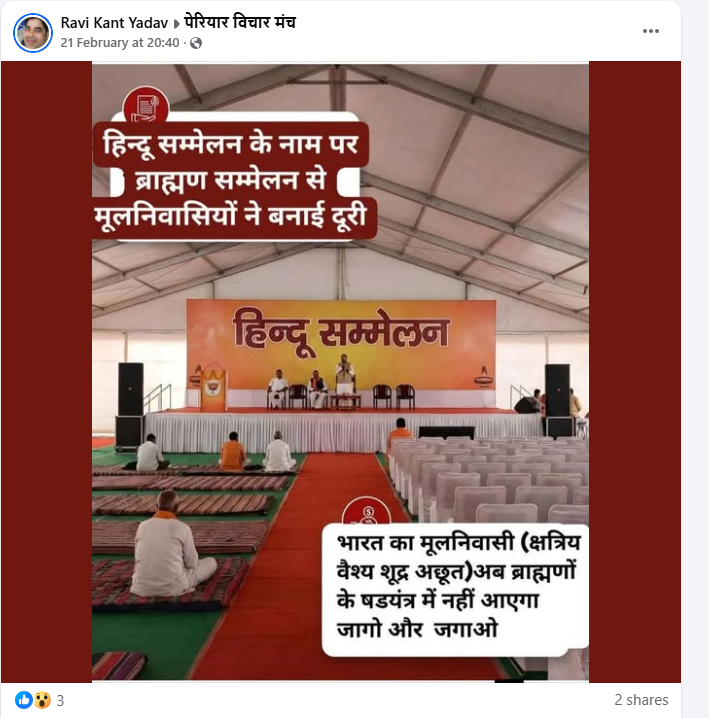
A photo circulating on social media shows a stage with the words “Hindu Sammelan” (Hindu Conference) written in large letters. In front of the stage, rows of chairs appear largely empty, with only a few people seated while most seats remain vacant.
Users sharing the image claim that the event, held under the banner of a “Hindu Sammelan,” was in fact a “Brahmin Sammelan,” and that indigenous communities chose to stay away, resulting in poor attendance.
It is noteworthy that, on the occasion of the centenary year of the Rashtriya Swayamsevak Sangh (RSS), various “Hindu Sammelan” events are being organized across the country. The viral image is being linked to this broader context.
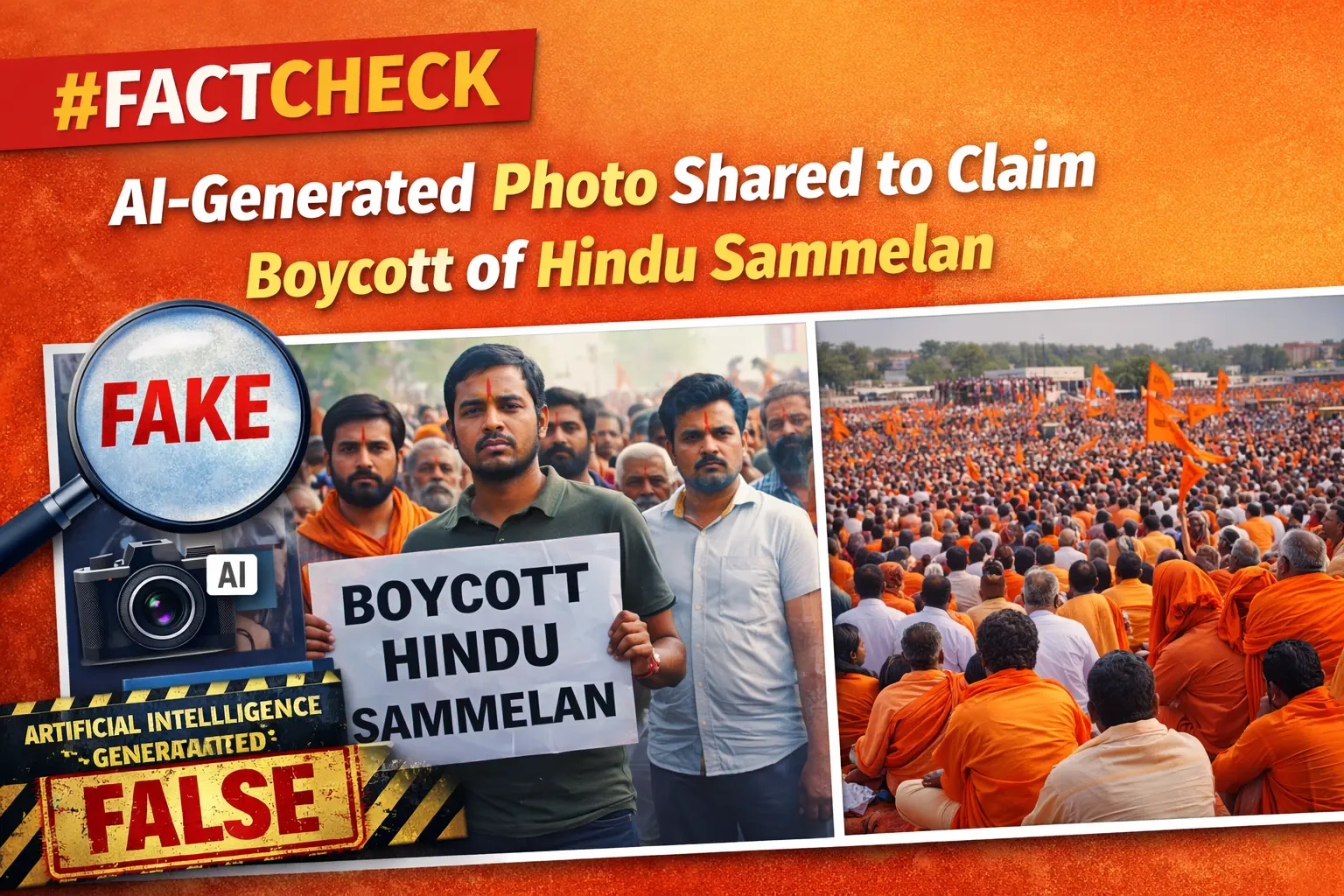
However, research conducted by the CyberPeace found the viral claim to be false. Our research revealed that the image being shared on social media is not authentic but AI-generated and is being circulated with a misleading narrative.
Claim
On February 21, 2026, a Facebook user shared the viral image. The original and archived links are provided below
- https://www.facebook.com/photo?fbid=935049042540479&set=gm.2425972001215469&idorvanity=465387370607285
- https://ghostarchive.org/archive/sxC6d
Fact Check:
A keyword search on Google confirmed that several “Hindu Sammelan” events have indeed been organized across the country as part of the RSS centenary year. For instance, media reports have covered such events in different cities, including Nagpur.

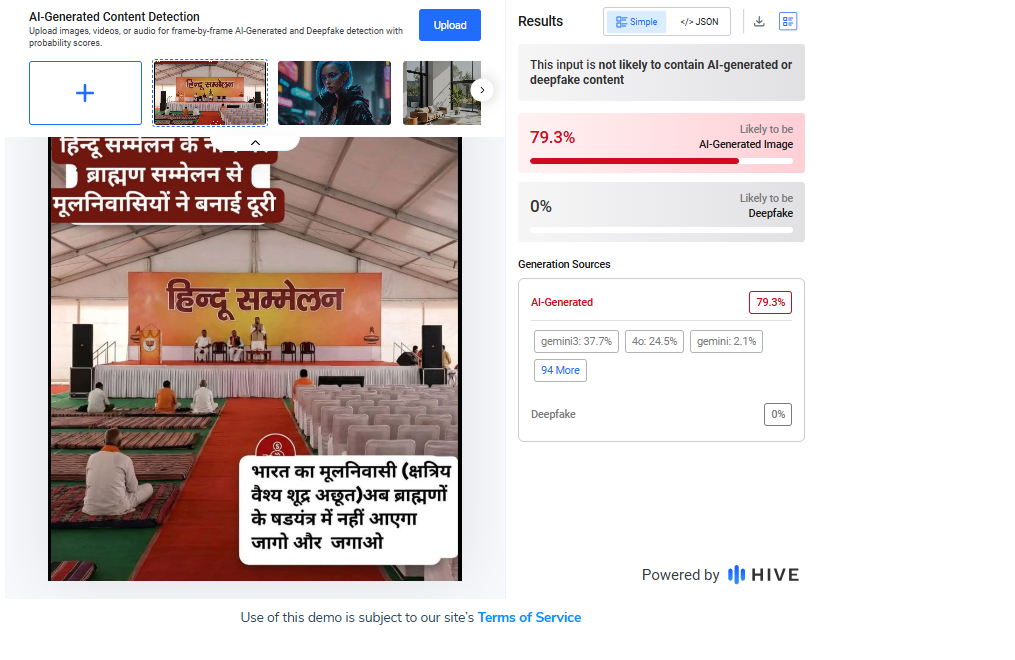
However, upon closely examining the viral image, we observed certain visual inconsistencies and unnatural elements that raised suspicion of AI generation. We first analyzed the image using the AI detection tool Hive Moderation, which indicated a 79.3 percent probability that the image was AI-generated.
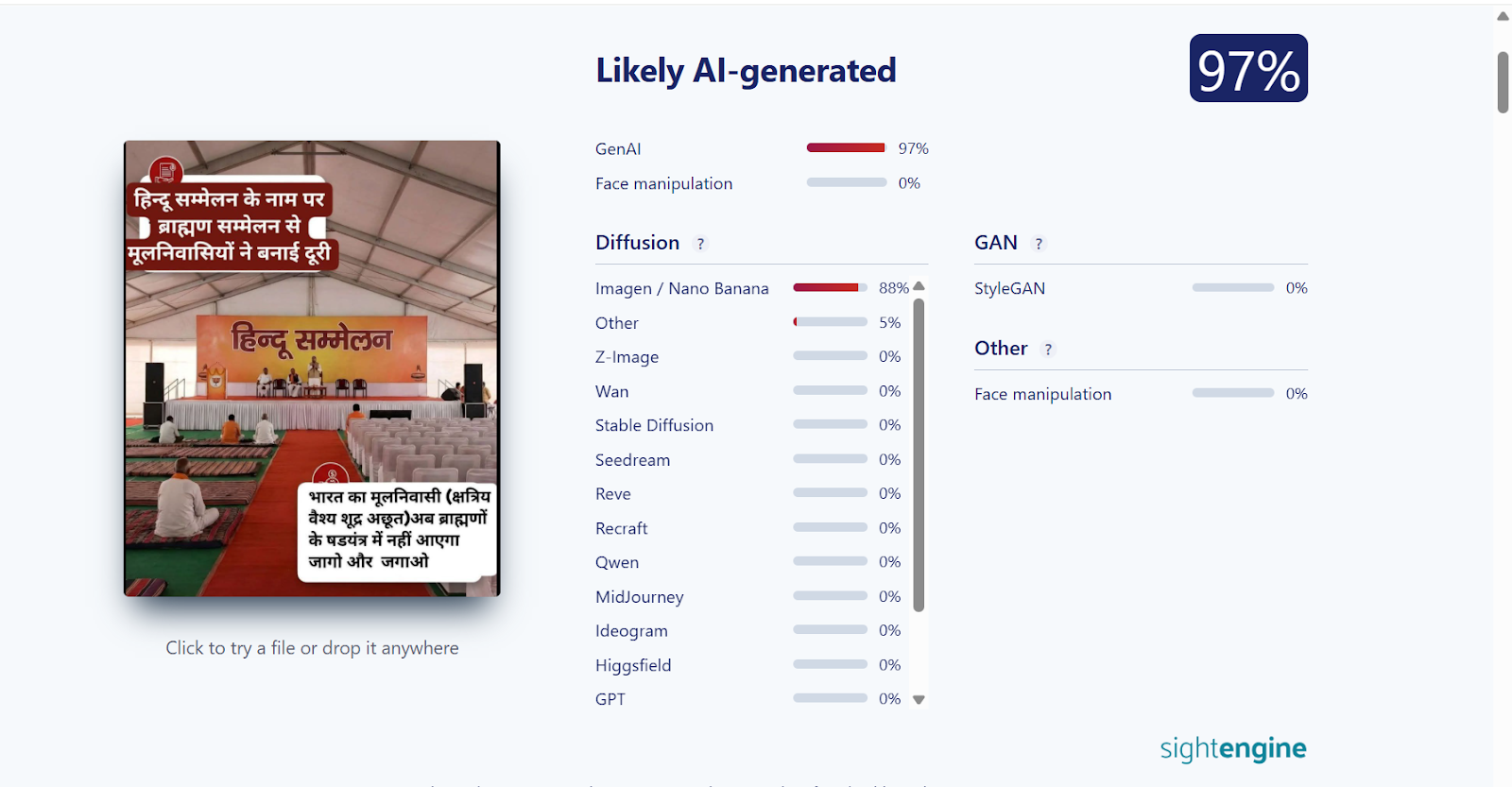
To further verify, we scanned the image using another AI detection platform, Sightengine. The results showed a 97 percent likelihood that the image was AI-generated.
Conclusion
Our research confirms that the image circulating on social media is not genuine. It has been artificially created using AI technology and is being shared with a misleading claim.

Executive Summary
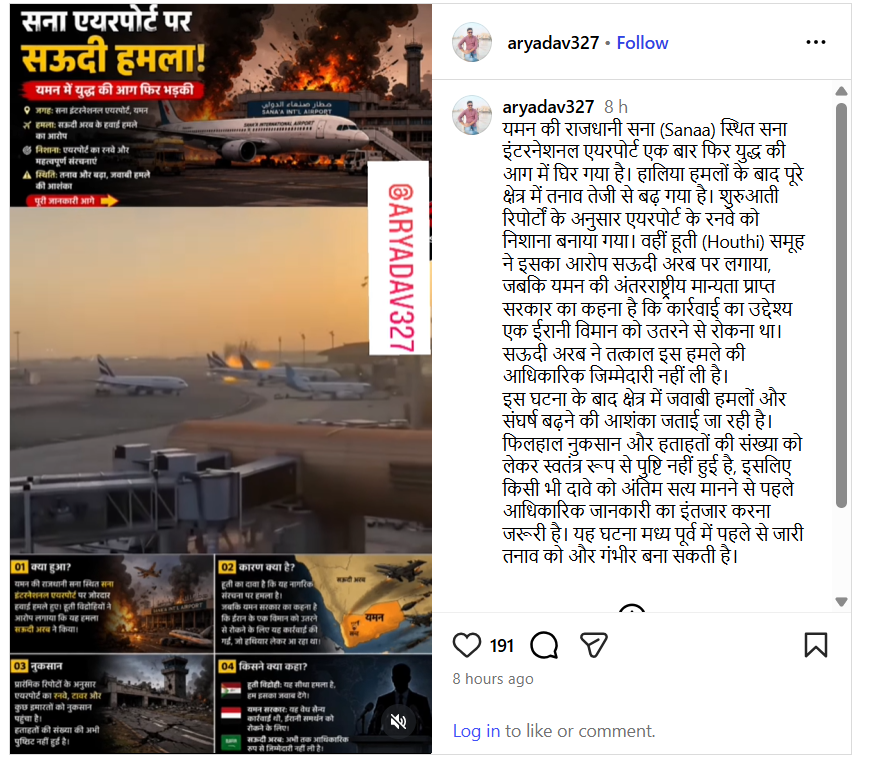
A video is being widely shared on social media claiming to show a Saudi Arabian F-15 fighter jet carrying out an airstrike on Sanaa International Airport in Yemen's capital. The footage shows several aircraft parked at what appears to be an airport before explosions erupt, followed by flames, thick smoke and people running in panic. The CyberPeace Research Wing found that the viral claim is false. Our research revealed that the circulating video is AI-generated and does not depict the actual airstrike. While it is true that Saudi Arabia carried out an airstrike at Sanaa International Airport, the viral footage is unrelated to that incident and is being shared with a misleading claim.
Claim
An Instagram post shared on July 15, 2026, claims that Saudi Arabia's F-15 fighter jets bombed Sanaa International Airport in Yemen. The post can be viewed here:
https://www.instagram.com/reel/DayBwufzn2N/?utm_source=ig_web_button_share_sheet
Fact Check
To verify the claim, we searched using relevant keywords but found no credible news reports or authentic footage matching the viral video. However, we found verified footage of the actual Saudi airstrike on The New York Post's YouTube channel. A comparison showed that the genuine footage is entirely different from the viral clip in terms of visuals, sequence and overall content.
https://www.instagram.com/reel/DawHCM_s_fn/?utm_source=ig_web_button_share_sheet

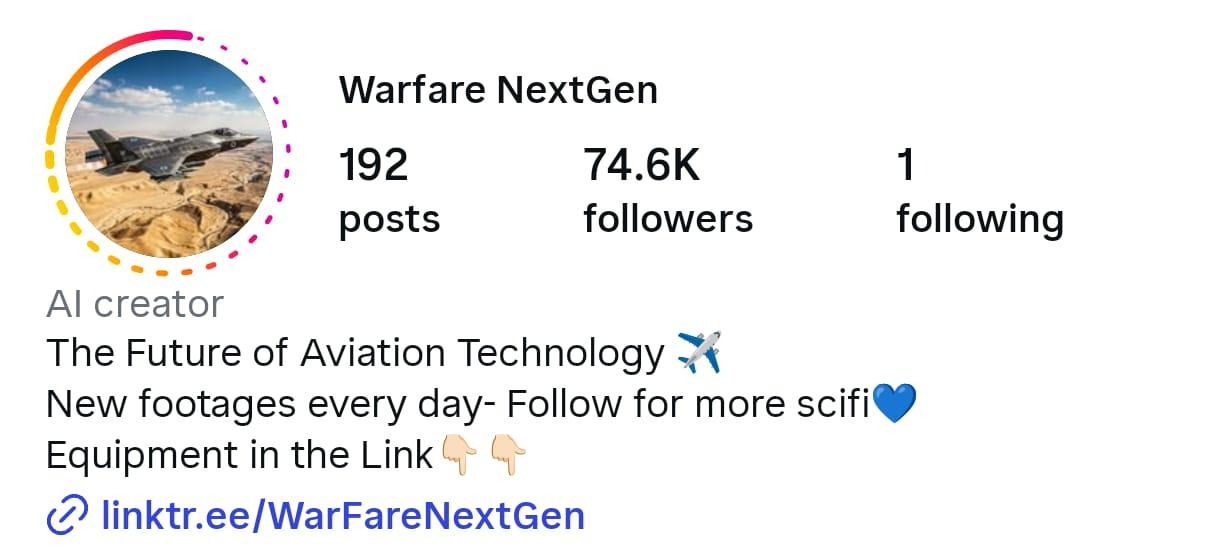
During our research, we also found the same viral video on an Instagram account named "warfarenextgen", which regularly publishes AI-generated war-related videos
We further examined the video using multiple AI detection tools: Hive Moderation assessed the video as 99.9% likely to be AI-generated.

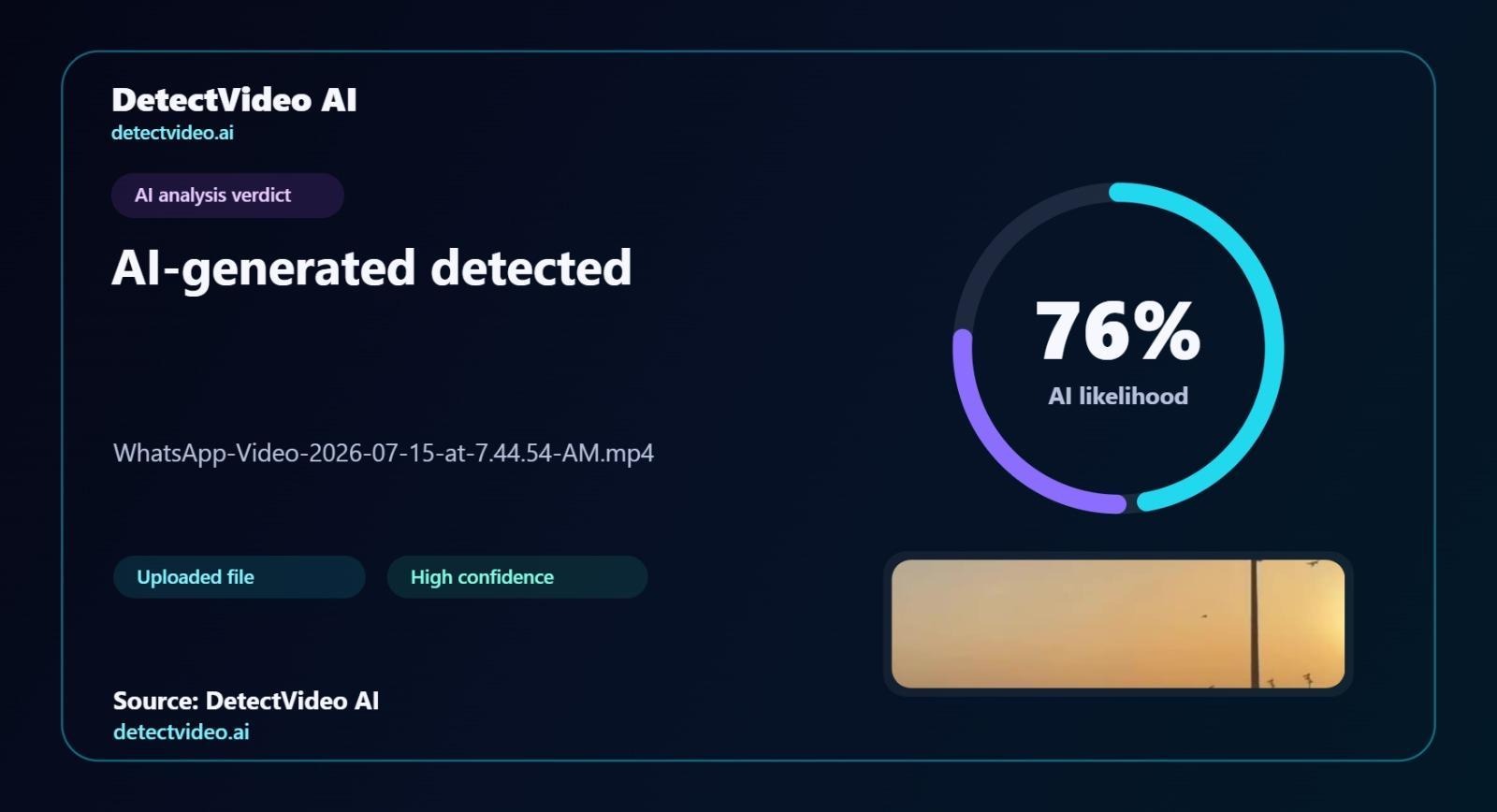
DetectVideo AI found a 76% probability that the video was AI-generated.
Sightengine also concluded that the video was approximately 99% likely to be AI-generated.

Conclusion
Our research found that Saudi Arabia did carry out an airstrike on Sanaa International Airport to prevent an Iranian aircraft carrying a Houthi delegation from landing. However, the viral video does not show that attack. It is an AI-generated video that is being falsely circulated as footage of the real incident, making the viral claim misleading.
