
#FactCheck - AI-Generated Video of Peacock ‘Rescue’ Falsely Shared as Real
Executive Summary:
A video showing a peacock allegedly trapped in ice has been going viral on social media. In the clip, the peacock appears to be frozen in a snow-covered area. Moments later, a man is seen approaching with a hammer and breaking the ice to rescue the bird. Social media users are sharing the video as a real-life incident, praising the peacock’s resilience and describing the scene as inspiring. However, CyberPeace research found the viral claim to be misleading. Our research revealed that the video was created using Artificial Intelligence (AI) and is being falsely circulated as a real incident.
Claim:
Facebook user ‘Ras Bihari Pathak’ shared the viral video on January 25, 2026, with the caption: “This peacock is not standing on ice, but on courage. It reminds us that no matter how harsh the circumstances are, hope always returns in colours.” The archived version of the post can be accessed here.

Fact Check:
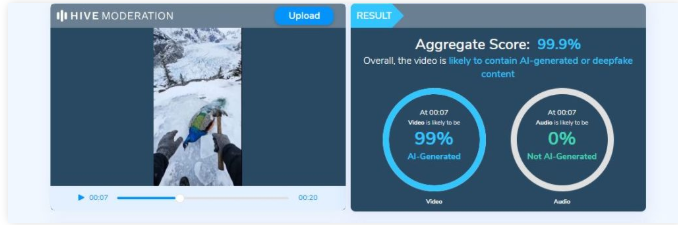
To verify the claim, we first conducted a keyword search on Google to check whether any such real incident involving a peacock trapped in ice had been reported. However, no credible or verified media reports were found. Next, we closely examined the viral video. Upon observation, the peacock’s movements and reactions appeared unnatural and artificial. The motion lacked realistic physical behaviour, raising suspicion that the video might have been digitally generated. To confirm this, we analysed the clip using the AI video detection tool Hive Moderation, which indicated a 99 per cent or higher likelihood that the video was AI-generated.
Conclusion:
CyberPeace research confirms that the viral video showing a peacock allegedly trapped in ice is not real. The clip has been created using Artificial Intelligence and is being shared on social media with a false and misleading claim.

Related Blogs

Introduction
Lost your phone? How to track and block your lost or stolen phone? Fear not, Say hello to Sanchar Saathi, the newly launched portal by the government. The smartphone has become an essential part of our daily life, our lots of personal data are stored in our smartphones, and if a phone is lost or stolen, it can be a frustrating experience. With the government initiative launching Sanchar Saathi Portal, you can now track and block your lost or stolen smartphone. The Portal uses a central equipment identity register to help users block their lost phones. It helps you track your lost and stolen smartphone. So now, say hello to Sanchar Saathi, the newly launched portal by the government. Users should keep an FIR copy of their lost/stolen smartphone handy for using certain features of the portal. FIR copy is also required for tracking the phone on the website. This portal allows users to track lost/stolen smartphones, and they can block the device across all telecom networks.
Preventing Data Leakage and Mobile Phone Theft
When you lose your phone or your phone is stolen, you worry as your smartphone holds your various personal sensitive information such as your bank account information, UPI IDs, and social media accounts such as WhatsApp, which cause a serious concern of data leakage and misuse in such a situation. Sanchar saathi portal addresses this problem and serves as a platform for blocking data saved on a lost or stolen device. This feature protects the users against financial fraud, identity thrift, and data leakage by blocking access to your lost or stolen device and ensuring that unauthorised parties cannot access or abuse important information.
How the Sanchar Saathi Portal Works
To file a complaint regarding their lost or stolen smartphones the users are required to provide IMEI (International Mobile Equipment Identity) number. The official website of the portal is https://sancharsaathi.gov.in/ users can access the “Citizen Centric Services” option on the homepage. Then users may, by clicking on “Block Your Lost/Stolen Mobile”, can fill out the form. Users need to fill in details such as IMEI number, contact number, model number of the smartphone, mobile purchase invoice, and information such as the date, time, district, and state where the device was lost or stolen. Users must keep a copy of the FIR handy and fill in their personal information, such as their name, email address, and residence. After completing and selecting the ‘Complete tab’, the form will be submitted, and access to the lost/stolen smartphone will be blocked.
Enhancing Security with SIM Card Verification
Using this portal, users can access their associated sim card numbers and block any unauthorised use. In this way portal allows owners to take immediate action if their sim card is being used or misused by someone else. The Sanchar Saathi Portal allows you to check the status of active SIM cards registered under an individual’s name. And it is an extra security feature provided by the portal. This proactive strategy helps users to safeguard their personal information against possible abuse and identity theft.
Advantages of the Sanchar Saathi Portal
The Sanchar Saathi platform offers various benefits for reducing mobile phone theft and protecting personal data. The portal offers a simplified and user-friendly platform for making complaints. The online complaint tracking function keeps consumers informed of the status of their complaints, increasing transparency and accountability.
The portal allows users to block access to personal data on lost/stolen smartphones which reduces the chances or potential risk of data leakage.
The portal SIM card verification feature acts as an extra layer of security, enabling users to monitor any unauthorised use of their personal information. This proactive approach empowers users to take immediate action if they detect any suspicious activity, preventing further damage to their personal data.
Conclusion
Our smartphones store large amounts of sensitive information and Data, so it becomes crucial to protect our smartphones from any unauthorised access, especially in case when the smartphone is lost or stolen. The Sanchar Saathi portal is a commendable step by the government by offering a comprehensive solution to combat mobile phone theft and protect personal data, the portal contributes to a safer digital environment for smartphone users.
The portal provides the option of blocking access to your lost/stolen device and also checking the SIM card verification. These features of the portal empower users to take control of their data security. In this way, the portal contributes to preventing mobile phone theft and data leakage.
Executive Summary
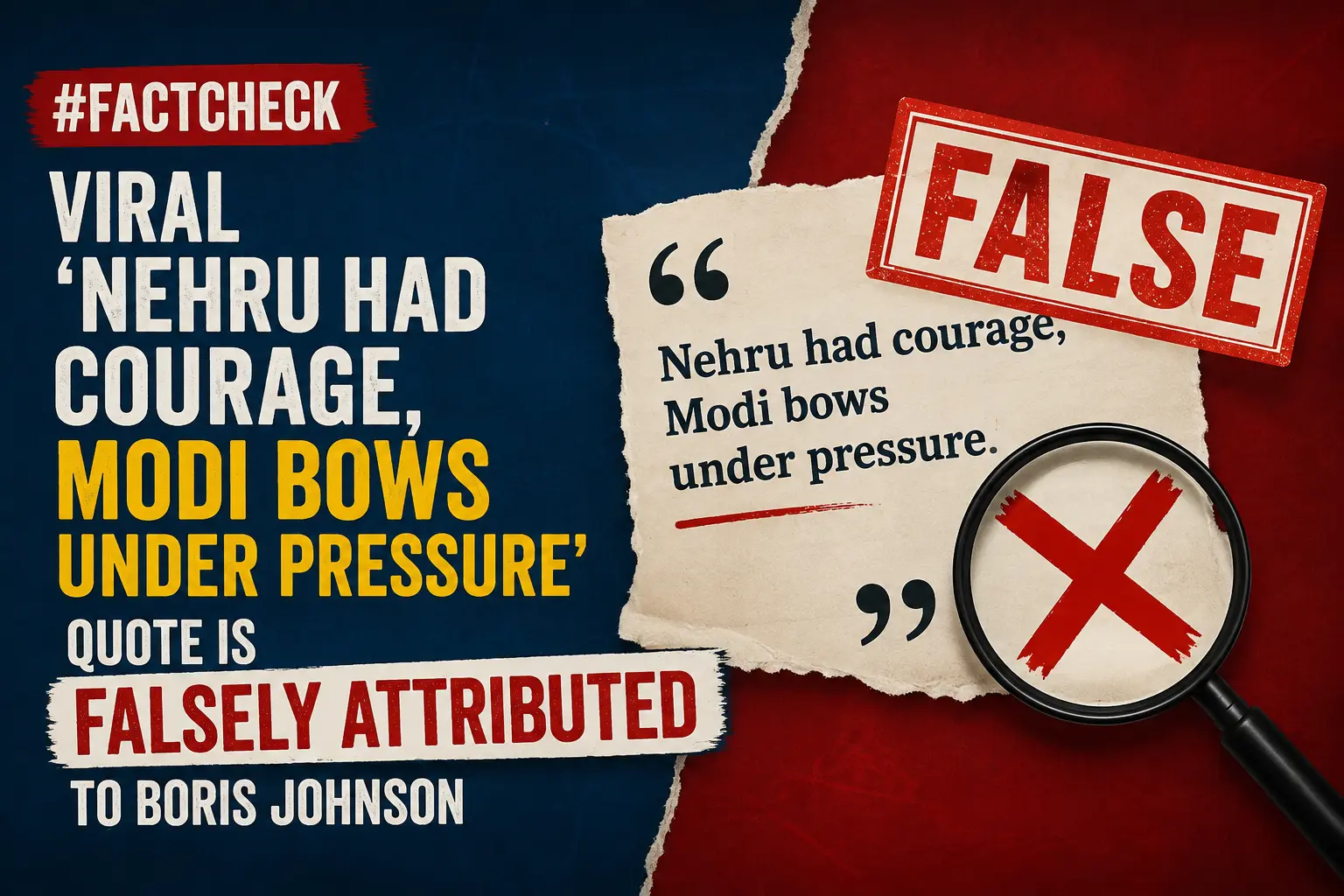
A purported statement attributed to former British Prime Minister Boris Johnson is going viral on social media. The post claims that Johnson said about Prime Minister Narendra Modi, “Modi bows under pressure.” It also attributes a comparison between Jawaharlal Nehru and Modi to Johnson, portraying Nehru as more courageous. A research done by the Research Wing of the CyberPeace found the viral claim to be false. During the research, the team examined Boris Johnson’s interview at the ET World Leaders Forum 2026, along with media reports related to the interview. The available transcript contains no remark by Johnson saying “Modi bows under pressure” or anything similar. On the contrary, he praised the changes and development taking place in India.
Claim:
A user on Instagram shared the viral claim, writing: “The purported statement by former British Prime Minister Boris Johnson has intensified the debate over India’s foreign policy and Prime Minister Narendra Modi’s leadership. The viral claim describes Nehru’s foreign policy as visionary while accusing the Modi government of bowing under pressure and taking shortcuts. The statement has triggered political reactions on social media.” The link to the post, its archive link, and a screenshot are provided below.
https://www.instagram.com/p/Dcdo_TGy-W0/

Fact Check
To verify the authenticity of the viral claim, the Desk examined the available transcript and reports of Boris Johnson’s interview at the ET World Leaders Forum 2026. The Desk found that Johnson also praised India’s current situation. He said that India is going through a “very good period under very strong and stable leadership.” He described India’s progress as “a really wonderful story” and expressed optimism about the country’s future.
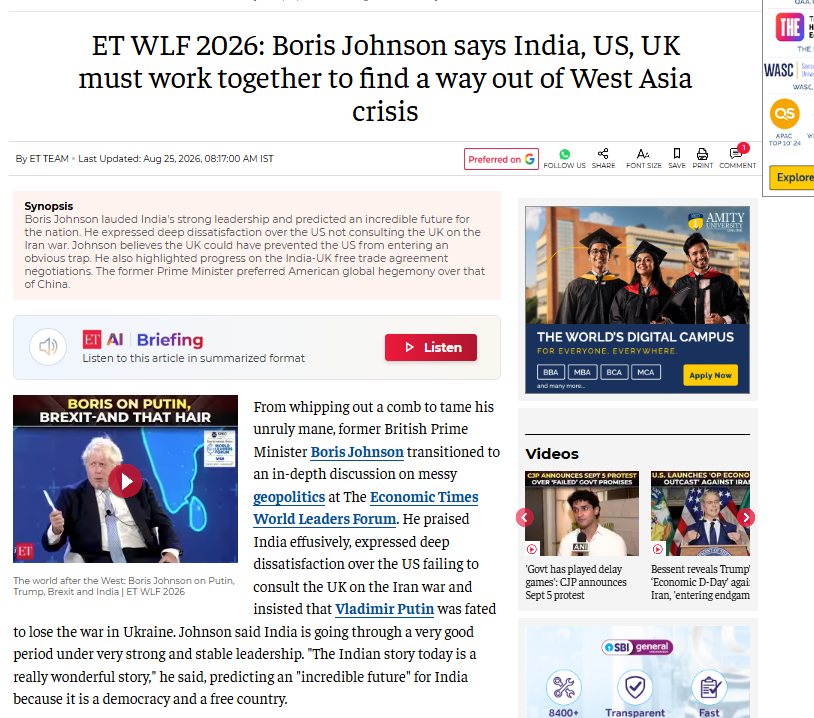
During the interview, Johnson discussed several international issues, including India-UK relations, US-UK ties, NATO defence spending, the Iran war and the Ukraine war. The available interview transcript contains no statement from him saying that “Modi bows under pressure” or that Nehru was more courageous than Modi. Johnson also referred to Jawaharlal Nehru in the context of India-Russia relations. He recalled that the late Queen Elizabeth II had once shared an anecdote about a conversation she had with Nehru in the 1950s, during which Nehru reportedly told her that India would always stand by Russia and that some things never change.

Conclusion
Boris Johnson did not make any statement at the ET World Leaders Forum 2026 suggesting that “Modi bows under pressure” or that “Nehru had courage.” On the contrary, he praised India’s progress and spoke positively about Prime Minister Narendra Modi’s leadership. Johnson did mention Nehru during the conversation, but his reference was in the context of India-Russia relations and an old conversation between Nehru and the late Queen Elizabeth II. He did not compare Nehru with Modi, nor did he criticise Modi. Therefore, the claim circulating on social media attributing the statement “Nehru had courage, Modi bows under pressure” to Boris Johnson is false.

Executive Summary
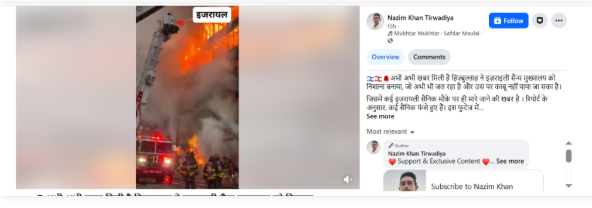
A video showing a building engulfed in flames is going viral on social media, with users claiming it depicts an attack by Hezbollah on Israel’s military headquarters. The clip is being shared with assertions that several Israeli soldiers were killed and many remain trapped inside the burning structure. However, a research by the CyberPeace Research Wing found that the claim is false. The viral video is not from Israel but from New York City in the Manhattan area, where a residential building caught fire.
Claim
A Facebook user, ‘Nazim Khan Tirwadiya’, shared the video on April 15, 2026, claiming that Hezbollah had targeted an Israeli military headquarters, resulting in heavy casualties and ongoing fire.
Fact Check
To verify the claim, we extracted keyframes from the viral video and conducted a reverse image search. This led us to a longer version of the same clip uploaded on the YouTube channel “FDNY Response Videos” on April 12, 2026. The video description identified the location as Manhattan, New York City.
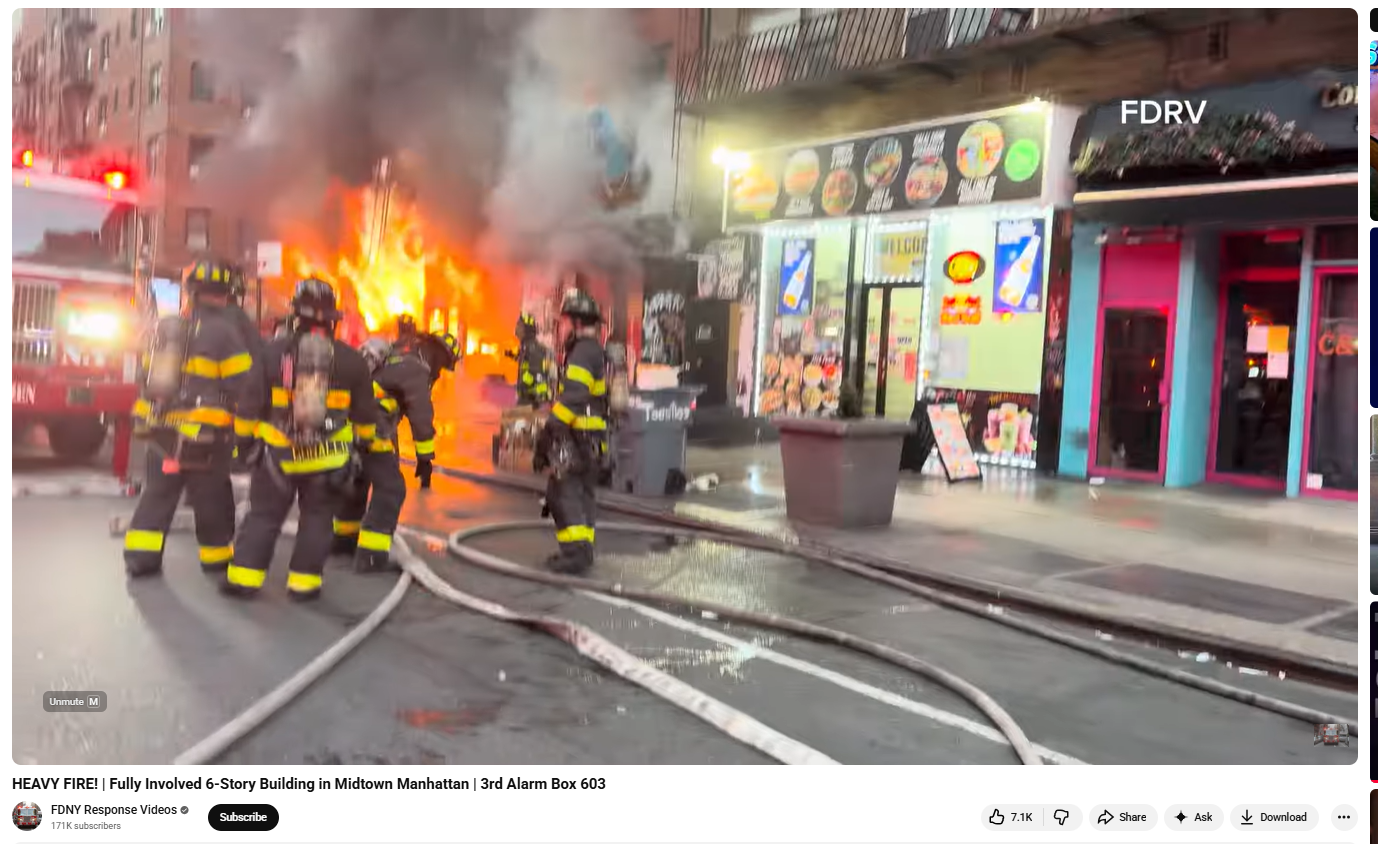
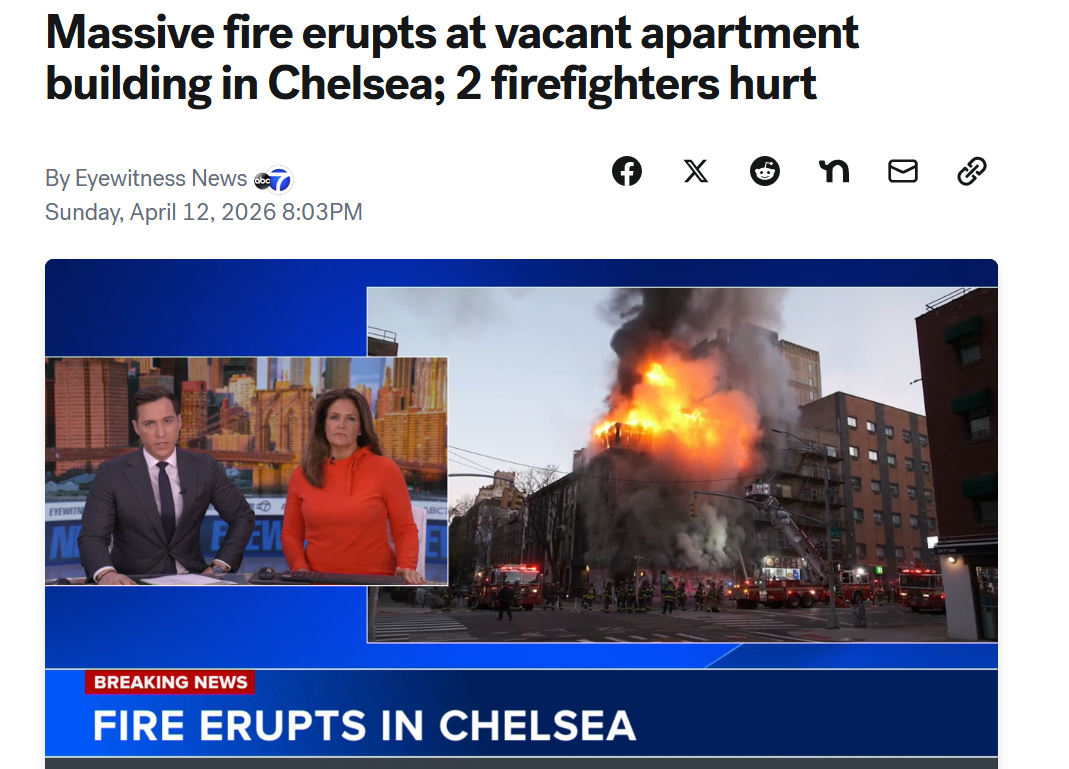
Further keyword searches led us to a report published by ABC7NY on April 12, 2026. According to the report, a massive fire broke out in a six-storey apartment building in Manhattan’s Midtown area around 6 a.m. Firefighters worked extensively to control the blaze, and two firefighters sustained minor injuries. No fatalities were reported.
Conclusion
The viral claim is false. The video does not show an attack on Israel by Hezbollah. Instead, it captures a fire incident in a residential building in Manhattan, New York City. The clip has been shared with a misleading narrative unrelated to the actual event.
