
#FactCheck - AI-Generated Video Falsely Attributes ‘Saffronisation’ Remark to PM Modi
A video purportedly showing Prime Minister Narendra Modi delivering a politically charged warning during a public address has been widely circulated on social media. The clip is being shared with claims that the Prime Minister spoke about the “saffronisation” of the Indian Army and issued a stern message to Bangladesh by invoking India’s role in the 1971 war.
A detailed verification by the CyberPeace Foundation found these claims to be misleading. The investigation revealed that the viral video has been digitally altered, and the statements attributed to the Prime Minister do not appear in the original speech. The misleading narrative appears to have been created by inserting manipulated audio into authentic video footage.
Claim
An X user, “@Pakpulse247,” shared a video on December 26 claiming that Prime Minister Narendra Modi, while addressing a public gathering, made remarks about the “saffronisation” of the Indian Army and issued a warning to Bangladesh by invoking India’s role in the 1971 war.
The post’s caption alleged that the Prime Minister made these statements during the inauguration of the Rashtra Prerna Sthal in Lucknow, suggesting that Bangladesh should not expect support from Pakistan in the event of an Indian offensive and should remember India’s contribution during the 1971 conflict.
The link to the post is provided below, along with a screenshot of the viral claim.

Fact Check:
During the verification process, the Desk carried out a targeted keyword search and located the complete, original version of the video on the official YouTube channel of the Bharatiya Janata Party, uploaded on December 26, 2025. The video description confirmed that Prime Minister Narendra Modi was addressing the gathering at the inauguration of the Rashtra Prerna Sthal in Lucknow.
A comparison of the visuals showed that the venue, backdrop, and the Prime Minister’s attire were identical to those seen in the viral clip circulating on social media. However, after carefully reviewing the full speech, the Desk found no reference to Pakistan, Bangladesh, or the claims being attributed to him in the viral post.
The link to the original video is provided below, along with a relevant screenshot.
https://www.youtube.com/watch?v=L9rbzU0m30o
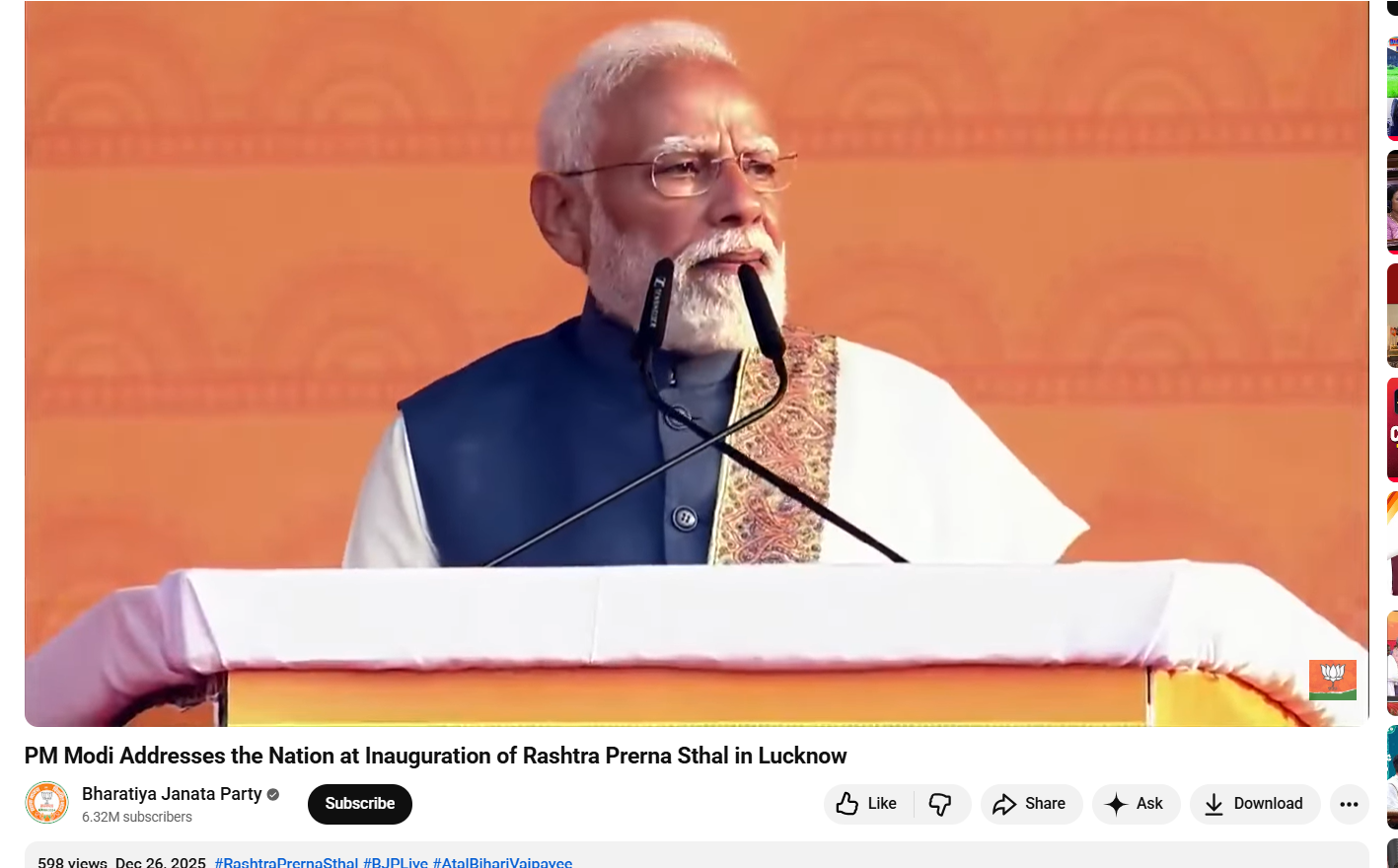
Upon further examination of the search results, the Desk located the official English transcript of Prime Minister Narendra Modi’s speech on the PM India website. A thorough review of the complete transcript revealed no mention of the statements attributed to him in the viral social media post.
The link to the official transcription is provided below.
On further examination of the search results, the Desk accessed the official English transcript of Prime Minister Narendra Modi’s speech published on the PM India website. A careful review of the complete transcript confirmed that none of the claims made in the viral social media post appear in the official record.
The link to the transcription is provided below.
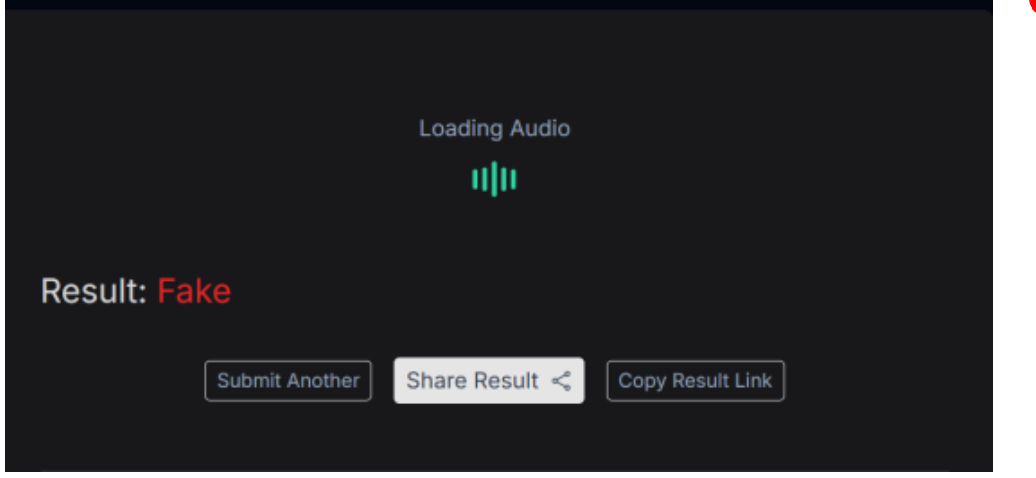
Building on these findings, the Desk extracted the audio track from the viral video and analysed it using Resemble AI, an audio-detection tool. The analysis flagged the audio as fake, indicating that it had been digitally manipulated.
Conclusion
The CyberPeace Foundation’s research clearly establishes that the viral video claiming Prime Minister Narendra Modi made remarks about the saffronisation of the Indian Army and issued warnings to Bangladesh is false and misleading. The full original video and official transcript of the speech contain no such references to Pakistan, Bangladesh, or the 1971 war. Furthermore, audio analysis using AI-detection tools confirms that the voice in the viral clip has been digitally manipulated.

Related Blogs

Introduction
The advancement of technology has brought about remarkable changes in the aviation industry, including the introduction of inflight internet access systems. While these systems provide passengers with connectivity during their flights, they also introduce potential vulnerabilities that can compromise the security of aircraft systems.
Inflight Internet Access Systems
Inflight internet access systems have become integral to the modern air travel experience, allowing passengers to stay connected even at 30,000 feet. However, these systems can also be attractive targets for hackers, raising concerns about the safety and security of aircraft operations.
The Vulnerabilities of Inflight Internet Access Systems:
Securing Networked Avionics
Avionics, the electronic systems that support aircraft operation, play a crucial role in flight safety and navigation. While networked avionics are designed with robust security measures, they are not invulnerable to cyber threats. Therefore, it is essential to implement comprehensive security measures to protect these critical systems.
- Ensuring Robust Architecture: Networked avionics should be designed with a strong focus on security. Implementing secure network architectures, such as segmentation and isolation, can minimise the risk of unauthorised access and limit the potential impact of a breach.
- Rigorous Security Testing: Avionics systems should undergo rigorous security testing to identify vulnerabilities and weaknesses. Regular assessments, penetration testing, and vulnerability scanning are essential to proactively address any security flaws.
- Collaborative Industry Efforts: Collaboration between manufacturers, airlines, regulatory bodies, and security researchers is crucial in strengthening the security of networked avionics. Sharing information, best practices, and lessons learned can help identify and address emerging threats effectively.
- Continuous Monitoring and Updtes: Networked avionics should be continuously monitored for any potential security breaches. Prompt updates and patches should be applied to address newly discovered vulnerabilities and protect against known attack vectors.
Best practices to be adopted for the security of Aircraft Systems
- Holistic Security Approach: Recognizing the interconnectedness of inflight internet access systems and networked avionics is essential. A holistic security approach should be adopted to address vulnerabilities in both systems and protect the overall aircraft infrastructure.
- Comprehensive Security Measures: The security of inflight internet access systems should be on par with any other internet-connected device. Strong authentication, encryption, intrusion detection, and prevention systems should be implemented to mitigate risks and ensure the integrity of data transmissions.
- Responsible Practices and Industry Collaboration: Encouraging responsible practices and fostering collaboration between security researchers and industry stakeholders can accelerate the identification and remediation of vulnerabilities. Open communication channels and a cooperative mindset are vital in addressing emerging threats effectively.
- Robust Access Controls: Strong access controls, such as multi-factor authentication and role-based access, should be implemented to limit unauthorised access to avionics systems. Only authorised personnel should have the necessary privileges to interact with these critical systems.
Conclusion
Inflight internet access systems bring convenience and connectivity to air travel but also introduce potential risks to the security of aircraft systems. It is crucial to understand and address the vulnerabilities associated with these systems to protect networked avionics and ensure passenger safety. By implementing robust security measures, conducting regular assessments, fostering collaboration, and adopting a comprehensive approach to aircraft cybersecurity, the aviation industry can mitigate the risks and navigate the sky with enhanced safety and confidence. Inflight internet access systems and networked avionics are vital components of modern aircraft, providing connectivity and supporting critical flight operations. Balancing connectivity and cybersecurity is crucial to ensure the safety and integrity of aircraft systems.

Executive Summary:
A photo allegedly shows an Israeli Army dog attacking an elderly Palestinian woman has been circulating online on social media. However, the image is misleading as it was created using Artificial Intelligence (AI), as indicated by its graphical elements, watermark ("IN.VISUALART"), and basic anomalies. Although there are certain reports regarding the real incident in several news channels, the viral image was not taken during the actual event. This emphasizes the need to verify photos and information shared on social media carefully.

Claims:
A photo circulating in the media depicts an Israeli Army dog attacking an elderly Palestinian woman.


Fact Check:
Upon receiving the posts, we closely analyzed the image and found certain discrepancies that are commonly seen in AI-generated images. We can clearly see the watermark “IN.VISUALART” and also the hand of the old lady looks odd.

We then checked in AI-Image detection tools named, True Media and contentatscale AI detector. Both found potential AI Manipulation in the image.


Both tools found it to be AI Manipulated. We then keyword searched for relevant news regarding the viral photo. Though we found relevant news, we didn’t get any credible source for the image.

The photograph that was shared around the internet has no credible source. Hence the viral image is AI-generated and fake.
Conclusion:
The circulating photo of an Israeli Army dog attacking an elderly Palestinian woman is misleading. The incident did occur as per the several news channels, but the photo depicting the incident is AI-generated and not real.
- Claim: A photo being shared online shows an elderly Palestinian woman being attacked by an Israeli Army dog.
- Claimed on: X, Facebook, LinkedIn
- Fact Check: Fake & Misleading
.webp)
Overview:
WazirX is the platform for cryptocurrencies, based in India that has been hacked, and it made a loss of more than $230 million in cryptocurrency. This case concerned an unauthorized transaction with a multisignature or multisig, wallet controlled through Liminal’a digital asset management platform. These attacking incidents have thereafter raised more questions on the security of the Cryptocurrency exchanges and efficiency of the existing policies and laws.
Wallet Configuration and Security Measures
This wallet was breached and had a multisig setting meaning that more than one signature was needed to authorize a transaction. Specifically, it had six signatories: five are funded by WazirX and one is funded by Liminal. Every transaction needed the approval of at least three signatories of WazirX, all of whom had addressed security concerns by using Ledger’s hardware wallets; while the Liminal, too, had a signatory, for approval.
To further increase the level of security of the transactions, a whitelisting policy was introduced, only limited addresses were authorized to receive funds. This system was rather vulnerable, and the attackers managed to grasp the discrepancy between the information available through Liminal’s interface and the content of the transaction to seize unauthorized control over the wallet and implement the theft.
Modus Operandi: Attack Mechanics
The cyber attack appears to have been carefully carried out, with preliminary investigations suggesting the following tactics:
- Payload Manipulation: The attackers apparently substituted the transaction’s payload during signing; hence, they can reroute the collected funds into an unrelated wallet.
- Chain Hopping: To make it much harder to track their movements, the attackers split large amounts of money across multiple blockchains and broke tens of thousands of dollars into thousands of transactions involving different cryptocurrencies. This technique makes it difficult to trace people and things.
- Zero Balance Transactions: There were also some instances where it ended up with no Ethereum (ETH) in the balance and such wallets also in use for the purpose of further anonymization of the transactions.
- Analysis of the blockchain data suggested the enemy might have been making the preparations for this attack for several days prior to their attack and involved a high amount of planning.
Actions taken by WazirX:
Following the attack, WazirX implemented a series of immediate actions:
- User Notifications: The users were immediately notified of the occurrence of the breach and the possible risk it posed to them.
- Law Enforcement Engagement: The matters were reported to the National Cyber Crime Reporting Portal and specific authorities of which the Financial Intelligence Unit (FIU) and the Computer Emergency Response Team (CERT-In).
- Service Suspension: WazirX had suspended all its trading operations and user deposits’ and withdrawals’ to minimize further cases and investigate.
- Global Outreach: The exchange contacted more than 500 cryptocurrency exchanges and requested to blacklist the wallet’s addresses linked to the theft.
- Bounty Program: A bounty program was announced to encourage people to share information that can enable the authorities to retrieve the stolen money. A maximum of 23 million dollars was placed on the bounty.
Further Investigations
WazirX stated that it has contracted the services of cybersecurity professionals to help in the prosecution process of identifying and compensating for the losses. The exchange is still investigating the forensic data and working with the police for tracking the stolen assets. Nevertheless, the prospects of full recovery may be quite questionable primarily because of complexity of the attack and the methods used by the attackers.
Precautionary measures:
The WazirX cyber attack clearly implies that there is the necessity to improve the security and the regulation of the cryptocurrency industry. As exchanges become increasingly targeted by hackers, there is a pressing need for:
- Stricter Security Protocols: The commitment to technical innovations, such as integration of MFA, as well as constant monitoring of the users’ wallets’ activities.
- Regulatory Oversight: Formalization of the laws that require proper security for the cryptocurrency exchange platforms to safeguard their users as well as their investments.
- Community Awareness: To bypass such predicaments, there is a need to study on emergent techniques in spreading awareness, particularly in cases of scams or phishing attempts that are likely to follow such breaches.
Conclusion:
The cyber attack on WazirX in the field of cryptocurrency market, shows weaknesses and provides valuable lessons for enhancing the security. This attack highlights critical vulnerabilities in cryptocurrency exchanges, even though employing advanced security measures like multisignature wallets and whitelisting policies. The attack's complexity, involving payload manipulation, chain hopping, and zero balance transactions, underscores the attackers' meticulous planning and the challenges in tracing stolen assets. This case brings a strong message regarding the necessity of solid security measures, and constant attention to security in the rapidly growing world of digital assets. Furthermore, the incident highlights the importance of community awareness and education on emerging threats like scams and phishing attempts, which usually follow such breaches. By fostering a culture of vigilance and knowledge, the cryptocurrency community can better defend against future attacks.
Reference:
https://wazirx.com/blog/important-update-cyber-attack-incident-and-measures-to-protect-your-assets/
https://www.linkedin.com/pulse/wazirx-cyberattack-in-depth-analysis-jyqxf

