
#Fact Check: Viral Smoke Video Is Not From Israel-Iran Conflict, But Mexico Casino Fire
Executive Summary
Amid heightened tensions following Israel and US actions against Iran, a video is being widely shared on social media. The footage shows thick black smoke rising into the sky from a location, suggesting a major explosion or attack. However, research conducted by the CyberPeace found the viral claim to be misleading. Our research revealed that the video is not recent and has no connection to the current Israel-Iran tensions. In fact, the footage is nearly a year old and shows a fire at a casino in Mexico, now being shared out of context.
Claim
Users circulating the video claim that it shows an attack on Tel Aviv, Israel. On March 1, 2026, a user on X shared the clip with the caption, “Iran has drained the oil out of Tel Aviv,” implying a devastating retaliatory strike. (Post and archive links provided above.)

Fact Check:
To verify the authenticity of the video, we extracted key frames and performed a reverse image search using Google Lens. During the search, we found the same visuals in a Spanish media report published on January 16, 2025. This confirmed that the video predates the ongoing geopolitical developments.

According to the report, the footage shows a fire at the Royal Park Casino located inside the Cinépolis plaza in Culiacán, Mexico. Local outlet Meganoticias Culiacán reported on X that the casino was “completely burned down.” The structure reportedly collapsed following the blaze, and emergency responders confirmed that several people were injured. Further keyword searches led us to the same footage on the official YouTube channel of Milenio, uploaded on January 17, 2025. The report clearly states that the fire occurred at the Royal Yacht Casino in Mexico and is unrelated to any recent military developments.

Conclusion
Evidence gathered during our research clearly establishes that the viral video is not related to any missile attack by Iran on Israel. The claim is false. The footage is from a fire incident at a casino in Mexico and is being misleadingly shared in the context of current international tensions, potentially creating unnecessary panic and confusion.

Related Blogs

Introduction
26th November 2024 marked a historical milestone for India as a Hyderabad-based space technology firm TakeMe2Space, announced the forthcoming launch of MOI-TD “(My Orbital Infrastructure - Technology Demonstrator)”, India's first AI lab in space. The mission will demonstrate real-time data processing in orbit, making space research more affordable and accessible according to the Company. The launch is scheduled for mid-December 2024 aboard the ISRO's PSLV C60 launch vehicle. It represents a transformative phase for innovation and exploration in India's AI and space technology integration space.
The Vision Behind the Initiative
The AI Laboratory in orbit is designed to enable autonomous decision-making, revolutionising satellite exploration and advancing cutting-edge space research. It signifies a major step toward establishing space-based data centres, paving the way for computing capabilities that will support a variety of applications.
While space-based data centres currently cost 10–15 times more than terrestrial alternatives, this initiative leverages high-intensity solar power in orbit to significantly reduce energy consumption. Training AI models in space could lower energy costs by up to 95% and cut carbon emissions by at least tenfold, even when factoring in launch emissions. It positions MOI-TD as an eco-friendly and cost-efficient solution.
Technological Innovations and Future Impact of AI in Space
This AI Laboratory, MOI-TD includes control software and hardware components, including reaction wheels, magnetometers, an advanced onboard computer, and an AI accelerator. The satellite also features flexible solar cells that could power future satellites. It will enable the processing of real-time space data, pattern recognition, and autonomous decision-making and address the latency issues, ensuring faster and more efficient data analysis, while the robust hardware designs tackle the challenges posed by radiation and extreme space environments. Advanced sensor integration will further enhance data collection, facilitating AI model training and validation.
These innovations drive key applications with transformative potential. It will allow users to access the satellite platform through OrbitLaw, a web-based console that will allow users to upload AI models to aid climate monitoring, disaster prediction, urban growth analysis and custom Earth observation use cases. TakeMe2Space has already partnered with a leading Malaysian university and an Indian school (grades 9 and 10) to showcase the satellite’s potential for democratizing space research.
Future Prospects and India’s Global Leadership in AI and Space Research
As per Stanford’s HAI Global AI Vibrancy rankings, India secured 4th place due to its R&D leadership, vibrant AI ecosystem, and public engagement for AI. This AI laboratory is a step further in advancing India’s role in the development of regulatory frameworks for ethical AI use, fostering robust public-private partnerships, and promoting international cooperation to establish global standards for AI applications.
Cost-effectiveness and technological exercise are some of India’s unique strengths and could position the country as a key player in the global AI and space research arena and draw favourable comparisons with initiatives by NASA, ESA, and private entities like SpaceX. By prioritising ethical and sustainable practices and fostering collaboration, India can lead in shaping the future of AI-driven space exploration.
Conclusion
India’s first AI laboratory in space, MOI-TD, represents a transformative milestone in integrating AI with space technology. This ambitious project promises to advance autonomous decision-making, enhance satellite exploration, and democratise space research. Additionally, factors such as data security, fostering international collaboration and ensuring sustainability should be taken into account while fostering such innovations. With this, India can establish itself as a leader in space research and AI innovation, setting new global standards while inspiring a future where technology expands humanity’s frontiers and enriches life on Earth.
References
- https://www.ptinews.com/story/national/start-up-to-launch-ai-lab-in-space-in-december/2017534
- https://economictimes.indiatimes.com/tech/startups/spacetech-startup-takeme2space-to-launch-ai-lab-in-space-in-december/articleshow/115701888.cms?from=mdr
- https://www.ibm.com/think/news/data-centers-space
- https://cio.economictimes.indiatimes.com/amp/news/next-gen-technologies/spacetech-startup-takeme2space-to-launch-ai-lab-in-space-in-december/115718230

Executive Summary:
We have identified a post addressing a scam email that falsely claims to offer a download link for an e-PAN Card. This deceptive email is designed to mislead recipients into disclosing sensitive financial information by impersonating official communication from Income Tax Department authorities. Our report aims to raise awareness about this fraudulent scheme and emphasize the importance of safeguarding personal data against such cyber threats.

Claim:
Scammers are sending fake emails, asking people to download their e-PAN cards. These emails pretend to be from government authorities like the Income Tax Department and contain harmful links that can steal personal information or infect devices with malware.
Fact Check:
Through our research, we have found that scammers are sending fake emails, posing as the Income Tax Department, to trick users into downloading e-PAN cards from unofficial links. These emails contain malicious links that can lead to phishing attacks or malware infections. Genuine e-PAN services are only available through official platforms such as the Income Tax Department's website (www.incometaxindia.gov.in) and the NSDL/UTIITSL portals. Despite repeated warnings, many individuals still fall victim to such scams. To combat this, the Income Tax Department has a dedicated page for reporting phishing attempts: Report Phishing - Income Tax India. It is crucial for users to stay cautious, verify email authenticity, and avoid clicking on suspicious links to protect their personal information.

Conclusion:
The emails currently in circulation claiming to provide e-PAN card downloads are fraudulent and should not be trusted. These deceptive messages often impersonate government authorities and contain malicious links that can result in identity theft or financial fraud. Clicking on such links may compromise sensitive personal information, putting individuals at serious risk. To ensure security, users are strongly advised to verify any such communication directly through official government websites and avoid engaging with unverified sources. Additionally, any phishing attempts should be reported to the Income Tax Department and also to the National Cyber Crime Reporting Portal to help prevent the spread of such scams. Staying vigilant and exercising caution when handling unsolicited emails is crucial in safeguarding personal and financial data.
- Claim: Fake emails claim to offer e-PAN card downloads.
- Claimed On: Social Media
- Fact Check: False and Misleading
Executive Summary
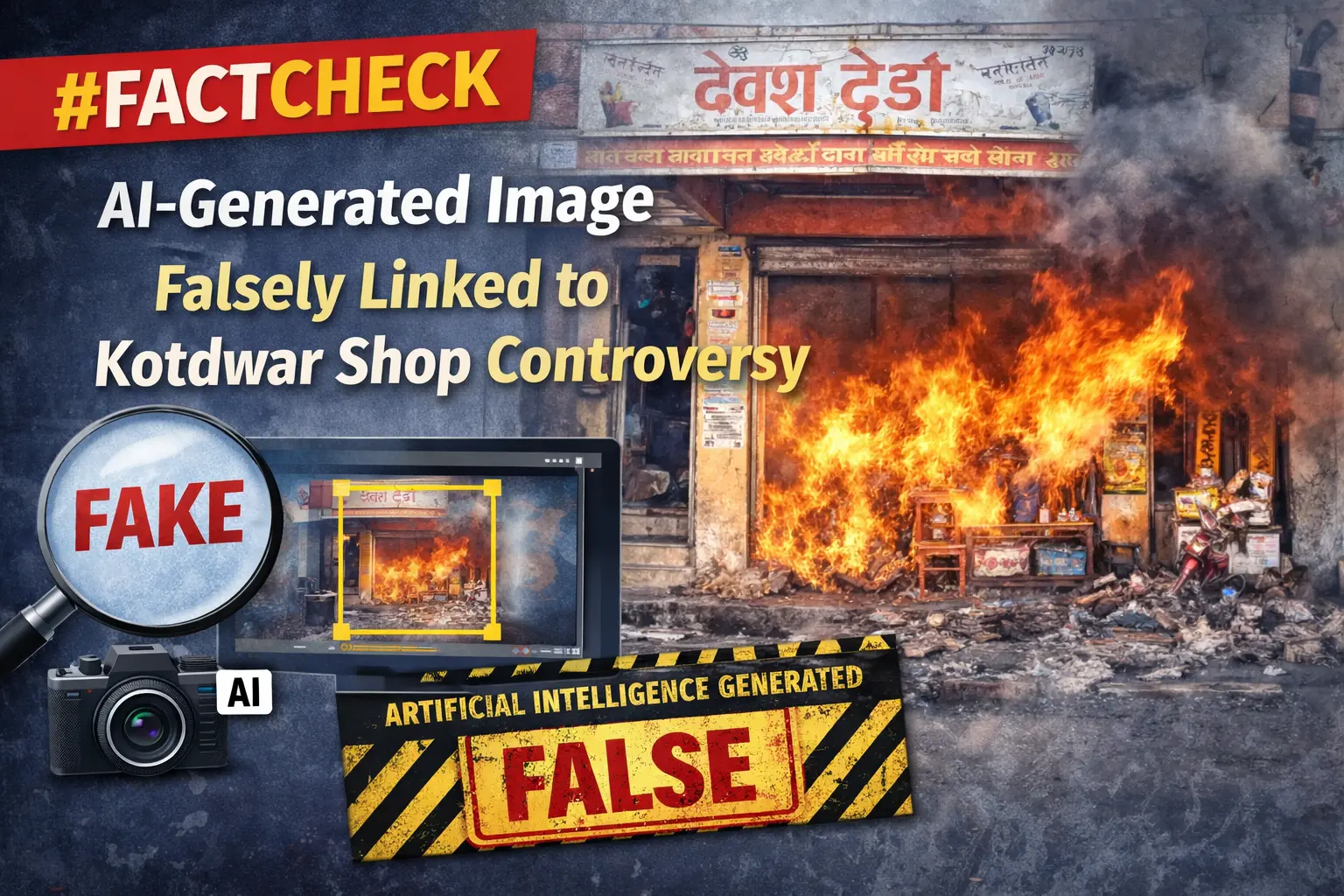
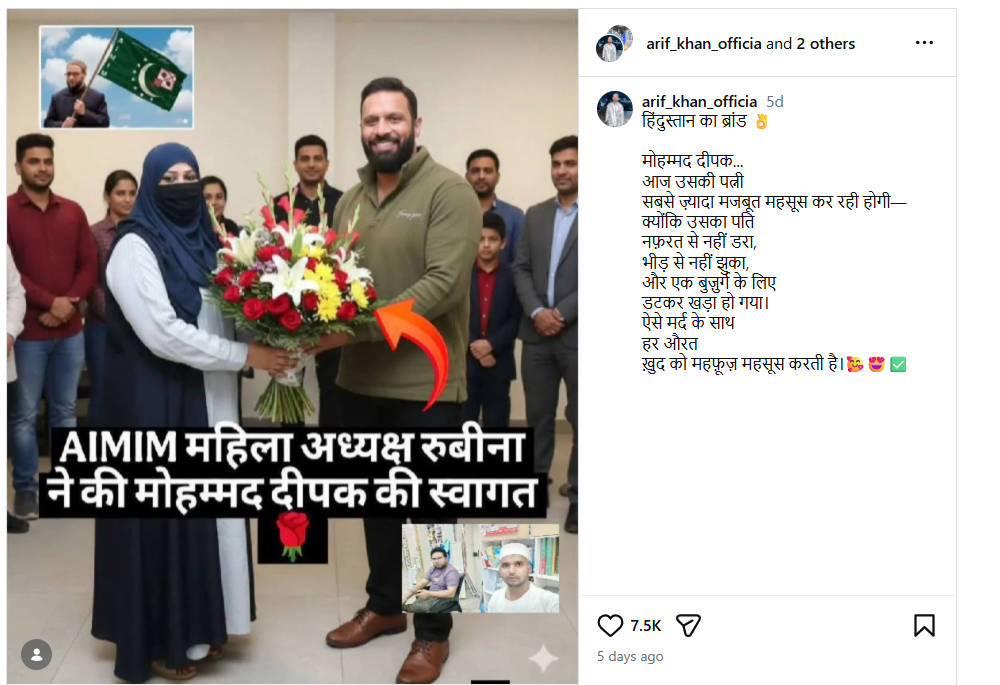
A dispute had recently emerged in Kotdwar, Uttarakhand, over the name of a shop. During the controversy, a local youth, Deepak Kumar, came forward in support of the shopkeeper. The incident subsequently became a subject of discussion on social media, with users expressing varied reactions. Meanwhile, a photo began circulating on social media showing a burqa-clad woman presenting a bouquet to Deepak Kumar. The image is being shared with the claim that All India Majlis-e-Ittehadul Muslimeen (AIMIM)’s women’s president, Rubina, welcomed “Mohammad Deepak Kumar” by presenting him with a bouquet. However, research conducted by the CyberPeace found the viral claim to be false. The research revealed that users are sharing an AI-generated image with a misleading claim.
Claim:
On social media platform Instagram, a user shared the viral image claiming that AIMIM’s women’s president Rubina welcomed “Mohammad Deepak Kumar” by presenting him with a bouquet. The link to the post, its archived version, and a screenshot are provided below.
Fact Check:
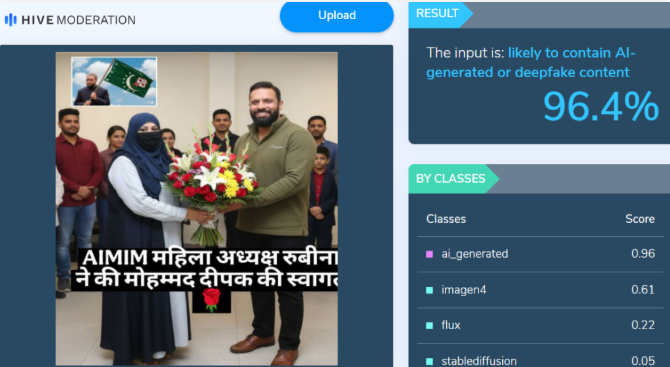
Upon closely examining the viral image, certain inconsistencies raised suspicion that it could be AI-generated. To verify its authenticity, the image was analysed using the AI detection tool Hive Moderation, which indicated a 96 percent probability that the image was AI-generated.
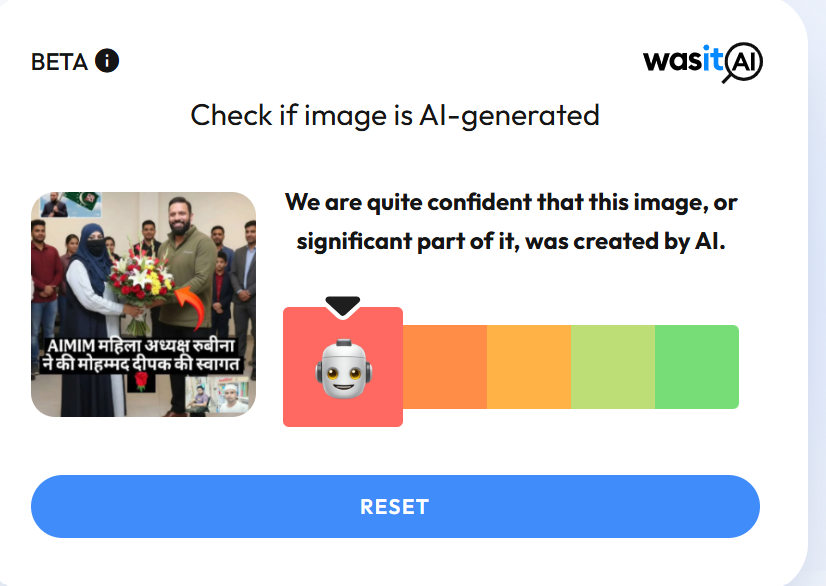
In the next stage of the research , the image was also analysed using another AI detection tool, Wasit AI, which likewise identified the image as AI-generated.
Conclusion
The research establishes that users are circulating an AI-generated image with a misleading claim linking it to the Kotdwar controversy.
