
Step-by-Step Manual: Setting Up Parental Controls
Today, let us talk about one of the key features of our digital lives – security. The safer their online habits are, the safer their data and devices will be. A branded security will make their devices and Internet connections secure, but their carelessness or ignorance can make them targets for cybercrimes. On the other hand, they can themselves unwittingly get involved in dubious activities online. With children being very smart about passwords and browsing history clearing, parents are often left in the dark about their digital lives.
Fret not, parental controls are there at your service. These are digital tools often included with your OS or security software package, which helps you to remotely monitor and control your child’s online activities.
Where Can I find them?
Many devices come with pre-installed PC tools that you have to set up and run. Go to Settings-> Parental controls or Screentime and proceed from there. As I mentioned, they are also offered as a part of your comprehensive security software package.
Why and How to Use Parental Controls
Parental controls help monitor and limit your children's smartphone usage, ensuring they access only age-appropriate content. If your child is a minor, use of this tool is recommended, with the full knowledge of your child/ren. Let them know that just as you supervise them in public places for their safety, and guide them on rights and wrongs, you will use the tool to monitor and mentor them online, for their safety. Emphasize that you love them and trust them but are concerned about the various dubious and fake characters online as well as unsafe websites and only intend to supervise them. As they grow older and display greater responsibility and maturity levels, you may slowly reduce the levels of monitoring. This will help build a relationship of mutual trust and respect.
Step 1: Enable Parental Controls
- iOS: If your child has an iPhone, to set up the controls, go to Settings, select Screen Time, then select Content & Privacy Restrictions.
- Android: If the child has an Android phone, you can use the Google Family Link to manage apps, set screen time limits, and track device usage.
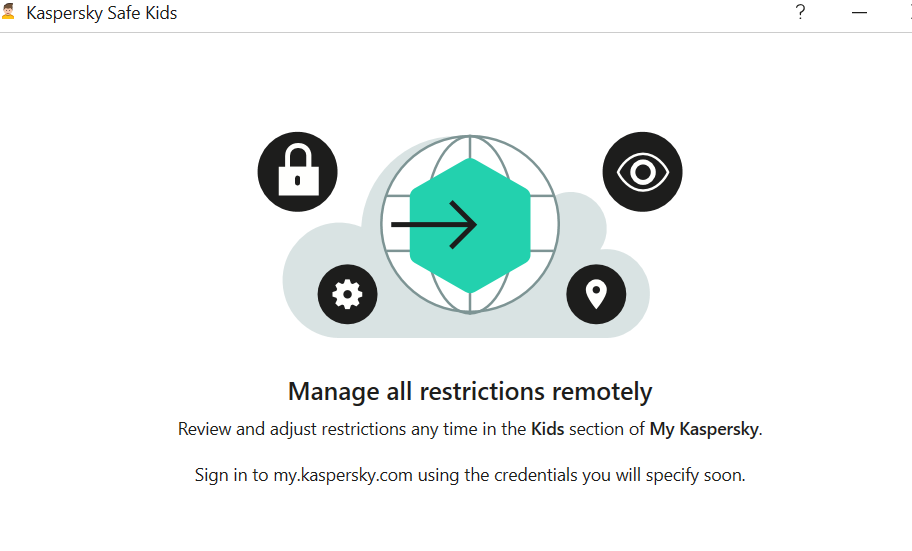
- Third-party apps: Consider security tools like McAfee, Kaspersky, Bark, Qustodio, or Norton Family for advanced features.
Check out what some of the security software apps have on offer:


If you prefer Norton, here are the details:

McAfee Parental Controls suite offers the following features:

McAfee also outlines why Parental Controls matter:

Lastly, let us take a look at what Quick Heal has on offer:

STEP 2: Set up Admin Login
Needless to say, a parent should be the admin login, and it is a wise idea to set up a strong and unique password. You do not want your kids to outsmart you and change their accessibility settings, do you? Remember to create a password you will remember, for children are clever and will soon discover where you have jotted it down.
STEP 3: Create Individual accounts for all users of the device
Let us say two minor kids, a grandparent and you, will be using the device. You will have to create separate accounts for each user. You can allow the children to choose their own passwords, it will give them a sense of privacy. The children or you may (or may not) need to help any Seniors set up their accounts.
Done? Good. Now let us proceed to the next step.
STEP 4: Set up access permissions by age
Let us first get grandparents and other seniors out of the way by giving them full access. when you enter their ages; your device will identify them as adults and guide you accordingly.
Now for each child, follow the instructions to set up filters and blocks. This will again vary with age – more filters for the younger ones, while you can remove controls gradually as they grow older, and hence more mature and responsible. Set up screen Time (daily and weekends), game filtering and playtime, content filtering and blocking by words (e.g. block websites that contain violence/sex/abuse). Ask for activity reports on your device so that you can monitor them remotely This will help you to receive alerts if children connect with strangers or get involved in abusive actions.
Save the data and it has done! Simple, wasn’t it?
Additional Security
For further security, you may want to set up parental controls on the Home Wi-Fi Router, Gaming devices, and online streaming services you subscribe to.
Follow the same steps. Select settings, Admin sign-in, and find out what controls or screen time protection they offer. Choose the ones you wish to activate, especially for the time when adults are not at home.
Conclusion
Congratulations. You have successfully secured your child’s digital space and sanitized it. Discuss unsafe practices as a family, and make any digital rule breaches and irresponsible actions, or concerns, learning points for them. Let their takeaway be that parents will monitor and mentor them, but they too have to take ownership of their actions.

Related Blogs
.webp)
Introduction
Misinformation has the potential to impact people, communities and institutions alike, and the ramifications can be far-ranging. From influencing voter behaviours and consumer choices to shaping personal beliefs and community dynamics, the information we consume in our daily lives affects every aspect of our existence. And so, when this very information is flawed or incomplete, whether accidentally or deliberately so, it has the potential to confuse and mislead people.
‘Debunking’ is the process of exposing false information or countering inaccuracies and manipulation by presenting actual facts. The goal is to minimise the harmful effects of misinformation by informing and educating people. Debunking initiatives work hard to expose false information and cut down conspiracies, catalogue evidence of false information, clearly identify sources of misinformation vs. accurate information, and assert the truth. Debunking looks at building capacity and educating people both as a strategy and goal.
Debunking is most effective when it comes from trusted sources, provides detailed explanations, and offers guidance and verifiable advice. Debunking is reactive in nature and it focuses on specific instances of misinformation and is closely tied to fact-checking. Debunking aims to mitigate the impact of misinformation that has already spread. As such, the approach is to contain and correct, post-occurrence. The most common method of debunking is collaboration between fact-checking groups and social media companies. When journalists or other fact-checkers identify false or misleading content, social media sites flag or label it such, so that audiences are alerted. Debunking is an essential method for reducing the impact and incidence of misinformation by providing real facts and increasing overall accuracy of content in the digital information ecosystem.
Role of Debunking the Misinformation
Debunking fights against false or misleading information by correcting false claims, myths, and misinformation with evidence-based rebuttals. It combats untruths and the spread of misinformation by providing and disseminating debunked evidence to the public. Debunking by presenting evidence that contradicts misleading facts and encourages individuals to develop fact-checking habits and proactively check for authenticated sources. Debunking plays a vital role in boosting trust in credible sources by offering evidence-based corrections and enhancing the credibility of online information. By exposing falsehoods and endorsing qualities like information completeness and evidence-backed data and logic, debunking efforts help create a culture of well-informed and constructive public conversations and analytical exchanges. Effectively dispelling myths and misinformation can help create communities and societies that are more educated, resilient, and goal-oriented.
Debunking as a tailoring Strategy to counter Misinformation
Understanding the information environment and source trustworthiness is critical for developing effective debunking techniques. Successful debunking efforts use clear messages, appealing forms, and targeted distribution to reach a wide range of netizens. Debunking as an effective method for combating misinformation includes analysing successful efforts, using fact-checking, relying on reputable sources for corrections, and using scientific communication. Fact-checking plays a critical role in ensuring information accuracy and holding people accountable for making misleading claims. Collaborative efforts and transparent techniques can boost the credibility and efficacy of fact-checking activities and boost the legitimacy and effectiveness of debunking initiatives at a larger scale. Scientific communication is also critical for debunking myths about different topics/concerns by giving evidence-based information. Clear and understandable framing of scientific knowledge is critical for engaging broad audiences and effectively refuting misinformation.
CyberPeace Policy Recommendations
- It is recommended that debunking initiatives must highlight core facts, emphasising what is true over what is wrong and establishing a clear contrast between the two. This is crucial as people are more likely to believe familiar information even if they learn later that it is incorrect. Debunking must provide a comprehensive explanation, filling the ‘information gap’ created by the myth. This can be done by explaining things as clearly as possible, as people may stop paying attention if they are faced with an overload of competing information. The use of visuals to illustrate core facts is an effective way to help people understand the issue and clearly tell the difference between information and misinformation.
- Individuals can play a role in debunking misinformation on social media by highlighting inconsistencies, recommending related articles with corrections or sharing trusted sources and debunking reports in their communities.
- Governments and regulatory agencies can improve information openness by demanding explicit source labelling and technical measures to be implemented on platforms. This can increase confidence in information sources and equip people to practice discernment when they consume content online. Governments should also support and encourage independent fact-checking organisations that are working to disprove misinformation. Digital literacy programmes may teach the public how to critically assess information online and spot any misinformation.
- Tech businesses may enhance algorithms for detecting and flagging misinformation, therefore reducing the propagation of misleading information. Offering options for people to report suspicious/doubtful information and misinformation can empower them and help them play an active role in identifying and rectifying inaccurate information online and foster a more responsible information environment on the platforms.
Conclusion
Debunking is an effective strategy to counter widespread misinformation through a combination of fact-checking, scientific evidence, factual explanations, verified facts and corrections. Debunking can play an important role in fostering a culture where people look for authenticity while consuming the information and place a high value on trusted and verified information. A collaborative strategy can increase the legitimacy and reach of debunking efforts, making them more effective in reaching larger audiences and being easy-to-understand for a wide range of demographics. In a complex and ever-evolving digital ecosystem, it is important to build information resilience both at the macro level for the ecosystem as a whole and at the micro level, with the individual consumer. Only then can we ensure a culture of mindful, responsible content creation and consumption.
References

Executive Summary
A fabricated graphic designed to look like a Dainik Jagran postcard is viral on social media. The viral post claims that Prime Minister Narendra Modi made a statement regarding his father, alleging that he was part of Netaji Subhash Chandra Bose's army and spied against the British. The post further claims that his father later surrendered on Mahatma Gandhi's advice and became a Gandhian. Research by the CyberPeace Research Wing has revealed that this claim is entirely fake and misleading. There is no record or evidence of PM Modi ever making such a statement, and the viral postcard has been digitally altered.
The Claim
An Instagram user shared the viral graphic claiming that PM Modi stated his father was associated with Netaji Subhash Chandra Bose's army, worked as a spy against the British, and later surrendered on Mahatma Gandhi's advice to become a follower of his ideology. https://www.instagram.com/reels/DZ7BAHdP5u , https://archive.ph/wip/7ajAK

Fact Check
A thorough Google keyword search was conducted using relevant terms, but no credible news reports or official sources were found to back up the viral claim.

During the research, the original, authentic postcard published by Dainik Jagran was located. The original post actually quoted PM Modi speaking about India's startup ecosystem. Today, 21st-century India is going through a massive phase of transformation. A startup revolution is taking place in India today. In this revolution, the youth of India, with a fresh mindset, are finding solutions to problems for the welfare of humanity." https://www.instagram.com/p/DZkRUY2n2hi/

Conclusion
The research confirms that Prime Minister Narendra Modi never made any statement linking his father to Netaji Subhash Chandra Bose or Mahatma Gandhi's surrender advice. The viral image circulating on social media is morphed and edited to spread misinformation.

Introduction
Google’s search engine is widely known for its ability to tailor its search results based on user activity, enhancing the relevance of search outcomes. Recently, Google introduced the ‘Try Without Personalisation’ feature. This feature allows users to view results independent of their prior activity. This change marks a significant shift in platform experiences, offering users more control over their search experience while addressing privacy concerns.
However, even in this non-personalised mode, certain contextual factors including location, language, and device type, continue to influence results. This essentially provides the search with a baseline level of relevance. This feature carries significant policy implications, particularly in the areas of privacy, consumer rights, and market competition.
Understanding the Feature
When users engage with this option of non-personalised search, it will no longer show them helpful individual results that are personalisation-dependent and will instead provide unbiased search results. Essentially,this feature provides users with neutral (non-personalised) search results by bypassing their data.
This feature allows the following changes:
- Disables the user’s ability to find past searches in Autofill/Autocomplete.
- Does not pause or delete stored activity within a user’s Google account. Users, because of this feature, will be able to pause or delete stored activity through data and privacy controls.
- The feature doesn't delete or disable app/website preferences like language or search settings are some of the unaffected preferences.
- It also does not disable or delete the material that users save.
- When a user is signed in, they can ‘turn off the personalisation’ by clicking on the search option at the end of the webpage. These changes, offered by the feature, in functionality, have significant implications for privacy, competition, and user trust.
Policy Implications: An Analysis
This feature aligns with global privacy frameworks such as the GDPR in the EU and the DPDP Act in India. By adhering to principles like data minimisation and user consent, it offers users control over their data and the choice to enable or disable personalisation, thereby enhancing user autonomy and trust.
However, there is a trade-off between user expectations for relevance and the impartiality of non-personalised results. Additionally, the introduction of such features may align with emerging regulations on data usage, transparency, and consent. Policymakers play a crucial role in encouraging innovations like these while ensuring they safeguard user rights and maintain a competitive market.
Conclusion and Future Outlook
Google's 'Try Without Personalisation' feature represents a pivotal moment for innovation by balancing user privacy with search functionality. By aligning with global privacy frameworks such as the GDPR and the DPDP Act, it empowers users to control their data while navigating the complex interplay between relevance and neutrality. However, its success hinges on overcoming technical hurdles, fostering user understanding, and addressing competitive and regulatory scrutiny. As digital platforms increasingly prioritise transparency, such features could redefine user expectations and regulatory standards in the evolving tech ecosystem.
