
#FactCheck -Edited Jaishankar Video Falsely Links Him to ‘Cockroach Party’ Remarks; Fact Check Finds No Such Statement
Executive Summary
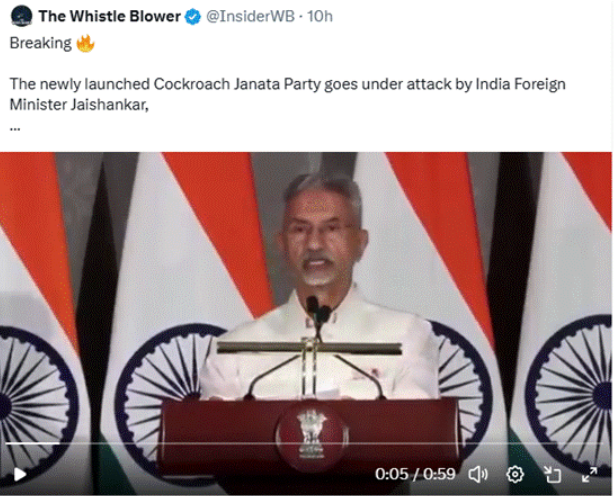
A video featuring India’s External Affairs Minister S. Jaishankar is being widely circulated on social media with the claim that he urged US Secretary of State Marco Rubio and US President Donald Trump to hand over the “handlers” of the so-called “Cockroach Janata Party” to India. The viral post further alleges that Jaishankar described the organisation as a “Pakistani and Iranian proxy group.” CyberPeace Research Wing research found the viral claim to be fake. External Affairs Minister S. Jaishankar did not make any statement regarding the “Cockroach Party” or its alleged handlers during the press conference. The viral video has been edited and is being shared with a misleading claim.
Claim
A verified X (formerly Twitter) user shared the viral clip and claimed that during a joint press conference, Jaishankar said:“I request Marco Rubio and Trump to hand over the handlers of the Cockroach Party because they are Pakistani and Iranian proxy groups.”
Fact Check
To verify the claim, we converted the viral clip into key frames and conducted a reverse image search. During the research, we found the original video uploaded on May 24, 2026, on the official YouTube channel of the Ministry of External Affairs.
The video was captioned:“Press conference of EAM Dr S Jaishankar and US Secretary of State Marco Rubio.”

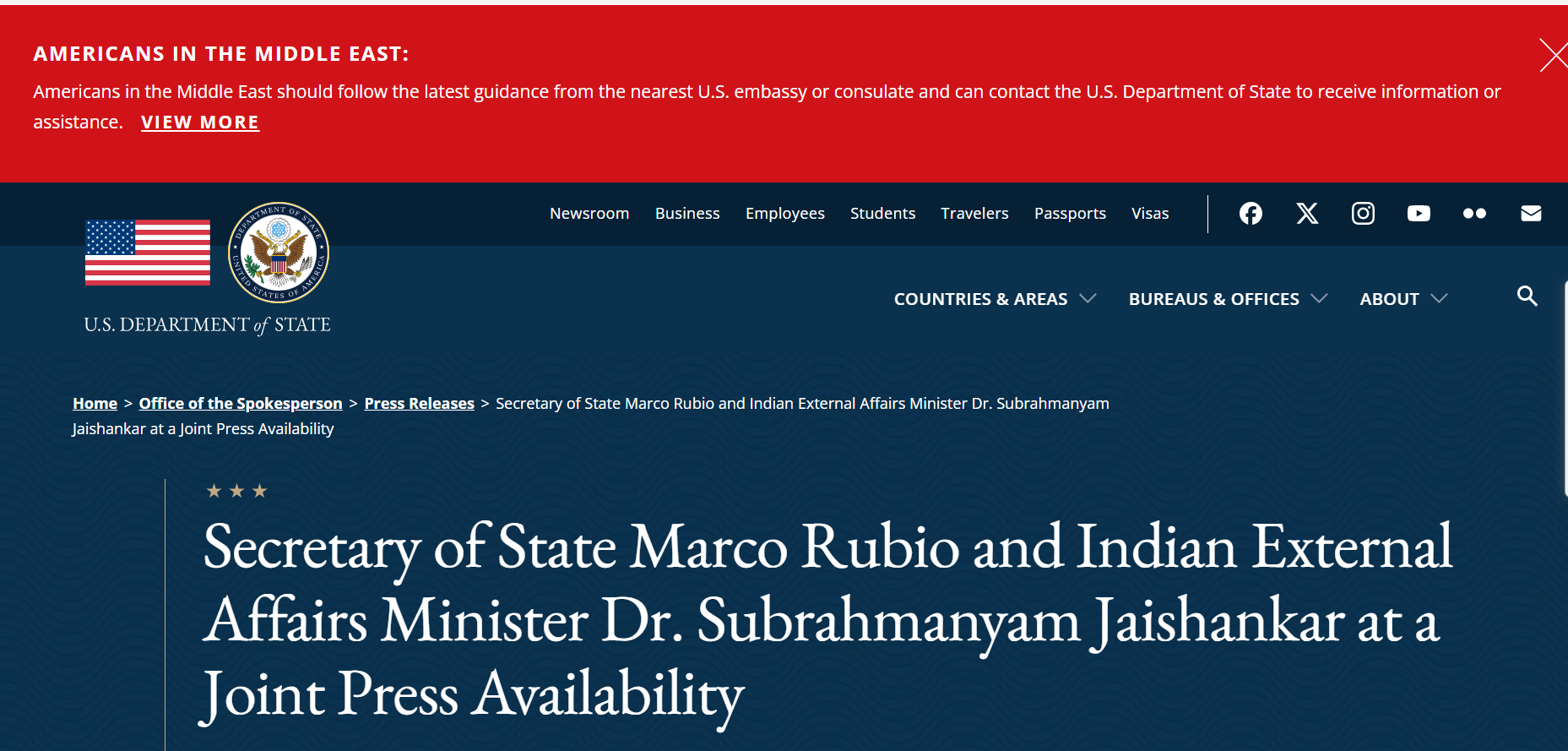
A review of the full press conference confirmed that Jaishankar made no mention of any “Cockroach Party,” its alleged handlers, or any Pakistani or Iranian proxy network. Further verification of the official transcripts published by both the Indian Ministry of External Affairs and the United States Department of State also found no references to the terms “Cockroach Party,” “handlers,” “Pakistani proxy,” or any statements matching the viral claim.
https://www.state.gov/releases/office-of-the-spokesperson/2026/05/secretary-of-state-marco-rubio-and-indian-external-affairs-minister-dr-subrahmanyam-jaishankar-at-a-joint-press-availability
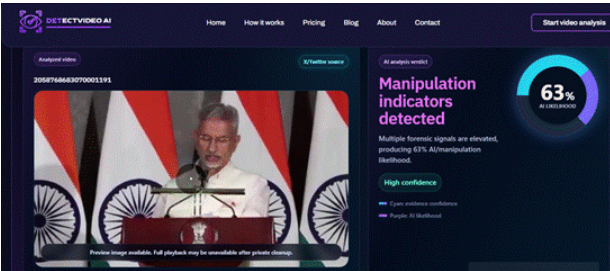
In the final stage of verification, the viral clip was analysed using an AI detection tool. The analysis suggested that the audio had been manipulated and that the video appeared to be edited. The tool indicated a 63 percent probability that the clip had been altered using AI-based editing techniques.
Conclusion
The research confirms that the viral claim is fake. S. Jaishankar did not make any statement regarding the “Cockroach Party” or its alleged handlers during the press conference. The viral clip has been edited and is being shared with misleading claims.

Related Blogs

Introduction
Prebunking is a technique that shifts the focus from directly challenging falsehoods or telling people what they need to believe to understanding how people are manipulated and misled online to begin with. It is a growing field of research that aims to help people resist persuasion by misinformation. Prebunking, or "attitudinal inoculation," is a way to teach people to spot and resist manipulative messages before they happen. The crux of the approach is rooted in taking a step backwards and nipping the problem in the bud by deepening our understanding of it, instead of designing redressal mechanisms to tackle it after the fact. It has been proven effective in helping a wide range of people build resilience to misleading information.
Prebunking is a psychological strategy for countering the effect of misinformation with the goal of assisting individuals in identifying and resisting deceptive content, hence increasing resilience against future misinformation. Online manipulation is a complex issue, and multiple approaches are needed to curb its worst effects. Prebunking provides an opportunity to get ahead of online manipulation, providing a layer of protection before individuals encounter malicious content. Prebunking aids individuals in discerning and refuting misleading arguments, thus enabling them to resist a variety of online manipulations.
Prebunking builds mental defenses for misinformation by providing warnings and counterarguments before people encounter malicious content. Inoculating people against false or misleading information is a powerful and effective method for building trust and understanding along with a personal capacity for discernment and fact-checking. Prebunking teaches people how to separate facts from myths by teaching them the importance of thinking in terms of ‘how you know what you know’ and consensus-building. Prebunking uses examples and case studies to explain the types and risks of misinformation so that individuals can apply these learnings to reject false claims and manipulation in the future as well.
How Prebunking Helps Individuals Spot Manipulative Messages
Prebunking helps individuals identify manipulative messages by providing them with the necessary tools and knowledge to recognize common techniques used to spread misinformation. Successful prebunking strategies include;
- Warnings;
- Preemptive Refutation: It explains the narrative/technique and how particular information is manipulative in structure. The Inoculation treatment messages typically include 2-3 counterarguments and their refutations. An effective rebuttal provides the viewer with skills to fight any erroneous or misleading information they may encounter in the future.
- Micro-dosing: A weakened or practical example of misinformation that is innocuous.
All these alert individuals to potential manipulation attempts. Prebunking also offers weakened examples of misinformation, allowing individuals to practice identifying deceptive content. It activates mental defenses, preparing individuals to resist persuasion attempts. Misinformation can exploit cognitive biases: people tend to put a lot of faith in things they’ve heard repeatedly - a fact that malicious actors manipulate by flooding the Internet with their claims to help legitimise them by creating familiarity. The ‘prebunking’ technique helps to create resilience against misinformation and protects our minds from the harmful effects of misinformation.
Prebunking essentially helps people control the information they consume by teaching them how to discern between accurate and deceptive content. It enables one to develop critical thinking skills, evaluate sources adequately and identify red flags. By incorporating these components and strategies, prebunking enhances the ability to spot manipulative messages, resist deceptive narratives, and make informed decisions when navigating the very dynamic and complex information landscape online.
CyberPeace Policy Recommendations
- Preventing and fighting misinformation necessitates joint efforts between different stakeholders. The government and policymakers should sponsor prebunking initiatives and information literacy programmes to counter misinformation and adopt systematic approaches. Regulatory frameworks should encourage accountability in the dissemination of online information on various platforms. Collaboration with educational institutions, technological companies and civil society organisations can assist in the implementation of prebunking techniques in a variety of areas.
- Higher educational institutions should support prebunking and media literacy and offer professional development opportunities for educators, and scholars by working with academics and professionals on the subject of misinformation by producing research studies on the grey areas and challenges associated with misinformation.
- Technological companies and social media platforms should improve algorithm transparency, create user-friendly tools and resources, and work with fact-checking organisations to incorporate fact-check labels and tools.
- Civil society organisations and NGOs should promote digital literacy campaigns to spread awareness on misinformation and teach prebunking strategies and critical information evaluation. Training programmes should be available to help people recognise and resist deceptive information using prebunking tactics. Advocacy efforts should support legislation or guidelines that support and encourage prebunking efforts and promote media literacy as a basic skill in the digital landscape.
- Media outlets and journalists including print & social media should follow high journalistic standards and engage in fact-checking activities to ensure information accuracy before release. Collaboration with prebunking professionals, cyber security experts, researchers and advocacy analysts can result in instructional content and initiatives that promote media literacy, prebunking strategies and misinformation awareness.
Final Words
The World Economic Forum's Global Risks Report 2024 identifies misinformation and disinformation as the top most significant risks for the next two years. Misinformation and disinformation are rampant in today’s digital-first reality, and the ever-growing popularity of social media is only going to see the challenges compound further. It is absolutely imperative for all netizens and stakeholders to adopt proactive approaches to counter the growing problem of misinformation. Prebunking is a powerful problem-solving tool in this regard because it aims at ‘protection through prevention’ instead of limiting the strategy to harm reduction and redressal. We can draw parallels with the concept of vaccination or inoculation, reducing the probability of a misinformation infection. Prebunking exposes us to a weakened form of misinformation and provides ways to identify it, reducing the chance false information takes root in our psyches.
The most compelling attribute of this approach is that the focus is not only on preventing damage but also creating widespread ownership and citizen participation in the problem-solving process. Every empowered individual creates an additional layer of protection against the scourge of misinformation, not only making safer choices for themselves but also lowering the risk of spreading false claims to others.
References
- [1] https://www3.weforum.org/docs/WEF_The_Global_Risks_Report_2024.pdf
- [2] https://prebunking.withgoogle.com/docs/A_Practical_Guide_to_Prebunking_Misinformation.pdf
- [3] https://ijoc.org/index.php/ijoc/article/viewFile/17634/3565

Introduction
In the digital realm of social media, Meta Platforms, the driving force behind Facebook and Instagram, faces intense scrutiny following The Wall Street Journal's investigative report. This exploration delves deeper into critical issues surrounding child safety on these widespread platforms, unravelling algorithmic intricacies, enforcement dilemmas, and the ethical maze surrounding monetisation features. Instances of "parent-managed minor accounts" leveraging Meta's subscription tools to monetise content featuring young individuals have raised eyebrows. While skirting the line of legality, this practice prompts concerns due to its potential appeal to adults and the associated inappropriate interactions. It's a nuanced issue demanding nuanced solutions.
Failed Algorithms
The very heartbeat of Meta's digital ecosystem, its algorithms, has come under intense scrutiny. These algorithms, designed to curate and deliver content, were found to actively promoting accounts featuring explicit content to users with known pedophilic interests. The revelation sparks a crucial conversation about the ethical responsibilities tied to the algorithms shaping our digital experiences. Striking the right balance between personalised content delivery and safeguarding users is a delicate task.
While algorithms play a pivotal role in tailoring content to users' preferences, Meta needs to reevaluate the algorithms to ensure they don't inadvertently promote inappropriate content. Stricter checks and balances within the algorithmic framework can help prevent the inadvertent amplification of content that may exploit or endanger minors.
Major Enforcement Challenges
Meta's enforcement challenges have come to light as previously banned parent-run accounts resurrect, gaining official verification and accumulating large followings. The struggle to remove associated backup profiles adds layers to concerns about the effectiveness of Meta's enforcement mechanisms. It underscores the need for a robust system capable of swift and thorough actions against policy violators.
To enhance enforcement mechanisms, Meta should invest in advanced content detection tools and employ a dedicated team for consistent monitoring. This proactive approach can mitigate the risks associated with inappropriate content and reinforce a safer online environment for all users.
The financial dynamics of Meta's ecosystem expose concerns about the exploitation of videos that are eligible for cash gifts from followers. The decision to expand the subscription feature before implementing adequate safety measures poses ethical questions. Prioritising financial gains over user safety risks tarnishing the platform's reputation and trustworthiness. A re-evaluation of this strategy is crucial for maintaining a healthy and secure online environment.
To address safety concerns tied to monetisation features, Meta should consider implementing stricter eligibility criteria for content creators. Verifying the legitimacy and appropriateness of content before allowing it to be monetised can act as a preventive measure against the exploitation of the system.
Meta's Response
In the aftermath of the revelations, Meta's spokesperson, Andy Stone, took centre stage to defend the company's actions. Stone emphasised ongoing efforts to enhance safety measures, asserting Meta's commitment to rectifying the situation. However, critics argue that Meta's response lacks the decisive actions required to align with industry standards observed on other platforms. The debate continues over the delicate balance between user safety and the pursuit of financial gain. A more transparent and accountable approach to addressing these concerns is imperative.
To rebuild trust and credibility, Meta needs to implement concrete and visible changes. This includes transparent communication about the steps taken to address the identified issues, continuous updates on progress, and a commitment to a user-centric approach that prioritises safety over financial interests.
The formation of a task force in June 2023 was a commendable step to tackle child sexualisation on the platform. However, the effectiveness of these efforts remains limited. Persistent challenges in detecting and preventing potential child safety hazards underscore the need for continuous improvement. Legislative scrutiny adds an extra layer of pressure, emphasising the urgency for Meta to enhance its strategies for user protection.
To overcome ongoing challenges, Meta should collaborate with external child safety organisations, experts, and regulators. Open dialogues and partnerships can provide valuable insights and recommendations, fostering a collaborative approach to creating a safer online environment.
Drawing a parallel with competitors such as Patreon and OnlyFans reveals stark differences in child safety practices. While Meta grapples with its challenges, these platforms maintain stringent policies against certain content involving minors. This comparison underscores the need for universal industry standards to safeguard minors effectively. Collaborative efforts within the industry to establish and adhere to such standards can contribute to a safer digital environment for all.
To align with industry standards, Meta should actively participate in cross-industry collaborations and adopt best practices from platforms with successful child safety measures. This collaborative approach ensures a unified effort to protect users across various digital platforms.
Conclusion
Navigating the intricate landscape of child safety concerns on Meta Platforms demands a nuanced and comprehensive approach. The identified algorithmic failures, enforcement challenges, and controversies surrounding monetisation features underscore the urgency for Meta to reassess and fortify its commitment to being a responsible digital space. As the platform faces this critical examination, it has an opportunity to not only rectify the existing issues but to set a precedent for ethical and secure social media engagement.
This comprehensive exploration aims not only to shed light on the existing issues but also to provide a roadmap for Meta Platforms to evolve into a safer and more responsible digital space. The responsibility lies not just in acknowledging shortcomings but in actively working towards solutions that prioritise the well-being of its users.
References
- https://timesofindia.indiatimes.com/gadgets-news/instagram-facebook-prioritised-money-over-child-safety-claims-report/articleshow/107952778.cms
- https://www.adweek.com/blognetwork/meta-staff-found-instagram-tool-enabled-child-exploitation-the-company-pressed-ahead-anyway/107604/
- https://www.tbsnews.net/tech/meta-staff-found-instagram-subscription-tool-facilitated-child-exploitation-yet-company
.webp)
Executive Summary
A video showing a monkey allegedly saving the life of a sleeping child is rapidly going viral on social media. In the clip, a monkey can be seen picking up a child sleeping on a mat under a tree and moving the child away moments before a heavy tree branch falls at the same spot. Social media users are sharing the video as a “miracle of nature” and praising the emotional sensitivity and instincts of animals. However, research conducted by CyberPeace Research Wing found that the viral video is not real and was created using artificial intelligence tools.
Claim
The caption accompanying the viral post states:“In a shocking incident, a monkey was seen stepping in to save an innocent child sleeping under a tree from imminent danger. People nearby were stunned by the scene. It is being claimed that the monkey sensed the danger around the child and tried to protect him. The unusual incident has now gone viral on social media, with many saying that emotions and compassion are not limited to humans, animals can also understand feelings.”
The video has been widely shared across social media platforms
- https://www.instagram.com/reels/DYMvhRPTcCA/
- https://archive.ph/https://www.instagram.com/reels/DYMvhRPTcCA/

Fact Check
To verify the authenticity of the video, we extracted keyframes from the clip and conducted a reverse image search. During the research, we found the same video uploaded on May 8, 2026, on an Instagram page named Instagram user “mojilo_vandro.” The caption of the original upload did not provide any factual context and presented the video in a dramatic, miracle-like manner.

We further examined the Instagram account and found that it regularly posts several AI-generated videos featuring monkeys performing heroic or emotional acts. Importantly, the account owner has also identified themselves as an “AI video creator” in the bio section.
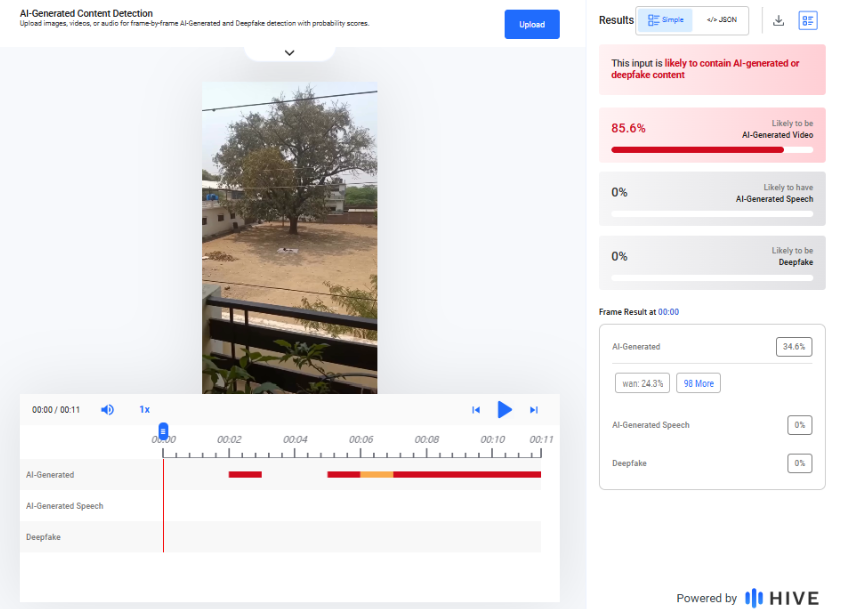
To further analyze the clip, we tested it using the AI detection tool Hive Moderation. The tool’s analysis classified the viral video as 85.6% likely to be AI-generated. We also checked the clip using another AI detection platform, Deepfake-o-meter. Its AVSRDD (2025) detection model flagged the video as potentially AI-generated with a 100% confidence score.

Conclusion
The evidence gathered during our research clearly shows that the viral video claiming to show a monkey saving a sleeping child from a falling tree branch is not authentic. The clip was created using AI-generated visual techniques and does not depict a real incident.
