
#FactCheck: Viral Video Falsely Linked to September 4 Anak Krakatau Eruption Is AI-Generated
Executive Summary
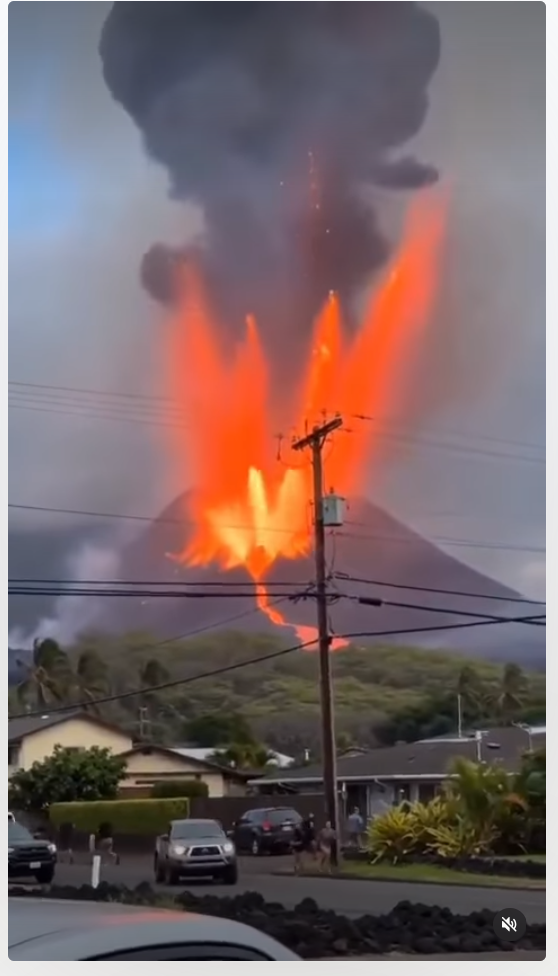
A volcano erupted at Indonesia’s Anak Krakatau on the night of September 4, 2026. A video is being shared on social media in connection with the eruption. The video shows lava rising high into the air following a volcanic eruption, with people seen fleeing the area. Some social media users are sharing the video claiming that it shows the eruption of Indonesia’s Anak Krakatau volcano. Research by CyberPeace found that the viral video is AI-generated. The video was created with the help of AI tools. However, four volcanoes, including Anak Krakatau, have erupted in Indonesia.
Claim
An Instagram user shared the viral video with the caption: “Indonesia’s Anak Krakatau volcano erupted Friday night. According to MAGMA Indonesia, lava fountains were seen rising from the volcano’s crater, while ash plumes reached a height of up to 400 metres. The volcano remains at Level III, with authorities enforcing a 3-kilometre exclusion zone around the crater.”
https://www.instagram.com/reels/DdBfQprThPA/

Fact Check
To investigate the viral video, we examined it closely and noticed several inconsistencies. At the beginning of the video, people can be seen standing calmly as the volcanic eruption takes place. Shortly afterward, the vehicles parked there suddenly begin moving. In one of the cars, no driver is visible. Meanwhile, the legs of a person running on the road disappear, and the person appears to merge into the background. These visual inconsistencies raised suspicions that the viral video had been created using AI tools.
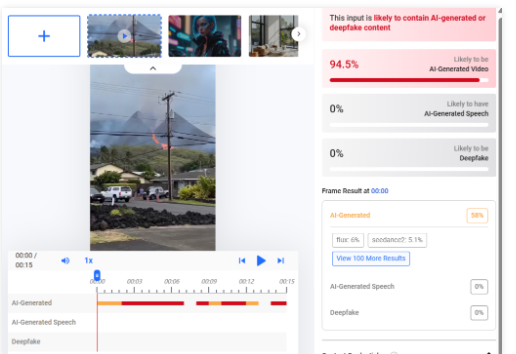
We checked the video using the AI detection tool Hive Moderation, which indicated that there was a more than 94 percent likelihood that the video was AI-generated.
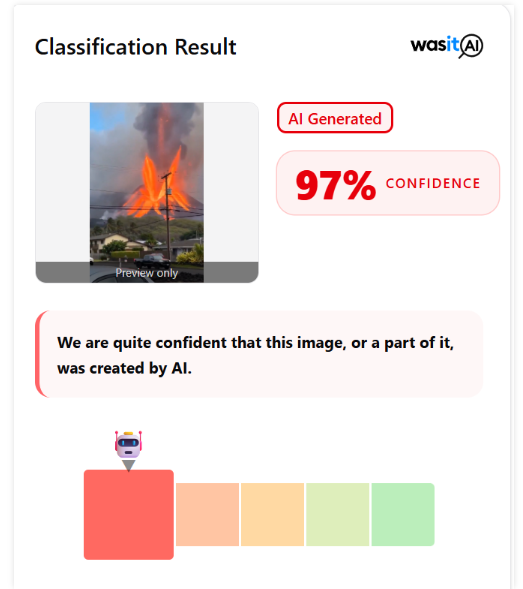
We checked the keyframes of the video using the AI detection tool Was It AI, which identified the video as 97 percent likely to be AI-generated.
Conclusion
The Anak Krakatau volcano in Indonesia erupted on the night of September 4, 2026. However, our research found that the video being shared in connection with the eruption was created using AI tools. Visual inconsistencies in the footage, along with the results of AI detection tools, indicate that the video is AI-generated and does not show genuine footage of the Anak Krakatau eruption. Therefore, the claim that the viral video shows the September 4 eruption of Indonesia’s Anak Krakatau volcano is false.

Related Blogs
.webp)
Introduction
With the advent of cloud computing, new information and asset delivery avenues have become possible, including Infrastructure-as-a-Service, Platform-as-a-Service, and Software-as-a-Service. With this change, the conventional paradigm of "computer as a product" is replaced with "computing as a service," which is provided to customers via the internet by big data warehouses or the cloud. Additionally, it has brought about an essential shift in how organisations function, allowing them to access computer tools and services online instead of needing to construct and manage their IT systems. As a result, organizations are now more agile, scalable, and efficient and can react swiftly to shifting consumer demands and market situations.
The Growth of Remote and Hybrid Workspaces
Hybrid and remote workplaces are becoming more popular post-pandemic era. Many businesses have used regional workplace solutions to manage a more scattered workforce. IT departments are put in a difficult position since they have to make sure that branch office staff and remote workers can access the information they require safely and dependably. VPNs and Direct Internet Access links are becoming more and more popular, thus IT professionals are coming up with innovative ways for connecting distant locations to the main office while protecting the confidentiality of information.
User Portability
The widespread use of mobile devices for work, along with the growing Bring Your Own Device (BYOD) culture, has significantly contributed to the rise of remote work and flexible work environments. Employees can now connect to corporate systems using either personal or company-issued devices through secure methods such as Virtual Private Networks (VPNs) or cloud-based platforms. This has made teleworking, work-from-home setups, and flexible work hours increasingly common and practical, allowing for greater productivity and work-life balance.
Growing Volume of Traffic
Professionals in the modern workplace must have access to private apps stored in a data centre or a multi-cloud setup. Nevertheless, these programs might not always be easily accessible from branch offices or by remote workers and staff members might not have instant support for IT. Organizations must discover solutions to this problem so that remote workers may consistently and dependably access company resources while also making the most of their current assets. It is important to note that employees need reliable and secure ways to access their work tools from anywhere, just like they would in the office.
Battling Networking and Security Issues in a Post-Pandemic Setting
While many businesses have successfully adopted a cloud-first approach for new system implementations or have deployed specific Software-as-a-Service (SaaS) solutions, many are still struggling to fully reap the benefits of moving most or all of their business software to the cloud.
- Conventional IT frameworks allowed for the creation of the present company applications. Because of this, these applications are frequently inflexible and configured for fixed capacity across a limited number of data facilities. Certain organizations could lack the elements required to oversee an entire cloud migration. This could be the result of things like an affinity for on-premises systems, aversion to alteration, or a lack of experience with cloud systems.
- Although cloud computing might be a cost-effective solution for some workloads, it might not be the best choice overall. Running certain applications in a combination of cloud services or on-premises may be more cost-effective.
- Particularly if they are regionally distributed, workloads requiring high connection speeds or low latency may not be ideal for cloud computing.
- If a corporation lacks authority over the servers in the cloud, it may be concerned about the integrity of its data stored there. Consequently, they would rather keep it inside their data facilities.
- Firms may be restricted in their ability to migrate some types of information to the cloud by legal or compliance regulations.
Networking and Cybersecurity Consolidation: Handling Present Risks
In the past, protecting a network required establishing boundaries and keeping an eye on communication between recognized devices. However, it is now required for a network's components to work together as a cohesive system due to shifting expectations. To do this, flexible network pieces must be able to communicate with one another while also protecting workflows, apps, and payments that move across different devices. The current problem is to effortlessly combine security with network capabilities and connection so that data can flow between constantly moving devices while being inspected, encrypted, and subject to regulation.
Infrastructure and security personnel must update their methods and equipment to better meet these constraints to deliver reliable, efficient, and trustworthy access across users, apps, and regions within an enterprise. Inevitably, networking and safety will eventually merge for improved organizational alignment.
Businesses may stay ahead of the competition in attracting top people in an increasingly diverse and cost-effective workplace by integrating a virtual and physical workforce. The future of security solutions lies in consolidation and platformisation; a cloud-centric Secure Access Service Edge (SASE) the capacity offering paired with network edge capabilities like secured Software-Defined Wide Area Network (SD-WAN) can improve and automate the safety measures of the company while also cutting down on the complexity and expense of managing disparate point remedies.
Safe Networking: Moving Towards This Phenomenon and Concentration of Cybersecurity
Companies relying on conventional networking models often face challenges in securing modern elements, such as cloud-based applications, remote users, mobile devices, and distributed locations, because traditional networks were not designed with these factors in mind. A robust networking strategy integrates both safety and networking into one system to get around these problems. It enhances security posture and network performance. It improves the user's experience and lessens the complexities of management. It is important to combine point product providers into a risk management platform rather than implementing safety measures one at a time. Tighter cooperation, greater efficiency, and a quicker, better-coordinated reaction to network threats are made possible by this.
SASE: A Coordinated Method
Secure Access Service Edge (SASE) is a cloud-based architecture that offers security and networking solutions as needed and unites all edges into a single logical connection.
SASE drivers
Conventional safety measures are ill-suited to deal with the more dispersed and complicated IT environment brought about by the advent of the Internet of Things, edge computing, and telecommuting. Using SASE, security and network services may be accessed from the cloud, eliminating the need to backhaul traffic to a single data centre for safety assessment.
- Distant user traffic assessment and blind spots presented difficulties for companies.
- Full oversight over hybrid network operations is provided by SASE technology, which provides network services including FWaaS, SWG, DLP, and CASB.
- Issues around abnormal port usage and policy violations have arisen as more customers access SaaS apps from different gadgets and regions.
- SASE technology reduces the cost of hiring IT staff by combining safe access to resources from one supplier.
- SASE technology consolidates secure accessibility capabilities from one vendor, hence lowering the cost of hiring IT workers.
- One major benefit of SASE technology is its ease of administration. Even when overseeing multiple offices inside a corporate network, the IT department's job is minimized because a single cloud-based administrator manages the entire system.
Recommendations
- For high-risk use cases, consider utilizing Zero Trust Network Access to supplement or replace the outdated VPN for distant users.
- Take inventory of the gear and agreements in order to progressively replace the branch and perimeter hardware on-site over a few years in favour of delivering SASE functionalities via the cloud.
- Simplify and cut expenses by grouping suppliers when VPN, CASB, and encrypted web portal agreements are up for renewal. Profit from a market that has come together and integrated these security edge services.
- Limit SASE products to a couple of partnering companies.
- Irrespective of location, integrate Zero Trust Network Access (ZTNA) and methods of authorization (such as MFA) for every client, including those in the workplace or branch.
- To meet security and regulatory requirements, select SASE products that provide you control over where inspection takes place, how traffic is directed, what is recorded, and where records are kept.
Conclusion
The development of cloud technology, the rise of offsite and hybrid workplaces, and the increased challenges in communication and privacy following the pandemic highlight the necessity for a comprehensive and integrated strategy. By adopting SASE (Secure Access Service Edge), a cloud-centric framework that enables secure connectivity across diverse environments, businesses can enhance cybersecurity, streamline operations, and adapt to the evolving needs of modern workplaces. This approach ultimately contributes to a safer and more efficient future for information architecture.
References
- https://www.dsci.in/files/content/knowledge-centre/2023/DSCI-Fortinet%20POV%20Paper.pdf
- https://www.datacenterknowledge.com/cloud/cloud-trends-and-cybersecurity-challenges-navigating-future
- https://banagevikas.medium.com/cybersecurity-trends-2024-navigating-the-future-10383ec10efe
Authors:
Soumya Gangele (Intern - Tech & Policy), CyberPeace
Neeraj Soni (Sr. Researcher), CyberPeace

Introduction
In the digital era, where technology is growing rapidly, the role of Artificial Intelligence (AI) has been making its way to different corners of the world. Where nothing seems to be impossible, technology and innovation have been moving conjointly and once again, and such innovation is in the limelight with its groundbreaking initiative known as “Project Groot”, which has been announced by the AI chip leader “Nvidia”. The core of this project is the fusion of technology with AI and robotics, where a humanoid can be produced with the capability to understand the natural language and interact with it to further learn from the physical environment by observing human actions and skills. Project Groot aims to assist humans in diverse sectors such as Healthcare and so on.
Humanoid robots are based on NVIDIA’s thor system-on-chip (SoC). The thor powers the intelligence of these robots, and the chip has been designed to handle complex tasks and ensure a safe and natural interaction between humans and robots. However, a big question arises about the ethical considerations of privacy, autonomy and the possible replacement of human workers.
Brief Analysis
Nvidia has announced Project GR00T, or Generalist Robot 00 Technology, which aims to create AI-powered humanoid robots with human-like understanding and movement. The project is part of Nvidia's efforts to drive breakthroughs in robotics and embodied AI, which can interact with and learn from a physical environment. The robots built on this platform are designed to understand natural language and emulate movements by observing human actions, such as coordination, dexterity, and other skills.
The model has been trained on NVIDIA GPU-accelerated simulation, enabling the robots to learn from human demonstrations with imitation learning and from the robotics platform NVIDIA Isaac Lab for reinforcement learning. This multimodal AI system acts as the mind for humanoid robots, allowing them to learn new skills and interact with the real world. Leading names in robotics, such as Figure, Boston Dynamics, Apptronik, Agility Robotics, Sanctuary AI, and Unitree, are reported to have collaborated with Nvidia to leverage GR00T.
Nvidia has also updated Isaac with Isaac Manipulator and Isaac Perceptor, which add multi-camera 3D vision. The company also unveiled a new computer, Jetson Thor, to aid humanoid robots based on NVIDIA's SoC, which is designed to handle complex tasks and ensure a safe and natural interaction between humans and robots.
Despite the potential job loss associated with humanoid robots potentially handling hazardous and repetitive tasks, many argue that they can aid humans and make their lives more comfortable rather than replacing them.
Policy Recommendations
The Nvidia project highlights a significant development in AI Robotics, presenting a brimming potential and ethical challenges critical for the overall development and smooth assimilation of AI-driven tech in society. To ensure its smooth assimilation, a comprehensive policy framework must be put in place. This includes:
- Human First Policy - Emphasis should be on better augmentation rather than replacement. The authorities must focus on better research and development (R&D) of applications that aid in modifying human capabilities, enhancing working conditions, and playing a role in societal growth.
- Proper Ethical Guidelines - Guidelines stressing human safety, autonomy and privacy should be established. These norms must include consent for data collection, fair use of AI in decision making and proper protocols for data security.
- Deployment of Inclusive Technology - Access to AI Driven Robotics tech should be made available to diverse sectors of society. It is imperative to address potential algorithm bias and design flaws to avoid discrimination and promote inclusivity.
- Proper Regulatory Frameworks - It is crucial to establish regulatory frameworks to govern the smooth deployment and operation of AI-driven tech. The framework must include certification for safety and standards, frequent audits and liability protocols to address accidents.
- Training Initiatives - Educational programs should be introduced to train the workforce for integrating AI driven robotics and their proper handling. Upskilling of the workforce should be the top priority of corporations to ensure effective integration of AI Robotics.
- Collaborative Research Initiatives - AI and emerging technologies have a profound impact on the trajectory of human development. It is imperative to foster collaboration among governments, industry and academia to drive innovation in AI robotics responsibly and undertake collaborative initiatives to mitigate and address technical, societal, legal and ethical issues posed by AI Robots.
Conclusion
On the whole, Project GROOT is a significant quantum leap in the advancement of robotic technology and indeed paves the way for a future where robots can integrate seamlessly into various aspects of human lives.
References
- https://indianexpress.com/article/explained/explained-sci-tech/what-is-nvidias-project-gr00t-impact-robotics-9225089/
- https://medium.com/paper-explanation/understanding-nvidias-project-groot-762d4246b76d
- https://www.techradar.com/pro/nvidias-project-groot-brings-the-human-robot-future-a-significant-step-closer
- https://www.barrons.com/livecoverage/nvidia-gtc-ai-conference/card/nvidia-announces-ai-model-for-humanoid-robot-development-BwT9fewMyD6XbuBrEDSp

Executive Summary
A video is being shared on social media showing an aircraft seemingly losing control amid strong winds. The video is being claimed to be from Ahmedabad, with users alleging that it shows the aircraft being affected by Cyclone Arnab. CyberPeace Research found the viral claim to be false. Our research found that the video is AI-generated. Gujarat is not among the states affected by Cyclone Arnab.
Claim:
A Facebook user shared the viral video on September 28 with the caption: “The terrifying form of Cyclone Arnab was witnessed in Ahmedabad! An airplane lost control during the storm. The power of nature is truly incredible. Stay alert, stay safe.” The post link, archive link and screenshot are provided below.
https://www.facebook.com/watch/?v=1076505855146958

Fact Check
To verify the authenticity of the viral claim, we conducted a Google search using relevant keywords. During the search, we found a report published on the DD News website on September 25, 2026. According to the report, Cyclone Arnab, which formed over the Bay of Bengal, weakened after making landfall along the coastal areas of Odisha and Andhra Pradesh. The cyclone made landfall along the coast of north Andhra Pradesh and south Odisha between around 11 pm and 1 am, bringing heavy rainfall and strong winds to both states.The report, citing the India Meteorological Department (IMD), stated that rainfall was forecast across 22 states and Union Territories in the country. A heavy rainfall alert was issued for Odisha, Chhattisgarh, Madhya Pradesh, Maharashtra, West Bengal, Sikkim, Uttarakhand, Uttar Pradesh, Bihar, Jharkhand, Andhra Pradesh and Telangana. Meanwhile, light rainfall was expected in Delhi-NCR and Karnataka. Rain accompanied by strong winds was also forecast in the northeastern states, the Andaman and Nicobar Islands, and Kerala.The post link and screenshot are provided below.
https://ddnews.gov.in/cyclone-arnab-weakens-rain-forecast-for-22-states-today/

The report made no mention of Gujarat. This raised doubts about the authenticity of the viral video. As part of the next step in our research, we conducted a reverse image search on Google using keyframes from the video. During the search, we found the same video on an Instagram channel that posts AI-generated content. The link and screenshot of the relevant post are provided below.
https://www.instagram.com/reels/Ddya_O1O1rP/
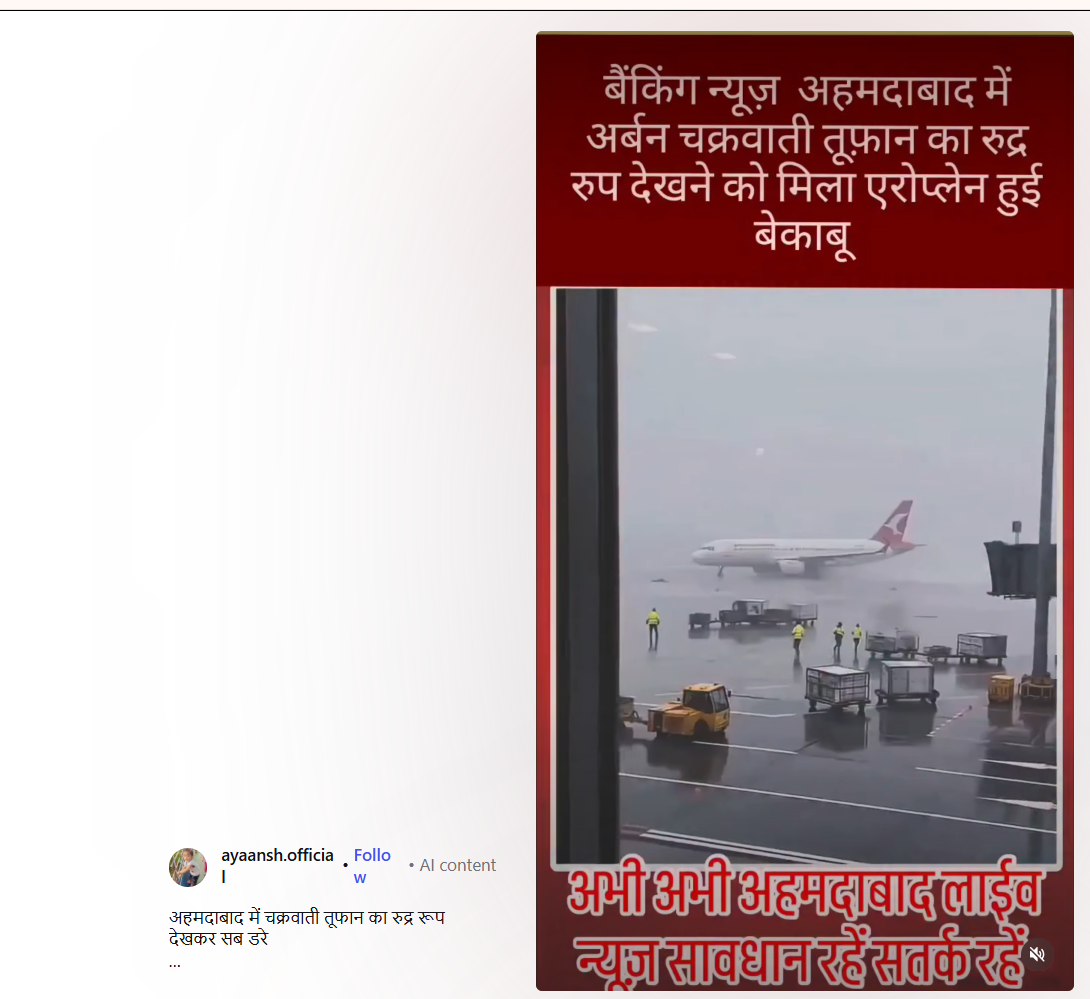
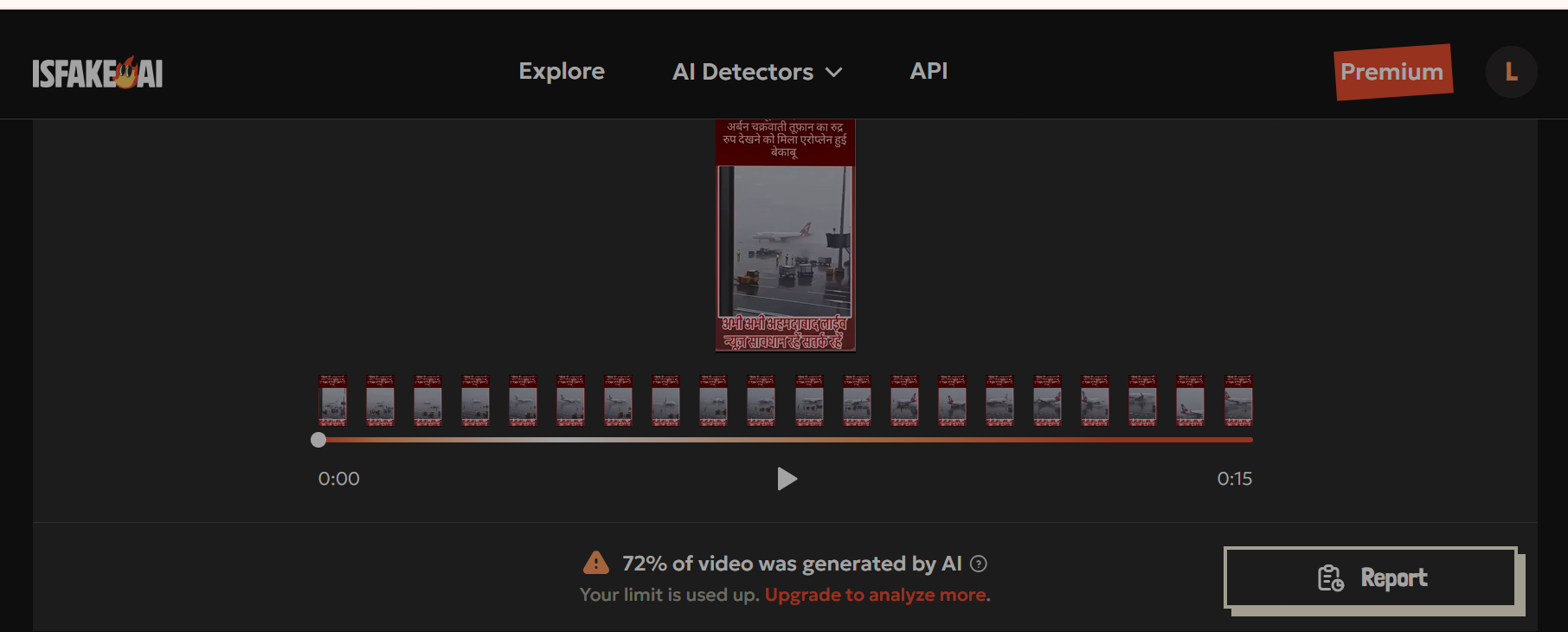
Taking the research forward, we scanned the viral video using the AI detection tool IsFakeAI. According to the results generated by the tool, the viral video was found to be AI-generated.
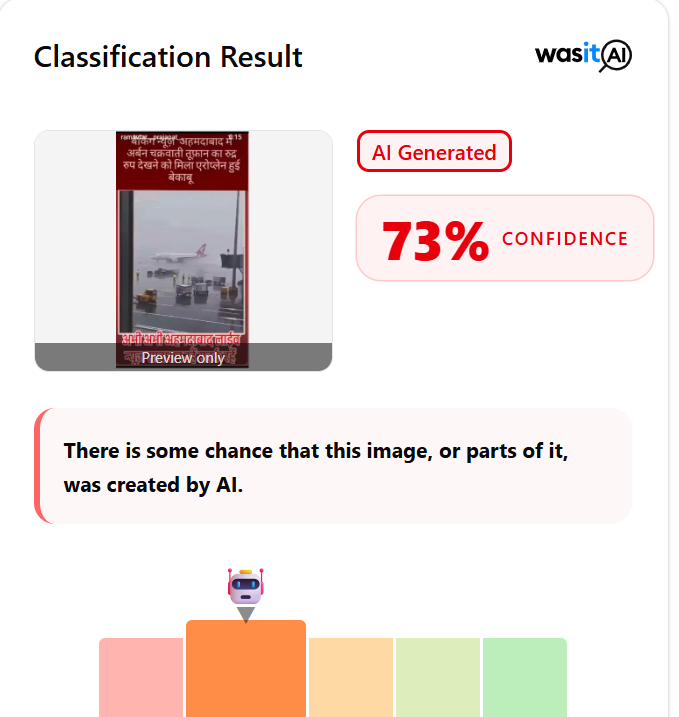
As part of the next step in our research, we scanned the viral video using another AI detection tool, WasIt AI. According to the results, the viral video has a 73 per cent likelihood of being AI-generated.
Conclusion
Our research found the viral claim to be false. We found that the video is AI-generated. Gujarat is not among the states affected by Cyclone Arnab.
