
#FactCheck: Viral Kyrgyzstan Video Misleadingly Shared as Nepal Flood Footage
Executive Summary
A video is being shared on social media with the claim that the Quran is being recited in Nepal to seek protection from floods. Research by the CyberPeace Research Wing found that the video is actually from Kyrgyzstan, a Central Asian country, and dates back to June. It shows people praying for the safety of a six-year-old boy who had been swept away by floodwaters.
Claim:
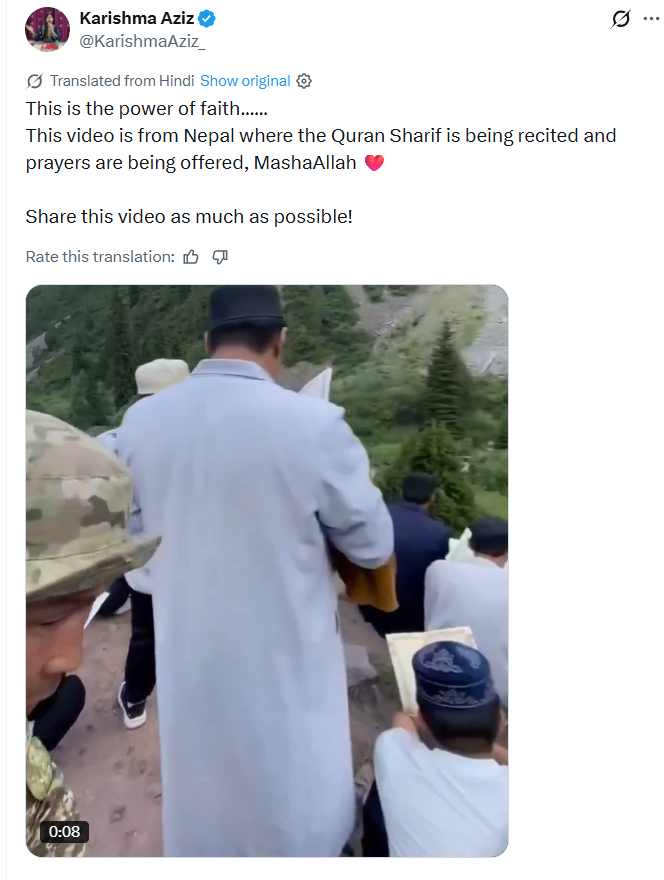
The video is being shared on X with a caption making the viral claim. It reads, “This is the power of faith. This video is from Nepal, where the Holy Quran is being recited and prayers are being offered. Mashallah.”
https://x.com/KarishmaAziz_/status/2095053199531286855
Fact Check
During our research into the viral video claiming that the Quran is being recited in Nepal to seek protection from floods, a reverse image search using keyframes led us to the same video uploaded on an Instagram account on June 25.
https://www.instagram.com/reels/DaAtnyUN4WP/
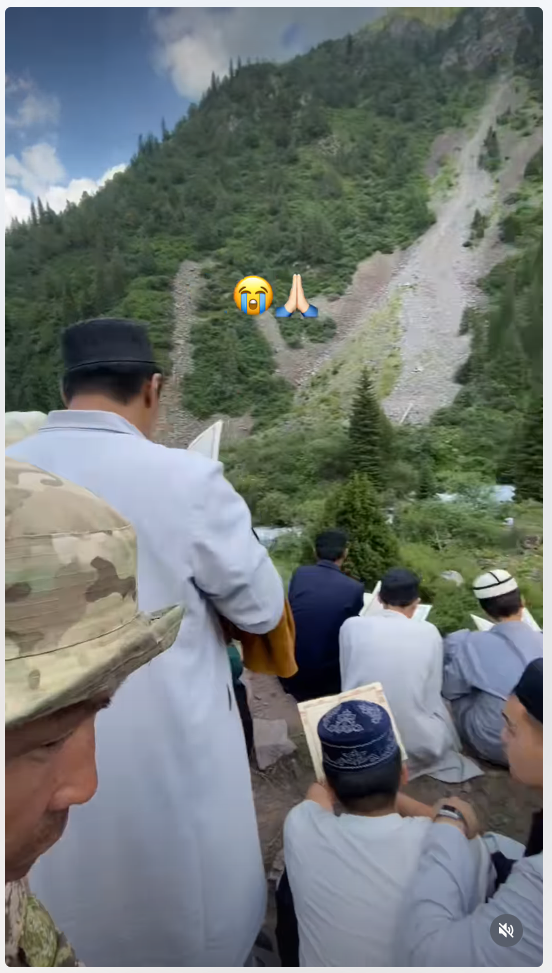
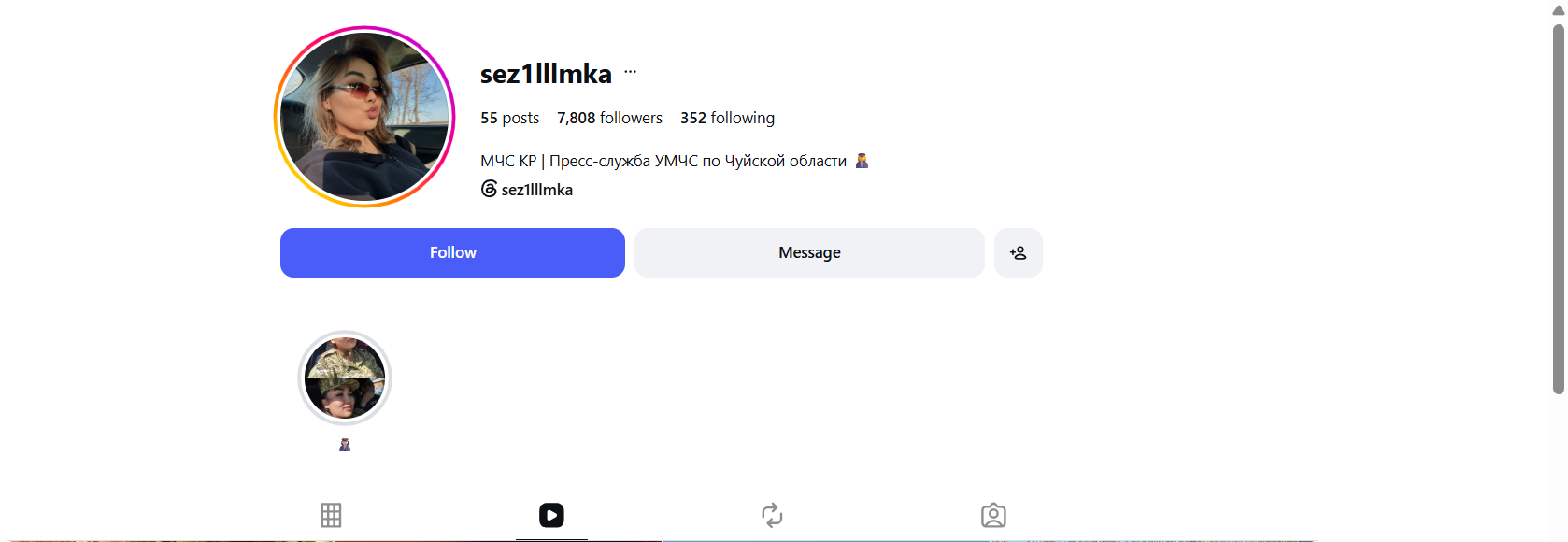
We translated the bio of the said Instagram account and found that it is associated with the Press Department of the Ministry of Emergency Situations in Kyrgyzstan’s Chuy Region. We also found several videos uploaded on the account featuring uniformed personnel wearing the same attire as those seen in the viral video.
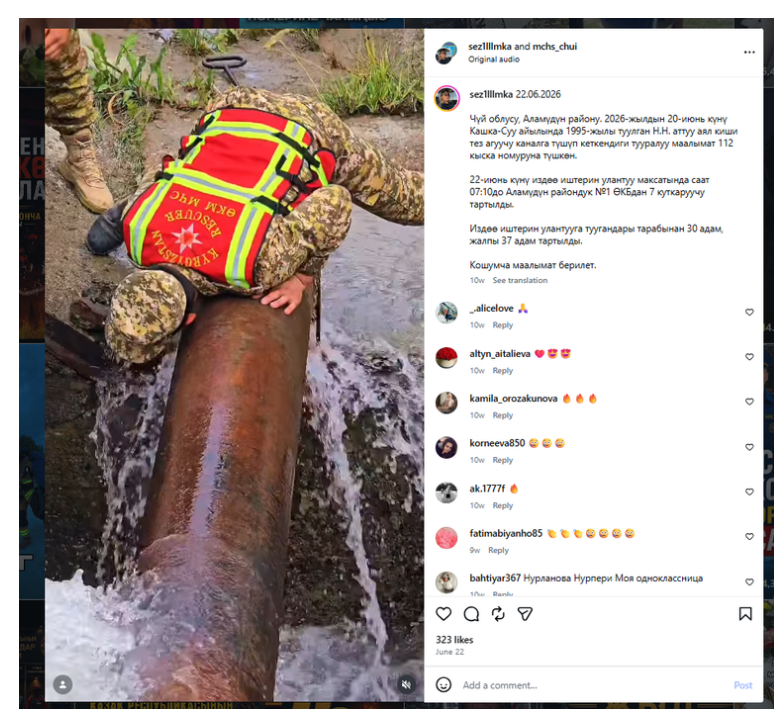
The life jackets worn by the uniformed personnel in these videos also clearly bear the words “Kyrgyzstan Rescue.”
During our research, we also found several Instagram posts published on June 25 featuring visuals similar to those in the viral video. The captions stated that Hafizs were reciting the Quran and offering prayers for the safety of a six-year-old boy during his rescue operation.
https://www.instagram.com/reels/DaBK3nYtfDf/https://www.instagram.com/reels/DaBK3nYtfDf/
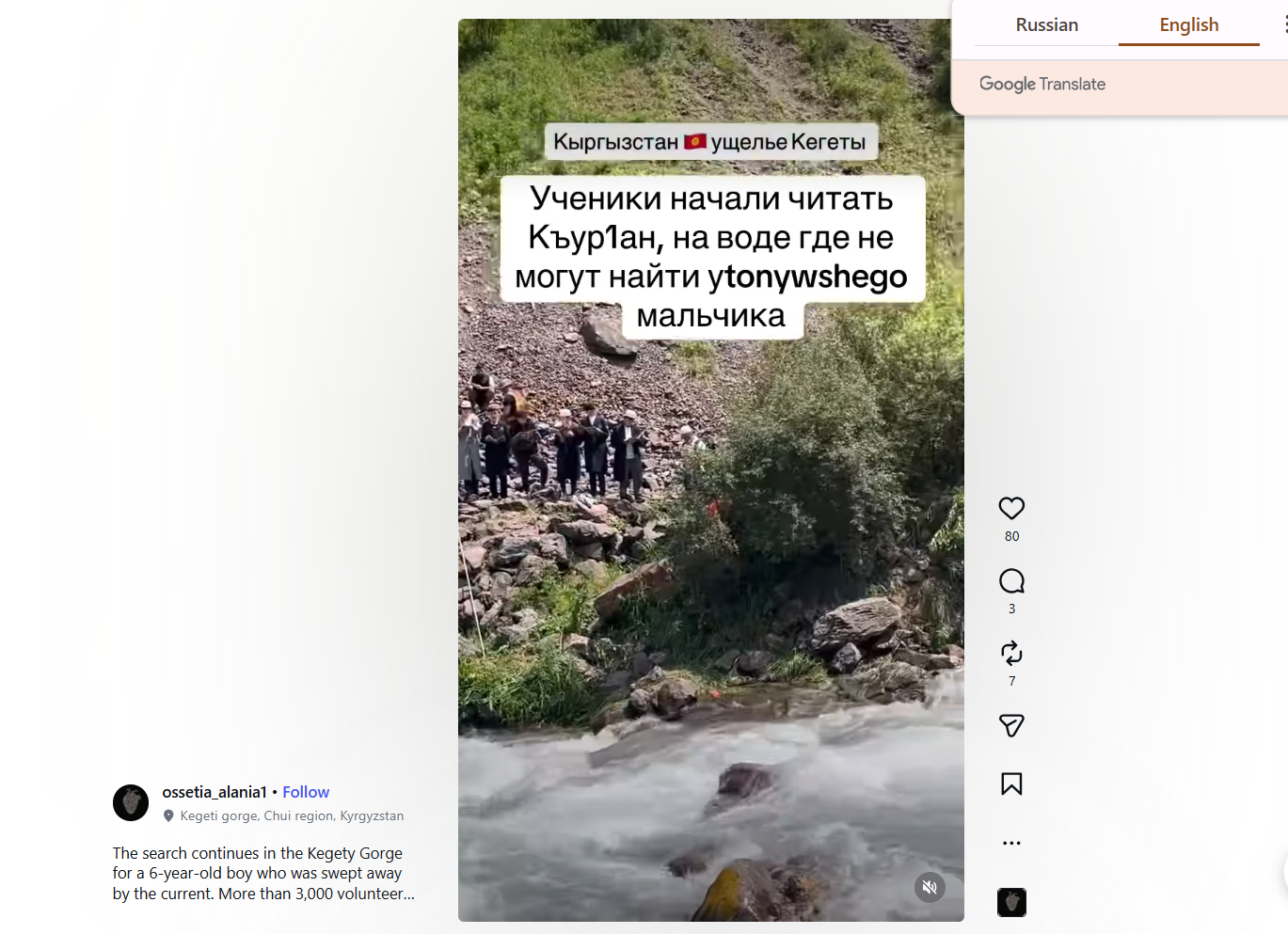
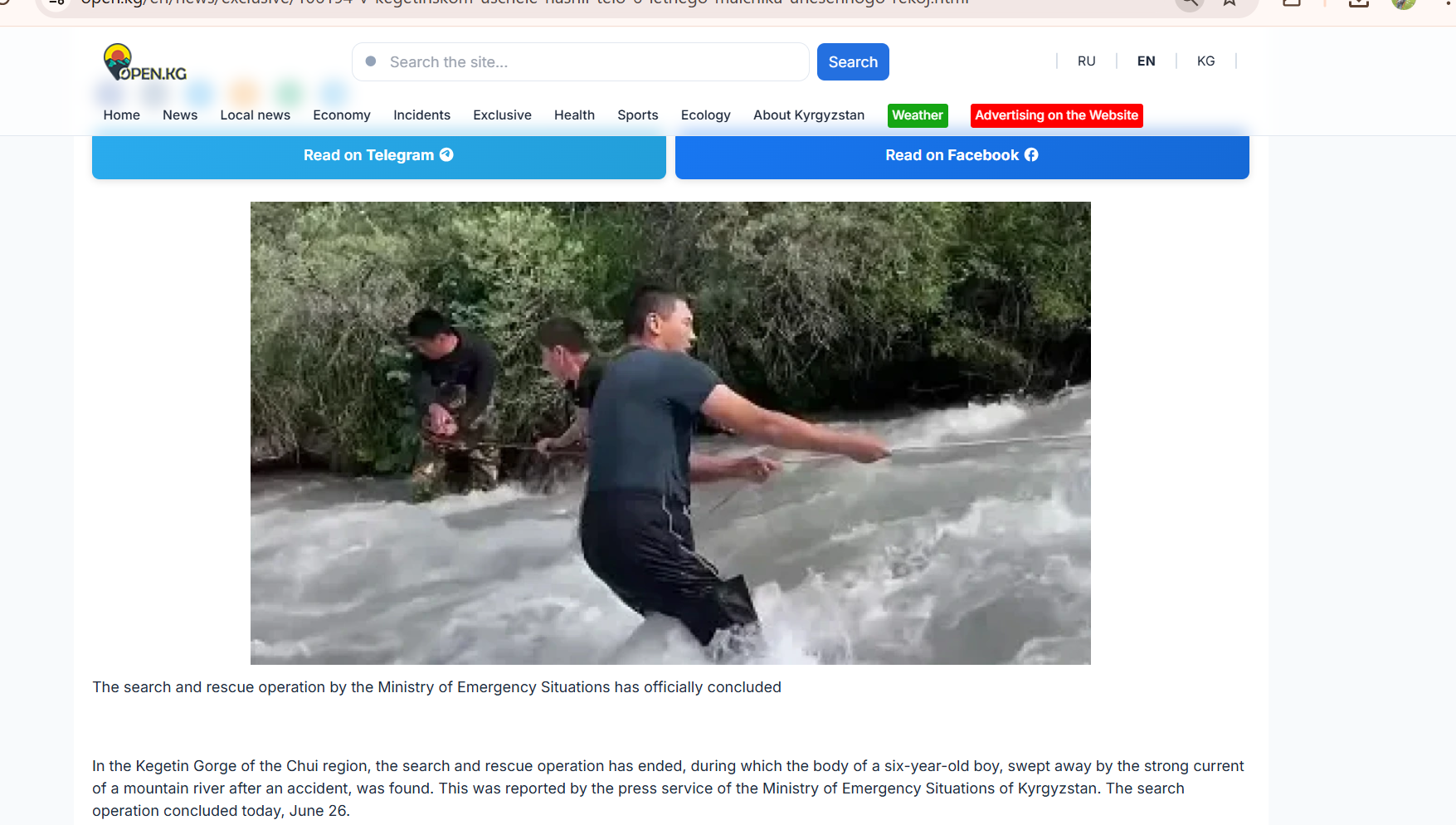
In this regard, we also found a report published on June 26 by a Kyrgyz news website. The report stated that on June 23, a car carrying two women and five children fell into the Kegety River. The two women and three children managed to get out of the vehicle, but two children remained trapped inside. The body of a 12-year-old girl had already been recovered by the rescue team. Later, on June 26, the body of the other child was also recovered.
Conclusion
Our research found that the viral claim is false. The video being shared with the claim that the Quran was being recited in Nepal to seek protection from floods is actually from Kyrgyzstan and dates back to June. The evidence gathered during our research, including the original social media posts and reports from Kyrgyzstan, confirms that the footage is related to a rescue operation involving children after a car fell into the Kegety River. Therefore, the viral video has no connection with the recent floods in Nepal and is being shared with a false claim.

Related Blogs

Think about the difference between a video game and gambling the way most people were taught to understand it. A video game is something you play, maybe you spend money on it upfront, maybe you buy an expansion pack, but what you get in return is fixed and known. Gambling is different: you put money in, and what comes back is uncertain, decided by chance, with real financial stakes attached to the outcome. For decades, that distinction was reasonably clear. It no longer is.
Across a growing number of mobile games and gaming platforms, the two have started to blend into each other. Games increasingly include features where a player pays real money for a randomised reward, a mechanic structurally identical to a slot machine or a scratch card, just wrapped in animation, sound effects, and gaming language that makes it feel like part of the game rather than a bet. Because this trend targets an audience that skews young, and because it deliberately makes gambling like behaviour feel like ordinary play, the UN Office on Drugs and Crime recently flagged it as a serious and growing concern. Understanding exactly what is happening, and why it matters, starts with their warning.
What UNODC is actually warning about
The claim traces back to UNODC's July 2026 report, An Interconnected Criminal Ecosystem: Transnational Organised Crime Threat Assessment for Southeast Asia 2026. Delphine Schantz, UNODC's regional representative for South-East Asia and the Pacific, put the core problem plainly: the line between online gaming and online gambling is becoming increasingly blurred, and platforms have converged through design features that deliberately exploit that ambiguity. Online gaming, by definition, never required money changing hands. What the report documents is a shift where mobile accessibility, deliberately addictive design, and the introduction of real monetary stakes are pulling younger users into something that looks and feels like gaming but functions, mechanically, like gambling.
The report's most striking finding is not really about the games themselves. It is about what happens after. UNODC found that illegal online gambling platforms operating across the region do not simply extract money from young users; they generate a secondary population of indebted, criminally exposed young people who become vulnerable to recruitment into broader criminal networks, including debt collection operations, money mule schemes, and the scam compounds the report documents elsewhere. In other words, the gambling loss is often only the first harm. The debt it creates becomes the entry point into something considerably worse.
The mechanics of the convergence
This is not a vague, impressionistic claim. Academic researchers have spent close to a decade documenting the specific design features responsible for blurring gaming and gambling, and loot boxes sit at the centre of that research. A loot box is a purchasable in game item containing randomised rewards, structurally similar to a scratch card or a slot pull, wrapped in gaming aesthetics, animated reveal sequences, anticipation building sound design, that make the underlying mechanic easy to overlook. Researchers writing in Nature Human Behaviour as early as 2018 argued loot boxes are psychologically akin to gambling, and subsequent studies have consistently found meaningful associations between loot box engagement and problem gambling severity in young people. One widely cited cross sectional study estimated that between 16 and 21 percent of surveyed young people had engaged in gambling like video game practices at least once in the preceding year, and found that people who engaged in one such practice were highly likely to engage in several more, suggesting these mechanics function less as isolated features and more as an interconnected ecosystem designed to normalise wagering behaviour early.
What makes this genuinely difficult to regulate is precisely the ambiguity Schantz pointed to. A loot box does not always pay out in real currency; often the reward is a cosmetic item, a weapon skin, or in game currency that can then be resold or traded on secondary markets, creating real monetary value once removed from the platform that generated it. That one extra step, converting a virtual reward into tradeable value outside the game itself, has repeatedly let gambling like mechanics avoid classification under gambling law, even as researchers increasingly argue the psychological experience for the user is functionally identical. Regulators in several countries, including the UK, South Korea, and parts of Europe, have wrestled with exactly this classification problem for years, generally landing on disclosure requirements, probability labelling, and age restrictions rather than outright bans, an approach critics argue leaves the core mechanic intact while addressing only its edges.
The mobile phone has made all of this considerably harder to contain. Where gambling once required a physical location, an ID check, or at minimum a desktop browser, mobile gaming apps put the same monetised, chance based mechanics directly into a pocket, often accessible without any meaningful age verification beyond a self reported birth date a user can simply falsify. UNODC's own framing of "mobile access" as a driving factor is not incidental; it is arguably the single structural change that turned what was once a manageable regulatory grey zone into a rapidly scaling public health concern.
Why age matters so much here
Financial literacy research is fairly consistent on this point: the capacity to reason clearly about risk, probability, and long term financial consequence continues developing well into a person's twenties. Marketing a mechanic engineered around variable reward schedules, the same principle behind slot machine design, to an audience whose risk judgment is still forming is not an accident of overlapping demographics. It is, as UNODC's own language suggests, closer to a deliberate exploitation of that gap.
Where India fits into this picture
India has arguably moved further and faster on this exact concern than most jurisdictions. The Promotion and Regulation of Online Gaming Act, 2025, alongside its accompanying 2026 Rules that came into force on 1 May 2026, drew a hard statutory line most countries have avoided: real money online games, including fantasy sports, rummy, poker, and online casino style platforms, are now categorically prohibited in India, not merely regulated. A newly created central regulator, the Online Gaming Authority of India, oversees a separate, permitted category for e-sports and social games, requiring registration, age gating, and grievance redressal mechanisms, while offshore and unregistered real money platforms are now explicitly illegal to operate or use, backed by bank freeze powers and potential prosecution of platform directors.
The government's own stated rationale mirrors UNODC's warning almost exactly. Lawmakers cited addiction and social harm linked to real money games, reports that Indian users lose close to 20,000 crore rupees annually on these platforms, concerns about money laundering and potential terror financing routed through gaming networks, and specifically flagged the vulnerability of teenagers increasingly drawn into fantasy leagues and online poker as a driving justification. India's approach, an outright prohibition on monetary stakes rather than a licensed regulatory model similar to the UK's Gambling Commission or Malta's Gaming Authority, is distinctive by global standards, and reflects a judgement that the gaming gambling boundary has already become too difficult to police through disclosure and age verification alone.
The larger question this leaves open
Whether prohibition succeeds where lighter touch regulation elsewhere has struggled remains genuinely unresolved, and enforcement against offshore platforms determined to evade an Indian ban is likely to be an ongoing challenge rather than a solved problem. What UNODC's warning underscores, and what India's own legislative response implicitly concedes, is that voluntary industry self regulation was never going to be sufficient on its own. Platforms have commercial incentive to keep the gaming gambling boundary blurry, not to clarify it, because that ambiguity is precisely what lets monetised, addictive design features reach audiences who would otherwise be walled off from gambling entirely. Closing that gap convincingly will likely require the kind of cross sector coordination, spanning gaming regulators, financial authorities, and platform accountability, that UNODC's own statement called for, rather than any single fix applied in isolation.
References
- UNODC, "An Interconnected Criminal Ecosystem: Transnational Organised Crime Threat Assessment for Southeast Asia 2026," July 2026.
- The Hawk, "UNODC warns young gamers lured into online gambling." https://www.thehawk.in/news/india/unodc-warns-young-gamers-lured-into-online-gambling
- IAG, "UNODC report says Southeast Asian illegal online gambling creating cycle of crime that targets youth." https://asgam.com/2026/07/22/unodc-report-says-southeast-asian-illegal-online-gambling-creating-cycle-of-crime-that-targets-the-youth/
- GambleAware, "Lifting the Lid on Loot Boxes: Chance-based purchases in videogames and the convergence of gaming and gambling." https://www.gambleaware.org/media/aswow4lr/gaming_and_gambling_report_final_0.pdf Drummond
- A, Sauer JD, "Video game loot boxes are psychologically akin to gambling," Nature Human Behaviour, 2018. PubMed, "Loot Boxes, Gambling, and Problem Gambling Among Young People: Results from a Cross-Sectional Online Survey." https://pubmed.ncbi.nlm.nih.gov/33103911/
- Mondaq, "Play By The New Rules: India's 2026 Online Gaming Law Decoded." https://www.mondaq.com/india/gaming/1785180/play-by-the-new-rules-indias-2026-online-gaming-law-decoded
- CAclubindia, "India's Online Gaming Revolution: A Complete Guide to the Promotion and Regulation of Online Gaming w.e.f 1st May, 2026." https://www.caclubindia.com/articles/indias-online-gaming-revolution-a-complete-guide-to-the-promotion-and-regulation-of-online-gaming-wef-1st-may-2026-55118.asp
- https://www.meity.gov.in/static/uploads/2025/10/8a7f103cefc68ed8aaa2ebc9a2ed7c13.pdf
- https://x.com/UNODC/status/2100560453319467298?s=48&t=3CXE-95D2WFgsLsKDkX_Jg
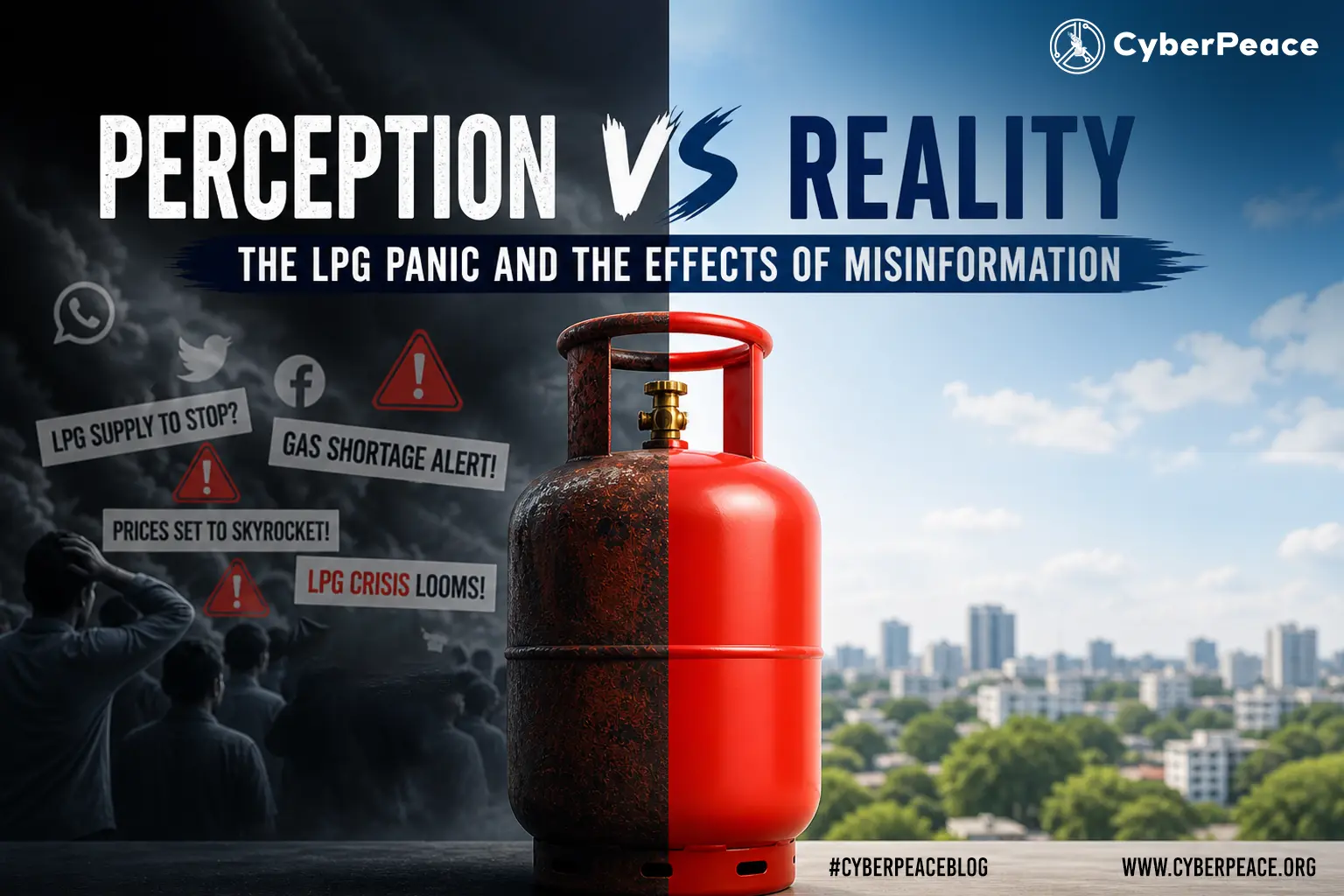
In recent months, conversations around the possible shortage of liquefied petroleum gas (LPG), a basic cooking fuel in Indian households, have quietly resurfaced across the country. From whispers in local markets to viral messages circulating on social media, concerns about LPG availability began to take hold in the public imagination. Though the immediacy of the situation has since faded, its echoes remain, reminding us how quickly uncertainty can spread. Like a ripple across still water, a single rumour can travel far, gathering force as it moves and blurring the line between perception and reality.
Against this backdrop, in April 2026, reports began circulating about a potential LPG shortage. The Union Government moved quickly to counter what it identified as misinformation, emphasising that supply remained stable and urging citizens not to engage in panic buying. A noticeable disconnect emerged between official communication and public perception. Across different regions, signs of anxiety-driven behaviour became evident. Instances of panic buying and hoarding increased, law enforcement agencies conducted raids to address such actions, and opportunistic thefts were reported, often exploiting widespread concern. These incidents highlight how misinformation, even when addressed promptly, can continue to shape public behaviour.
It is worth noting that rising prices also played a role in shaping public response, as increases in LPG rates contributed to a sense of urgency among consumers. Therefore, the surge in panic buying cannot be attributed solely to misinformation, but rather to a combination of economic pressures and perceived scarcity.
Misinformation Ecosystem - From Rumours to Behaviour
The spread of misinformation is occurring at an unprecedented pace and is, in large part, driven by the viral nature of social media. Digital platforms not only enable the rapid dissemination of information but also allow it to be amplified in ways that would not be possible through traditional media outlets. Often, the drive for virality outweighs any concern for accuracy, meaning that many individuals who spread misinformation are motivated more by the pursuit of attention than by any ideological agenda. Recent arrests of individuals involved in spreading misinformation about LPG and petrol shortages, much of which went viral, suggest that misinformation today is frequently driven by the desire for visibility rather than ideological motives. The information being circulated has largely followed a similar pattern, focusing on fears of an LPG shortage, expectations of price increases, and concerns about supply disruptions. Even though this information has not been verified, it has triggered behavioural responses among individuals. In several areas, including parts of Uttar Pradesh and Goa, the spread of misinformation through social media has led to panic buying, despite official assurances that there would be sufficient LPG supply to meet demand.
The impact of panic buying, and its associated misinformation, has already been seen in multiple sectors; these increased demands have placed pressure on the distribution network, leading to disruptions in access, as well as being out of stock of certain products. In many cases, commercial users of products (especially restaurants) have experienced significant disruption, threatening their continued operations, and industry representatives have alerted others about the inconsistent supply of commercial cylinders; likewise, consumers (households) are beginning to switch to alternative products (e.g., induction cooking) as a reflection of the anticipatory mindset to address the uncertainty created through perceptions of Product Scarcity.
State Response: Managing Misinformation or Behaviour?

The government has taken a variety of approaches, from advisories and enforcement actions to communicating with citizens indirectly. For example, State Governments have been directed to combat misinformation, monitor supply chains and take action against hoarding and black market activity. There has been a significant increase in the level of large- scale enforcement activity, with over 3,700 raids carried out to crack down on hoarding and black marketing related to LPG, in addition to confiscating cylinders and issuing penalties to those who break the law. In addition, the authorities have also focused on maintaining regular communication with the public in order to reassure them about the supply of LPG and fuel stability.
Geopolitical Context: Why Rumours Are Believable
Understanding today’s panic requires an understanding of the global environment: i.e., due to the ongoing conflict in West Asia, the energy markets are unstable, and energy supply is uncertain not only in West Asia but across a large part of the world. Even if domestic supply remains stable, public perception is affected by global instability. A clear example of this can be seen in neighbouring countries to India; Pakistan has seen significant increases in the cost of fuel, implemented measures such as reducing the number of days individuals work each week, and has created public support mechanisms; Bangladesh has imposed restrictions on the use of energy, has shortened the number of hours individuals can operate businesses each day, and has restricted the total amount of energy used; Sri Lanka has begun to ration fuel, and to increase the price of petrol; and Nepal has reduced the numbers of days individuals may work each week, and has adjusted supply.
All of these examples are not isolated instances, but are markers of a common regional environment. As we live in a global community that is connected in many ways, these developments will quickly affect public expectations everywhere. Therefore, for consumers in India, seeing evidence of rationing of fuel and shortages of fuel in neighbouring countries increases their belief that these types of problems could occur in their country.
Critical Perspective: Between Panic and Precaution
The LPG incident has brought about questions surrounding the nature of misinformation in terms of its definition & regulation. One of the main concerns is whether or not "misinformation" is being cast too widely. To be sure, false claims need to be addressed; however, not everything that is responded to publicly is based on untrue facts, as many times public responses are based on perceived risk via global and/or local incidents that occur. Perhaps the greatest challenge is the difficulty in differentiating precaution and panic. People’s memories of the COVID-19 pandemic are fresh in their minds and will serve to influence their behaviours moving onward, in that many people are stockpiling or preparing for uncertainty not out of irrational fear, but as an anticipatory response to their prior experiences.
Conclusion
The Indian LPG "crisis" is not so much a problem with actual supply chain breakdown as it is a result of how information and behaviour are connected through perception. This cohabitating environment of panic buying, law enforcement, and government assurance demonstrates an evident disconnect and gap between how governments present a narrative and how the public responds. While there is some role of misinformation within this discourse, the misinformation itself extends beyond any or all false claims about LPG supply and operates within a greater ecosystem of global uncertainty and personal experience. As such, and because of this, perception becomes an incredibly strong force in itself that produces true economic consequences.
Reference
- https://www.pib.gov.in/PressReleasePage.aspx?PRID=2248640&utm_source®=3&lang=2
- https://www.pmindia.gov.in/en/news_updates/pm-addresses-the-lok-sabha-on-the-ongoing-conflict-in-west-asia/
- https://www.ndtv.com/delhi-news/iran-war-middle-east-conflict-why-the-lpg-crisis-is-forcing-migrants-to-quietly-leave-delhi-11313629
- https://timesofindia.indiatimes.com/city/bareilly/thieves-steal-108-lpg-cylinders-from-godown-in-up/articleshow/130035518.cms
- https://indianexpress.com/article/india/arrested-rumours-lpg-petrol-shortage-police-chasing-views-10614193/
- https://www.hindustantimes.com/cities/lucknow-news/social-media-rumours-fuel-panic-buying-in-some-up-districts-situation-normal-in-lucknow-101774465353107.html
- https://timesofindia.indiatimes.com/city/goa/fear-of-shortage-price-rise-fuels-panic-buying-across-goa/articleshow/129810144.cms
- https://www.news18.com/cities/new-delhi-news/online-rumours-offline-rush-panic-buying-sweeps-petrol-pumps-across-cities-whats-the-truth-ws-ln-9995684.html
- https://m.economictimes.com/news/india/3700-raids-conducted-across-country-to-wipe-out-lpg-black-marketing-says-centre/articleshow/130025232.cms
- https://www.reuters.com/business/energy/induction-stoves-fly-off-shelves-india-gas-shortage-fears-spark-panic-buying-2026-03-12/
- https://www.ndtv.com/india-news/restaurant-body-warns-of-closures-over-commercial-lpg-supply-concerns-writes-to-minister-11194418
- https://www.freepressjournal.in/mumbai/fpj-dialogue-we-are-getting-only-1-cylinder-instead-of-10-says-ahar-president-vijay-shetty-on-mumbai-lpg-crisis
- https://www.hindustantimes.com/world-news/fuel-cuts-wfh-and-more-how-indias-neighbours-are-dealing-with-global-energy-crisis-triggered-by-us-iran-war-101775397199941.html
- https://www.abc.net.au/news/2026-03-30/four-step-fuel-supply-plan-national-cabinet-fuel-crisis/106512706
- https://tribune.net.ph/2026/04/07/philippines-scrambles-as-regional-oil-crisis-hits

Executive Summary:
The video that allegedly showed cars running into an Indian flag while Pakistan flags flying in the air in Indian states, went viral on social media but it has been established to be misleading. The video posted is neither from Kerala nor Tamil Nadu as claimed, instead from Karachi, Pakistan. There are specific details like the shop's name, Pakistani flags, car’s number plate, geolocation analyses that locate where the video comes from. The false information underscores the importance of verifying information before sharing it.


Claims:
A video circulating on social media shows cars trampling the Indian Tricolour painted on a road, as Pakistani flags are raised in pride, with the incident allegedly taking place in Tamil Nadu or Kerala.


Fact Check:
Upon receiving the post we closely watched the video, and found several signs that indicated the video was from Pakistan but not from any place in India.
We divided the video into keyframes and found a shop name near the road.
We enhanced the image quality to see the shop name clearly.


We can see that it’s written as ‘Sanam’, also we can see Pakistan flags waving on the road. Taking a cue from this we did some keyword searches with the shop name. We found some shops with the name and one of the shop's name ‘Sanam Boutique’ located in Karachi, Pakistan, was found to be similar when analyzed using geospatial Techniques.


We also found a similar structure of the building while geolocating the place with the viral video.


Additional confirmation of the place is the car’s number plate found in the keyframes of the video.

We found a website that shows the details of the number Plate in Karachi, Pakistan.

Upon thorough investigation, it was found that the location in the viral video is from Karachi, Pakistan, but not from Kerala or Tamil Nadu as claimed by different users in Social Media. Hence, the claim made is false and misleading.
Conclusion:
The video circulating on social media, claiming to show cars trampling the Indian Tricolour on a road while Pakistani flags are waved, does not depict an incident in Kerala or Tamil Nadu as claimed. By fact-checking methodologies, it has been confirmed now that the location in the video is actually from Karachi, Pakistan. The misrepresentation shows the importance of verifying the source of any information before sharing it on social media to prevent the spread of false narratives.
- Claim: A video shows cars trampling the Indian Tricolour painted on a road, as Pakistani flags are raised in pride, taking place in Tamil Nadu or Kerala.
- Claimed on: X (Formerly known as Twitter)
- Fact Check: Fake & Misleading
