
#FactCheck: Chhatarpur Protest Video Falsely Shared as Indian Army Atrocities in Manipur
Executive Summary
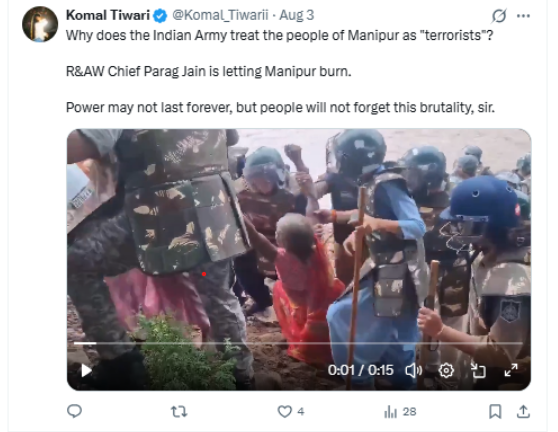
A video is going viral on social media showing police personnel allegedly dragging an elderly woman. The video is being shared with the claim that it was filmed in Manipur and shows the Indian Army committing atrocities against women. The CyberPeace Research Wing found that the viral video is not from Manipur. It was recorded during protests against the Ken-Betwa Link Project in Chhatarpur, Madhya Pradesh, and is being circulated with a misleading claim.
Claim:
A video shared on social media claims that the Indian Army is committing atrocities against local people, particularly women, in Manipur. The post further alleges that R&AW chief Parag Jain is allowing Manipur to burn and that people will never forget the alleged brutality.
https://x.com/i/status/2084180049285005687
Factcheck
To verify the claim, our team extracted keyframes from the viral video and conducted a reverse image search using Google Lens. During the search, we found the same video uploaded on the Facebook page of Public Vani News on July 31. The accompanying description stated: “Police action against an elderly tribal woman is shameful. During protests against the Ken-Betwa Link Project in Chhatarpur, a video showing police removing an elderly tribal woman has gone viral. Protesters claim they were holding a Jal Satyagraha, hunger strike and Chita Andolan while demanding fair compensation and protection of their land, forests and homes.”
The post and screenshot are provided below:
https://www.facebook.com/reel/1031078973033873

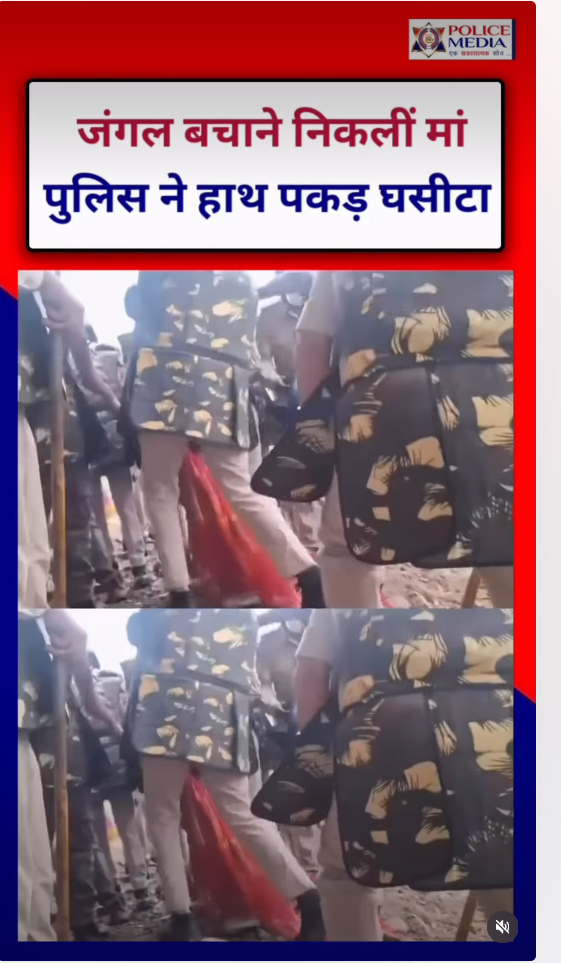
In the next step of the research, we found the same video on an Instagram channel named policemedianews, where it was shared without the misleading Manipur-related claim. The post link and screenshot are provided below
https://www.instagram.com/reels/DbfALvaT4mH/
Conclusion:
The research found that the viral claim is misleading. The video is not from Manipur and does not show Indian Army personnel targeting women there. The footage is from protests against the Ken-Betwa Link Project in Chhatarpur, Madhya Pradesh, where police were seen removing an elderly tribal woman during the demonstration. The video is being shared on social media with a false context.

Related Blogs

Introduction
In July 2025, the Digital Trust & Safety Partnership (DTSP) achieved a significant milestone with the formal acceptance of its Safe Framework Specification as an international standard, ISO/IEC 25389. This is the first globally recognised standard that is exclusively concerned with guaranteeing a secure online experience for the general public's use of digital goods and services.
Significance of the New Framework
Fundamentally, ISO/IEC 25389 provides organisations with an organised framework for recognising, controlling, and reducing risks associated with conduct or content. This standard, which was created under the direction of ISO/IEC's Joint Technical Committee 1 (JTC 1), integrates the best practices of DTSP and offers a precise way to evaluate organisational maturity in terms of safety and trust. Crucially, it offers the first unified international benchmark, allowing organisations globally to coordinate on common safety pledges and regularly assess progress.
Other Noteworthy Standards and Frameworks
While ISO/IEC 25389 is pioneering, it’s not the only framework shaping digital trust and safety:
- One of the main outcomes of the United Nations’ 2024 Summit for the Future was the UN's Global Digital Compact, which describes cross-border cooperation on secure and reliable digital environments with an emphasis on countering harmful content, upholding online human rights, and creating accountability standards.
- The World Economic Forum’s Digital Trust Framework defines the goals and values, such as cybersecurity, privacy, transparency, redressability, auditability, fairness, interoperability and safety, implicit to the concept of digital trust. It also provides a roadmap to digital trustworthiness that imbibes these dimensions.
- The Framework for Integrity, Security and Trust (FIST) launched at the Cybereace Summit 2023 at USI of India in New Delhi, calls for a multistakeholder approach to co-create solutions and best practices for digital trust and safety.
- While still in the finalisation stage for implementation rollout, India's Digital Personal Data Protection Act, 2023 (DPDP Act) and its Rules (2025) aim to strike a balance between individual rights and data processing needs by establishing a groundwork for data security and privacy.
- India is developing frameworks in cutting-edge technologies like artificial intelligence. Using a hub-and-spoke model under the IndiaAI Mission, the AI Safety Institute was established in early 2025 with the goal of creating standards for trustworthy, moral, and safe AI systems. Furthermore, AI standards with an emphasis on safety and dependability are being drafted by the Bureau of Indian Standards (BIS).
- Google's DigiKavach program (2023) and Google Safety Engineering Centre (GSEC) in Hyderabad are concrete efforts to support digital safety and fraud prevention in India's tech sector.
What It Means for India
India is already claiming its place in discussions about safety and trust around the world. Google's June 2025 safety charter for India, for example, highlights how India's distinct digital scale, diversity, and vast threat landscape provide insights that inform global cybersecurity strategies.
For India's digital ecosystem, ISO/IEC 25389 comes at a critical juncture. Global best practices in safety and trust are desperately needed as a result of the rapid adoption of digital technologies, including the growth of digital payments, e-governance, and artificial intelligence and a concomitant rise in instances of digital harms. Through its guidelines, ISO/IEC 25389 provides a reference benchmark that Indian startups, government agencies, and tech companies can use to improve their safety standards.
Conclusion
A global trust-and-safety standard like ISO/IEC 25389 is essential for making technology safer for people, even as we discuss the broader adoption of security and safety-by-design principles integrated into the processes of technological product development. India can improve user protection, build its reputation globally, and solidify its position as a key player in the creation of a safer, more resilient digital future by implementing this framework in tandem with its growing domestic regulatory framework (such as the DPDP Act and AI Safety policies).
References
- https://dtspartnership.org/the-safe-framework-specification/
- https://dtspartnership.org/press-releases/dtsps-safe-framework-published-as-an-international-standard/?
- https://www.weforum.org/stories/2024/04/united-nations-global-digital-compact-trust-security/?
- https://economictimes.indiatimes.com/tech/technology/google-releases-safety-charter-for-india-senior-exec-details-top-cyber-threat-actors-in-the-country/articleshow/121903651.cms?
- https://initiatives.weforum.org/digital-trust/framework
- https://government.economictimes.indiatimes.com/news/secure-india/the-launch-of-fist-framework-for-integrity-security-and-trust/103302090

Executive Summary
Amid the ongoing tensions involving the United States, Israel, and Iran, a video of a cargo ship engulfed in flames is being widely shared across social media platforms. The clip shows a vessel burning intensely at sea, with users claiming that Iran targeted the ship with a drone for attempting to cross the Strait of Hormuz without permission. Some users have also claimed that the destroyed vessel was a Pakistani-flagged oil tanker hit by Iranian missiles. However, research by CyberPeace found the claim to be false. Our verification also reveals that the viral video is being misrepresented.
Claim
Social media users, including an X (formerly Twitter) account named “IranDefenceForce,” shared the video claiming that Iran targeted an oil tanker in the Strait of Hormuz for allegedly violating restrictions.

Fact Check
A keyword-based news search led us to multiple credible reports mentioning a statement by Iran’s Foreign Minister Abbas Araghchi. According to reports, Iran had allowed ships from “friendly countries” including India, China, Russia, Iraq, and Pakistan to pass through the Strait of Hormuz.
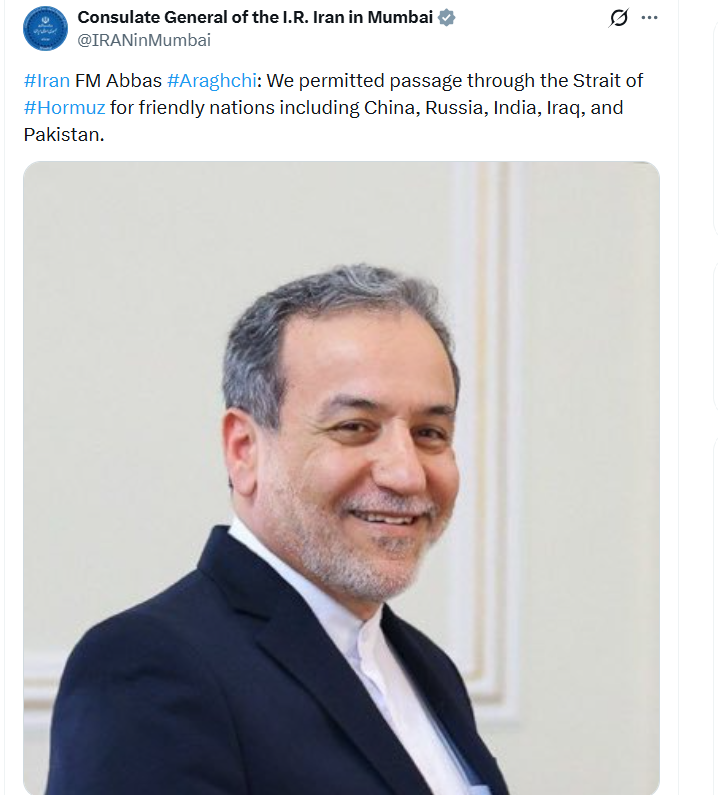
A March 26, 2026 report by The Hindu stated that Araghchi also emphasized Iran’s assertion of sovereignty over the strategic waterway connecting the Persian Gulf and the Gulf of Oman. The same statement was also shared via the official X handle of the Iranian Consulate in Mumbai. During a frame-by-frame analysis of the viral video, we noticed the word “SAFEEN” written on a part of the ship. Using this clue, we conducted a targeted news search and found a report by Reuters dated March 4, 2026.

According to the report, a Malta-flagged container ship named Safeen Prestige was damaged in an attack while heading toward the Strait of Hormuz. Shipping sources cited in the report stated that the vessel was struck around 1109 GMT while sailing eastward, approximately two nautical miles north of Oman. The ship had reportedly departed from Sharjah Port in the United Arab Emirates but was damaged before reaching its destination. Its last known location was in the Persian Gulf. Additionally, earlier this month, another cargo vessel named Mayuri Naree was also attacked near Iran’s Qeshm Island. As per Reuters, an explosion caused a fire in the engine room, after which 20 crew members were rescued by the Omani navy, while three remained missing.
Conclusion
The viral video does not show Iran targeting a Pakistani oil tanker for violating restrictions in the Strait of Hormuz. In reality, the clip features the Malta-flagged container ship Safeen Prestige, which was damaged in an unidentified attack in the Persian Gulf. The claim being circulated on social media is misleading.

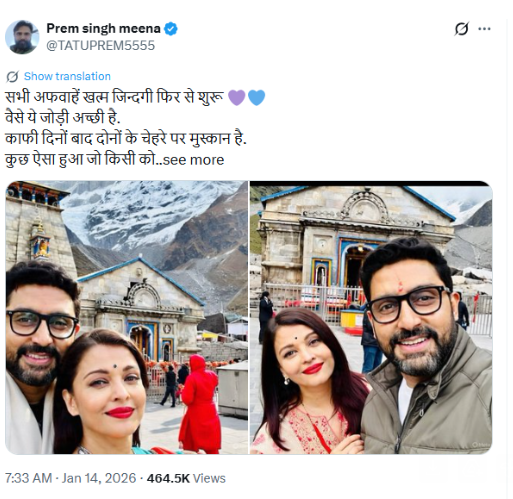
A photo featuring Bollywood actor Abhishek Bachchan and actress Aishwarya Rai is being widely shared on social media. In the image, the Kedarnath Temple is clearly visible in the background. Users are claiming that the couple recently visited the Kedarnath shrine for darshan.
Cyber Peace Foundation’s research found the viral claim to be false. Our research revealed that the image of Abhishek Bachchan and Aishwarya Rai is not real, but AI-generated, and is being misleadingly shared as a genuine photograph.
Claim
On January 14, 2026, a user on X (formerly Twitter) shared the viral image with a caption suggesting that all rumours had ended and that the couple had restarted their life together. The post further claimed that both actors were seen smiling after a long time, implying that the image was taken during their visit to Kedarnath Temple.
The post has since been widely circulated on social media platforms
Fact Check:
To verify the claim, we first conducted a keyword search on Google related to Abhishek Bachchan, Aishwarya Rai, and a Kedarnath visit. However, we did not find any credible media reports confirming such a visit.
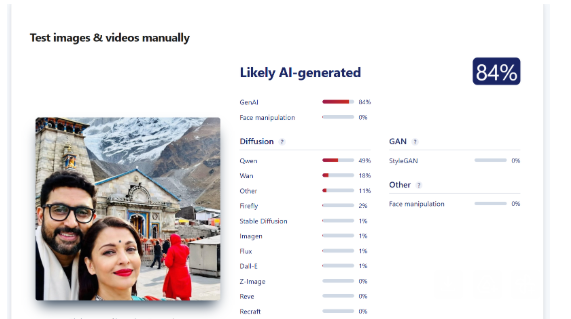
On closely examining the viral image, several visual inconsistencies raised suspicion about it being artificially generated. To confirm this, we scanned the image using the AI detection tool Sightengine. According to the tool’s analysis, the image was found to be 84 percent AI-generated.
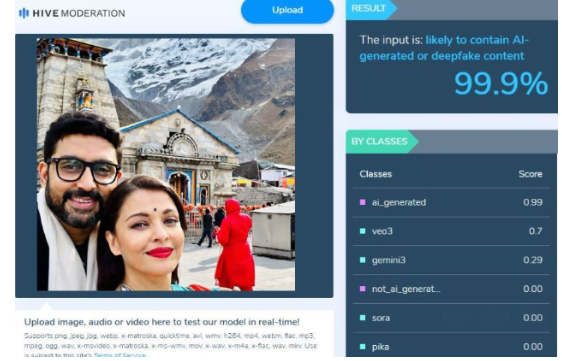
Additionally, we scanned the same image using another AI detection tool, HIVE Moderation. The results showed an even stronger indication, classifying the image as 99 percent AI-generated.
Conclusion
Our research confirms that the viral image showing Abhishek Bachchan and Aishwarya Rai at Kedarnath Temple is not authentic. The picture is AI-generated and is being falsely shared on social media to mislead users.
