
#FactCheck-AI-Generated Image Falsely Shows Iranian Soldiers Near Downed Helicopter
Executive Summary
Our research confirms that the viral image showing Iranian soldiers standing near a crashed helicopter is AI-generated and has no connection to any real-world event. It is being misleadingly shared online amid geopolitical tensions. Amid rising tensions between Iran, the United States, and Israel, a dramatic image is being widely shared on social media. The picture shows soldiers standing near the wreckage of a crashed helicopter in a desert, holding an Iranian flag. Users claim that Iranian forces shot down the aircraft. Research by CyberPeace Research Wing found that the viral image is fake and was created using AI tools.
Claim
A Facebook page named “Official Salman 09” shared the image on May 1, 2026, portraying it as a powerful symbol of victory in an ongoing conflict. The post suggested that the image reflected Iran’s military success and carried a broader political message amid regional tensions.
- https://www.facebook.com/photo/?fbid=909905332099201&set=a.522993370790401
- https://perma.cc/KCL8-7UDN

Fact Check
To verify the claim, we first conducted a reverse image search using Google Lens. The image did not appear on any credible news platforms, although it was widely circulating across social media—raising suspicion about its authenticity. We then analyzed the image using Google’s SynthID detector, which confirmed with high confidence that the image was generated using Google’s AI tools. SynthID is a technology designed to watermark and identify AI-generated content.

Further verification using AI detection tool Hive Moderation indicated a very high likelihood (up to 99.9%) that the image was AI-generated, with strong probability that it was created using Google’s Gemini.

Conclusion
Our research confirms that the viral image showing Iranian soldiers standing near a crashed helicopter is AI-generated and has no connection to any real-world event. It is being misleadingly shared online amid geopolitical tensions.

Related Blogs
.webp)
Introduction
As the 2024 Diwali festive season approaches, netizens eagerly embrace the spirit of celebration with online shopping, gifting, and searching for the best festive deals on online platforms. Historical web data from India shows that netizens' online activity spikes at this time as people shop online to upgrade their homes, buy unique presents for loved ones and look for services and products to make their celebrations more joyful.
However, with the increase in online transactions and digital interactions, cybercriminals take advantage of the festive rush by enticing users with fake schemes, fake coupons offering freebies, fake offers of discounted jewellery, counterfeit product sales, festival lotteries, fake lucky draws and charity appeals, malicious websites and more. Cybercrimes, especially phishing attempts, also spike in proportion to user activity and shopping trends at this time.
Hence, it becomes important for all netizens to stay alert, making sure their personal information and financial data is protected and ensure that they exercise due care and caution before clicking on any suspicious links or offers. Additionally, brands and platforms also must make strong cybersecurity a top priority to safeguard their customers and build trust.
Diwali Season and Phishing Attempts
Last year's report from CloudSEK's research team noted an uptick in cyber threats during the Diwali period, where cybercriminals leveraged the festive mood to launch phishing, betting and crypto scams. The report revealed that phishing attempts target the e-commerce industries and seek to damage the image of reputable brands. An astounding 828 distinct domains devoted to phishing activities were found in the Facebook Ads Library by CloudSEK's investigators. The report also highlighted the use of typosquatting techniques to create phony-but-plausible domains that trick users into believing they are legitimate websites, by exploiting common typing errors or misspellings of popular domain names. As fraudsters are increasingly misusing AI and deepfake technologies to their advantage, we expect even more of these dangers to surface this year over the festive season.
CyberPeace Advisory
It is important that netizens exercise caution, especially during the festive period and follow cyber safety practices to avoid cybercrimes and phishing attempts. Some of the cyber hygiene best practices suggested by CyberPeace are as follows:
- Netizens must verify the sender’s email, address, and domain with the official site for the brand/ entity the sender claims to be affiliated with.
- Netizens must avoid clicking links received through email, messages or shared on social media and consider visiting the official website directly.
- Beware of urgent, time-sensitive offers pressuring immediate action.
- Spot phishing signs like spelling errors and suspicious URLs to avoid typosquatting tactics used by cybercriminals.
- Netizens must enable two-factor authentication (2FA) for an additional layer of security.
- Have authenticated antivirus software and malware detection software installed on your devices.
- Be wary of unsolicited festive deals, gifts and offers.
- Stay informed on common tactics used by cybercriminals to launch phishing attacks and recognise the red flags of any phishing attempts.
- To report cybercrimes, file a complaint at cybercrime.gov.in or helpline number 1930. You can also seek assistance from the CyberPeace helpline at +91 9570000066.
References
- https://www.outlookmoney.com/plan/financial-plan/this-diwali-beware-of-these-financial-scams
- https://www.businesstoday.in/technology/news/story/diwali-and-pooja-domains-being-exploited-by-online-scams-see-tips-to-help-you-stay-safe-405323-2023-11-10
- https://www.abplive.com/states/bihar/bihar-crime-news-15-cyber-fraud-arrested-in-nawada-before-diwali-2024-ann-2805088
- https://economictimes.indiatimes.com/tech/technology/phishing-you-a-happy-diwali-ai-advancements-pave-way-for-cybercriminals/articleshow/113966675.cms?from=mdr
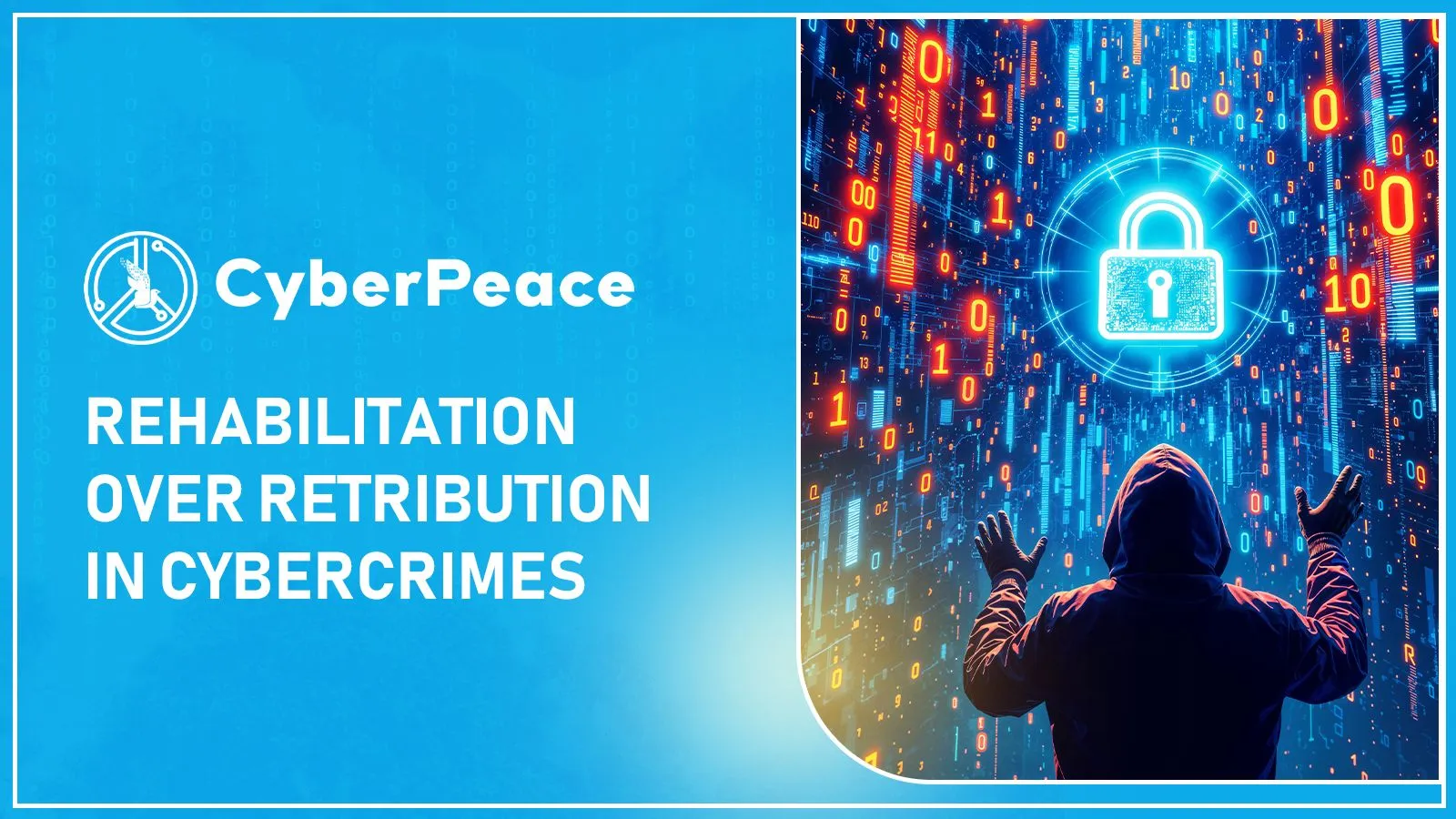
Transforming Misguided Knowledge into Social Strength
यत्र योगेश्वरः कृष्णो यत्र पार्थो धनुर्धरः । तत्र श्रीर्विजयो भूतिर्ध्रुवा नीतिर्मतिर्मम ॥ (Bhagavad Gita) translates as “Where there is divine guidance and righteous effort, there will always be prosperity, victory, and morality.” In the context of the idea of rehabilitation, this verse teaches us that if offenders receive proper guidance, their skills can be redirected. Instead of causing harm, the same abilities can be transformed into tools for protection and social good. Cyber offenders who misuse their skills can, through structured guidance, be redirected toward constructive purposes like cyber defence, digital literacy, and security innovation. This interpretation emphasises not discarding the “spoiled” but reforming and reintegrating them into society.
Introduction
Words and places are often associated with positive and negative aspects based on their history, stories, and the activities that might happen in that certain place. For example, the word “hacker” has a negative connotation, as does the place “Jamtara”, which is identified with its shady history as a cybercrime hotspot, but often people forget that there are lots of individuals who use their hacking skills to serve and protect their nation, also known as “white hat hackers”, a.k.a. ethical hackers, and places like Jamtara have a substantial number of talented individuals who have lost their way and are often victims of their circumstances. This presents the authorities with a fundamental issue of destigmatising cybercriminals and the need to act on their rehabilitation. The idea is to shift from punitive responses to rehabilitative and preventive approaches, especially in regions like Jamtara.
The Deeper Problem: Systemic Gaps and Social Context
Jamtara is not an isolated or a single case; there are many regions like Mewat, Bharatpur, Deoghar, Mathura, etc., that are facing a crisis, and various lives are uprooted because youth are entrapped in cybercrime rings, often to escape unemployment, poverty, and simply in the hope of a better life. In one such heart-wrenching story, a 24-year-old Shakil, belonging to Nuh, Haryana, was arrested for committing various cybercrimes, including sextortion and financial scams, and while his culpability is not in question here, his background reflects a deeper issue. He committed these crimes to pay for his diabetic father’s mounting bills and to see his sister, Shabana, married. This is the story of almost every other individual in the rural areas who is forced into committing these crimes, if not by a person, but by their circumstances. In a news report covered in 2024, an intervention was launched by various Meo leaders and social organisations in the Mewat region aimed at weaning the youth away from cybercrimes.
Not only poverty, but lack of education, social awareness, and digital literacy have acted as active agents for pushing the youth of India away from mainstream growth and towards the dark trenches of the cybercrime world. The local authorities have made active efforts to solve this problem; for instance, to dispel Jamtara’s unfavourable reputation for cybercrime and set the city firmly on the path to change, community libraries have been established in all 118 panchayats spread across six blocks of the district by IAS officer and DM Faiz Aq Ahmed Mumtaz.
The menace of cybercrimes is not limited to rural areas, as various reports surfaced during and post-COVID, where young children from urban areas became victims of various cybercrimes such as cyberbullying and stalking, and often perpetrators were someone from the same age group, adding to the dilemma. The issue has been noticed by various agencies, and the a need to deal with both victims and the accused in a sensitised manner. Recently, ex-CJI DY Chandrachud called for international collaboration to combat juvenile cybercrimes, as there are many who are ensnared and coerced into these criminal gangs, and swift resolution is the key to ensuring justice and rehabilitation.
CyberPeace Policy Outlook
Cybercrime is often a product of skill without purpose. The youth who are often pushed into these crimes either have an incomplete idea of the veracity of their actions or have no other resort. The legal system and the agencies will have to look beyond the nature of the crimes and adopt and undertake a reformative approach so that these people can make their way into society and harness their skills ethically. A good alternative would be to organise Cyber Bootcamps for Reform, i.e., structured training with placement support, and explain to them how ethical hacking and cybersecurity careers can be attractive alternatives. One way to make the process effective is to share real-world stories of reformed hackers. There are many who belong to small villages and districts who have written success stories on reform after participating in digital training programmes. The crime they commit doesn’t have to be the last thing they are able to do in life; it doesn’t have to be the ending. The digital programmes should be organised in a way and in a vernacular that the youth are well-versed in, so there are no language barriers. The programme may give training for coding, cyber hygiene, legal literacy, ethical hacking, psychological counselling, and financial literacy workshops.
It has become a matter of reclaiming the misdirected talent, as rehabilitation is not just humane; it is strategic in the fight against cybercrime. On 1st April 2025, IIT Madras Pravartak Technologies Foundation finished training its first batch of law enforcement officers in cybersecurity techniques. The initiative is commendable, and a similar initiative may prove effective for the youth accused of cybercrimes, and preferably, they can be involved in similar rehabilitation and empowerment programmes during the early stages of criminal proceedings. This will help prevent recidivism and convert digital deviance into digital responsibility. In order to successfully incorporate this into law enforcement, the police can effectively use it to identify first-time, non-habitual offenders involved in low-impact cybercrimes. Also, courts can exercise the authority to require participation in an approved cyber-reform programme as a condition of bail in addition to bail hearings.
Along with this, under the Juvenile Justice (Care and Protection of Children) Act, 2015, children in conflict with the law can be sent to observation homes where modules for digital literacy and skill development can be implemented. Other methods that may prove effective may include Restorative Justice Programmes, Court-monitored rehabilitation, etc.
Conlusion
A rehabilitative approach does not simply punish offenders, it transforms their knowledge into a force for good, ensuring that cybercrime is not just curtailed but converted into cyber defence and progress.
References
- Ismat Ara, How an impoverished district in Haryana became a breeding ground for cybercriminals, FRONTLINE (Jul 27, 2023, 11:00 IST), https://frontline.thehindu.com/the-nation/spotlight-how-nuh-district-in-haryana-became-a-breeding-ground-for-cybercriminals/article67098193.ece )
- Mohammed Iqbal, Counselling, skilling aim to wean Mewat youth away from cybercrimes, THE HINDU (Jul. 28, 2024, 01:39 AM), https://www.thehindu.com/news/cities/Delhi/counselling-skilling-aim-to-wean-mewat-youth-away-from-cybercrimes/article68454985.ece
- Prawin Kumar Tiwary,Jamtara’s journey from cybercrime to community libraries, 101 REPORTERS (Feb. 16, 2022), https://101reporters.com/article/development/Jamtaras_journey_from_cybercrime_to_community_libraries .
- IIT Madras Pravartak completes Training First Batch of Cyber Commandos, PRESS INFORMATION BUREAU (Apr. 1, 2025, 03:36 PM), https://www.pib.gov.in/PressReleasePage.aspx?PRID=2117256

Introduction
A hacking operation has corrupted data on Madhya Pradesh's e-Nagarpalika portal, a vital online platform for paying civic taxes that serves 413 towns and cities in the state. Due to this serious security violation, the portal has been shut down. The incident occurred in December 2023. This affects citizens' access to vital online services like possessions, water, and municipal tax payments, as well as the issuing of obituaries and certain documents offered via online portal. Ransomware which is a type of malware encodes and conceals a victim's files, and data making it inaccessible and unreachable unless the attacker is paid a ransom. When ransomware initially appeared, encryption was the main method of preventing individuals' data from such threats.
The Intrusion and Database Corruption: Exposing the Breach's Scope
The extent of the assault on the e-Nagarpalika portal was revealed by the Principal Secretary of the Urban Administration and Housing Department of Madhya Pradesh, in a startling revelation. Cybercriminals carried out a highly skilled assault that led to the total destruction of the data infrastructure covering all 413 of the towns for which the website was responsible.
This significant breach represents a thorough infiltration into the core of the electronic civic taxation system, not just an arrangement. Because of the attackers' nefarious intent, the data integrity was compromised, raising questions about the safeguarding of private citizen data. The extent of the penetration reaches vital city services, causing a reassessment of the current cybersecurity safeguards in place.
In addition to raising concerns about the privacy of personal information, the hacked information system casts doubt on the availability of crucial municipal services. Among the vital services affected by this cyberattack are marriage licenses, birth and death documents, and the efficient handling of possessions, water, and municipal taxes.
The weaknesses of electronic systems, which are the foundation of contemporary civic services, are highlighted by this incident. Beyond the attack's immediate interruption, citizens now have to deal with concerns about the security of their information and the availability of essential services. This tragedy is a clear reminder of the urgent need for robust safety safeguards as authorities work hard to control the consequences and begin the process of restoration.
Offline Protections in Place
The concerned authority informed the general population that the offsite data, which has been stored up on recordings every three days, is secure despite the online attack. This preventive action emphasises how crucial offline restores are to lessening the effects of these kinds of cyberattacks. The choice to keep the e-Nagarpalika platform offline until a certain time highlights how serious the matter is and how urgently extensive reconstruction must be done to restore the online services offer
Effect on Civic Services
The e-Nagarpalika website is crucial to providing online municipal services, serving as an invaluable resource for citizens to obtain necessary paperwork and carry out diverse transactions. Civic organisations have been told to function offline while the portal remains unavailable until the infrastructure is fully operational. This interruption prompts worries about possible delays and obstacles citizens face when getting basic amenities during this time.
Examination and Quality Control
Information technology specialists are working diligently to look into the computer virus and recover the website, in coordination with the Madhya Pradesh State Electronic Development Corporation Limited, the state's cyber police, and the Indian Computer Emergency Response Team (CERT-In). Reassuringly for impacted citizens, authorities note that there is currently no proof of data leaks arising from the hack.
Conclusion
The computerised attack on the e-Nagarpalika portal in Madhya Pradesh exposes the weakness of computer networks. It has affected the essential services to public services offered via online portal. The hack, which exposed citizen data and interfered with vital services, emphasises how urgently strong safety precautions are needed. The tragedy is a clear reminder of the need to strengthen technology as authorities investigate and attempt to restore the system. One bright spot is that the offline defenses in place highlight the significance of backup plans in reducing the impact of cyberattacks. The ongoing reconstruction activities demonstrate the commitment to protecting public data and maintaining the confidentiality of essential city operations.
References
- https://government.economictimes.indiatimes.com/tag/cyber+attack
- https://www.techtarget.com/searchsecurity/definition/ransomware#:~:text=Ransomware%20is%20a%20type%20of,accessing%20their%20files%20and%20systems.
- https://www.business-standard.com/india-news/mp-s-e-nagarpalika-portal-suffers-cyber-attack-data-corrupted-officials-123122300519_1.html
- https://www.freepressjournal.in/bhopal/mp-govts-e-nagar-palika-portal-hacked-data-of-over-400-cities-leaked
